Learn how to write thrifted clothing descriptions that build buyer trust, reduce returns, and turn browsers into sales.”
A thrifted denim jacket sits in a cart for eleven minutes. The buyer reads the description twice, zooms into the one blurry photo, then closes the tab. Not because the jacket was wrong for them, because nothing in the listing told them enough to be sure.
That’s the real cost of a vague description. In secondhand clothing, buyers can’t touch the fabric, can’t try it on, can’t smell whether “gently used” actually means gently used.
All they have is your words, and every gap you leave in them becomes a reason to hesitate instead of buy. Fit issues alone drive the majority of hesitation and returns in online clothing sales, and “not as described” complaints follow close behind.
The fix isn’t clever copywriting. It’s specificity. The sellers who move thrifted pieces consistently aren’t writing the flashiest listings — they’re writing the most exact ones, the kind buyers learn to trust because the details are always there, every single time.
In this guide, you’ll find exactly what to include in every thrifted clothing description, from the measurements that stop fit-based hesitation to the small trust signals that turn a browser into a buyer, so your listings read as reliable every time, not just occasionally.
If you’re building a resale business from the ground up, Thrift Business in Nigeria: How to Start a Profitable Thrift Clothing Business explains the key steps involved in sourcing inventory, pricing items, and growing a sustainable thrift business.
Start With the Measurements, Not Just the Size Label
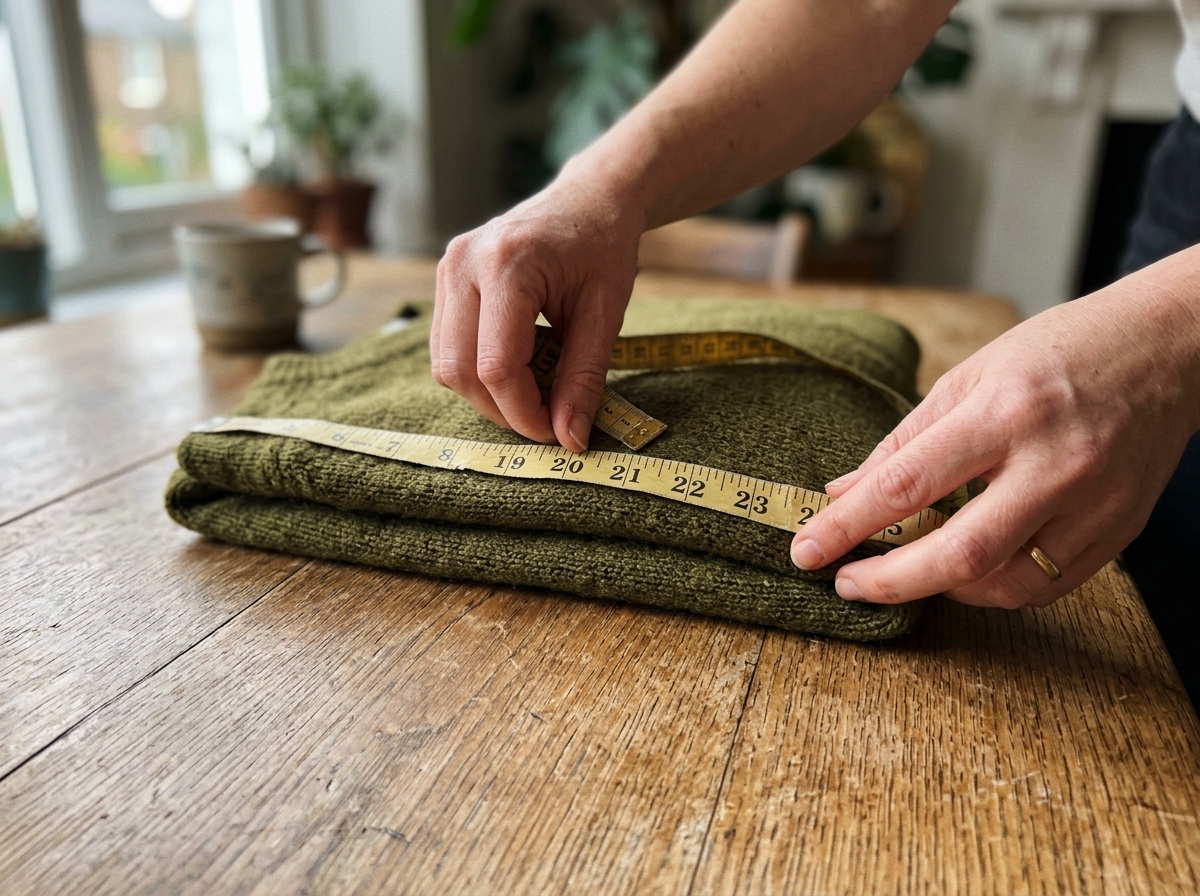
A size tag tells a buyer almost nothing once clothing has been through different brands, decades, or a wash cycle or two. A “medium” from one label can fit like a small from another, and vintage sizing rarely lines up with today’s charts at all.
Measurements are the only detail a buyer can actually compare against clothes they already own, which makes them the fastest way to earn trust and stop the guessing that leads to hesitation or a return.
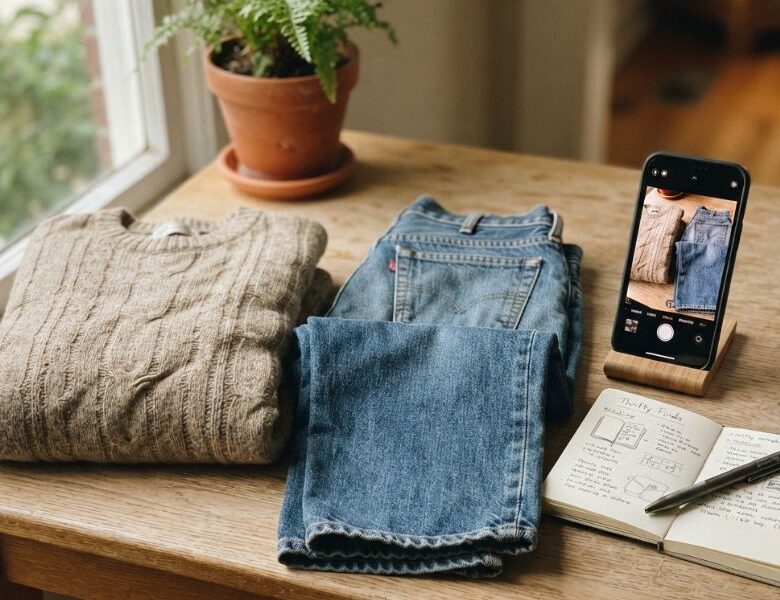
Here’s what to measure and note for every piece you list:
- Pit-to-pit (chest): Lay the item flat and measure straight across, underarm to underarm. This is the most reliable number for tops, jackets, and dresses.
- Waist: Measure flat across the waistband, then double it for the full circumference.
- Inseam: For pants and shorts, measure from the crotch seam to the bottom hem.
- Length: Measure from the highest point of the shoulder (for tops) or the waistband (for bottoms) down to the hem.
Lay the item flat before you measure. Clothes measured on a hanger or draped over your body stretch and throw the numbers off.
If you notice a brand tends to run small or large, say so , buyers who know that brand will trust you more for confirming what they already suspected.
And keep your measurements in the same order every time you post a listing, so a repeat buyer always knows exactly where to look.
Skip the size label as your headline stat. Lead with the numbers instead, and let the size be a secondary reference.
Before purchasing inventory, How to Identify Grade A vs Grade B Thrift Clothes Before Buying a Bale (Beginner Guide) helps you understand quality differences so you can make smarter buying decisions and avoid costly mistakes.
Name the Flaws Before the Buyer Finds Them
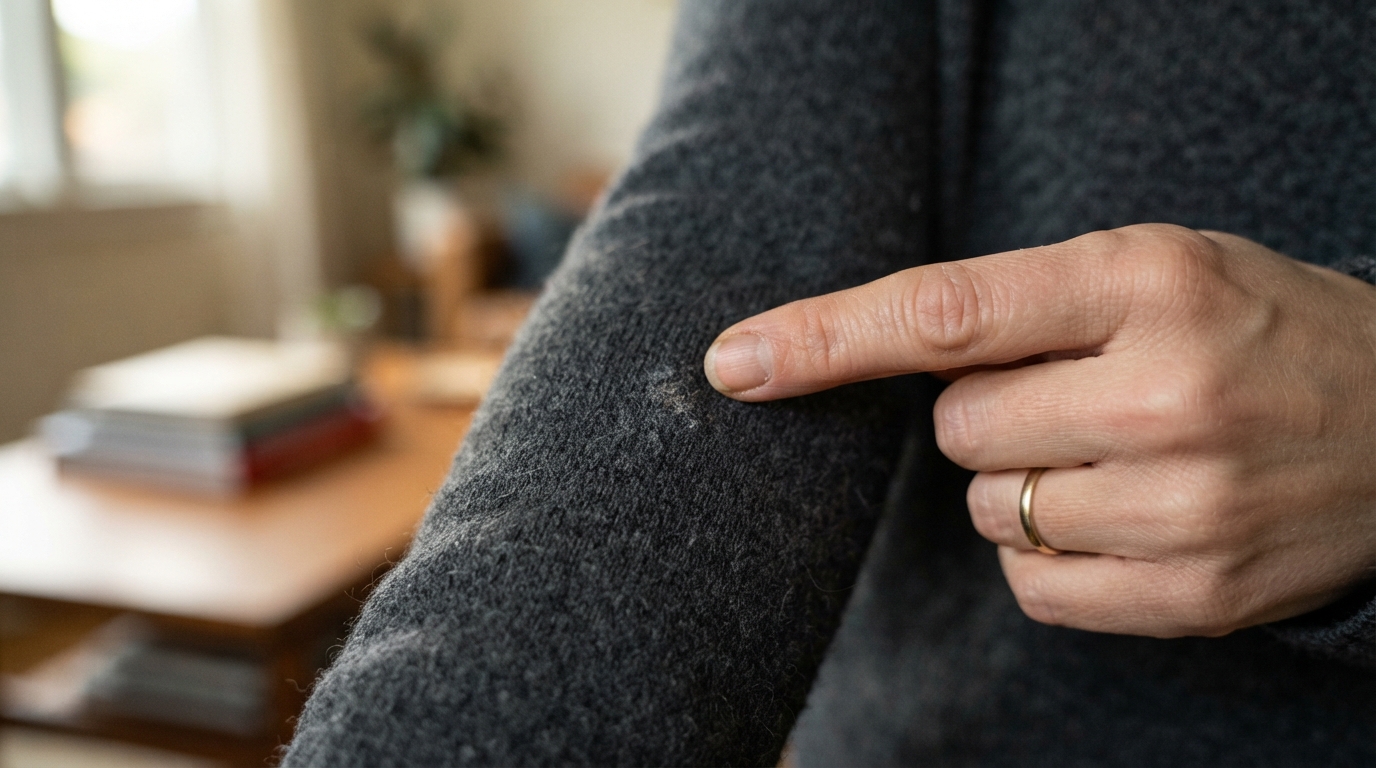
Every thrifted piece has a history, and most buyers already expect a little wear. What they don’t expect, and won’t forgive, is finding a stain or a loose button themselves after the sale is done.
Knowing how to write thrifted clothing descriptions that build trust starts with saying the hard part first, not hiding it in the fine print or leaving it out altogether.
Cover these flaw types every time they apply:
- Stains or discoloration: Name the location and size — “small faded mark near the left hem” tells a buyer exactly what they’re getting, instead of leaving them to imagine the worst.
- Pilling or fabric wear: Mention where it’s concentrated, like under the arms or along the inner thighs, so the buyer can judge if it matters for how they’ll wear the piece.
- Missing or replaced buttons, zippers, or hardware: Say what’s missing and whether it affects function, not just appearance.
- Fading or sun damage: Note if it’s even throughout or patchy, since patchy fading is often a bigger dealbreaker for buyers than an item that’s uniformly worn-in.
Frame each flaw factually, not apologetically. “There’s a small pull near the collar” reads as honest and matter-of-fact. Over-explaining or apologizing for it (“sorry, I know this isn’t perfect but…”) makes the flaw feel bigger than it is and can make buyers question what else you might be downplaying.
If a flaw is minor enough that most buyers won’t notice it, still mention it. The buyers who do notice will remember that you told them upfront, and they’ll trust your next listing more because of it.
Get Specific About Fabric and Care
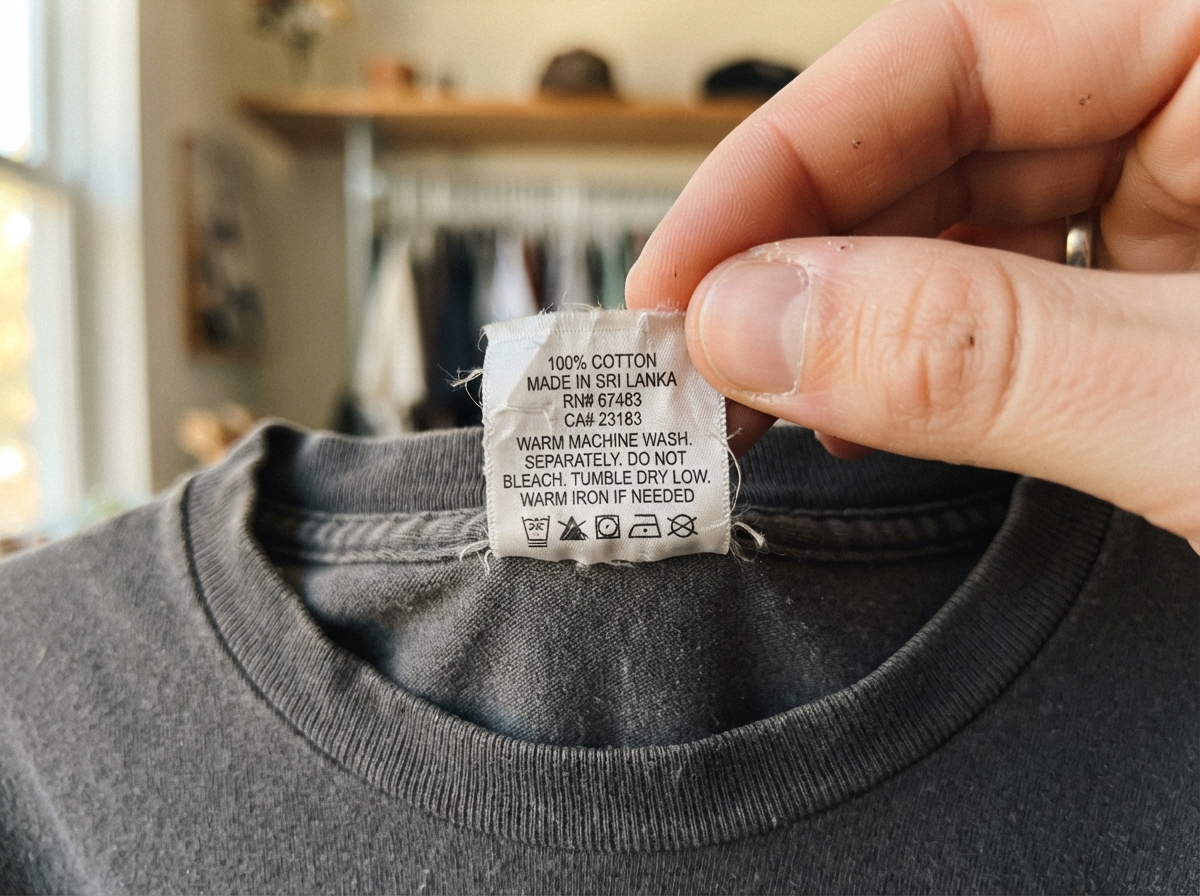
Fabric content tells a buyer more than most sellers realize, it signals how the piece will feel, how it’ll hold up, and how much work it’ll take to maintain. Skipping this detail is one of the easiest ways to lose a buyer who’s comparing your listing against someone else’s more specific one.
Cover these details whenever you know them:
- Material content: Check the care tag for the exact fabric blend, “100% cotton” or “60% cotton, 40% polyester” tells a buyer far more than “soft, comfortable material.”
- Stretch or give: Say whether the fabric has stretch and how much, especially for anything with spandex or elastane blended in. This matters most for fitted pieces like jeans or bodycon dresses.
- Care instructions: Note dry clean only, hand wash, or machine washable based on the tag. If the tag is missing or worn off, say so rather than guessing.
If a fabric behaves in a way that’s worth flagging, like a wool blend that runs warm, or a rayon piece that wrinkles easily, mention it.
Buyers appreciate knowing what they’re signing up for beyond just what the item looks like in photos.
Once you start making sales, Thrift Delivery for Beginners: How to Safely Ship Thrift Clothes Across States or Countries covers practical packaging and shipping tips that help protect items and improve the customer experience.
Describe the Condition in Buyer-Friendly Terms

Condition language only works if it means the same thing every time you use it. A buyer who reads “gently used” on one listing and finds heavy pilling on the item will stop trusting that label on your next one, and every listing after that.
Set a consistent scale and stick to it:
- Like-new: No visible flaws, may still have retail creases, little to no signs of wear.
- Gently used: Minor, barely noticeable wear, a small amount of pilling or slight fading that doesn’t affect how the piece looks worn.
- Well-loved: Visible signs of wear that don’t affect function, noticeable fading, some pilling, minor marks, but still wearable and priced accordingly.
Once you define these terms, use them the same way across every post and every listing. Consistency is what turns a one-time buyer into a repeat one, because they’ll learn to trust your scale without needing to double-check every time.
Add the Small Trust Signals
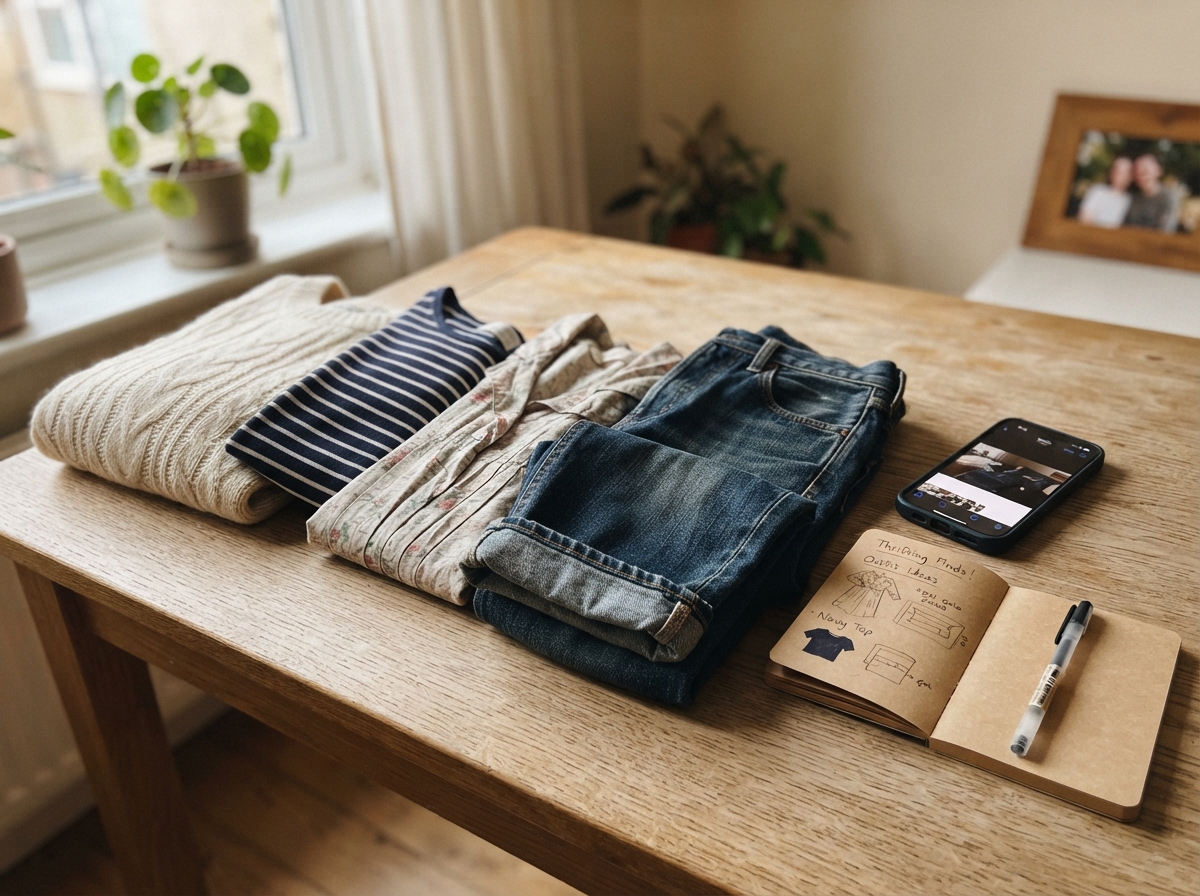
Beyond measurements and condition, a few small details do a lot of quiet work in building buyer confidence.
Learning how to write thrifted clothing descriptions that convert isn’t just about the big facts, it’s the small ones that make a listing feel complete instead of rushed.
Include these where relevant:
- Smoke-free or pet-free home note: A short line like “from a smoke-free, pet-free home” reassures buyers with allergies or sensitivities, and its absence can quietly raise doubt even when there’s nothing to worry about.
- Brand and era details: Name the brand clearly, and if you know or can identify the decade or collection a vintage piece is from, include it. This helps buyers searching for a specific era find your listing and trust that you know what you’re selling.
- Why you’re selling (optional): A brief, honest reason, “downsizing my closet” or “never got around to wearing it” ,can add warmth to a listing, but skip it if it feels forced. A flat, factual listing builds just as much trust as a personal one, as long as the details are accurate.
None of these details are required to make a sale, but together they signal that you’ve paid attention to the item and to the buyer’s experience, and that’s often the difference between a listing someone trusts enough to buy from and one they scroll past.
To focus on products with strong demand, Top-Selling Clothes for Thrift Business in Nigeria (What Moves Fast) highlights clothing categories that consistently attract buyers and generate faster sales.
Help the Buyer Picture Wearing It
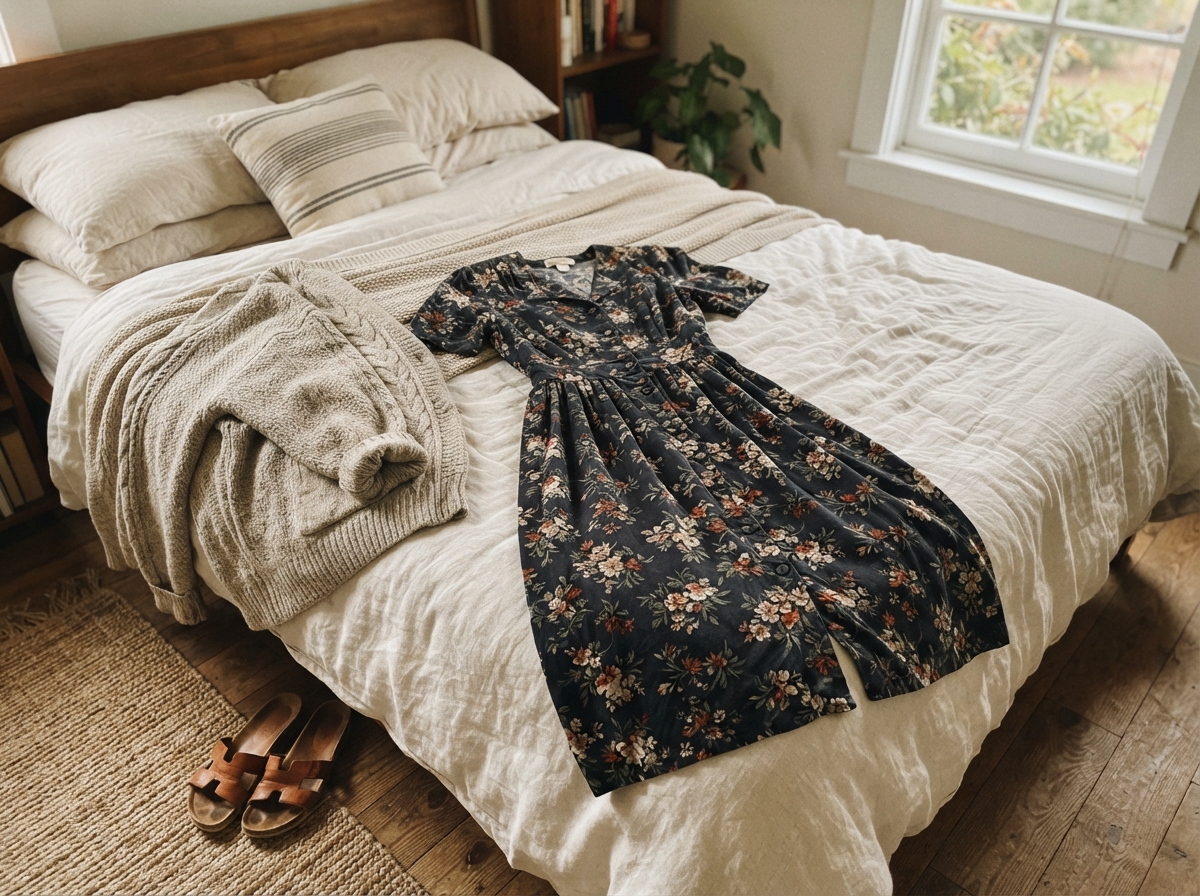
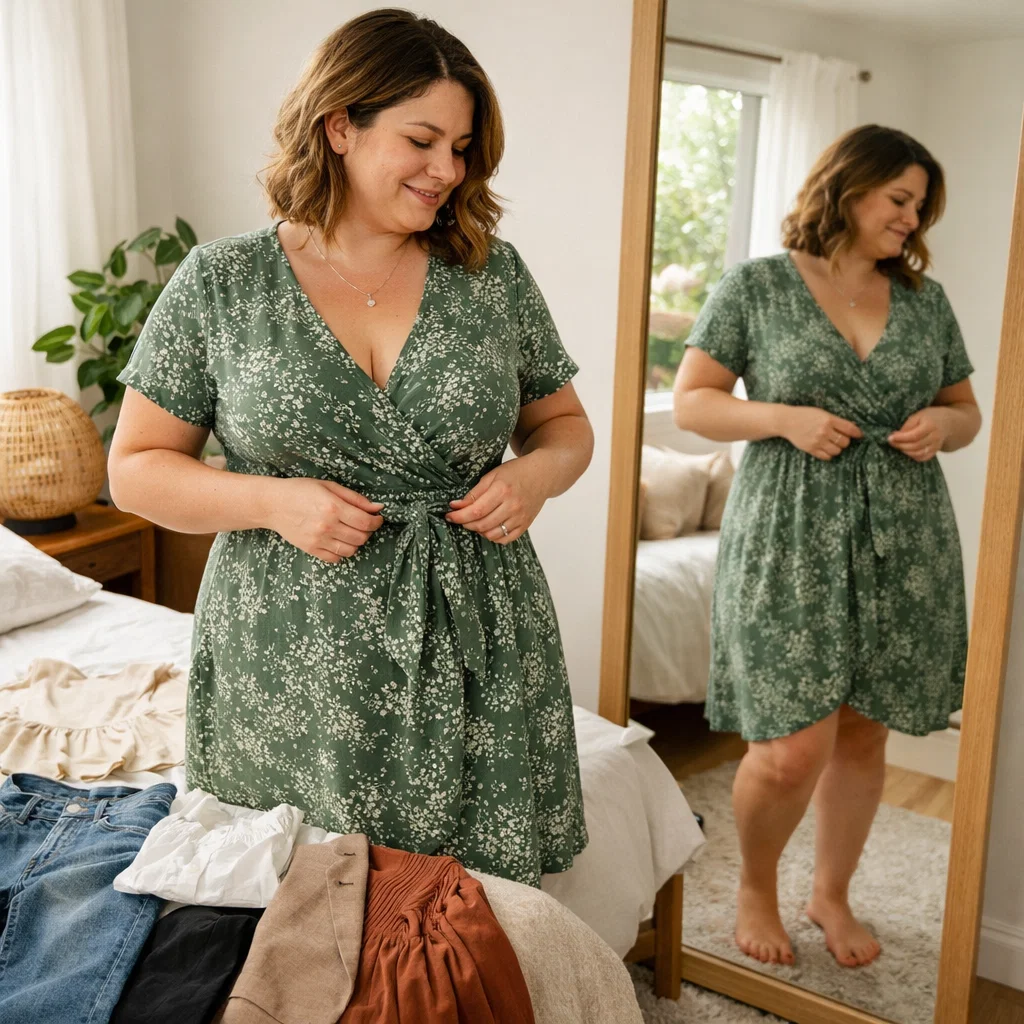
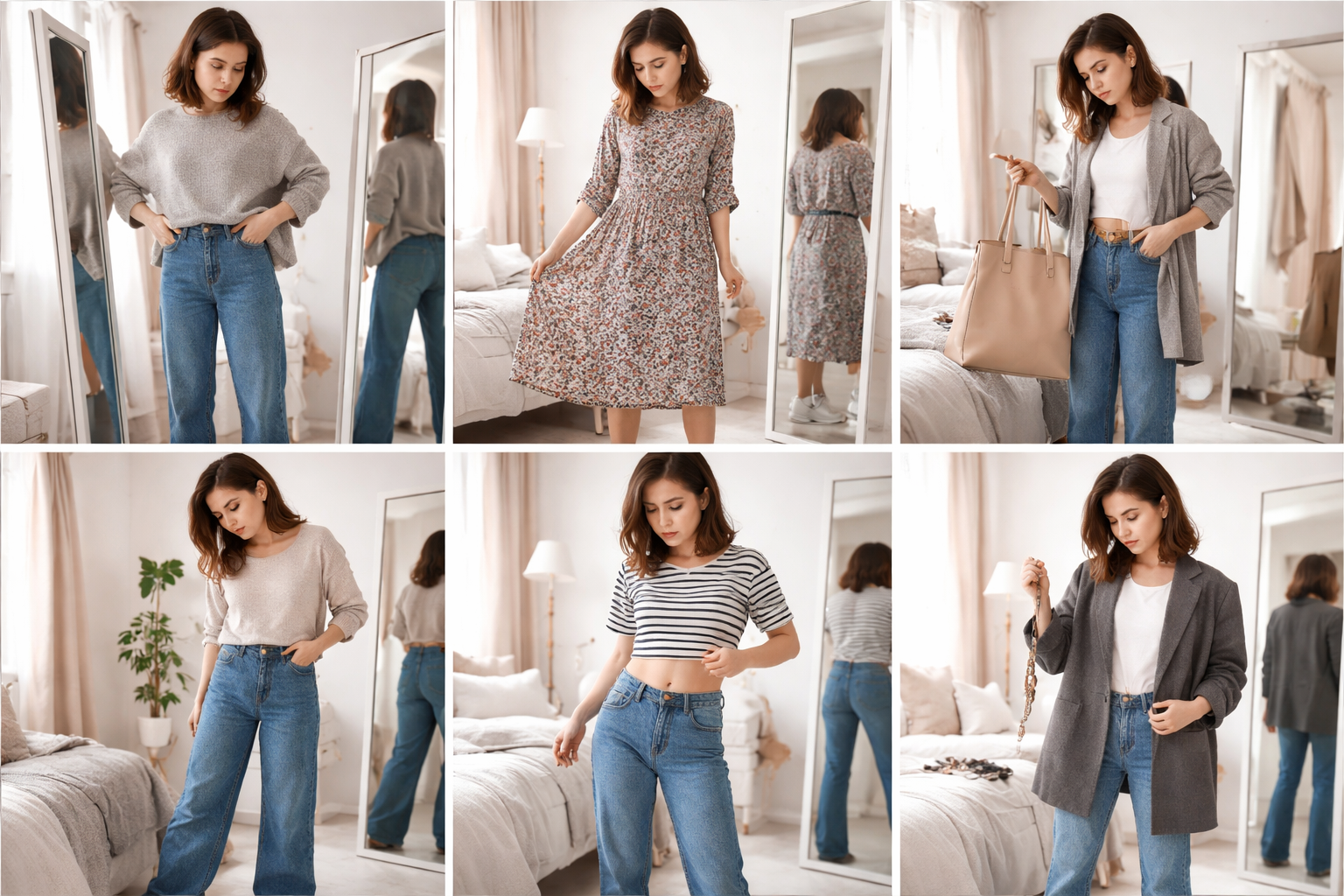
Once the facts are covered, measurements, flaws, fabric, condition, this is the one place in your description where you can sell a little. Not with hype, but by helping the buyer picture the piece actually working in their life.
Keep it simple and specific:
- One styling suggestion: Mention a pairing that makes sense, “layers well under a denim jacket” or “pairs easily with wide-leg trousers for a work-ready look.” One clear suggestion is more useful than a long list of options.
- Occasion or season fit: Note when the piece works best, like “a lightweight throw for early fall” or “perfect for a casual weekend brunch.” This helps a buyer place the item into their actual wardrobe instead of leaving them to guess.
Keep this part short. A sentence or two is enough, the trust was already built in the sections above, so this is just the nudge that turns “I believe this listing” into “I can see myself wearing this.
Use Keywords Buyers Actually Search For, Not Just Adjectives
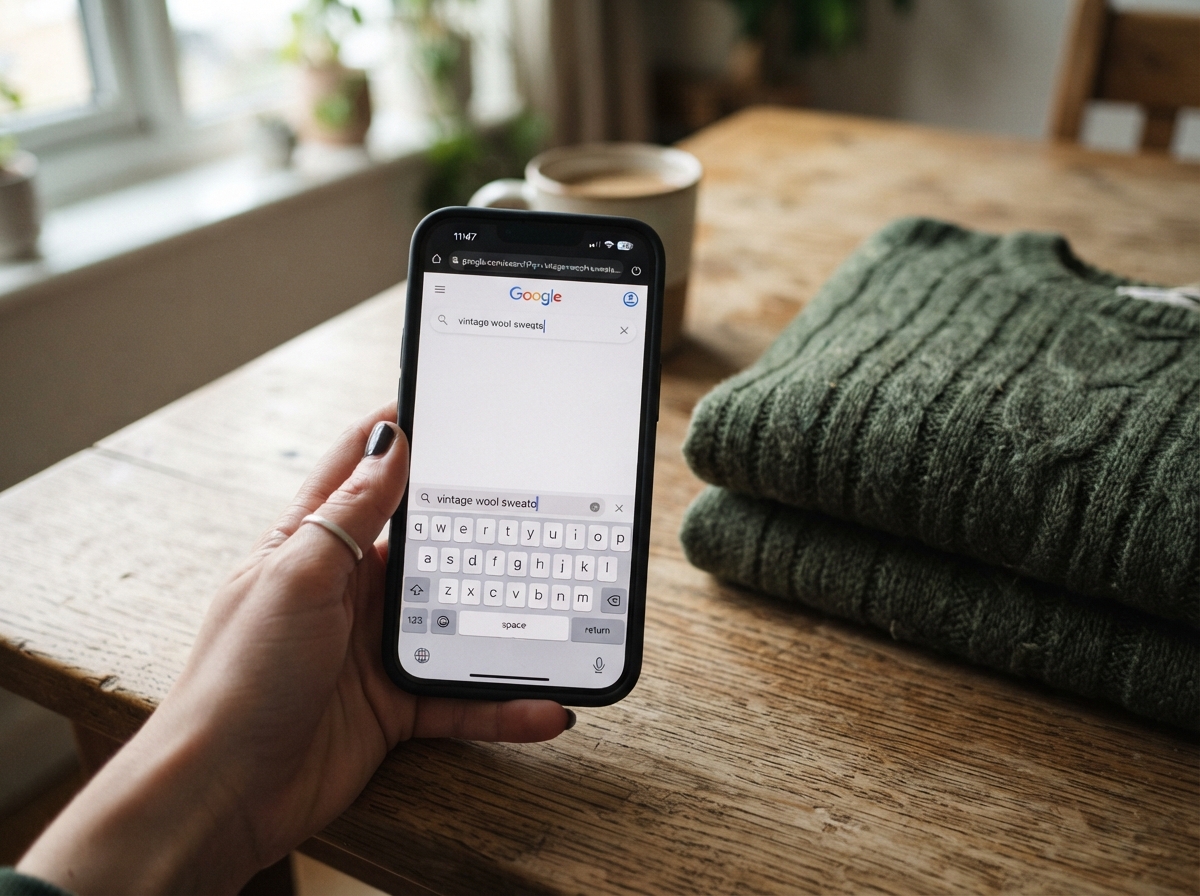
Words like “gorgeous,” “amazing,” or “must-have” don’t show up in a buyer’s search bar. Learning how to write thrifted clothing descriptions that actually get found means thinking like a buyer typing a search, not like a seller trying to impress one.
Focus on the terms buyers use to filter and search:
- Item type and cut: “wide-leg jeans,” “crewneck sweater,” “midi wrap dress” — specific enough to match a real search, not just “cute pants.”
- Era or style label: “Y2K,” “90s vintage,” “cottagecore,” “grandmacore” — these pull in buyers searching for a specific aesthetic, not just a category.
- Material and fabric: “linen,” “corduroy,” “cashmere blend” — buyers often filter by fabric when they know what they want.
- Condition terms: “pre-loved,” “gently used,” “deadstock”, searchable phrases that also double as trust signals once a buyer lands on the listing.
Drop these terms into your title and the first line of your description, since that’s what search results and previews show first. Adjectives can still have a place further down, once the buyer’s already clicked, they just won’t be the reason the buyer found you in the first place.
For creative styling inspiration, Old Money Outfit Ideas from Thrift Flips That Look Rich (But Cost Almost Nothing) shows how affordable secondhand pieces can be transformed into polished, high-end-looking outfits.
Keep the Tone Consistent With Your Brand’s Voice
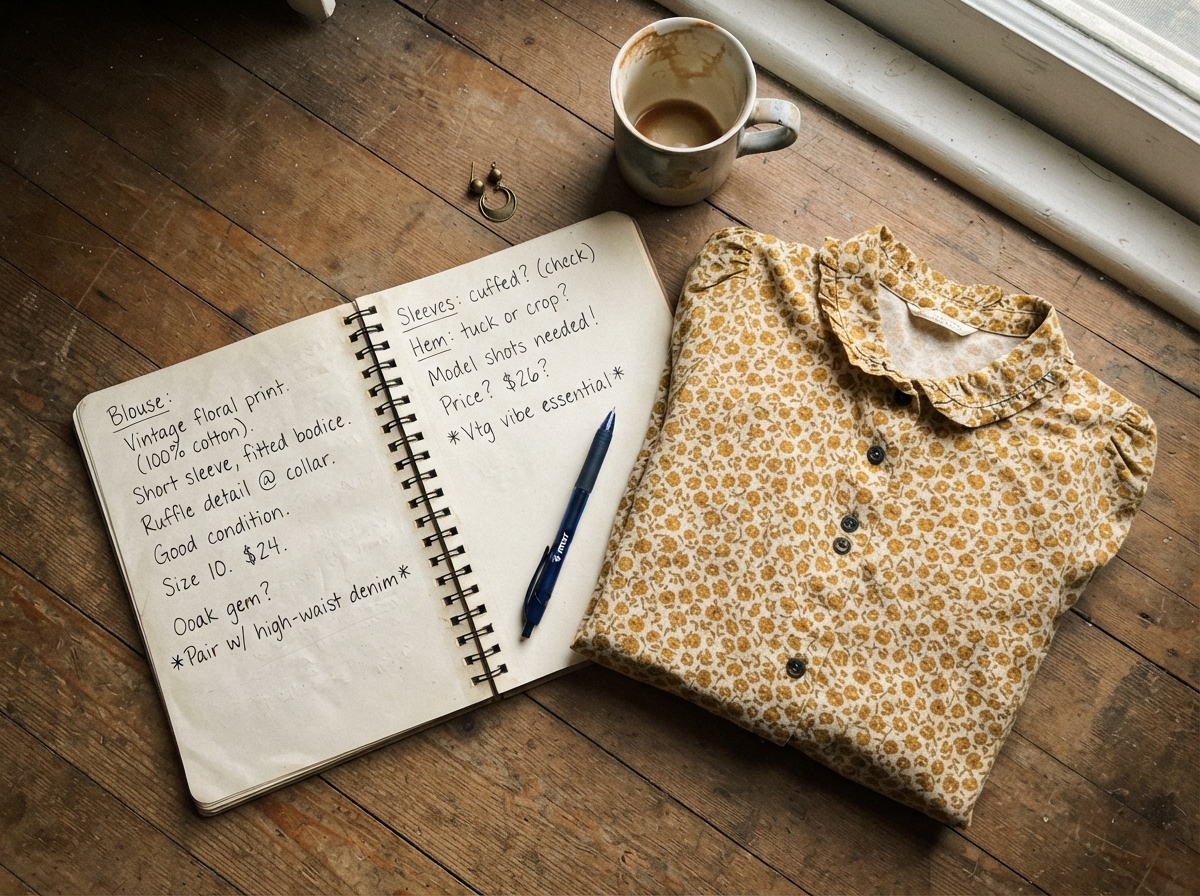
A buyer who reads two of your listings back to back should be able to tell they came from the same seller, even without seeing your name. That consistency is part of how to write thrifted clothing descriptions that build a real audience, not just single, one-off sales.
Pick a tone that fits how you want to be known, and use it every time:
- Casual and conversational: Short sentences, contractions, maybe a little personality, “loved this one but it’s just not my size anymore.” Feels approachable and personal, especially for everyday pieces.
- Clean and polished: Straightforward, factual, no filler, closer to how a boutique would describe an item. Feels more premium and works well for higher-value or vintage pieces.
Neither tone is more trustworthy than the other on its own. What erodes trust is switching between them listing to listing, casual and joking on one item, stiff and formal on the next. Buyers pick up on that inconsistency even if they can’t name what feels off.
Once you settle on a tone, apply it to more than just the description. Carry it into your titles, your captions, and how you respond to buyer questions.
That’s what turns a single purchase into a buyer who recognizes your listings on sight and comes back for the next one.
If you enjoy customizing clothing, Thrift Flip Sewing Projects Ideas For People Who Want Expensive Style on a Budget shares beginner-friendly upcycling ideas that turn ordinary thrift finds into unique, fashionable pieces.
End Note: Trust Is the Real Selling Point
A well-written description doesn’t just describe a piece of clothing, it answers every question a buyer would have asked if they could hold the item in their hands.
That’s the real goal behind learning how to write thrifted clothing descriptions that build buyer trust and boost sales: closing the gap between what you know about the piece and what your buyer needs to know to feel confident hitting “buy.”
None of this requires more time than writing a vague, generic listing. It just requires a habit, measure the same way every time, name the flaws before they’re found, and keep your condition language consistent from one post to the next.
Buyers notice that consistency faster than you’d think, and it’s what turns a one-time sale into a return customer who trusts your next listing without needing to ask a single question first.
Start with your very next piece. Measure it, describe it honestly, and watch how much faster it moves.