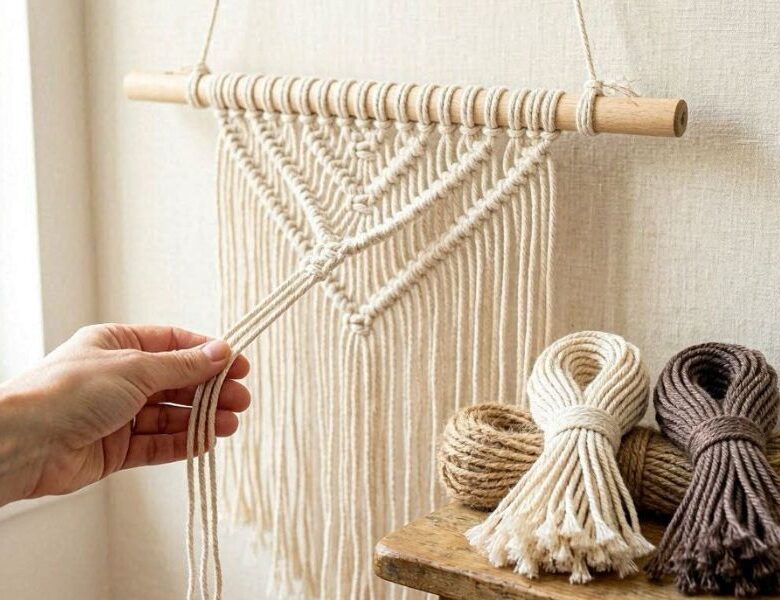
A quick guide to the best cords for macramé, what each cord is for, and which one fits the project you’re making.
You finally decided to try macramé. You searched “macramé cord,” clicked on the first listing that looked decent, and ordered it.
Now you’re sitting there with a knot that won’t hold its shape, fringe that refuses to fluff out no matter how hard you brush it, or a cord so stiff your fingers are sore before you’ve even finished one row.
Here’s what you should know: not all macramé cord is the same. The cord that makes a gorgeous, fluffy wall hanging is the wrong choice for a plant hanger that needs to hold weight.
The cord that’s perfect for delicate jewelry knots will fall apart if you try to make a market bag with it. Choosing the wrong one isn’t a small mistake, it’s the difference between a project you’re proud of and one you abandon halfway through.
By the end of this post, you’ll know exactly which of these 7 cords to reach for, whatever you’re making next, so you don’t have to guess or waste money on the wrong spool.
Looking for another beginner-friendly skill? Start with Macramé for Beginners: What It Is, What You Need, and How to Start to learn the basics.
What Makes a Cord Best for Macramé? It Starts With Construction
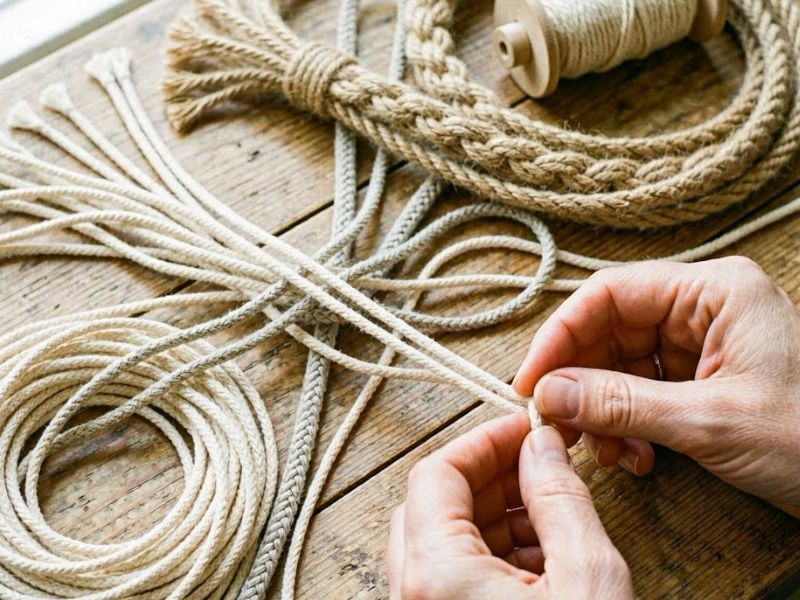
Two cords can be 100% cotton and behave completely differently depending on whether they’re single-strand, 3-ply, or braided.
Here’s what each construction actually does:
Single-Strand (single-twist) cord:
Is made of fine threads loosely twisted into one strand. It’s the softest of the three, brushes out into a full, fluffy fringe, and is the most forgiving to knot with, which is why it’s the go-to for anyone just starting out. The tradeoff: it’s also the most fragile, so it’s not the cord you want for anything that needs to bear real weight.
3-Ply Twisted Cord (rope)
Is three strands twisted together into one. It’s noticeably stronger than single-strand, holds its shape under tension, and gives you that distinctive wavy fringe when unraveled. This is the cord most experienced macramé makers reach for when a project needs to actually hold weight, think plant hangers or swings.
Braided Cord
Is woven rather than twisted, which means it won’t fray or unravel no matter how much you handle it. Knots sit clean and well-defined, but it doesn’t fringe the way the other two do. Best for bags, market totes, and any structured piece where you want sharp, precise lines.
Best Cords for Macramé
1. Single-Strand Cotton Cord — The Soft, Beginner-Friendly Fringe Cord
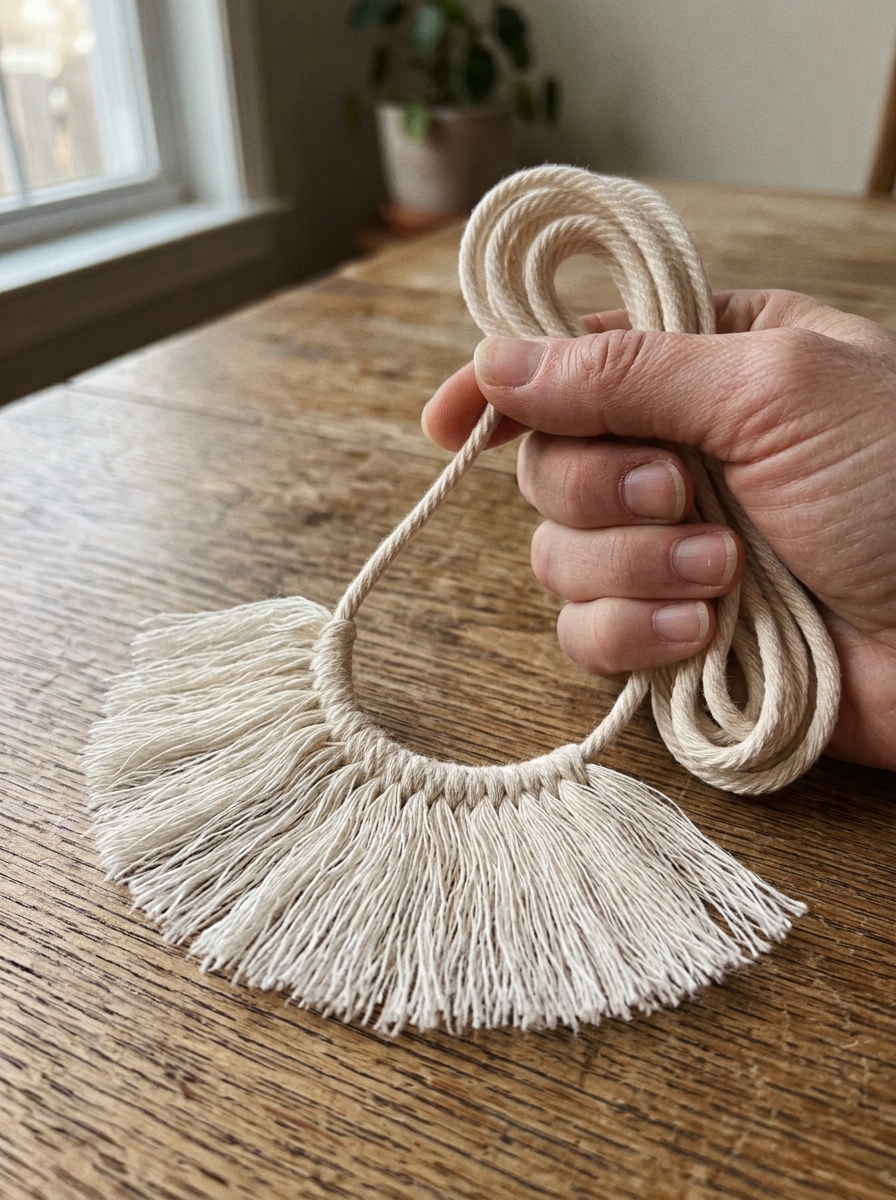
Single-strand cotton cord is made from fine cotton threads loosely twisted into one continuous strand. It’s the softest cord on this list, which makes it the easiest to knot with when you’re still getting used to tension and hand movement.
Best for: wall hangings, decorative feathers, coasters, and any piece that ends in fringe.
What it turns out like: because the threads are loosely twisted, you can comb the ends out into a full, cloud-like fringe, this is the cord behind that soft, dreamy boho look you see in most wall hanging tutorials.
The downside is right there in the structure: that same looseness that makes it soft also makes it fragile. Use it for something that needs to hold real weight, like a loaded plant pot, and it’ll stretch and sag over time.
2. 3-Ply Twisted Cotton Cord (Rope) — The Strong, Structural Workhorse
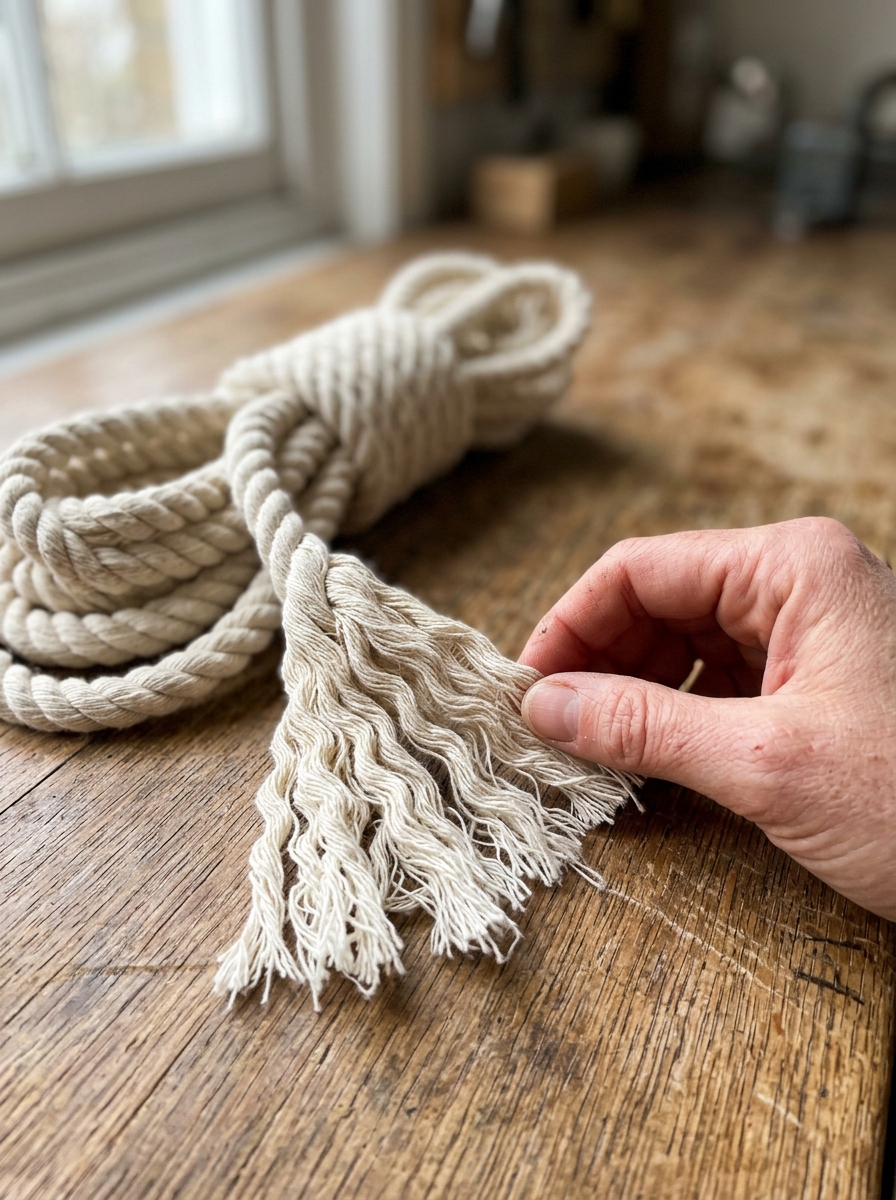
This is three individual cotton strands twisted tightly together into one rope. That twisting is what gives it strength, noticeably more than single-strand, while still keeping a soft, knottable feel.
Best for: plant hangers, hanging swings, hammocks, and anything that needs to carry actual weight without losing shape.
What it turns out like: when you unravel the ends, you get a distinctive wavy, textured fringe instead of the straight, fluffy look of single-strand cord.
It’s a different aesthetic, more rustic and handcrafted-looking, and it holds its structure under tension, so your knots stay where you put them even after months of hanging.
3. Braided Cotton Cord — The Clean, Won’t-Fray Structural Cord
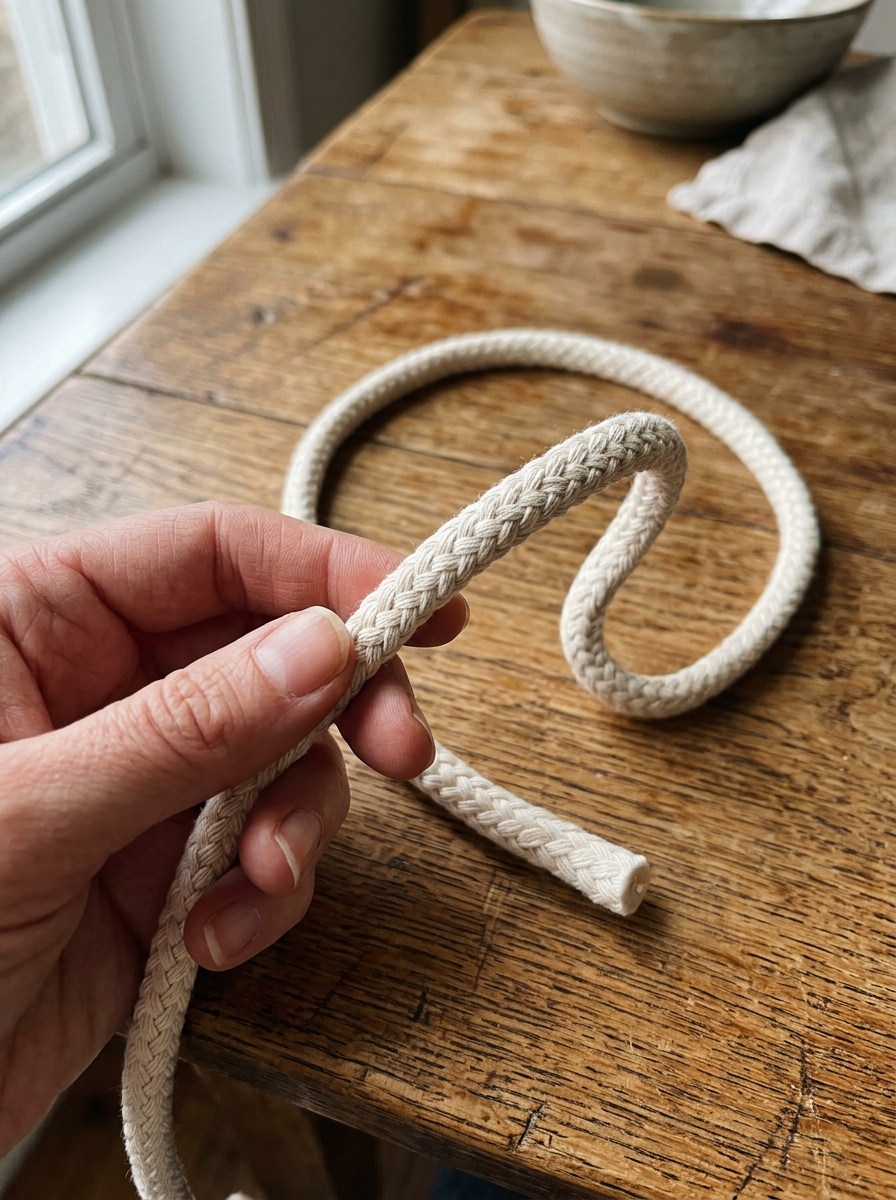
Instead of twisting, braided cord is woven from multiple strands into a tight, tube-like cord. That weave is the key difference: it makes the cord much harder to unravel or fray, even with heavy handling.
Best for: bags, market totes, and any project with sharp, geometric, or structured patterns where you want clean lines.
What it turns out like: knots sit precise and well-defined, with none of the softness or fuzziness you get from twisted cord.
The tradeoff is that you lose the fringe option almost entirely, braided cord resists unraveling by design, so if your project depends on a soft fringed finish, this isn’t the one.
New to fiber art? How to Make a Macramé Plant Hanger: A Beginner’s Guide to Cord, Knots, and Getting It Right First Time is a great next project to practice your first knots.
4. Jute Cord — The Rustic, Earthy Natural-Fiber Cord
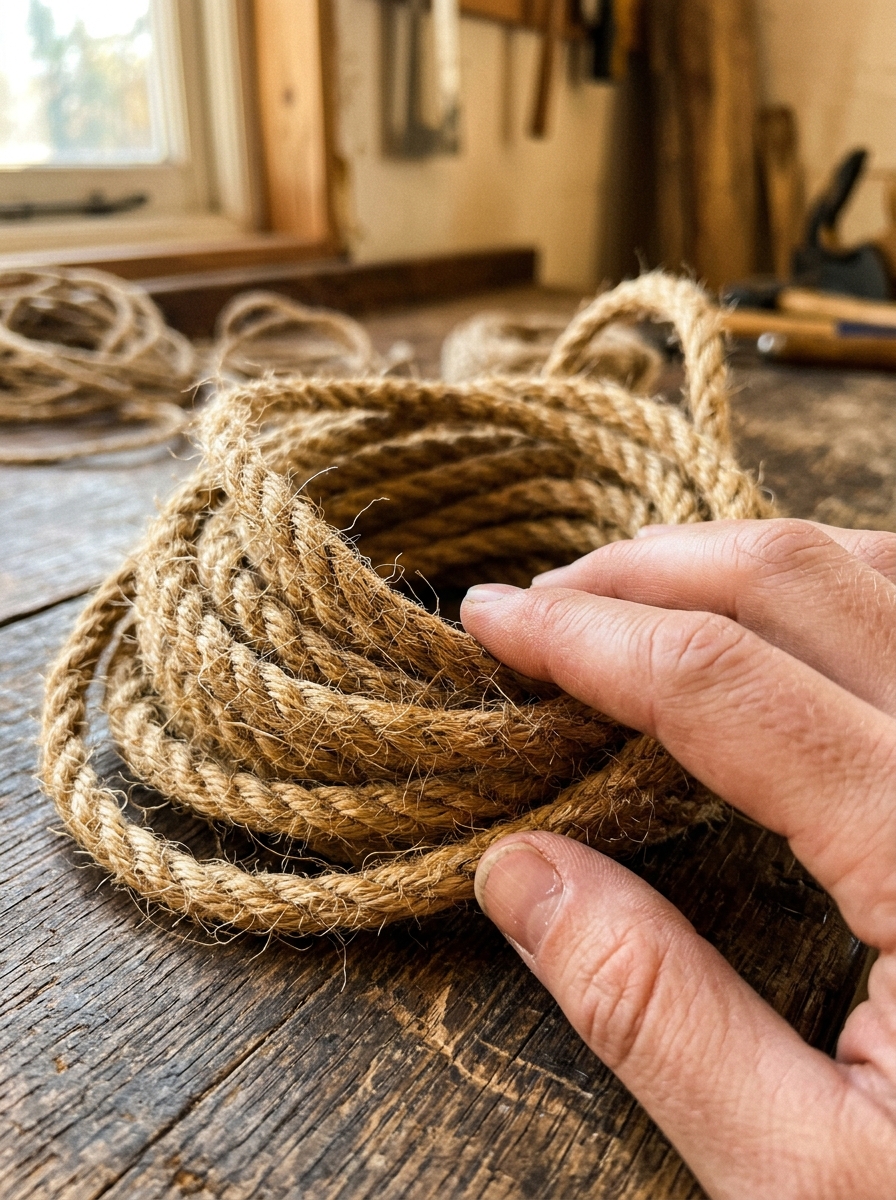
Jute is a coarse, natural plant fiber cord, not cotton at all. It has a rougher hand-feel and a warm, golden-brown tone that’s hard to replicate with dyed cotton.
Best for: rustic wall art, natural-themed accents, and boho decor pieces where texture and earthiness are the point.
What it turns out like: the finished piece reads as raw and organic rather than soft and polished. Because jute doesn’t comb into a smooth fringe and can be rough on the hands during long knotting sessions, it’s not the cord to reach for if you’re making jewelry or anything worn against skin, save it for decor.
5. Hemp Cord — The Strong, Eco-Friendly Choice for Fine Detail
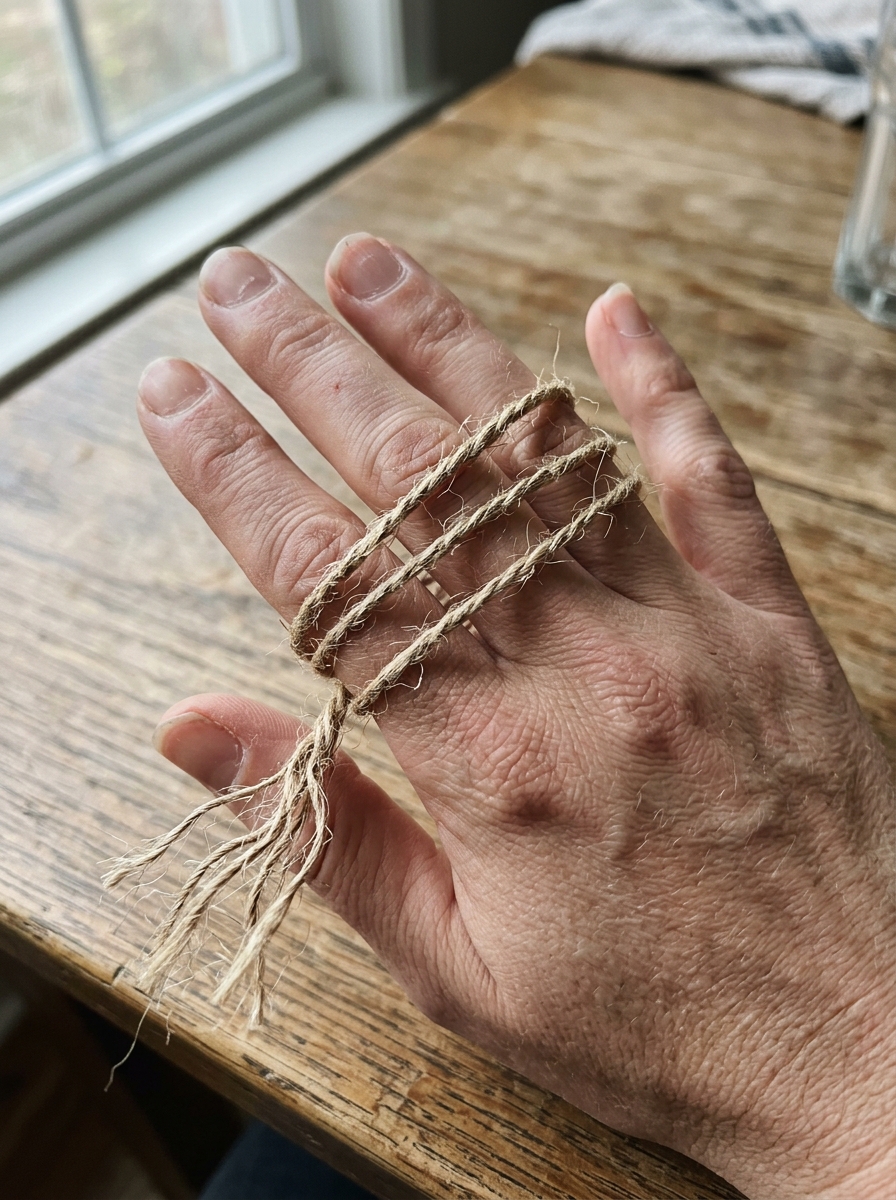
Hemp cord is a natural plant fiber known for its strength relative to its thickness, even at small gauges, it holds tight, precise knots without stretching out of shape.
If you’re searching for the best cords for macramé that are also biodegradable and grown without heavy pesticide use, hemp is one of the few that checks both boxes.
Best for: plant ties, eco-conscious projects, and micro-macramé accents where you need strength without bulk.
What it turns out like: the finished knots stay crisp and well-defined, with a slightly rougher, natural texture than cotton.
One thing to plan for, hemp frays at the cut ends if you don’t seal them, so finishing techniques matter more here than with cotton.
6. Waxed Polyester or Linen Cord — The Precision Cord for Jewelry
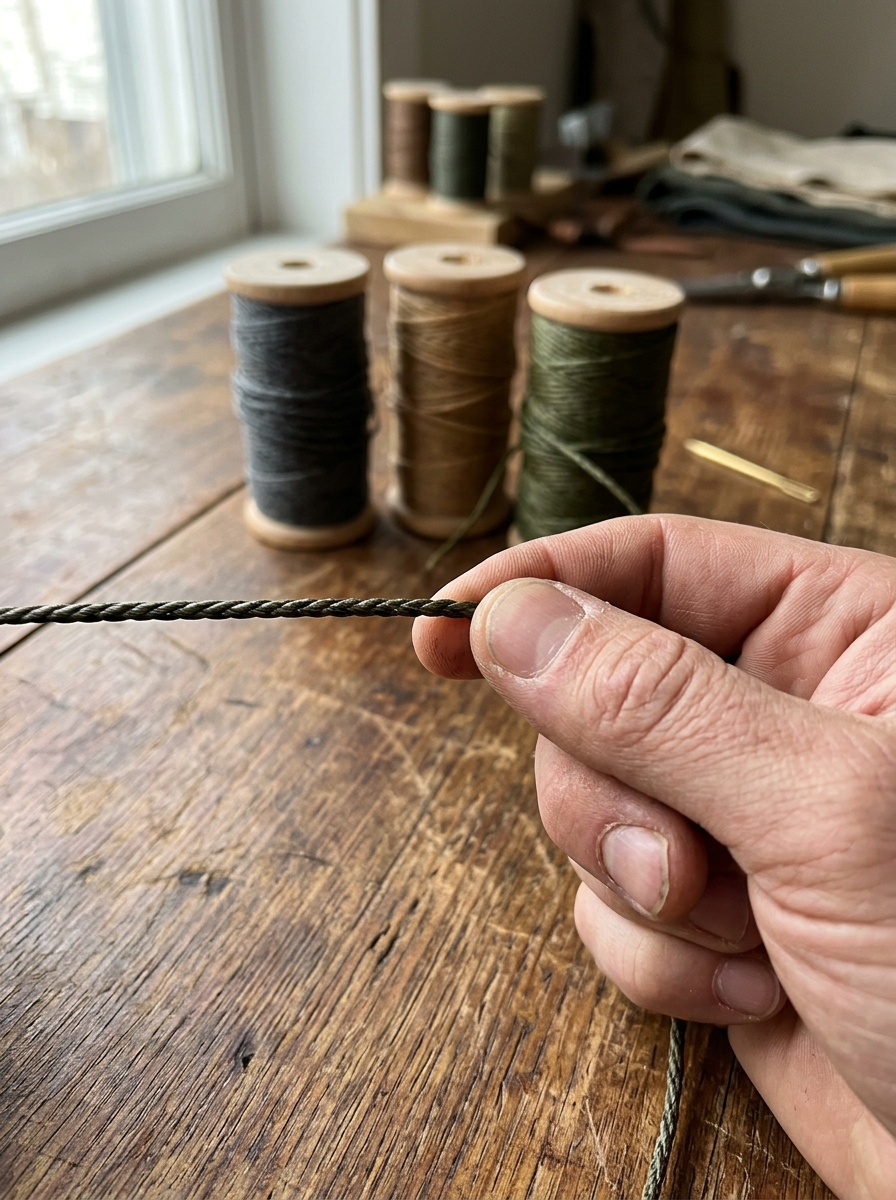
This cord is coated in a thin layer of wax, which keeps it from slipping or loosening as you work, exactly what you need when you’re tying knots small enough to fit on a wrist or earring.
Among the best cords for macramé jewelry specifically, waxed cord is the standard choice for a reason: nothing else holds tension this reliably at a tiny scale.
Best for: bracelets, earrings, and any micro-macramé piece where knots need to stay locked in place.
What it turns out like: tight, clean, slip-resistant knots with a slightly glossy finish.
The tradeoff is that waxed cord doesn’t fringe or fluff, it’s built for control and precision, not texture, so it’s not the cord to reach for if your project’s finished look depends on a soft fringed edge.
7. Paracord or Nylon Cord — The Durable Pick for Outdoor and Everyday Use
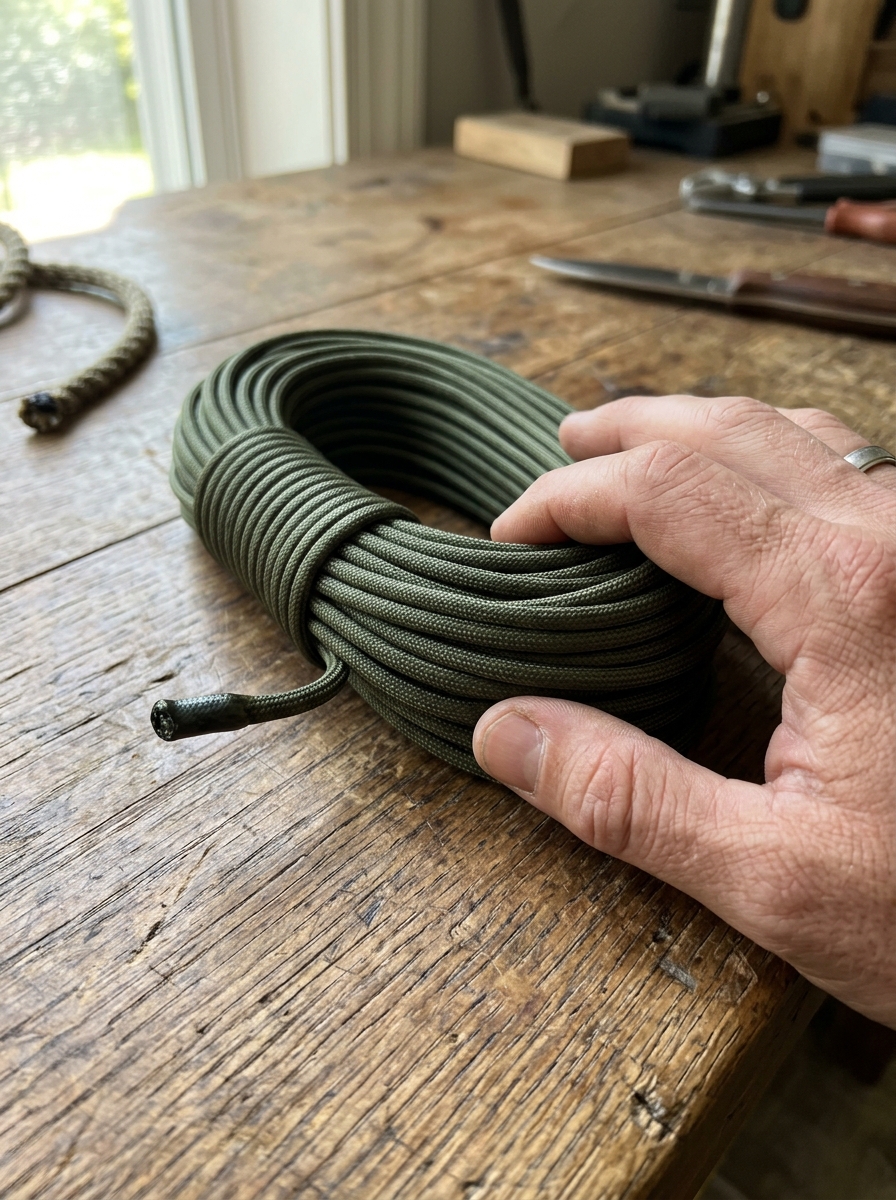
Both are synthetic, which means they resist moisture, won’t rot, and hold up to repeated handling far better than any natural fiber on this list.
When a project needs to survive rain, sun, or daily wear and tear, these are the best cords for macramé that’s actually going to live outdoors or get used hard.
Best for: outdoor plant hangers, dog leashes, keychains, and anything exposed to the elements or heavy use.
What it turns out like: knots stay tight and structured with a smoother, slightly stiffer finish than cotton,less soft to the touch, but built to last.
Nylon also has a practical bonus for beginners: it unravels easily when you make a mistake, so it’s forgiving to practice knots on before committing to a real project.
Match Your Project to Your Cord
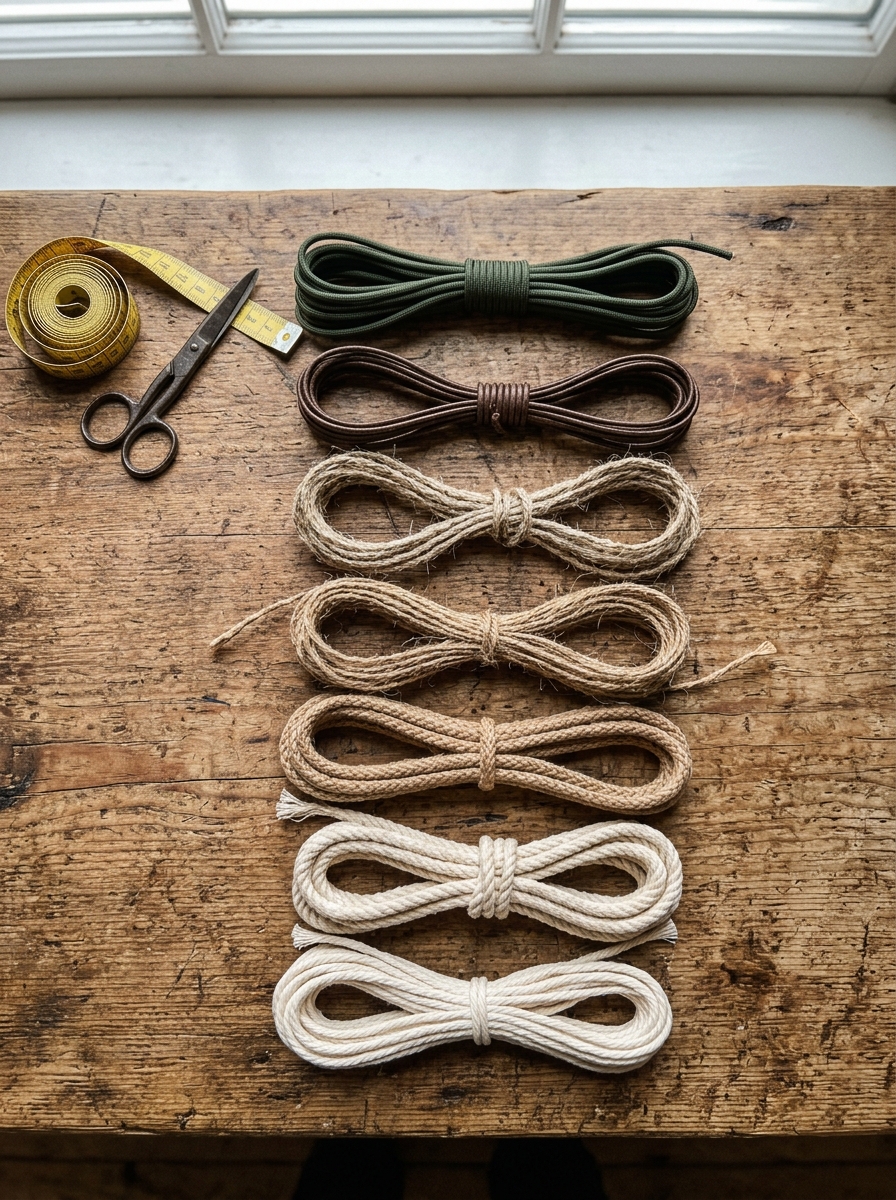
| Project | Best Cord | Why |
| Wall hangings | Single-strand cotton | Brushes into soft, full fringe |
| Plant hangers (indoor) | 3-ply twisted cotton | Holds weight without losing shape |
| Plant hangers (outdoor) | Paracord or nylon | Weather-resistant, won’t rot |
| Market bags / totes | Braided cotton | Won’t fray under daily handling |
| Bracelets / earrings | Waxed polyester or linen | Tiny knots stay locked in place |
| Rustic wall art / boho accents | Jute | Earthy texture, natural look |
| Keychains / dog leashes | Paracord or nylon | Built for repeated wear and tear |
| Eco-conscious or micro-macramé pieces | Hemp | Strong at small gauges, biodegradable |
Most projects can flex between two cords depending on the look you’re after, a plant hanger in 3-ply cotton for indoor softness, or paracord for a balcony that gets rained on. Use this table as a starting point, not a rigid rule.
Once you’ve mastered a simple plant hanger, explore 30 Summer Crafts to Make and Sell at Craft Fairs This Year (With Free Patterns) for more handmade project ideas.
What Size Cord Should You Use?
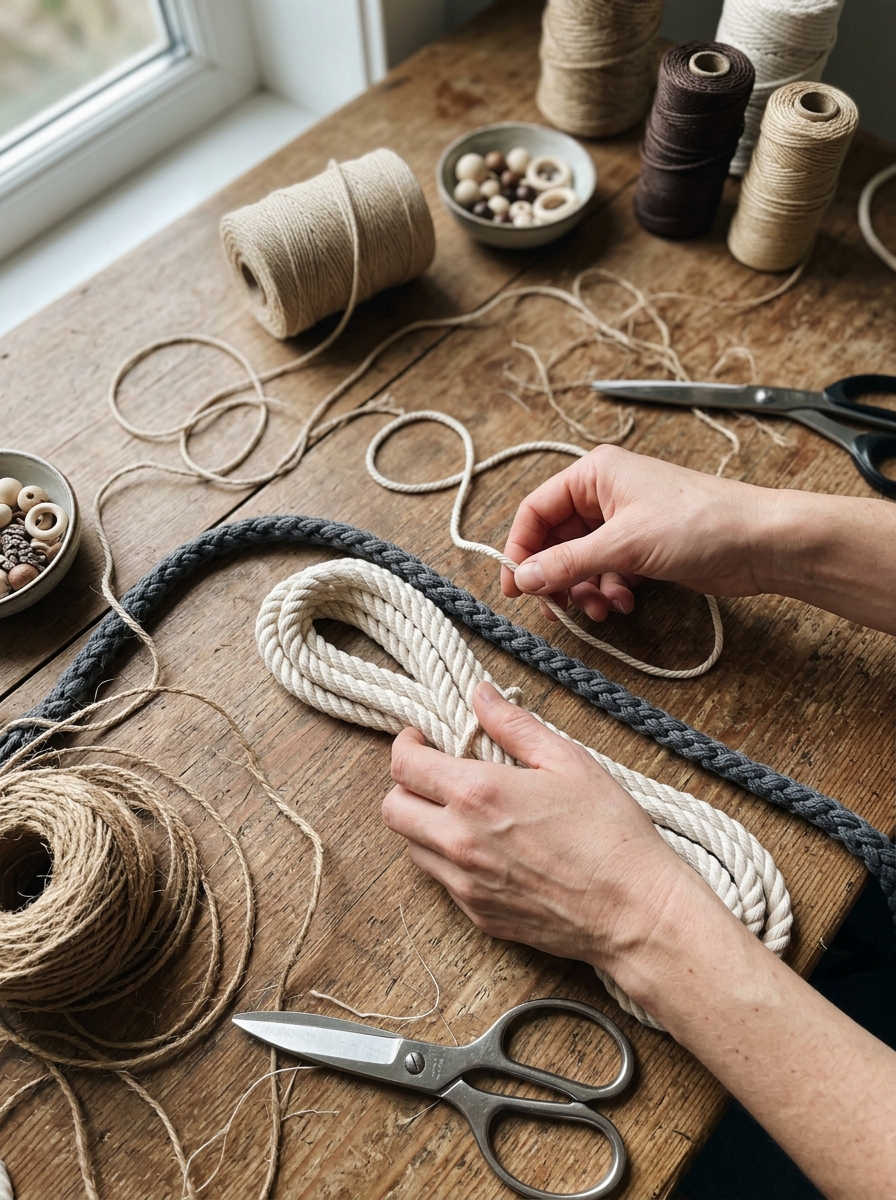
Cord type isn’t the only decision, thickness matters just as much.
As a general rule, thinner cords (1–2mm) work best for jewelry, keychains, and other small, detailed pieces where you want fine, precise knots.
Mid-range cords (3–4mm) are the sweet spot for most wall hangings, giving you clean knot definition without taking forever to finish.
Thicker cords (5mm and up) are best for plant hangers and chunky, statement-style decor, where bigger knots and a bold, oversized look are part of the appeal.
When you’re weighing the best cords for macramé for your next project, matching thickness to scale matters just as much as matching cord type to function.
Conclusion
There’s no single best cord for macramé, just the right one for what you’re making. Match the cord to the job, and the rest of the process tends to fall into place.
Now grab your cord, and let’s get knotting. Share your results or tell us about your project in the comments, you might just be the motivation someone else needs to start theirs.
Frequently Asked Questions
1. How much cord do I actually need to buy?
A safe rule of thumb: cut each cord roughly 4 times the finished length of your project. If you’re folding the cord in half with a Lark’s Head knot to attach it (which most projects start with), double that to 8 times the finished length.
Projects with lots of knots eat up more cord per inch than projects with long, loose hanging sections, so when in doubt, buy more than the calculation suggests , running short mid-project is far more frustrating than having leftover cord.
2. Can I mix different cord types in one project?
Yes, and it’s actually a common technique once you’re past the beginner stage. Combining, say, 3-ply twisted cotton for structure with single-strand cotton for fringe sections gives you both strength and softness in the same piece. The one rule to stick to: keep the thickness (mm) consistent across the cords you mix, or your knots will sit unevenly.
3. How do I stop my cord from fraying at the ends?
For natural fibers like cotton, jute, or hemp, wrap the cut end tightly with tape, apply a small dab of fabric glue or clear nail polish, and let it dry before trimming the excess. For synthetic cords like nylon or polyester, you can carefully melt the cut end with a lighter or hot knife to fuse the fibers, this method only works on synthetic material, so don’t try it on cotton or jute.
4. Is macrame cord washable?
It depends on the material. Cotton cord can usually be hand-washed or spot-cleaned with mild soap and air-dried, though it may shrink slightly the first time it gets wet. Jute and hemp are more sensitive to moisture and can weaken or develop mildew if they stay damp, so they’re best kept dry. Synthetic cords like nylon and paracord are the most water-resistant of the group, which is exactly why they’re the better choice for anything that lives outdoors.
5. Will the color of my cord fade over time?
Yes, especially with prolonged direct sunlight. Natural fibers like cotton and jute fade faster than synthetic cords, which are generally more colorfast. If you’re making something for a sunny window or an outdoor space, choosing a synthetic cord or a deeper, richer color (rather than pastels) will hold up better over time.
6. What’s the single best cord to start with as a complete beginner?
Single-strand cotton cord, in a 3mm or 4mm thickness. It’s the most forgiving to knot with, easy to find, affordable, and gives you a soft fringe finish that makes even a first attempt look intentional. Once you’re comfortable with basic knots, branching into 3-ply or braided cord becomes much easier.
7. Is macrame cord the same thing as yarn or string?
Not exactly, though the terms get used loosely. String is typically a single, thin, unplied strand, not the most common choice for macrame, though it can work for very fine detail.
Yarn is a separate category often used in crochet and knitting, but it can be used in macrame for a softer, fuzzier, more retro look. “Macrame cord” specifically refers to cord built (twisted, plied, or braided) for the structure and tension that knotting requires.