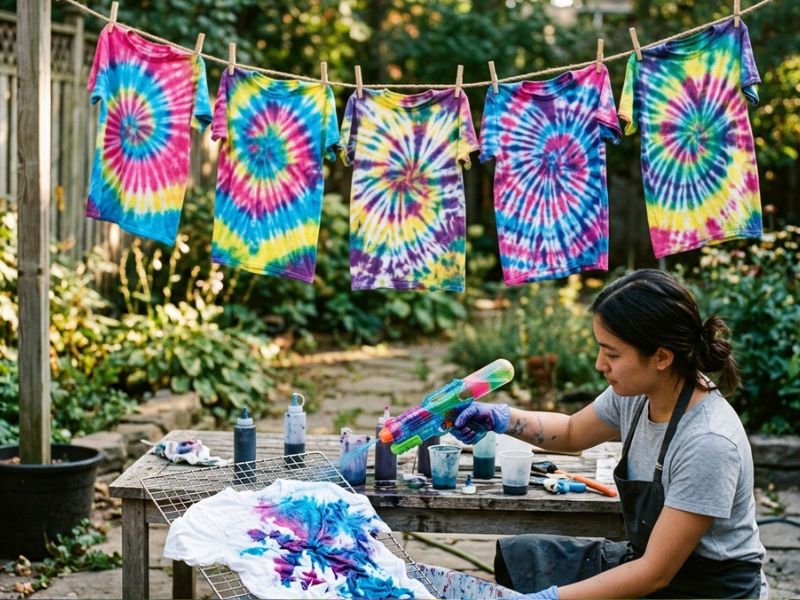
Most people don’t know water gun tie dye exists. Those who do are making bright, colorful shirts at home and selling them online.
Tie dye is not a craft trend. It is a 6,000-year-old art form.
The technique called bandhani originated in what is now Western India around 4,000 to 6,000 years ago, the name itself comes from the Sanskrit word “bandh,” meaning to bind or tie.
Across ancient Peru, Nigeria, Japan, and Southeast Asia, different cultures developed their own versions of the technique entirely independently of each other. In China it was even banned by the Song dynasty in the 10th century, considered too extravagant for ordinary people to wear.
What you think of as a hippie craft from the 1960s was actually forbidden luxury.
And today, you can recreate that same ancient art form in your backyard, with a water gun, and sell the results from your phone.
That is exactly what this post is going to show you. How to make bright, colorful tie dye shirts at home using a water gun, and how to turn them into real income, with color, craft, and the right knowledge.
Why Water Gun Tie Dye Is Different (And Better For Selling)
Most people learn tie dye the traditional way, rubber bands, folding, twisting, soaking. It works. But it is slow, and every shirt looks like a version of the same handful of patterns everyone already knows.
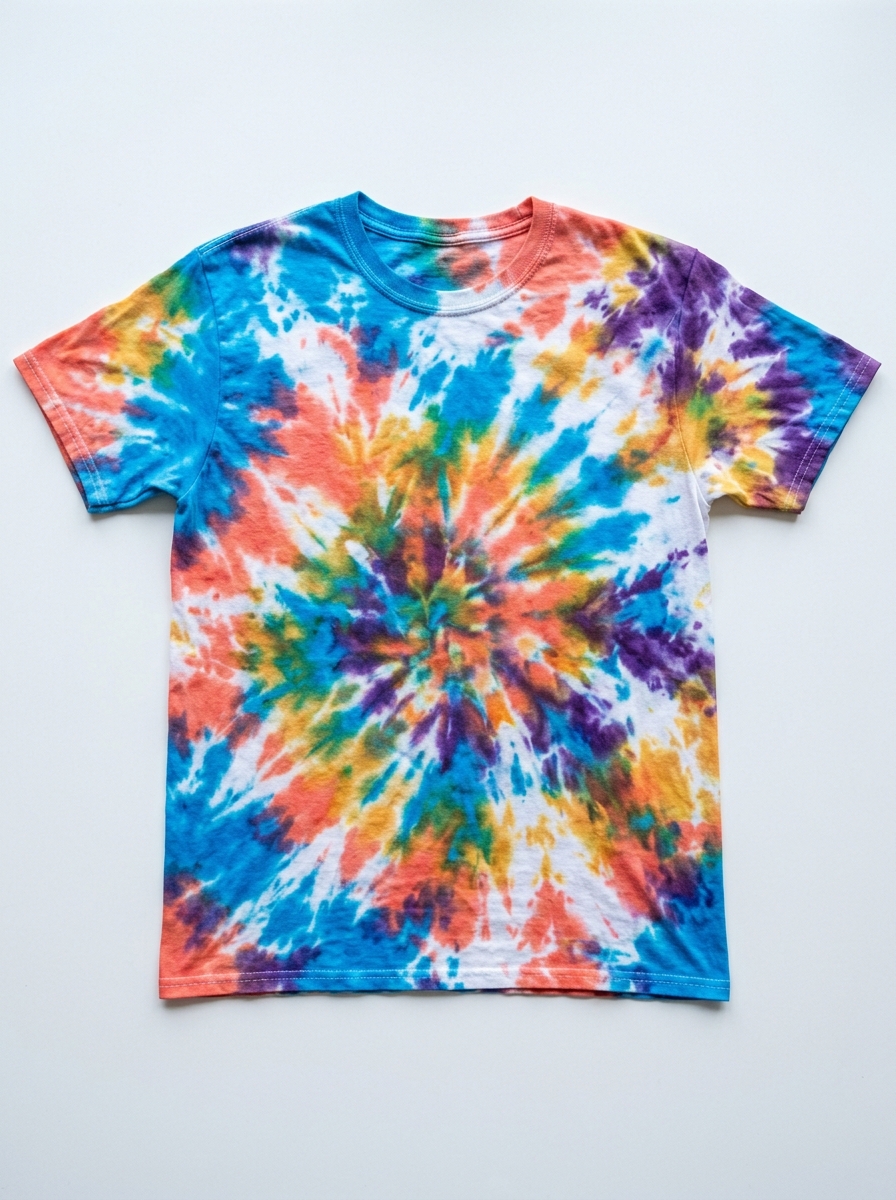
Water gun tie dye breaks that entirely.
Instead of controlling where the dye goes through folds and ties, you control it through distance, angle, and pressure. Close range gives you bold, concentrated bursts of color.
Further away creates soft, blended splashes. The result is a shirt that looks like nothing else on the market, and that matters enormously when you are trying to sell.
Tie dye shirts are social-media-friendly with high potential to go viral on TikTok and Instagram, and they face less direct competition than basic tees, giving your brand a strong, distinct personality.
But only if your shirts actually look different from what everyone else is making. Water gun tie dye gives you that edge by default.
There is also a practical business advantage. The traditional method requires you to tie rubber bands around fabric in specific ways before a single drop of dye touches the shirt.
That takes time, and time is money when you are making multiple pieces to sell. With a water gun, your setup is faster, your process is faster, and no two shirts ever come out the same.
That last point is your biggest selling argument. Buyers on handmade marketplaces will not pay a premium for something they could make themselves with basic craft store supplies.
But a shirt that is genuinely one of a kind, that could not be replicated on a production line, that is something people pay real money for.
Starting a creative journey becomes easier with How to Start Embroidery as a Beginner -Step-by-Step Guide for Complete Beginners, especially when basic techniques are explained in a simple, structured way.
What You Actually Need
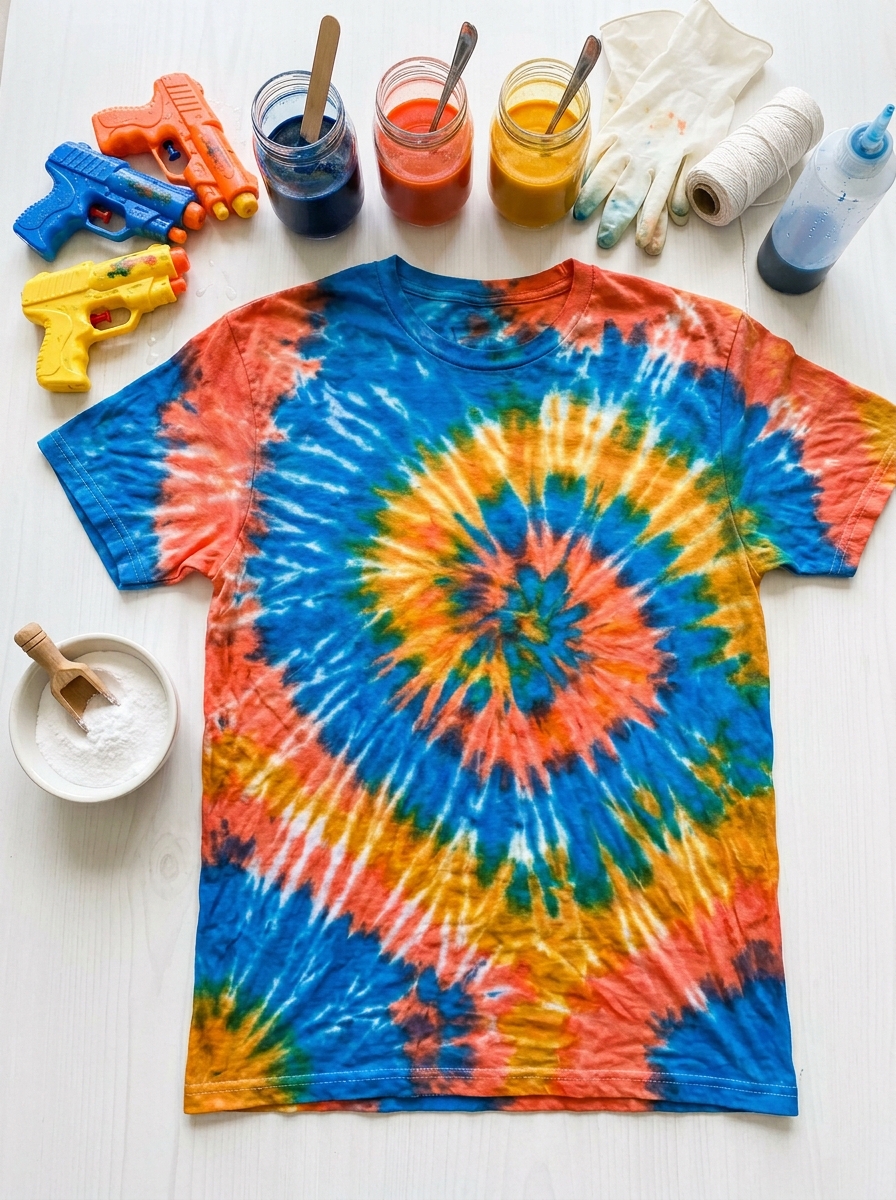
Before you pick up a water gun, you need to understand something: the materials you choose determine whether your shirts are still vibrant after fifty washes or faded after two. If you are making shirts to sell, this section is the difference between repeat customers and refund requests.
✅ The Shirts — Fabric Is Everything
The best fabric for tie-dye is 100% cotton because it has high absorbency and works well with fiber-reactive dyes. But not all cotton is the same, and this is where most beginners make an expensive mistake.
There are two main types of cotton construction you will encounter when buying blank shirts:
Carded Open-End (COE) cotton — this is what budget blank shirts like the Gildan 5000 Heavy Cotton are made from. The Gildan 5000 weighs 5.3 oz and uses COE cotton, which is coarser compared to combed cotton and offers a more structured feel. It takes dye well and is affordable for bulk production, making it a solid choice when you are starting out and managing costs.
Combed and Ring-Spun cotton — this is the premium tier. Bella Canvas uses 100% Airlume combed and ring-spun cotton at 4.2 oz, offering a soft, smooth feel, the Airlume process removes impurities from the cotton fibers, resulting in a cleaner surface.
Combed and ring-spun cotton shirts hold up better in the wash and have a higher quality look and feel compared to open-end cotton yarn shirts. For shirts you plan to sell at $25 to $35 and above, this is what you want, buyers can feel the difference the moment they put it on.
What you must avoid entirely: polyester has a dense molecular structure that resists absorbing dye, and colors on polyester often appear pale, uneven, or fade quickly, making it unsuitable for home tie-dye projects.
This includes any blend that contains polyester. Always check the label before you buy. If it says 50/50 cotton-polyester, the dye will only bond with the cotton portion, and your colors will look washed out from day one.
The rule is simple: 100% cotton only. COE cotton for practice batches and budget lines. Combed ring-spun for your premium pieces.
✅ The Dye — This Is Where Most People Go Wrong
This is the single most important decision you will make, and most tutorials gloss over it completely.
There are two categories of dye that people commonly use for tie dye, and they are not equal:
All-purpose dyes like Rit are widely available and easy to find. But here is what they will not tell you on the box: all-purpose dyes don’t form a covalent bond with fabric, instead they rely on weaker hydrogen bonds to cling to the fiber, which are easily broken by water and detergent.
This is why all-purpose dyes are notorious for fading quickly. For personal projects, that may be acceptable. For shirts you are selling, it is not.
Fiber-reactive dyes — specifically Procion MX, are in a completely different category.
Sodium carbonate raises the pH of the solution to between 10 and 11, allowing deprotonation to occur where the cellulose fabric loses some of its positively charged hydrogen atoms, and considering that covalent bonds are one of the strongest bonds, it is hard for the dye to be removed after it has bonded, so the color can last a very long time without fading.
In plain terms: the dye does not sit on top of the fabric. It becomes chemically part of it.
For pure cotton, Jacquard Procion MX delivers the highest colorfastness through covalent fiber bonding. This is the dye professional tie dye sellers use. It is available online and at craft stores, it works in cold water, and the color difference compared to all-purpose dye is immediately visible.
One honest note: acrylic paint mixed with water can create a watercolor effect on shirts, but the color may fade a little after a few washes.
It is a fun and accessible starting point for experimenting with the water gun method, but if you are selling, invest in proper fiber-reactive dye. Your reputation depends on it.
Detailed stitching becomes much less intimidating when you follow beginner-friendly guides like 19 Easy Hand Embroidery Projects That Look Like You’ve Been Stitching for Years, where small projects help build confidence fast.
✅ The Water Guns — Size Matters More Than You Think
Not all water guns give the same result, and the size you choose directly affects the style of shirt you produce.
Small water guns give you precision. You can aim at specific areas, layer colors deliberately, and create more controlled patterns.
They hold less dye, which actually slows you down in a useful way, smaller guns had to be refilled more often, but this actually slowed down the process in a good way, giving more time to be intentional about placement.
Large water guns create bold, dramatic splashes and are better for shirts where you want a wilder, more abstract look. They cover surface area faster but give you less control.
A practical tip that prevents one of the most common mistakes: color-code your dye by matching it to the gun color, blue dye in the blue gun, for example, to keep colors organized and prevent muddy mixing.
When colors blend unintentionally on the shirt, you get brown. This simple system prevents it entirely.
✅ The Other Essentials — None Of These Are Optional
-
Soda ash (sodium carbonate) —
This is not a nice-to-have. Soda ash raises the pH of your fabric, which helps fiber-reactive dyes bond to the fibers. Without it, your colors will likely end up pale and will continue to fade over time.
You can find it on Amazon, at Dharma Trading, or even in the pool supply aisle at large supermarkets sold as pH increaser, it is the same chemical. Mix approximately one cup of soda ash per gallon of warm water for your pre-soak solution.
One important note: soda ash works specifically with fiber-reactive dyes like Procion MX. It will not m
-
Cardboard insert —
slide a piece inside the shirt before you start. This stops dye from bleeding straight through to the back and giving you a shirt with identical fronts and backs instead of two distinct surfaces.
-
Gloves —
Fiber-reactive dyes stain skin. Wear them every single time without exception.
-
Drop cloth or plastic tablecloth —
protect your work surface. Procion MX dye will permanently stain concrete, wood, and fabric it was not meant to touch.
-
Ziplock bags —
Once you have applied the dye, the shirt goes into a sealed bag for the curing period.
This traps moisture and heat, which is what allows the dye to fully bond with the fiber. Do not skip this step thinking air-drying will achieve the same result. It will not.
Creative sellers often start with simple seasonal items, and 30 Summer Crafts to Make and Sell at Craft Fairs This Year (With Free Patterns) gives practical ideas that can actually turn into quick weekend profit.
The Step-By-Step Tutorial (Read Every Word)
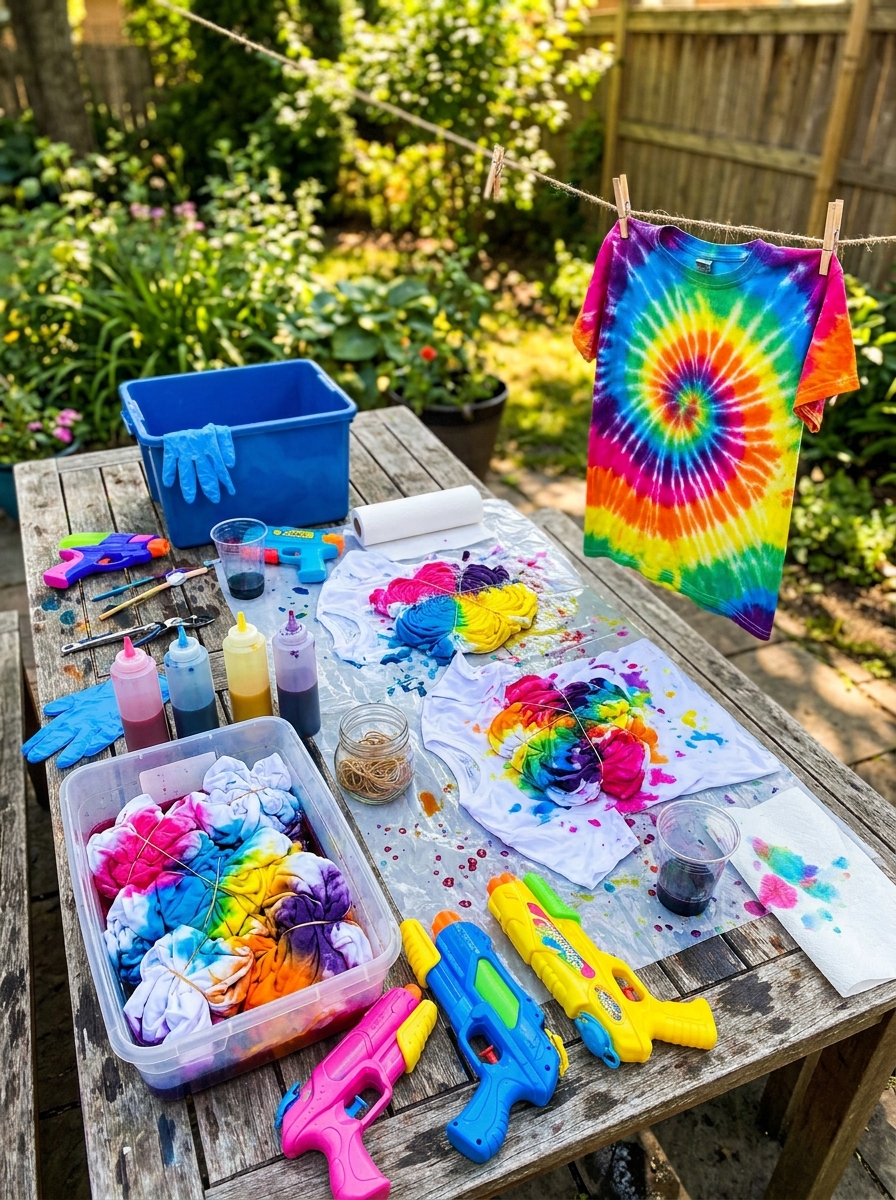
Before you touch a single thing, read this entire section first. Tie dye is a chemical process, not just a craft activity.
Each step builds on the one before it. Skipping one or doing them out of order does not just produce a bad result, it can ruin the shirt entirely.
Step 1 — Pre-Wash Your Shirt Before Anything Else
Most beginners skip this. Do not.
Brand new shirts come treated with factory sizing, a starch-like coating applied during manufacturing to make shirts look crisp on the shelf. It sits on top of the cotton fibers and blocks dye from penetrating. Dye a shirt straight out of the packaging and you will get patchy, pale, uneven results.
What to do:
- Machine wash on a normal cycle with a small amount of laundry detergent
- Use hot water to break down the factory coating
- Remove any oils, dirt, or sizing that might resist the dye
- Do not use fabric softener, it coats fibers the same way factory sizing does
- Do not use a dryer sheet either
Your shirt does not need to be fully dry before the next step. Damp is fine.
Step 2 — Soak In Soda Ash (This Is What Makes Color Permanent)
This is the most important step in the entire process. Without soda ash, your colors will end up pale and will continue to fade over time.
Soda ash is sodium carbonate, a white powder available on Amazon, at Dharma Trading Company, or in the pool supply aisle of large supermarkets sold as “pH increaser.” It is the same chemical.
Why it works:
- Soda ash raises the pH level of the fabric, activating the molecules so they can better absorb the dye, resulting in brighter and longer-lasting colors
- This triggers deprotonation, where the cellulose fabric loses some of its positively charged hydrogen atoms, allowing the dye to form one of the strongest chemical bonds possible, making it extremely hard to remove after bonding
- The dye does not stain the shirt. It becomes chemically fused with it
How to do it:
- Mix one cup of soda ash into one gallon of warm water and stir until fully dissolved
- Submerge your shirt completely and soak for 15 minutes
- Wearing gloves, remove the shirt and wring out gently, damp but not dripping
- Do not rinse the shirt after soaking, the soda ash must stay in the fibers when dye is applied
Home tools can turn into income opportunities when you learn techniques from 11 Wood Burning Crafts You Can Make at Home with Basic Tools That Turn into Income, especially when starting with basic patterns and low-risk materials.
Step 3 — Set Up Your Workspace Properly
Do this before you open a single bottle of dye. Once dye is out, it moves fast and stains permanently.
Setting up:
- Slide a piece of cardboard inside the shirt, any cut-down shipping box works
- This keeps the shirt flat and stops dye bleeding straight through to the back
- Lay it flat on a drop cloth or plastic tablecloth, or hang it between two fixed points outdoors
- Hanging lets you walk around the shirt and shoot from multiple angles. this produces more interesting results
- Put your gloves on now and keep them on for the entire session
- Work outside if at all possible, dye spray travels further than you expect and permanently marks concrete, wood, and any fabric it lands on
Step 4 — Mix Your Dye And Load The Water Guns
Mixing:
- Dissolve Procion MX dye powder in warm water first, then transfer to your water guns
- Pre-mix in a plastic cup or jug, it makes loading cleaner and more controlled
- Color-code your guns, blue dye in the blue gun, red in the red gun, to keep colors organized and prevent muddy mixing
Choosing your colors:
- Limit yourself to 3 to 4 colors per shirt to avoid colors mixing into muddy brown
- More color does not mean more vibrant, it means more brown
- Warm palettes work well together: red, orange, yellow
- Cool palettes work well together: blue, purple, teal
- Colors directly opposite each other on the color wheel, like red and green, will neutralize each other into grey or brown where they mix, so plan before you shoot.
Beginners who want to sell handmade products without expensive machines often enjoy 10 Beginner-Friendly Vinyl Crafts to Make and Sell Without a Cricut at Home, which shows how to start small and still create market-ready pieces.
How To Make Water Gun Tie Dye Colors That Actually Stay Bright
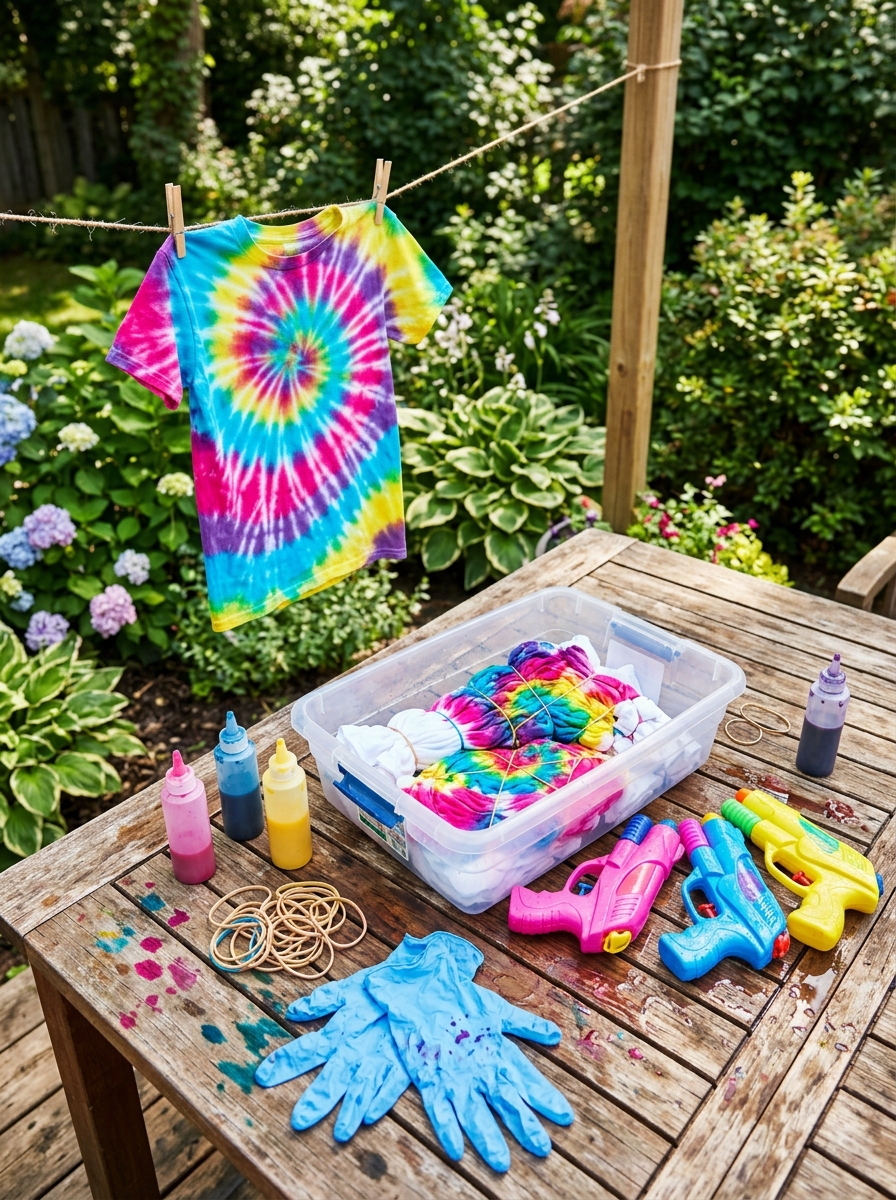
Anyone can make a tie dye shirt. Not everyone can make one that still looks vibrant after a year of washing. That gap is where your business either builds loyal customers or drowns in complaints.
✅ Start With The Right Dye — Everything Else Follows From This
The most important thing you can do to ensure your tie dye does not fade is to select high-quality, colorfast dyes, and for cotton, that means fiber-reactive dye.
If you use fiber-reactive dyes correctly, they are permanent and will not fade even after repeated washings. The dye for
All-purpose dyes like Rit are more like stains than true dyes, they do not bond to fabric the same way and will fade over time, especially in the wash. For shirts you are selling, they are not a viable option.
✅ Soda Ash Is Non-Negotiable
The only thing that sets fiber-reactive dyes on cotton is soda ash. No substitute. No shortcut. It creates the alkaline environment the dye needs to chemically fuse with the fiber. Skip it and even the best Procion MX dye will wash out over time.
✅ The Vinegar And Salt Myth — Stop Doing This
This is one of the most repeated pieces of bad advice in tie dye, and it is everywhere on Pinterest.
Vinegar will not help set fiber-reactive dye on cotton fabric, nor make it more resistant to fading. Fiber-reactive dyes on cotton require an alkaline environment to bond, vinegar is acidic and would actually work against the process.
Salt is equally ineffective, it is not a dye fixative and will not make your colors more permanent or colorfast.
Soda ash is the only fixative that works on cotton. That is the complete answer.
Handmade gifting becomes more profitable when inspiration comes from 10 Handmade Boho-Inspired Gift Ideas You Can Make and Sell From Home, where aesthetic appeal meets simple production methods.
✅ Cure At The Right Temperature
Let your water gun tie dye cure at temperatures above 70°F (21°C), cooler temperatures slow the reaction and produce pale, faded results.
- 70°F — 24 hours
- 80°F — 4 hours
- 90°F — 2 hours
Do not exceed 24 hours regardless of temperature. Beyond that, dark odd splotches appear where the fabric begins to dry out inside the bag.
✅ Rinse Thoroughly — Every Single Time
After curing, unfixed dye sits loosely on the fabric surface. Proper rinsing removes it, reducing color bleeding and ensuring the clarity of the design. Skip this and your customer’s first wash ruins their shirt, and your reputation.
- Rinse under cold running water, never wring or twist
- Keep going until the water runs completely clear
- Machine wash alone on cold with Synthrapol detergent
- Hang to air dry in shade, dryer heat damages fabric and causes fading.
✅ Include A Care Card With Every Order
Tell customers: cold wash, inside out, hang dry in shade, away from direct sunlight. A small printed card costs almost nothing and eliminates the most common complaints entirely. It also signals you are a professional, and that supports the price you charge.
Clay crafting becomes less overwhelming with step-by-step ideas from 12 Polymer Clay Crafts You Can Make and Sell from Home for Beginners, helping new creators build sellable items without stress.
Turning Your Water Gun Tie Dye Into Real Income
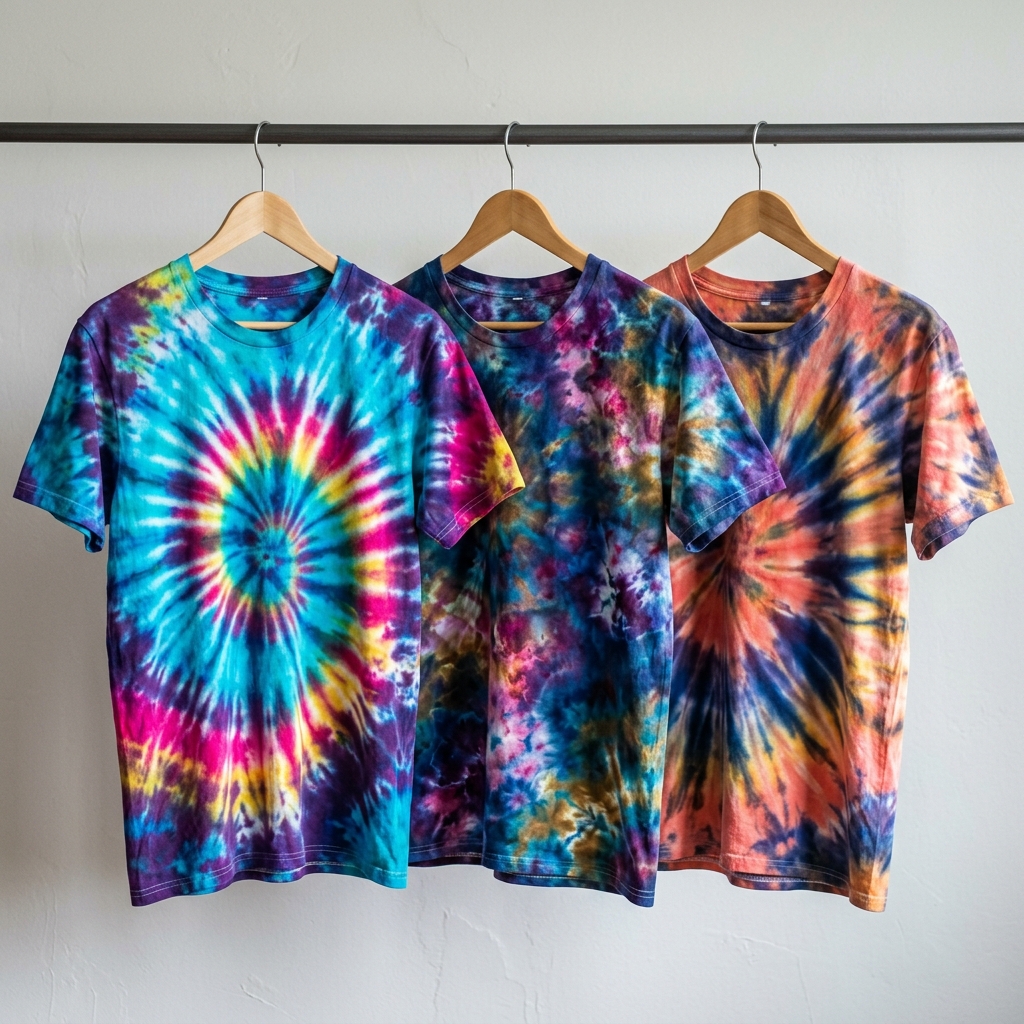
Know the real platforms, and the real decisions that determine whether your water gun tie dye shirts make you money or just cost you time.
What It Actually Costs To Start
The cost of entry is low, around $500, and the profit margins are great, with everything done from the comfort of your home. Here is what that $500 realistically covers:
- Blank white shirts (bulk order of 20–30)
- Procion MX fiber-reactive dye in 4–6 colors
- Soda ash fixer
- Water guns, gloves, drop cloths, Ziplock bags
- Synthrapol detergent
A frequent oversight is forgetting to budget for practice items and mistakes, build a 10 to 15% buffer into your cost estimates. Your first few shirts are learning shirts. Factor that in from the start.
Small business ideas become clearer when you explore Low-Cost Craft Business Ideas for Beginners That Require No Expensive Tools or Skills, which helps turn everyday creativity into real income opportunities.
What You Can Realistically Charge
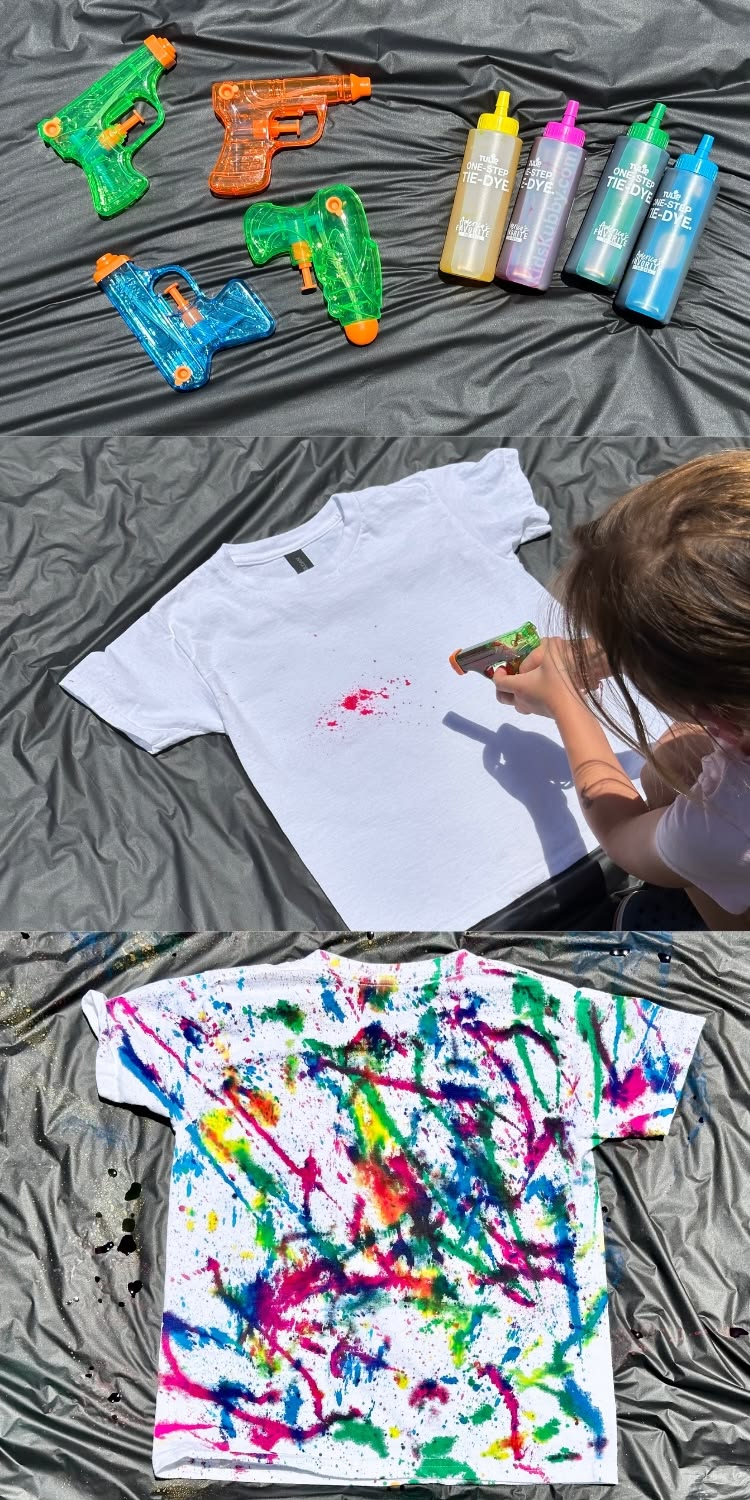
Photo credit: @ Kids Kubby
Custom t-shirt prices typically range from $20 to $40 per shirt, with production costs usually between $5 and $15, giving profit margins of 50 to 70% depending on how you price.
Amateur tie-dyers selling random patterns can expect around $15 per shirt. Using higher-quality materials with intentional, recognizable designs pushes the average price point to $30 and above.
The difference between a $15 shirt and a $35 shirt is not always the materials, it is the perceived value. Premium blank shirts, consistent color combinations, and professional photography all push your shirts into the higher bracket.
Water gun tie dye shirts are genuinely one of a kind. Price them that way. Do not compete with mass-produced tees on price, you will lose. Compete on uniqueness, quality, and the story behind the craft.
Know Your Real Costs Before You Price Anything
If you are selling on Etsy, fees eat into your margin faster than most beginners expect.
Etsy charges a $0.20 listing fee per item, a 6.5% transaction fee on every sale, and a payment processing fee of 3% plus $0.25 per transaction. When you add these up, Etsy keeps around 20 to 25% of the total order value.
On a $30 shirt, that is roughly $7.50 going to Etsy before you factor in materials, shipping, or your time.
Aim for at least a 40% margin after all costs, if your shirt costs $10 to make, price it at $16 to $20 minimum to stay sustainable. For handmade, one-of-a-kind water gun tie dye shirts, $25 to $35 is a realistic and defensible price point.
Candle making feels more professional when guided by How to Make Scented Candles at Home That Look and Smell Professional– Step-by-Step Guide, where presentation and scent balance are broken down clearly.
Where To Sell
Etsy — the strongest starting platform for handmade goods. It has a built-in audience actively seeking creative and handmade items, with tools to improve product visibility. The fees are real but so is the traffic.
Instagram Shop — tie dye shirts are social-media-friendly with high viral potential on TikTok and Instagram. Post your process, not just the finished shirt. Behind-the-scenes water gun tie dye content performs well because it is visual, surprising, and satisfying to watch.
Local markets and pop-up events — zero listing fees, immediate cash, and face-to-face feedback on which designs people actually reach for. Invaluable when you are starting out.
Facebook Marketplace — good for local sales with no shipping complexity. Useful for moving volume quickly while you build your online presence.
What Actually Sells
If you are selling tie-dye products, use premium ingredients that consumers cannot easily purchase themselves, because if you use basic craft store dyes, buyers could make the same thing themselves and have no reason to buy from you.
Your water gun tie dye shirts need to look like nothing a buyer could recreate at home on a Saturday afternoon. That means:
- Intentional, repeatable color combinations, not random splatter
- Consistent quality across every shirt, buyers who love one will return for another
- Unique designs that stand out rather than looking like a shirt made at a child’s birthday party, custom color combinations build loyal customers over time
- Professional photography, a great shirt photographed badly will not sell
Build a recognizable visual identity. When someone sees your shirt in the wild and asks where it came from, your name should come to mind, not just some tie dye shop.
Jewelry making feels more achievable with How to Make Resin Jewelry with Real Flowers That Looks Professional at Home, where natural materials are turned into polished, sellable designs.
Conclusion
Your First Water Gun Tie Dye Shirt Is Closer Than You Think
Today you can make it in your backyard with a water gun and sell it to someone across the world.
The water gun method is genuinely the most beginner-friendly way to start tie dye, because you need color, a water gun, the right dye, and everything you learned in this guide.
So:
- Grab your supplies — 100% cotton shirts, Procion MX fiber-reactive dye, soda ash, and a water gun
- Make your first shirt this weekend
- Take photos in natural light before anything else
- List it and see what happens
You do not need a perfect setup, nor do not need ten designs ready. You need one good shirt and the confidence to put it out there.
Made something you are proud of? Share your results and let others see what the water gun method can really do.