Most rooms look cheap for one reason. Learn how to decorate your home on a budget and fix it this weekend.
Walk into a beautifully designed space and your first instinct is to assume the owner spent a fortune. The plush textures, the way the light falls, the furniture that seems to belong exactly where it sits, it all whispers money.
But spend enough time around professional interior designers and you’ll quickly realise, that’s rarely the case.
The real difference between a home that looks curated and one that looks chaotic isn’t budget. It’s knowledge, specific, learnable principles that designers use on every single project, regardless of cost.
Principles like how to make a small room feel twice its size, why some colour combinations feel effortless while others feel off, and how a single well-placed object can pull an entire room together.
In this guide, you’ll learn exactly how to see your space the way a designer does, and how to transform it without blowing your budget.
From colour and light to furniture arrangement and the small details that make a big difference, everything you need is right here.
Until now, this was knowledge you had to pay for, but if i dont do it for, who will?.
A room that feels cold and unlived-in isn’t a furniture problem — it’s a feeling problem, and these DIY Room Decor Ideas on a Budget That Make Your Space Feel Warm and Lived-In fix exactly that without touching your savings.
Stop Buying and Start Editing
Before you spend a single penny, I need you to do something that feels counterintuitive, stop adding and start removing.
The mistake most people make when decorating on a budget is thinking the room needs more. More cushions, more shelves, more trinkets picked up on sale. It doesn’t. What it needs is less of the wrong things.
Walk through your space right now and be ruthless. That vase you’ve had since 2019 but never really loved? Out.
The three picture frames that don’t relate to each other at all? Take them down. The surfaces piled with things that just… landed there over time? Clear them.
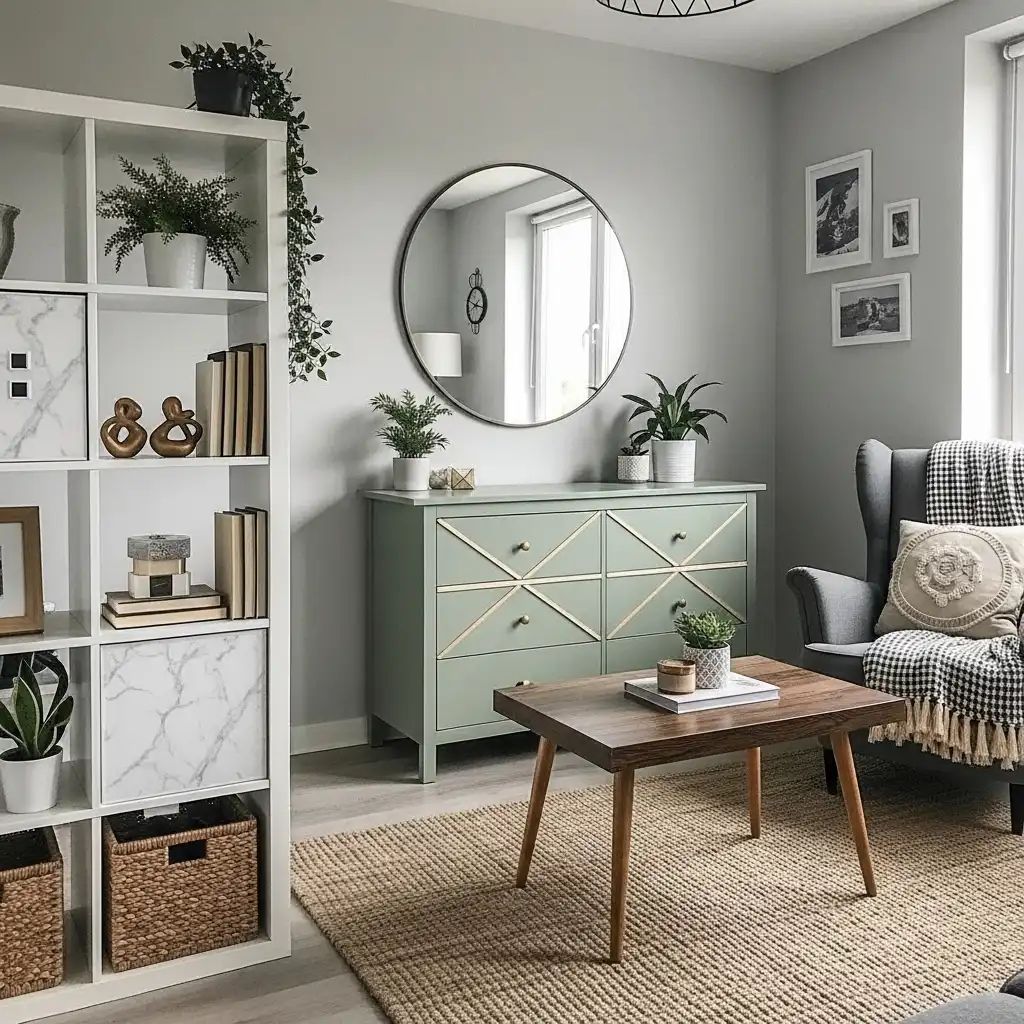
Here’s what nobody tells you, a clean, edited room always reads more expensive than a full, cluttered one. Always. Because clutter doesn’t just look messy, it makes even beautiful pieces invisible.
Once you’ve stripped it back, then look at what you actually have. Rearrange your furniture. Move that lamp to a different corner. Take one piece you love and let it breathe on its own instead of competing for attention.
That’s not decorating from scratch. That’s curation. And curation is exactly what designers get paid to do.
Your home probably doesn’t need more decor. It needs you to finally edit it.
Sustainable living doesn’t have to be expensive or complicated, and these Eco-Friendly DIY Projects for Sustainable Living at Home That Save Money and Time prove you can be kinder to the planet while actually spending less.
Every Room Needs One Focal Point, Most Have Zero
If you’ve ever looked at a room and felt something was off, even when everything was clean and tidy, this is probably why. No focal point. And it’s one of the most common reasons budget spaces look unfinished, no matter how much effort went into them.
When you’re figuring out how to decorate your home on a budget, this is the principle that gives you the biggest return for the least spend.
A focal point isn’t a luxury, it’s the backbone of a well-designed room. It’s the thing your eye travels to first, the anchor that makes everything else around it feel intentional. Without one, the eye wanders. The room feels restless and unresolved.
Well, you don’t need to buy anything to create one.
-
Hang your curtains at ceiling height:
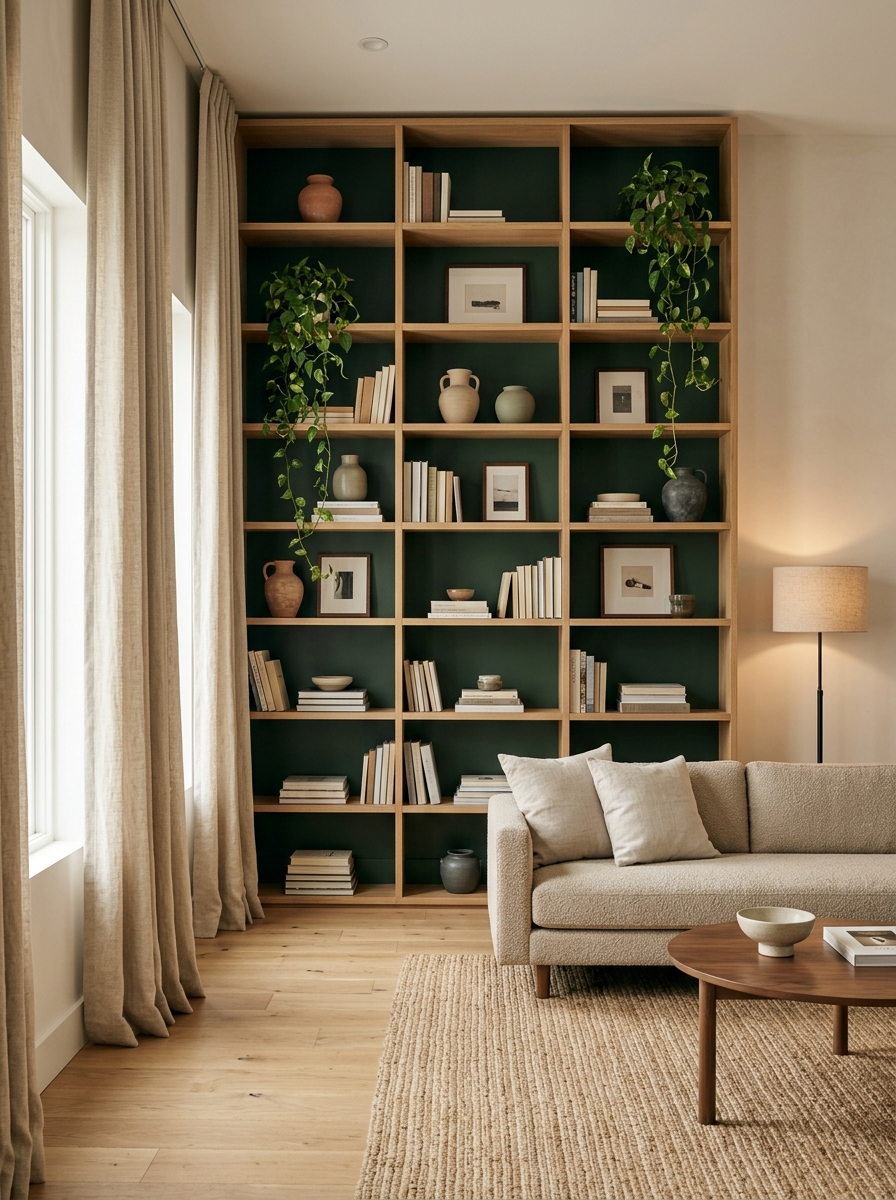
Most people hang curtain rods just above the window frame. Move them up, all the way to just below the ceiling. Let the curtains drape down to the floor. That single change draws the eye upward, makes your walls feel taller, and transforms a flat window into a proper feature. Zero cost if you already own the curtains.
2. Style your bookshelf like a designer would:
A bookshelf crammed with books is storage. A bookshelf with books mixed with vases, framed photos, small plants, and objects at varying heights? That’s a focal point. Paint the back panel a deep, contrasting colour and suddenly it becomes the most intentional corner in the room.
3. Fix your TV wall:
A flat screen on a bare wall isn’t a focal point, it’s an eyesore. Frame it. Add shelves on either side, a media console beneath it, or surround it with objects that use the full height of the wall. The goal is to make the TV feel like part of a considered arrangement, not something that just got mounted and forgotten.
Pick one wall. Give it a job. Everything else in the room will feel more pulled together because of it , and your space will finally start to look the way you’ve been trying to make it look all along.
Turning secondhand pieces into high-end home décor becomes easier to visualize through 10 Thrift Store Furniture Flips That Look Expensive on a Budget, where simple upgrades completely change the look of ordinary furniture without heavy spending.
The Thrift Store Is Your Most Underrated Design Partner
Almost everyone thrifts Not because they can’t afford not to, but because the thrift store is genuinely one of the best places to find pieces with real character, real materials, and real craftsmanship at a fraction of what anything comparable would cost new.
That side table at the big-box store? Particleboard wrapped in a photograph of wood grain. The one at the thrift store from 1974? Solid oak. Same price. Sometimes cheaper.
When you’re learning how to decorate your home on a budget, shifting where you shop changes everything. But you need to know what to look for, because not everything secondhand is worth picking up.
-
Hunt For Stone:
Marble-top dressers, travertine coffee tables, pedestal bases with stone surfaces, these pieces have become seriously coveted for that old-world European aesthetic that’s everywhere right now.
Thrift stores and estate sales are still one of the few places you can find them without paying a premium. When you see one, don’t overthink it.
2. Always Check Mirrors, Frames, and Lighting:
These are the pieces designers consistently pull from secondhand stores because they carry instant character. A chunky vintage mirror. A brass floor lamp with actual weight to it.
An ornate frame you can repaint or repurpose. New versions of these rarely have the same presence, and they cost three times as much.
3. Look Past Ugly Upholstery:
A vintage sofa or armchair with solid bones but terrible fabric isn’t a bad find, it’s an opportunity. Reupholstering a vintage frame costs far less than buying a quality new piece, and you get to choose the fabric.
Same logic applies to old crates turned into wall shelves, or worn picture frames flipped into decorative trays.
What to skip?
Anything with structural damage beyond a simple fix, mattresses, always, and upholstered pieces where you genuinely can’t tell what you’re inheriting. The thrift store rewards patience and a sharp eye. Go in knowing what you’re looking for, and it will consistently deliver.
Whether you have a sprawling garden or a single windowsill, these DIY Farmhouse Planter Ideas That Don’t Look Cheap and Fit Every Space bring that grounded, organic warmth that no mass-produced pot ever quite manages.
The One Thing That Changes Everything (Paint)
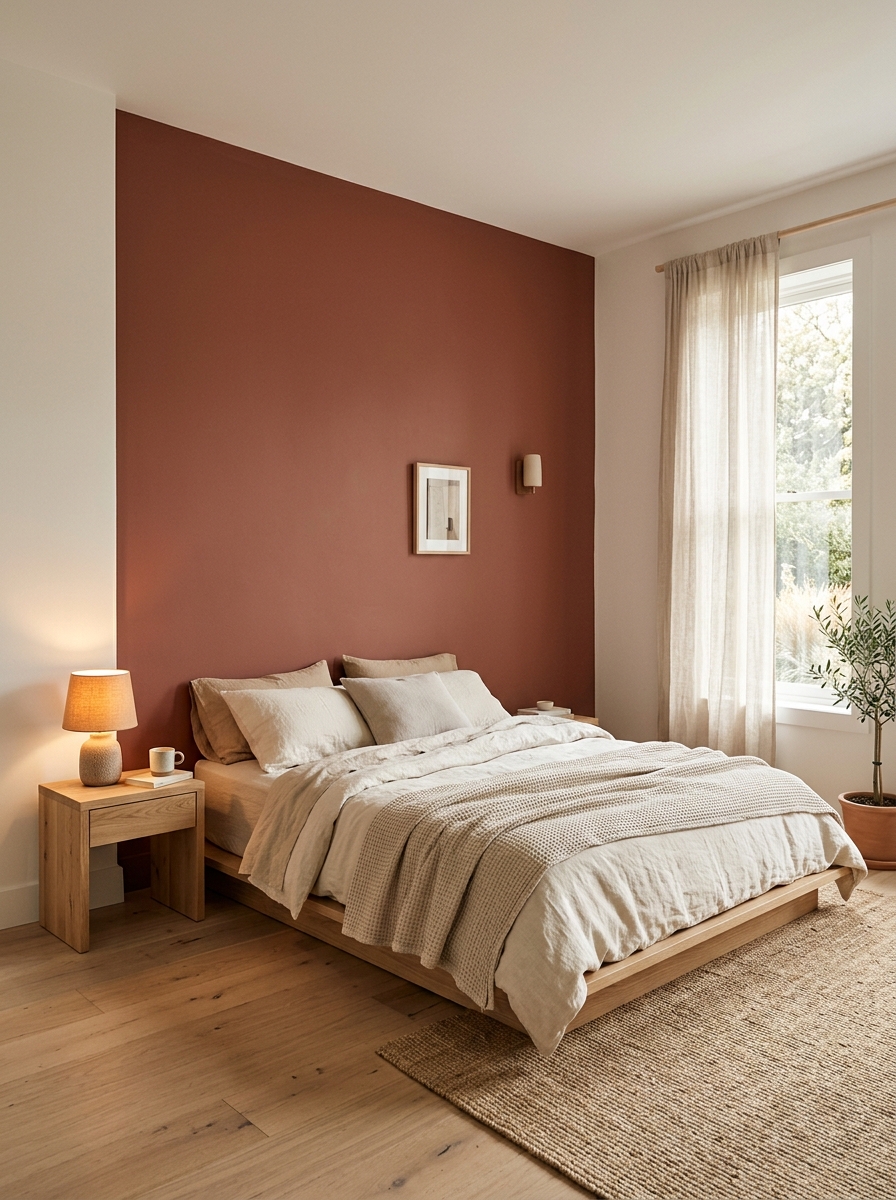
If there’s one move in the entire guide to decorating your home on a budget that delivers the most dramatic result for the least amount of money, it’s paint.
One tin done in one weekend, and you have a room that looks completely different.
Designers know this, which is why colour is always one of the first conversations in any project. The right colour doesn’t just change how a room looks, it changes how it feels. How big it seems, calm or energetic the atmosphere is. How expensive everything else in the room appears by association.
The principle most designers work with is simple: keep 80% of your room neutral. Whites, warm creams, soft greiges, muted taupes. This gives the room breathing room and makes it feel considered rather than chaotic. Then let the remaining 20% do the work, which can be a coloured wall, a bold trim, a painted ceiling.
One accent wall is enough. You don’t need to repaint the whole room to feel the impact. A single deep, confident colour on one wall could be a forest green, a dusty terracotta, a slate blue, reframes the entire space.
It creates the focal point we talked about earlier and gives every other element in the room something to anchor against.
And here’s the practical reality, one gallon of interior paint covers up to 400 square feet.
That’s more than enough for a striking accent wall that makes your room look like it had a professional touch to it. The cost is minimal. The impact is not.
If flat colour feels too safe, use painter’s tape to block out a geometric pattern, wide vertical stripes, a half-wall colour block, a simple grid. It costs nothing extra and looks intentional in a way that plain paint sometimes doesn’t.
This is the cheapest, highest-impact move in the room. Don’t sleep on it.
There’s a reason some homes feel like they have soul and yours might not yet — these Grandmacore DIY Projects That Make Your Home Look Like It Has a 100-Year Story are the quiet, character-building touches that new furniture simply can’t replicate.
Lighting Is the Cheat Code
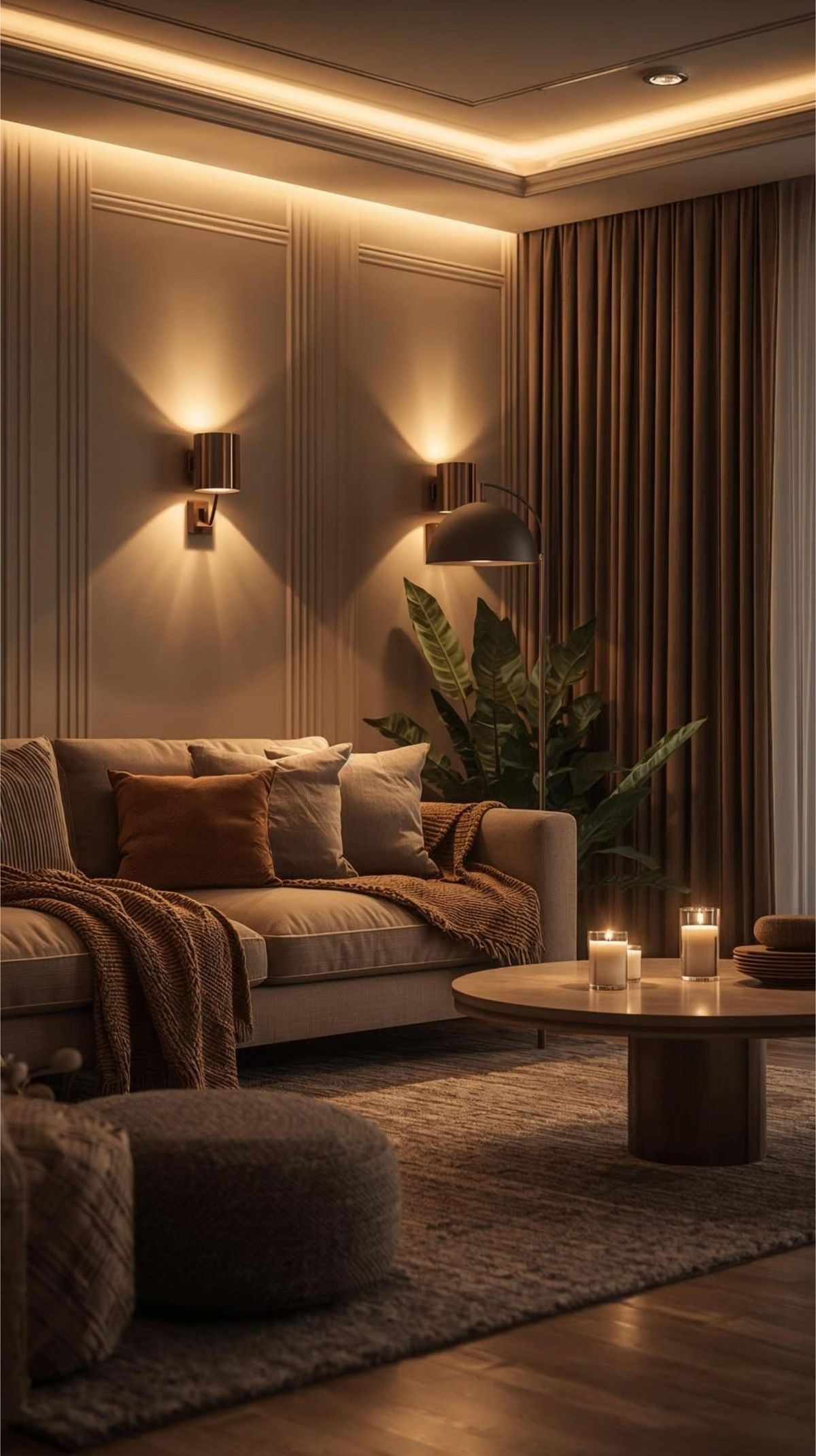
Photo credit: @ Everita
You could have the perfect furniture, a beautiful accent wall, a curated bookshelf, and bad lighting will kill all of it.
Flat, harsh, overhead light is the fastest way to make even a well-decorated room feel cheap. And most people never touch their lighting. Ever.
This is exactly why it’s the cheat code.
When designers talk about making a space feel expensive, lighting is almost always the first thing they reach for, not furniture, not colour. Light. Because light doesn’t just illuminate a room, it shapes how every single thing inside it looks and feels.
Get it right and your existing furniture suddenly looks more intentional. Get it wrong and nothing else matters.
The principle is simple: every room needs three types of light working together.
- Ambient light — your general overhead source.
- Task lighting — a reading lamp, a desk light, something functional and directional.
- Accent lighting — the layer that creates mood. Wall sconces, candles, a small lamp tucked into a corner. This is the layer most budget spaces are missing entirely, and it’s the one that does the most emotional work.
Here’s where to start without spending much at all.
Change your bulbs first:
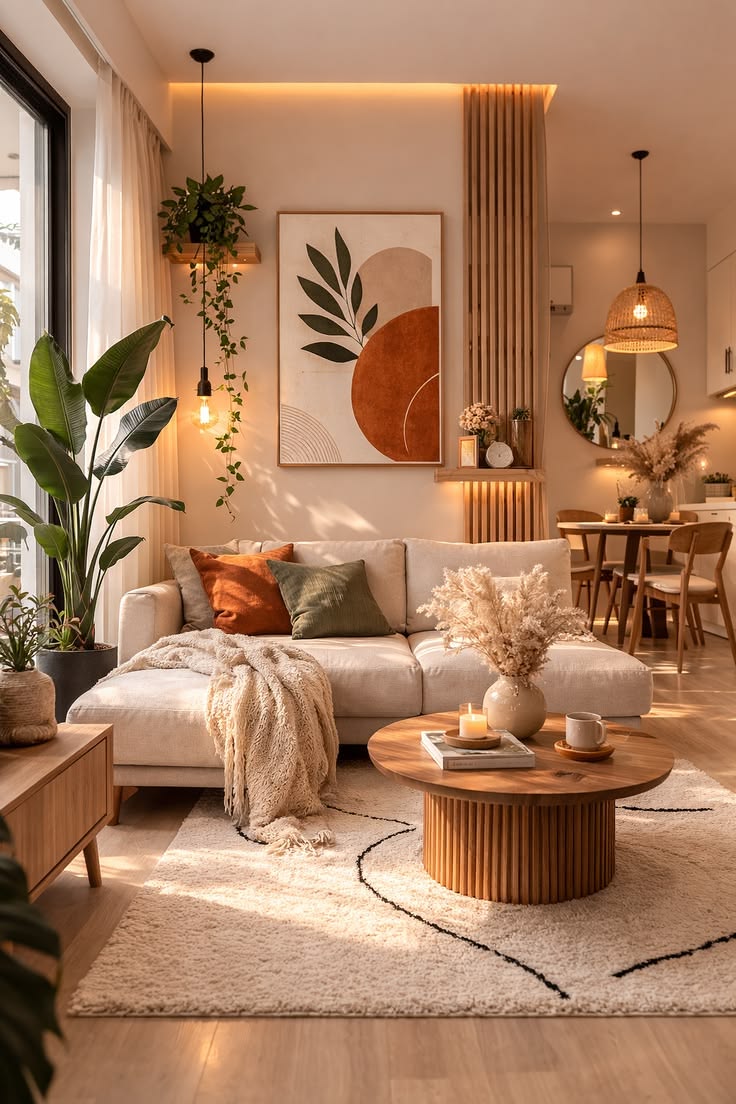
Swap out any cool-toned or bright white overhead bulbs for warm-toned ones. That single change, which costs around $10 or there about , immediately softens the entire room and makes it feel warmer, calmer, more considered.
It takes five minutes and the difference is immediate.
Add LED strips behind your TV or underneath shelving:
This is a trick lifted straight from high-end interior shoots. The soft backglow adds depth, reduces eye strain, and makes the whole wall feel designed rather than functional. Affordable, easy to install, and looks far more expensive than it is.
Wrap fairy lights around a mirror or frame your curtains with them:
It sounds simple because it is, but the effect is a soft, ambient glow that layered overhead lighting simply can’t replicate.
You’re not just decorating with objects. You’re decorating with light. Once you start seeing it that way, every room becomes easier to get right.
If you love creating things with your hands but hate spending money, these Low Budget Craft Ideas That Don’t Look Cheap for Events, Gift-Giving, and Home Decor will show you exactly how to make beautiful things without the beautiful price tag.
Know Where to Splurge and Where to Save
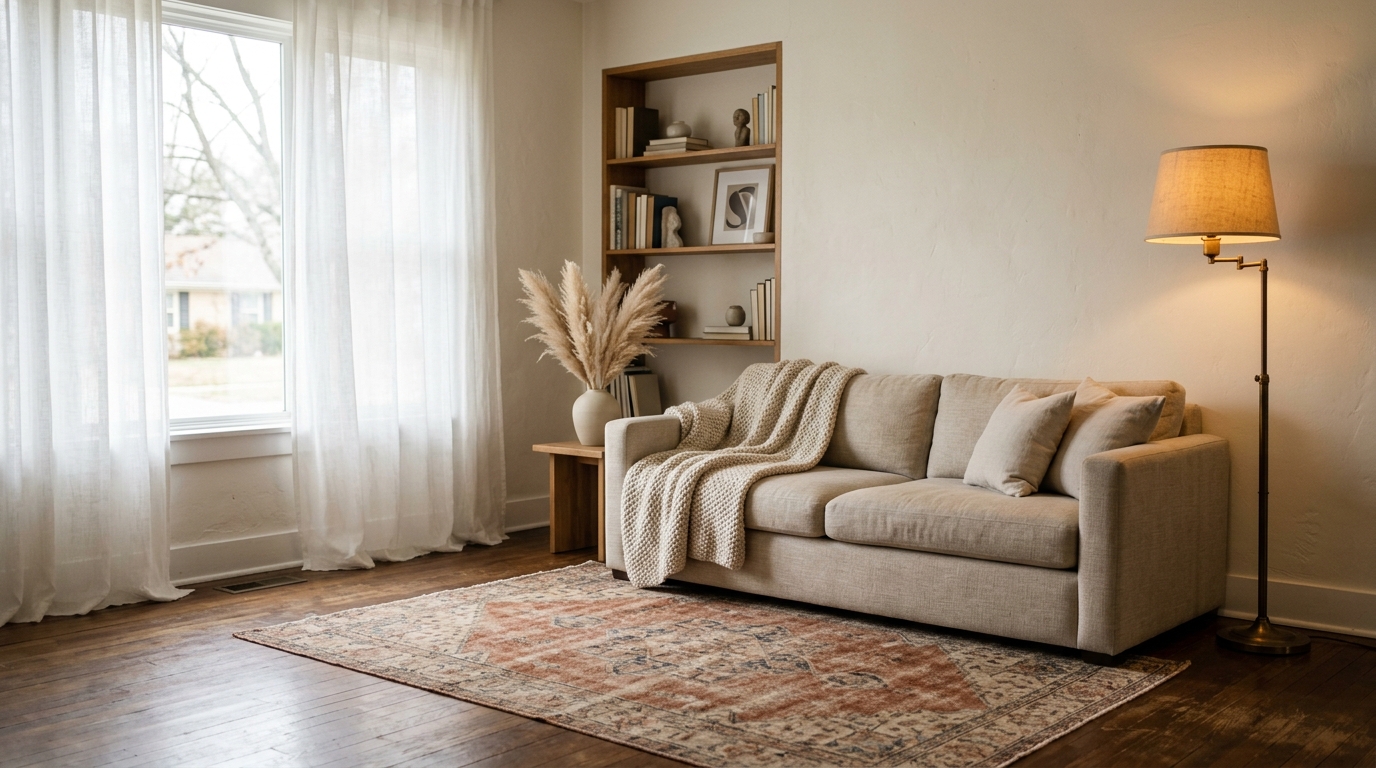
The biggest misconception about well-designed homes is that everything in them is expensive. It’s not. What they actually are is strategic.
A few investment pieces doing the heavy lifting, surrounded by budget finds that nobody can tell cost almost nothing. That balance, knowing exactly where to spend and where to hold back, is what separates good taste from wasted money.
When you’re working out how to decorate your home on a budget, this is the framework that makes everything click.
-
Splurge here.
Your sofa, bed, and your statement light fixture. These are the pieces that get used every single day, that define the room the moment someone walks in, and that are nearly impossible to fake at a low price point.
A quality sofa with good upholstery will last a decade. A cheap one will look tired in two years and cost you more in the long run.
Same with lighting, one genuinely beautiful pendant or floor lamp elevates an entire room in a way that ten budget pieces can’t.
-
Save here.
Accent chairs, side tables, decorative accessories, trend-led pieces, anything that you might want to change in a few years anyway. This is also where the thrift store becomes your biggest asset.
Character pieces with history, interesting textures, and real materials that would cost a fortune new are sitting in secondhand markets right now waiting to be found.
-
And Don’t Overlook Hardware.
This is one of the most underrated moves in decorating your home on a budget, swapping out the handles and knobs on your cabinets, drawers, and furniture. It takes less than an hour, costs very little, and instantly makes a dated piece look intentional and current.
Want to add warmth? Brushed brass. Want something sleeker? Matte black. It’s the smallest change with a quietly outsized effect.
The goal isn’t to spend less on everything. It’s to spend deliberately, so that every pound or dollar you put into your space is working hard for you.
A small outdoor space is no excuse for a boring celebration, and these 4th of July Patio Decor Ideas That Make Small Spaces Feel Party-Ready prove that square footage has nothing to do with how good a party looks.
Fixes That Look Like You Tried Hard
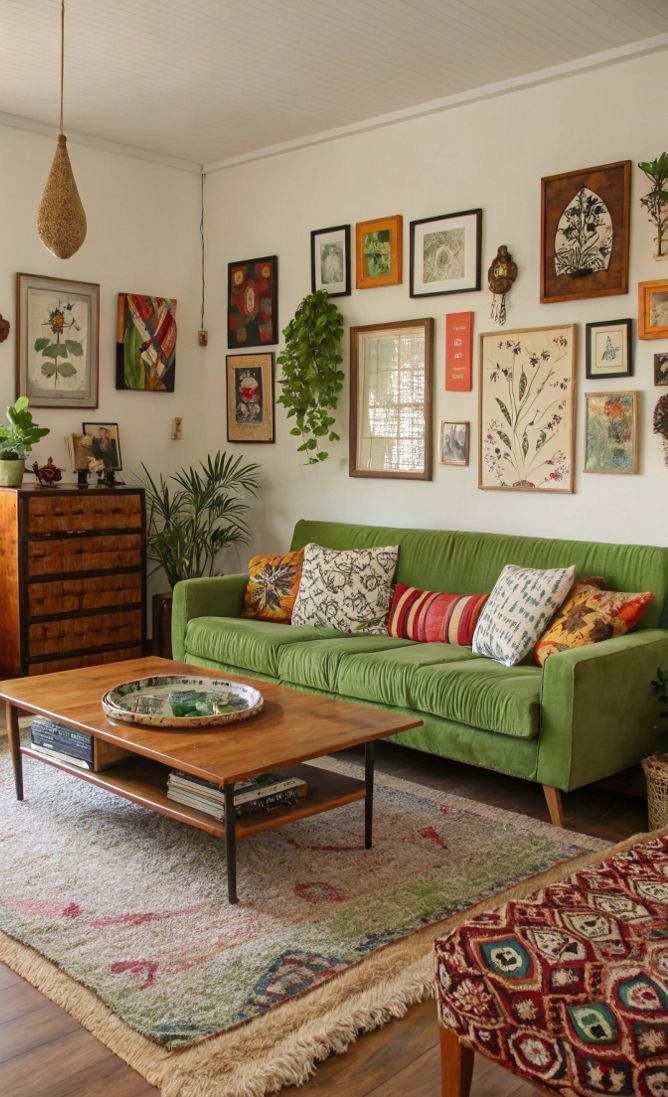
Not the kind that requires a craft room, a glue gun collection, and three hours of YouTube tutorials. These are the moves that look considered, cost almost nothing, and take an afternoon at most.
✔️ Print and frame artwork:
This one still surprises people. Museums and art archives across the world offer high-resolution prints of their collections for free, the Metropolitan Museum of Art, the Art Institute of Chicago, the Rijksmuseum.
Download, print at your local print shop, drop into a frame from the thrift store, and hang it. Nobody will ask if it’s original. What they’ll notice is that your walls look curated.
✔️Stencil a wall or a piece of furniture:
A geometric pattern on a plain wall. A simple border along a hallway. A design across the front of an old dresser drawer.
Stencils are cheap, the technique is forgiving, and the result looks far more intentional than plain paint. If you have children, this is also an opportunity, their artwork, properly framed and displayed, becomes genuinely unique decor that no designer could replicate for you.
✔️ Propagate your plants:
If you already have greenery in your home, you likely don’t need to buy more, you need to multiply what you have. Pothos, snake plants, and succulents all propagate easily from cuttings.
A few weeks in water and you have new plants ready to style into corners, shelves, and windowsills. Greenery softens a room in a way that almost nothing else does, and this version costs exactly nothing.
✔️ Rearrange before you redecorate:
This is the one most people skip because it feels too simple. Before spending a single penny on anything new, move your furniture.
Completely. Pull pieces away from walls, try a different orientation, swap items between rooms. What felt stale in one space can feel fresh in another. Sometimes the room you’ve been wanting is already there, it’s just been arranged wrong.
The best decorating wins don’t always come from buying something new. Sometimes they come from using what you already have, differently.
You’d be surprised what a dollar and a little creativity can do — these Dollar Tree 4th of July Crafts That Look Surprisingly Expensive and Make Your Home Look Styled are the kind of finds that make guests ask where you shopped.
Conclusion
Learning how to decorate your home on a budget forces something that unlimited spending never does: deliberate choices. You can’t buy your way out of a decision, so you think harder, edit more carefully, and end up with a space that actually reflects something intentional rather than just… accumulated.
The most stylish homes aren’t the most expensive ones. They’re the most considered ones. And consideration costs nothing.
So here’s your challenge. Pick one room. Choose one thing from this guide, just one, and try it this weekend.
Rearrange the furniture. Hang the curtains higher. Clear a surface and let it breathe. Change a bulb. It doesn’t have to be big. It just has to be deliberate.
You’ll be surprised how much shifts from a single intentional move.
And when you do, come back and tell me about it. What’s your best budget decorating hack? The trick that changed a room for almost nothing? Drop it in the comments below. I’d love to add it to this list, and honestly, the best ideas in here might end up coming from you.
You just read: How to decorate your home on a budget.

It’s so encouraging to see that a beautiful home doesn’t have to cost a fortune. I never realized how much the placement of just one object or the way light falls in a room can completely change the atmosphere. Definitely makes me want to rethink how I arrange my space!