Easy, honest steps for a milk carton bird feeder craft that gets preschoolers off screens and checking the window for days after.
Somewhere around 9 a.m., a lot of parents are doing the same quiet count, how many more hours until someone else can take a turn watching this kid, now that school’s out for the break.
Most craft ideas help for about half of that. The thing gets made, gets admired, gets left on a shelf, and the same “what now” comes back before lunch.
A bird feeder doesn’t ask to be admired once and forgotten. It asks to be checked on.
You make it in one sitting, then hang it outside a window, and after that, it does the work on its own.
Once it’s up, there’s something new to watch for: has a bird shown up yet, is the seed still there, what kind was that one.
That’s not nothing. Researchers who study screen time in young children have found that time spent outdoors can actually soften some of what heavy screen time does to a child’s development, not just replace the screen time, but offset its effects.
That’s a better reason to hang something by a window than just “it’s good to get outside.”
In this guide, you’ll get everything you need to make one: what to grab (most of it’s already in or about to be your recycling bin), the steps to put it together safely with little hands helping, where to hang it so birds actually find it, and what to expect in the first few days after it goes up.
Keep little hands busy with 13 Easy Egg Carton Craft Ideas for Preschoolers at Home (Perfect for Tired Days), featuring simple recycled crafts that build creativity without requiring expensive supplies.
Why This Craft Is Great for Preschoolers
Gluing, pouring seed into a small opening, holding a carton steady while a hole gets poked through it, these are small, deliberate hand movements, and at this age, that kind of practice matters more than it looks like it should.
It’s the same coordination a preschooler will lean on later for buttons, scissors, and eventually a pencil.
It also does something most crafts don’t: it turns “watching” into an actual skill.
A preschooler checking a feeder every day is quietly learning patience, noticing small changes, and paying attention to something outside of themselves, without anyone framing it as a lesson.
There’s also a small, real responsibility built in, noticing when the seed’s low, refilling it, keeping it going. Nothing heavy. Just one small thing that’s theirs to look after.
One honest thing worth knowing upfront: birds don’t usually show up on day one. It can take a few days, sometimes closer to a week, before a new feeder gets noticed.
That’s normal, not a sign anything’s wrong, worth mentioning to a preschooler ahead of time so the wait doesn’t feel like a letdown.
Teach an important Bible lesson through creativity with Daniel and the Lion’s Den Craft: A Sunday School Activity for Kids That Teaches Courage and Faith, a fun hands-on project for church, homeschool, or family devotion time.
What You Need
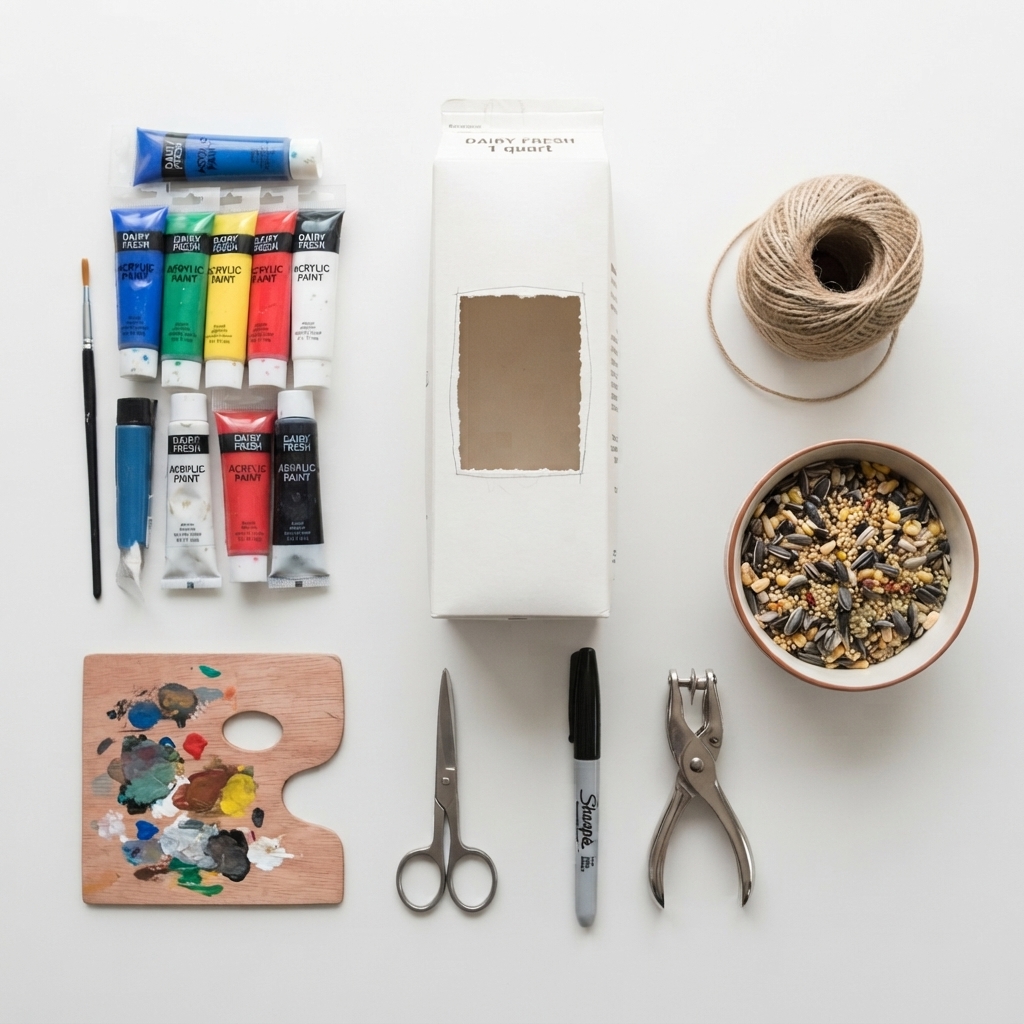
A clean, fully dried milk or juice carton (half-gallon or gallon size)
Rinse it out right after it’s empty, then let it air-dry with the cap off for a day or two before starting.
This step gets skipped more than any other, and it’s the reason paint sometimes won’t stick or peels off within a week, a carton that’s even slightly damp or waxy on the inside won’t hold paint the same way.
Acrylic paint, not washable or craft paint
This feeder is going outside, so it needs to survive sun, wind, and the occasional rain. Washable paints made for indoor crafts aren’t built for that and will streak or wash away fast.
Craft knife or a sturdy pair of scissors
This is the one part that’s adult-only, no exceptions, cutting through a carton wall takes more force than it looks like, and it’s easy to slip.
Hole Punch or an Awl
For putting a clean hole through the top of the carton to thread string through for hanging.
Twine or String
Something strong enough to hold the weight of a full feeder and stand up to being outside.
Wild Bird Seed
This matters more than it sounds like it should, seed made for pet or cage birds is a different blend and won’t attract the birds actually living around a yard. Look for a bag labeled specifically for wild birds.
Turn letter learning into play with Train Craft Ideas for Kids That Make Learning the Alphabet Fun With Things You Already Have, using everyday materials to make early literacy exciting.
Step-by-Step: How to Make It
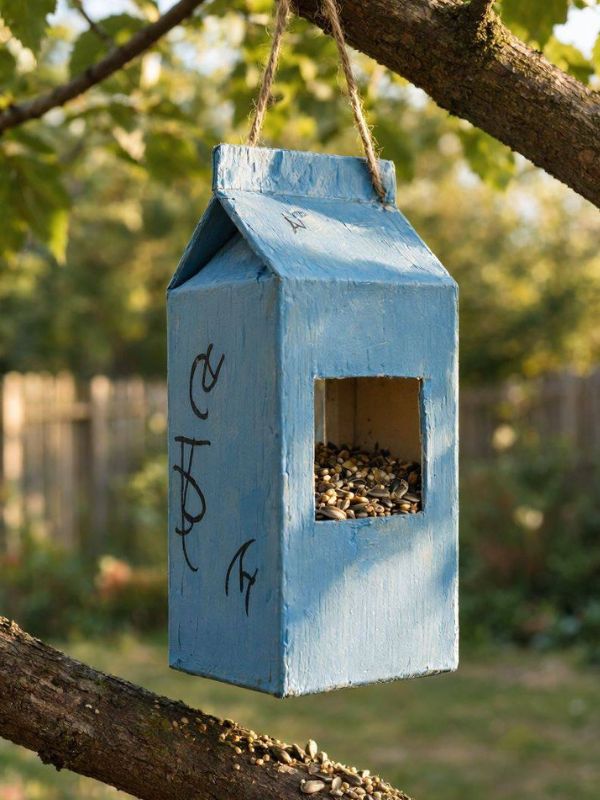
Step 1: Clean and dry the carton completely
Rinse out any leftover milk or juice, then leave the carton open with the cap off for one to two days before you start.
This isn’t optional, a carton that’s still damp inside, or has a waxy film left over from packaging, won’t hold paint properly.
If the surface still feels slick once it’s dry, a light pass with sandpaper on the outside gives the paint something to grip.
Step 2: Mark where the opening will go
Before cutting anything, sketch the shape of the feeding opening directly onto the carton with a marker.
A simple U-shape or rectangle, roughly 3 to 4 inches wide, works well on one side.
Leave about two inches of uncut carton at the bottom of the opening, that lip isn’t decorative, it’s what keeps birdseed from spilling straight out once the feeder is filled.
Step 3: Cut the opening (adult only)
This step is for adult hands only, no exceptions.
Using a craft knife or sturdy scissors, cut along the marked line slowly, cardboard resists more than it looks like it should, so short, controlled cuts work better than one long push. For two feeding sides, repeat the same cut on the opposite side of the carton.
Step 4: Punch the holes for hanging
Using a hole punch or an awl, make a small hole near the top of the carton on each side, close to where the peak folds.
These are what the string will thread through later. Punching them now, before painting, means less handling of wet paint afterward.
Step 5: Paint the carton
This is the part preschoolers can take over almost entirely. If the carton has dark print or heavy branding underneath, a thin coat of white primer first will stop it from bleeding through.
Then apply one coat of acrylic paint over the whole carton.
Let it dry, press a finger lightly to the surface, and if it feels tacky rather than fully smooth, it needs more time, then add a second coat.
One coat rarely hides everything underneath, and skipping the second is the most common reason a feeder looks patchy once it’s outside.
Step 6: Decorate
Once the paint is fully dry, this is where a preschooler can go anywhere with it, a plain colorful house, a face, stripes, dots, whatever holds their attention that day.
Markers work well for adding detail on top of dried paint without smudging it.
Step 7: Thread the twine and hang it up
Feed twine or string through the two punched holes and tie it off securely, leaving enough length that the feeder can hang freely without swinging into a wall or window on a windy day.
Step 8: Fill it with seed
Pour wild bird seed in until it reaches just below the cut edge. Filling it too full means seed spills the moment there’s any wind, better to underfill slightly and top it off every few days than pack it in all at once.
Step 9: Hang it somewhere birds will actually use
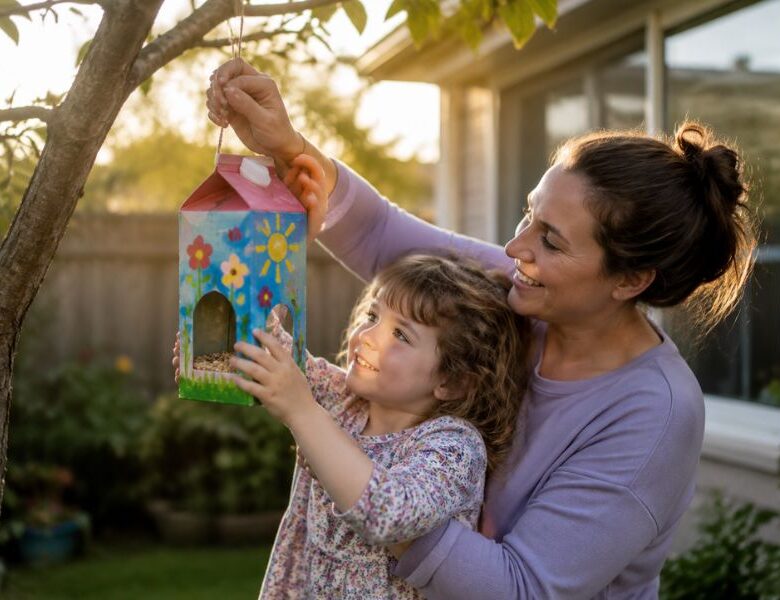
Hang the feeder near a tree or shrub, somewhere with cover nearby, at roughly 5 to 6 feet off the ground, high enough to keep it out of easy reach of a cat, low enough to still be visible from a window inside. Avoid hanging it directly over where kids play, or anywhere it can swing into glass.
Where to Hang the Milk Carton Bird Feeder Craft
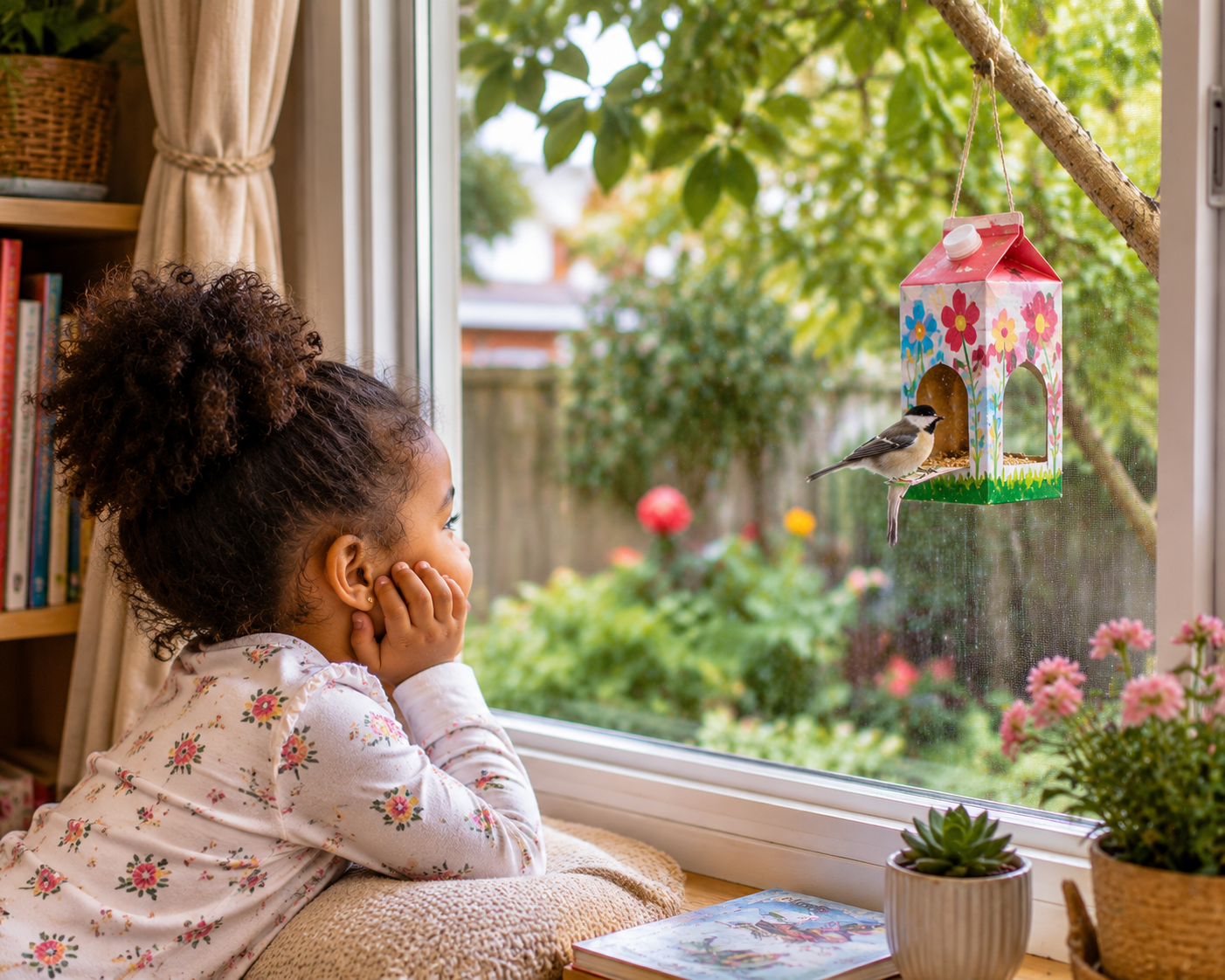
This is the part that decides whether the whole thing actually works, and it’s usually the part left out. A milk carton bird feeder craft can be painted perfectly and still sit empty for weeks if it’s hung in the wrong spot.
Birds don’t feel safe feeding out in the open. In the wild, that’s exactly where they’re most exposed to predators, so a feeder sitting alone in the middle of a yard with nothing around it often gets ignored, not because the feeder’s wrong, but because there’s nowhere nearby for a bird to retreat to if something startles it.
Hanging it near a tree, a shrub, or even a fence line with some plant cover close by gives birds a place to dart to between visits, which makes them far more likely to land in the first place.
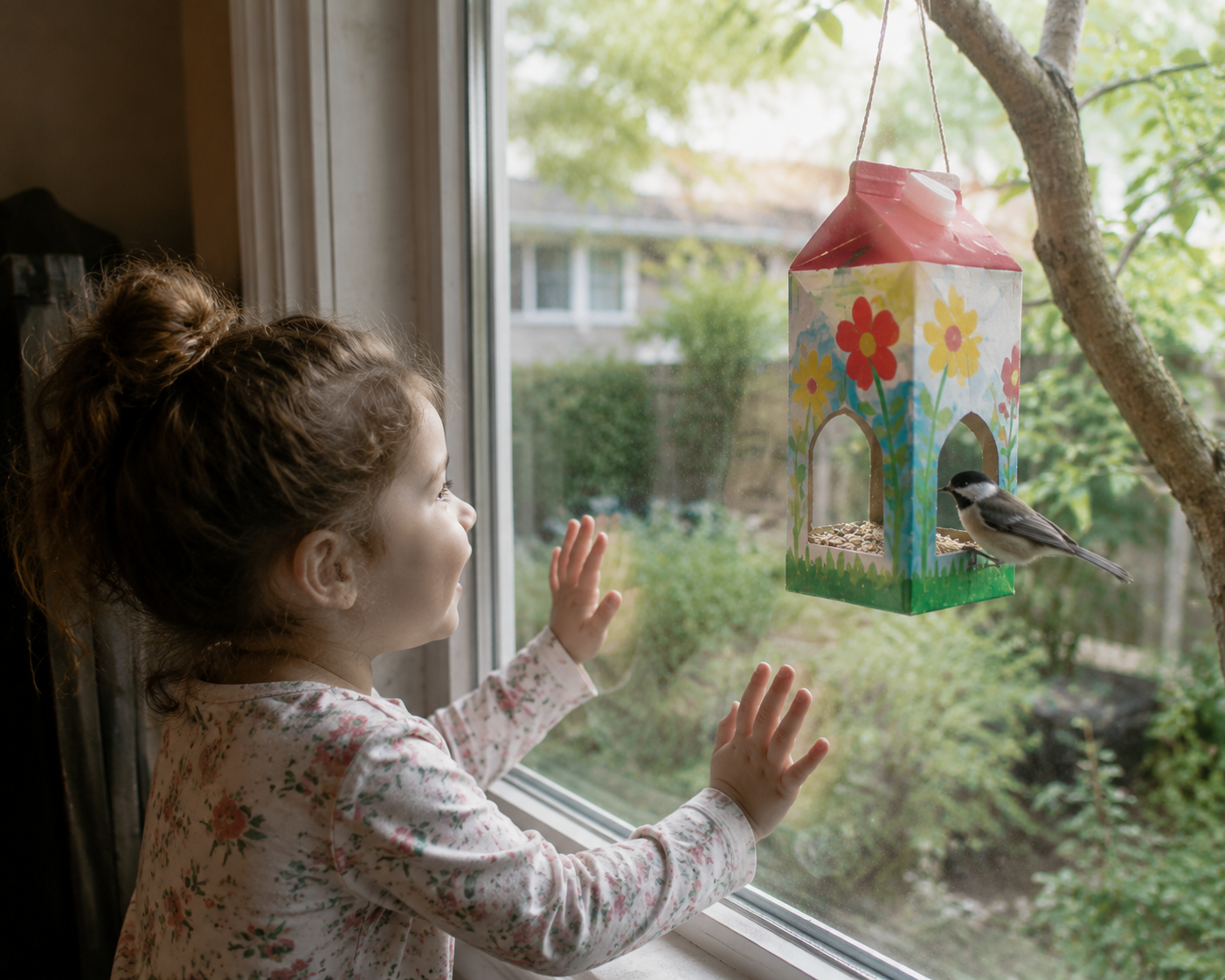
Hang it somewhere visible from a window inside the house.
This is where the “off screens” idea actually plays out in real life, a preschooler doesn’t need to be told to go check the feeder if they can already see it from the couch or the kitchen table.
The window becomes the new thing worth looking at, and that’s not something that has to be enforced or reminded. It just sits there, in view, doing its job.
So the ideal spot for a milk carton bird feeder craft is somewhere with cover nearby, at that 5 to 6 foot height mentioned earlier, and within sight of a window a preschooler passes by often. Not placed in a back corner of the yard where no one but the birds will ever notice it’s there.
Enjoy sensory fun with Safe and Easy Slime Craft Ideas for Kids — Non-Toxic Projects That Keep Them Busy for Hours, featuring kid-friendly recipes that are fun to make and safe to play with.
What to Expect After the Feeder Goes Up
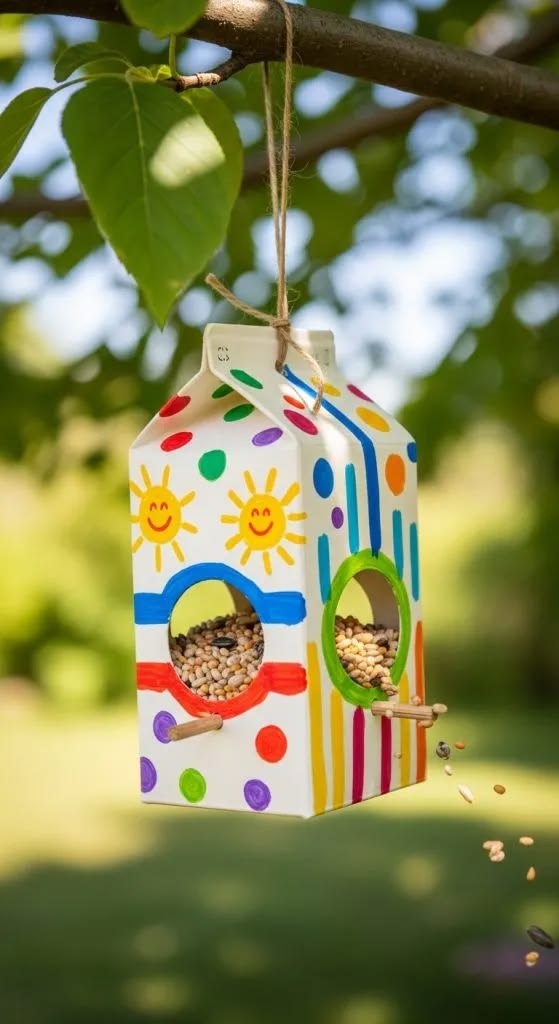
A few honest things worth knowing before the excitement wears off waiting:
- Birds usually don’t show up on day one. It’s common for a new feeder to sit untouched for several days, sometimes closer to a week, before birds notice it’s there.
That’s normal, not a sign anything was done wrong, worth telling a preschooler ahead of time so the wait doesn’t feel like the craft failed.
- What shows up depends partly on what’s inside. Smaller seed tends to draw smaller birds, while larger seed or nuts tend to bring in bigger ones. There’s no need to overthink this, a general wild bird seed blend will attract a mix, and that variety is part of what makes it interesting to watch.
- Some days will be quieter than others. Weather, time of day, and even how much noise is nearby can affect whether birds visit that day. A quiet afternoon doesn’t mean the feeder stopped working , it just means nothing happened to show up yet.
- The feeder needs occasional upkeep to keep working. Seed gets low, rain can dampen it, and a feeder that’s forgotten will eventually stop getting visitors. A quick check every few days keeps it active.
Simple Ways to Extend the Activity
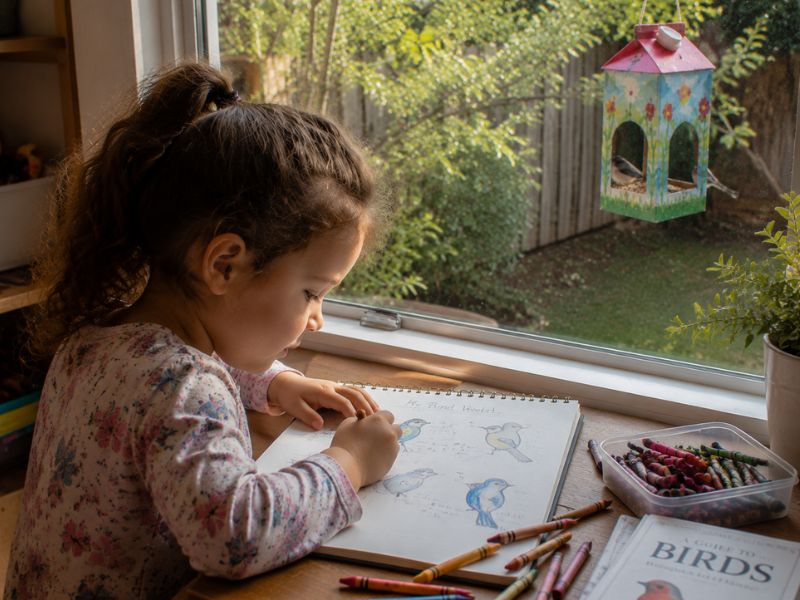
The craft itself is done in an afternoon, but there’s no reason the fun has to stop there. A few ways to keep it going:
- Start a simple bird tally. A blank sheet of paper taped near the window works fine, every time a bird visits, add a mark, a scribble, or a little drawing if a preschooler wants to try describing what they saw.
It turns watching into something active, and it gives the whole thing a reason to keep being checked on well past the first week.
- Talk about what kind of birds might visit. No need for a detailed regional guide here, just a simple heads-up that different birds are drawn to different things, some smaller, some bigger, some more colorful than others, and that part of the fun is not knowing exactly who’s going to show up next.
That bit of mystery is often what keeps a preschooler coming back to look.
- Let the feeder become a small daily habit. Checking it before breakfast, after nap, or before bed gives the day a small anchor point that has nothing to do with a screen, and over time, that’s less about the craft and more about a habit that sticks around long after the paint’s dried.
Encourage imaginative play with Farm Animal Crafts for Toddlers: Build Creativity and Fine Motor Skills Beyond Playtime, where young children can explore farm life through easy hands-on activities.
Conclusion
A carton that used to sit in the recycling bin is now the reason someone looks out a window without being asked to.
That’s really the whole point of a milk carton bird feeder craft, not the painting, not the seed, but the small shift it creates in an ordinary day.
Some feeders get noticed fast. Others take a patient week or two. Either way, something is happening outside that wasn’t there before, and that’s worth more than another hour filled by a screen.
Give it a try this week, and let the window do the rest of the work.
FAQ
-
How long does it take birds to find a feeder?
It varies, but it’s common for a new feeder to go unnoticed for several days, sometimes closer to a week. Location plays a big role, feeders near trees or shrubs tend to get found faster than ones out in the open.
-
What seed should I use for a homemade feeder?
Look for seed labeled specifically for wild birds. Seed made for pet or cage birds is a different blend and won’t attract the birds actually living in a yard. Smaller seed draws smaller birds, while larger seed or nuts tend to bring in bigger ones.
-
Can I reuse a juice carton instead of milk?
Yes, juice cartons work the same way as milk cartons for this craft. Just make sure it’s rinsed out well and fully air-dried before starting, since any leftover residue affects how the paint holds.
How do I keep it from getting soggy in rain?
A carton painted with acrylic paint holds up better outside than one painted with washable craft paint, but it’s still cardboard underneath. Hanging it somewhere with a bit of natural cover, like under a tree canopy, helps shield it from direct rain.
Checking it after a heavy rain and swapping out any wet, clumped seed keeps it usable longer.