Looking for nativity costumes toddlers and kids? Make 15 from clothes at home
Nativity plays have a long history, with one of the best-known early living Nativity scenes organised by St. Francis of Assisi in Greccio, Italy, in 1223. The scene used real people and animals to help bring the story of Jesus’ birth to life.
Today, children take on those familiar roles in Christmas performances at schools and churches.
But when a child is assigned Mary, Joseph or a shepherd, finding something suitable to wear can mean an extra expense for a costume they may use only once.
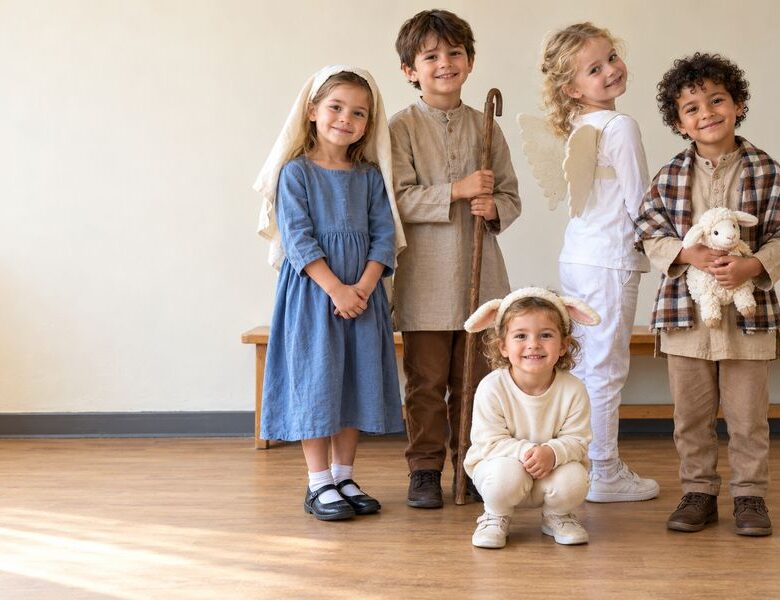
Nativity costumes for toddlers and kids you can make from clothes at home for school plays offers a practical starting point: looking at what is already in the wardrobe before buying something new.
Help children follow the story of Jesus’ birth through these 12 Nativity Crafts That Walk Kids Through the Story of Jesus’ Birth, at Home or Sunday School.
Read the School’s Costume Letter Before You Make Anything
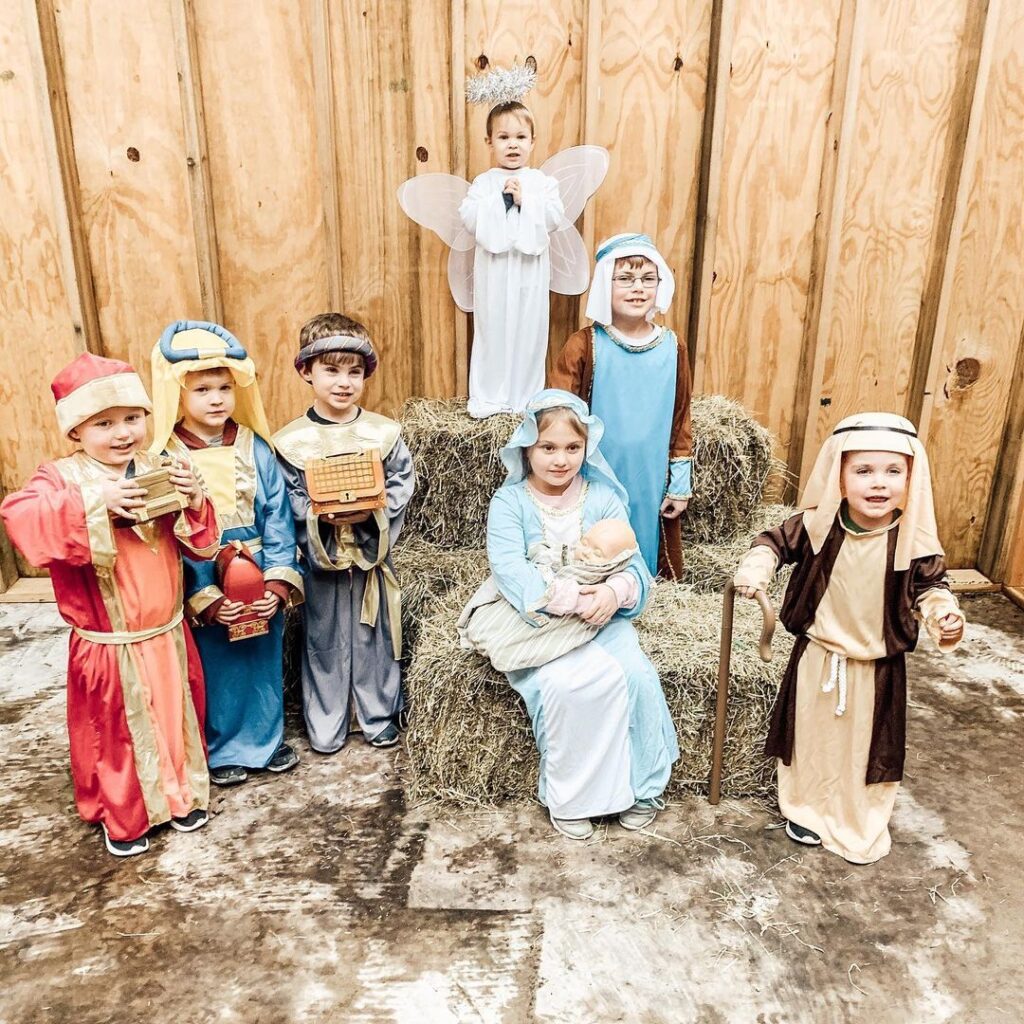
Photo credit: @ Jdellhome
A few minutes with the school letter can save you hours of work. Many schools already know which costumes they need, and some supply most of them. Read the letter first, and ask the teacher about anything it leaves out.
-
Find Out Which Role Your Child Has
Don’t assume your child is a shepherd or an angel. School letters often list many more parts. One school’s letter named storytellers, innkeepers, a chorus, animals, a moon and a sun. The costume for each is different, so check the role before you buy or make anything.
-
Check What the School Already Supplies
Some schools only ask parents for plain clothes. One letter says the school has costumes for most parts and asks for pyjamas for the chorus, and a dressing gown for a parent role. Another asks for a dark t-shirt and black trousers for shepherds, with the school providing the rest. If the letter doesn’t say, ask whether headpieces, crowns, wings or props can be borrowed.
-
Ask About the Look and the Colours
If your school has a colour or style in mind, you’ll want to know before you start. Ask if there is a reference photo or a colour rule, so your child doesn’t turn up in the wrong shade.
-
Think About Where the Play Is Held
A warm classroom, a cold church hall and an outdoor setting call for different layers. Plan a thin layer under the costume that your child can wear comfortably, and check that the costume still fits over it.
-
Label Everything
Letters often ask for costumes in a plastic bag clearly labelled with your child’s name. A label on each piece helps when more than 5 children change at once.
Nativity Costumes for Toddlers and Kids For School Play
1. Mary: Make a Simple Nativity Costume From a Dress
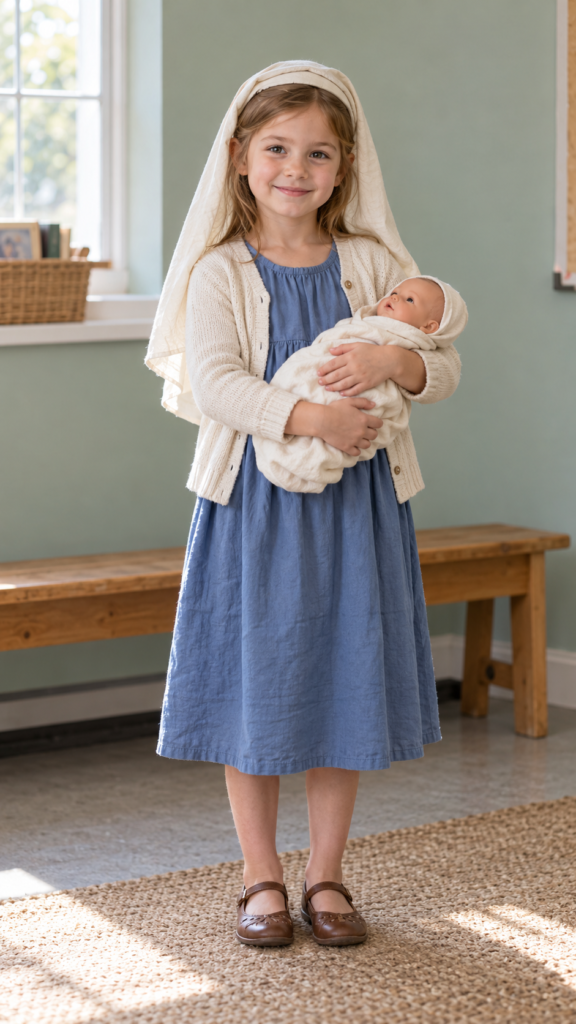
Mary’s costume does not need to be a specially sewn robe. A long blue, white or cream dress can work well for a school nativity play. If there is no suitable dress in the wardrobe, try a loose, long top with a matching skirt or trousers.
How to put the outfit together
- Start with the main outfit: Choose a plain dress or a loose combination of a top and skirt. Blue is common in traditional pictures of Mary, but white, cream and other simple colours can work if they suit the school’s instructions.
- Add a head covering: A lightweight scarf or piece of soft fabric can create the familiar look. Secure it comfortably so it does not slip over your child’s eyes.
- Keep the finish simple: A cardigan or plain outer layer can complete the outfit if needed. There is no need to add elaborate decoration.
A small detail worth knowing: The Bible does not specify that Mary wore blue. That colour became familiar through Christian art and devotional tradition, so parents can use another suitable colour without claiming it is historically certain.
For toddlers: Avoid tying fabric around the neck or using long, loose pieces that could catch on something. A comfortable headband or a school-approved head covering is a more practical choice.
2. Joseph: Turn a Long Shirt Into a Simple Nativity Costume
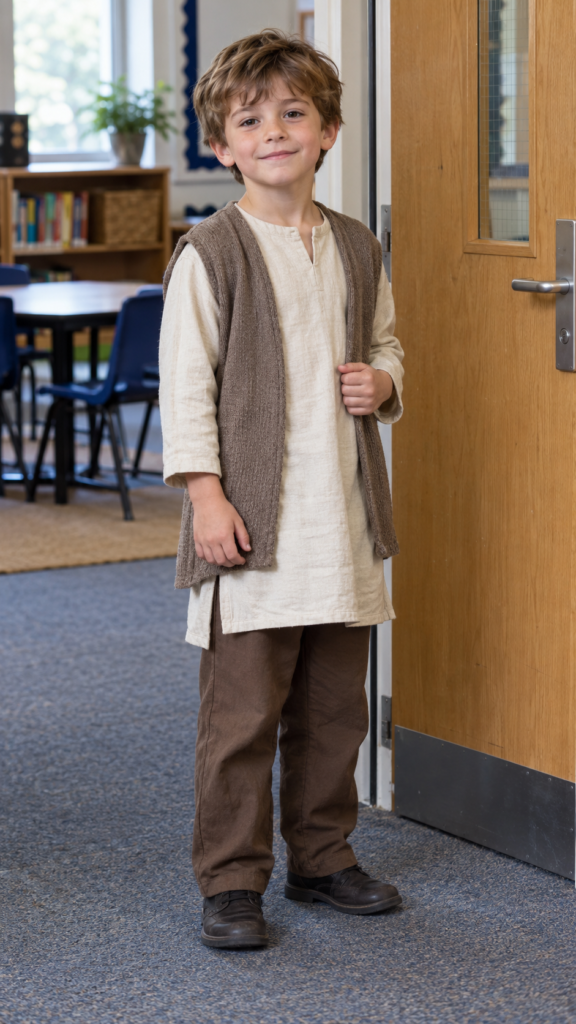
Joseph’s costume can start with an ordinary long shirt and a pair of loose trousers. Brown, beige, cream and other muted colours are common choices for nativity plays, but the school may have its own costume instructions.
How to put Joseph’s outfit together
- Choose a suitable shirt: A long, plain shirt or tunic works well. If you cannot find one, a regular shirt with loose trousers can still suit the role.
- Add an outer layer: A loose cardigan or another long garment can give the outfit a layered appearance without requiring any sewing.
- Include a head covering if needed: A lightweight scarf can complete the traditional stage look, provided it stays comfortably in place.
Make the outfit practical for young children
An oversized adult shirt may work as a tunic, but check the sleeve length, neckline and hem before the performance. The child should be able to walk, sit and move their arms without stepping on the fabric. Skip long cords and loose belts that could catch on furniture or cause a trip.
One thing to remember: The Bible does not specify Joseph’s clothing colours or exact outfit. These are familiar costume choices used to represent the setting of the Nativity story, rather than confirmed details of his historical dress.
For a group that wants a coordinated look without wearing identical outfits, try these 13 Friendsgiving Group Costume Ideas You Can Coordinate Without Matching.
3. Baby Jesus: Make a Simple Costume From a Romper or Sleepsuit
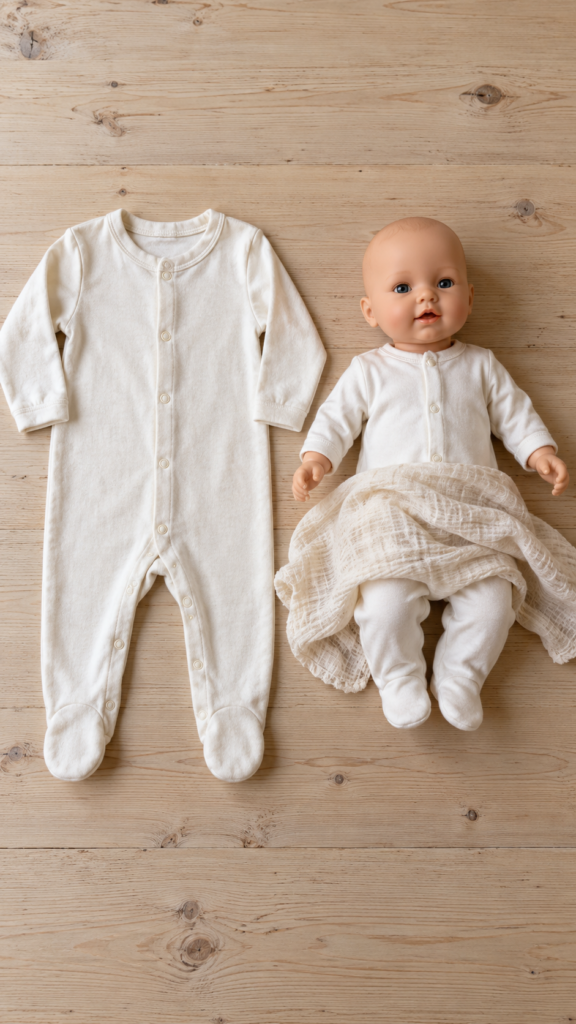
A baby Jesus costume does not have to be a miniature robe. A white or cream romper, sleepsuit or comfortable set of clothes can work for a child playing the infant Jesus in a school nativity play. Check the wardrobe first before buying a new outfit for the performance.
How to put the outfit together
- Start with the main outfit: Choose a plain white, cream or other light-coloured romper or set of clothes that fits comfortably. The colour is a costume choice, not a detail specified in the Bible.
- Add a soft cloth if needed: If the school wants the traditional swaddled appearance, use a lightweight cloth over the outfit without wrapping it tightly around the child.
- Consider using a doll: If the scene requires Baby Jesus to lie in a manger, ask whether the school uses a doll. A small blanket can then represent the cloths described in Luke 2:7.
A small detail worth knowing: Luke 2:7 says Mary wrapped Jesus in cloths and laid him in a manger. It does not specify the colour of the cloths, so white and cream are practical costume choices rather than confirmed historical details.
For toddlers: Keep the child’s face uncovered and avoid loose fabric around the neck. The outfit should allow free movement, and the child should never be wrapped tightly just to make the costume look authentic.
4. Angel: Make a Nativity Costume From White Clothes and Simple Wings
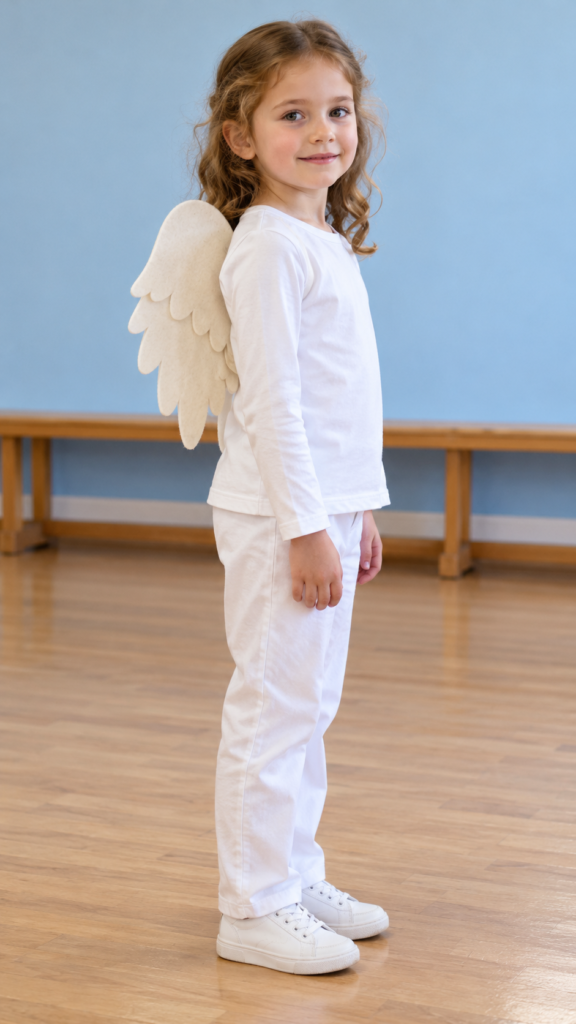
An angel costume can begin with a white dress, shirt and trousers, or another light-coloured outfit already at home. For parents putting together nativity costumes for toddlers and kids, the main decision is whether the school expects wings or whether ordinary white clothing is enough.
How to put the outfit together
- Start with the main outfit: Choose a comfortable white dress or a white top with trousers. A cream or pale-coloured outfit can also work if it matches the school’s instructions.
- Add simple wings: Cut two matching wing shapes from lightweight card or felt with adult help. Attach them securely to a suitable backing, making sure they do not restrict the child’s arms.
- Include a halo if required: A halo is optional. Use a comfortable headband that stays in place without slipping over the child’s eyes.
A small detail worth knowing: In Luke 2:8–14, an angel announces Jesus’ birth to the shepherds. The passage does not describe the angel wearing white clothes, wings or a halo; these are familiar features of traditional religious art and Nativity performances.
For toddlers: Test the wings before the school performance. If they catch on chairs, make it difficult to sit or interfere with other children, a white outfit without wings may be the more practical choice.
5. Shepherd: Make a Costume From a Shirt and a Scarf
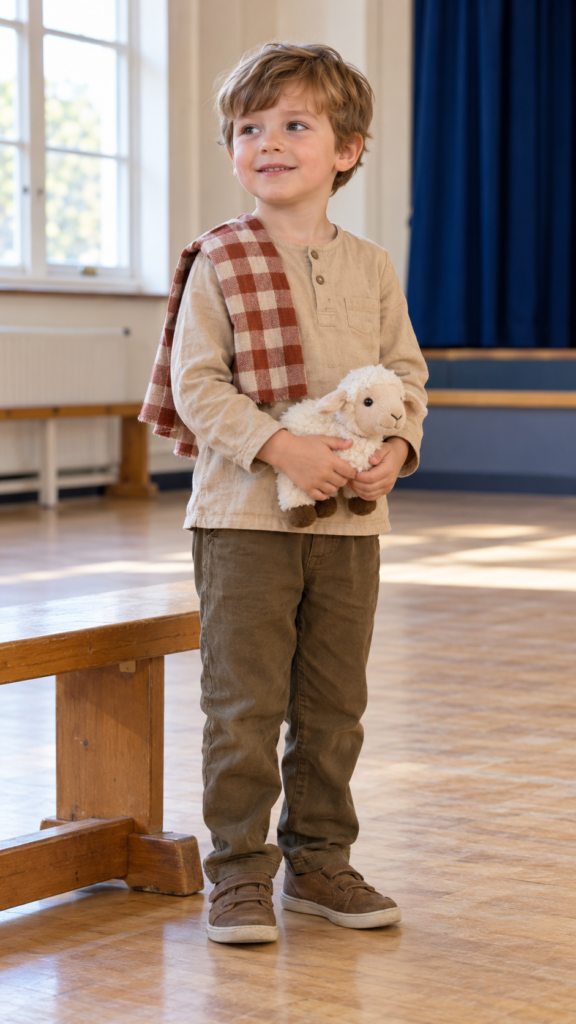
A shepherd costume can work with ordinary clothes, so there is no need to find a complete robe. Start with a plain shirt and trousers, then use a checked scarf, tea towel or lightweight piece of fabric as a shoulder covering. A neutral cardigan can serve as an extra layer if the school hall is cold.
How to put the outfit together
- Choose the base clothing: Use a plain shirt and trousers in colours that work together. They do not have to match perfectly; the aim is to create a simple, everyday look for the character.
- Add the shoulder cloth: Drape a lightweight scarf over one shoulder and secure it so it cannot slip under the child’s feet or cover their hands.
- Decide whether a prop is necessary: A soft toy sheep can help identify the role if the school permits props. Ask the teacher before sending a walking stick or shepherd’s crook, as it may not be suitable for a crowded stage.
A small detail worth knowing: In Luke 2:8–20, shepherds are watching their flocks when an angel announces Jesus’ birth. Their role is directly connected to the biblical account, but the passage does not describe the colours or exact style of their clothing.
For toddlers: A shoulder cloth is optional. If your child keeps pulling it off or finds it uncomfortable, the shirt and trousers can still work for the performance.
Keep children busy when winter weather keeps everyone indoors with these 17 Snow Day Crafts Kids Can Make When the Power Goes Out.
6. Wise Man: Add One Gold Detail to an Everyday Outfit
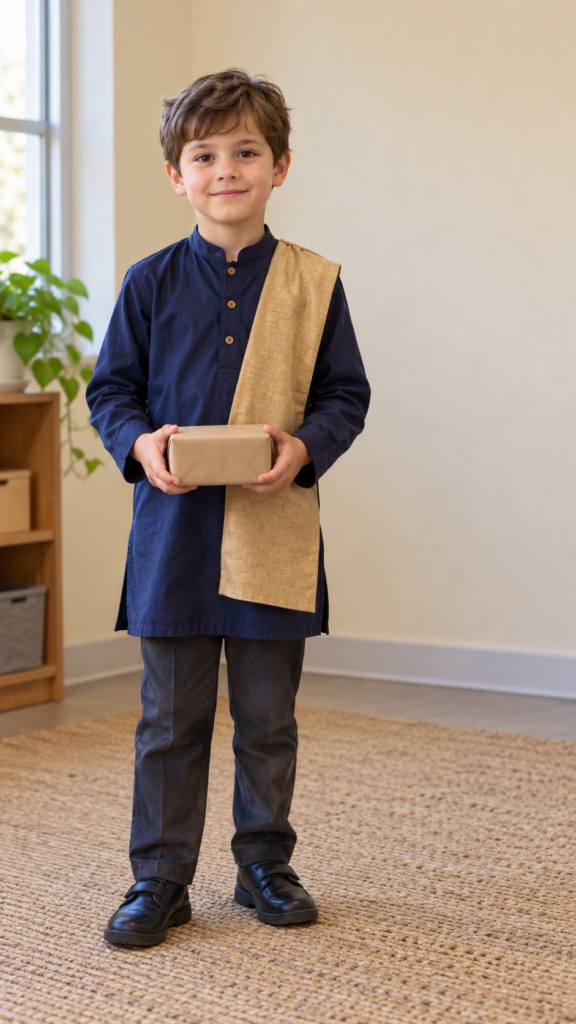
You do not need a gold robe to dress a child as one of the wise men. A plain long shirt, tunic or loose-fitting outfit can form the base, while a gold-coloured scarf or fabric panel gives it a more formal stage appearance.
How to put the outfit together
- Choose the main clothing: Look for a long shirt or tunic in a colour that works with gold. If you have no tunic, an ordinary shirt and trousers can still be used.
- Add a gold accent: Drape a short piece of gold-coloured fabric over the shoulders or across the front. Secure it so it does not trail or interfere with walking.
- Prepare a gift prop: A small, empty box wrapped in paper can represent one of the gifts brought to Jesus. Keep it light enough for the child to carry comfortably.
A small detail worth knowing: Matthew 2:11 names three gifts brought by the Magi: gold, frankincense and myrrh. It does not state how many Magi visited Jesus or specify the colours of their clothing. Gold is a traditional costume choice, not a biblical dress requirement.
For parents on a budget: Save any gold fabric or gift wrapping after the performance if it is still in good condition. You may be able to reuse it for another child’s costume or a future Christmas play.
7. Wise Man: Use a Different Outer Layer to Distinguish the Character
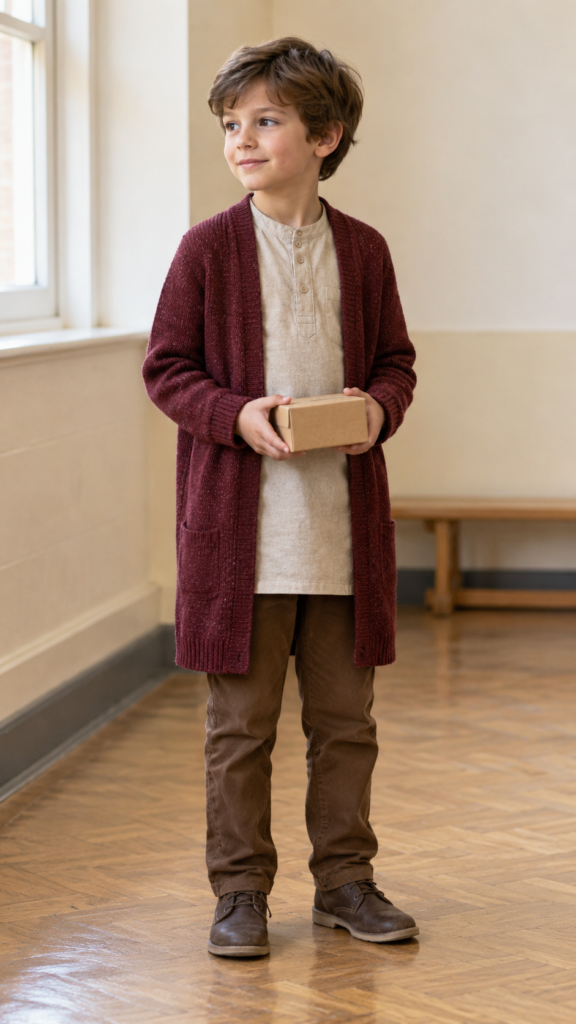
When a school assigns three children to play the wise men, parents may feel they need to find three separate costumes. That is not always necessary.
If the children wear similar base clothing, a different outer layer can make each outfit look distinct without buying three complete sets.
How to put the outfit together
- Start with a similar base: Use a long shirt, tunic or loose top with trousers. The children can wear the same neutral base if that is what the family has available.
- Choose a different outer layer: A long cardigan, scarf or fabric panel in green, burgundy, purple or another available colour can distinguish this wise man from the child wearing gold accents.
- Keep the accessories consistent: If the teacher wants the three wise men to look like a group, use a similar style of head covering or gift box while varying the outer colours.
A small detail worth knowing: The familiar image of three wise men comes from Christian tradition, commonly linked to the three gifts in Matthew 2:11. The passage itself refers to Magi without giving their number. Some school scripts call them kings, but Matthew describes them as Magi rather than explicitly identifying them as kings.
A practical way to save money: Before buying fabric, compare the clothes already available to all three children. A shared set of borrowed scarves or cardigans may be enough to create three different stage outfits.
8. Wise Man: Turn a Patterned Scarf Into the Main Costume Detail
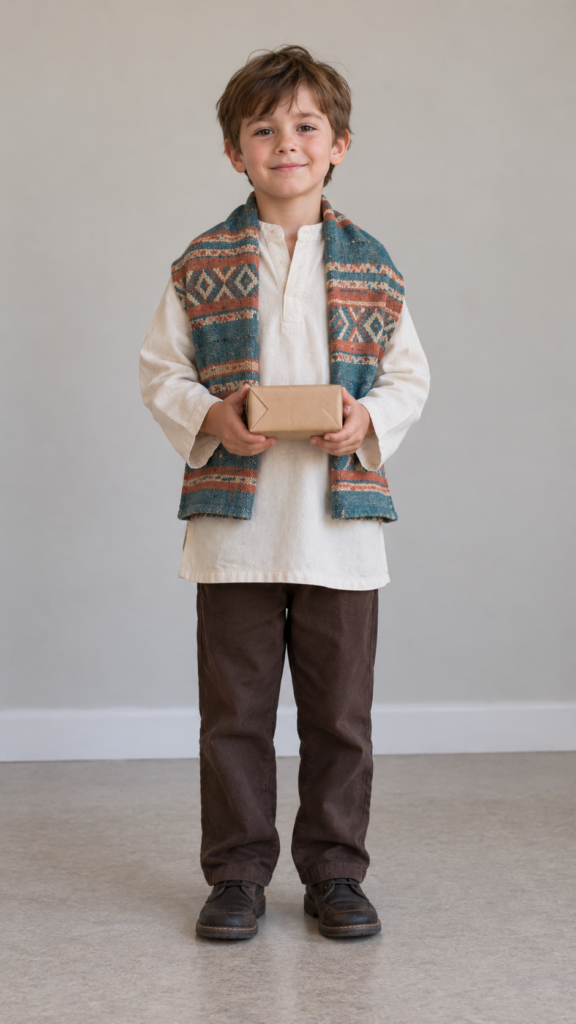
A patterned scarf or shawl can help create a third wise man’s outfit when the wardrobe has no special costume pieces. Use it over a plain shirt or tunic, choosing a pattern that stands apart from the other two costumes without needing extra decoration.
How to put the outfit together
- Choose a plain base: A simple long shirt and trousers allow the patterned fabric to stand out.
- Use the scarf as an outer layer: Drape it over the shoulders or across the front, securing it discreetly if needed. Avoid long loose ends that could catch on props or furniture.
- Add a simple gift container: A small, lightweight box can represent one of the gifts from the Magi. It does not need to contain anything or resemble a valuable object.
A small detail worth knowing: Matthew 2:1–12 records the Magi’s visit and their gifts, but it does not assign gold, frankincense or myrrh to three named individuals. If your child’s school script gives each wise man a particular gift, follow the script rather than presenting that division as a detail stated in the Bible.
For a costume that can be reused: Choose a scarf that can return to everyday use after the play. That way, the family does not need to store a complete costume that may never be worn again.
Put those pinecones and winter finds to good use with these 12 Christmas Nature Crafts for the Kids Who Keep Bringing Pinecones and Winter Finds Home.
9. Bethlehem Villager: Make a Simple Costume From Everyday Clothes
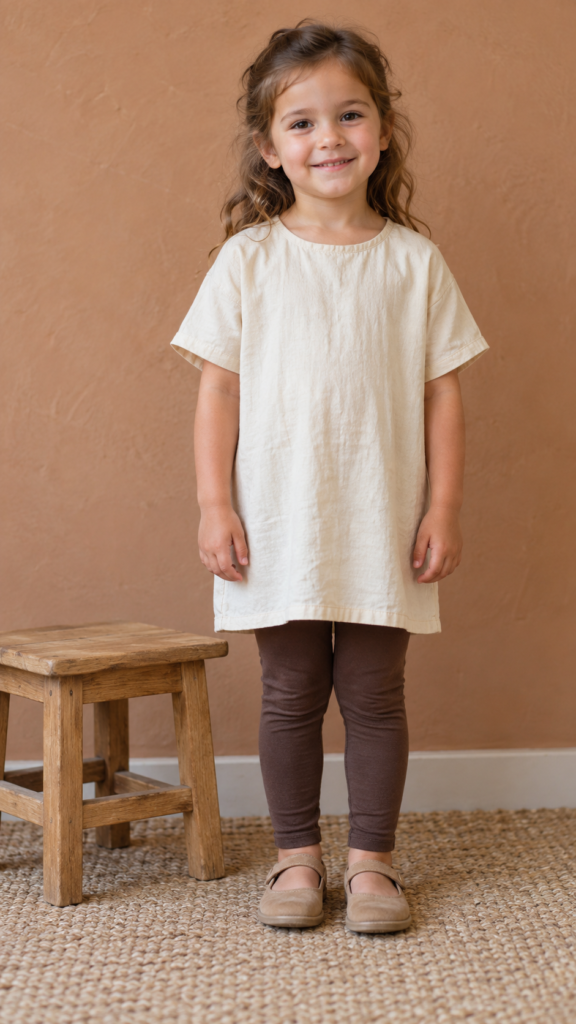
Not every child in a nativity play will have a named biblical role. Some schools include townspeople to help create the setting of Bethlehem, and their costumes can be much simpler than those of Mary, Joseph or the wise men.
How to put the outfit together
- Choose a plain base: A long shirt, simple dress or loose top with trousers can work. For example, a child’s cream tunic with brown leggings can create a coordinated look without buying a new outfit.
- Follow the school’s colour scheme: If the teacher wants the townspeople to wear neutral colours, use what is already available in beige, brown, cream or another approved shade.
- Skip unnecessary accessories: A background character may not need a head covering, prop or special decoration. Check the school’s instructions before adding anything.
A small detail worth knowing: Bethlehem is central to the Nativity story, but the Gospels do not provide a detailed wardrobe for its ordinary residents. These outfits are practical stage interpretations, not reconstructions of confirmed historical clothing.
For parents: When several children have background roles, coordinating their existing clothes can be easier and less expensive than making a separate costume for each child.
This is one way to keep nativity costumes for toddlers and kids manageable when the school needs a whole group dressed for the same scene.
10. Innkeeper: Adapt a Shirt and Apron for a Traditional Play Role
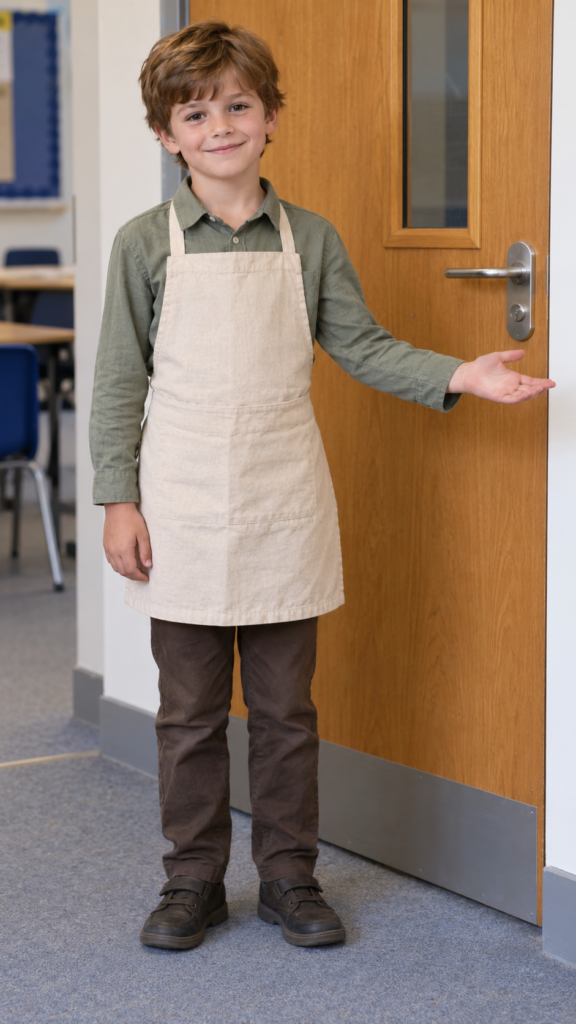
Some school nativity plays include an innkeeper who responds to Mary and Joseph when they seek accommodation. If your child’s script includes this character, a plain shirt with an apron or loose outer layer can create a simple everyday look.
How to put the outfit together
- Start with an ordinary shirt: Pair it with trousers or a skirt in a colour that suits the school’s costume plan.
- Add an apron if available: A kitchen apron can suggest a working household character. Choose one that fits properly and does not have long ties hanging loose.
- Use an outer layer only if needed: A cardigan or long shirt can provide another layer, but avoid bulky clothing that makes it difficult for the child to move.
A small detail worth knowing: The innkeeper is familiar from many Nativity plays, but Luke 2:7 mentions that there was no room for Mary and Joseph in the kataluma, a Greek term often translated as a guest room or lodging place.
The passage does not explicitly introduce an innkeeper who speaks to them. The character belongs to a common theatrical interpretation of the story.
For parents: Check the actual script before preparing this costume. If the school has assigned your child the innkeeper role, follow its version of the scene rather than assuming every Nativity play presents it in the same way.
When shopping for someone who has little room for extra belongings, consider these Christmas Gifts for Someone in a Nursing Home With No Room for Anything: 21 Gifts That Don’t Add Clutter.
11. The Star: Make a Simple Star Costume From Yellow Clothes
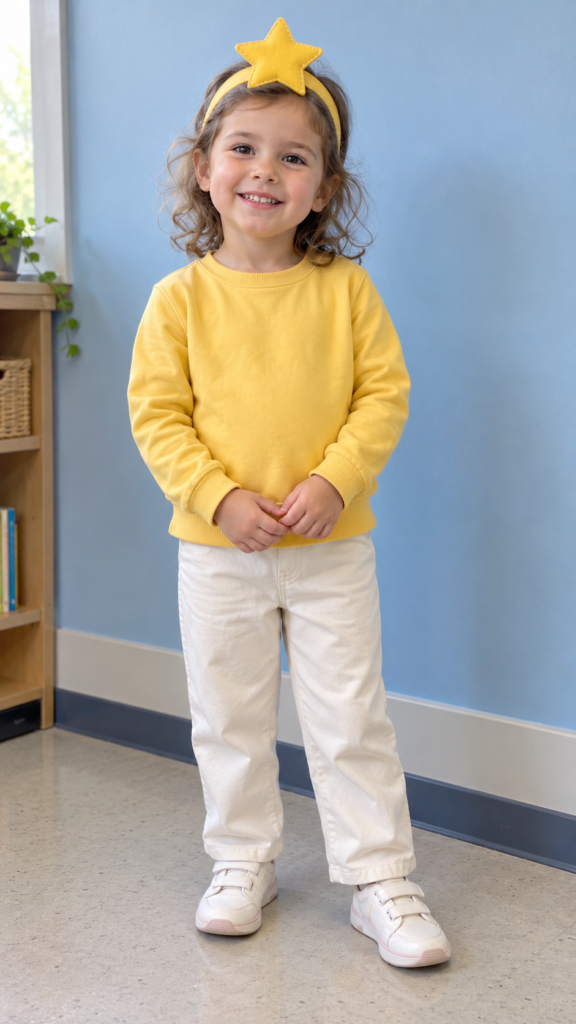
Some school performances give a child the role of the Star of Bethlehem. Rather than constructing a large star-shaped outfit, start with a yellow, cream or gold-coloured dress or a shirt and trousers, then add a lightweight star if the teacher expects one.
How to put the outfit together
- Choose the base clothing: A plain yellow top with dark or neutral trousers can work if a full yellow outfit is unavailable.
- Make a star shape: With adult help, cut a star from lightweight card and decorate it with crayons or paper. Attach it to a suitable backing only if it can be worn securely and comfortably.
- Consider a handheld star: If a headpiece would be awkward, ask whether the child can carry a small star instead. Keep it light and make sure it does not block their view.
A small detail worth knowing: Matthew 2:1–10 describes the Magi seeing a star associated with the birth of Jesus and following it. The Gospel does not describe a child-shaped star character; that role is a creative addition used in some Christmas performances.
For toddlers: A star on a headband may be easier to manage than a large cardboard structure, but it should never obstruct vision or become loose during the performance. A yellow outfit alone may be sufficient if the teacher agrees.
12. Sheep: Create a Simple Costume From White or Cream Clothes
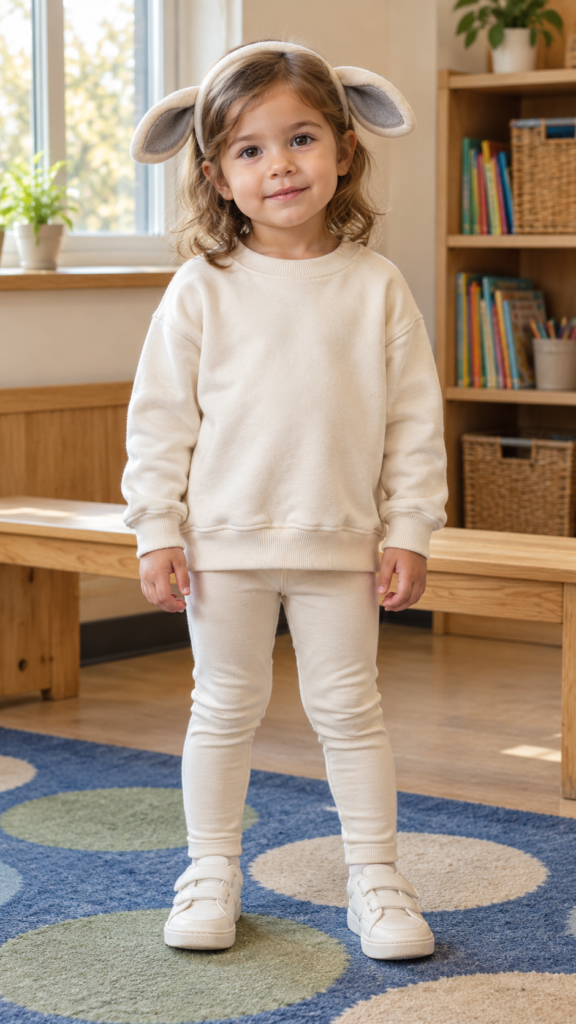
A sheep costume is useful when a school includes animals in its Nativity scene. You do not need to cover a child’s clothing in cotton balls or buy a furry suit. A white or cream sweatshirt with matching trousers, leggings or a comfortable dress can provide the starting point.
How to put the outfit together
- Start with comfortable clothes: A plain white sweatshirt and leggings are practical for a child who needs to sit on the floor or move around the stage.
- Add sheep ears if required: Cut two simple ear shapes from felt with adult help and attach them securely to a comfortable headband.
- Leave off unnecessary decoration: A fluffy effect is optional. If the school wants a more recognisable animal costume, ask whether ears alone are enough before adding extra materials.
A small detail worth knowing: Sheep appear in Luke 2:8, where shepherds are watching their flocks. The passage connects shepherds and their flocks to the Nativity account, although it does not specifically say that sheep stood beside the manger.
For toddlers: Avoid loose cotton balls, small decorations that can detach, and heavy layers that may make the child uncomfortable. A plain outfit with simple ears can be more practical for a short school performance than a costume covered in glued-on materials.
13. Donkey: Make a Nativity Costume From Grey or Brown Clothes

A donkey costume does not need a full-body suit or a homemade mask. Grey or brown clothes from your child’s wardrobe can do most of the work, while a pair of soft ears makes the animal easy to recognise on stage.
This is a useful option when the school has assigned an animal role but you have little time to sew or buy a costume.
How to put the outfit together
- Start with clothes you already own: Choose a grey or brown long-sleeved top with matching trousers, leggings or comfortable bottoms. Different shades can work together, so there is no need to find a perfect colour match.
- Make simple donkey ears: Cut two ear shapes from felt or sturdy fabric, using a darker shade for the inner ears if you have one. Attach them securely to a comfortable headband. If you would rather not sew, an adult can use a suitable fabric adhesive and allow it to dry fully before the child wears the ears.
- Add a small finishing detail: A soft grey or brown tail attached securely to the back of the top can help complete the look. Keep it short enough that it will not catch underfoot or snag on chairs.
- Try the whole outfit before the performance: Ask your child to walk, sit and bend in the costume. This helps you spot ears that slip, a tail that gets in the way or trousers that are too long.
A small detail worth knowing: Donkeys often appear in traditional Nativity scenes, but the Gospel accounts do not say that Mary rode a donkey to Bethlehem.
Luke 2:4–7 describes Mary and Joseph travelling to Bethlehem and Jesus’ birth, without identifying a donkey as their means of transport. The animal is a familiar part of Nativity tradition rather than a detail stated in that passage.
For toddlers/parents: Keep the ears light and make sure the headband does not press uncomfortably or slip over the child’s eyes. Avoid small decorations that can detach, especially for toddlers.
If your child dislikes headbands, the grey or brown outfit can still suggest a donkey without them.
Need a work-appropriate present for a colleague you barely know? These Corporate Secret Santa Gifts for a Coworker You Barely Know: 9 Safe Ideas Under $20 offer practical options.
14. Camel: Create a Simple Costume With Tan Clothes and a Small Hump
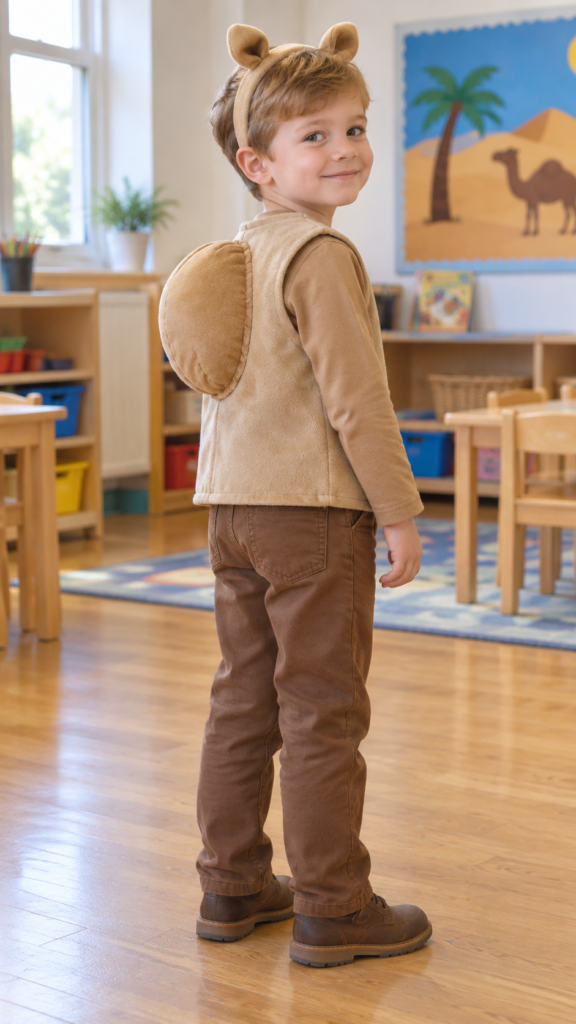
A camel costume can seem difficult to make at home, especially when a school asks for something more recognisable than brown clothes.
The easiest solution is to use a tan, beige or brown outfit as the base and add one simple hump detail. You can make the addition from fabric scraps or soft stuffing, without turning the costume into something bulky or uncomfortable.
How to put the outfit together
- Choose the base outfit: Use a tan or brown top with matching trousers or leggings. If you do not have a matching set, a beige top with brown bottoms is fine for a school play.
- Make a lightweight hump: Fold a small piece of brown fabric around a little soft stuffing, then close it securely. An adult can attach it to the back of an outer top or waistcoat, making sure the stitching or fastening is firm. The hump is a costume detail, so it does not need to be large to be noticed.
- Keep the shape manageable: Place the hump where it will not press against the child’s neck, interfere with a schoolbag or make sitting difficult. If the child needs to sit on the floor during the performance, test this before the costume is finished.
- Use a simple head detail only if needed: If the school wants a more obvious camel appearance, a soft fabric headband with small rounded ears may help. Skip it if the child finds headwear uncomfortable; the outfit and hump may be enough for the role.
A small detail worth knowing: Camels are commonly shown with the wise men in Nativity displays, but Matthew 2:1–12 does not mention camels.
It says that Magi came from the East, followed a star and brought gifts of gold, frankincense and myrrh. A camel is therefore a traditional visual addition, not an animal specifically named in Matthew’s account.
For toddlers/parents: Keep the hump light, securely attached and small enough not to affect balance. Avoid loose straps around the neck or bulky padding that could make walking harder. Before the school play, let your child practise moving in the outfit and check that nothing catches when they turn or sit.
15. Traveller: Put Together a Simple Outfit for a Background Role
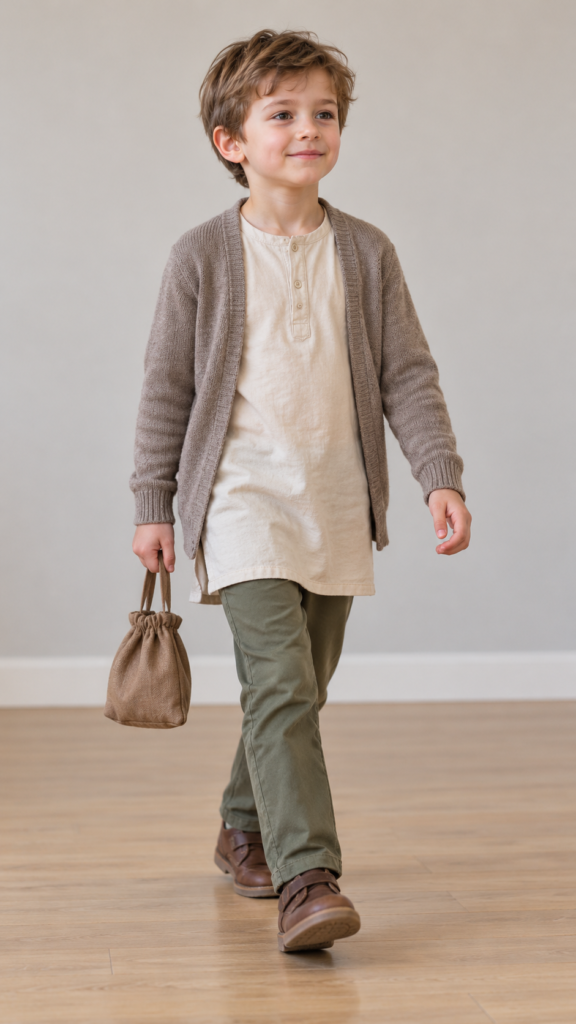
Not every child in a Nativity play needs to be a named biblical character. Some school productions include extra travellers or townspeople to make Bethlehem look busy, and these roles can be easier to dress than the main characters.
A long shirt, plain trousers or a simple skirt, and a lightweight outer layer can create a period-inspired look without buying a special costume.
How to put the outfit together
- Use a plain base: Choose a long shirt or tunic with trousers, leggings or a long skirt. Cream, white, brown, olive and other muted colours work well together, but the outfit does not need to look exactly like a museum reconstruction.
- Add a loose outer layer: A lightweight scarf worn over the shoulders or a simple open-front cardigan can suggest travel clothing. Secure it so it does not trail on the floor or slide across the child’s face.
- Make a small travel bag if the script calls for one: A soft fabric pouch or small cloth bag can be carried by hand. For a younger child, an empty bag is enough; there is no need to add heavy props.
- Keep the outfit distinct from the main characters: A plain tunic and small bag can distinguish a traveller from Mary, Joseph or the shepherds without making the costume elaborate. If several children have background roles, using different neutral colours can also help the audience tell them apart.
A small detail worth knowing: “Traveller” is a general role used in some school Nativity productions, not a named character in the Gospel birth narratives. Luke 2 describes Mary and Joseph travelling to Bethlehem for the census, while Matthew 2 tells of the Magi arriving later to visit Jesus. Extra travellers can help a school play show the setting, but they should be understood as part of the production rather than a specific group identified in the biblical account.
For toddlers/parents: Choose clothes that allow easy movement and shoes your child can walk in safely. Keep bags small and light, and avoid long straps that could catch on furniture or other children.
If the school has a quick costume change or a crowded stage, a simple outfit with no extra props may be the easiest choice.
For a calmer December routine without nightly elf setups, try these Elf on the Shelf Alternatives for Parents Tired of Coming Up With Ideas Every Night: 9 Low-Effort Traditions Kids Still Love.
Comfort and Safety Checks for Toddlers
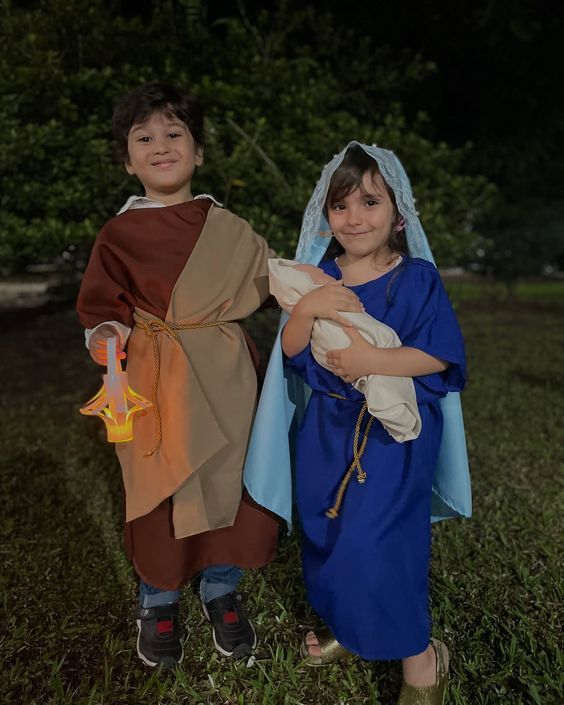
Your toddler has to walk, sit still, sing and stay in costume for the whole play. Before the dress rehearsal, check four things: can they move easily, is anything near the neck, an they see, and is anything small or hot?
-
Check the Hem and Practise Wearing It
A costume that is too long is a tripping risk. Costume guidance says the outfit should be short enough to prevent tripping or snagging, and children should practise wearing it first.
Try it on with the shoes your child will wear, then have them walk, sit down and climb a step. Baggy, loose costumes are also a concern, so a fitted costume is safer than a baggy one.
-
Keep the Neck Area Free of Cords
This is the check most nativity posts miss. Product safety authorities warn that cords and drawstrings can catch on objects and strangle a child. Singapore’s consumer safety office says clothing for children under 7 should have no cords or drawstrings around the hood and neck, and that belts and sashes at the back should not hang below the hem when untied.
The European standard on children’s clothing cords covers disguise costumes too. In the US, the CPSC knows of 18 deaths and 38 non-fatal incidents linked to neck and hood drawstrings, mostly involving young children.
For a nativity costume, this means:
- Hold head cloths with a soft stretchy headband, not a tie under the chin.
- Tie any belt at the front with short ends, or use a stretchy or Velcro belt instead of a long dressing gown cord.
- Skip hoods with cords, and don’t add neck ties or necklaces.
-
Choose Comfortable Fabrics
Costume guidance says to consider the child’s sensory needs when choosing outfits and accessories. A toddler who finds a scratchy tunic or tight headband uncomfortable may pull it off on stage. Try each piece at home for a few minutes, and use soft cotton layers next to the skin.
-
Keep Props Soft and Faces Clear
Choose props made from soft, flexible materials. Some costume guides suggest a large branch from the garden as a shepherd’s stick, but for a toddler a rolled cardboard crook is safer.
For animals, avoid masks, because masks can block vision. Use face paint instead if the school allows it. Look for non-toxic paint made for skin, and test a small patch on the forearm a few days before.
-
Watch for Small Parts
Toddlers put things in their mouths. In US safety rules, a small part is anything that fits entirely inside a cylinder 2.25 inches long and 1.25 inches wide, roughly the size of a child’s throat.
That rule is for toys and products for children under 3, but it is a useful guide. Leave off buttons, beads, sequins and loose gems. If a decoration could come off and fit in a small child’s mouth, don’t use it.
-
Be Careful With Battery Lights
A battery-powered tea light seems safer than a candle, but many contain button batteries. Safety regulators say that once swallowed, severe or fatal injuries can happen in 2 hours or less.
A product warning says to seek immediate medical attention if a battery is suspected to be swallowed. So for a toddler, the safest lantern is a cardboard one with no light. If you do use an LED tea light, check that the battery compartment is completely secure, and keep spare batteries away from children.
-
Keep Costumes Away From Open Flames
If your event uses real candles, check where they will be. Even flame-resistant costumes can catch fire if they touch an open flame, especially loose, flowing parts. One nativity script suggests that the innkeeper’s lantern should not be a lit candle
-
While You Make the Costume
Keep scissors and sewing kits out of reach of children. A church guide says children enjoy helping with costumes, but sharp tools should stay out of their reach.
Conclusion
Making nativity costumes for toddlers and kids can be as simple as checking the wardrobe before buying anything new. A plain dress, brown trousers, a long shirt or a few fabric scraps may be enough to create a recognisable character for a school play.
Add one or two suitable details, check that the outfit fits comfortably, and let your child practise moving in it before the big day.
Which Nativity character has your child been assigned? Share the outfit you plan to use in the comments, or tell us which item from your wardrobe helped you put the costume together. Your idea might help another parent prepare for the school play with less stress and expense.