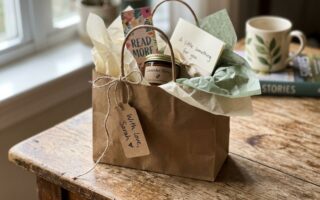
Already bought fabric, thread and the usual sewing tools? These gifts for people who sew go beyond the basics with useful upgrades they may not think to buy.
A sewist can have a drawer full of presser feet, three pairs of scissors, enough thread for the next ten projects and still have a sewing problem that a good gift could solve.
The question is which problem.
The most useful choice often depends on what happens at the sewing table.
Pressing curved seams, adjusting a pattern, cutting accurately, working with bulky fabrics or keeping years of patterns organized can all call for tools that rarely appear on basic sewing supply lists.
Someone who has mastered the fundamentals may also be ready for a technique that requires equipment they have never needed before.
That makes the best gift less about adding to their collection and more about finding something that improves the way they sew.
Here are 15 ideas worth considering when the basics are already covered.
A good starter kit does not need to be expensive. 11 Essential Sewing Tools for Sewists That Help Improve Accuracy and Are Budget-Friendly covers the tools worth having.
Four Things to Find Out Before You Buy
A few details can save you from buying something they already own, or something that will not work for their setup.
- Their machine’s make and model: This matters for machine-specific accessories such as presser feet and attachments. A photo of the machine’s label is usually enough.
- What they sew: Garments, quilts, bags and home décor use different tools, so this helps narrow down the right gift.
- How they use patterns: Find out whether they work mainly with printed paper patterns or download and print PDF patterns. Storage and tracing needs can differ.
- Where they cut and press: Someone working at a dedicated sewing table has different space needs from someone who cuts on the floor or presses on a standard ironing board.
Small technique changes can make a noticeable difference. 15 Sewing Hacks for Beginners Who Want Neater, More Professional Results has practical ones to try.
Gifts for Patterns and Planning
1. Copy-Shop Printing for PDF Patterns
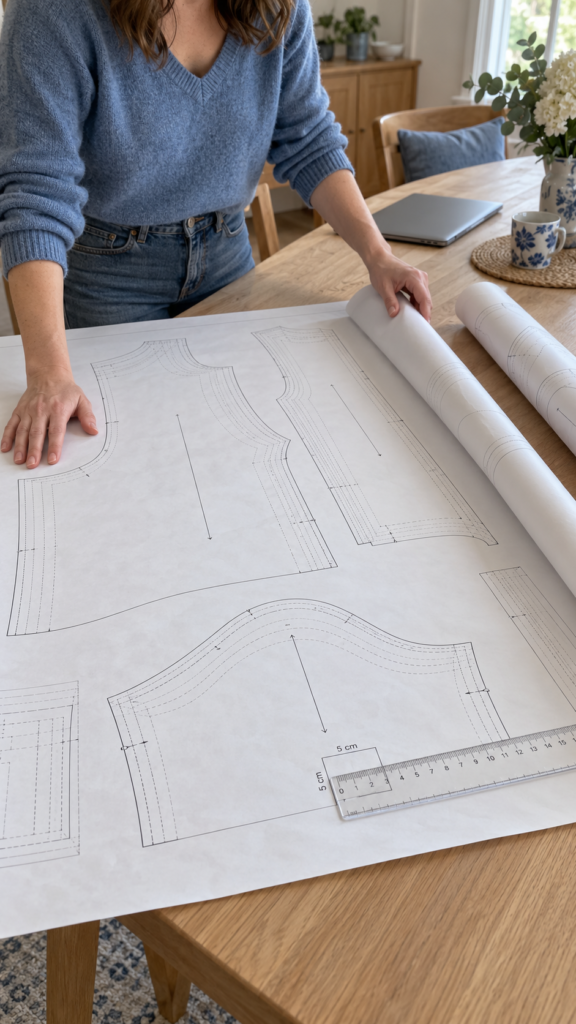
If the person you are buying for regularly downloads sewing patterns, you can give them something they may appreciate more than another sewing notion: have one of their patterns printed professionally for them.
Many PDF patterns come with several printing options. You may see a US Letter or A4 file for home printing, alongside an A0, A1, A2 or copy-shop file for large-format printing.
The large-format version puts the pattern pieces onto much larger sheets, so there is considerably less page trimming and taping.
There is another reason to check the file carefully: not every PDF pattern includes an A0 file, and some pattern companies provide a separate copy-shop file rather than including it with the home-print version.
Some also offer projector files, which are a completely different option and should not be sent to a print shop by mistake.
If you want to make this gift personal, ask which pattern they have been meaning to print and pay for that one. A0 is 841 × 1189 mm, while the common US large-format size used by copy shops is often 36 × 48 inches, but the pattern designer’s file and the print shop’s available equipment should determine the actual size.
Check before ordering: Make sure you have the correct copy-shop file, ask the shop to print at 100% / actual size, and check the pattern’s test square after printing.
Do not assume that “fit to page” is acceptable for a sewing pattern, it can change the dimensions.
Best for: sewists who buy PDF patterns but would rather not spend an evening printing, trimming and assembling them at home.
Sewing can become a fun shared activity with 12 Easy Sewing Projects Adults and Kids Will Actually Complete Together.
2. Pattern Tracing Paper and a Curved Ruler
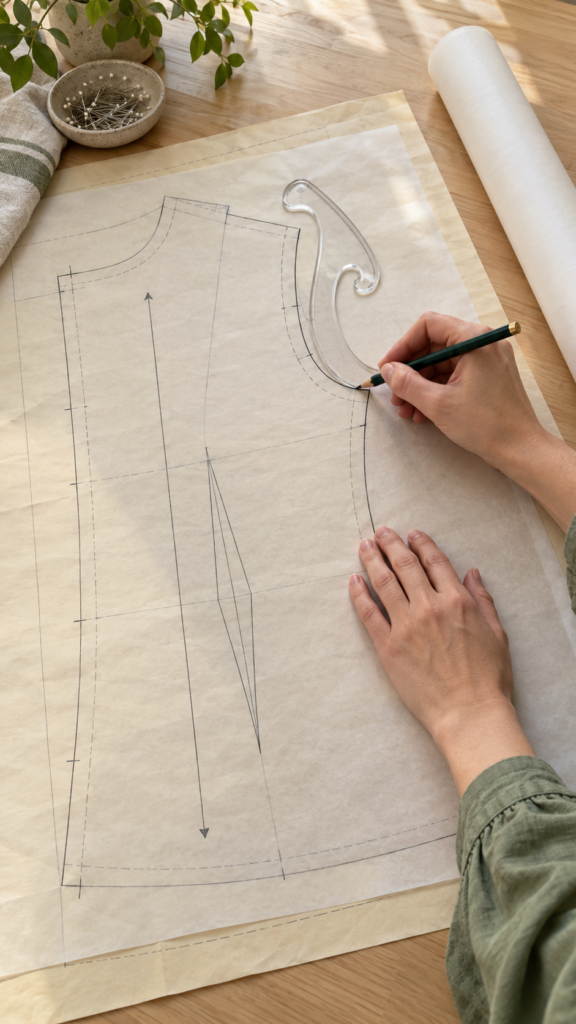
Cutting directly into a favourite sewing pattern can be a nuisance when the same pattern may be needed again in another size or after future alterations.
Pattern tracing paper gives the sewist a working copy while the original stays intact, so they can experiment with adjustments without putting the master pattern at risk.
That can be especially useful for someone who enjoys tweaking a pattern until it fits just right. Dot-and-cross pattern paper provides a visible grid for checking measurements and making adjustments, while the traced pieces can retain important markings such as the grainline, notches, darts, fold lines, piece number and size.
Pair it with a French curve, and the gift becomes even more useful for someone who alters patterns.
The curved edge helps them redraw smooth armholes, necklines and hip lines instead of struggling to reproduce those curves freehand.
Check before buying: Look at the roll’s width and total length. Someone who works mainly on full-size garment patterns will appreciate more working space than someone tracing small projects.
Why they may appreciate it: It gives them room to preserve a pattern they love, try a different size or make a fitting adjustment without sacrificing the original.
Handmade boho pieces can become sellable gifts too. 10 Handmade Boho-Inspired Gift Ideas You Can Make and Sell From Home has ideas to try.
Gifts for Cutting and Standing
The cutting stage is easy to overlook when buying gifts for people who sew.
Yet it can involve standing over a table, spreading out several metres of fabric, leaning across the work surface and making dozens of repeated cuts.
A few practical changes can make an existing cutting area work much better.
3. Table Risers for the Cutting Table
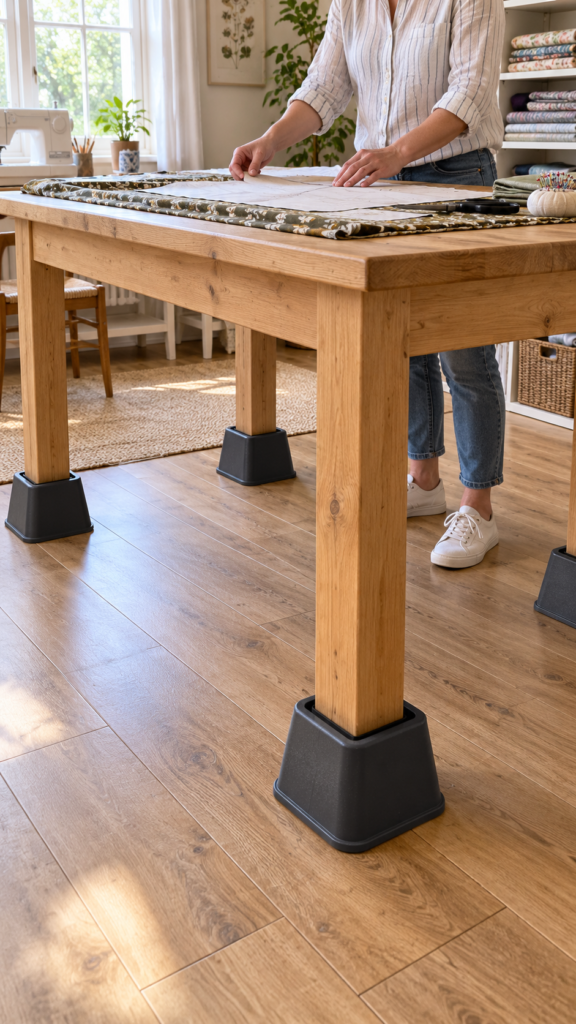
A cutting table does not have to be expensive to be useful, but the wrong height can make the person using it work in an awkward position.
This is particularly noticeable during large projects when they are standing at the table for a long time.
Table risers can be an inexpensive way to raise an existing table instead of replacing it.
The right height is personal: Threads has suggested using the distance from the floor to the elbow as a starting point and subtracting a few inches, although the ideal height also depends on whether the person is cutting, pinning or doing another task at the table.
This makes a better gift when you already know they complain about their cutting table being too low or you have seen them constantly bend over it. Do not guess the size of the risers, though.
Check the table-leg dimensions and choose a weight rating that comfortably supports the table and its usual load. Locking casters are another option when the table needs to move but should remain secure while in use.
A height-adjustable cutting table is the more substantial option for someone who spends a lot of time sewing and has the room for a dedicated work surface.
Best for: Someone with a sturdy cutting table that is too low and who would benefit from raising the work surface without replacing the whole table.
A thoughtful gift does not have to cost much. DIY Gift Ideas for Friends When You Have No Money That Still Feel Special has budget-friendly ideas.
4. Anti-Fatigue Mat
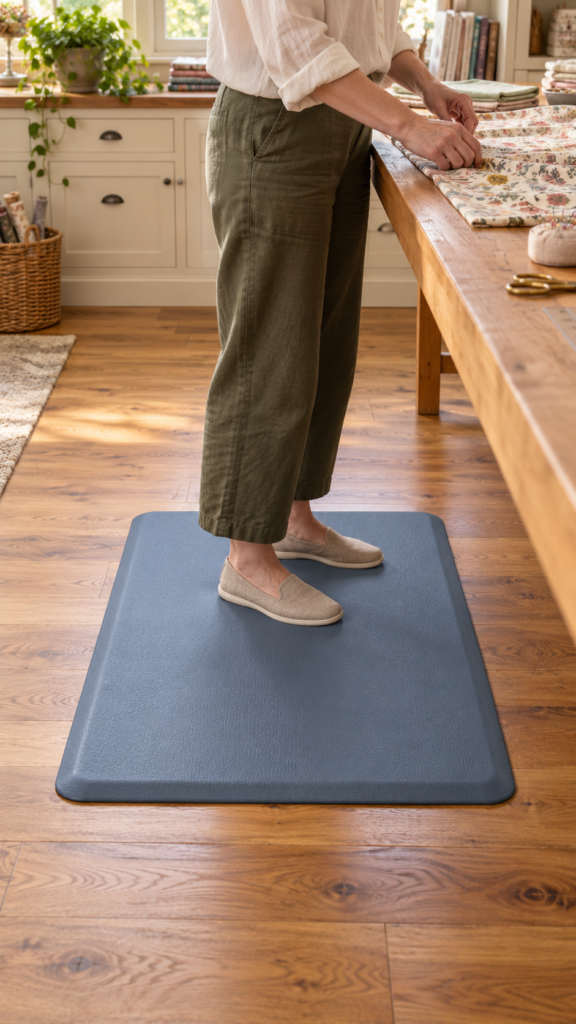
Standing on a hard floor while cutting fabric or pressing seams can become one of those small annoyances that is easy to ignore until a sewing session runs long.
An anti-fatigue mat gives the standing area a more cushioned surface, making it a sensible addition to a cutting or pressing station.
It is worth keeping the claim modest. An anti-fatigue mat should not be presented as a treatment for back, foot or leg pain.
Its more straightforward purpose is to provide cushioning and support during prolonged standing.
A quilting ergonomics guide from a specialist retailer recommends considering this type of mat for standing sewing tasks such as cutting and pressing.
For the gift, measure the area where they normally stand rather than buying the largest mat available. The mat should fit comfortably under the person’s working position without creating a trip hazard around the table.
Best for: Someone who regularly spends long sewing sessions standing at a cutting table or pressing station, particularly on a hard floor.
Wedding gifts feel more personal when you make them yourself. 11 Unique and Handmade Wedding Gift Sewing Projects That Will Impress Newlyweds has projects worth considering.
5. Rotary Blades in the Right Size
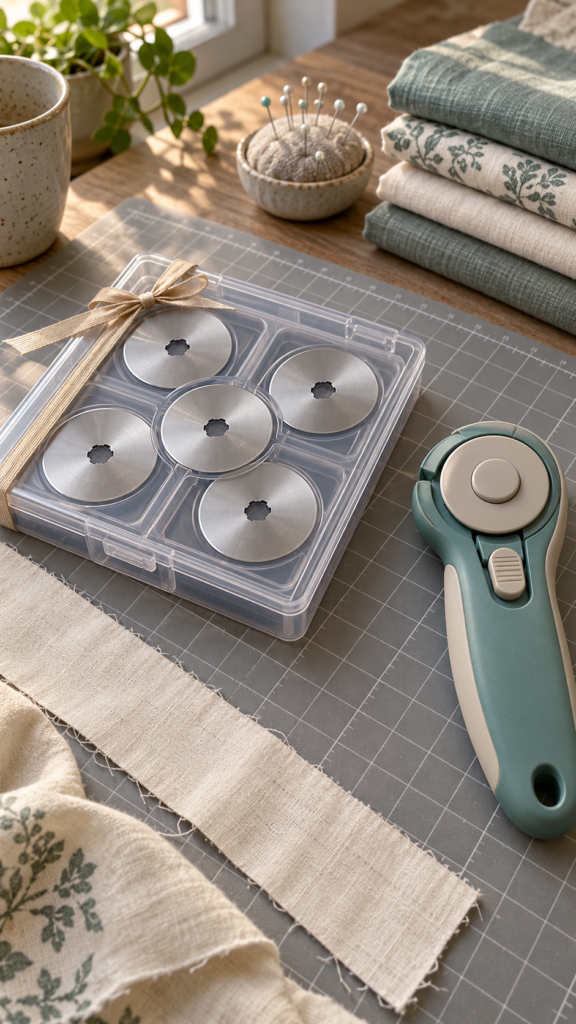
This is one of those gifts that can look ordinary until you understand how much a sewist relies on a rotary cutter. The blade is a consumable, and it eventually becomes dull even when the cutter itself is perfectly good.
A worn blade can make cutting less pleasant and may require more pressure to move through fabric.
Replacing it is therefore part of maintaining the tool, rather than buying a completely new cutter every time the blade wears out.
A 45 mm rotary cutter is a common size, but that is not a reason to automatically buy 45 mm replacement blades.
Check the cutter they use first. Rotary cutters are available in different blade diameters, and replacement blades need to match the cutter’s specifications. The manufacturer’s instructions are the safest reference when compatibility is unclear.
A multipack can make sense for someone who cuts frequently because it gives them replacements ready when the current blade becomes dull. Just avoid buying a large quantity for someone who rarely uses a rotary cutter.
Best for: Quilters and sewists who use a rotary cutter regularly and are likely to appreciate having the correct replacement blades ready when the current one wears out.
Useful handmade items can be easier to sell than pieces chosen just for decoration. 12 Useful Crafts to Make and Sell That Solve Problems, Not Just Decorate
Gifts for Seeing and Sitting
Some sewing problems have nothing to do with the machine or the fabric. Poor lighting can make colour matching harder, while the wrong chair can leave someone constantly adjusting their position to get comfortable at the machine.
Both are easy to overlook when choosing gifts for people who sew, but they can make a noticeable difference to a sewing setup.
6. Daylight Lamp With a Stated CRI
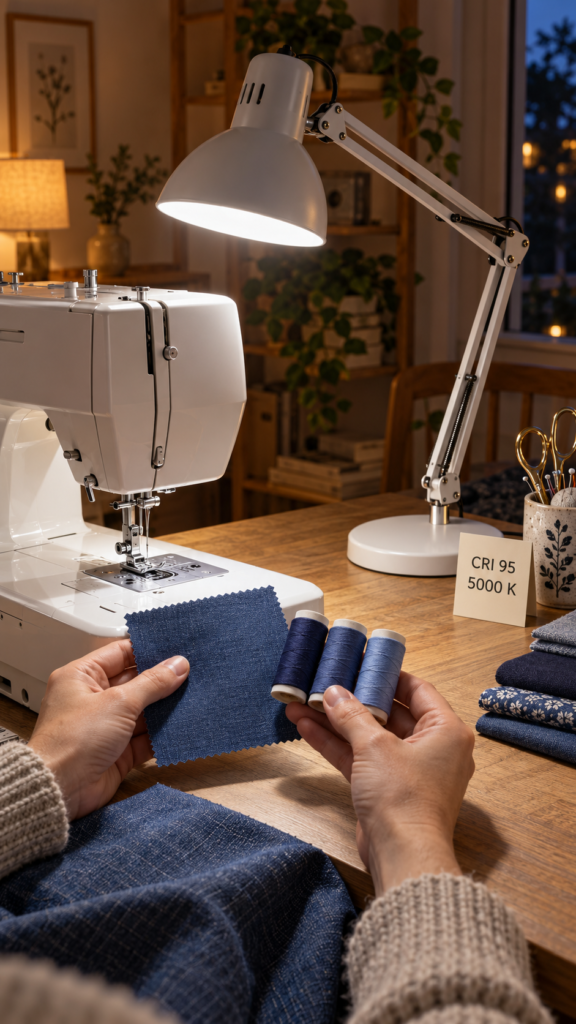
Thread colours can look different under different lights, which is one reason a lamp labelled simply “daylight” is not necessarily enough when buying a gift for a sewist.
Colour Rendering Index (CRI) tells you more about how accurately a light source shows colours. Lighting guidance for detailed tasks commonly recommends a CRI of at least 80, with 90 or higher preferred when accurate colour distinction matters.
The Kelvin rating matters too. A lamp around 5000–6500K gives a cooler, daylight-like appearance, while warmer light can change how colours appear. This becomes particularly useful when someone is matching thread to fabric, checking small details or working with several shades that look deceptively similar.
Look beyond the product name when shopping. The listing should give an actual CRI figure and colour temperature in Kelvin rather than relying only on phrases such as “natural daylight” or “daylight bulb.”
A lamp with an adjustable arm or head can also be more useful at a sewing machine because the light can be directed towards the needle and work area.
For an international gift, check the plug type and voltage before ordering. A beautiful lamp is not much use if it needs an incompatible electrical supply.
Best for: A sewist who works with lots of different fabric and thread colours, sews in the evening or has a sewing area that depends on ordinary room lighting.
Choosing between machine types gets easier once you understand how they differ. Industrial vs Domestic Sewing Machines: Which One Should You Buy as a Beginner
7. Adjustable-Height Sewing Chair
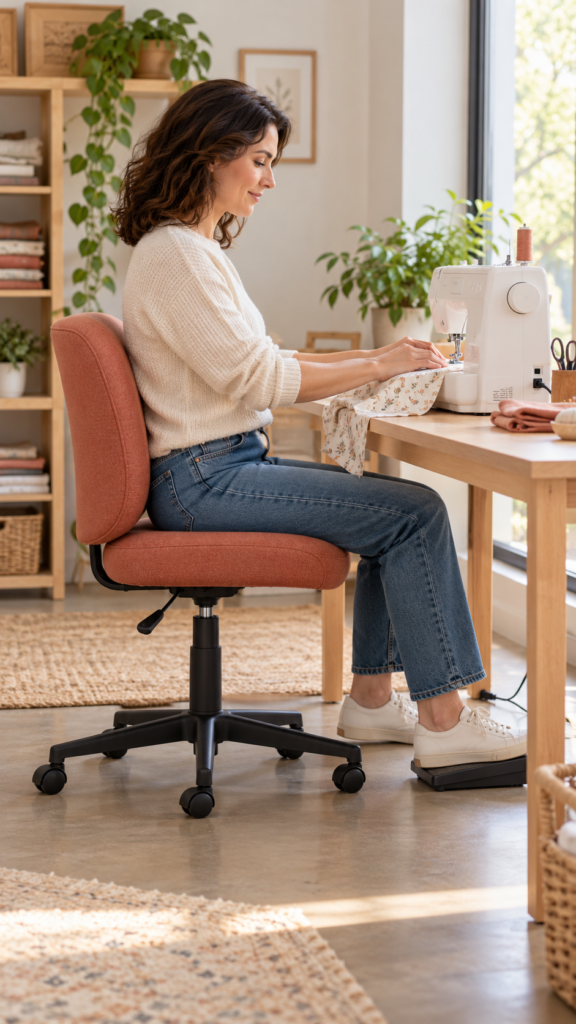
The chair beside a sewing machine has a job beyond simply providing somewhere to sit. The height needs to work with the machine, table and the person’s own body, so a chair that adjusts can be more useful than a standard dining or office chair.
A useful starting position is having the feet supported on the floor while the sewing work sits around elbow height, but the exact setup will vary with the machine, table and person.
An adjustable-height chair gives the sewist more room to find a position that works with their particular machine rather than forcing their body to adapt to a fixed seat.
Look for a chair with a height range that actually suits the sewing table, a stable base and a seat that allows them to sit comfortably while operating the foot control.
Wheels are not automatically an advantage in a sewing room; too much movement can be irritating when precise foot control is needed.
This is one of the bigger gifts on the list, so it is worth checking the height of their existing sewing table before buying.
A chair that is adjustable but still cannot put them in a comfortable working position has not solved the problem.
Best for: Someone who spends long periods at their sewing machine and keeps changing their sitting position because their current chair does not match the height of the machine or table.
Ready to turn sewing into income? Struggling to Make Money From Home Sewing? Launch a Profitable Sewing Side Hustle covers the business side.
Gifts for Machine Sewing
Machine accessories can make excellent gifts for people who sew, but they are also some of the easiest gifts to get wrong.
A presser foot that fits one machine may not fit another, and specialty feet only make sense when they match the kind of sewing the person actually does.
8. Walking Foot That Fits Their Machine
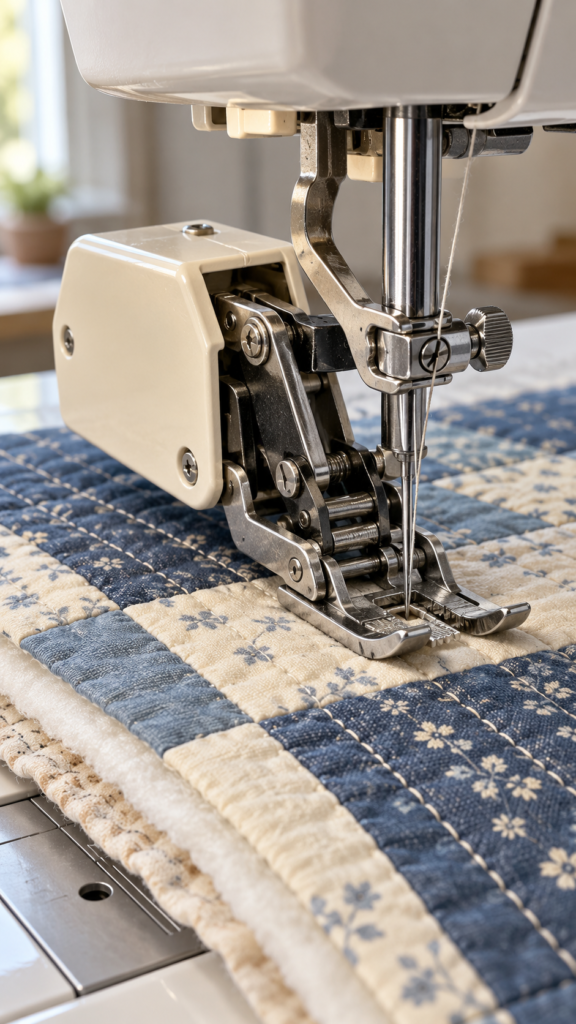
Some sewing projects become difficult simply because the layers do not stay where they should.
A walking foot, also called an even-feed foot, adds feeding from above so multiple layers can move through the machine more evenly.
This is particularly useful when quilting several layers or sewing materials that tend to shift as they pass under the presser foot.
It is not a replacement for the machine’s normal feed dogs. Instead, the walking foot works with them to help move the upper layers along with the fabric underneath.
That can make a difference when quilting lines across a layered quilt sandwich or sewing bulky combinations where the top layer tends to creep.
The important part of this gift is the word fits. Walking feet are not interchangeable across every sewing machine.
Compatibility can depend on the machine’s presser-foot system, shank arrangement and the way the foot attaches. Some manufacturers also make brand-specific walking feet designed for particular machines.
That is why the machine’s make and exact model is much more useful than a listing that simply says “universal.” The sewing machine manual is the safest place to confirm which walking foot is compatible.
Best for: A quilter or sewist who works with multiple layers and would benefit from more even feeding, provided you can confirm the correct foot for their machine.
Skipped stitches do not always mean your machine needs repair. Why Your Sewing Machine Keeps Skipping Stitches (And 7 Easy Fixes That Work Fast) helps you troubleshoot them.
9. Ruler Foot and Matching Quilting Rulers
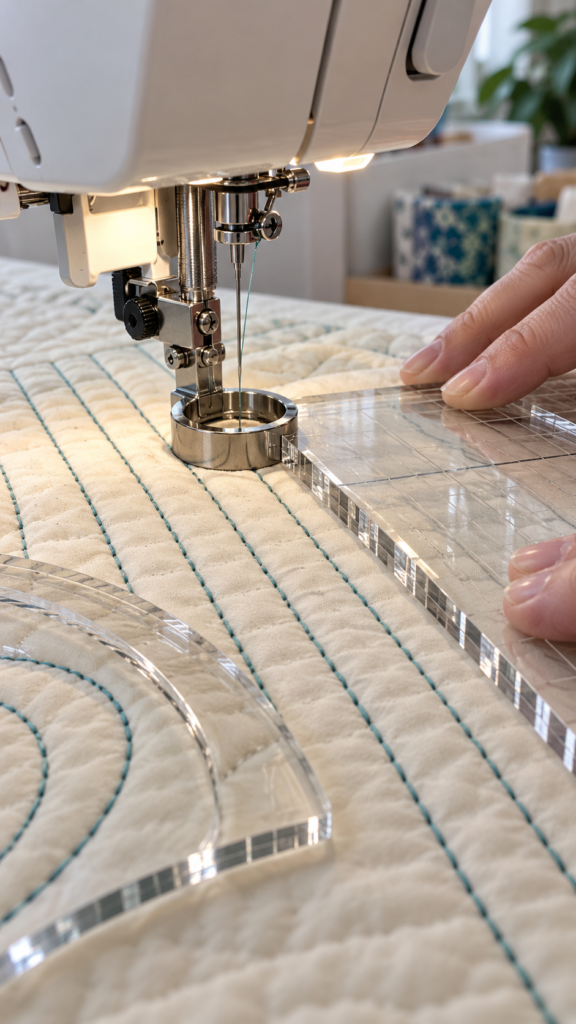
For someone who enjoys free-motion quilting, a ruler foot can open up a technique that is very different from ordinary machine sewing.
The quilter lowers or covers the feed dogs, moves the quilt by hand and uses a quilting ruler against the foot to guide repeated lines, curves and motifs.
The foot and ruler need to be treated as a pair when buying this gift. Quilting rulers made for ruler work have a specific thickness so the edge can sit against the foot without slipping underneath it.
Home sewing machines may use different ruler-foot heights, commonly around 3 mm for low-shank setups and around 4.5 mm for high-shank setups.
Longarm rulers are a separate category and should not simply be assumed to work safely with a domestic sewing machine.
This is also one gift where buying the wrong accessory can be more than disappointing. A ruler that is too thin may not provide the intended guide against the foot, while an unsuitable thick ruler can interfere with the foot or machine.
Check the machine model, compatible ruler-foot system and the thickness recommended by the foot manufacturer before ordering.
It is usually better to buy a compatible foot and a small set of matching rulers than to assemble the gift from unrelated pieces.
And this one has a very specific audience. Someone who mainly makes garments or ordinary seams may have little use for a ruler foot, whereas a free-motion quilter who has been curious about ruler work may genuinely enjoy having the equipment to try it.
Best for: A quilter who already does free-motion quilting or has specifically shown an interest in learning ruler work on their domestic sewing machine.
Confusing pattern instructions can make a simple project feel much harder. How to Find Sewing Patterns That Are Easy to Follow and Beginner-Friendly (Save Hours of Frustration)
Gifts for Pressing and Finishing
Pressing tools are easy to overlook because they are not involved in stitching the seam itself.
Yet garment sewing can produce awkward curves, narrow sections and bulky seams that are difficult to handle well on a flat ironing board.
For gifts for people who sew, these are the kinds of tools that can make sense when the recipient already owns the usual iron and ironing board.
10. Hardwood Tailor’s Clapper
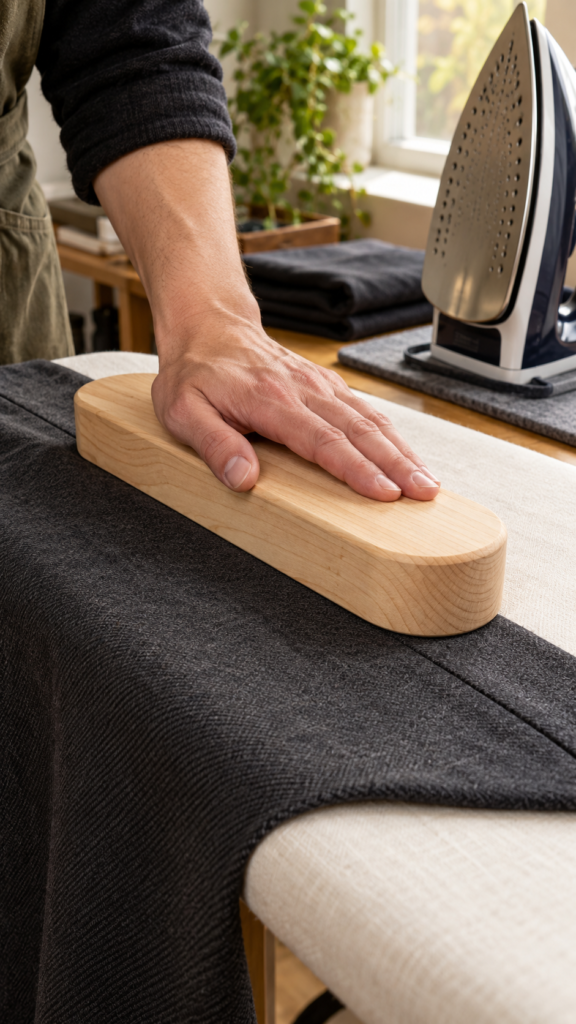
A tailor’s clapper looks almost too simple to be a worthwhile gift: it is essentially a solid wooden block. Its usefulness becomes clear when a sewist is trying to get a seam, hem or crease to stay flat after steam pressing.
The usual method is to steam-press the area, lift the iron and immediately place the clapper over the freshly pressed section, applying firm pressure while the fabric cools.
The wood helps draw away heat and moisture while keeping pressure on the fabric, which can set a sharper, flatter press than leaving the seam to cool on its own.
It is particularly useful for tailoring, wool, denim, heavier cottons and areas such as hems, collars and cuffs.
This is also a gift where the material matters. Look for a solid, unfinished hardwood clapper with a flat pressing surface rather than choosing one simply because it looks attractive.
Hardwood varieties such as maple, oak and ash are commonly used, but there is no special requirement that every good clapper be one particular species.
Size and shape vary between makers, so the more useful checks are that it is comfortable to hold and has enough flat surface for the type of work the recipient does.
One important caveat: the clapper is not a universal “press everything harder” tool. Heat-sensitive or synthetic fabrics still need the temperature and pressing method appropriate to the fabric.
Best for: Someone who makes tailored garments, coats, structured clothing or other projects where crisp seams and firm creases matter.
Another skipped-stitch problem may need a different set of checks. Sewing Machine Skipping Stitches? 9 Checks That Can Point You to the Real Problem Before You Book a Repair
11. Tailor’s Ham and Seam Roll
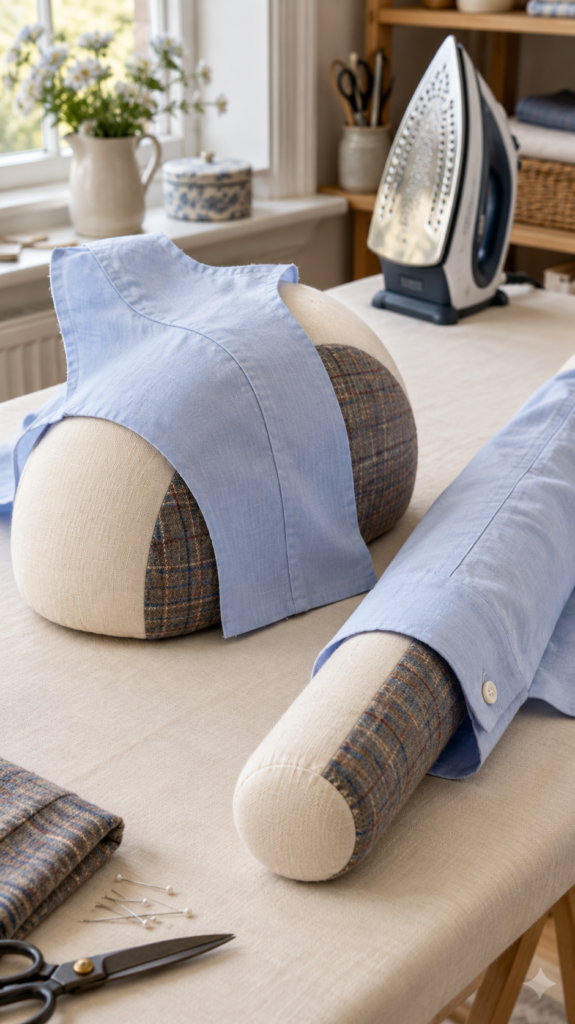
The flat ironing board is not shaped like a human body, but many garment seams are. That is where a tailor’s ham earns its place.
Its firm, rounded surface lets the sewist press darts, princess seams, sleeve caps, collars and other curved sections without forcing the garment completely flat.
The seam roll solves a different problem. Its long, narrow shape can fit inside sleeves, trouser legs and other restricted areas where an ordinary ironing board would press unwanted creases into the surrounding fabric.
It can also help when pressing a seam allowance without imprinting the seam onto the outside of the garment.
A good set often has different pressing surfaces. Wool is useful where lower temperatures are appropriate, while cotton can handle higher-temperature pressing, depending on the fabric being worked on.
Some commercial hams are firmly packed with materials such as sawdust or other dense fillings so they hold their shape during pressing.
This is one of the gifts for people who sew where knowing their sewing style really matters.
A person who mainly quilts flat blocks may rarely reach for either tool, while someone who makes fitted shirts, dresses, jackets or trousers can use them throughout a garment.
Best for: Garment sewists who regularly press darts, curved seams, sleeve sections, collars or other shaped parts of clothing.
The right presser foot can make certain sewing jobs much easier. Sewing Machine Presser Feet: How to Choose the Right One for Your Project explains which ones to use.
12. Buttonhole Chisel and Cutting Block
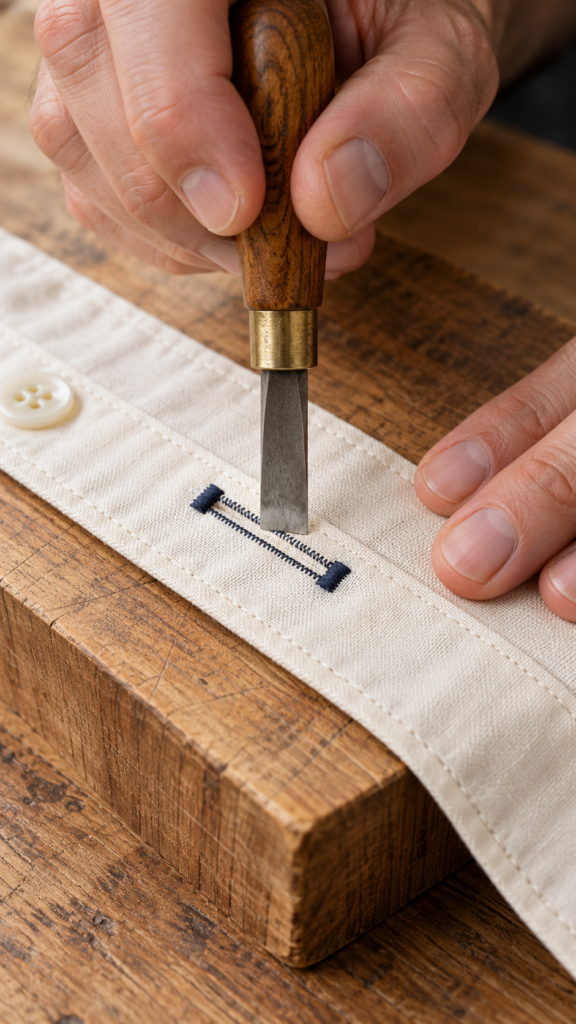
Opening a finished buttonhole is one of those tiny jobs where a mistake can ruin otherwise careful sewing.
A buttonhole chisel gives the sewist a controlled way to cut the opening through the centre of the stitched buttonhole, with a solid cutting block underneath to protect the work surface.
The technique is straightforward: place the finished buttonhole over the wooden block, position the sharp chisel between the stitched sides and press or tap it through the fabric.
The blade cuts the opening while the stitched ends, or bartacks, remain intact. Sewing references specifically recommend a block and chisel for opening finished buttonholes.
The useful buying detail is the blade width. A 1/2-inch (12.7 mm) chisel is a common option, but it should not be treated as the correct size for every garment.
One sewing pattern retailer, for example, lists a 1/2-inch chisel for garments using 1/2–3/4-inch buttons, while a dedicated sewing supplier sells a 12.5 mm blade.
That means the recipient’s usual buttonhole sizes are worth knowing before you buy. A blade that is shorter than the finished buttonhole may require more than one cut, while a blade that is too wide can cut beyond the stitched opening.
The wooden block is part of the set for a reason; using a sharp chisel directly against a table or other hard surface can damage both the surface and the cutting edge.
Best for: Someone who regularly makes shirts, jackets, dresses, coats or other button-front garments and wants a more controlled way to open finished buttonholes.
A favourite garment can become the starting point for a new pattern. How to Copy a Pattern From Clothes You Already Own (Without Taking Them Apart) shows you how.
Gifts for Machine Care
Machine-care gifts may not look as exciting as a new presser foot, but they can be more useful for someone who has been sewing for years. The important thing is to avoid treating every sewing machine as though it needs the same maintenance routine.
13. Professional Sewing Machine Service Voucher
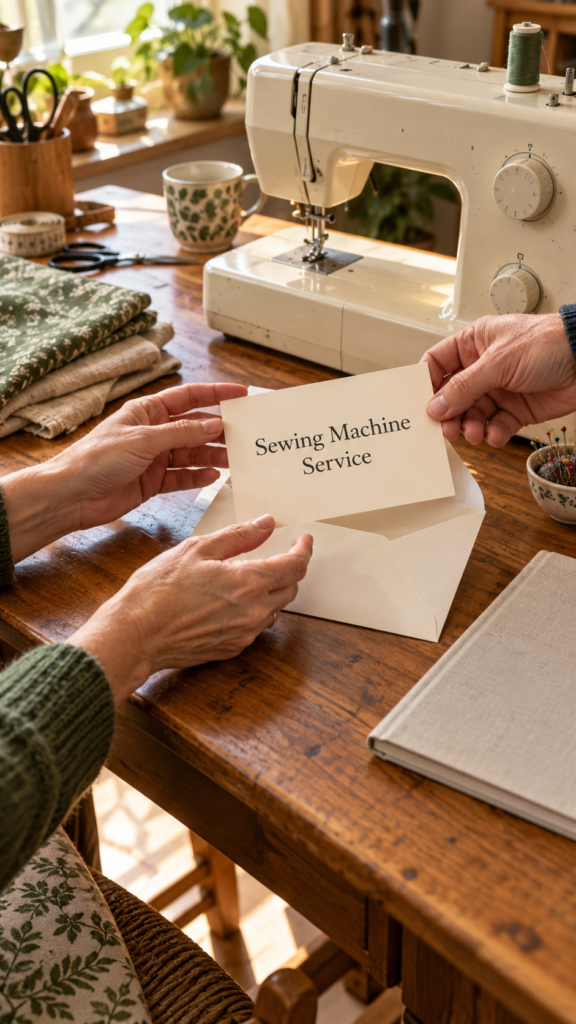
A service voucher can be a surprisingly thoughtful choice for someone whose machine gets regular use. Instead of buying another accessory they may already own, you are paying for something that keeps an important piece of their sewing setup checked and maintained.
The catch is that “service” does not mean exactly the same thing for every machine.
Brother, for example, gives some models a maintenance schedule based on hours of use, while another Brother support page says certain machines are manufactured with sufficient lubrication and should not be oiled by the owner.
One Brother guideline recommends authorised servicing at 500 hours for light-to-moderate use and 300 hours for heavier or prolonged high-speed use.
That makes a service voucher more useful than simply handing someone a bottle of sewing-machine oil. The technician can follow the manufacturer’s requirements for that particular model rather than applying a routine that may not belong to it.
Before buying, call the repair shop and give them the machine’s make and model.
Confirm that they service that brand, what the service includes and whether the voucher covers cleaning, inspection, lubrication where required and adjustments or repairs separately. A “service voucher” that only covers a basic cleaning may not be the same thing as a full machine service.
This can also be a particularly good gift for someone who has owned their machine for years but keeps putting maintenance off because the machine still appears to be working normally.
Best for: A regular sewist with a well-used machine, especially someone who has never had it professionally serviced or is overdue for manufacturer-recommended maintenance.
Needle choice matters more than many beginners realise. How to Choose the Right Sewing Needle for Every Fabric Type — Before You Blame Your Machine breaks it down by fabric.
14. Soft Brush Set — Without the Guesswork of Machine Oil
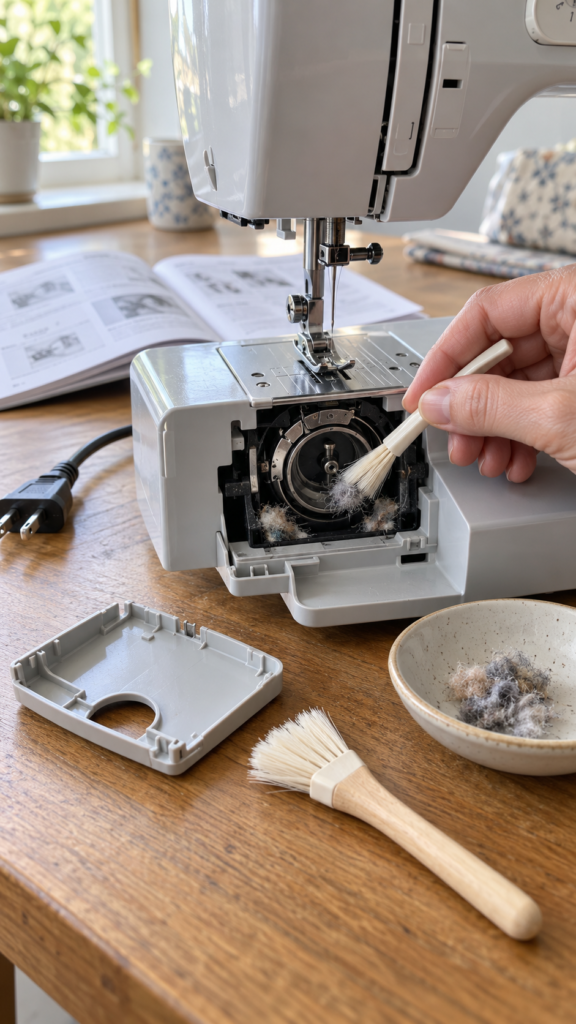
A small set of soft, lint-removing brushes is a much safer maintenance gift than assuming the recipient needs sewing-machine oil.
Lint and loose thread can collect around areas such as the bobbin case and feed dogs, and a suitable brush gives the sewist a simple way to remove debris during routine cleaning.
The important word is soft. The brush should be suitable for delicate machine parts and narrow enough to reach the areas the manufacturer’s cleaning instructions identify.
It is not necessary to buy an elaborate “professional” brush kit just because it has more pieces; one or two appropriately sized brushes may be more useful.
And this is where the gift buyer should resist the temptation to add oil. Machine lubrication is model-specific.
Brother’s support information demonstrates why: some models have specific oiling instructions, while other models explicitly state that no periodic user lubrication is necessary.
The same caution applies to compressed air. Advice differs between machines and manufacturers, so blowing lint into the machine is not something to recommend as a universal cleaning method.
The machine’s manual should determine what the owner is supposed to clean, what they can access and whether lubrication is required.
Best for: Someone who regularly cleans their machine and would appreciate simple maintenance tools without receiving an oil or cleaning product that may not be suitable for their particular model.
Pattern markings make much more sense once you know how to read them. How to Read Sewing Patterns Without Feeling Lost walks you through the basics.
A Gift for Learning
15. Fabric Swatch Book
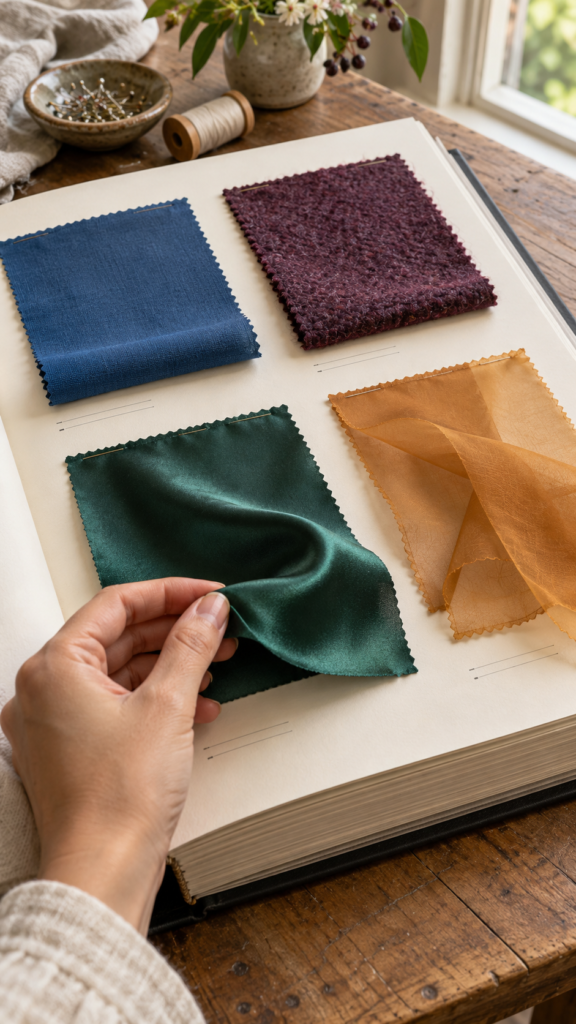
Buying fabric for an experienced sewist can be surprisingly difficult. Colour and print are easy to see online, but drape, weight, surface texture and fabric structure cannot be understood properly from a product photograph.
That is what makes a physical fabric swatch book an unusual but genuinely useful gift.
Fabric for Fashion: The Swatch Book by Clive Hallett and Amanda Johnston is designed around this idea.
The Revised Second Edition contains 142 fabric swatches and yarn samples, with information about fibre composition, construction, weight and other fabric characteristics.
The publisher describes it as a reference for fashion students, designers, textile professionals and crafters.
That information can change how someone chooses fabric. Two materials may both be described as cotton, for example, while their construction and weight make them behave very differently when sewn.
Seeing and handling actual samples gives the reader something a list of fabric names cannot provide.
The book is particularly useful for someone who is moving beyond simply following a pattern and wants to understand why one fabric is suitable for a particular garment while another is not.
It can help connect fibre, construction, weight and fabric behaviour to decisions made at the cutting and sewing table.
There are different editions, so check the listing carefully. The 2014 second edition contains 125 swatches, while the Revised Second Edition from 2021 is listed with 142 swatches and yarn samples.
The revised edition is also a relatively substantial investment, so it makes more sense as a gift for someone genuinely interested in textiles, garment construction or fashion design than for someone who only sews occasionally.
Best for: An experienced garment sewist, fashion student, designer or fabric enthusiast who wants to understand textiles more deeply rather than simply collect more sewing supplies.
New to machine sewing? Beginner’s Guide to Sewing Machine Basics You’ll Actually Use covers the parts and settings you need first.
Conclusion
The best gifts for people who sew are rarely the ones that simply add another item to their sewing room.
A thoughtful gift fits the way they work, the projects they enjoy and the small frustrations they have learned to work around.
Before buying, think about what would make their sewing easier, more precise or more enjoyable. That usually leads to a better gift than choosing something simply because it looks like a sewing product.
Not sure which idea to choose? Start with the one that matches a problem you have actually seen them deal with, that is often the gift they will appreciate most.
Neater seams often come down to simple habits rather than expensive equipment. 15 Sewing Hacks for Beginners Who Want Neater, More Professional Results has more.
A handmade wedding gift can carry much more meaning than a generic present. 11 Unique and Handmade Wedding Gift Sewing Projects That Will Impress Newlyweds
Frequently Asked Questions
1. How do I know which presser foot fits?
Start with the sewing machine’s make and exact model, then check the manufacturer’s manual or compatibility guide. Presser feet can differ by shank type, attachment system and brand, so do not rely on a listing that simply says “universal.”
2. Should I buy a sewing machine as a gift?
Usually, not without involving the recipient. Sewing machines differ greatly in features, controls, accessories and price, and experienced sewists often have strong preferences. A contribution towards the machine they have chosen can be a safer gift than selecting one for them.
3. How often should a sewing machine be serviced?
There is no single schedule for every machine. Follow the manufacturer’s maintenance instructions, because some models specify servicing by hours of use while others have different requirements. Heavy use may require attention sooner than occasional sewing.
4. What is the best lighting for sewing?
Look for a task lamp with a clearly stated CRI and colour temperature, rather than relying only on “daylight” in the product name. A CRI of 90 or higher is a useful target when accurate colour distinction matters, while around 5000–6500K gives a daylight-like appearance.
6. What does a tailor’s clapper do?
A tailor’s clapper is a solid wooden pressing tool used immediately after steam pressing. Holding it against the freshly pressed area as it cools helps set seams and creases flat, making it particularly useful for tailoring, wool and other projects where crisp pressing matters.
Also Read:
- Before assuming the machine is faulty, check the common causes of skipped stitches. Why Your Sewing Machine Keeps Skipping Stitches (And 7 Easy Fixes That Work Fast)
- Beginner-friendly patterns can save hours of frustration at the cutting table. How to Find Sewing Patterns That Are Easy to Follow and Beginner-Friendly (Save Hours of Frustration)
- Those leftover pieces can still become something useful. What to Do With Fabric Scraps: Sewing Hacks That Turn Leftovers Into Keep-Worthy Gifts