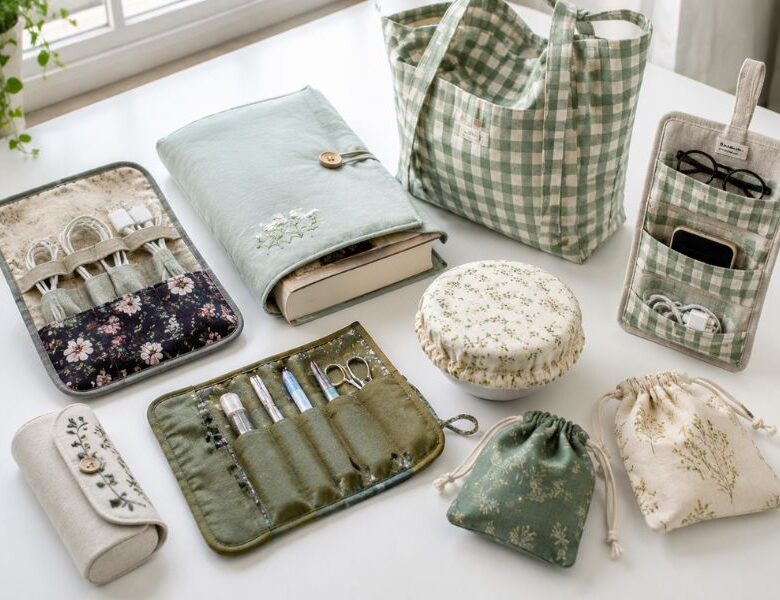
What makes a handmade product worth buying? These useful crafts to make and sell turn everyday problems into practical products.
Some of the best things to make and sell are hiding in places that don’t look very creative at first.
A cable that is always tangled.
A pair of glasses tossed into a handbag.
A book getting its corners bent inside a backpack.
A handful of sewing tools that never seem to stay together.
A small bedside space with nowhere convenient to put a phone, glasses and charging cable.
None of these problems sounds like a craft idea. That is exactly why they are worth paying attention to.
When you look at handmade selling only through the lens of decoration, you tend to ask, “What beautiful thing can I make?” Functional crafts start with a more useful question:
“What small, everyday frustration could I make easier?”
That shift can lead to products people have a practical reason to buy, not just something they like looking at.
And the possibilities are surprisingly ordinary. A handmade sleeve can keep a book protected in a bag, purpose-built pouch can stop small tools from disappearing, an organiser can give a collection of loose items a proper place.
The 12 ideas below focus on those kinds of everyday problems, with the function of the craft coming first and the decoration coming second.
Start with seasonal ideas in 30 Summer Crafts to Make and Sell at Craft Fairs This Year (With Free Patterns) if you want practical products that fit a summer craft-fair crowd.
Don’t Confuse “Useful” With “Worth Buying”
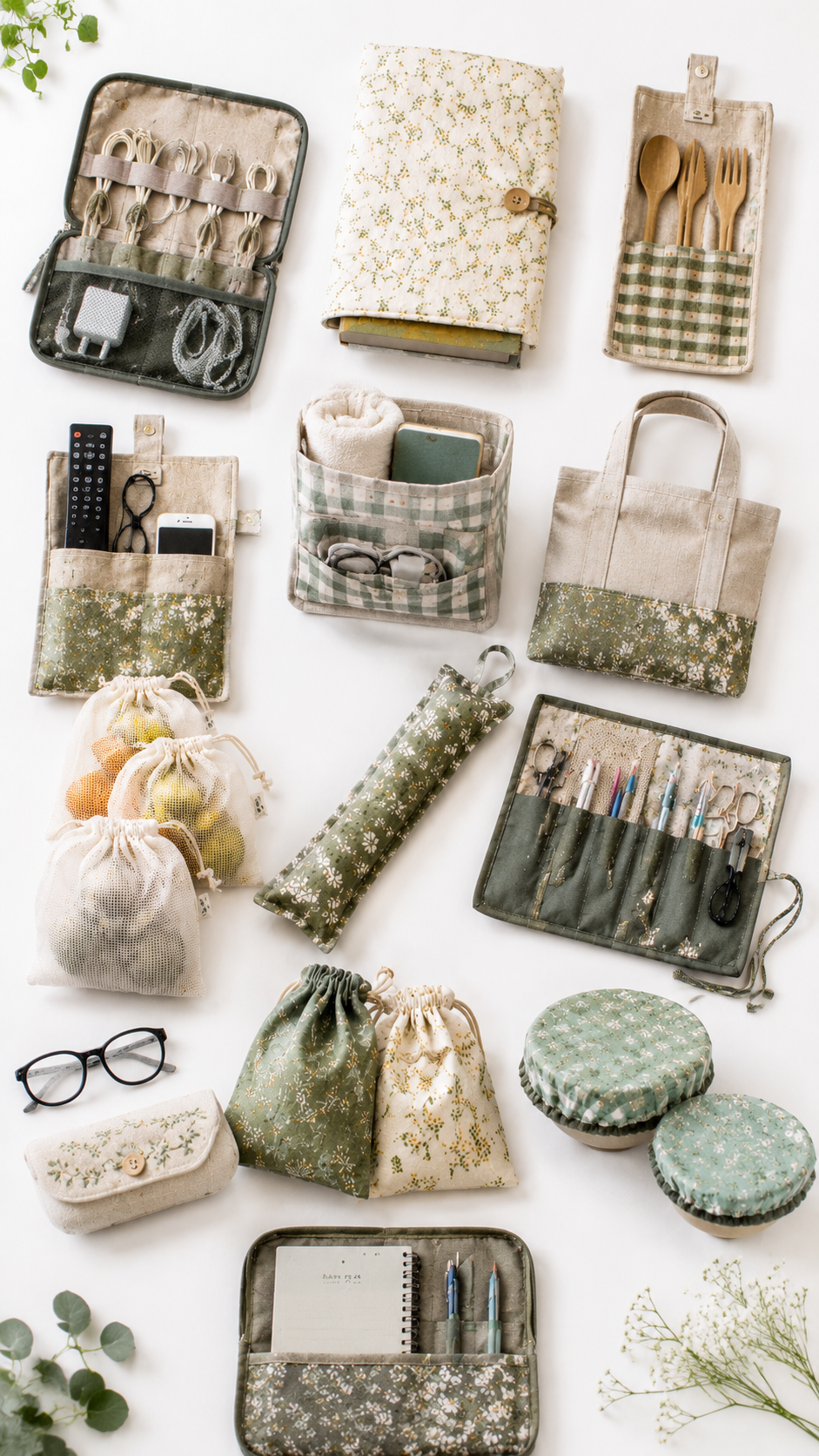
A product can be useful and still be a poor product to sell.
Someone may genuinely need a way to organise their cables, protect their glasses or carry their tools, but that does not automatically mean they will buy your handmade version.
They may already own something that works, or find a mass-produced alternative that costs much less.
That is why the problem alone is not enough. Your craft also needs a reason to be chosen.
A handmade version becomes more compelling when it offers something the ordinary alternative doesn’t, such as a better size, a more practical layout, a custom fit, personalisation, a particular material or a solution designed for a specific type of user.
You also need to consider the making side. If a product takes two hours to make, uses expensive materials and has to be sold at a price customers are unlikely to accept, its usefulness will not make the numbers work.
Before turning a useful idea into a product, ask three simple questions:
- Is this a problem people actually experience?
- Does my version solve it in a noticeably useful way?
- Can I make and sell it at a price that makes sense for both me and the buyer?
If the answer to all three is yes, you may have more than a useful craft. You may have a product with a genuine reason to exist.
1. Fabric Cable and Charger Organisers for People Who Are Tired of Tangled Cords
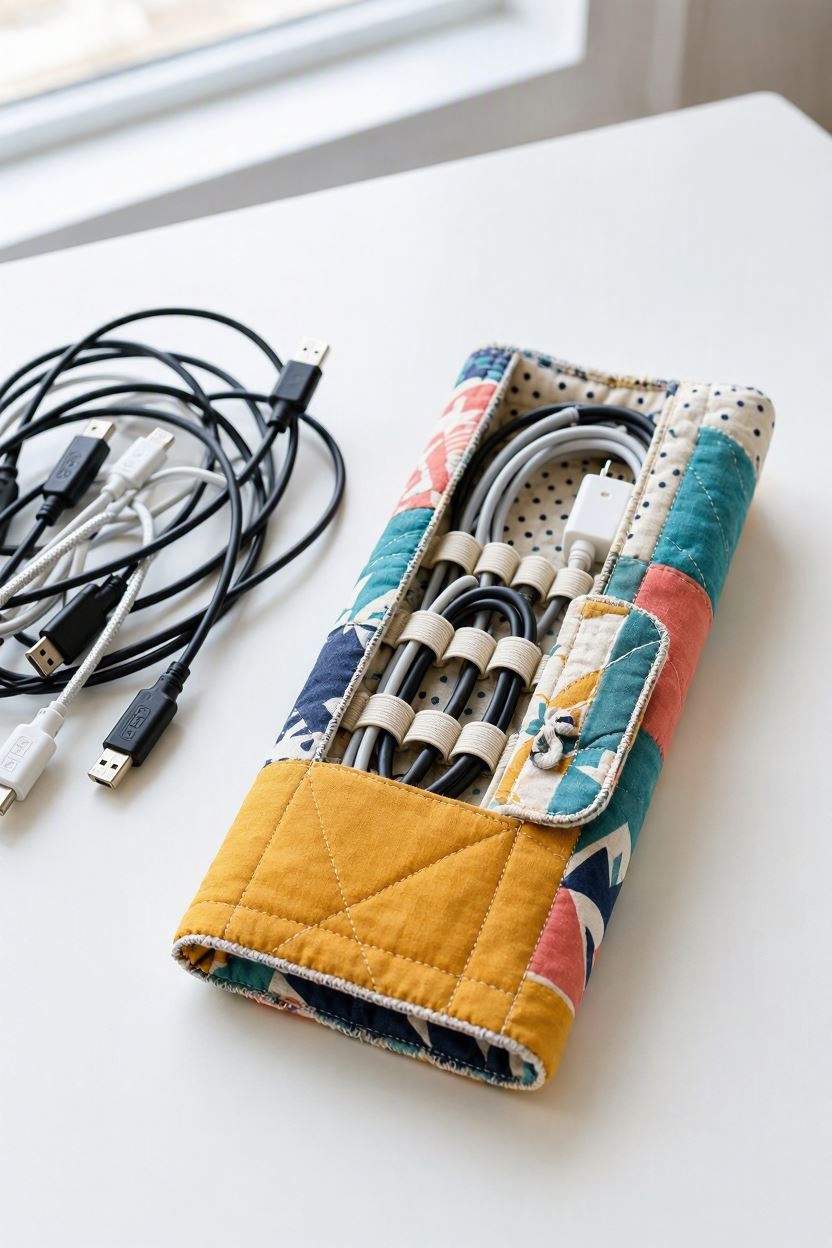
Charging cables have a habit of becoming a small mess of their own, especially when several are thrown into a drawer, handbag or travel bag together. A fabric cable organiser gives each cord a designated place, making it easier to separate and find what you need.
The useful part is not simply putting cables inside a pouch. The design should make the cables easier to identify, carry and retrieve.
Depending on the intended use, you could make a compact organiser with individual elastic loops, pockets for charging plugs, or a combination of both. A small version can work for everyday carry, while a larger one can hold several cables and adapters for travel.
This is also where a handmade version can have a genuine advantage. Instead of making a generic pouch, you can design the organiser around a specific need, such as a slim version for a handbag, a larger travel organiser, or a personalised organiser for someone who carries several devices.
Before making it for sale, test it with the cables it is supposed to hold. A loop that is too tight becomes frustrating, while a loose one does little to prevent the cords from shifting around.
The organiser should also remain reasonably compact; otherwise, you have simply created another bulky bag to carry.
The selling point: don’t sell it as “a cute handmade cable pouch.” Sell the convenience of having your cables, chargers and small accessories together instead of tangled at the bottom of a bag.
Planning ahead for another season? What to Make and Sell This Fall: 15 Fall Craft Fair Project Ideas Worth Your Table Space focuses on products shoppers may actually want to take home.
2. Padded Book Sleeves for Readers Who Carry Books Around

A book can leave the house looking perfectly fine and come back with bent corners, scuffed covers or other signs of being carried around in a bag.
A padded book sleeve offers a simple way to give a favourite paperback, hardcover or e-reader its own protected space.
This is one of the more practical useful crafts to make and sell because the purpose is easy to understand: the sleeve is made for transporting something that people already own and want to keep in good condition.
A good design should fit the intended book size without being so tight that getting the book in and out becomes difficult. Light padding can cushion the cover, while a secure closure helps keep the book from sliding out.
An outer pocket could also provide a convenient place for a bookmark or reading glasses.
The opportunity for handmade sellers is in making the sleeve more specific rather than producing another generic pouch.
You could offer different sizes, fabrics and closure styles, or make versions designed specifically for readers who carry books to work, school, cafés or while travelling.
Just be clear about what the product protects against. A padded fabric sleeve can help reduce everyday scratches, scuffs and corner damage during transport, but it should not be presented as heavy-duty protection.
The selling point: you’re not simply selling a fabric cover. You’re giving a reader a convenient way to carry a book without throwing it loose into their bag.
For Halloween-specific products, Halloween Crafts to Make and Sell: 21 Ideas to Cash In on the Spookiest Season gives you more seasonal options to consider.
3. Travel Cutlery Pouches for Reusable Utensils
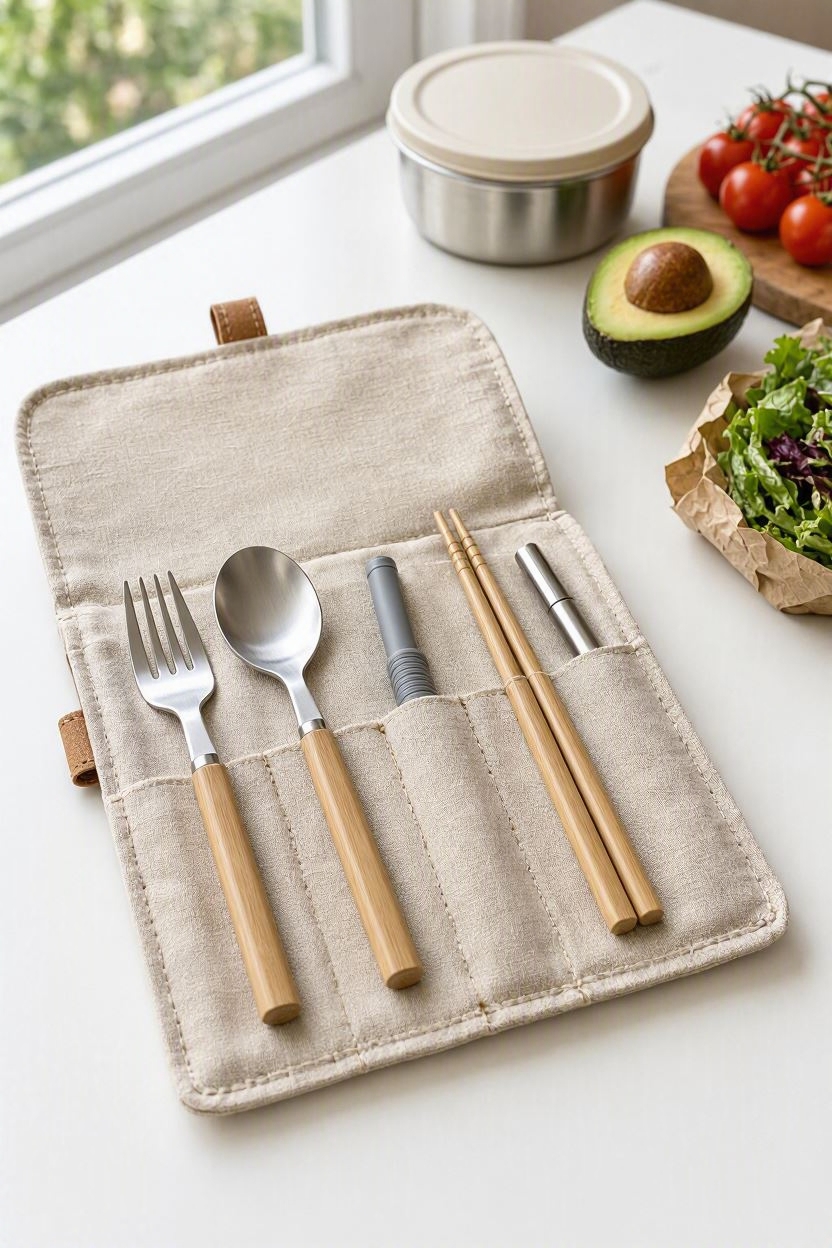
Carrying reusable cutlery sounds simple until you have to put a fork, spoon or chopsticks loose inside a handbag, lunch bag or backpack.
A dedicated fabric pouch keeps those utensils together and gives them a cleaner, more organised place to travel.
That makes a travel cutlery pouch another strong option among useful crafts to make and sell, particularly because the product is built around a very specific everyday situation rather than decoration.
The design can be straightforward: individual utensil slots, a secure flap or roll-up closure, and fabric that can withstand regular washing.
The finished pouch should also be compact enough that carrying it does not become more inconvenient than carrying the utensils themselves.
Think about the person you are designing for. Someone carrying a basic fork and spoon needs a different pouch from someone who regularly carries chopsticks, a reusable straw and several utensils.
Offering different sizes or configurations can make the handmade version more useful than a one-size-fits-all design.
If the pouch will be used around food, choose materials and construction with repeated washing and the intended use in mind. Don’t automatically describe every handmade fabric as “food-safe” simply because it is washable.
The selling point: you’re solving the awkwardness of carrying reusable utensils—not merely selling another small fabric pouch.
4. Remote-Control and Sofa Caddies
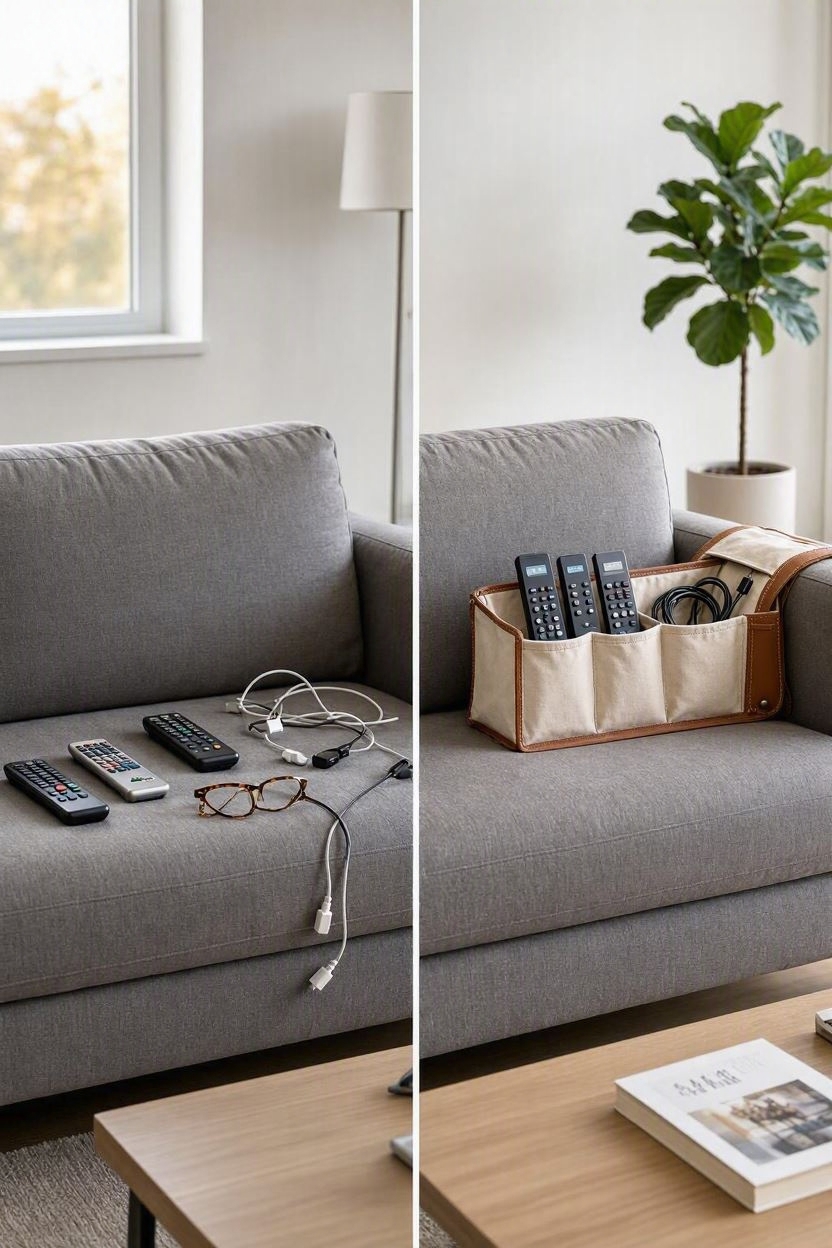
Remotes, phones, glasses and charging cables are small enough to disappear between sofa cushions or get left on the nearest table.
A sofa caddy gives those frequently used items a designated spot within arm’s reach.
The useful detail is where the organiser lives.
Instead of making a general storage basket, design a caddy that can slide beneath a sofa cushion or hang over the armrest, with pockets sized for the things the user actually reaches for.
You can make different versions for different routines: a compact one for a remote and phone, or a larger design with space for reading glasses, a book and charging cable.
Firm stitching matters because the caddy will be pulled and moved regularly.
Avoid making it unnecessarily bulky. Its job is to keep essentials close without becoming another object that gets in the way.
The selling point: it gives commonly misplaced items a home exactly where they are used.
5. Bedside Pocket Organisers for Rooms With Little Nightstand Space
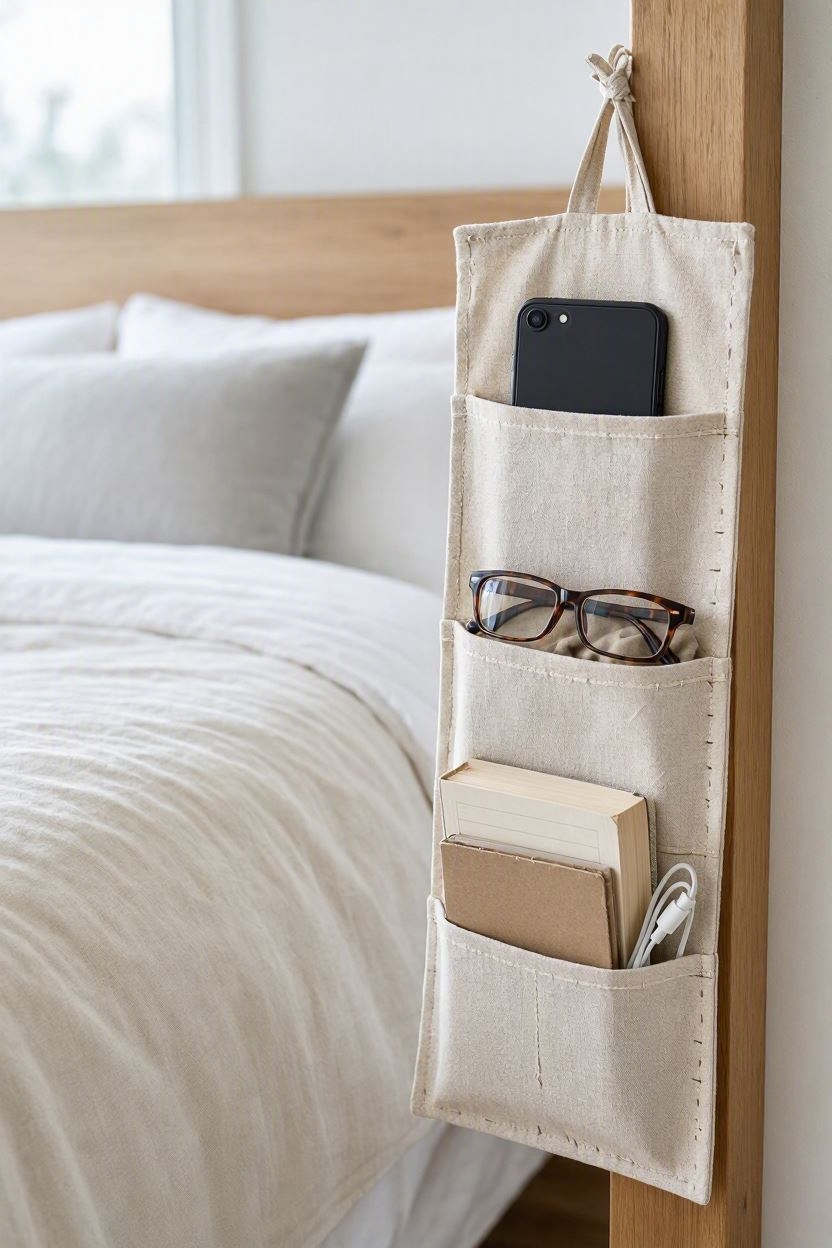
Not every bedroom has enough room for a proper bedside table. A hanging bedside organiser can make use of otherwise unused space beside the bed, giving smaller essentials somewhere to go.
The strongest designs are based on a specific set of items rather than simply adding as many pockets as possible.
A phone pocket, glasses sleeve, book compartment and cable opening may be more useful than a dozen shallow pockets that are difficult to reach.
The attachment method also deserves attention.
A product designed to hang from a bed frame, headboard or another fixed point needs to suit that particular setup and carry its intended weight without becoming awkward to use.
This makes sizing important. A bulky organiser may defeat the purpose in a small room, while a very narrow one may not hold the items it promises to organise.
The selling point: it creates accessible storage in a place where a conventional bedside table may not fit.
If you prefer working with wood, 11 Wood Burning Crafts You Can Make at Home with Basic Tools That Turn into Income shows how simple wood projects can become sellable products.
6. Reusable Produce and Shopping Bags for Carrying Loose Items
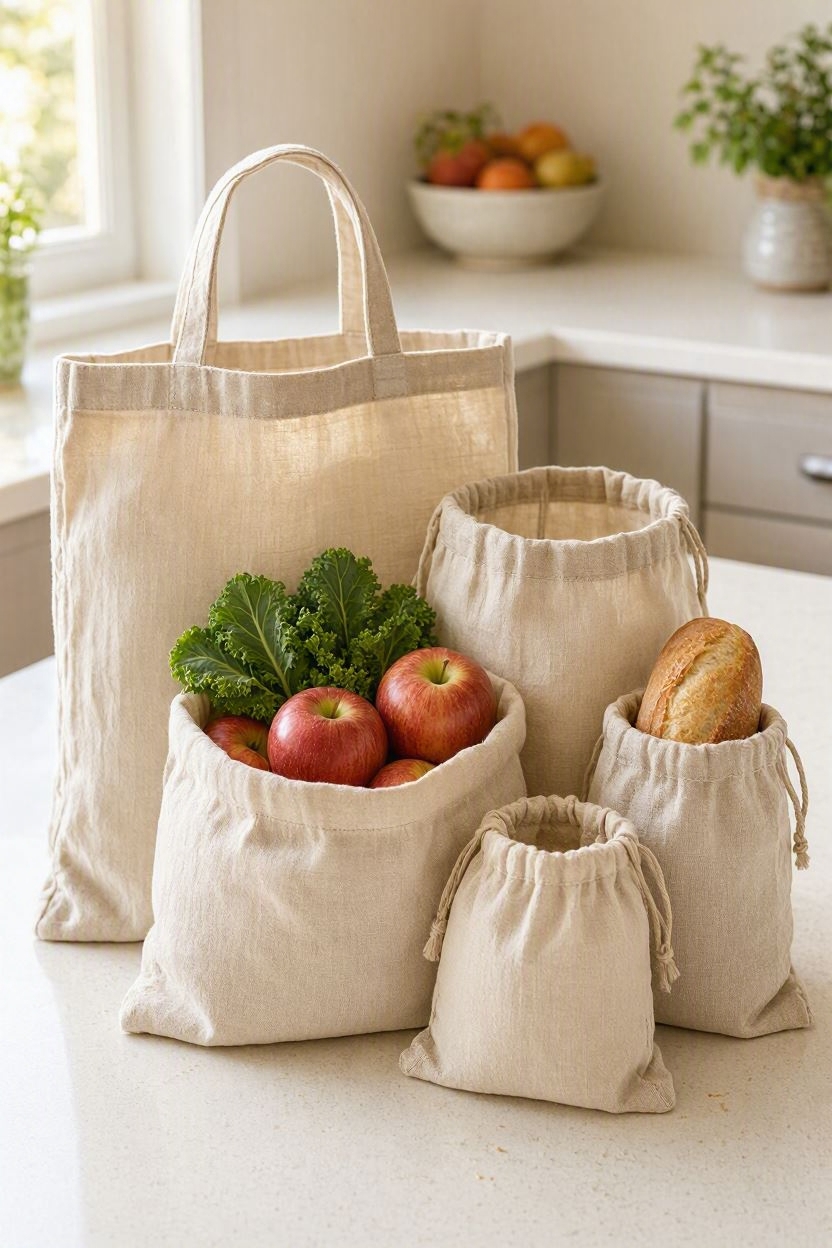
Reusable shopping bags are common, but a purpose-built bag can solve a more specific problem: carrying small or loose items without having them roll around inside a larger shopping bag.
Produce bags can be made in different sizes for items such as fruit, vegetables or bakery goods, while sturdier reusable bags can be designed for repeated shopping trips.
The important thing is to match the construction to the intended use rather than treating every reusable bag as interchangeable.
If a bag will come into direct contact with food, material choice, washing instructions and construction deserve particular attention.
Don’t make broad claims about a fabric being “food-safe” without knowing that it is appropriate for the intended use.
For selling, a coordinated set can make more sense than a single bag: different sizes give the customer a reason to use the products for different shopping needs.
The selling point: the design should make carrying and separating reusable shopping items more convenient, not simply replace a disposable bag with a prettier one.
7. Door Draft Stoppers for Gaps Under Doors
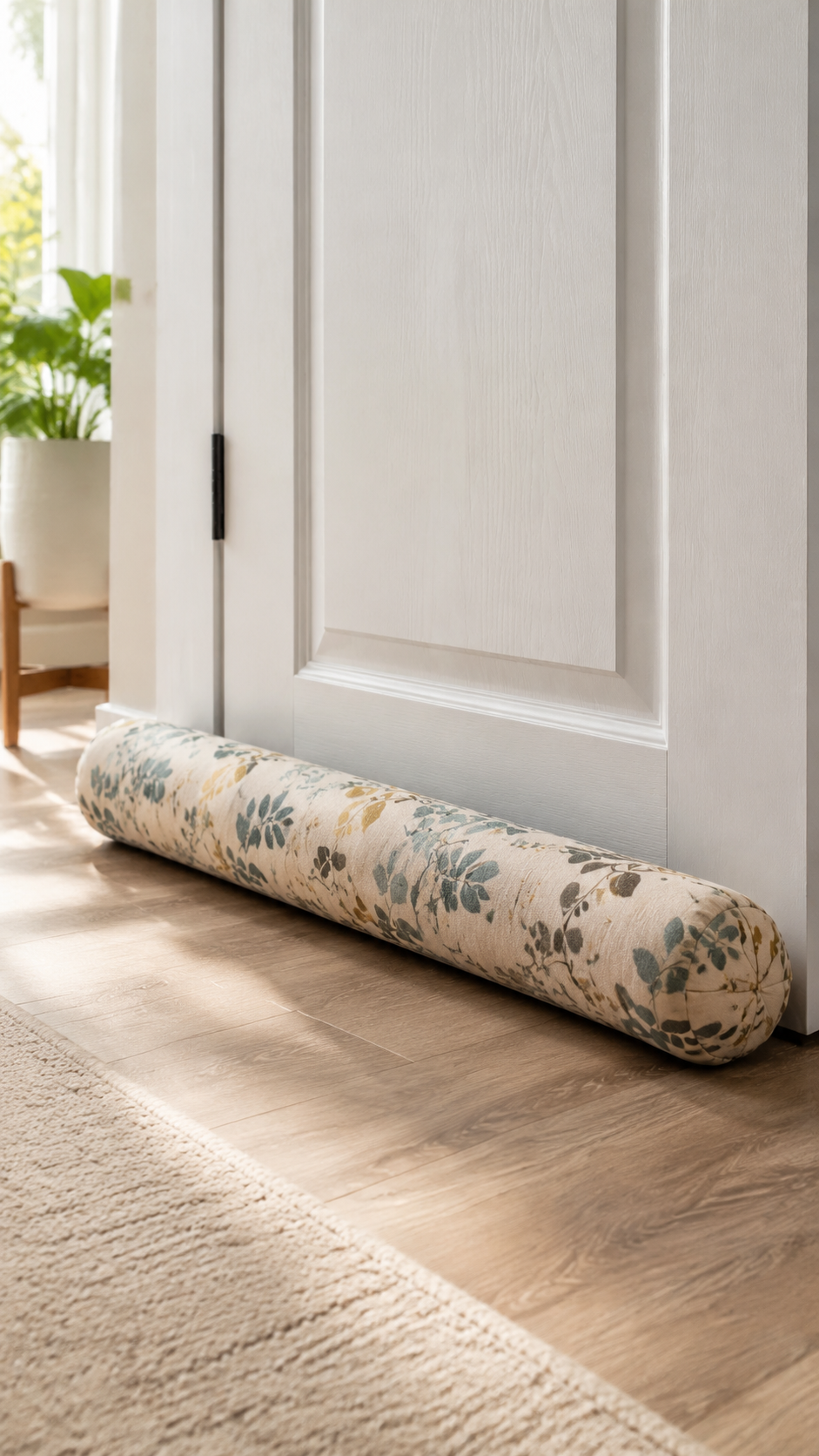
A noticeable gap under an exterior door can allow air to move between the indoors and outdoors.
A fabric draft stopper is a simple way to cover that gap and can also help reduce the amount of dust or light passing underneath.
This makes it a practical option among useful crafts to make and sell, particularly because it can be made in different lengths and styles to suit different doors.
A good draft stopper needs to sit firmly against the floor without becoming difficult to move. You can make a washable outer cover with a removable inner filling, which makes cleaning and maintenance easier.
Measuring matters too: a stopper that is too short leaves part of the gap exposed, while one that is excessively long can become awkward around the doorway.
Be careful with the promise you make when selling it.
A draft stopper can reduce air movement through a door gap, but it is not a substitute for proper weatherstripping or a solution for every source of heat loss in a building.
The selling point: a simple handmade product that addresses one very specific problem, a noticeable gap beneath a door.
8. Tool and Equipment Rolls for Keeping Small Items Together
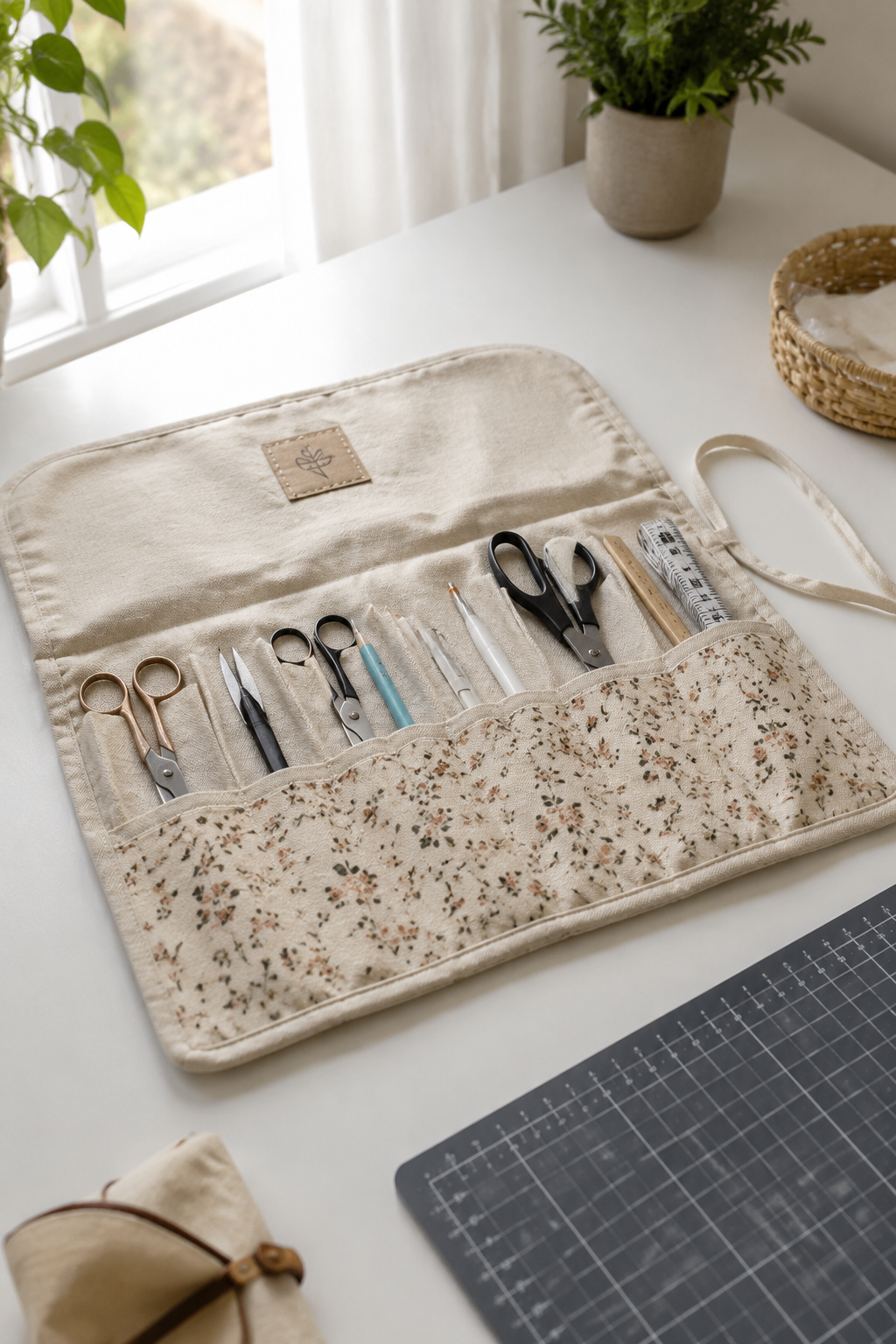
Small tools are easy to scatter across drawers, boxes and bags. A fabric tool roll gives each item a defined place and allows the whole collection to be rolled up and carried together.
The idea becomes much stronger when you design it for a particular group of tools.
A sewing roll might have narrow slots for scissors and marking tools, while a paintbrush roll would need different dimensions and materials.
This is where useful crafts to make and sell can become more specialised. Instead of competing with every organiser on the market, you can create products for a particular hobby or profession where the user already knows exactly what they need to carry.
The pockets should hold tools securely without making them difficult to remove. Strong stitching around pocket openings is also important because these areas receive repeated stress.
The selling point: the roll turns a loose collection of small tools into something visible, portable and easier to keep together.
You don’t necessarily need a Cricut to start making vinyl products. 10 Beginner-Friendly Vinyl Crafts to Make and Sell Without a Cricut at Home explores beginner-friendly options.
9. Protective Glasses Cases for Bags and Everyday Carry
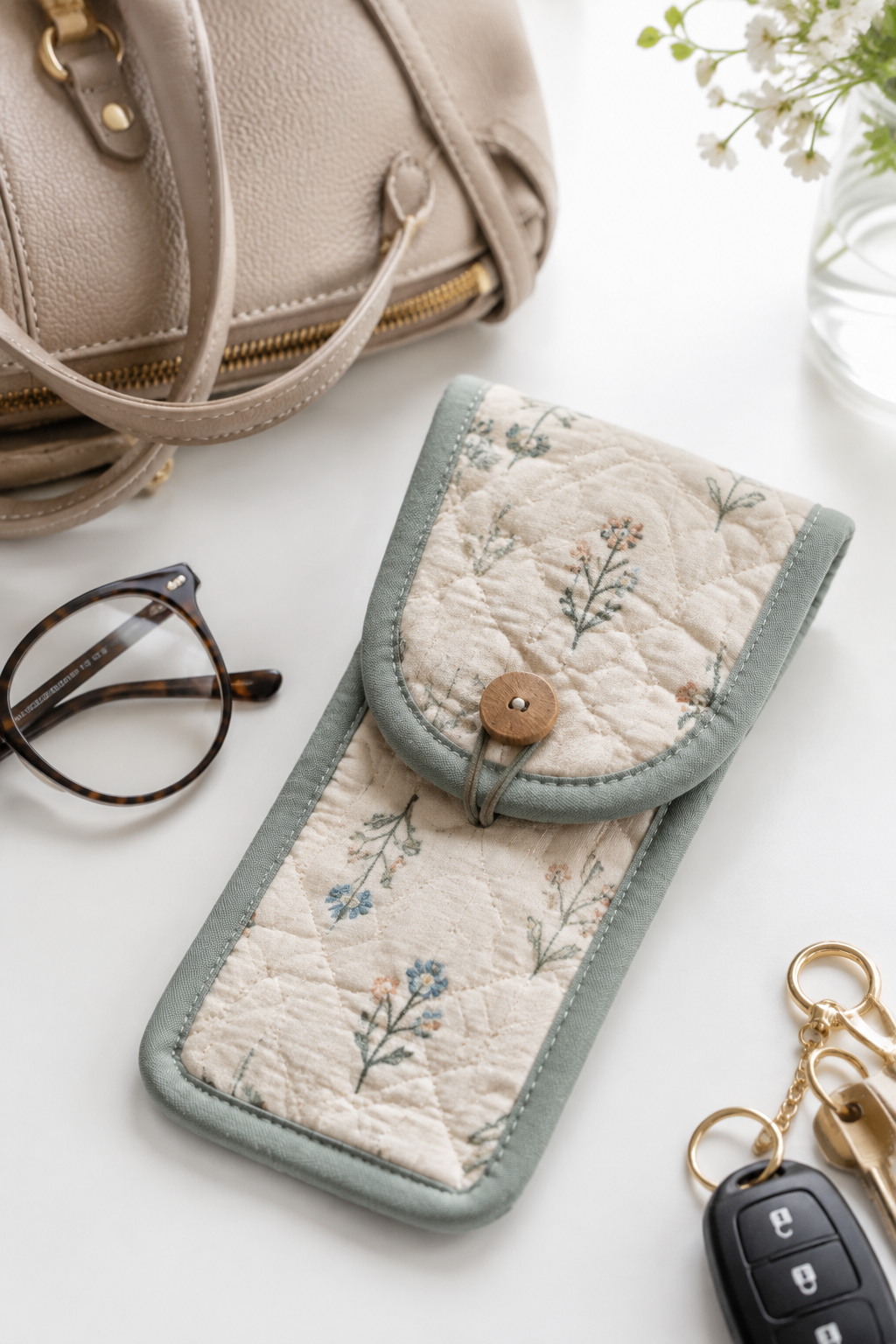
Putting glasses loose inside a handbag or backpack exposes them to scratches and pressure from other objects. A dedicated case gives them a separate place and can make them easier to find when needed.
A handmade case can be simple, but the construction needs to match the protection being promised.
Padded fabric case can provide cushioning against everyday contact and help protect lenses from scratches, while a soft pouch should not be advertised as equivalent to a rigid protective case.
Sizing is another opportunity for differentiation.
A case can be designed for reading glasses, sunglasses or particular frame shapes, with enough room to remove the glasses easily without making the case unnecessarily large.
You can also add practical features such as a secure closure, a small carrying loop or a lining that is gentle against the lenses.
The selling point: the product gives glasses a dedicated protective place instead of leaving them loose among keys, phones and other objects in a bag.
10. Reusable Gift-Wrapping Sets That Can Be Used Again
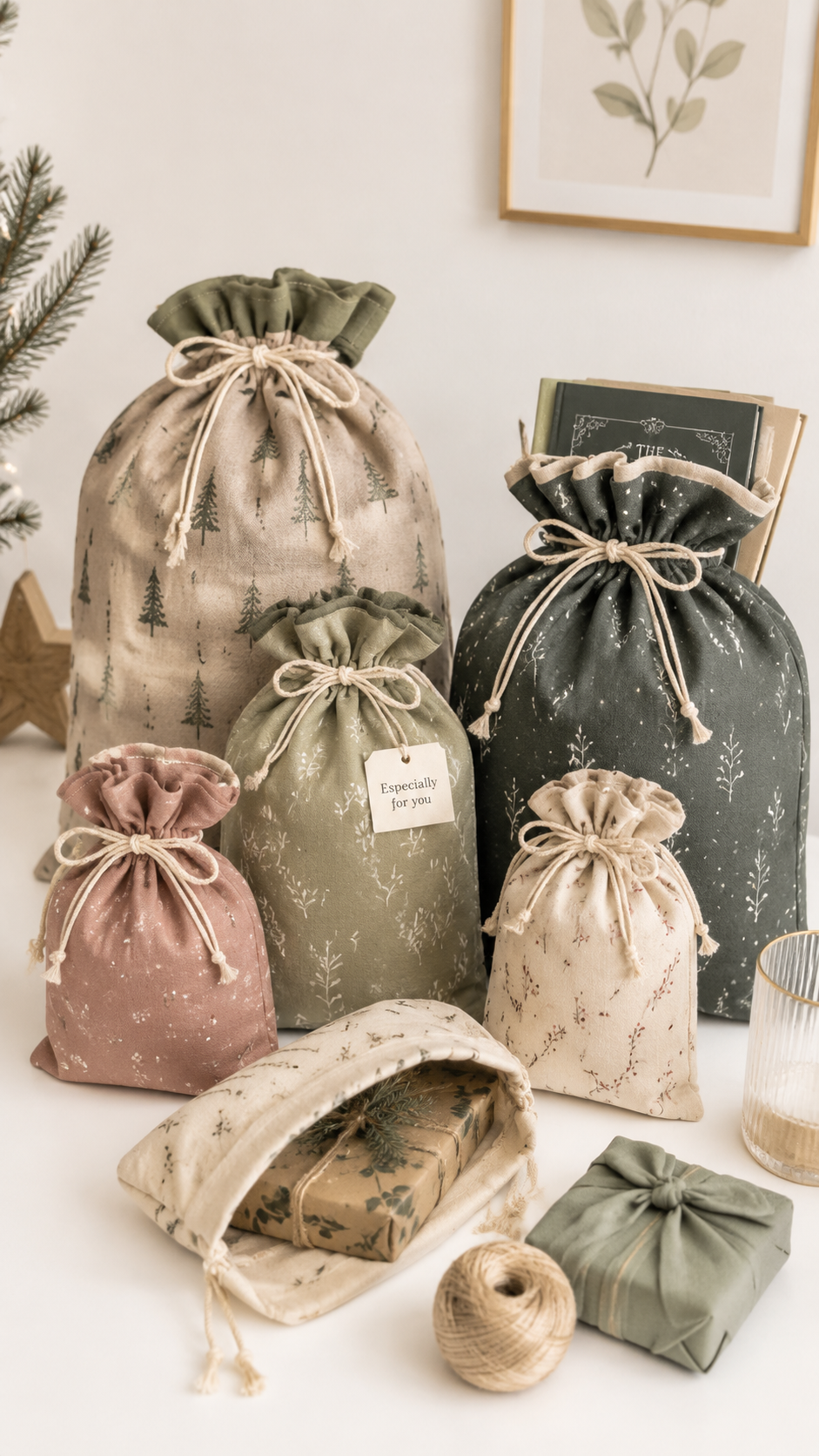
Gift wrapping solves a temporary problem, but much of it is designed to be used once and discarded.
A reusable fabric gift bag or wrapping set changes that by giving the recipient something that can be used again.
Instead of making one oversized drawstring bag, consider creating a small set in useful sizes. A larger bag can handle clothing or larger presents, while smaller ones can work for books, accessories or other compact gifts.
The details matter more than decoration here.
A closure should be easy to use, the seams should withstand repeated opening and closing, and the fabric should be washable when appropriate. Including reusable fabric tags can also make the set easier to identify when several gifts are being wrapped.
The strongest selling angle is not simply that the wrapping is attractive.
It is that the customer can buy it once and use it for multiple occasions rather than repeatedly purchasing disposable wrapping materials.
The selling point: make the wrapping itself part of the reusable gift rather than something that is thrown away after the celebration.
If clothing is more your thing, Top-Selling Clothes for Thrift Business in Nigeria (What Moves Fast) looks at the types of clothing that can move quickly in Nigeria’s thrift market.
11. Reusable Bowl Covers for Everyday Food Storage
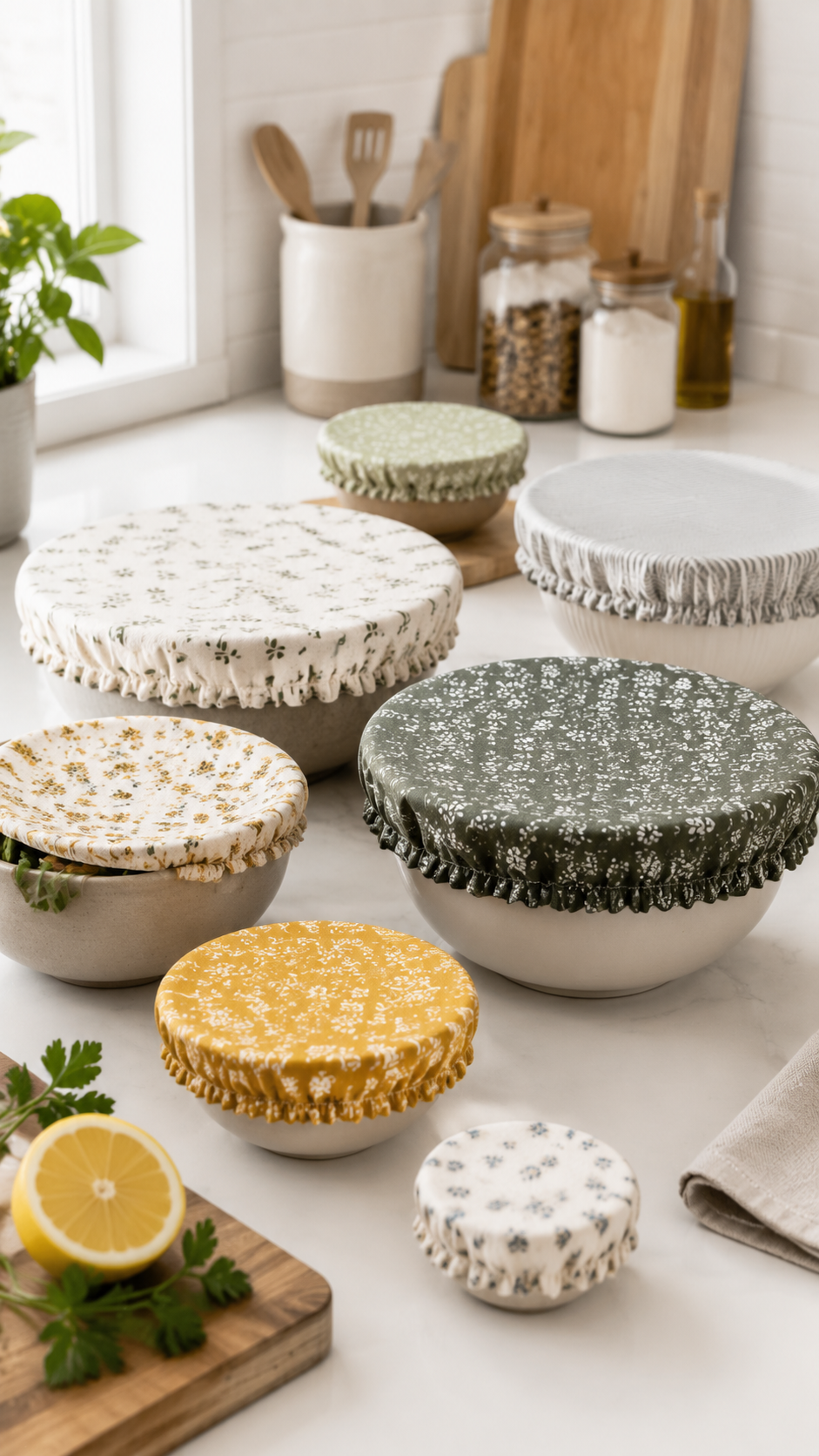
A bowl cover can be useful when someone wants to cover a bowl without transferring its contents into another container.
Elastic-edged fabric covers can be made in several sizes to fit different bowls, making them more useful as a coordinated set than as a single decorative item.
The design needs to balance a secure fit with ease of removal. If the elastic is too loose, the cover may slip; if it is too tight, putting it on the bowl becomes unnecessarily difficult.
Material choice also deserves careful consideration.
A washable cover intended to sit over food should be designed and labelled according to its actual use. Don’t assume that any attractive cotton fabric is automatically appropriate for direct food contact.
Offering several sizes can make the product more practical because household bowls rarely come in one standard dimension.
Clear care instructions are also important for a product that is expected to be washed repeatedly.
The selling point: a simple reusable cover that makes it easier to protect the contents of everyday bowls without needing another container.
12. Routine-Specific Organisers Built Around One Everyday Problem
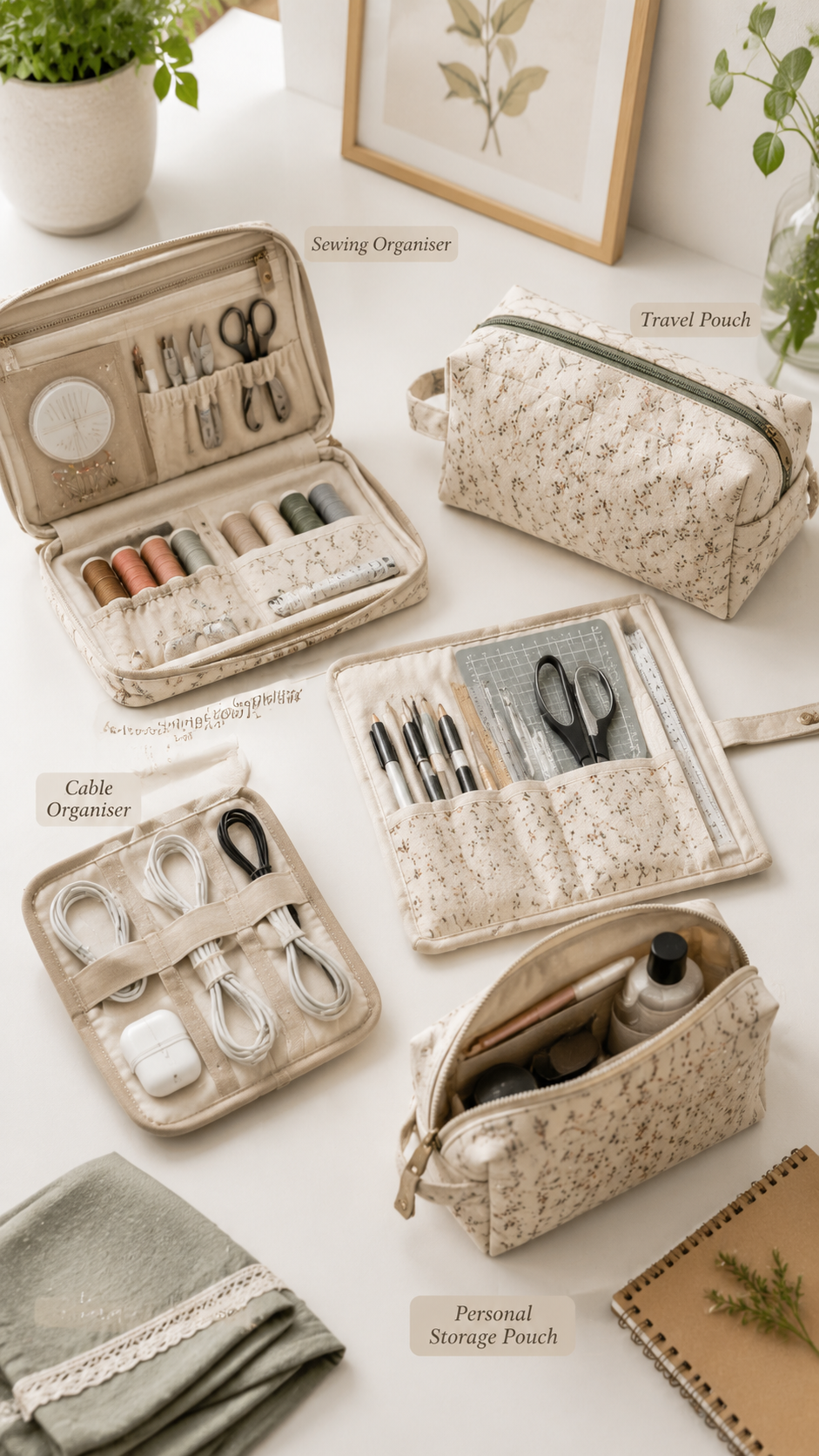
If you want to create useful crafts to make and sell that don’t look like everything else on the market, stop thinking only about the object and start thinking about the routine.
Look at what people repeatedly carry, lose, mix together or struggle to store. It could be sewing supplies, travel documents, work accessories, children’s small essentials, craft tools or the items someone needs for a particular hobby.
Then build the organiser around that exact routine.
Instead of making “a pouch,” you might create a compact organiser with dedicated spaces for the handful of things someone always needs together. Instead of adding pockets simply because you can, every compartment should have a purpose.
This approach also gives you room to serve smaller niches that mass-produced products may overlook.
A handmade organiser can be made in a particular size, adapted for a specific set of tools or personalised for its intended user.
The selling point: the product is designed around a real routine rather than being another generic organiser with pockets.
Crafting isn’t the only hobby that can become an income stream. 7 Surprising Hobbies That Could Actually Make You Cash offers other possibilities worth considering.
How to Test a Useful Craft Before Making 30 of Them
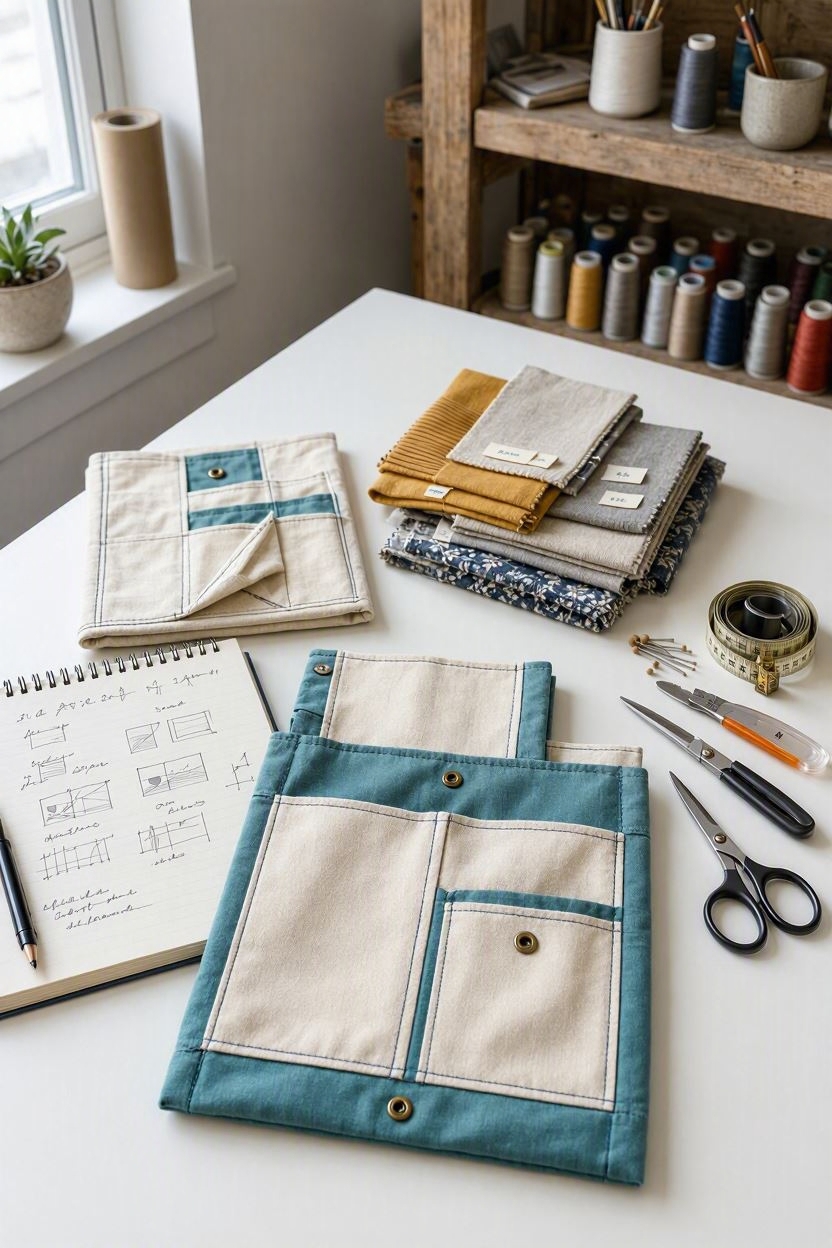
Making one prototype is very different from making 30 products for sale. Before buying materials in bulk or spending days producing stock, test whether the idea works in real use and makes financial sense.
Start with one finished sample and give it to someone who actually has the problem the product is meant to solve.
Don’t explain how they should use it. Watch whether they understand the purpose, find it convenient and use it the way you expected.
Then check the practical details:
- Does it solve the original problem? If the user still has to work around the same inconvenience, the design needs changing.
- Is it easy to use? A product can be clever but frustrating if it takes too much effort to open, adjust, clean or store.
- Does it hold up to repeated use? Test closures, seams, handles, elastic and other points that are likely to receive stress.
- How long does one take to make? Record the actual time rather than estimating from memory.
- What does one really cost? Include materials, hardware, packaging and selling fees, not just the main fabric or supplies.
- Can you make several consistently? A product that works once but becomes difficult to reproduce is harder to sell reliably.
You can also test demand before producing a large batch.
Show the finished prototype to potential customers, post clear photos or offer a very small initial quantity and pay attention to the questions people ask.
Those responses can reveal whether the problem is obvious to buyers or whether you have to explain the product too much.
The goal isn’t to prove that everyone will want it. You are looking for enough evidence to justify making more.
If the first few users find the product awkward, the price doesn’t work or nobody seems particularly interested, that is useful information—not wasted effort. It is much cheaper to change one prototype than to discover the problem after making 30.
The Handmade Advantage: Why Would Someone Choose Yours?
Useful products don’t automatically need to be handmade.
When shoppers can buy an almost identical version cheaply from a large retailer, the word handmade alone may not justify a higher price.
The real advantage lies in flexibility.
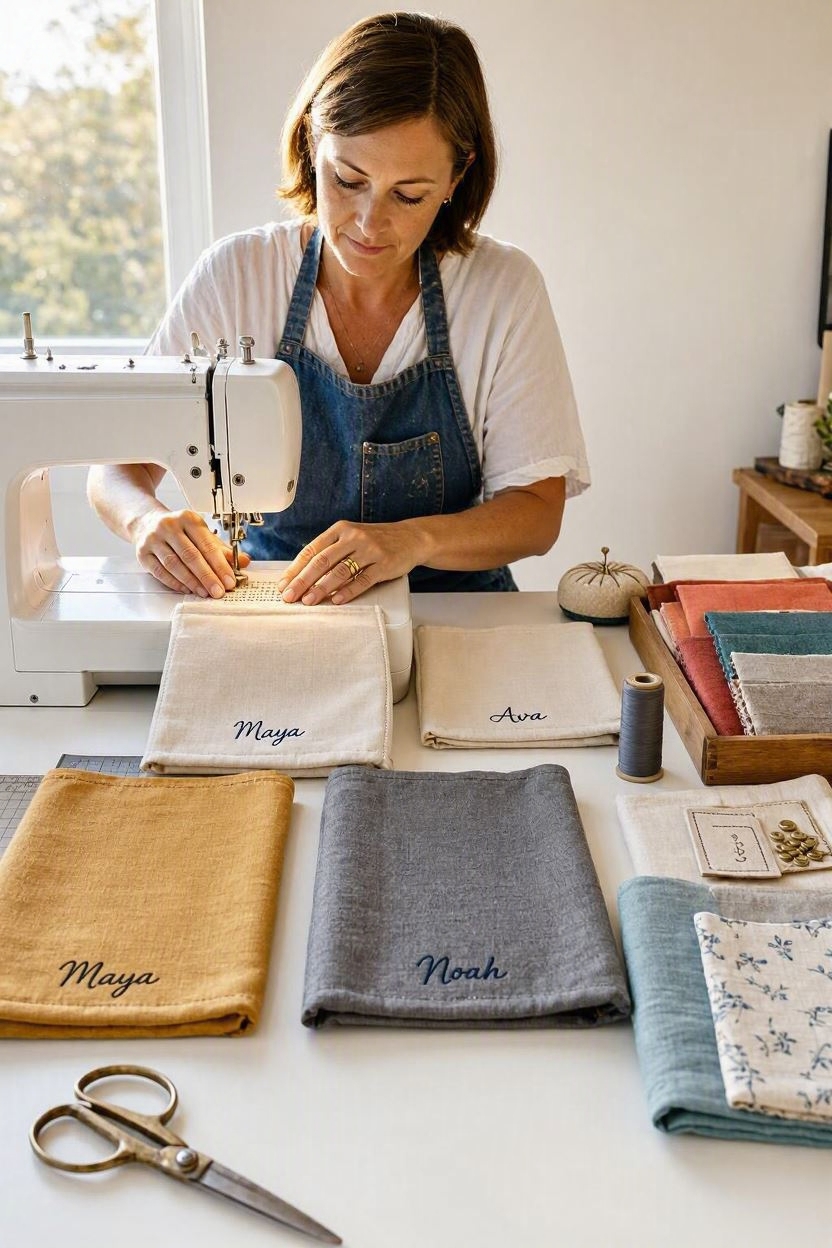
Handmade production becomes more valuable when you can adapt the design to the person using it.
A cable organiser can fit a particular set of devices. A tool roll can include the exact compartments a hobbyist needs. A book sleeve can accommodate an unusual book size or include personalisation that mass-produced versions may not offer.
Other advantages include:
- Custom sizing: Make products for items that don’t fit standard sizes well.
- Purpose-built organisation: Design compartments around the tools or accessories people actually carry.
- Personalisation: Names, colours, fabrics and other details can make a practical product feel more personal.
- Niche solutions: Serve specific groups whose needs large manufacturers may overlook.
- Small-batch flexibility: Adjust your designs as customers show you what works and what doesn’t.
The goal isn’t to make a handmade copy of something shoppers can find everywhere. It’s to offer a more thoughtful solution to a specific problem.
That is where the handmade advantage becomes worth paying for.
When your starting budget is tight, 10 Low-Cost DIY Crafts to Make and Sell From Home is a useful place to find ideas that don’t require a large upfront investment.
What Makes a Craft a Real Problem-Solving Product?
A craft becomes genuinely problem-solving when it does more than hold, cover or decorate something. It should make a specific inconvenience easier to handle.
Start with the problem, not the craft.
Tangled cables need an organiser that keeps individual cords separated and easy to retrieve.
Scattered sewing tools need more than a pouch. Purpose-sized sections give each item a predictable place.
A book that gets knocked around inside a bag needs a properly fitted padded sleeve that puts a protective layer between the book and everything else.
Notice the difference: the product isn’t useful simply because it has pockets or padding. Each feature responds directly to a problem.
When developing a craft for sale, ask:
- What is going wrong now? Identify the actual inconvenience instead of starting with the craft.
- What causes it? The cause might involve poor storage, limited space, tangled items, awkward carrying or repeated handling.
- What should change? The finished product should make that situation easier, not simply give the customer another object.
- Can the buyer understand the benefit quickly? They should see what the product does without needing a long explanation.
- Does every feature serve a purpose? Extra pockets, straps and compartments add value only when they improve the intended use.
That is the difference between adding a function and solving a problem.
For anyone exploring useful crafts to make and sell, ask one question before making the first prototype:
“What becomes easier because this product exists?”
A clear answer gives the craft a genuine purpose. Without one, adding more features or making the item prettier won’t necessarily make it more useful.
And if you’re interested in turning secondhand clothing into a business, Thrift Business in Nigeria: How to Start a Profitable Thrift Clothing Business in 2025 walks through the basics of getting started.
Conclusion
The strongest useful crafts to make and sell don’t need to be complicated. Their value often comes from making one ordinary task less awkward, less messy or easier to manage.
Before committing to a new product, look beyond whether it photographs well. Consider whether the finished piece earns its place in someone’s home, bag, workspace or daily routine.
That is a much stronger foundation for a handmade business than making something simply because it is popular.
Start with a small frustration, design around it, test the result, and let the usefulness give the craft its value.
Have a practical craft idea in mind? Make one prototype first, put it to real use, and see whether it genuinely makes the intended task easier before turning it into a product.