
What can replace the Elf without creating more work? These Elf on the Shelf alternatives offer low-effort Christmas traditions kids can enjoy.
By December, the Elf on the Shelf can start feeling less like Christmas magic and more like another thing to remember before bed.
The elf needs a new spot, the children expect a surprise, and suddenly you’re trying to think of something different for the next morning.
That’s where Elf on the Shelf alternatives can make sense.
Some keep the excitement of finding something each day, while others replace the nightly hiding with a Christmas countdown, a story, a character children can play with, or a tradition you prepare once and reuse.
These 9 low-effort traditions take a different route, so you can keep the anticipation without having to invent another elaborate scene every night.
Help kids connect the Christmas season to the story of Jesus’ birth with 12 Nativity Crafts That Walk Kids Through the Story of Jesus’ Birth, at Home or Sunday School.
1. Reindeer in Here — Let the Child Take the Character Along
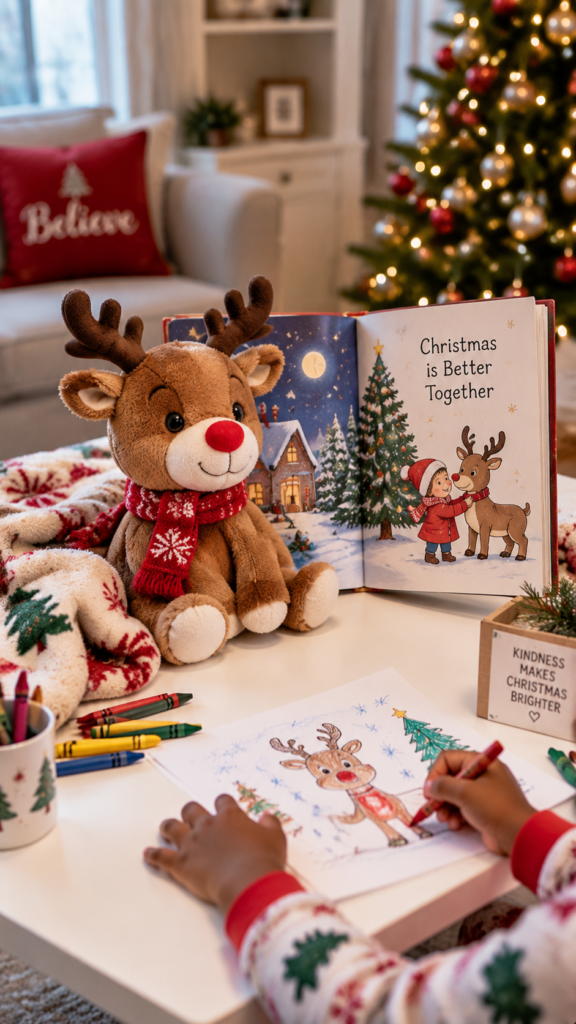
If your children love having a Christmas character around but you’re tired of deciding where to put it every night, Reindeer in Here takes a different approach.
The tradition starts when the reindeer arrives with a storybook. Your child names the reindeer, learns about its personality and keeps it as a companion throughout December.
The reindeer can go along for ordinary activities, sit with your child during story time or become part of their Christmas play.
The important difference is what happens each night: you don’t have to move the reindeer to a new hiding place.
Your child already knows where it is because the point is to keep the reindeer with them rather than have them search for it each morning.
On Christmas Eve, the reindeer is placed under the Christmas tree and, according to the story, returns to the North Pole with Santa.
So while you still need to introduce the story and your child may want you involved in some of their adventures, you aren’t spending December creating a new scene every night.
The child gets a Christmas character to care for and play with, while you get a tradition that asks for less nightly preparation.
Best for: families who want a Christmas character and a sense of companionship without the daily hide-and-find routine.
2. Santa’s Lazy Gnome — Keep the Character, Lose the Hiding

The biggest difference between Santa’s Lazy Gnome and the traditional Elf on the Shelf routine is simple: the gnome stays put.
Santa’s Lazy Gnome is a real Christmas character tradition designed without the nightly hide-and-seek routine.
You don’t need to move the gnome to a new location, create a new scene or come up with another joke before bedtime.
The gnome remains in its place as Santa’s helper while children interact with the character during the season.
That makes it one of the more direct Elf on the Shelf alternatives for a very specific problem: you like having a Christmas character in the house, but you don’t want to produce a new surprise every morning.
Your child still gets a character and story to engage with, but the excitement doesn’t depend on discovering where the gnome has moved overnight.
You can simply leave it where it is and let the character become part of the family’s Christmas routine.
There is a trade-off, though. The tradition still uses the Santa and naughty-or-nice idea. So while it removes the nightly setup, it may not suit a family looking to move away from that part of the Elf on the Shelf concept too.
Best for: families who want a Christmas character without the nightly hiding, staging and idea generation.
3. Family Christmas Character Tradition
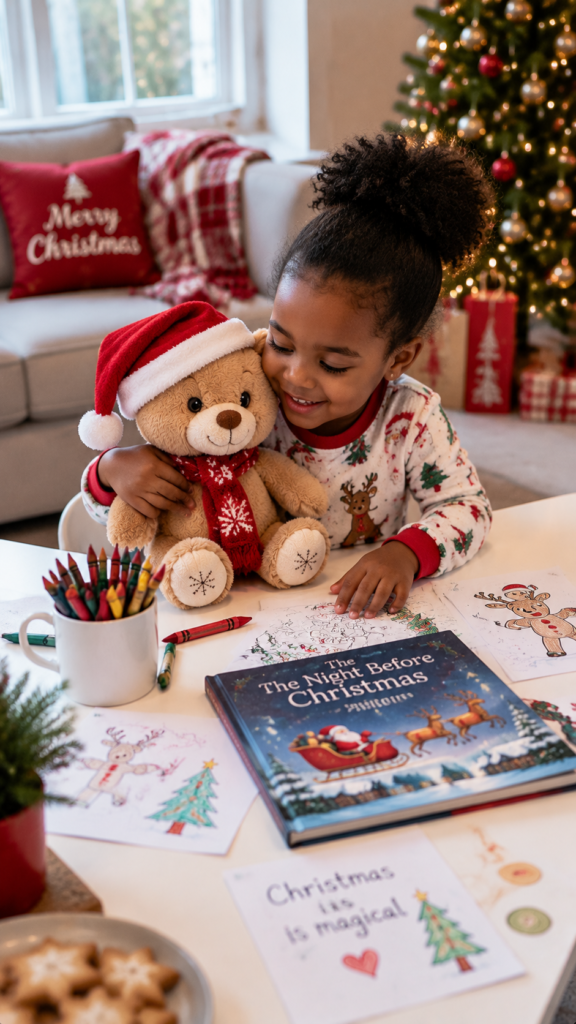
You don’t need to replace an Elf on the Shelf with another product to keep the idea of having a Christmas character.
You can give a favourite Christmas toy or figure a permanent place in the home and let your child decide how it becomes part of the season.
The difference is subtle but important. With the traditional Elf on the Shelf routine, the character’s new location is often the event: your child wakes up and searches for where the elf has gone.
With this approach, the character itself becomes the companion, so nothing has to happen to it overnight.
Your child might bring the character to breakfast, sit it beside them while reading a Christmas story, include it in a family movie night or take it along for a suitable outing.
You can join in when it feels natural, but you don’t have to create a new scene before bed just to keep the tradition going.
This can be one of the most practical Elf on the Shelf alternatives for families outside the US or Canada because you don’t need a particular branded character, product or set of accessories. A Christmas toy your child already owns can work.
The important thing is to present this honestly: this is a family-created Christmas tradition, not an established named alternative to Elf on the Shelf.
Its advantage is the flexibility. You decide what the character does, and there is no nightly hiding schedule to maintain.
Best for: families who want a Christmas character and imaginative play without making the parent’s nightly setup part of the tradition.
4. Star From Afar — Keep the Search, Change What Children Are Searching For
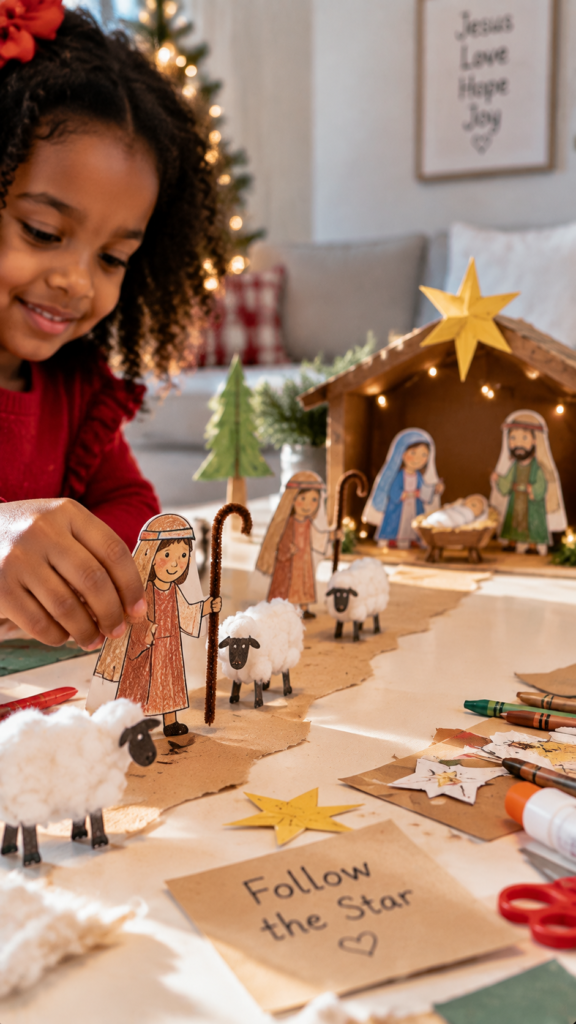
Star From Afar takes the searching element that makes Elf on the Shelf engaging and connects it to the Nativity story.
The activity uses a star that children search for each day, with the star’s journey leading toward the Nativity.
That gives you a different kind of December countdown. Instead of looking for an elf that has been moved into a new scene, your child searches for a star connected to the Christmas story.
The appeal is easy to understand: there is still something to look forward to each day, a physical object to find and a story that develops as Christmas approaches.
For families who want a faith-based option, it also gives the daily search a clear purpose rather than making the hiding itself the main attraction.
There is one important catch for parents looking for low-effort Elf on the Shelf alternatives: Star From Afar still involves hiding the star. So it doesn’t completely remove the nightly task.
That makes it a better fit when your main problem is coming up with increasingly elaborate Elf scenes, rather than having to hide something at all.
If you simply want to stop remembering to move an object every night, one of the stationary or one-time-preparation alternatives will solve that problem more directly.
Best for: families who enjoy the daily search but want to connect it to the Nativity story rather than stage new Elf scenes.
5. Shepherd on the Search — Turn the Daily Hunt Into a Nativity Journey
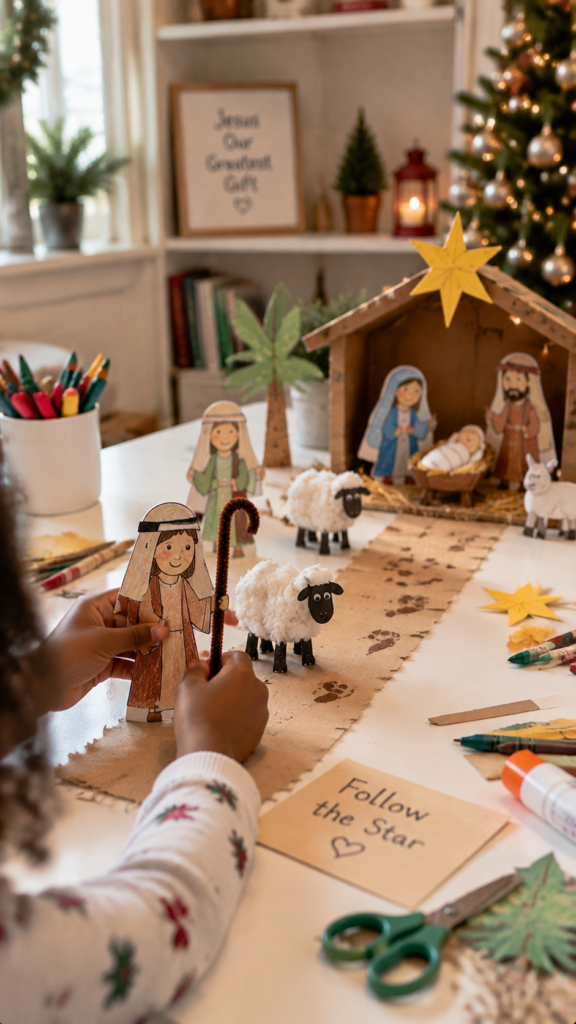
Shepherd on the Search gives families a Christmas search tradition with a clear Nativity focus. A shepherd figure becomes part of the December countdown, and children follow the shepherd’s search for Jesus as Christmas approaches.
The appeal is the familiar part: your child still has something to look for and anticipate each day.
The difference is what the search represents. Rather than looking for an elf that has been moved into another funny position, the child is following a character through a story connected to the birth of Jesus.
That makes it a useful option when you want to change the purpose of the daily search, particularly for a family looking for a Christian Christmas tradition.
There is an important limitation, though. The shepherd still needs to be placed somewhere for your child to find, so this does not completely remove the nightly setup that can make Elf on the Shelf feel like work.
You’re changing the story and the character, but some of the routine remains.
So consider what you are trying to fix. If you want to keep the excitement of a daily hunt but move away from the Elf’s theme, this can make sense.
If you want to stop hiding something every night altogether, choose a different option on this list.
Best for: families who enjoy the daily search but want that search to lead into the Nativity story.
6. Jesse Tree — Build the Christmas Story One Day at a Time
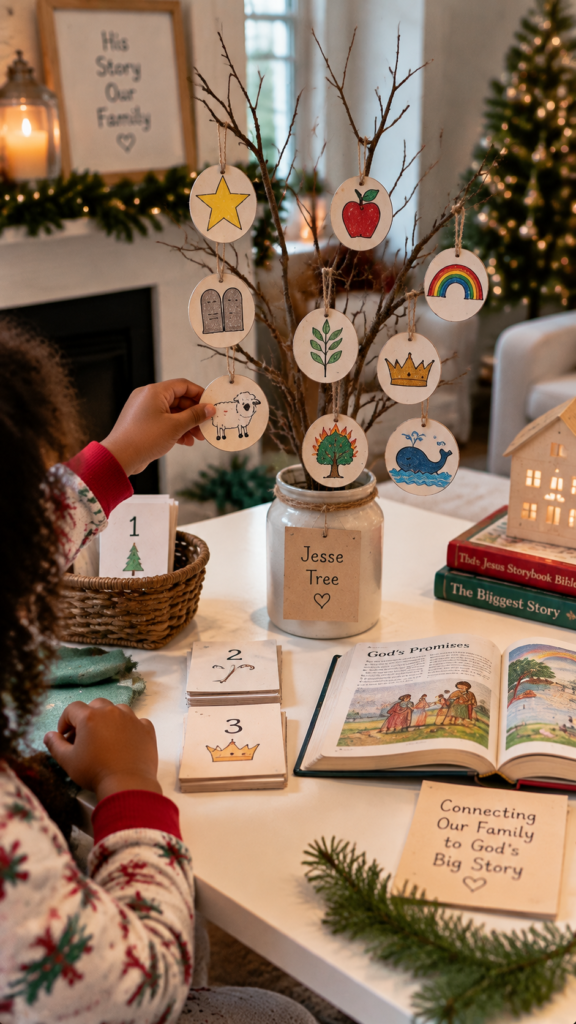
A Jesse Tree takes a different route altogether. Rather than using a character that needs to appear somewhere new each morning, you build a daily Advent tradition around Bible stories and symbols that lead toward the birth of Jesus.
A typical Jesse Tree uses an ornament or symbol for each day. You read or discuss the corresponding Scripture story, then add that day’s symbol to the tree or display.
The exact readings and number of days can vary between Jesse Tree resources, but the basic idea is the same: the Christmas story unfolds gradually through Advent.
This can solve the nightly-setup problem because nothing needs to be hidden around the house. Your preparation happens around the reading or the day’s ornament, rather than creating a new scene for children to discover.
It also gives children something concrete to watch develop. At the beginning of Advent, the display may be nearly empty. As the days pass, more symbols are added and the biblical story takes shape.
For a busy family, you can keep the routine simple: read the day’s short passage, explain what the symbol represents and add it to the display. There is no need to turn each day into a craft project or a long lesson.
Unlike some Elf on the Shelf alternatives, a Jesse Tree is an established Advent practice rather than a replacement toy.
That makes it particularly useful when you want the countdown and anticipation of a December tradition without the nightly character performance.
Best for: families who want a faith-based Advent tradition that builds toward Christmas without moving a character around the house each night.
7. Kindness Elves — Change the Focus From Mischief to Kindness

Kindness Elves are a real alternative to the traditional Elf on the Shelf concept. The idea was created around encouraging children to carry out acts of kindness rather than having a character focused on reporting behaviour to Santa.
That change can appeal to you if the part of the Elf tradition you dislike is the behaviour-monitoring element.
Instead of waking up to find out what the elf has been doing, your child gets a prompt or suggestion that encourages them to do something kind for someone else.
There is one catch that matters for this article: Kindness Elves are not automatically low-effort. A new kindness activity every day can leave you with another December routine to prepare, especially when you feel pressure to make each idea different.
You can make the tradition much easier by preparing the prompts before December begins.
Put simple activities on numbered cards, let your child choose from a small group of options, and repeat everyday acts of kindness rather than inventing elaborate challenges.
The activity can be as simple as helping with a household task, writing a thank-you note or doing something considerate for another person.
So this is an alternative to the Elf’s premise, but it is not necessarily an alternative to daily preparation. That distinction matters when your main goal is to reduce the amount of work you have to do each night.
Best for: families who want a Christmas tradition centred on kindness rather than mischief or behaviour monitoring.
8. A Christmas Countdown That Isn’t Built Around a Toy
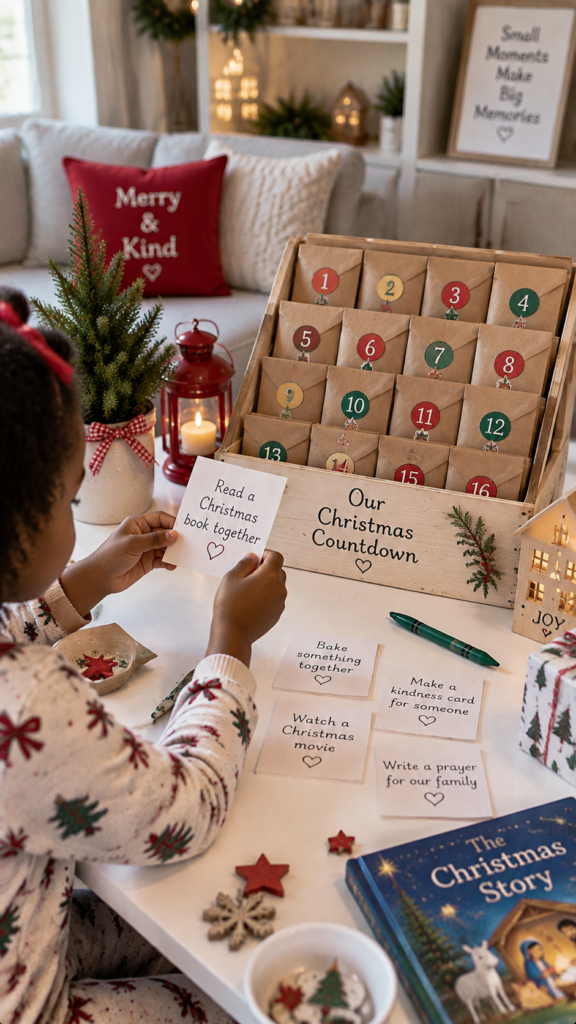
The daily surprise is one reason children can enjoy Elf on the Shelf. You can keep that sense of anticipation without having a character to move around the house.
A simple Christmas countdown gives you one prepared item, activity or story for each day leading to Christmas.
The useful part is that you can prepare the whole system before December starts instead of making up a new idea every night.
You could use numbered reveal cards, with each card containing a short family prompt, joke, question or activity.
Another approach is a story countdown, where you read a small section of a Christmas story each day. For something more visual, add one ornament, paper star or other decoration each day until the display is complete.
The choice matters less than the structure. The work happens mainly at the beginning, rather than at bedtime every night. Once the countdown is ready, your child simply opens, reads or adds the day’s item.
This also works well when you’re looking for Elf on the Shelf alternatives that don’t depend on a particular toy or brand.
You can adapt the countdown to your family’s Christmas traditions, whether that means Bible readings, family activities, stories or simple festive surprises.
Best for: families who want the daily anticipation of an Advent tradition without creating a new character scene each night.
9. Family Christmas Mission Calendar — Prepare Once, Then Let the Child Choose
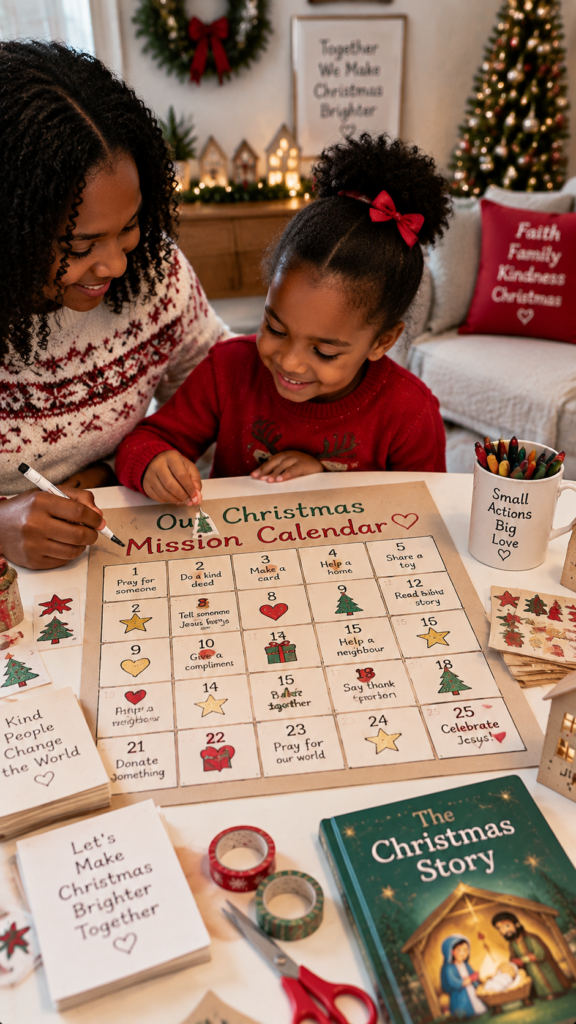
A Christmas mission calendar gives your child something to look forward to each day, but you decide the activities in advance.
That removes one of the biggest problems with the Elf routine: having to come up with another idea when you’re already ready for bed.
Prepare a set of numbered cards before December.
Each card can contain one small mission, with the activities spread across different types of experiences: a family memory, a simple act of giving, a Christmas story, a silly challenge, an outdoor activity, a food-related task or a creative project.
The important part is to keep the missions small enough to fit ordinary family life. “Make hot chocolate together” is easier to manage than an activity that requires a shopping trip and an hour of preparation.
You can also let your child choose from two or three cards when the day’s schedule changes.
This approach doesn’t promise that December requires no work. Instead, you move the decision-making to one planning session rather than 24 separate nights of thinking up something new.
It is also one of the more flexible Elf on the Shelf alternatives because you can make the missions secular, faith-based, educational, creative or focused on family time. You aren’t tied to a particular character, product or Christmas tradition.
Best for: families who want children to have a daily December surprise but would rather prepare the ideas once and let the child take part in choosing what happens.
Planning the Christmas menu? Add something special from 10 Showstopping Christmas Desserts to Make This Holiday Season.
Not Every Elf Alternative Is Actually Low-Effort
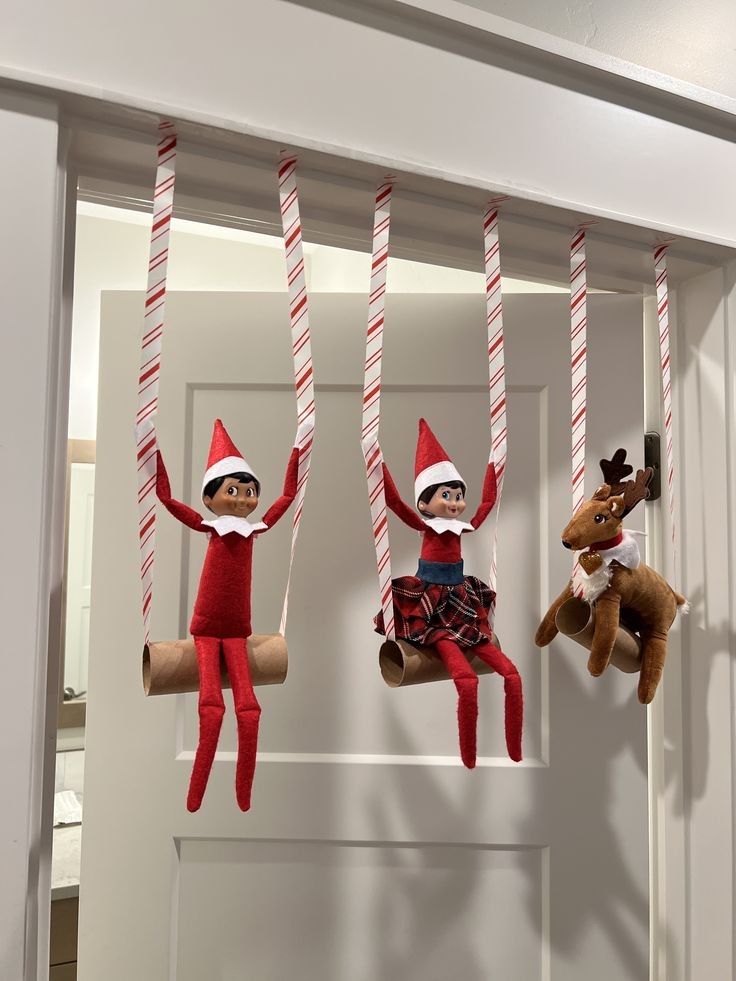
Calling something an Elf on the Shelf alternative does not automatically mean it will make December easier.
Some alternatives change the character or the story but keep the part that creates the most work: you still have to move or hide something every night. Star From Afar and Shepherd on the Search fall into this group.
They can give the daily search a different meaning, but someone still has to decide where the star or shepherd goes before the children wake up.
Other options remove that nightly job completely. Reindeer in Here stays with the child, while Santa’s Lazy Gnome is designed to remain in one place.
A Jesse Tree or a prepared Christmas countdown also shifts the work away from nightly setup, because most of the preparation can happen before December begins.
Kindness Elves sit somewhere in between. The focus moves from watching children’s behaviour to encouraging acts of kindness, but a daily prompt can still become another task for the parent unless the activities are prepared in advance.
That difference matters because “low-effort” can mean different things.
Maybe you don’t mind spending five minutes with your child each evening but don’t want to stage another scene. Or you enjoy a daily search but hate having to invent something new. Perhaps you want a December tradition that requires almost no preparation after the month begins.
The table below makes that distinction easier to see.
| Alternative | Nightly hiding? | Parent preparation | What it keeps |
| Reindeer in Here | No | Low | Christmas character and companionship |
| Santa’s Lazy Gnome | No | Very low | Christmas character and Santa connection |
| Family-created character | No | Low | Imaginative play with a Christmas character |
| Star From Afar | Yes | Medium | Daily search and Nativity story |
| Shepherd on the Search | Usually | Medium | Daily search and Nativity story |
| Jesse Tree | No | Low to medium | Daily Advent rhythm and Bible stories |
| Christmas countdown | No | One-time setup | Daily anticipation |
| Christmas mission calendar | No | One-time setup | Daily surprise and family activities |
| Kindness Elves | Not necessarily, but daily prompts may need preparation | Medium | Daily activity with a kindness focus |
So rather than asking “Which Elf alternative is the most fun?”, start with a more useful question: “Which part of the Elf routine am I trying to get rid of?”
That answer will narrow the choices much faster.
What “Low-Effort” Means Here
“Low-effort” does not mean your children do nothing every day. It means the tradition does not require you to keep producing something new every night.
That is an important distinction when comparing Elf on the Shelf alternatives.
A tradition might take 10 minutes of family time each evening and still be much easier to maintain than one that requires you to move a character, gather props and invent a new scene before bed.
For this article, a low-effort Christmas tradition might involve:
- No nightly setup: Nothing needs to be hidden, rearranged or staged after the children go to sleep.
- One-time preparation: You prepare the cards, ornaments, stories or activities before December, then use them as the month goes on.
- No elaborate props: The tradition works with ordinary household items or a simple character instead of requiring a new scene every morning.
- No daily shopping: You are not discovering tonight’s activity only to realise it needs a supply you don’t have.
- Child-led participation: Your child can choose, read, add, carry or play with something without needing you to direct every step.
- A repeatable activity: The routine can stay simple instead of demanding a completely new idea for every day of Advent.
That last point is especially useful. Children can still have a daily Christmas tradition without parents having to create 24 different experiences.
Reading one short Christmas story each night takes family time, for example, but it does not require you to invent and stage a new scene at 11 p.m.
A child choosing one card from a prepared countdown also creates anticipation without leaving you responsible for tonight’s idea at the last minute.
So when choosing between Elf on the Shelf alternatives, look beyond how exciting the tradition looks. Ask where the work falls.
Does the child participate, or does the parent have to make the magic happen every night?
A tradition can still require daily family time and be low-effort for the parent. The goal is not to remove the Christmas ritual. It is to remove the part that makes you feel like you have been assigned a new job for December.
Conclusion
Christmas traditions are meant to add something to December, not give you another task to complete before bed.
That is what makes Elf on the Shelf alternatives worth considering. You can keep the anticipation, the stories, the family moments or the Christmas fun without committing yourself to a routine that no longer fits your December.
Pick the tradition that feels realistic for your home, give it a try, and let it become your family’s own thing.
Which Elf alternative would work in your home? Start with the one that gives you less work and your family more time to enjoy December.
FAQs
1. Can you start an Elf on the Shelf alternative in the middle of December?
Yes. You don’t have to begin on December 1. A countdown can start with the number of days you have left, while a character-based tradition can begin whenever your family is ready.
2. What can I use instead of Elf on the Shelf if my child is scared of elves?
A Christmas character isn’t essential. A favourite stuffed animal, Christmas decoration or simple family-created character can become part of the tradition without using an elf.
3. How do you explain to a child that you are not doing Elf on the Shelf anymore?
Keep the explanation simple and introduce the new tradition as something your family is trying this Christmas. You don’t need to make the change sound like a punishment or a loss.
4. Are there Elf on the Shelf alternatives for older kids?
Yes. Older children may respond better to traditions that give them more involvement, such as family challenges, Christmas missions, Bible readings, cooking activities or choosing the day’s activity.
5. What if my child wants Elf on the Shelf but I don’t want to do it anymore?
You don’t have to recreate the full routine to keep the part your child enjoys. Keep the elf as a Christmas decoration or character and replace the nightly hiding with a simpler activity, story or countdown.