Looking for hands-on ways to teach letters? These train craft ideas for kids turn playtime into real alphabet practice at home.”
Trains have a structure that most toys don’t: cars connect to each other, one after another, in a fixed order. That’s not just a fun detail, it mirrors exactly what a word is. Letters connect in sequence to form something bigger, the same way train cars link together to form a train.
Kids grasp physical, hands-on sequencing before they grasp abstract ideas like spelling.
Early literacy research consistently shows that letter recognition and fine motor skills develop together, not separately, a child’s hands doing the sorting, connecting, and building helps their brain do the recognizing.
A train, with its cars to snap on and off, gives kids that physical sequencing practice built right into the toy.
This is also why letter-of-the-day worksheets often fall flat compared to hands-on play: a worksheet asks a child to recognize a letter in isolation, while a train lets them place that letter into an order that means something, first car, second car, third car, the same logic they’ll later use to sound out a word letter by letter.
In this guide you will see just how to make some of the train craft for kids.
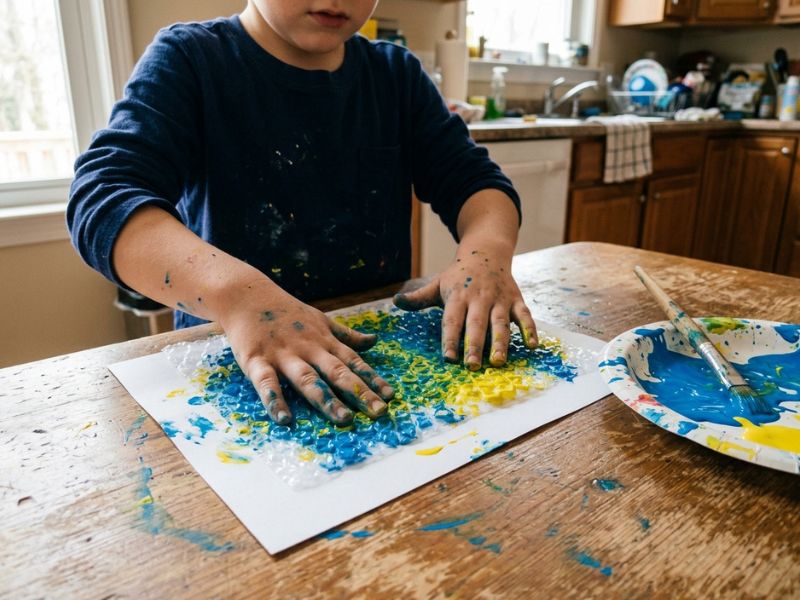
If your child enjoys hands-on art activities, Bubble Wrap Painting: The Easy Texture Trick That Turns Bored Kids Into Little Artists introduces a fun painting technique that encourages creativity while exploring patterns and texture.
Why Trains Work Especially Well for Letter Learning
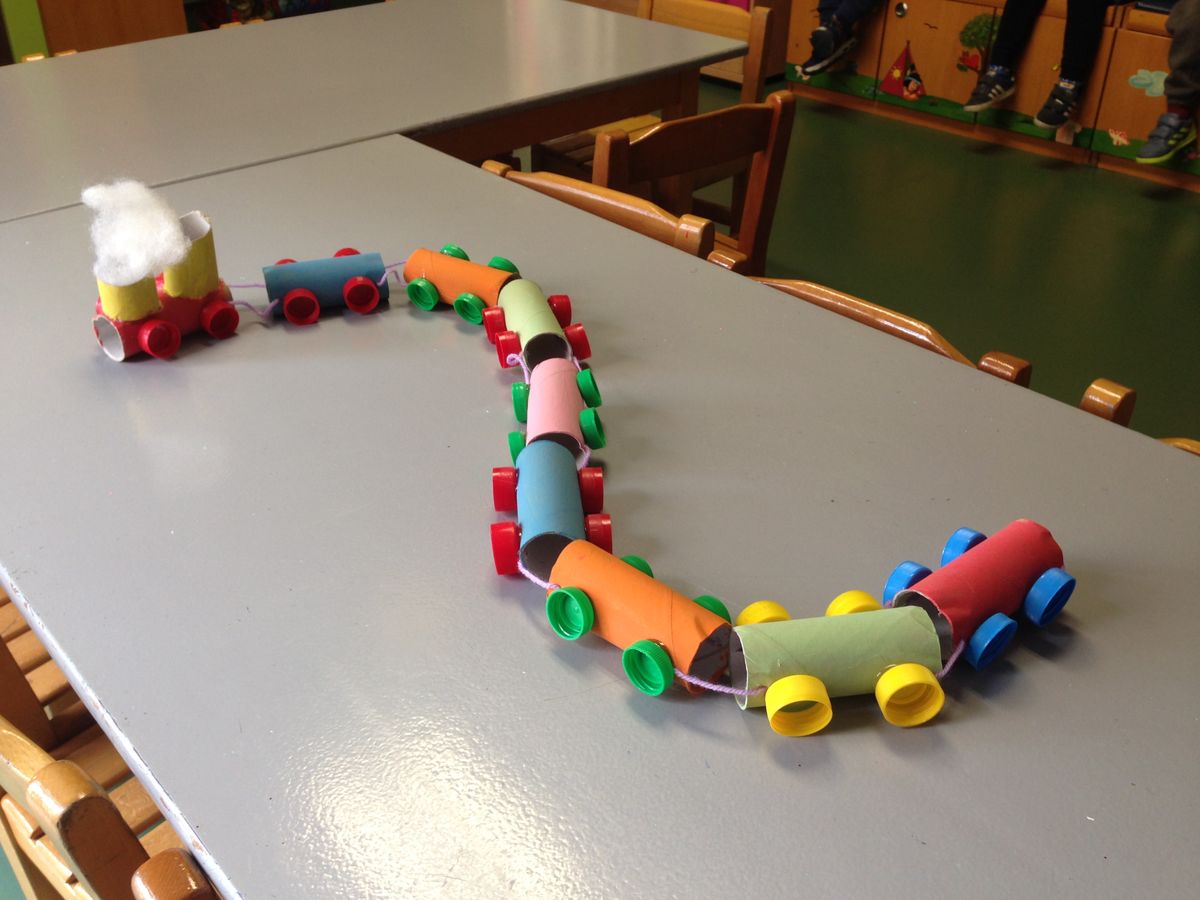
A train isn’t just a fun shape to build. The structure itself supports how kids learn letters.
- Sequencing: Trains have a natural front-to-back order, so lining up cars A–Z reinforces alphabetical sequence, not just letter identification.
- Kids grasp physical sequencing before abstract ideas. A worksheet asks a child to recognize a letter sitting alone on a page. A train lets them place that letter into an order that means something, first car, second car, third car.
- Hands-on building supports recognition. Early literacy research shows letter recognition and fine motor skills develop together, not separately. The act of snapping cars on and off, sorting them, and lining them up gives a child’s hands something to do while their brain does the recognizing.
- The connection sticks because it’s tactile. A child who’s physically connected ten train cars in order is more likely to remember that letters connect in order too, compared to a child who’s only seen the alphabet on a wall chart.
For projects that combine creativity with cultural learning, 12 African Art Projects for Kids That Teach Culture, Not Just Craft offers meaningful activities that help children explore traditions, symbols, and artistic expression from across Africa.
What You’ll Need
Most of these train craft ideas for kids come together with items already sitting in your recycling bin or craft drawer.
- Toilet paper or paper towel rolls
- Egg cartons
- Cereal boxes
- Bottle caps
- Clothespins
- String or yarn
- Markers
- Glue
- Scissors
Looking for sensory activities that keep kids engaged? Safe and Easy Slime Craft Ideas for Kids — Non-Toxic Projects That Keep Them Busy for Hours shares simple recipes and creative slime projects designed with safety and fun in mind.
Train Craft Ideas For Kids
1. Toilet Paper Roll Train Cars
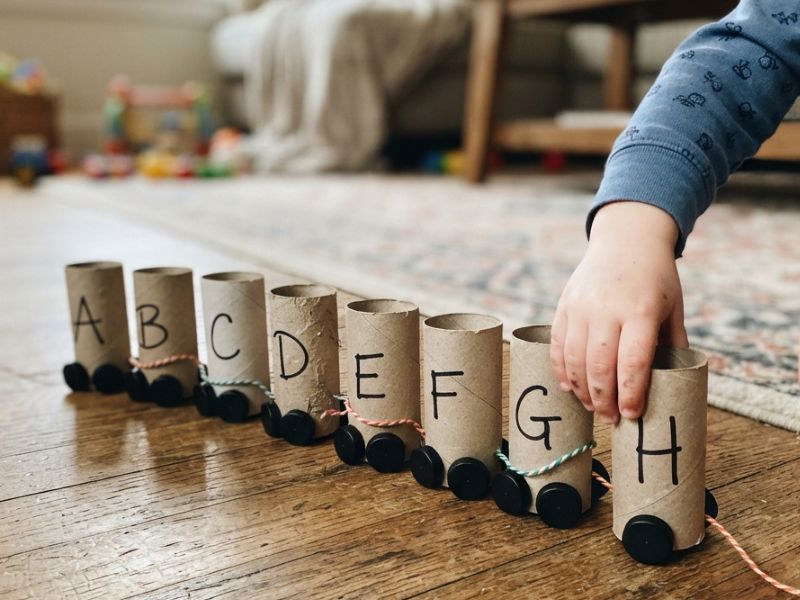
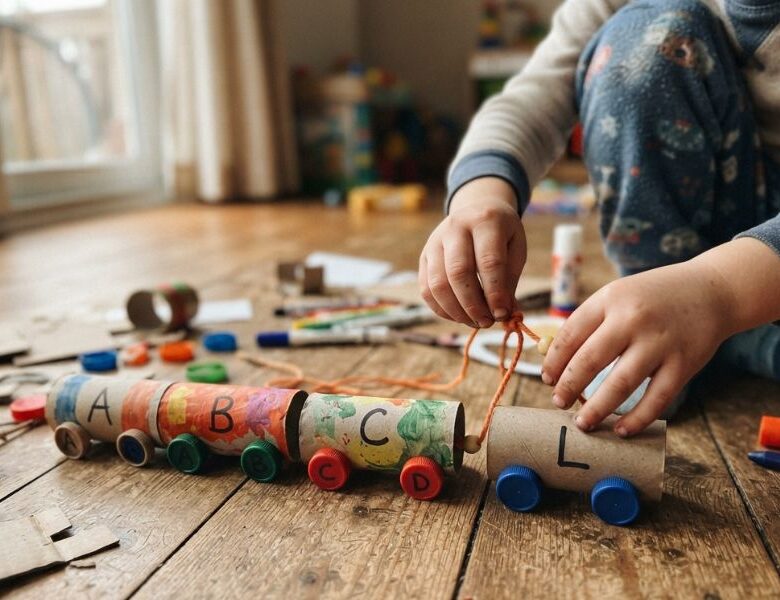
This is cardboard roll train where each car represents one letter, and the full set connects into a single alphabetical line once complete.
Materials
- Toilet paper or paper towel rolls (26, one per letter)
- Marker
- String or yarn
- Hole punch
How to make it:
- Collect 26 toilet paper or paper towel rolls (paper towel rolls work well if cut in half for smaller cars)
- Flatten one end of each roll slightly so it stands upright on its own
- Write one uppercase letter on each roll, keeping the lettering large and centered so it’s easy to read at a glance
- Punch two small holes near the top of each roll, on opposite sides
- Thread string through the holes, connecting each car to the next in alphabetical order, leaving enough slack between cars that kids can still handle them individually
What it Teaches:
Most alphabet activities test letter recognition in isolation, a flashcard, a single sticker, a worksheet square. This one is different because the letters have to go somewhere in relation to each other.
A child has to know that G comes after F and before H to place it correctly, which means they’re practicing sequence memory alongside shape recognition.
That distinction matters: kids who can rattle off the alphabet song don’t always know which letter comes next when asked cold, and building the sequence by hand closes that gap.
Because the cars detach and reattach, kids can also pull specific letters out to review, say, the ones from their name, without dismantling the whole set.
Want more recycled craft ideas? Toilet Paper Roll Crafts for Kids That Turn Everyday Waste into Fun, Skill-Building DIY Projects at Home transforms common household items into imaginative projects that support creativity and fine motor development.
2. Egg Carton Train
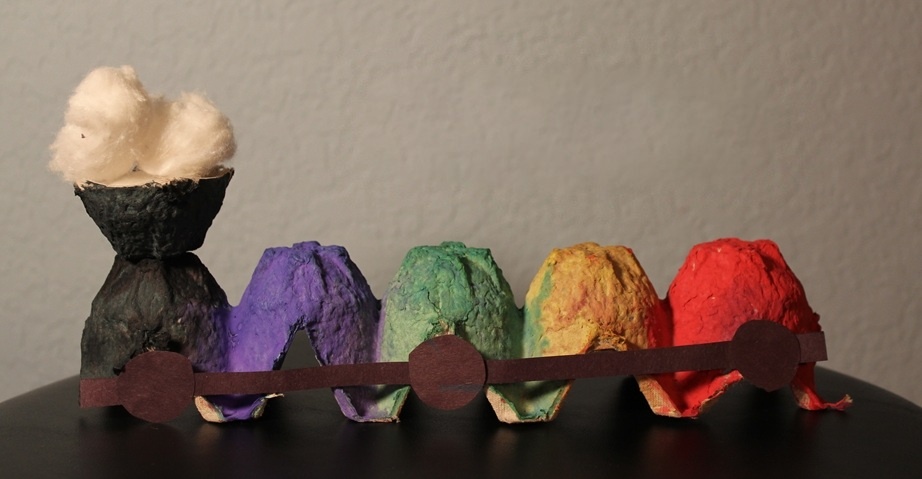
Photo credit: @ Unknown
An egg carton cut into sections, with each cup holding a small object that starts with a specific letter’s sound.
Materials
- Egg cartons
- Marker or letter stickers
- Small household objects (buttons, cotton balls, rubber bands, etc.)
- Scissors
- Tape or cardboard strip (for base)
How to make it:
- Cut a carton into rows of two or three cups each, so every row becomes one train car
- Label each car with a letter using marker or a printed sticker
- Gather small household items that match — a button for B, a cotton ball for C, a rubber band for R
- Place one object into each cup, matching it to that car’s letter
- Attach the cars in a row using tape or a strip of cardboard as a base, so the finished train can be picked up and carried as one piece
What it teaches:
This craft targets something flashcards skip entirely: the link between a letter and its sound, tied to a real object a child can hold. Recognizing that “B” looks like a certain shape is one skill.
Understanding that “B” makes the sound at the start of “button” is a separate one, and it’s the skill that actually leads to reading.
Searching the house for matching objects also turns the activity into a small scavenger hunt, which tends to hold attention longer than a seated worksheet, kids are moving, looking, and testing sounds out loud as they hunt, rather than passively filling in a blank.
If your child loves colorful art projects, Coffee Filter Butterfly Craft for Kids (Easy Stained Glass Effect Craft Idea) shows how to create vibrant butterflies while learning about color blending and design.
3. Cereal Box Engine and Cars
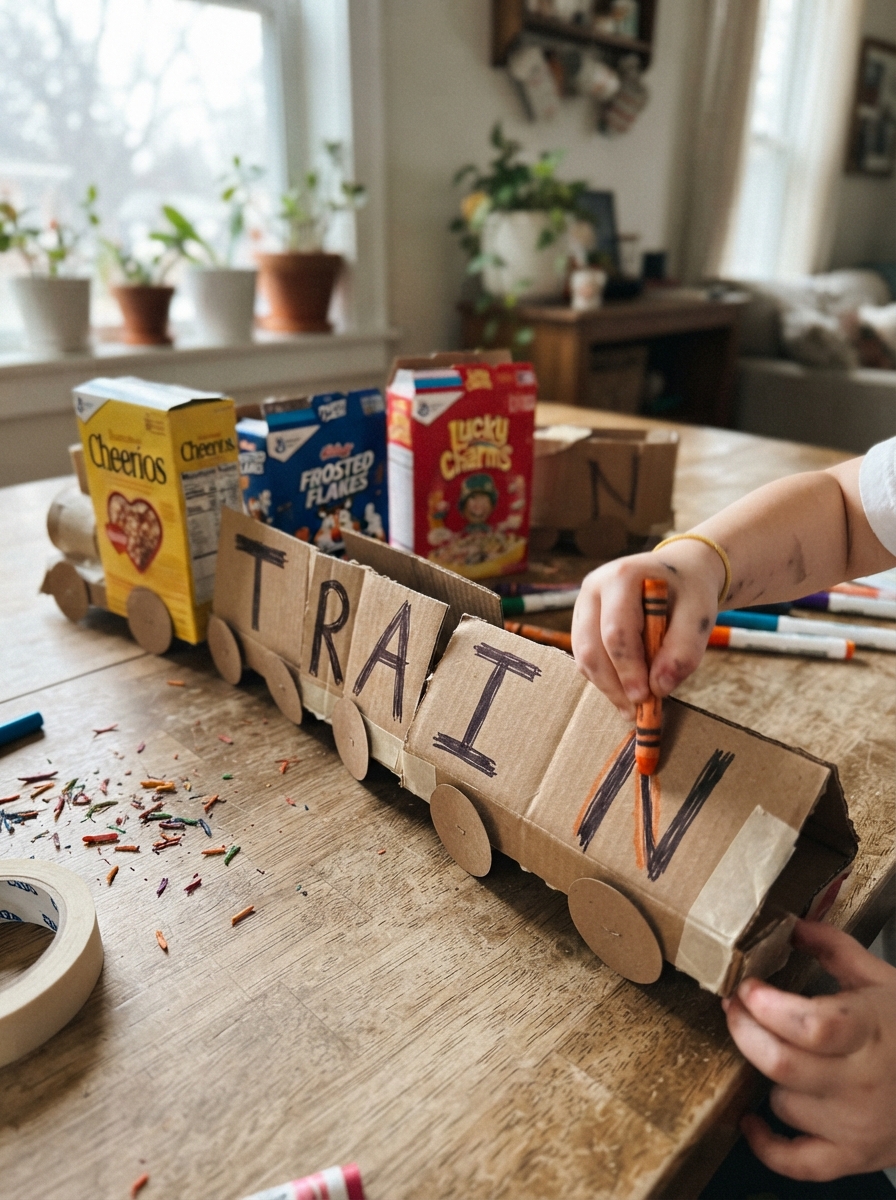
Is a larger-format train built from flattened cereal box cardboard, designed to give kids more room to trace and write than smaller materials allow.
Materials
- Cereal boxes
- Scissors
- Marker or crayons
- Brass fasteners or string (optional, for connecting cars)
How to make it:
- Flatten cereal boxes and cut them into rectangular car shapes, roughly the size of a small notebook
- On each car, write a large uppercase letter on one side and its lowercase pair on the other
- Punch holes and connect the cars with brass fasteners or string, or simply line them up on a table or floor
- Let kids trace over the letters with markers, crayons, or their fingers before adding their own drawings or decorations to each car
What it teaches:
Letter recognition and letter formation are two different milestones, and this craft is built for the second one.
The larger surface gives kids enough room to trace full letter shapes with a natural hand motion, rather than cramming strokes into a small worksheet box, which matters for kids still building fine motor control.
Pairing uppercase and lowercase on the same car also reinforces a connection kids often struggle with: that “A” and “a” are the same letter, not two unrelated symbols.
When you need a low-mess activity, Easy Foam Sheet Crafts for Kids That Keep Them Focused, Creative, and Productively Busy at Home offers colorful projects that are simple to set up and easy for young children to complete.
4. Clothespin Letter Cars
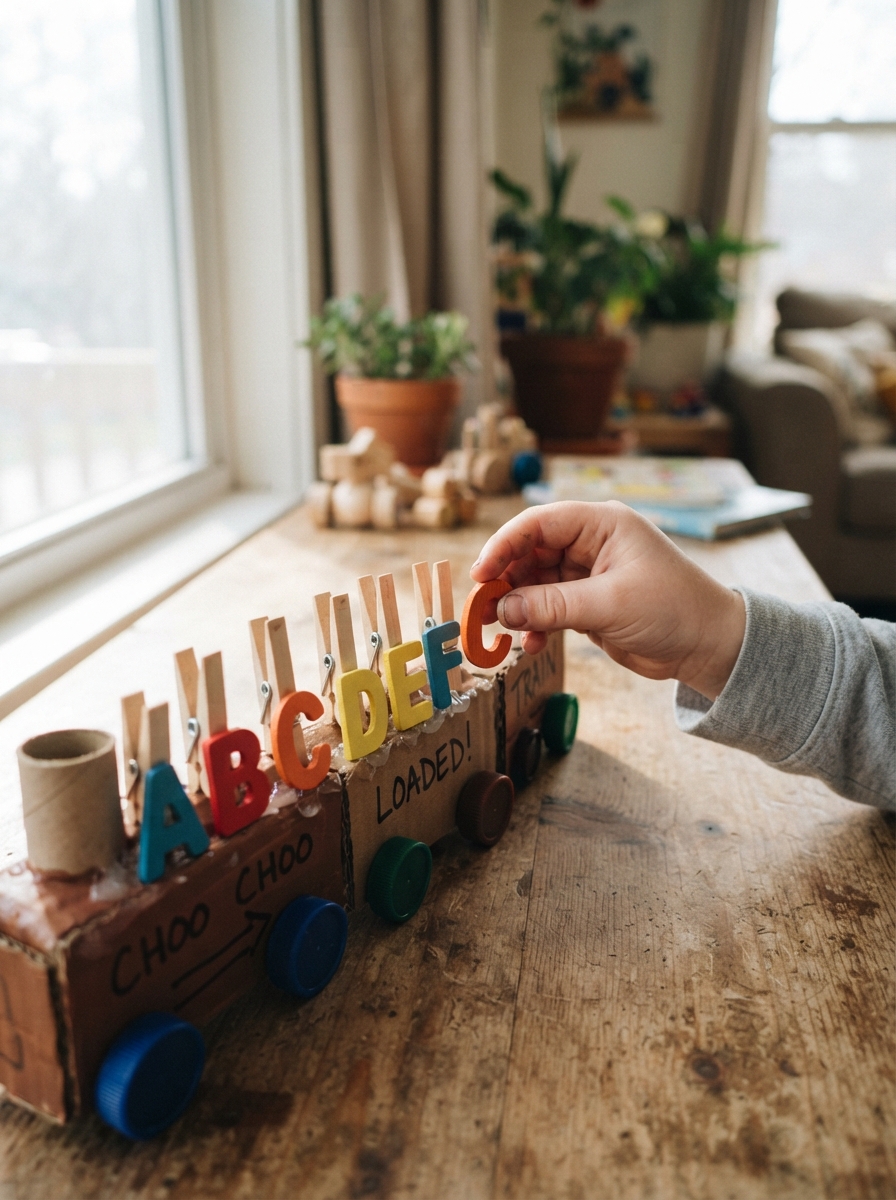
This train craft idea for kids uses clothespins as connectors, with each pin clipping onto a cardboard base to hold a magnetic or paper letter in place.
Materials
- Sturdy cardboard strip
- Wooden clothespins
- Paper letter cutouts or magnetic letters
- Marker (for drawing car outlines)
How to make it:
- Cut a long strip of sturdy cardboard to serve as the train base
- Write or draw simple train car outlines along the strip, spaced evenly apart
- Clip a wooden clothespin onto each car outline
- Prepare a set of small paper letter cutouts or magnetic letters
- Have kids clip the correct letter onto its matching car, working through the alphabet in order or picking letters at random for a matching challenge
What it teaches:
Clothespins demand a pinching grip that directly strengthens the small hand muscles kids need for holding a pencil later, so this craft is doing fine motor work disguised as play.
The matching task adds a second layer: kids have to hold a letter’s shape in mind while searching for its pair, which builds visual discrimination, the skill that lets a child tell “b” from “d” instead of confusing similar-looking letters, a common early reading hurdle.
Because letters clip on and off, the same base gets reused for weeks, cycling through new letter combinations without any new materials.
For a festive art activity, Q-Tip Firework Painting Craft for Kids for 4th of July Indoor and Outdoor Fun teaches a simple painting technique that creates bright firework effects using everyday supplies.
5. Bottle Cap Wheels With Letter Stickers
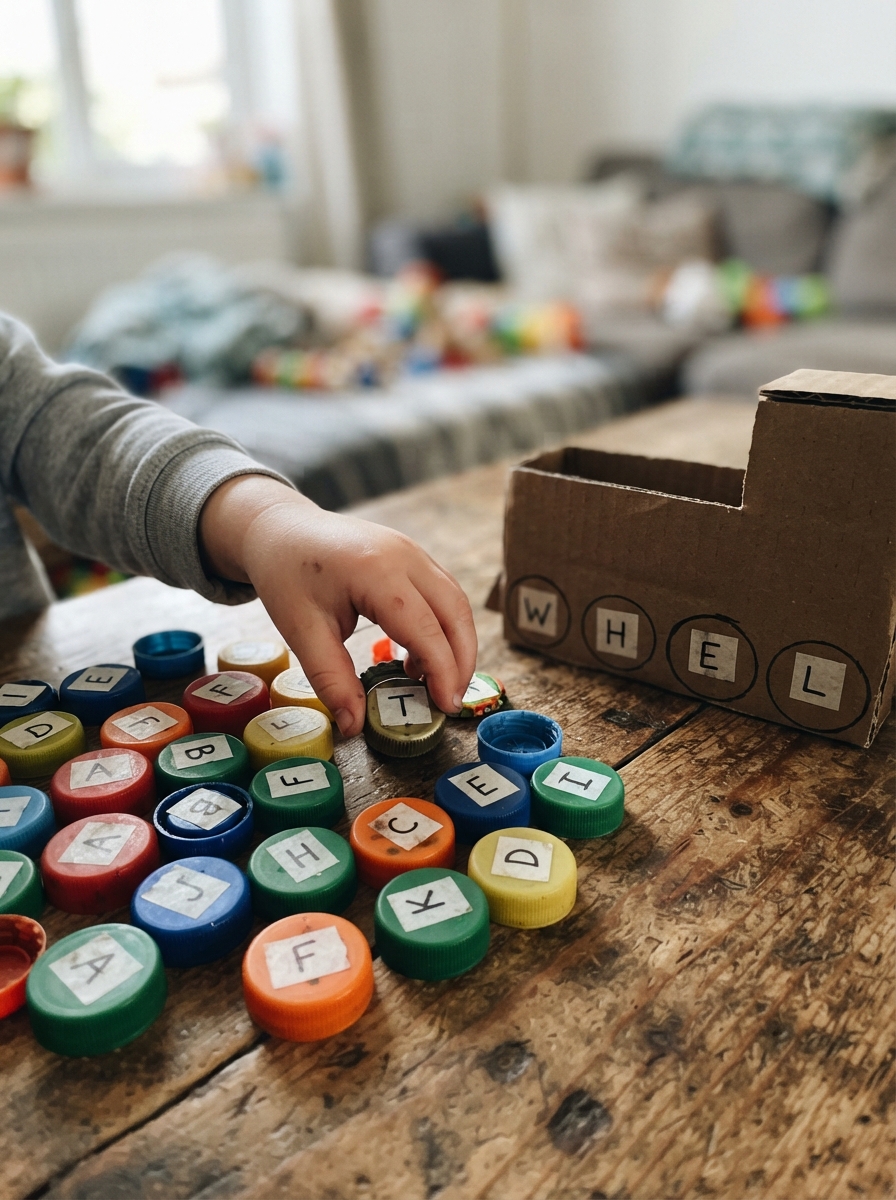
Bottle caps become the wheels for a paper or cardboard train, with each cap carrying a letter sticker that has to match its designated spot before the wheel gets attached.
Materials
- Bottle caps
- Letter stickers or marker
- Cardboard or paper (for train car shapes)
- Glue or tape
How to make it:
- Collect bottle caps and clean them thoroughly
- Add a small letter sticker or written letter to the inside of each cap
- Draw or cut out simple train car shapes with two circles marked as wheel spots on each car
- Label each wheel spot with a letter
- Have kids sort through the caps to find the one that matches each spot, then glue or tape it into place once they’ve confirmed the match
What it teaches:
Sorting through a pile of caps before placing any of them turns this into a search-and-match task rather than a straightforward craft step, which keeps kids engaged longer than simply gluing pieces in a fixed order.
It also builds a skill that gets overlooked in most alphabet activities: scanning a group of options and eliminating the wrong ones before landing on the right answer.
That’s closer to how reading actually works later on, when a child has to scan a word and pick out the letters that belong, rather than recognizing letters one at a time in isolation.
For quick and flexible crafting sessions, 13+ Pipe Cleaner Crafts for Kids That Are Simple, Fun, and Completely Mess-Free features creative projects that help children practice shaping, twisting, and building skills.
How to Extend These Crafts Without Buying Anything New
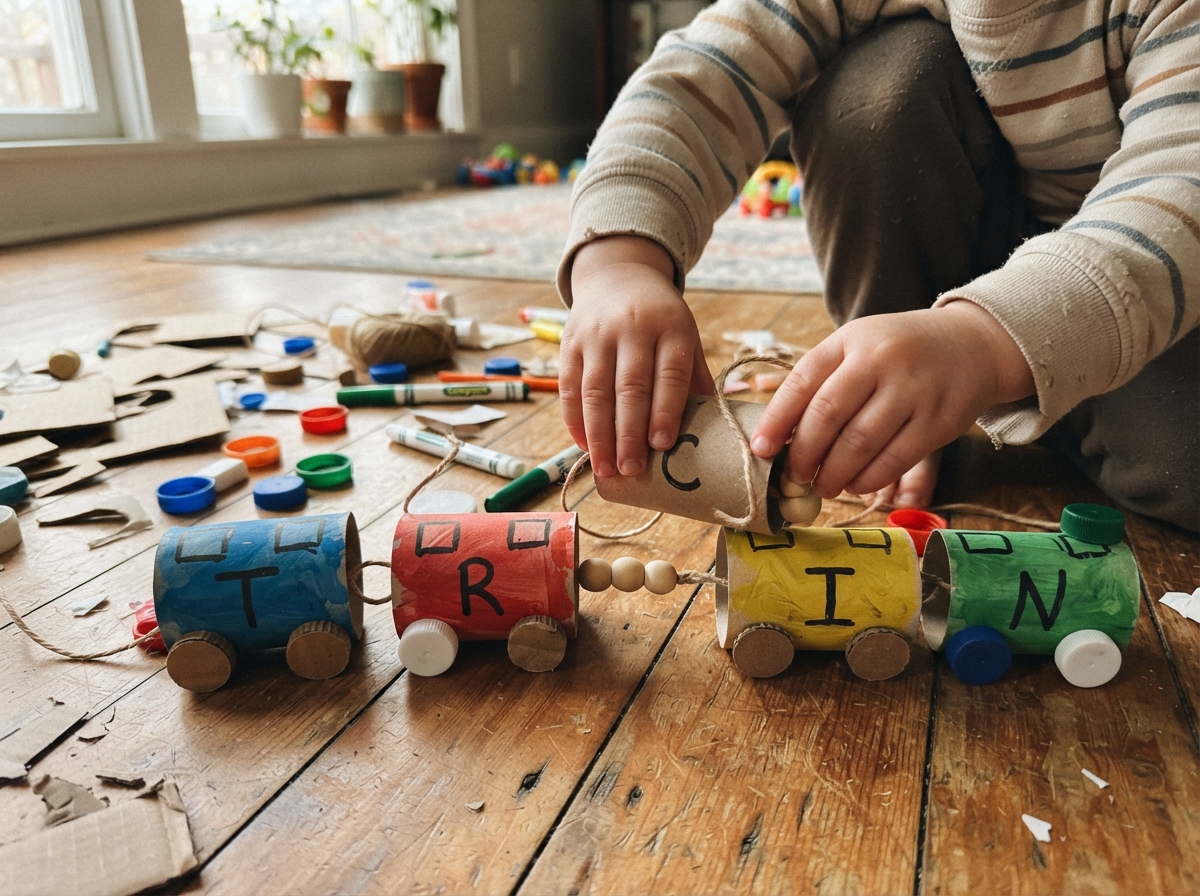
The materials for these crafts hold up well beyond a single afternoon, and a few small adjustments stretch the learning value even further.
-
Rotate letters daily instead of doing all 26 in one sitting:
Working through the entire alphabet in one session asks a lot of a young attention span, and it usually means the later letters get rushed. Pulling out just three or four cars a day keeps each letter in focus long enough to actually stick, and it turns the train into a short daily routine rather than a one-off project.
-
Reuse the same train base with swappable letter cards:
Instead of building a new train each time, keep one base, the cardboard strip, the egg carton, the cereal box row — and swap out the letters, objects, or stickers on it. This cuts down on materials and shifts the activity from “make a craft” to “practice with a tool,” which holds up better over weeks of repeated use.
-
Tie the craft to a train-themed book for added reading exposure:
Reading a train story before or after the activity gives kids a chance to spot letters and words in a different context, reinforcing that the alphabet shows up everywhere, not just on the craft table.
It also gives the train a bit of narrative purpose, which tends to hold a child’s interest longer than an unconnected activity would.
13 Popsicle Stick Crafts for Kids That Actually Keep Them Busy and Boosts Creativity features engaging projects that transform simple craft sticks into imaginative creations while encouraging problem-solving, creativity, and hands-on learning.
Adapting by Age
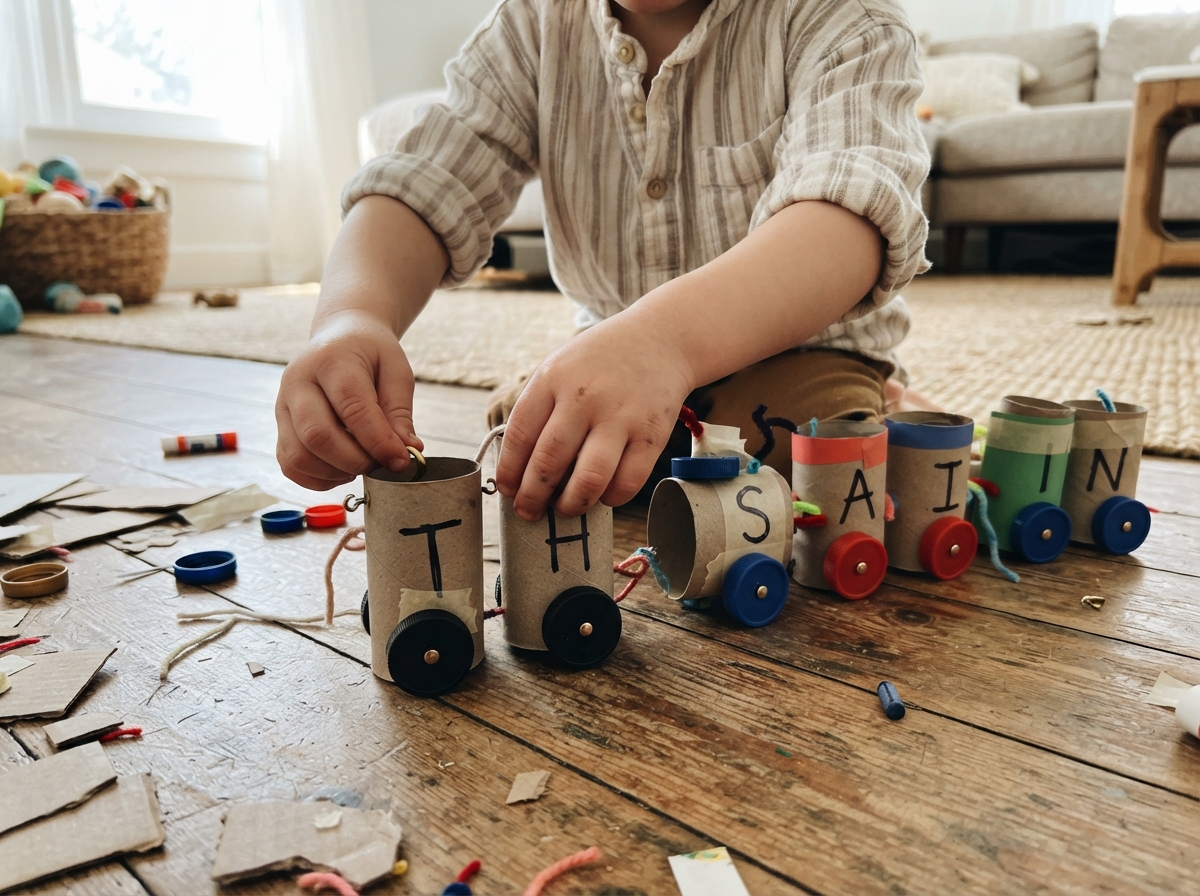
The same base structure works across a wide age range, what changes is how much a child is asked to do with it. These train craft ideas for kids scale up or down depending on what stage of letter learning they’re at.
✔ Toddlers (2–3): focus on letter recognition and color sorting, skip cutting steps.
At this age, the goal isn’t spelling or sound matching, it’s simply getting comfortable with the fact that letters are distinct shapes. Hand a toddler pre-cut cars and let them sort by color or group similar letters together.
Skipping scissors isn’t just a safety call; it keeps the activity focused on the one skill that actually matters right now instead of splitting attention between cutting and recognizing.
✔ Preschool (4–5): introduce letter-sound matching per car
This is the age where the leap from “I know what this letter looks like” to “I know what sound it makes” tends to happen, so it’s worth building the activity around that shift.
Have kids say the sound out loud as they place each letter, rather than naming the letter alone, the extra step of vocalizing the sound is what carries over into early reading later.
✔ Early elementary (6–7): add simple word-building across connected cars (spelling short words as the train “travels”)
By this stage, isolated letters are old news, and kids are ready to see how letters combine into something meaningful. Arrange a few cars to spell a short word cat, sun, dog and let the “train” carry that word across the room.
This turns a static alphabet exercise into an early spelling one, without needing new materials or a new craft.
Need something fast after school? 10 Super Fun After-School & Homework-Friendly Crafts Kids Can Make in 20 Minutes includes quick craft ideas that fit easily into busy afternoons without requiring extensive preparation.
Conclusion
You don’t need new supplies or a big project for this one. A few cardboard rolls, an old egg carton, some string, that’s really all it takes to turn the alphabet into something your child builds instead of just memorizes.
So start with a few letters, add more as you go, and let the train grow over the week.
Try one of these train craft ideas for kids today, and watch how much faster the letters stick when there’s a train car attached to each one.
FAQs
1. How do I keep younger kids from losing interest halfway through 26 letters?
Don’t aim for all 26 in one sitting. Most young kids hold focus for 10–15 minutes of hands-on activity, which is enough time for maybe four or five letters, not the whole alphabet.
Break the project into short daily sessions instead of one long build, the train grows a little each day, and kids tend to look forward to adding the next car rather than dreading a marathon craft session.
2. What’s a good order to introduce letters if not straight A–Z?
Starting with the letters in a child’s own name tends to work better than strict alphabetical order, since those letters already carry personal meaning and get reinforced daily anyway.
From there, moving to letters with distinct, easy-to-spot shapes (O, X, T) before tackling visually similar pairs (B/D, M/N) helps avoid early confusion. The train can still end up in A–Z order once it’s finished, the letters just don’t need to be introduced in that sequence.
3. Can this craft work for kids who don’t recognize letters yet?
Yes, and it’s actually a reasonable place to start. For kids with no letter recognition yet, skip the naming and sound-matching steps and focus purely on shape sorting, grouping cars that “look the same,” matching a letter card to an identical one, or simply handling and stacking the pieces.
The physical familiarity with letter shapes builds a foundation that recognition and sounds get layered onto later.
4. How do I store the train pieces between play sessions?
A shoebox or shallow bin works well, especially if the cars are kept connected by string rather than loose, that way the alphabet order stays intact and there’s no reassembly needed next time.
For pieces with small parts, like bottle cap wheels or clothespins, a divided container or a zip-top bag inside the main storage box keeps things from scattering.