You are currently viewing Q-Tip Firework Painting Craft for Kids for 4th of July Indoor and Outdoor Fun

Q-Tip Firework Painting Craft for Kids for 4th of July Indoor and Outdoor Fun

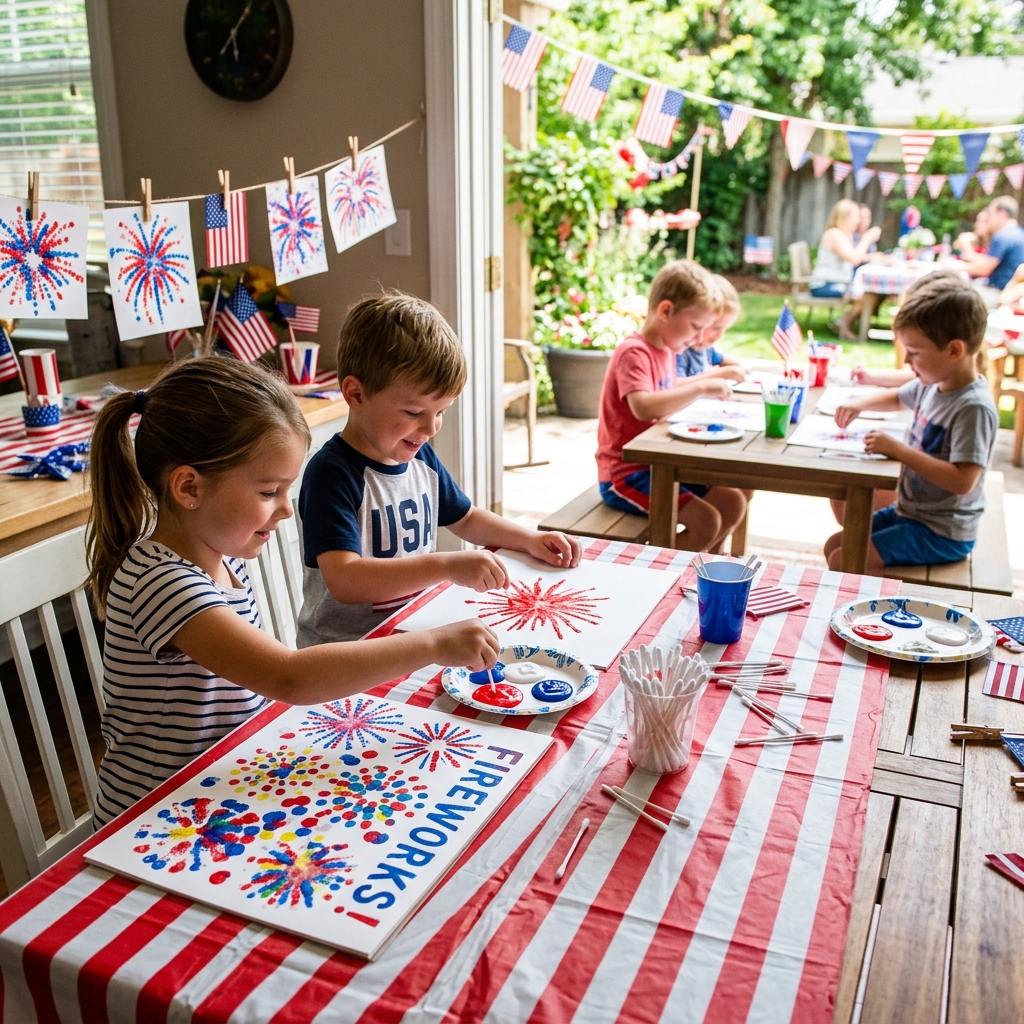
Keeping kids entertained on the 4th of July can be tricky, this Q-Tip firework painting craft for kids makes it easy, fun, and mess-friendly indoors or outside.

The 4th of July is rarely a slow, organized day for families. Between food prep, guests arriving, outdoor setups, and last-minute running around, things move fast,  and a little chaotically.

In the middle of all that, kids often end up in those “in-between moments” where nothing is really planned for them yet. That’s usually when boredom shows up first.

And most craft activities don’t help much because they tend to:

  • require too many materials
  • need constant adult supervision
  • create more cleanup than the actual activity itself

So instead of something complicated, what actually works on days like this is a simple transition activity,  something that fits into the flow of the day instead of interrupting it.

That’s exactly where this Q-Tip firework painting craft for kids comes in.

It keeps kids gently engaged while adults handle the busy parts of the day, and it works just as well indoors when things are hectic as it does outdoors during BBQ prep or fireworks time.

What you’ll learn in this guide

You’ll learn how to pick a simple 4th of July craft that actually keeps kids engaged, avoid the common setup mistakes that lead to stress or quick boredom, and understand what makes low-material, easy activities work so well on busy holiday days.

Screen time gets old fast, but Toilet Paper Roll Crafts for Kids That Turn Everyday Waste into Fun, Skill-Building DIY Projects at Home makes ordinary household items feel exciting again while keeping kids creatively engaged.

What Q-Tip Painting Is (and why it works so well for kids)
What-Q-Tip-Painting-Is

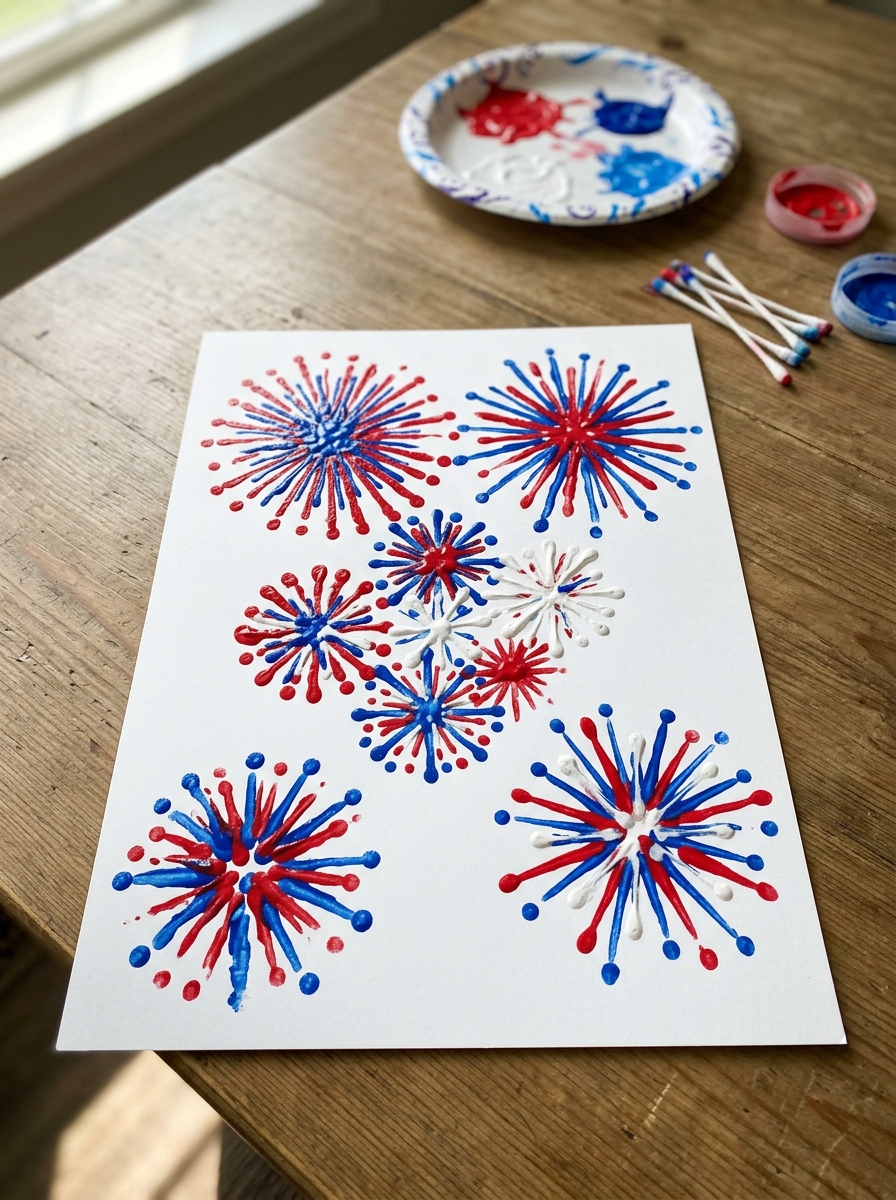
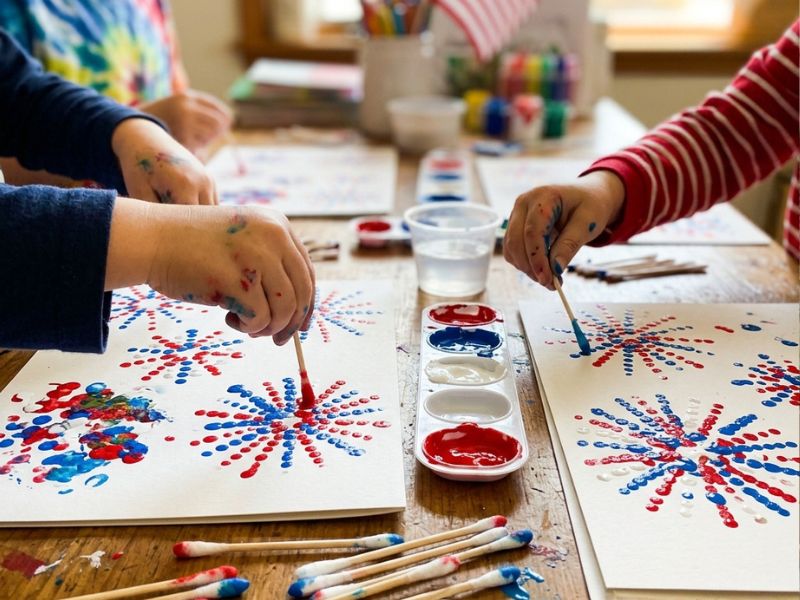
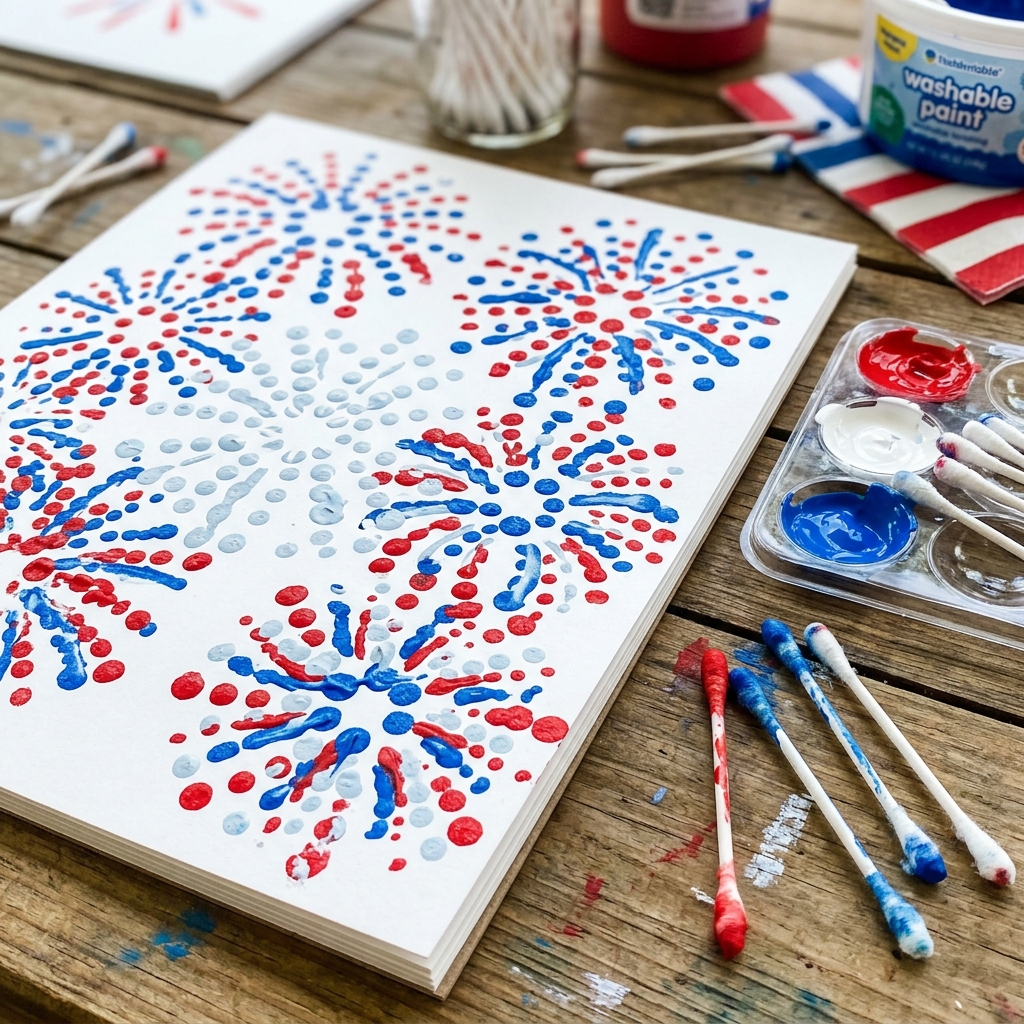
Q-tip painting is a simple kids’ art activity where cotton swabs (Q-tips) are dipped into paint and used to create patterns by dabbing them onto paper instead of using brushes.

Instead of smooth brush strokes, the Q-tip creates small stamped dots, which makes it perfect for building shapes like fireworks, stars, and bursts, especially for 4th of July designs.

What makes it useful is how simple it is:

  • no brush control needed
  • no complex technique required
  • easy for younger kids to repeat without frustration

Each dab builds texture and pattern, so children can layer colors (like red, white, and blue) to create firework effects that look intentional but are still easy to make.

In short: it’s a low-pressure painting method that turns simple stamping into creative “firework-style” art kids can actually complete and enjoy.

Bored kids and short attention spans become much easier to manage with Easy Foam Sheet Crafts for Kids That Keep Them Focused, Creative, and Productively Busy at Home using simple activities that actually hold their interest.

Materials You Will Need
Materials-You-Will-Need

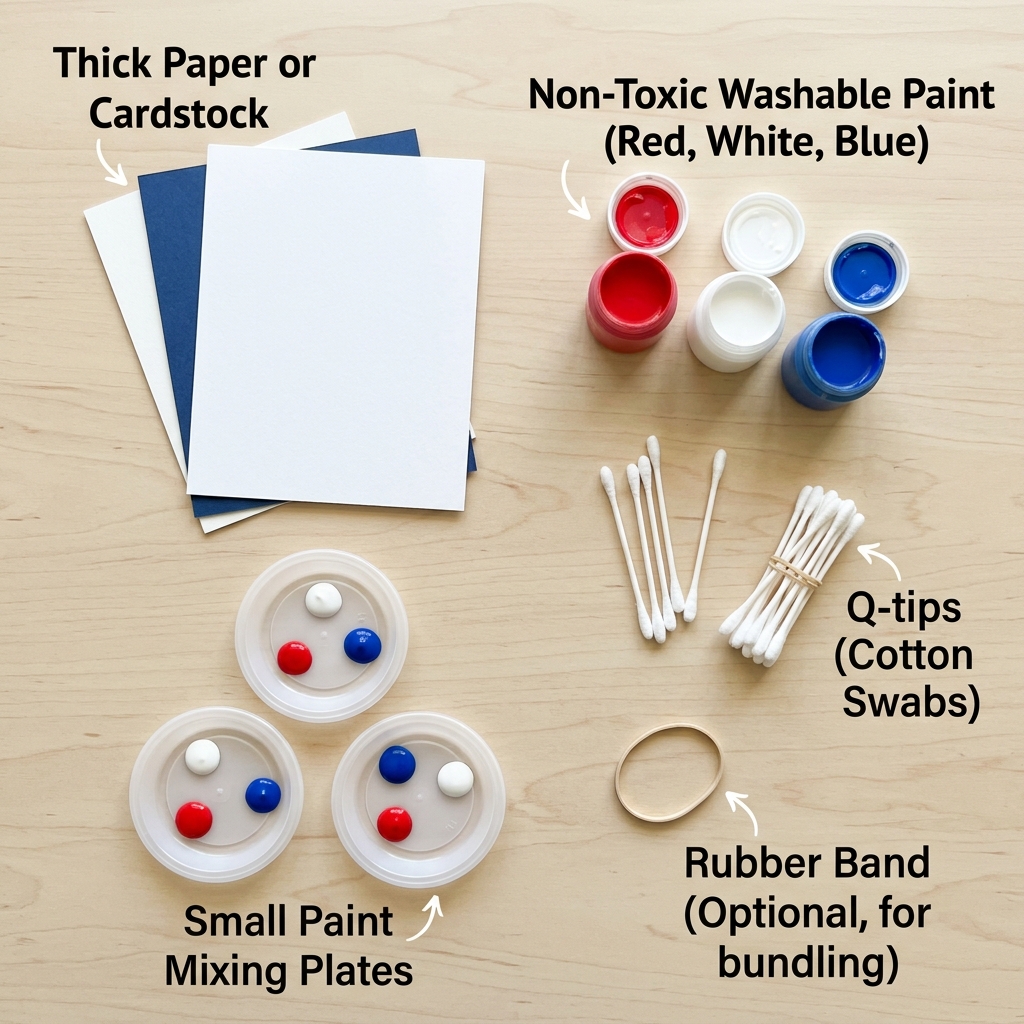
This craft uses very simple, everyday items,  nothing complicated or hard to find. Here’s what you’ll need and why each one matters:

  • Q-tips (cotton buds) – These are your main painting tool. They replace brushes and are used to dab paint onto the paper to create firework-style bursts and dots.
  • Non-toxic washable paint (red, white, blue) – These are the classic 4th of July colors. Washable paint is important because it’s safe for kids and much easier to clean up if spills happen.
  • Thick paper or cardstock – This holds the paint better than regular paper. It prevents tearing or wrinkling when multiple paint layers are added.
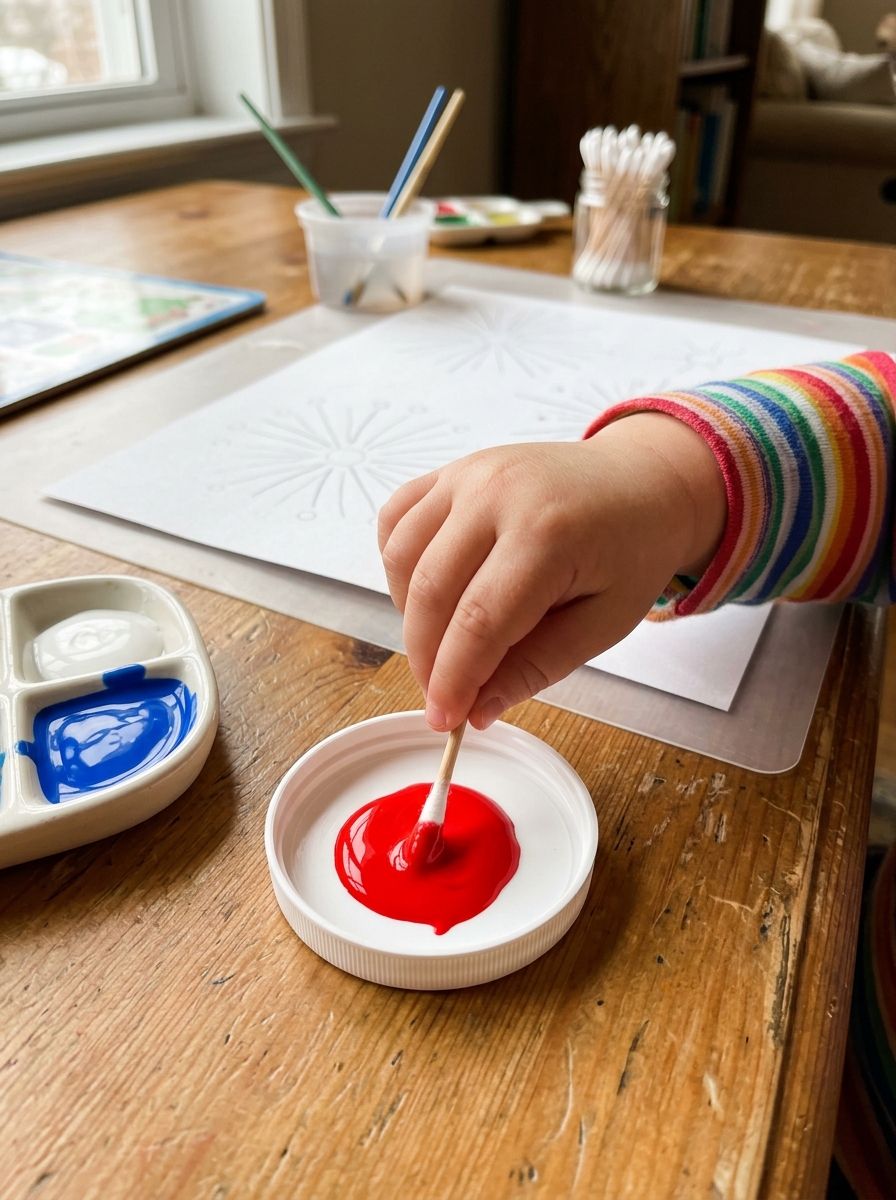
  • Small plates or lids for paint mixing – These act as simple paint trays so kids can dip Q-tips easily without making a mess or mixing colors too quickly.
  • Optional: rubber band (to bundle Q-tips) – This is used to tie a few Q-tips together to create larger firework bursts in a single stamp, making the design faster and more dramatic.
Running out of fresh activity ideas is frustrating, but 13 Popsicle Stick Crafts for Kids That Actually Keep Them Busy and Boosts Creativity gives simple projects kids genuinely enjoy making.

Step-by-Step Craft Execution

Video credit: @ Innova Crafts

This part of the Q-Tip firework painting craft for kids is where everything comes together. The goal is not perfection, it’s expression. Kids are simply using paint and Q-tips to recreate the look of fireworks in the sky using easy, repeatable steps.

1. Create the Firework Structure First

Create-the-Firework-Structure-First-

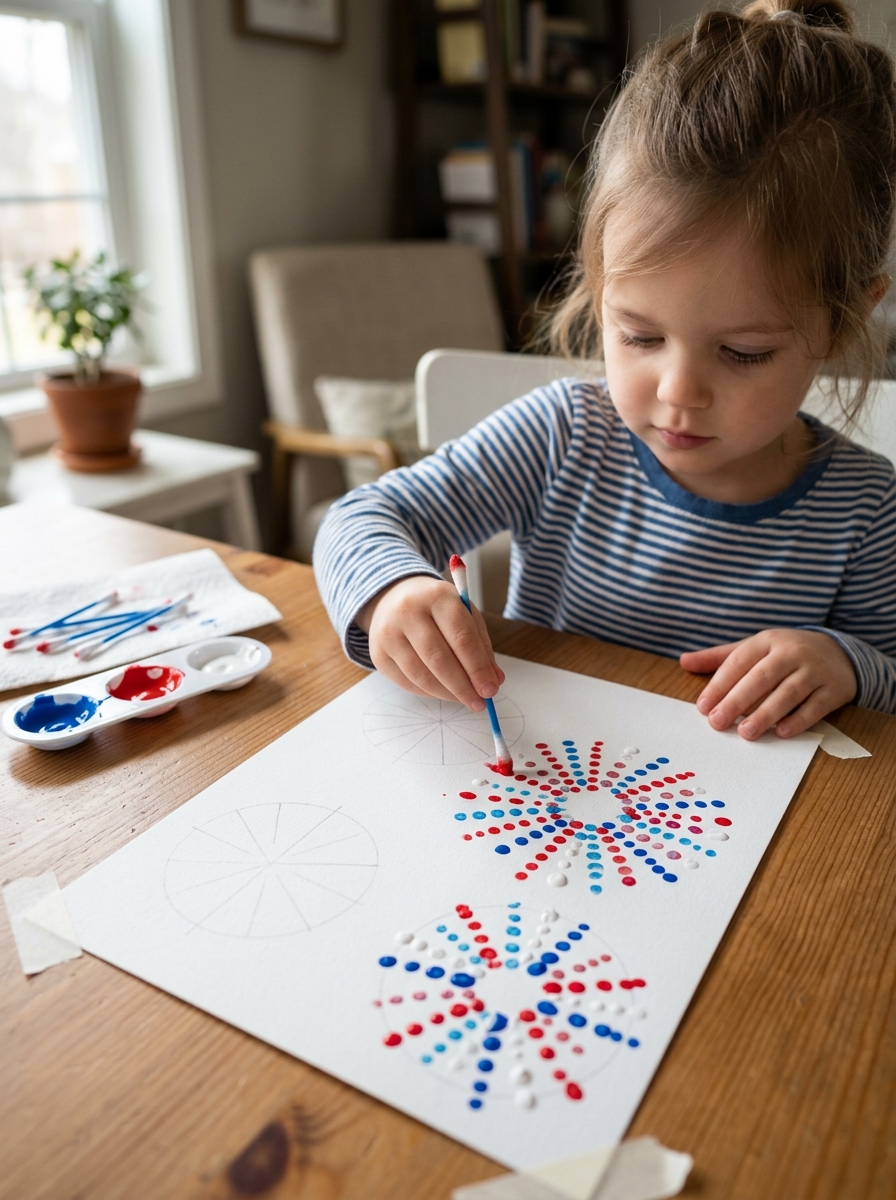
Before any paint is used, set the “firework map” on the paper.

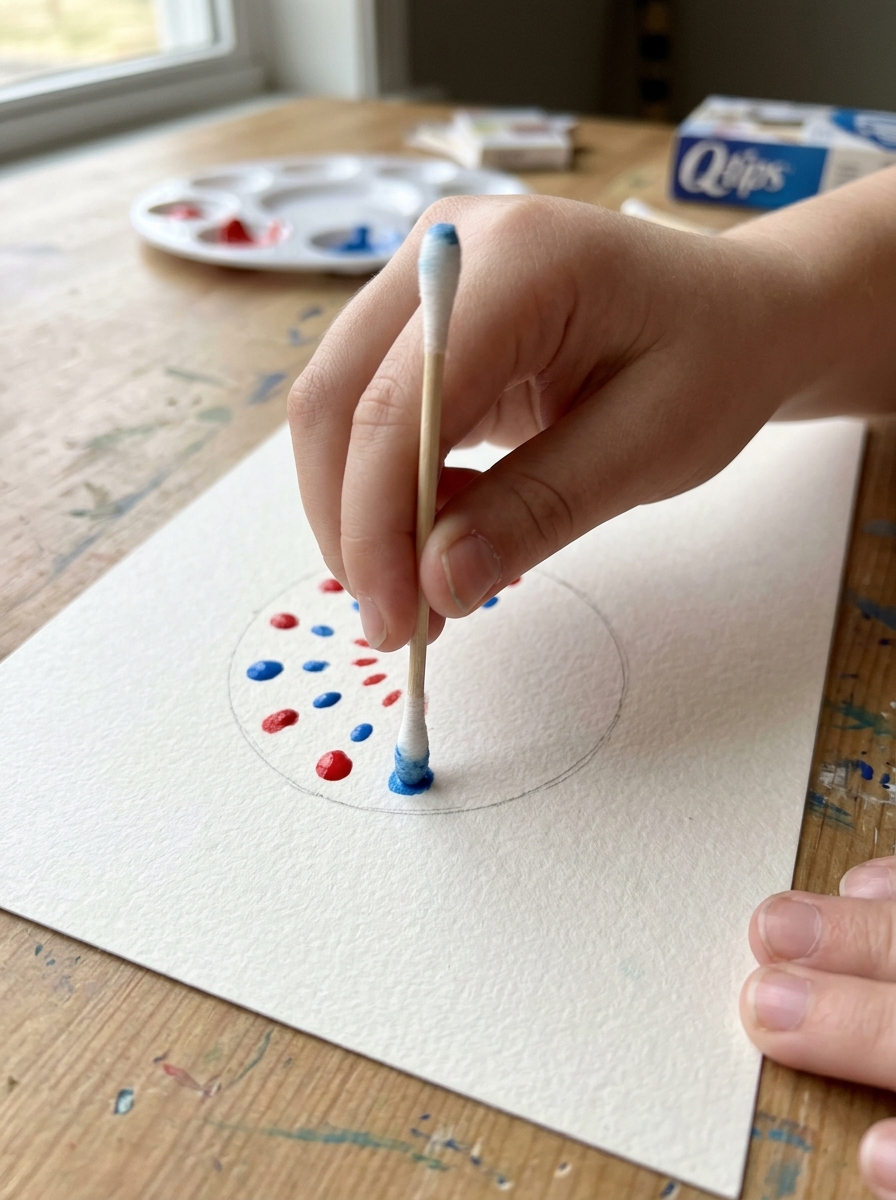
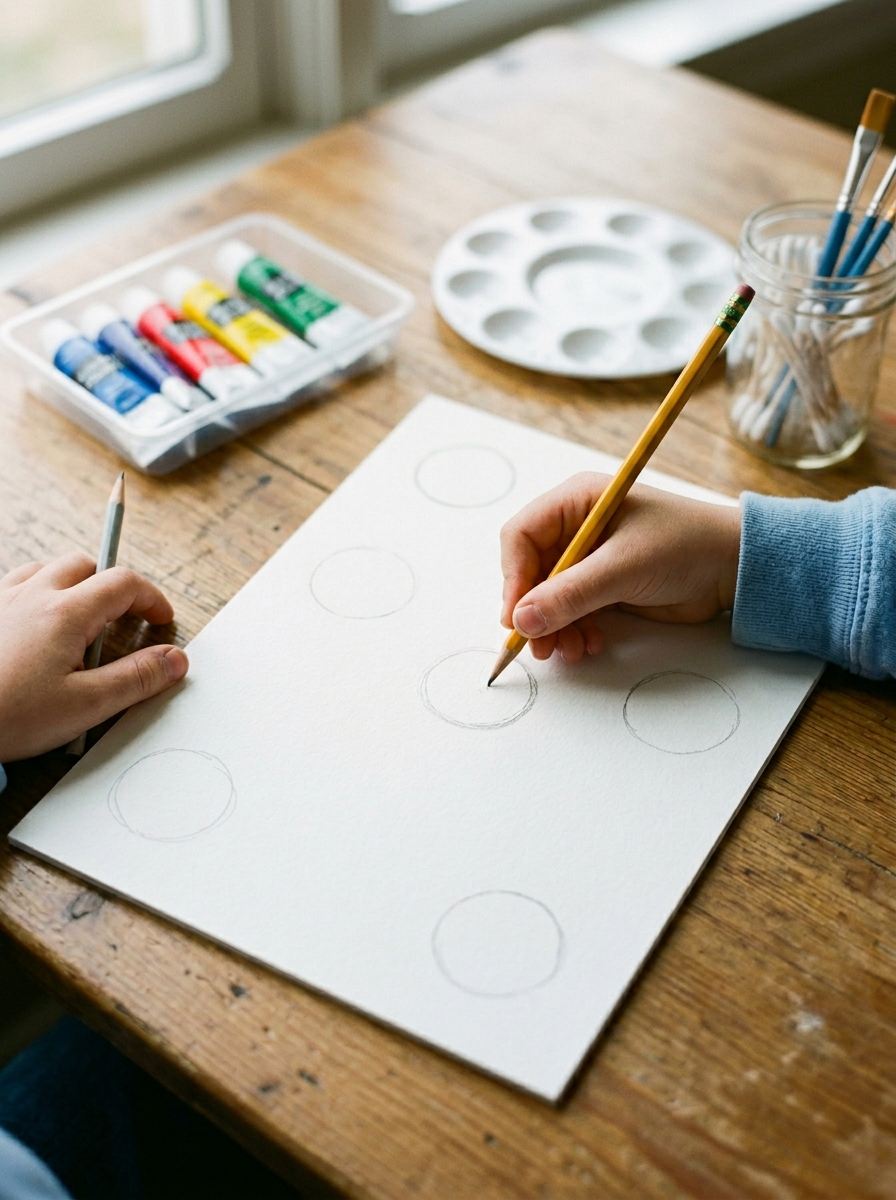
  • Lightly draw 3–5 loose circles or burst zones using a pencil
  • Keep spacing even (top, sides, and center, not all in one area)
  • These marks are just guides, not final shapes

 Optional upgrade: instead of pencil, place small dots of white school glue (PVA glue) to mark burst centers. This gives younger kids a visible guide they can follow.

2. Prepare the Q-Tip and Paint

Prepare-the-Q-Tip-and-Paint

Lightly dip the tip of the Q-tip into one color of paint. You don’t need to fully soak it, just enough paint to make a clear stamp on the paper.

  • Use one color at a time (start with red, white, or blue)
  • Light dips help prevent large messy blobs
  • Remind kids they can re-dip anytime they need more paint

 This step is all about getting comfortable with the tool.

3. Build the First Firework Bursts

Build-the-First-Firework-Bursts.

Next, press the painted Q-tip onto the paper in small bursts or circular dabs.

  • Press and lift, don’t drag
  • Try spacing the dots out first
  • Encourage different pressure levels for different effects

 This is where the “firework burst” effect begins to appear.

 4. Layer Colors to Build Depth

Layer-Colors-to-Build-Depth

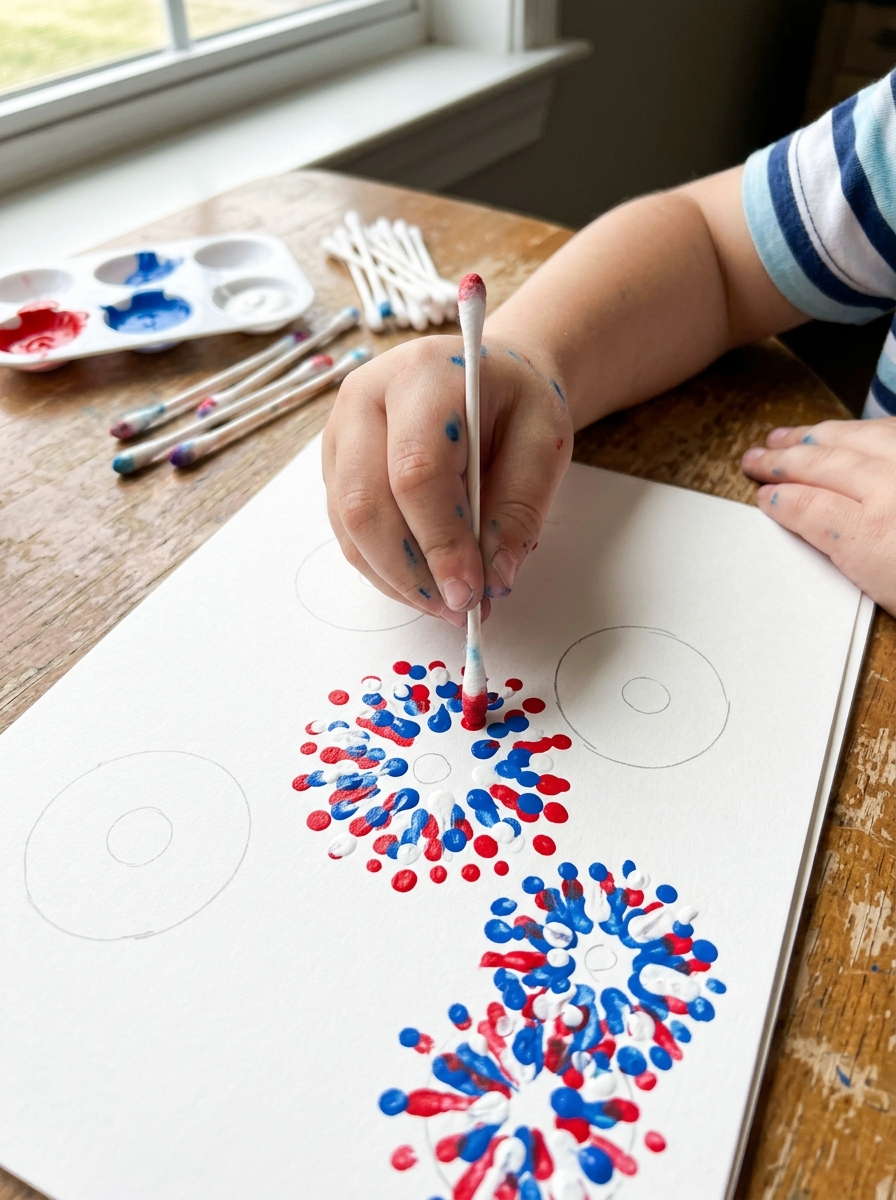
Once one color is used, switch to another and repeat the same dabbing motion.

  • Alternate between red, white, and blue
  • Allow colors to overlap slightly if it happens naturally
  • Let kids decide the order,  there’s no fixed pattern

 This builds visual variety and makes each artwork unique.

5.Expand the Firework Shape

Expand-the-Firework-Shape

Now start adding more “bursts” around the page to create a fuller firework sky.

  • Add clusters of dots in different areas
  • Vary the size and spacing of bursts
  • Encourage filling the page gradually, not all at once

 This is what gives the painting depth and movement.

 6. Let the Artwork Dry Flat

Let-the-Artwork-Dry-Flat.

Once finished, place the paper flat in a safe space to dry.

  • Avoid stacking or touching while wet
  • Keep away from fans or strong airflow to prevent smudging
  • Let colors settle fully before moving


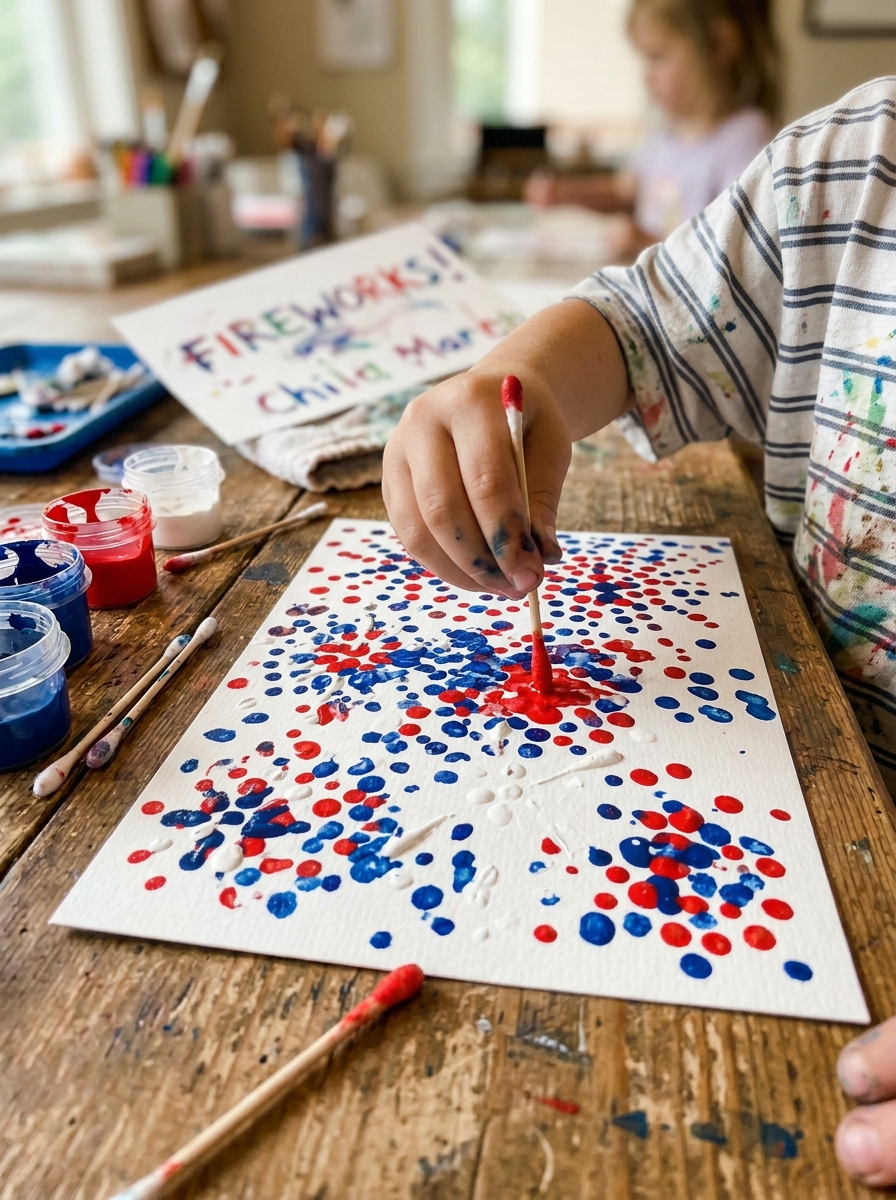
The beauty of the Q-Tip firework painting craft for kids is in its randomness. Fireworks are never perfectly shaped, so kids don’t need to aim for neatness, every dot, splash, and burst adds to the final result.

Long rainy days feel endless without the right activities, and Indoor Activities for Kids on Rainy Days That Actually Keep Them Busy helps turn restless energy into fun and productive playtime.

Indoor vs Outdoor Use

The Q-Tip firework painting craft for kids works well in both indoor and outdoor settings, but the experience changes depending on where you set it up. Understanding this helps you choose the best moment in your day to use it, especially on a busy 4th of July.

✅ Indoor Use

Q-Tip-firework-painting-craft-for-kids-indoor-use

Indoor setups work best when you want a quieter, more structured activity.

  • Better suited for younger kids who need closer supervision
  • The environment is controlled, so paint and materials stay contained
  • Ideal during midday heat, nap gaps, or late-day prep time before guests arrive

 This setting helps keep the activity calm and focused, especially when the rest of the day feels busy outside.

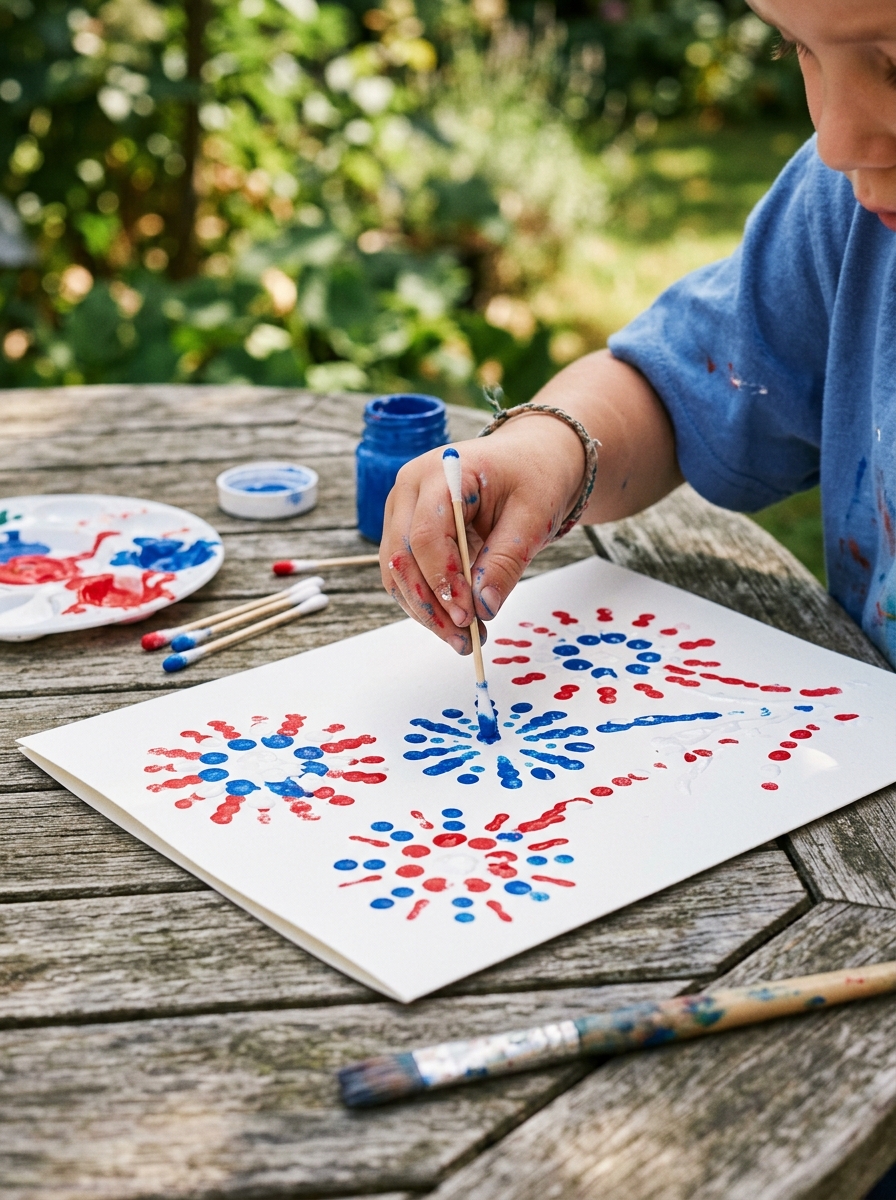
✅ Outdoor Use

Q-Tip-firework-painting-craft-for-kids-outdoor-use.

Outdoor setups bring a more relaxed and open energy to the same craft.

  • Kids have more space to move and create freely
  • There’s a more relaxed mindset around cleanup and creativity
  • Works perfectly during BBQ setup, family gatherings, or daytime celebrations

 This version often feels more social, with kids naturally sharing ideas and showing their work as they go.

Busy afternoons feel more manageable with 10 Super Fun After-School & Homework-Friendly Crafts Kids Can Make in 20 Minutes because the projects are quick, fun, and easy to fit into a packed routine.

Optional Variations for the Q-Tip Firework Painting Craft for Kids Fresh

Optional-Variations-for-the-Q-Tip-Firework-Painting-Craft-for-Kids-Fresh.

Photo credit: @ Hands On As We Grow

Once kids understand the basic Q-Tip firework painting craft for kids, it becomes easy to adjust and expand it. These variations are not required, but they help keep the activity exciting, especially if you’re doing it with multiple children or over a longer holiday period.

1.  Q-Tip Bundle Fireworks (Larger Burst Effect)

Instead of using a single Q-tip, tie a few together with a rubber band to create a thicker stamping tool.

  • Produces bigger, fuller firework bursts in one press
  • Speeds up the painting process for younger kids
  • Creates a more dramatic visual effect on the page

 This version is great when kids want quicker, bold results.

2.  Layered Night-Sky Background (Black or Navy Paper)

Switch the base paper from white to dark colors like black or navy.

  • Makes red, white, and blue pop more clearly
  • Gives a realistic “night fireworks” effect
  • Works well for older kids who want more contrast

 This variation changes the mood of the craft instantly.

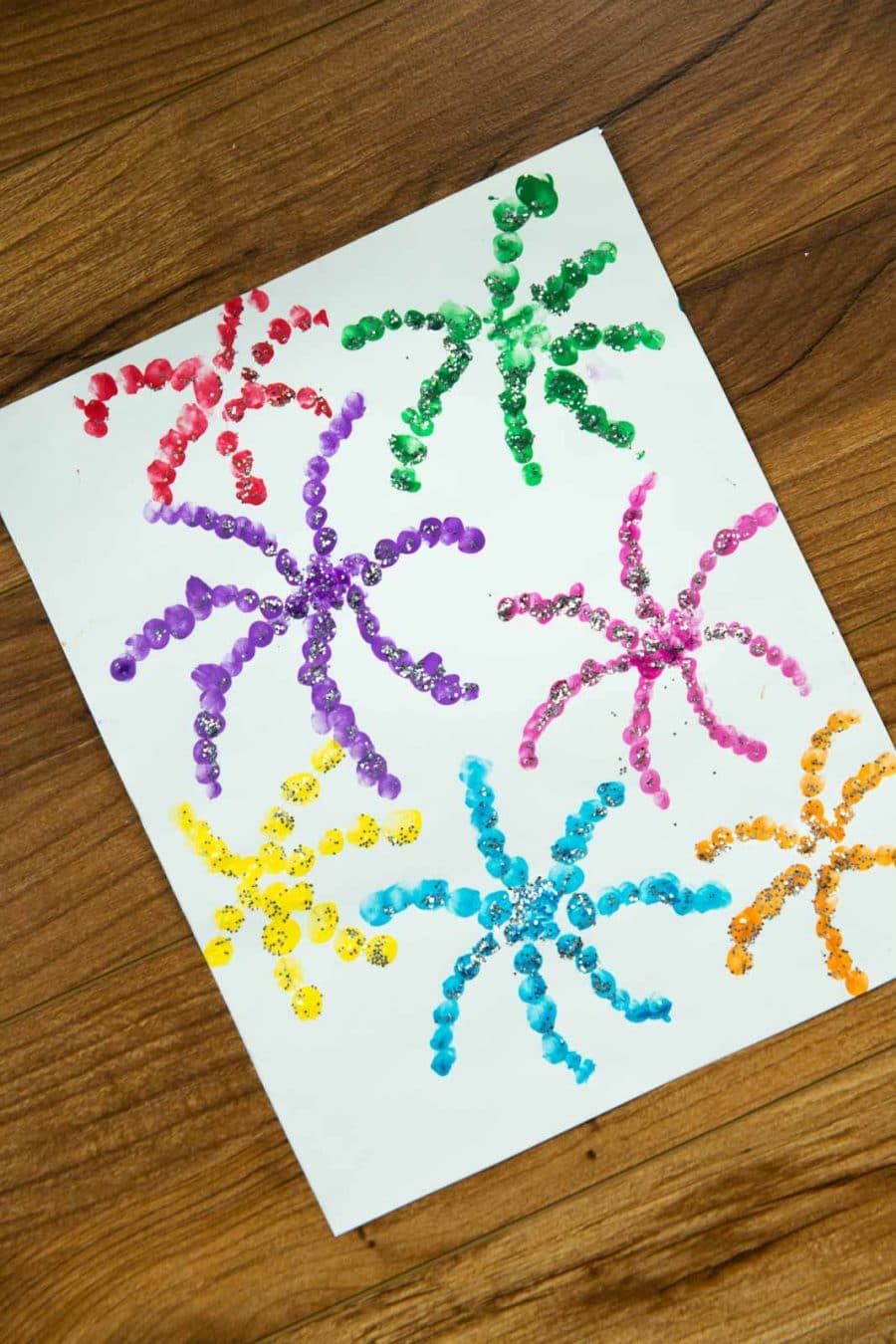
 3. Glitter Accent Finish (For Older Kids Only)

After the paint dries, add a light touch of glitter for extra sparkle.

  • Enhances the firework “spark” illusion
  • Best used sparingly to avoid mess
  • Recommended for kids who can handle finer detail work

 This adds visual excitement without changing the core activity.

4.  Group Mural Version (Multiple Kids Working Together)

Instead of individual sheets, use one large sheet of paper or poster board.

  • Each child contributes their own firework bursts
  • Creates a shared “fireworks sky” artwork
  • Encourages teamwork and shared creativity

 This works especially well during family gatherings or group play.

Tight outdoor spaces can still feel festive and welcoming with 4th of July Patio Decor Ideas That Make Small Spaces Feel Party-Ready showing how to style small patios without overcrowding them.

Conclusion

What makes the Q-Tip firework painting craft for kids stand out is how naturally it fits into the flow of the day, no setup pressure, no long attention demands, and no need to “pause everything” for it to work.

On a holiday that moves between cooking, hosting, and outdoor activity, the best kids’ crafts are the ones that quietly hold attention without creating extra work.

 When an activity is simple enough to start and finish in the middle of a busy moment, it becomes useful, not just entertaining.

If you’re putting your 4th of July plans together, this is one of those easy add-in activities that works almost anywhere in the day, without needing everything to slow down around it.

FAQs

These are real questions parents and caregivers often search for when planning 4th of July kids activities, especially when they want something that actually works in real situations, not just looks good on paper.

1. What age is best for Q-Tip firework painting craft for kids?

This craft works best for toddlers to early elementary kids (around ages 2–8). Younger kids enjoy the stamping motion, while older kids can focus more on patterns and layering designs.

2. What if my child keeps mixing all the paint colors together?

That’s very common. Instead of stopping it, it helps to limit paint access to one color at a time or use separate Q-tips per color. This keeps the firework effect clearer and avoids muddy colors.

3. How do I keep kids from using too much paint?

A small amount of paint on a flat lid works better than dipping into deep containers. It naturally limits how much paint sticks to the Q-tip and reduces dripping or smudging.

4. Can this craft work without a table setup?

Yes. A flat tray, floor mat, or even outdoor picnic setup works fine as long as the paper is stable. The key is keeping the surface flat so the paint doesn’t run.

5. How long does it usually take before kids lose interest?

Most children stay engaged for about 10–25 minutes depending on age. The repetitive stamping motion helps maintain focus longer than free drawing activities.

6. What should I do if my child gets frustrated with the pattern?

There’s no fixed pattern required. Encourage them to treat it like fireworks in the sky — random, scattered bursts. Removing structure usually reduces frustration immediately.

7. How do I store or display the finished artwork without smudging it?

Place the paper flat on a dry surface until fully dry, then store it in a folder or tape it onto a wall. Avoid stacking sheets on top of each other while paint is still damp.
Leave a Reply