Most people don’t know what to do with fabric scraps beyond another small sewing project. These 13 junk journaling ideas give your leftovers somewhere worth going.
There’s always fabric left over. A strip of cotton here, a corner of linen there, a few centimetres of lace trim you couldn’t bring yourself to bin.
You keep it because it feels wasteful not to, but realistically it’s too small for another sewing project and too pretty for the rubbish.
If that pile has been sitting in a bag or a box for longer than you’d like to admit, junk journaling might be exactly what you’ve been looking for.
It’s a creative practice that’s been quietly growing, Google searches spiked sharply in early 2025 and haven’t slowed down since.
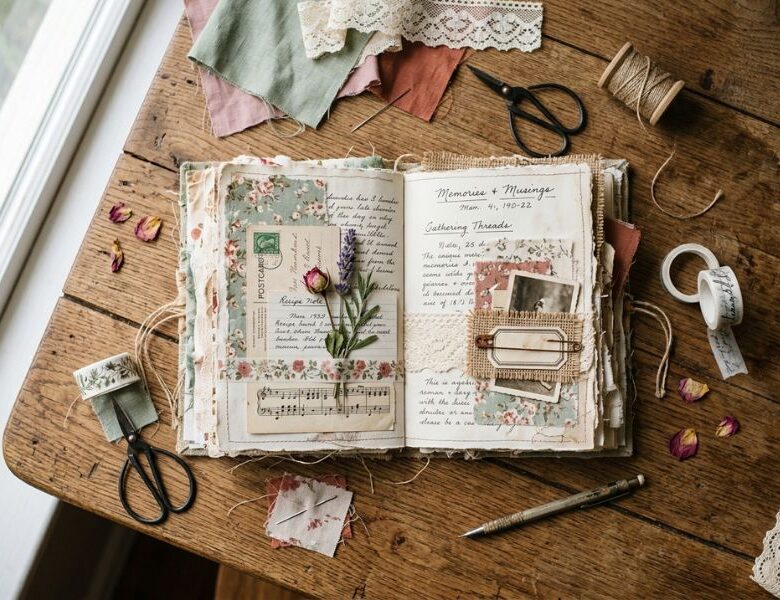
The idea is simple: you take an old notebook or book, and you fill its pages with materials you already have.
Scraps, ribbons, old envelopes, bits of packaging, dried flowers, washi tape. You layer them, glue them down, write on them or not, and build something that belongs entirely to you.
No pattern, deadline, measurements, one else’s brief.
This post walks you through 13 specific ways to use your fabric scraps in a junk journal, what works, what doesn’t, and what you actually need to get started.
Just made a cutting mistake? 15 Smart and Easy Sewing Fixes for Clothes and Fabrics You Keep Throwing Away covers real recovery options beyond what’s in this guide.
What Junk Journaling Is
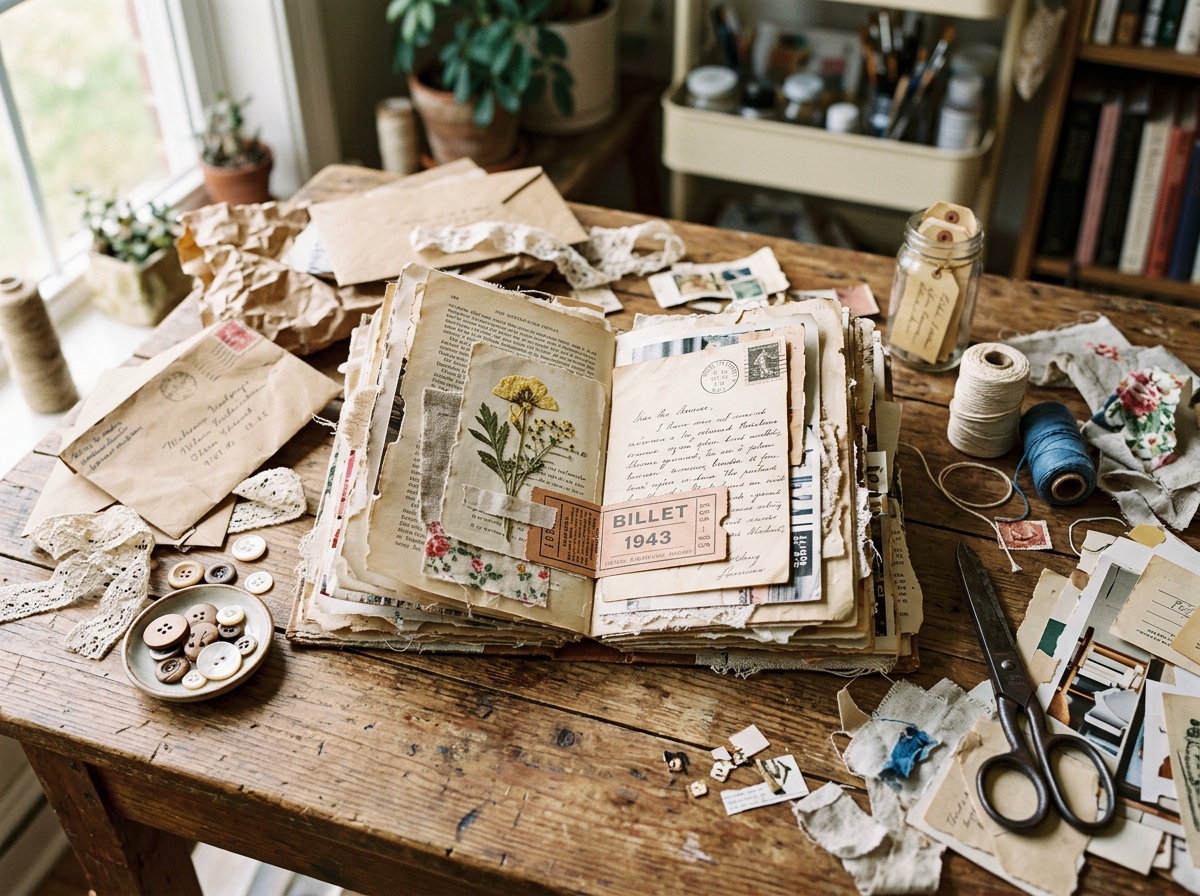
Junk journaling sits somewhere between collage, scrapbooking, and personal journaling , but it’s not quite any of them.
The basic idea is that you take a notebook, an old book, or even folded paper, and you fill the pages with materials you’d normally throw away.
Receipts, packaging, magazine clippings, fabric scraps, old envelopes, ribbon offcuts. You layer them onto the pages, glue them down, and build something that’s entirely your own.
There are no rules about what goes in or how it should look. The torn edges, the overlapping layers, the slight messiness, none of that is a mistake. It’s the point.
It helps to know what junk journaling is not. Scrapbooking is usually built around an event, a holiday, a birthday, a milestone, and tends to rely on purchased paper kits, sticker sets, and coordinated supplies.
You don’t need an occasion, a matching colour palette, or anything to say. You just need materials and a surface to put them on.
That freedom is likely why it’s growing the way it is. CNN reported in January 2025 that Google searches for junk journaling had spiked sharply and were holding, not a flash trend, but a sustained shift in what people are reaching for creatively.
In a world where most things you make are for someone else or toward some goal, junk journaling is one of the few creative practices that exists entirely for the person making it.
What You Need to Start
-
Your base
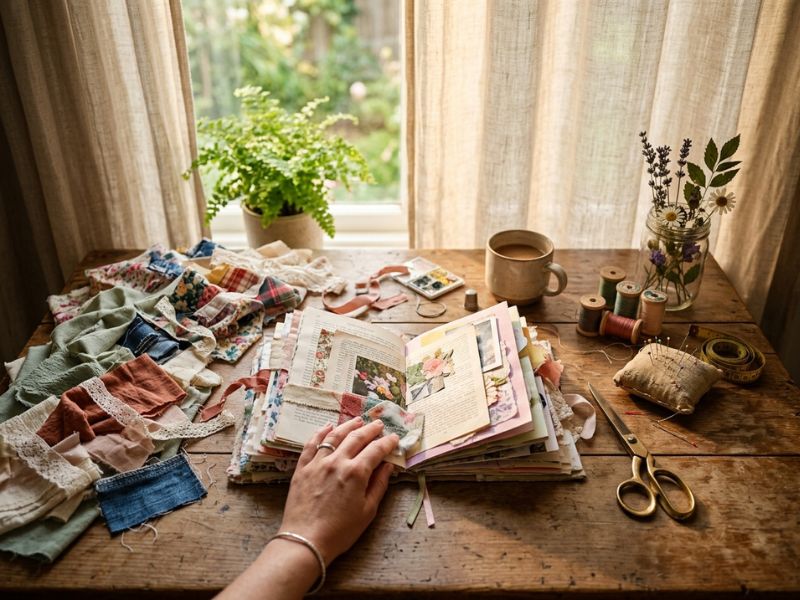
An old hardcover book you no longer read, a spare notebook, or sheets of cardstock folded and stacked together. Any of these work.
-
Fabric Scraps
Whatever you already have. You don’t need to sort or organise them first, part of the process is working with what’s in front of you.
-
Scissors
One pair. Nothing special.
-
An adhesive
This is the one thing worth choosing carefully. Two options work well for fabric:
- Beacon Fabri-Tac — bonds fabric to paper without warping the page, dries clear, holds lace and trim without bleeding through
- Mod Podge Fabric Formula — good for flat fabric pieces, and seals frayed edges as it dries which is useful when working with loosely woven fabrics
Pick one. You don’t need both.
-
A Pen or Paint Marker
For writing or drawing directly onto pages if you want to. Optional but useful to have nearby.
What You Don’t Need
- A sewing machine
- A Cricut or cutting machine
- A craft subscription box
- New supplies bought specifically for this
- Any prior experience with journaling or art
-
Nice to Have, Not Essential
If you want to build out your pages over time, these layer well with fabric scraps:
- Washi tape
- Old envelopes
- Pressed flowers
- Spare buttons
- Ribbon offcuts
- Vintage postage stamps
Not sure what to do with leftover fabric scraps? What to Do With Fabric Scraps: Sewing Hacks That Turn Leftovers Into Keep-Worthy Gifts turns every offcut into something worth keeping.
Junk Journaling Ideas for Your Fabric Scraps
1. The Fabric Background Page
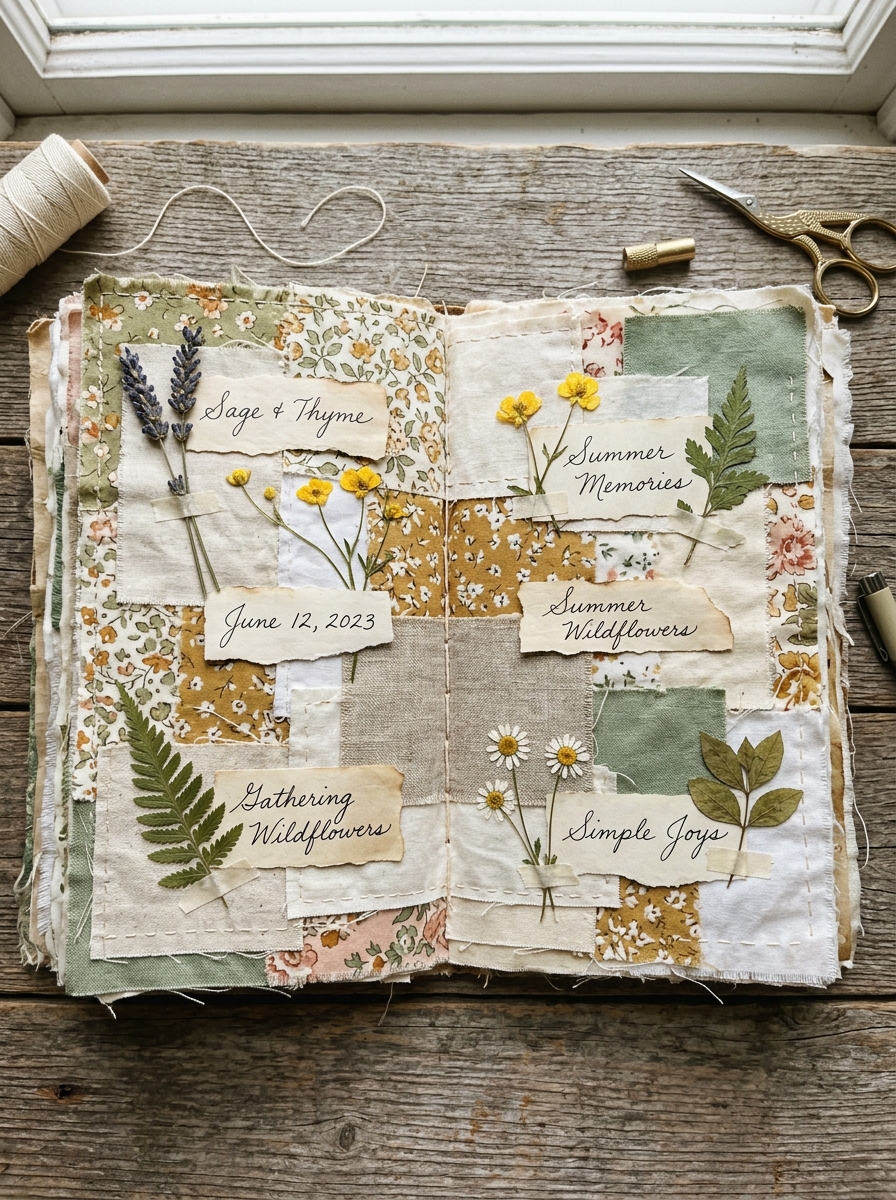
Instead of starting with a blank white page, glue a piece of cotton or quilting cotton flat onto the full surface as your base. You then write, stamp, or paint directly on top of the fabric.
Printed quilting cotton works particularly well here because the existing pattern, florals, geometrics, stripes, becomes part of the page design without you having to add anything decorative yourself.
Practical tip: Brush a light coat of Mod Podge Fabric Formula over the cotton before it fully dries to seal it flat to the page and prevent the edges from lifting later.
2. The Fabric Flip Pocket
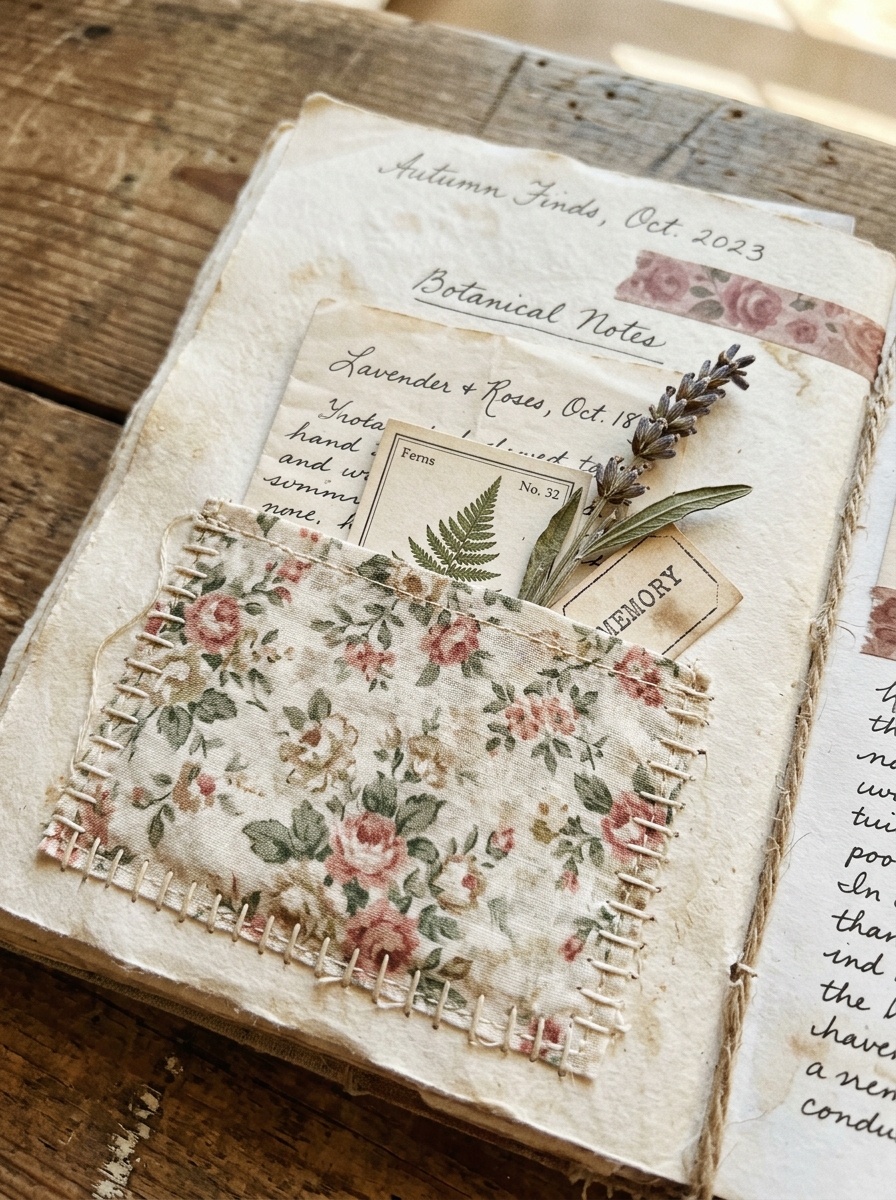
Cut a fabric scrap slightly larger than a tag, card, or small photo. Fold the bottom edge up to create a pocket shape, then glue three sides shut and leave the top open.
Slide notes, dried flowers, a small photo, or any flat ephemera inside. The pocket becomes part of the page rather than something stuck on top of it.
Lace fabric works especially well for this because the open weave lets you see a hint of whatever is tucked inside, which adds an extra layer of visual interest without any additional effort.
Practical tip: Use Beacon Fabri-Tac for the glued edges rather than Mod Podge, it creates a stronger bond on the folded seam and dries faster, so the pocket holds its shape while you continue working on the rest of the page.
3. The Sheer Veil Layer
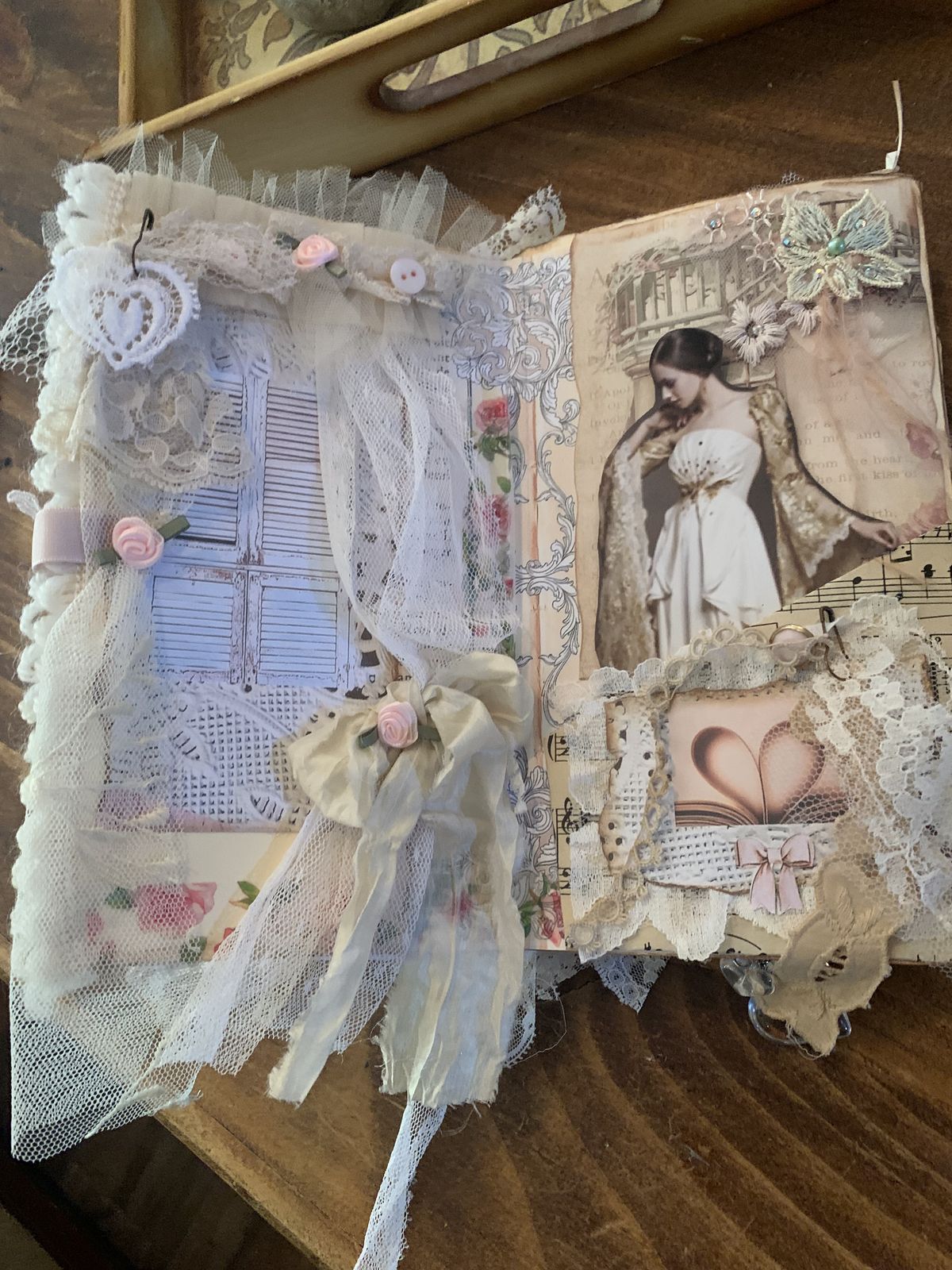
Take a piece of chiffon or organza and glue it over something already on the page, a handwritten note, a printed image, a strip of patterned paper.
The fabric is sheer enough that whatever is underneath remains visible, but softened. It creates a layered, slightly dreamy quality on the page that’s genuinely difficult to achieve with paper alone.
This works particularly well over handwriting. The words are still readable but the chiffon gives them a quality that makes them feel more like a memory than a note.
Practical tip: Apply your adhesive to the page surface rather than the fabric itself. Chiffon and organza are too lightweight to handle glue without bunching. Press it down gently from the centre outward to avoid air pockets.
4. The Frayed Edge Strip
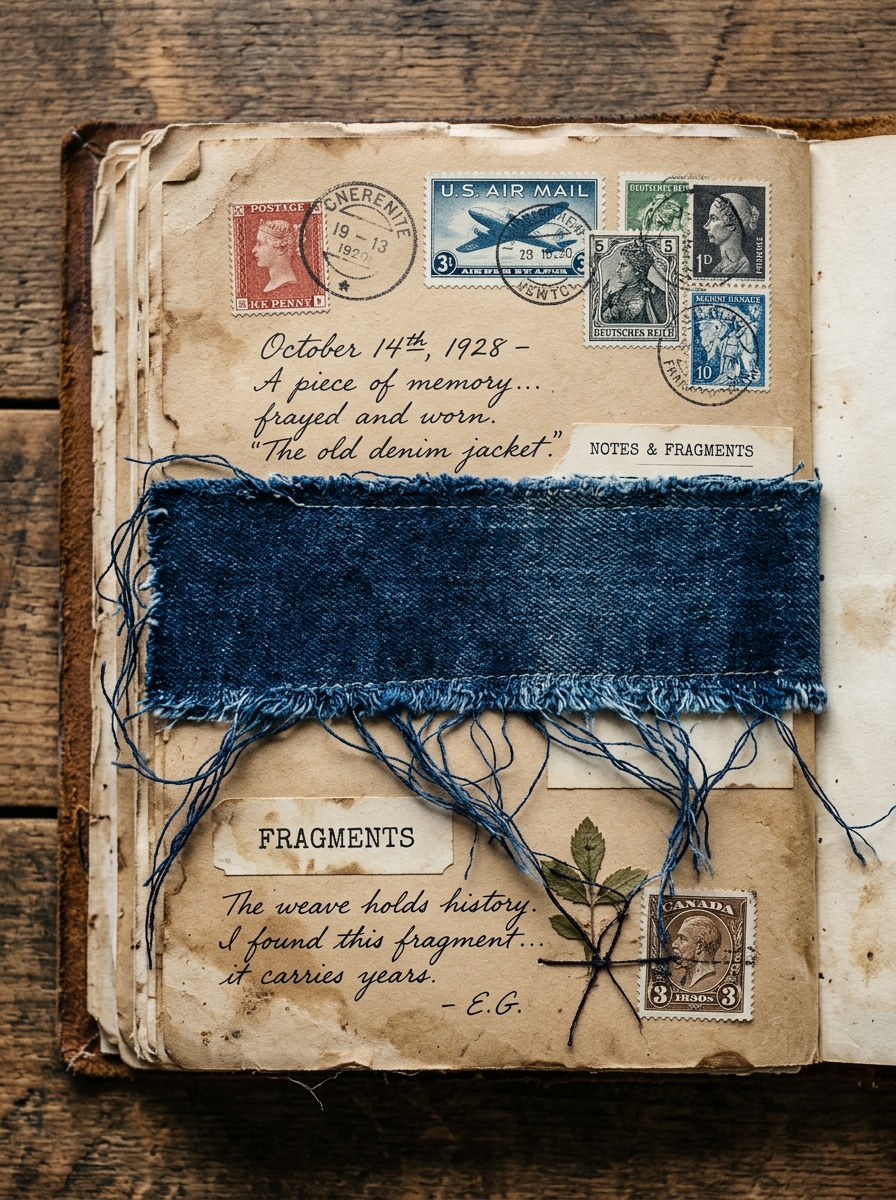
Tear your fabric into horizontal strips rather than cutting them. Glue them across the page in loose parallel lines, leaving space between each one.
The fraying that happens when you tear, especially with denim, linen, or loosely woven cotton, is not a flaw. It’s what gives the page its texture and visual movement.
This is one of the most straightforward things to do with fabric scraps that are too narrow or irregular to use for anything else in sewing.
Practical tip: Pull a few threads from the torn edge deliberately before gluing to exaggerate the fraying. On denim especially, this creates a soft, thread-like border along each strip that photographs well and adds genuine depth to the page.
Confused about which fabric to cut in the first place? Understanding Fabrics for Sewing: Choosing the Right Material for Every Project helps you pick the right one before the scissors come out.
5. The Fabric Cluster
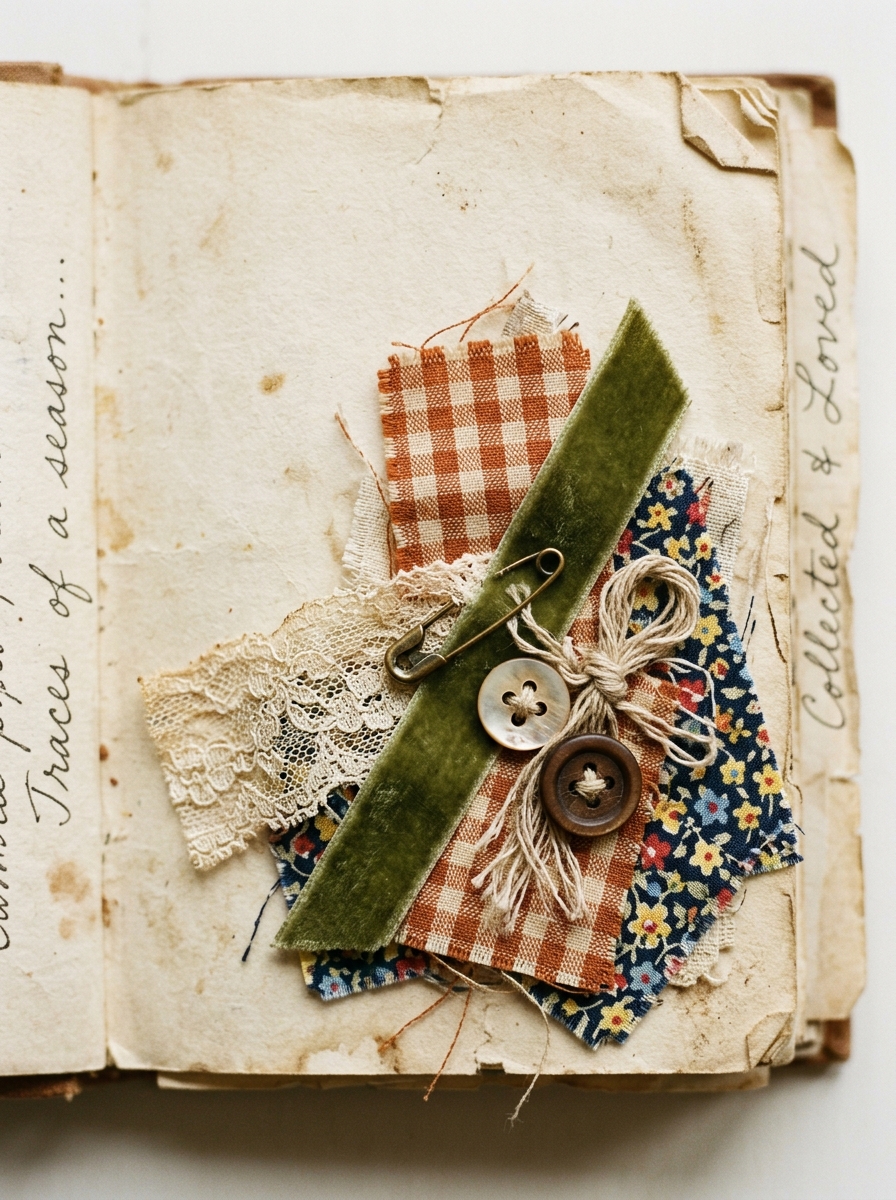
Gather a small collection of offcuts, a button, a snippet of ribbon, a piece of lace trim, a tiny square of printed fabric, and glue them together in one corner of a page in a loose group. Don’t arrange them too carefully.
The point is that they look like things that belong together rather than things that were placed.
This is a good use for the smallest scraps, the ones too small for any of the other ideas on this list but still too interesting to discard.
Practical tip: Anchor the cluster with one slightly larger piece of fabric at the base, then layer smaller items on top. This gives the grouping a natural hierarchy without requiring any deliberate design thinking.
6. The Denim Pocket Page
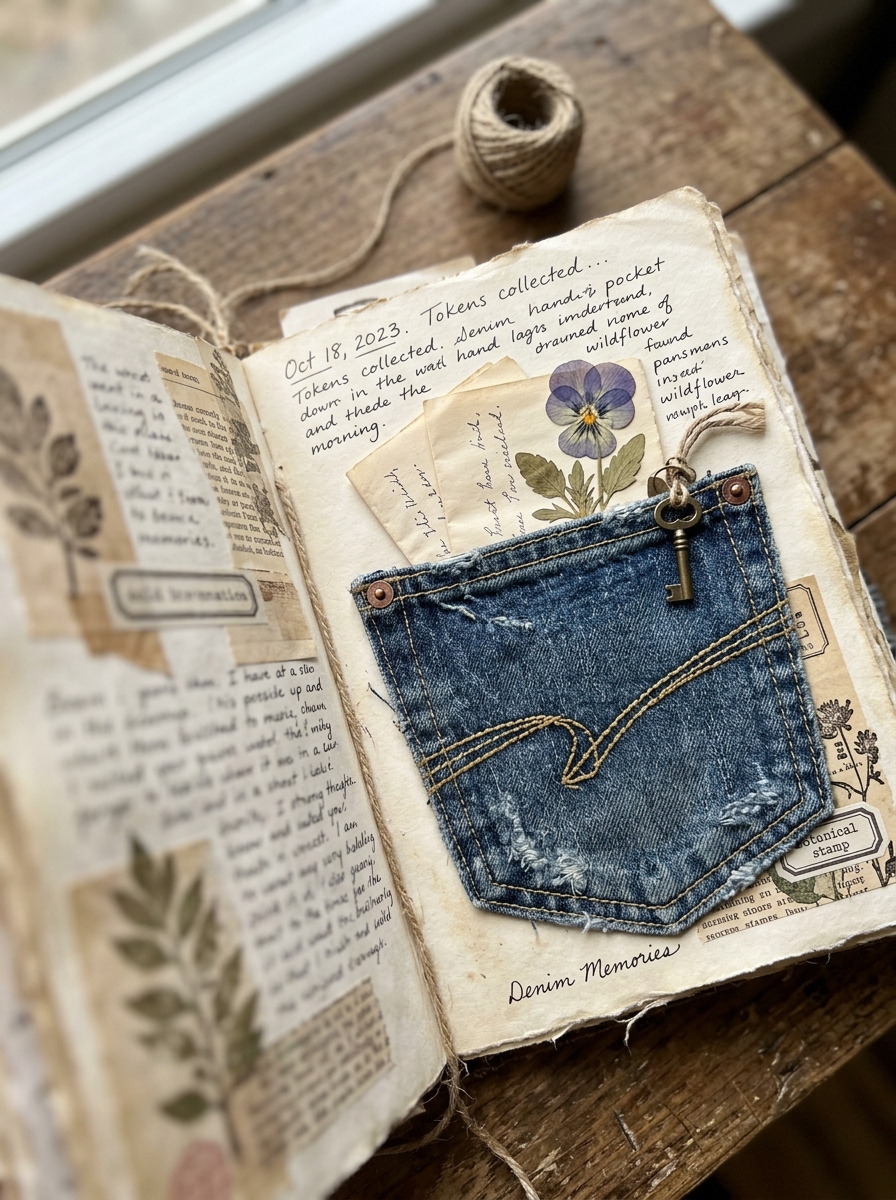
Cut a rectangle of denim, fold the bottom third upward, and glue the left and right sides shut. You now have a functioning page pocket made entirely from a fabric scrap.
Denim is stiff enough to hold its shape without any internal support, which is what makes it better for this than most other fabrics.
Slide in a folded note, a small card, a strip of photos, or anything flat. The pocket becomes both a functional and visual element of the page.
Practical tip: Distress the top edge of the pocket by rubbing it with sandpaper or pulling a few threads before gluing it down. This softens the look and makes it feel more integrated into the page rather than attached to it.
7. The Lace Overlay
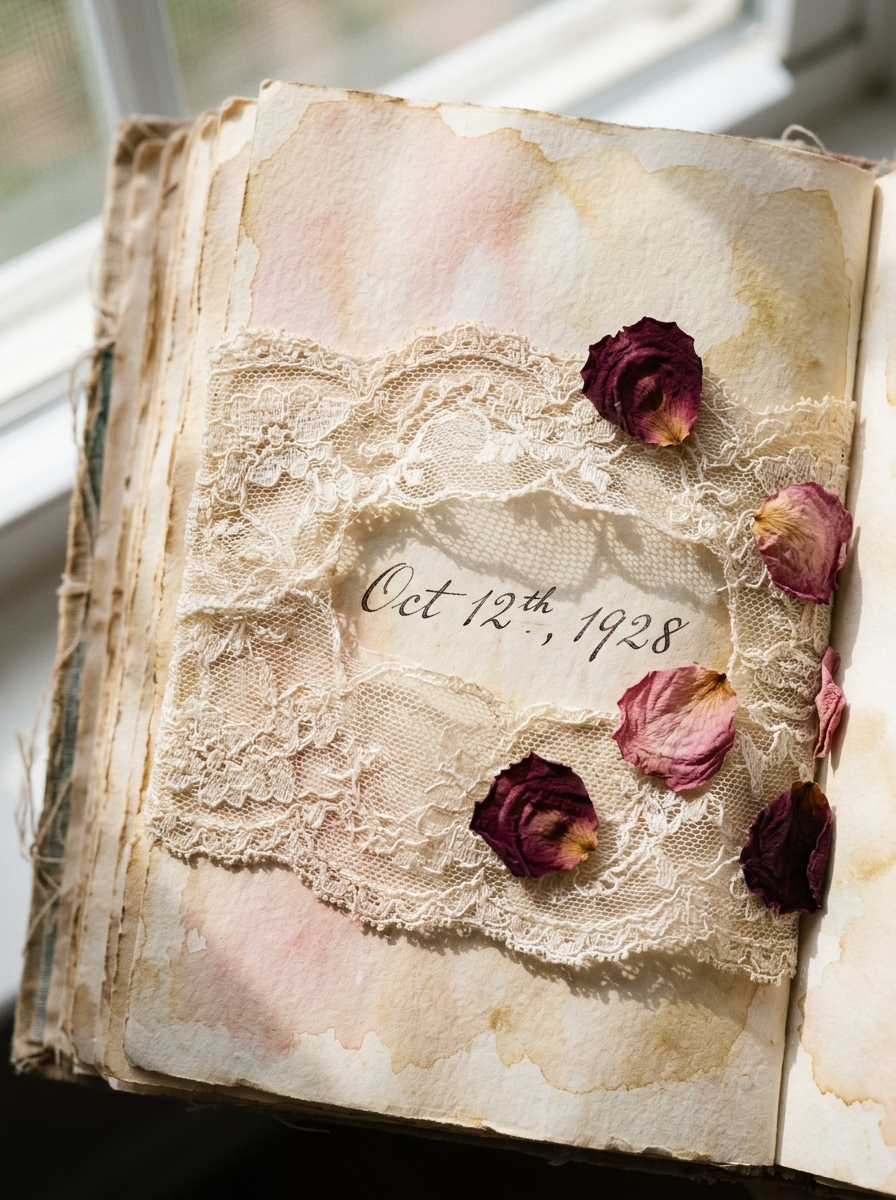
Glue a strip of lace trim along the top or bottom edge of a page, or across the middle as a horizontal divider.
It works as a decorative border that also adds physical dimension, lace sits slightly above the page surface in a way that flat paper borders don’t.
For a more layered effect, glue a strip of solid-coloured fabric behind the lace first so the contrast between the two makes the lace pattern more visible.
Practical tip: If your lace trim is very delicate or open-weave, use Art Glitter Glue rather than Mod Podge.
It holds fine detail without saturating the lace fibres, which can make delicate lace go stiff and flat when heavier adhesives are used.
8. The Color Story Page
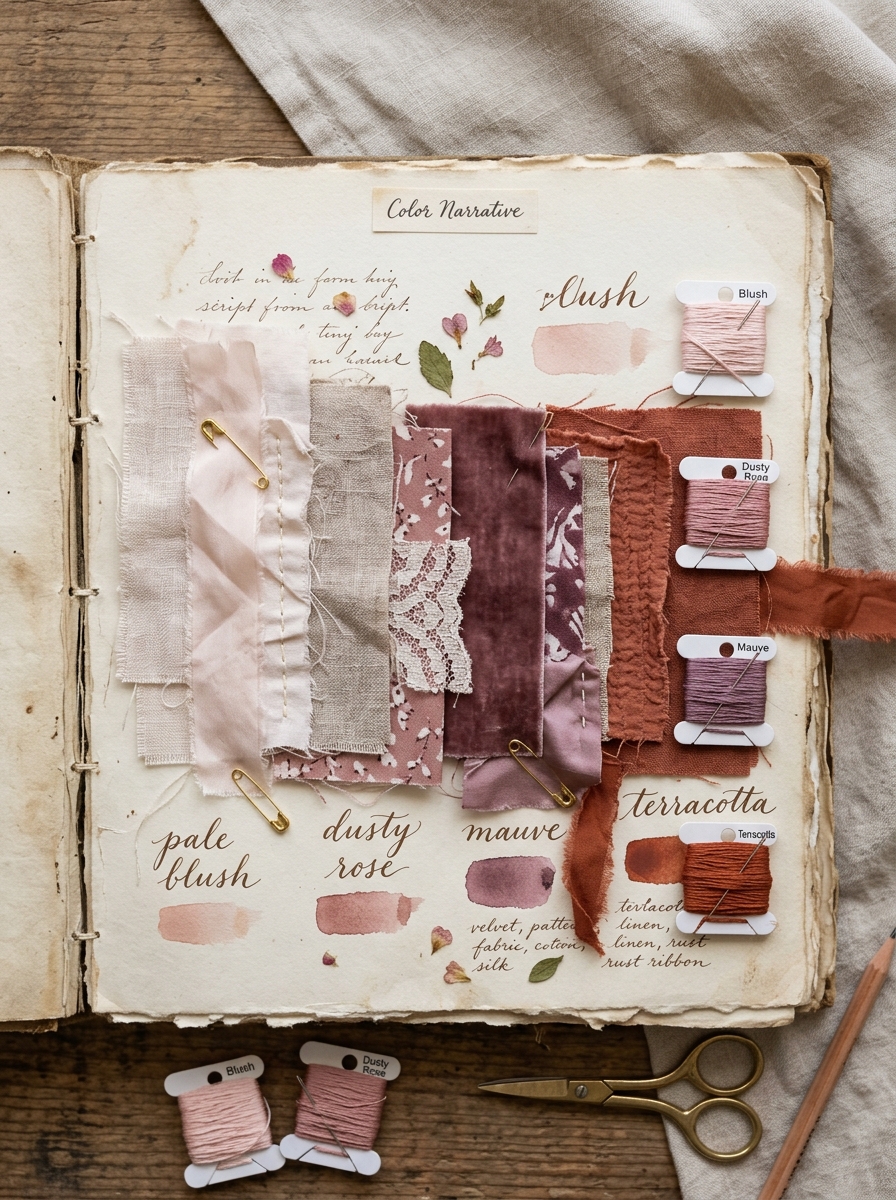
Pull every fabric scrap you have in one colour family, all the blues, or all the warm neutrals, or every piece with a floral on it, and build a page using only those. No other rule applies.
Overlap them, layer them, leave gaps, fill the whole page. The colour constraint does the decision-making for you.
This is one of the most useful ideas on this list for days when you want to create something but don’t know where to start. Limiting your palette removes the paralysis of too many options.
Practical tip: Include different fabric types within the same colour family rather than matching prints.
A navy denim scrap next to a navy chiffon next to a navy cotton stripe creates far more visual interest than three similar printed fabrics in the same shade.
9. The Textile Memory Page
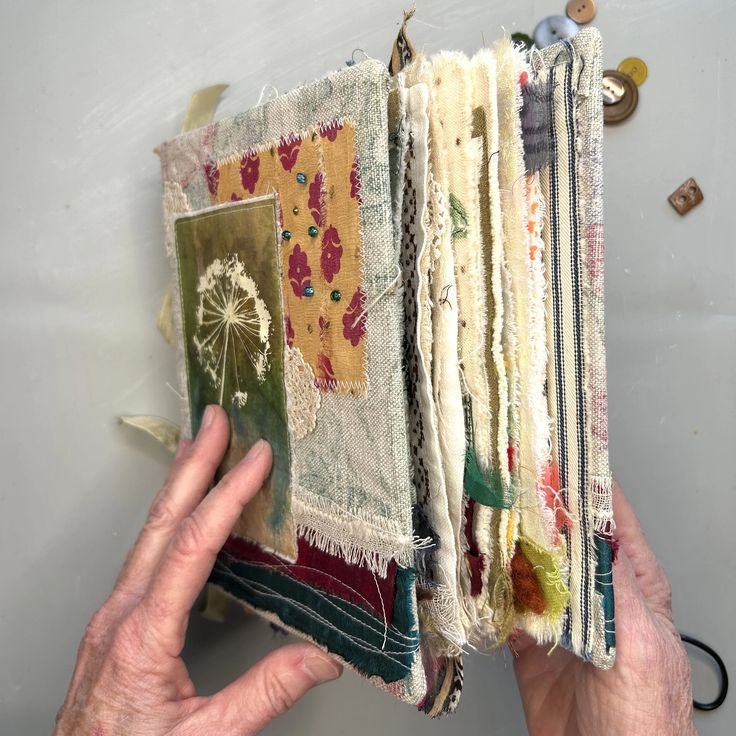
Use a scrap from a specific project or garment, the dress you made for a particular occasion, a fabric you bought somewhere that mattered, offcuts from something you sewed for someone else. Glue it to a page. Write the date, or the occasion, or nothing at all.
This is different from scrapbooking because you’re not documenting the event with photos and captions.
The fabric itself is the record. Anyone who sews knows that fabric carries association in a way that’s hard to explain, this page is just a place to keep that.
Practical tip: If the scrap is from something that no longer exists, a garment that wore out, a project that didn’t work, write that on the page too. The impermanence is part of what makes the page meaningful rather than decorative.
Before your scraps became journal material, they started with a clean cut — How to Cut Fabric Without Wasting It: A Beginner’s Guide to Cutting Confidently the First Time shows you how to get there without wasting a single piece.
10. The Mixed Media Base
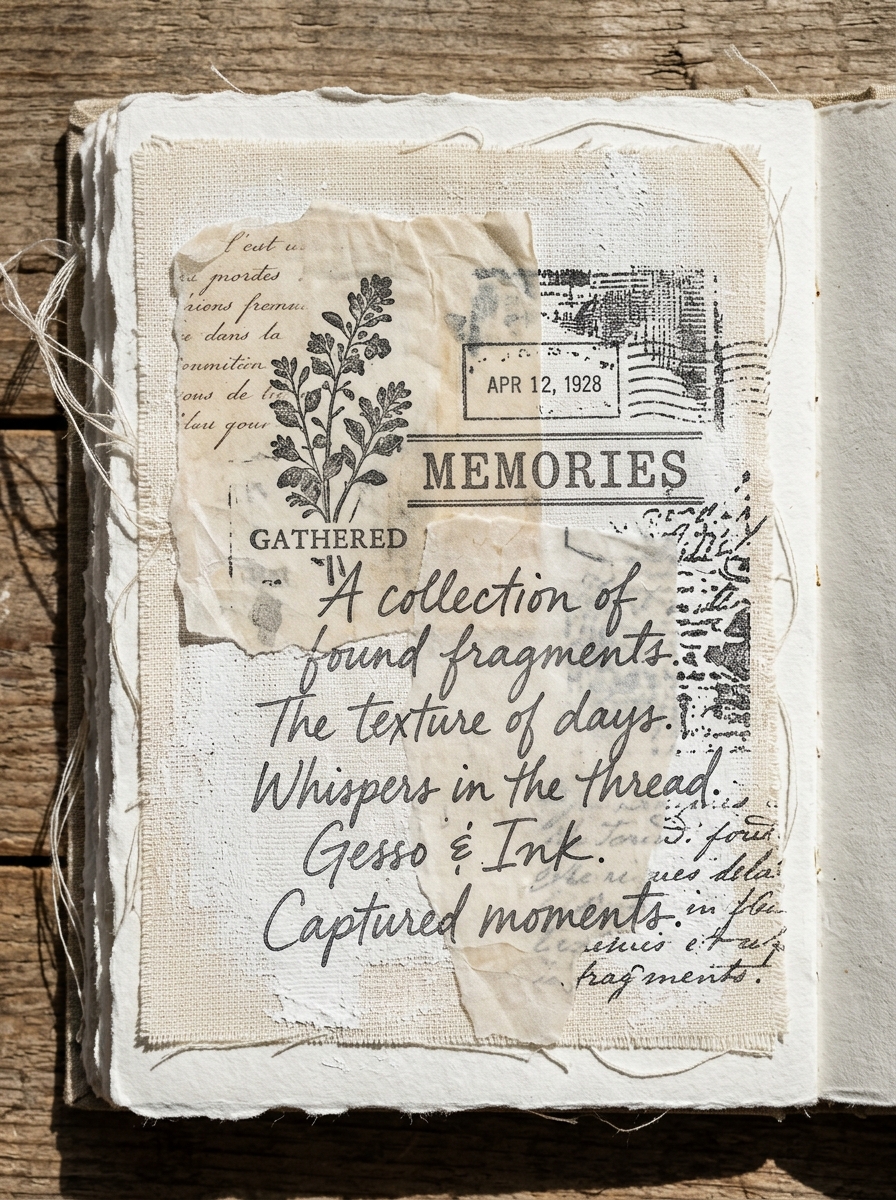
Apply a light coat of gesso to a fabric scrap and let it dry before gluing it to your page. Once the gesso is dry, the fabric surface accepts watercolour, acrylic, and ink in a way that untreated fabric doesn’t.
The weave of the fabric shows through thin layers of paint and creates a texture that looks intentional and is impossible to replicate on paper.
This turns your fabric scrap into a painting surface rather than a decorative element, which opens up a different kind of page entirely.
Practical tip: Loosely woven fabrics like linen or muslin show the most texture through gesso and paint.
Tightly woven cottons work too but give a smoother result. Use whichever you have, both work, they just look different.
11. The Fabric Tag
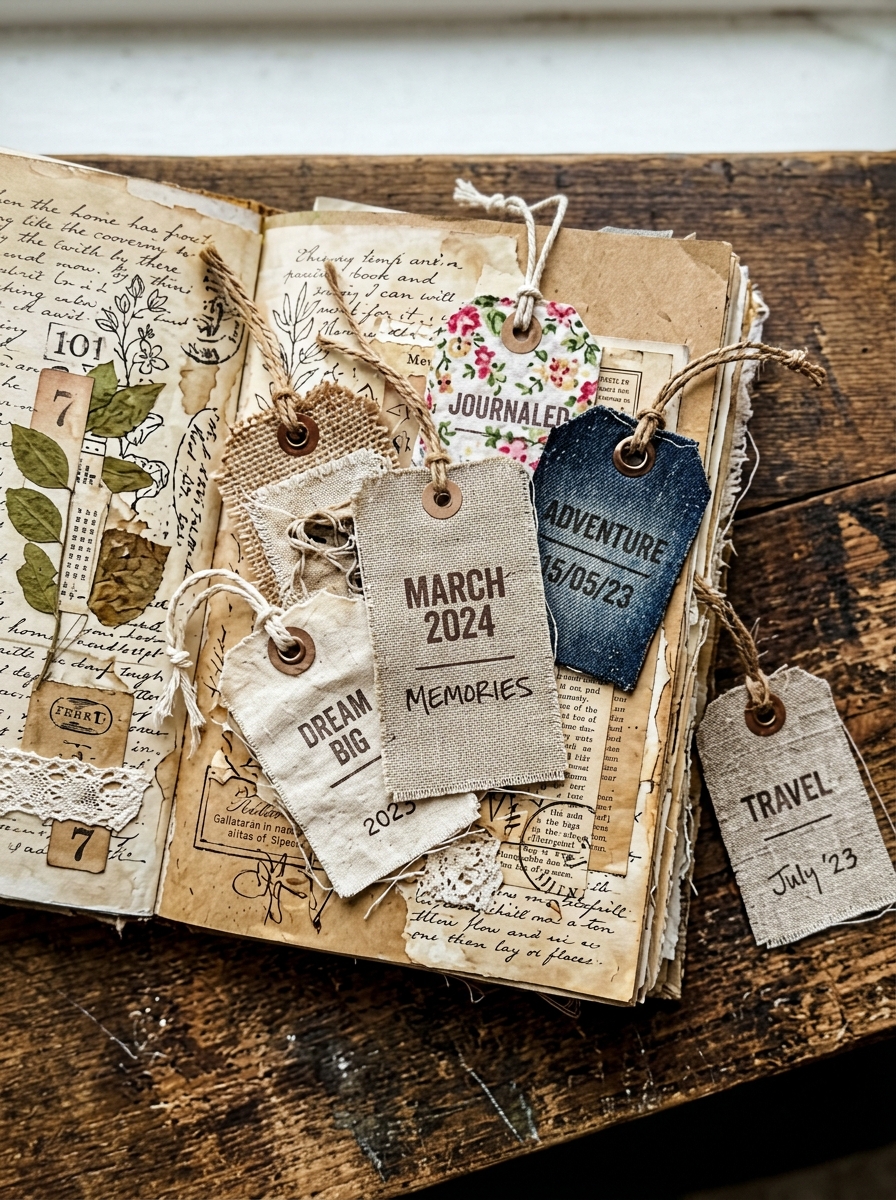
Cut a fabric scrap into a simple tag shape, a rectangle with a slightly rounded top, or just a rectangle.
Punch a hole at one end and thread a piece of ribbon, twine, or embroidery thread through it. Use it as a bookmark, tie it to a page edge, or glue it directly onto a page as an embellishment with a word or date written on it.
Velvet makes the most tactile version of this. Running your finger over a velvet tag on a journal page is a small but genuinely satisfying sensory experience.
Practical tip: Before cutting your tag shape, apply a thin coat of Mod Podge Fabric Formula to the scrap and let it dry completely.
This stabilises the fabric, makes it easier to cut cleanly, and means you can write on it with a regular pen without the ink bleeding into the fibres.
12. The Woven Strip Page
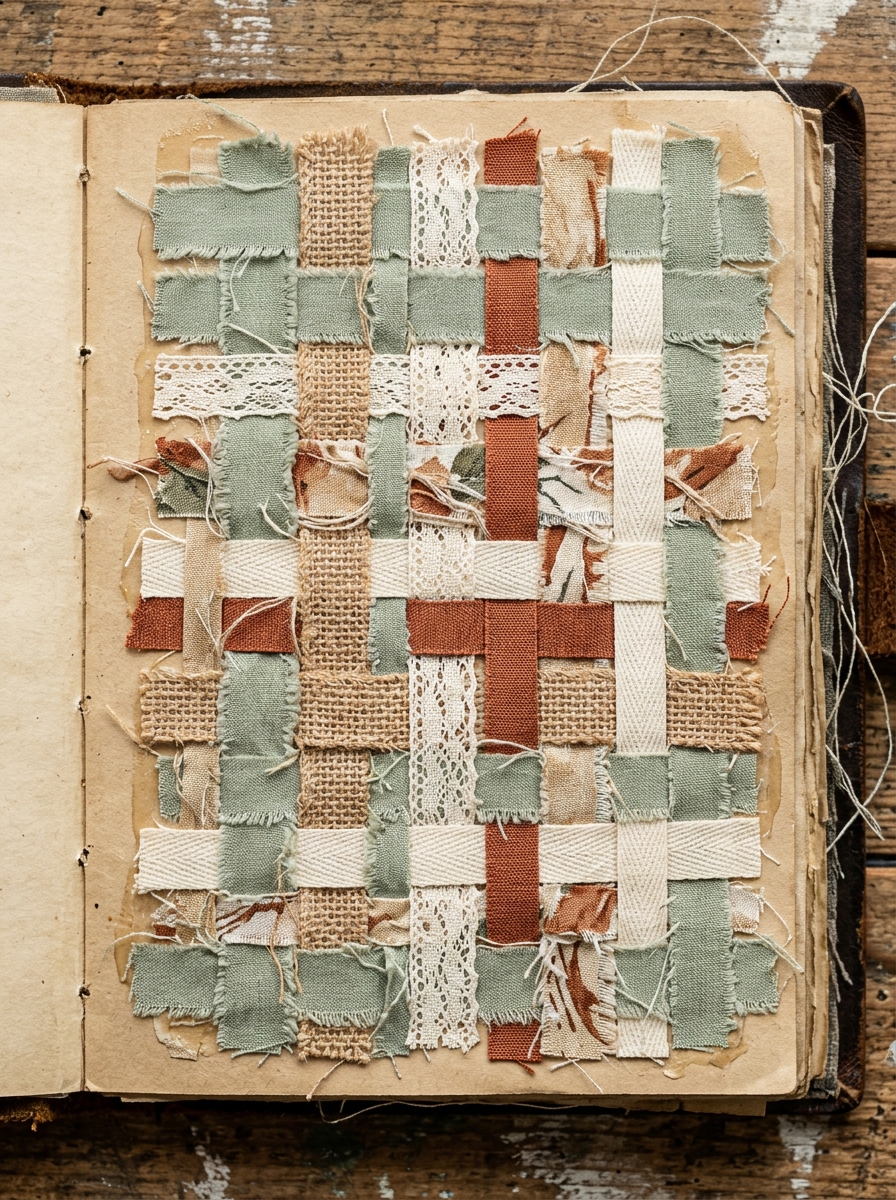
Cut or tear your fabric into thin strips, roughly half a centimetre to one centimetre wide.
Lay alternating strips horizontally and vertically on your page in a loose weave, then glue the ends down. You don’t need to weave tightly or evenly.
An irregular, slightly loose weave looks more interesting on a journal page than a neat one.
This is a good use for scraps that are long and narrow, the kind left over from cutting straight edges or trimming seam allowances.
Practical tip: Mix fabric types in the same weave rather than keeping them uniform. A strip of denim woven with a strip of cotton lawn and a strip of ribbon creates a page with far more visual texture than strips of the same fabric throughout.
13. The Comfort Page
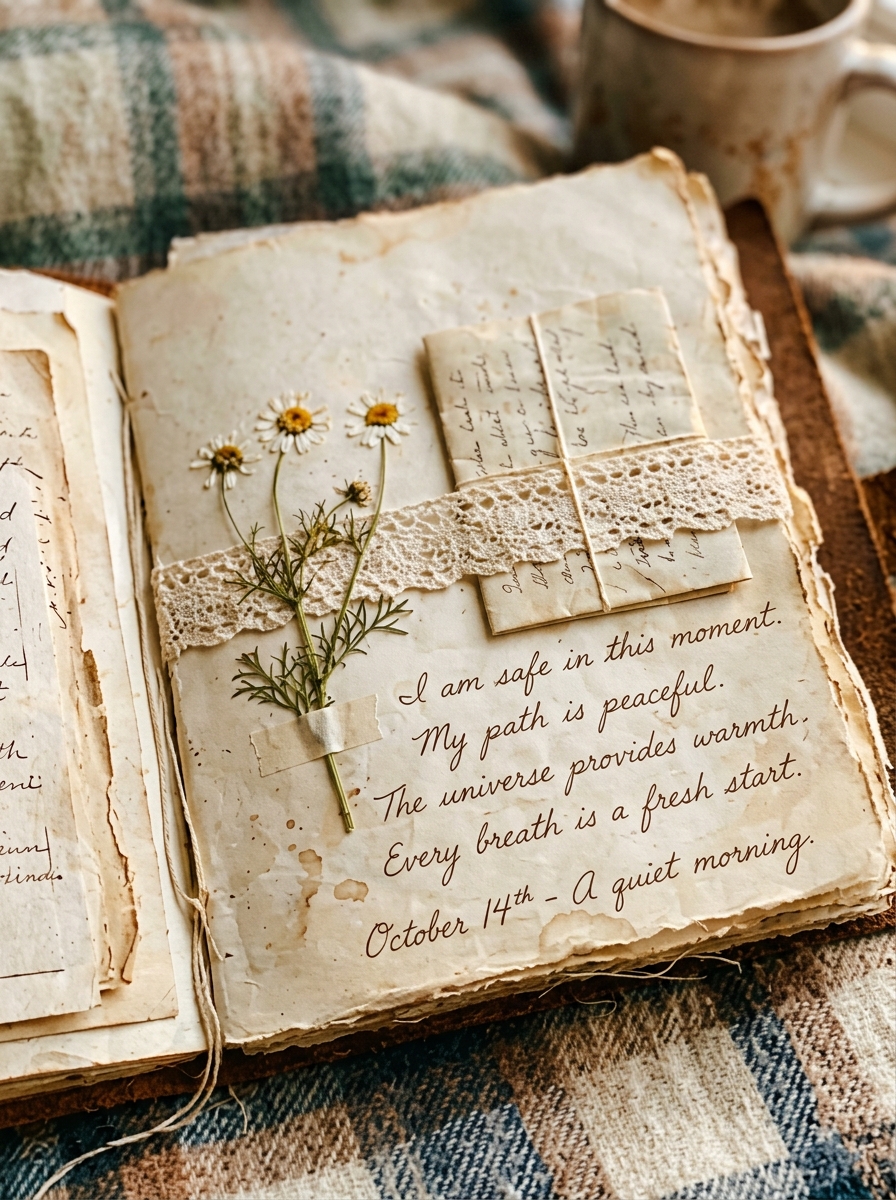
Find the softest fabric scrap you have, a piece of brushed cotton, a remnant of velvet, a strip of fleece, and glue it to a blank page. Sit with it. Write something if it comes. Leave it blank if it doesn’t.
This one is specifically for the days when you need to make something just for yourself, with no output expected and no result to evaluate. It sounds simple because it is. That’s what makes it work.
Practical tip: Keep this page near the front of your journal so it’s easy to find.
Some people return to it repeatedly, adding a word or a small scrap each time rather than completing it in one sitting. There’s no rule that a page has to be finished.
Why Fabric Scraps Work Better Than Paper in a Junk Journal
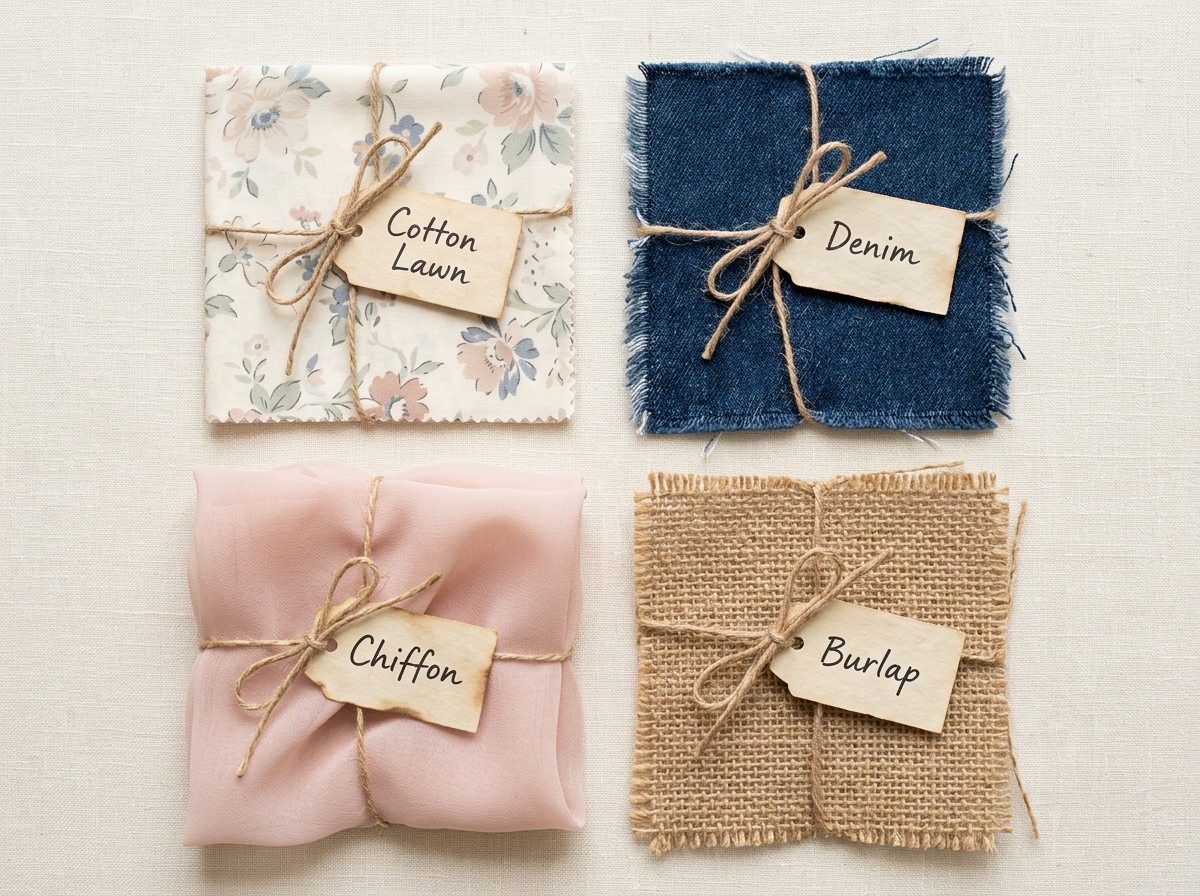
Most junk journaling content points you toward paper, vintage book pages, kraft card, decorative tissue. And paper works fine. But if you’re trying to figure out what to do with fabric scraps specifically, you’re actually sitting on better material.
Fabric brings something paper can’t: texture you can feel. A strip of cotton lawn sits flat and smooth on a page. A torn edge of denim is stiff and earthy.
A layer of chiffon over handwriting makes the words visible but soft, like something half-remembered. None of that is achievable with paper, regardless of how expensive the kit is.
When you layer different fabric types together on a journal page, the result looks genuinely handmade in a way that purchased supplies rarely do.
Here’s what each fabric type actually contributes:
✅ Cotton and Quilting Cotton
Flat, easy to glue, and takes ink and paint well. Use it as a full page background and write or stamp directly on top. Printed quilting cotton is particularly useful because the existing pattern does the decorative work for you.
✅ Lace and Lace Trim
Layer it over paper or another piece of fabric and it adds an immediate vintage softness. It also works well folded into a small pocket or flap — the open weave means whatever’s underneath is still partially visible.
✅ Denim
Structured enough to hold its shape when glued, which makes it one of the few fabrics that works well as a page pocket. Cut a rectangle, fold the bottom edge up, glue the sides, and you have a pocket that actually functions. The weight of denim also anchors a page visually when everything else is light and layered.
✅ Chiffon and Organza
Both are sheer, which is the whole point. Glued over a handwritten note or a printed image, they create a veil effect — the content underneath shows through but is softened. Organza holds its shape more than chiffon, which drapes. Both photograph well, which matters if you ever share your pages.
✅ Velvet Scraps
Tear rather than cut velvet where you can. The frayed edge is part of what makes it work — cut edges on velvet can look clinical, while torn edges look intentional. Even a small piece adds a richness to a page that’s hard to get from anything else.
✅ Ribbon and Trim
These are the functional pieces. Use ribbon as a page divider, a bookmark loop attached to the spine, or a tie closure if you’re making a pocket or folded element. Trim glued along a page edge works like a border without looking like one.
A note on adhesives for fabric
Different fabrics need different glues, and using the wrong one is usually why fabric lifts or pages warp.
- Mod Podge Fabric Formula — best for flat fabric pieces like cotton. It also seals frayed edges as it dries, which keeps things tidy without extra effort
- Beacon Fabri-Tac — better for lace, trim, and anything delicate. It bonds without bleeding through to the other side of the page
- Matte gel medium — works as both adhesive and sealant, and dries completely flat with no shine. A good choice if you plan to paint or write over the top of your fabric
Ready to put your cutting skills to use on a real project? DIY Oktoberfest Costume: 7 Outfits You Can Make From Clothes Already in Your Closet is a fun, beginner-friendly place to start.
The Real Reason People Are Doing This
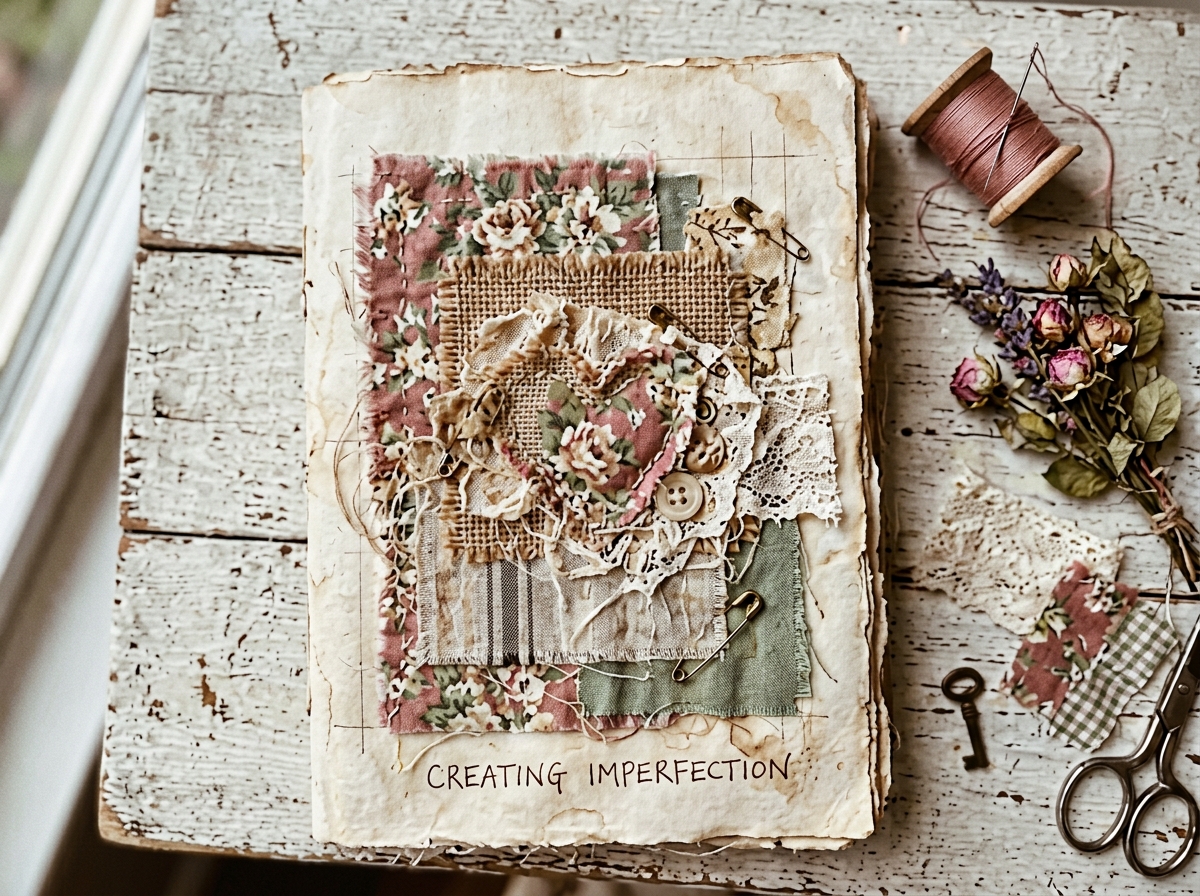
Junk journaling is not just a craft trend. It is a response to something a lot of people are quietly feeling, the need to make something that belongs entirely to them.
1. Your Brain Actually Needs This
Research published in the Journal of Environmental Research and Public Health found that engaging in creative activities significantly reduces anxiety and improves mood.
The repetitive physical actions involved, cutting, placing, gluing, activate the parasympathetic nervous system in a way that’s comparable to meditation. Your cortisol levels drop. Your heart rate slows. You’re not thinking about your to-do list.
CNN reported in January 2025 that junk journaling has been growing steadily, and that a significant part of its appeal is physical. People want something to touch. In a day spent mostly on screens, the texture of a fabric scrap under your fingers is a small but real form of relief.
2. Most of what you make is for someone else
If you sew, most of your creative energy goes outward. You’re making something to a pattern, to a size, for a person, for a purpose. Even when you enjoy it, there’s a brief you’re working to.
Figuring out what to do with fabric scraps is one of the few moments where that pressure disappears. The scraps have no intended use. Nobody is waiting for them. You don’t owe them anything.
The junk journal is where they go, and where you get to create without any of the usual conditions attached.
3. There is no result to evaluate
This matters more than it sounds. Most creative work gets assessed in some way, does it fit, does it look right, is it finished, is it good. Junk journaling has no equivalent moment. There is no finished version to compare yours against. There is no technique you’re supposed to master.
A page is done when you decide it is. That’s a genuinely rare experience for anyone who creates with any level of seriousness, and it’s worth having.
You Already Have Everything You Need
Figuring out what to do with fabric scraps doesn’t have to mean another sewing project with a pattern to follow and a result to evaluate. Junk journaling gives those scraps somewhere to go that asks nothing of you except your time and your presence.
The pile on your floor or stuffed in that bag isn’t clutter. It’s material. And now you know exactly what to do with it.
FAQs
1. Will adding fabric make my journal pages too thick to close?
Only if you use bulky or padded materials. Most sewing scraps, cotton, lace, chiffon, denim, are flat enough that even several layers on one page won’t stop a journal from closing.
The issue usually comes from three-dimensional embellishments like buttons or thick ribbon knots. If you want to include those, place them toward the outer edge of the page rather than the centre so the journal spine isn’t under pressure when closed.
2. Do fabric pages hold up over time or will they peel and deteriorate?
Fabric glued with the right adhesive, Beacon Fabri-Tac or Mod Podge Fabric Formula specifically, bonds durably to paper and doesn’t degrade the way some craft glues do.
The bigger risk is natural fibre fabrics like cotton and linen fading if the journal is stored in direct sunlight. Store your journal flat, away from light, and the pages will hold for years.
3. Can I wash or clean a fabric scrap before using it in my journal?
Yes, and for scraps from old clothing or secondhand fabric you should. Unwashed fabric can carry oils, residue, or sizing that interferes with adhesive bonding. Wash, dry, and press your scrap before gluing it down.
This also removes any stiffness from fabric sizing, which makes the scrap easier to work with on the page.
4. What if my fabric scrap is synthetic — does it behave differently?
It does. Synthetic fabrics like polyester and nylon don’t absorb adhesive the way natural fibres do, which means Mod Podge alone may not hold them reliably.
Beacon Fabri-Tac is a stronger choice for synthetics. Also avoid using a hot iron directly on synthetic scraps when pressing them before use, a pressing cloth between the iron and the fabric prevents melting or shining.
5. Is there a minimum scrap size worth keeping for junk journaling?
Practically speaking, anything smaller than roughly 3cm x 3cm becomes difficult to handle with glue without it bunching or shifting before it sets.
Scraps smaller than that are better gathered into a fabric cluster rather than used individually. That said, a single button, a short piece of trim, or a snippet of ribbon smaller than 3cm all work fine as part of a grouped element.