Hate leaving home? These 19 outdoor entertaining ideas prove the best host never has to. Your space, your rules, your people.
The best hosts aren’t the loudest people in the room. They’re not the ones with the biggest personality or the most elaborate table settings. They’re the ones who make you feel most at ease the moment you walk in, and that is precisely where homebodies have always had the edge.
If you’d rather have people come to you than drag yourself out to a crowded restaurant, you’re not antisocial. You’re strategic, your space, rules, energy, and an exit that’s always ten steps away.
Here’s something the data backs up: a survey of 2,000 Americans found that 72% prefer staying in with friends whenever possible, while just 28% prefer a night out, and half said this shift happened in the past few years. The homebody era isn’t an individual characteristic anymore. It’s a cultural movement.
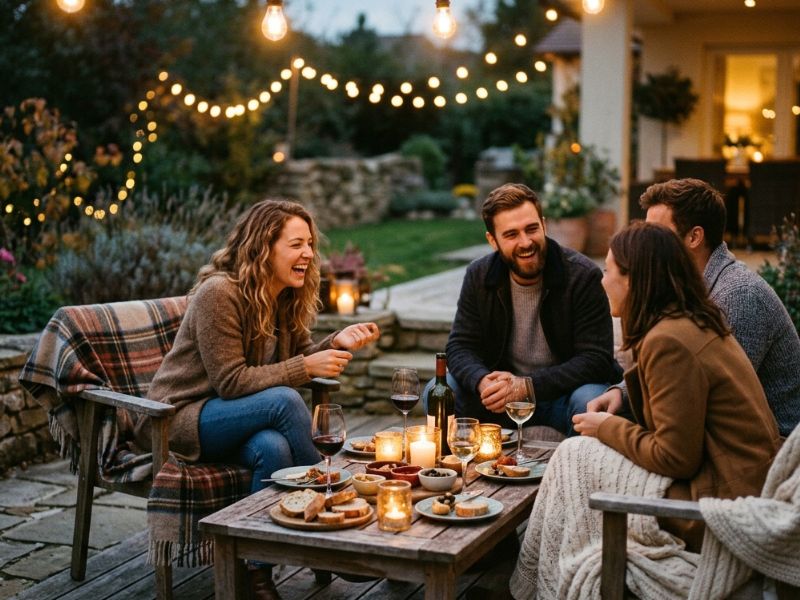
Your backyard, patio, balcony, or garden is your greatest hosting asset. No restaurant noise. No bill-splitting awkwardness, and no overstaying strangers you can’t politely remove. You control the environment, the guest list, the vibe, and, crucially, the end time.
These 19 outdoor entertaining ideas stated in this guide were compiled specifically for you: the homebody who genuinely loves their people, just loves their home a little more.
Small outdoor spaces can feel surprisingly festive with the creative decorating tips shared in 4th of July Patio Decor Ideas That Make Small Spaces Feel Party-Ready.
Why Homebodies Actually Make the Best Hosts
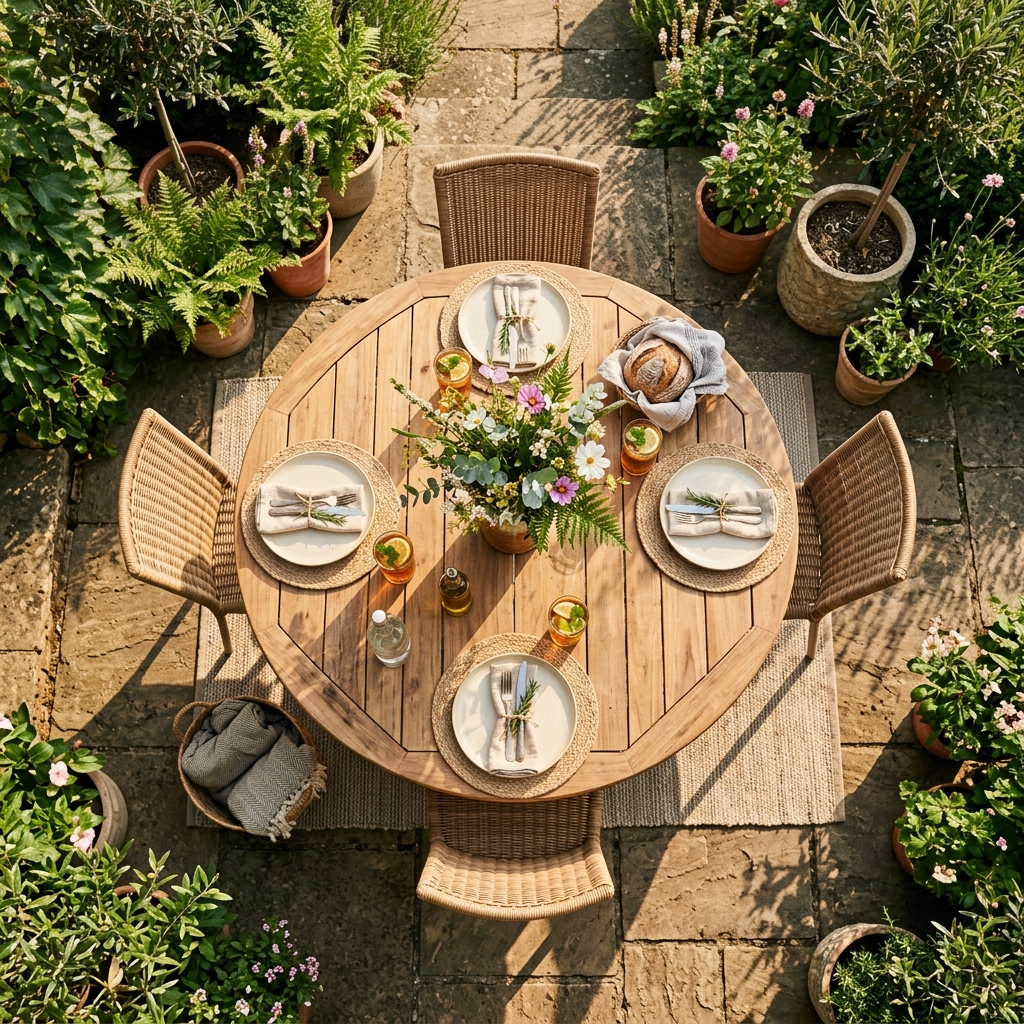
There’s a widely held assumption that the best host is the most outgoing person in the room, the one who fills silences with stories, works every corner of a crowd, and thrives on the energy of a packed space. It’s a compelling image, it’s also largely wrong.
The qualities that actually make someone a great host, attentiveness, comfort, preparation, and genuine care for how people feel, are qualities that homebodies have been quietly practising their entire lives.
Here’s why the homebody advantage is real:
✔️ They Know Their Space Better Than Anyone
A homebody hasn’t just lived in their home, they’ve studied it. They know where the light falls at 6pm, which corner gets the breeze, where guests will naturally gravitate, and which chair nobody actually wants to sit in.
Research in environmental psychology shows that personal spaces act as emotional anchors, homebodies understand their environment at a level most people simply don’t.
That knowledge translates directly into better hosting decisions: where to place seating, how to set the lighting, how to make the space feel easy and natural before a single guest arrives.
✔️ Understand People More Deeply
Here’s something counterintuitive: the people who observe from the edges of social situations often understand human behaviour better than those at the centre of them.
A Yale study found that introverted people have a significantly more accurate understanding of the psychology of others than those who spend more time socialising, because they spend more time observing human nature rather than performing in it.
For a host, that matters enormously. Reading the room, noticing when a guest is uncomfortable, knowing when to step in or step back these are observational skills, not extroverted ones.
✔️ They Host With Intention, Not Performance
Extroverted hosts can sometimes turn a gathering into a stage. Homebodies tend to host with a different motivation entirely, they genuinely want people to feel good in their space.
Homebodies naturally prefer smaller, deeper connections over frequent large-scale social gatherings, which means when they do host, every decision is deliberate.
The guest list is curated. The food is considered. The seating is thought through. Nothing is thrown together to impress, it’s all assembled to make people feel at ease.
✔️ They Create Comfort Instinctively
Homebodies are wired to seek environments that support emotional regulation, predictable, familiar, and low in sensory overload. That’s exactly what a good gathering feels like to a guest.
Not overwhelming. Not performative. Just warm, considered, and easy to be in. The homebody’s natural habitat, calm, comfortable, intentionally arranged, is the exact environment guests relax into most quickly.
✔️ Homebodies Protect Their Energy, Which Protects the Gathering
A host who is burned out halfway through their own event is not a good host. Extroverts can push through on social energy alone, but they also tend to over-invite, over-programme, and overstay their welcome.
Homebodies naturally set limits: on guest numbers, on timing, on how elaborate the setup gets. Those limits aren’t a weakness. They’re what keeps the gathering focused, intimate, and genuinely enjoyable, for the host and for everyone there.
✔️ They Turn Their Home Into an Experience
The most important part of hosting is how your guests feel, a comfortable space, good food, and a relaxed atmosphere go much further than perfectly styled décor. Homebodies have spent years making their home feel exactly that way, for themselves.
When guests walk into a space that has been lived in with care and intention, they feel it immediately. That feeling is the foundation of every great gathering, and it can’t be faked or bought. It’s built slowly, by someone who genuinely loves being at home.
Well, Extroverts may be louder at a party. But homebodies build the spaces people remember long after the party is over. That’s not a consolation prize anyways.
Boring evenings get a creative upgrade through Paint and Sip Ideas at Home That Actually Make Your Nights Feel Exciting Again, packed with fun ways to make staying in feel special.
Outdoor Entertaining Ideas for Homebodies Who Want to Host Friends
1. Host a Backyard Movie Night
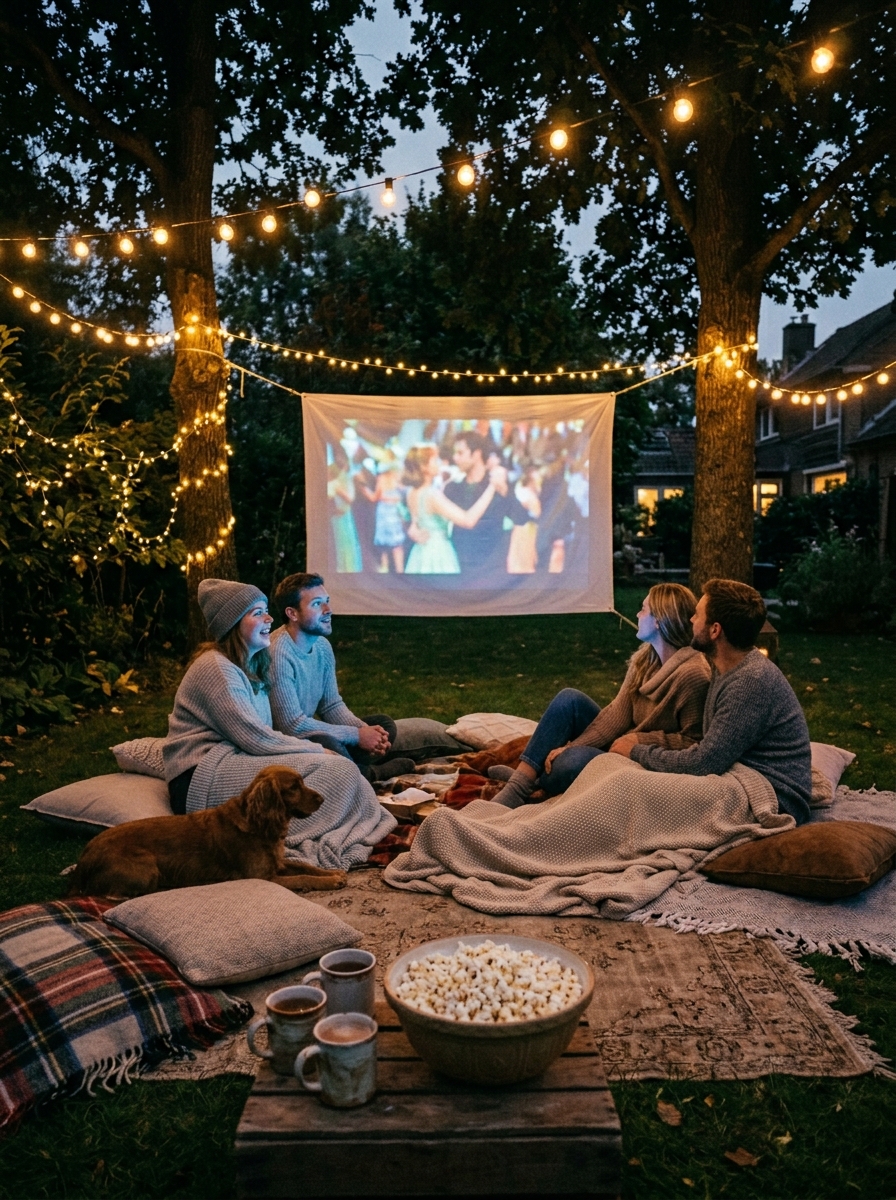
There is something a cinema can never fully replicate, the feeling of watching a great film in a space that already feels like yours. No overpriced popcorn, no strangers talking through the quiet scenes, no parking stress. Just your people, your outdoor space, and a screen for the evening.
For the homebody host, this is one of the most low-effort, high-impact gatherings you can pull off. Once the setup is done, the movie does all the hosting for you.
Why This Works for Homebodies
The backyard movie night removes the pressure of constant conversation. There is a shared focal point, the scree, which means guests are entertained without you having to carry the room. You set it up, press play, and settle in alongside everyone else. It is socialising with a built-in break from performing as a host.
How to Pull It Off
- A portable projector paired with a white sheet, blank wall, or open fence is all you need for a screen. The Anker Nebula and BenQ outdoor models are widely available, well reviewed, and built for exactly this use case
- Position your Bluetooth speaker behind the screen so sound travels toward your audience rather than away from it, this is the single biggest audio mistake most people make
- Start after dark, 7:30 to 8pm works in most climates depending on your season and location
- Keep seating low and relaxed: floor cushions, camping chairs, picnic blankets. The moment guests sink into low seating, the formality disappears
The One Thing Most Hosts Miss
Pre-load the movie before a single guest arrives. Buffering, login screens, or a last-minute search for the right file kills the atmosphere faster than anything else.
If your streaming platform allows it, download the film offline the night before. Treat the tech setup the same way you treat the food, it should be ready before people walk in, not while they’re standing around watching you troubleshoot.
Works Wherever You Are
A backyard movie night works in Lagos, London, Manila, Toronto, or anywhere with an outdoor wall, a fence, or open space. The setup is the same regardless of geography.
The one adjustment to make for hot or humid climates, set up a standing fan or two before guests arrive, not after. Heat is the only real enemy of this gathering, and it is entirely manageable with a little preparation.
2. Set Up a DIY Outdoor Bar Cart
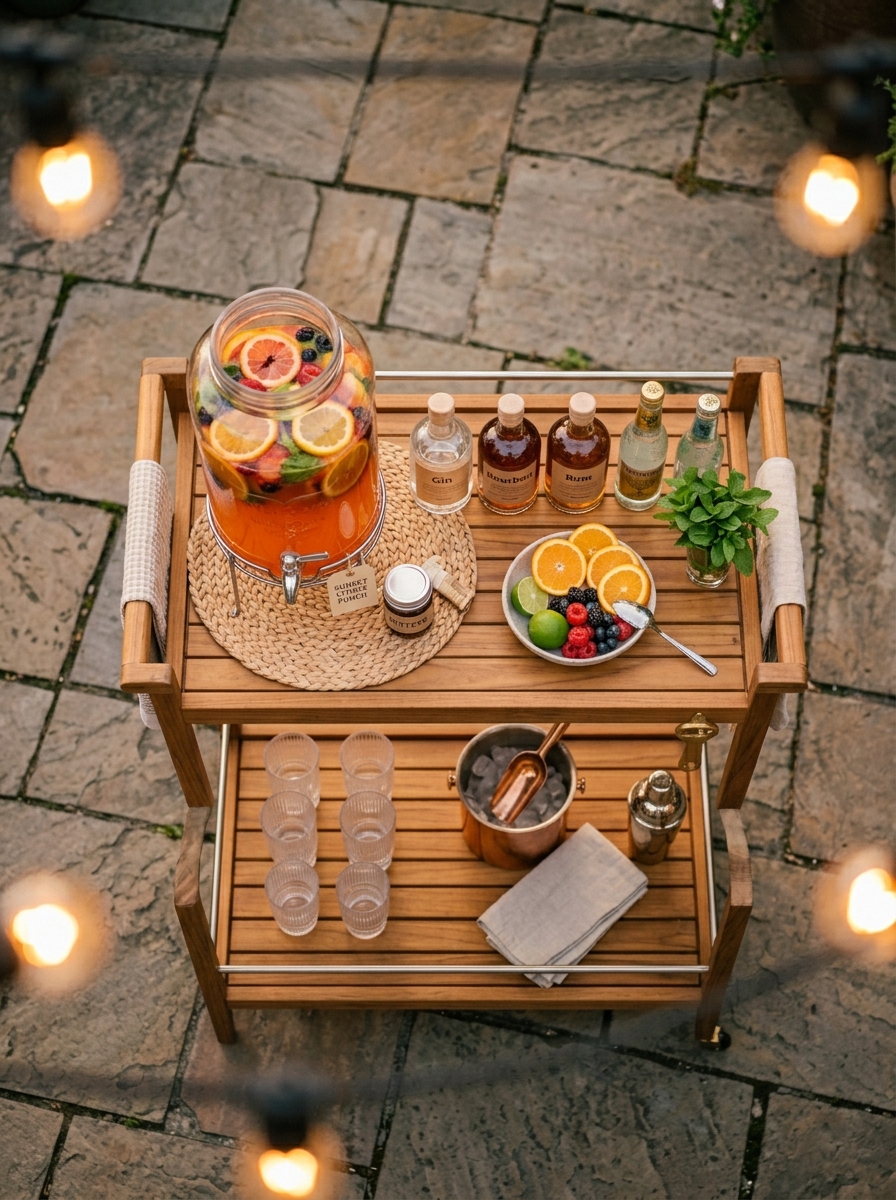
One of the quietest ways to ruin your own gathering is to spend the entire evening behind a makeshift bar, taking drink orders and playing mixologist while everyone else relaxes. A self-serve outdoor bar cart solves this completely. It looks intentional, it feels generous, and it frees you to actually be present at your own event.
For the homebody host, this is not just a convenience, it is a boundary. A well-stocked bar cart signals to guests: help yourself. And that single shift changes the entire dynamic of the gathering.
Why This Works for Homebodies
One of the most draining parts of outdoor entertaining ideas is the constant back-and-forth of drink service. A bar cart removes you from that loop entirely. You set it up once, replenish it once, and spend the rest of the evening as a guest at your own party, which is exactly where a homebody host thrives.
How to Pull It Off
- Pre-mix one signature batch cocktail or mocktail in a glass dispenser before guests arrive, the visual alone does half the work. Guests are drawn to it immediately and it sets the tone for the entire cart
- Label everything clearly: the mixed drink, the mixers, the garnishes, the non-alcoholic options. Clear labels remove confusion and eliminate the need for guests to ask questions
- Your non-alcoholic option should be equally elevated, not an afterthought. Flavoured sparkling water with fresh fruit and herbs, or a pre-mixed mocktail in its own dispenser, signals that every guest was considered
- Stock the cart fully before the first guest arrives and plan one replenishment halfway through. Beyond that, it runs itself
The One Thing Most Hosts Miss
The batch cocktail quantity. Most hosts either over-prepare and waste, or under-prepare and run dry at the worst possible moment.
A reliable rule of thumb: for every 10 guests, prepare 2 litres of your mixed drink. The average guest drinks 2 to 3 drinks across a 2 to 3 hour outdoor gathering, not more, not less. Do the maths before you mix, not after.
Works Wherever You Are
In parts of the Middle East, West Africa, and other regions where alcohol plays a smaller role socially, the mocktail version of this setup is not a lesser option, it is often the more impressive one.
Hibiscus water, tamarind coolers, ginger lemonade, and zobo are globally loved, visually stunning in a dispenser, and genuinely complex in flavour. A beautifully presented mocktail bar cart holds its own in any setting, anywhere in the world.
3. Throw a Lawn Games Tournament
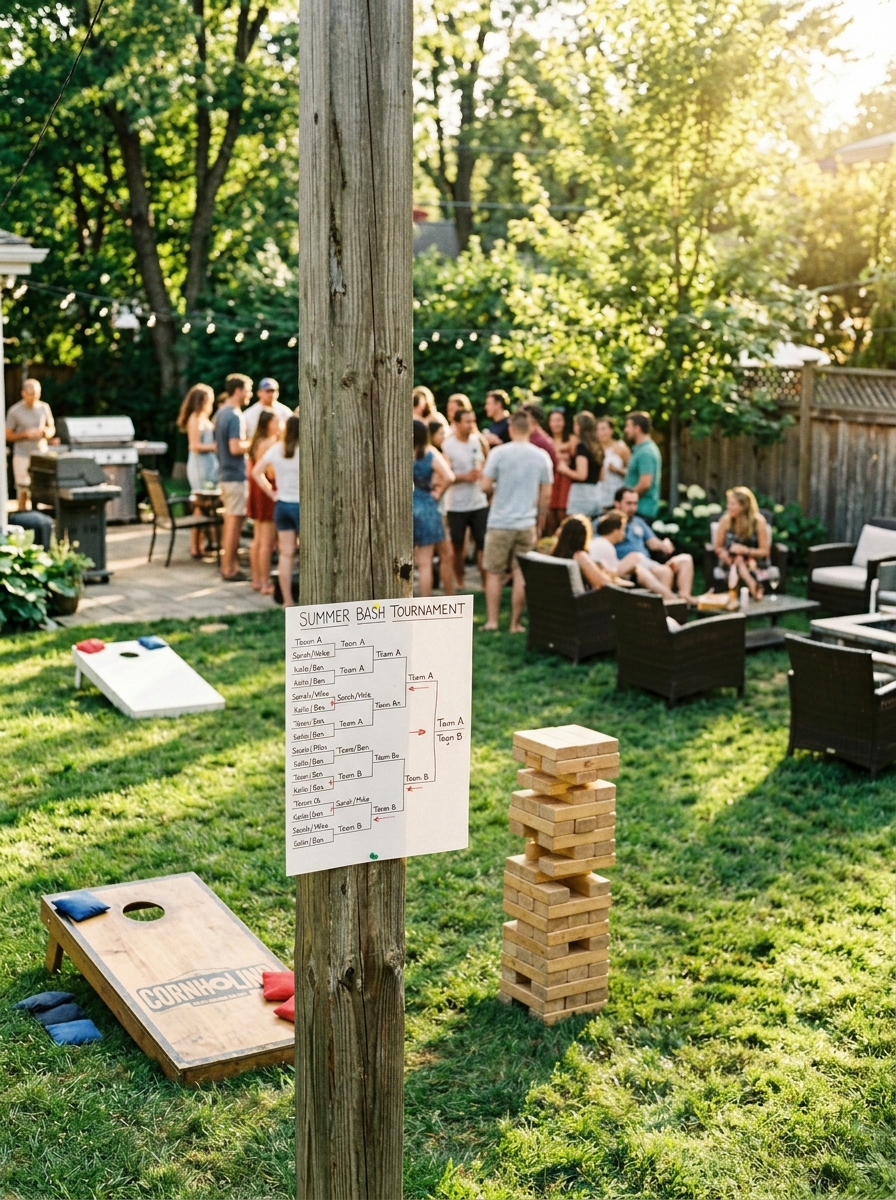
Awkward silences at a gathering are rarely about the people, they are almost always about the absence of structure. When guests do not know each other well, or when conversation has naturally run its course, there is nothing more valuable than something to do together.
A lawn games tournament provides exactly that: low-stakes competition, natural interaction, and a reason to stay engaged without anyone having to try too hard.
For the homebody host, this is one of the smartest outdoor entertaining ideas you can borrow, because once the tournament is running, it essentially hosts itself.
Why This Works for Homebodies
A tournament format means guests are occupied, entertained, and interacting, without you having to facilitate any of it. You set the bracket, explain the format once, and step back. The games create the energy. The competition creates the conversation. Your job, for the next hour or two, is simply to enjoy it alongside everyone else.
How to Pull It Off
- Choose games with the lowest possible barrier to entry: cornhole, bocce ball, giant Jenga, and ring toss require no prior experience, no lengthy rules explanation, and no physical ability beyond basic coordination
- A tournament bracket, even a handwritten one on a piece of paper, adds just enough structure to make it feel like an event rather than a casual kickabout. Pin it somewhere visible so guests can track their progress
- Keep teams at two people per side. Pairs naturally encourage conversation between people who might not have spoken otherwise, without the pressure of a one-on-one dynamic
- A small, lighthearted prize for the winner gives the whole thing a focal point, a bottle of wine, a candle, a novelty trophy. It does not need to be valuable. It just needs to exist
The One Thing Most Hosts Miss
The game selection matters more than most hosts realise. Cornhole is currently the most popular outdoor party game in the United States. Bocce ball has been played across Europe and Latin America for centuries and needs no introduction in those regions.
Giant Jenga is the only truly universal option, it crosses every language barrier, every age group, and every cultural background without a single word of explanation. If you are hosting a mixed or international crowd, lead with Jenga.
Works Wherever You Are
No lawn required. Urban balconies, rooftop terraces, courtyards, and even large indoor-outdoor spaces work perfectly for the tabletop versions of these games. Jenga, card games, and dominoes translate the same tournament format into any space, any size. The outdoor entertaining idea stays intact, only the surface changes.
4. Host a Sunset Dinner Party
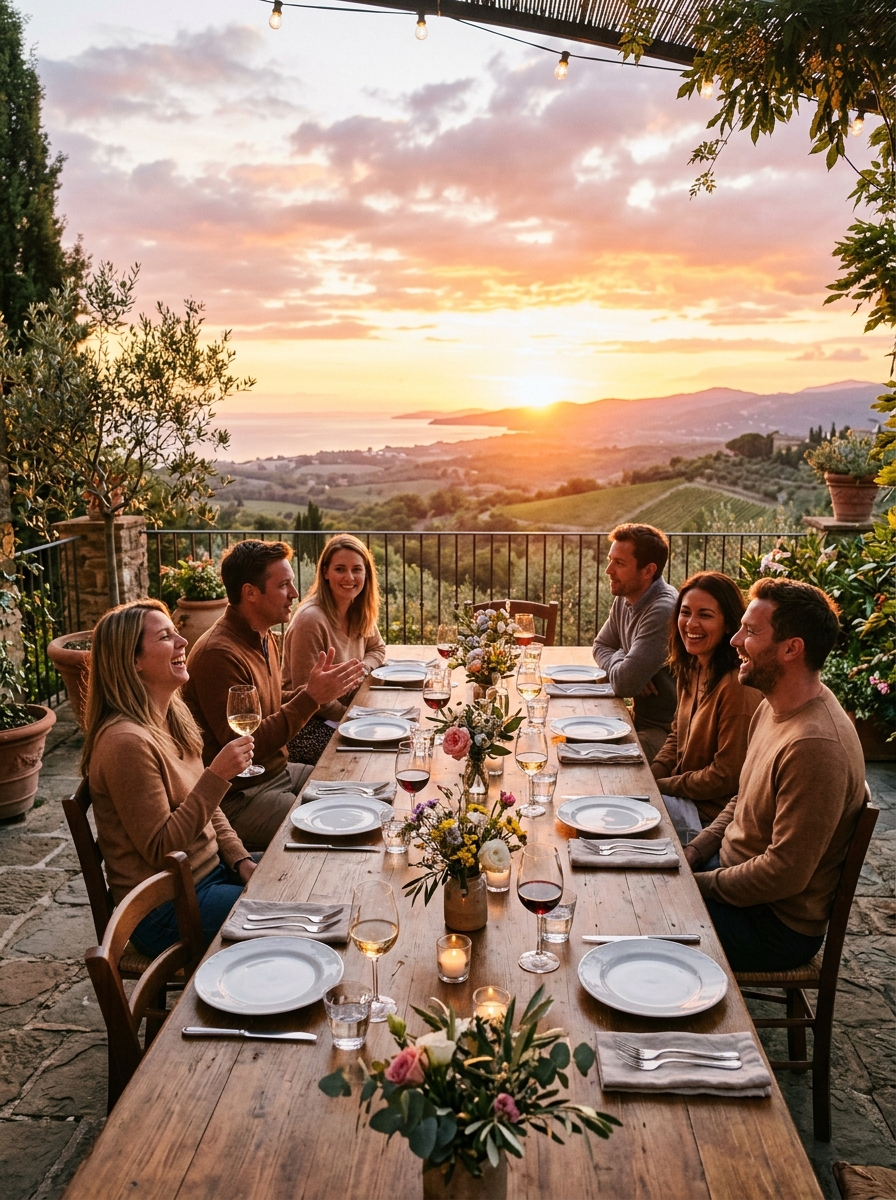
The most common mistake with dinner parties is trying to manufacture atmosphere through decoration, elaborate table settings, and carefully curated playlists.
All of that effort, and yet the most powerful atmospheric tool available to any outdoor host costs absolutely nothing and requires zero setup. It happens every single evening, right on schedule, and it is called sunset.
Timing your outdoor dinner party around the sunset turns a simple meal into an experience guests will reference long after the evening ends. The sky does the decorating. You just have to show up with good food and good people.
Why This Works for Homebodies
A sunset dinner party is one of the most effective outdoor entertaining ideas for homebodies because nature provides the centrepiece. There is no pressure to fill the space with conversation or energy, the changing sky gives every guest something to look at, comment on, and share together. It creates a natural pause in the evening that feels intentional without requiring anything from you.
How to Pull It Off
- Visit TimeandDate.com before you plan anything. Enter your city and get the exact sunset time for your chosen date. Sunset times vary dramatically by location and season, Lagos, London, and Sydney can differ by hours depending on the time of year
- Aim to have guests seated and food on the table 45 minutes before sunset. This gives the meal time to settle in before the sky becomes the main event
- Face your seating west. It sounds almost too simple, but the direction your guests face determines whether they see the sunset or miss it entirely
- Keep the menu to two or three dishes maximum, nothing that requires you to be in the kitchen as the sun goes down. The whole point is that you are at the table when it happens, not hovering over a stove
- As the sky darkens, candles and low lighting take over naturally. You do not need a dramatic lighting transition, the evening handles it for you
The One Thing Most Hosts Miss
The menu timing. Most hosts plan what to cook but not when each dish needs to be ready. For a sunset dinner party, work backwards from your sunset time. If sunset is at 7:15pm, food should be on the table by 6:30pm at the latest. A meal that arrives late means guests are eating in the dark, the natural centrepiece has passed, and the entire timing advantage of this outdoor entertaining idea is lost.
Works Wherever You Are
Sunset dinner parties work on any continent, in any outdoor space , a Lagos rooftop, a London garden, a Manila balcony, a Nairobi courtyard. The only genuine variable is the time.
In equatorial regions like West Africa and Southeast Asia, sunset is relatively consistent year-round at around 6 to 7pm, which actually makes planning easier. In higher latitude countries like the UK or Canada, summer sunsets can stretch past 9pm, giving you a much longer golden window to work with.
5. Host a Neighbourhood Potluck in Your Backyard
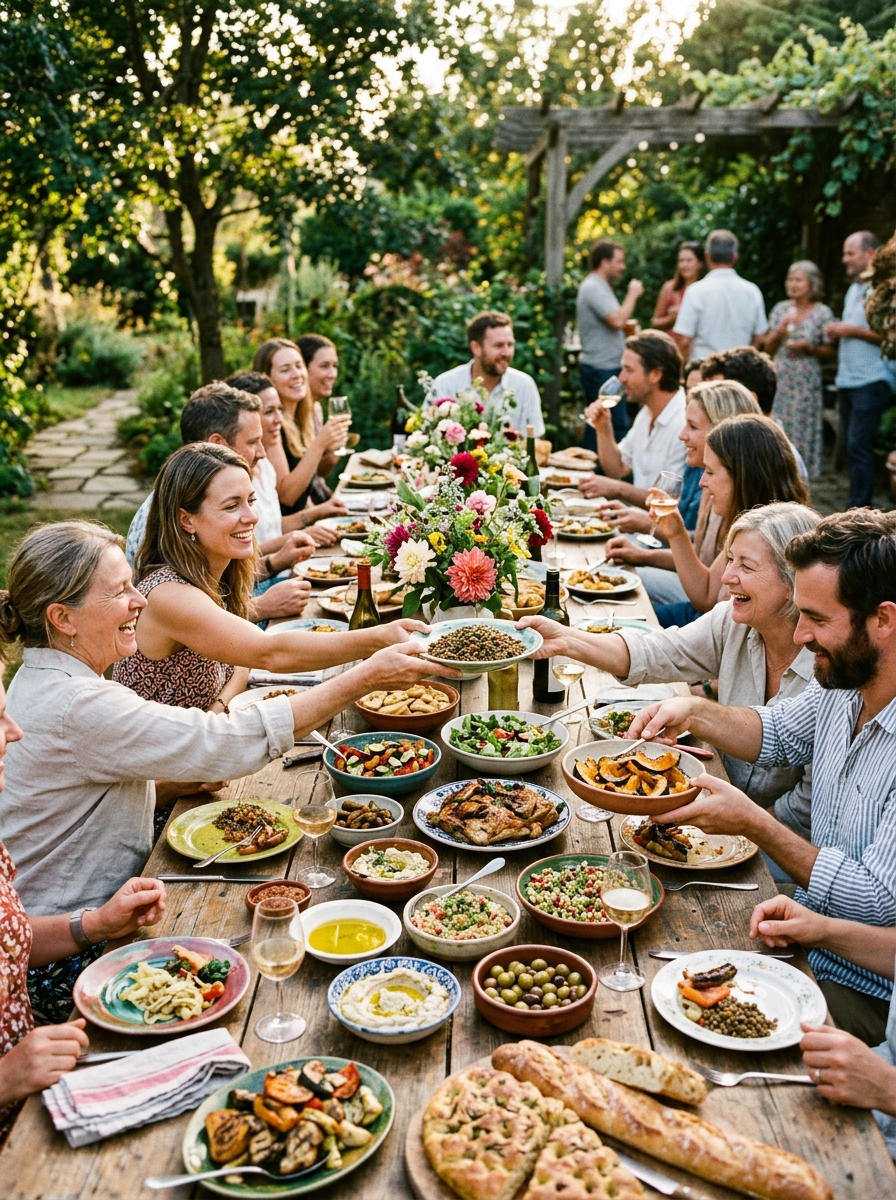
Catering for a crowd is one of the fastest ways to turn hosting into a chore. The shopping, the cooking, the timing, the budget, it adds up quickly and takes the joy out of the entire thing before a single guest arrives.
A neighbourhood potluck solves every one of those problems in one move, and it does something even more valuable: it turns a gathering into a genuine community experience.
For the homebody host, the potluck is not a shortcut. It is a smarter model of hosting, one where the effort is shared, the variety is greater, and the conversation practically writes itself.
Why This Works for Homebodies
The potluck format is one of the most underrated outdoor entertaining ideas for the homebody who loves to host but has limits on time, budget, or energy. You provide the space, the structure, and one anchor dish. Everything else arrives with your guests.
The gathering becomes collaborative by design, and collaborative gatherings are almost always more memorable than ones where a single host carries the entire load.
How to Pull It Off
- Assign food categories, not specific dishes. Tell one guest to bring a protein, another a side, another a dessert. This one instruction prevents the three-pasta-salads problem that derails most unstructured potlucks
- Your contribution as host is the space, the drinks, the plates and cutlery, and one anchor dish, ideally something that works as a centrepiece and signals the tone of the meal
- Set up a long communal table where every dish is displayed together when guests arrive. The visual of multiple dishes laid out collectively is one of the most inviting sights at any outdoor gathering, it signals abundance, generosity, and community before anyone has taken a single bite
- Send a simple message to guests two to three days before confirming what category they are bringing. A quick reminder prevents last-minute confusion and duplicate dishes
The One Thing Most Hosts Miss
Labelling. In a multicultural or dietary-diverse group, which most modern friend groups are, unlabelled dishes create anxiety for guests with allergies, dietary restrictions, or religious food requirements.
A small card or sticky note next to each dish listing the key ingredients is considerate hosting. It removes guesswork, makes every guest feel included, and costs nothing beyond two minutes of preparation.
Works Wherever You Are
The potluck format is one of the most culturally universal outdoor entertaining ideas that exists. In Nigeria it mirrors the communal eating culture that has always defined gatherings, everybody brings something, everybody eats together.
UK and Australia it is known as a “bring a dish” dinner. United States it is a deeply embedded social tradition. In Southeast Asia, shared meals are the default mode of hospitality. Whatever you call it and wherever you host it, the principle is the same: food shared is always better than food served.
6. Set Up a Backyard Bonfire or Fire Pit Hang
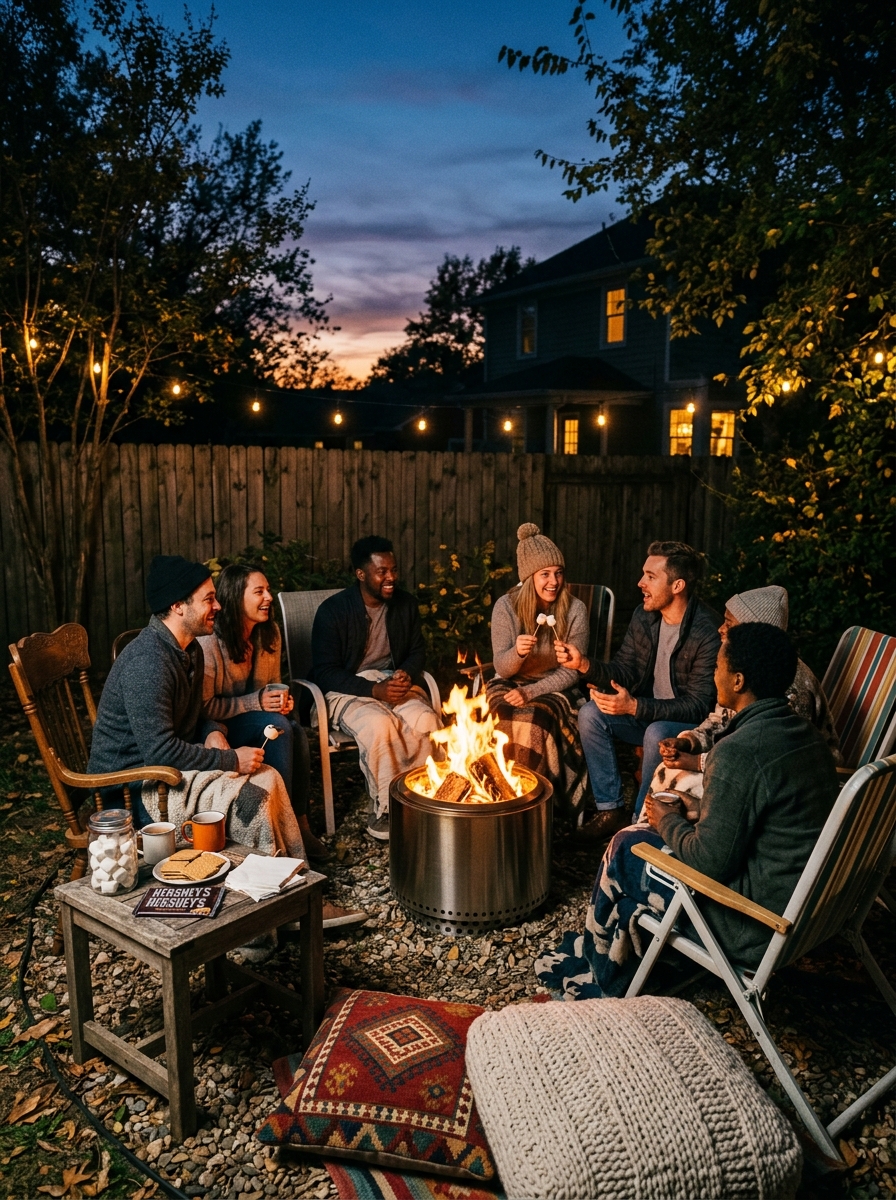
There is something almost biological about the way people respond to fire. Conversations slow down. Phones disappear. Eye contact returns. People who barely knew each other an hour ago find themselves talking properly, because fire creates a natural focal point that no decoration, playlist, or party game can fully replicate.
For the homebody host, the fire pit gathering solves one of the most persistent hosting anxieties: the open-ended evening with no natural conclusion. A fire pit creates its own social rhythm. People arrive, gather, talk, and leave naturally as the fire dies down. No awkward hints required.
Why This Works for Homebodies
The fire does the hosting. Once it is lit and the seating is arranged, the atmosphere is set without any further effort from you. Guests self-organise around the warmth, conversations emerge organically, and the fire provides a shared experience that needs no facilitation. For a homebody who finds constant hosting energy draining, this is one of the most self-sustaining gatherings you can create.
How to Pull It Off
- Portable fire pits, both propane and wood-burning, are widely available for between $50 and $200 and require zero permanent installation. You do not need a built-in fire feature to make this work
- Arrange seating in a full circle around the fire, not in rows facing it. The circle format is what creates intimacy and conversation, rows create an audience, not a gathering
- A s’mores station is one of the most universally loved additions to any fire pit evening. Chocolate, marshmallows, and biscuits work across every age group and cultural background, there is no version of this that guests do not enjoy
- Keep a bucket of water or sand within arm’s reach at all times. This is non-negotiable fire safety, and it should be in place before the first guest arrives, not retrieved in an emergency
The One Thing Most Hosts Miss
The seating arrangement. Most hosts set out chairs in whatever configuration is convenient rather than thinking deliberately about how guests will face each other.
At a fire pit gathering, the circle is everything. A full circle of seating, even mismatched chairs, garden stools, and floor cushions, creates the sense of an intimate inner world. Rows or scattered seating breaks that feeling instantly and the gathering never quite finds its depth.
Works Wherever You Are
In countries and cities with open fire restrictions, parts of Australia during dry season, California in summer, urban areas of the UK, a propane fire pit is the fully compliant alternative.
It produces the same warmth, the same visual centrepiece, and the same atmospheric pull as a wood-burning fire, with no smoke, no ash, and no permit required. Check your local regulations before you light anything, and when in doubt, go propane.
7. Host an Outdoor Brunch
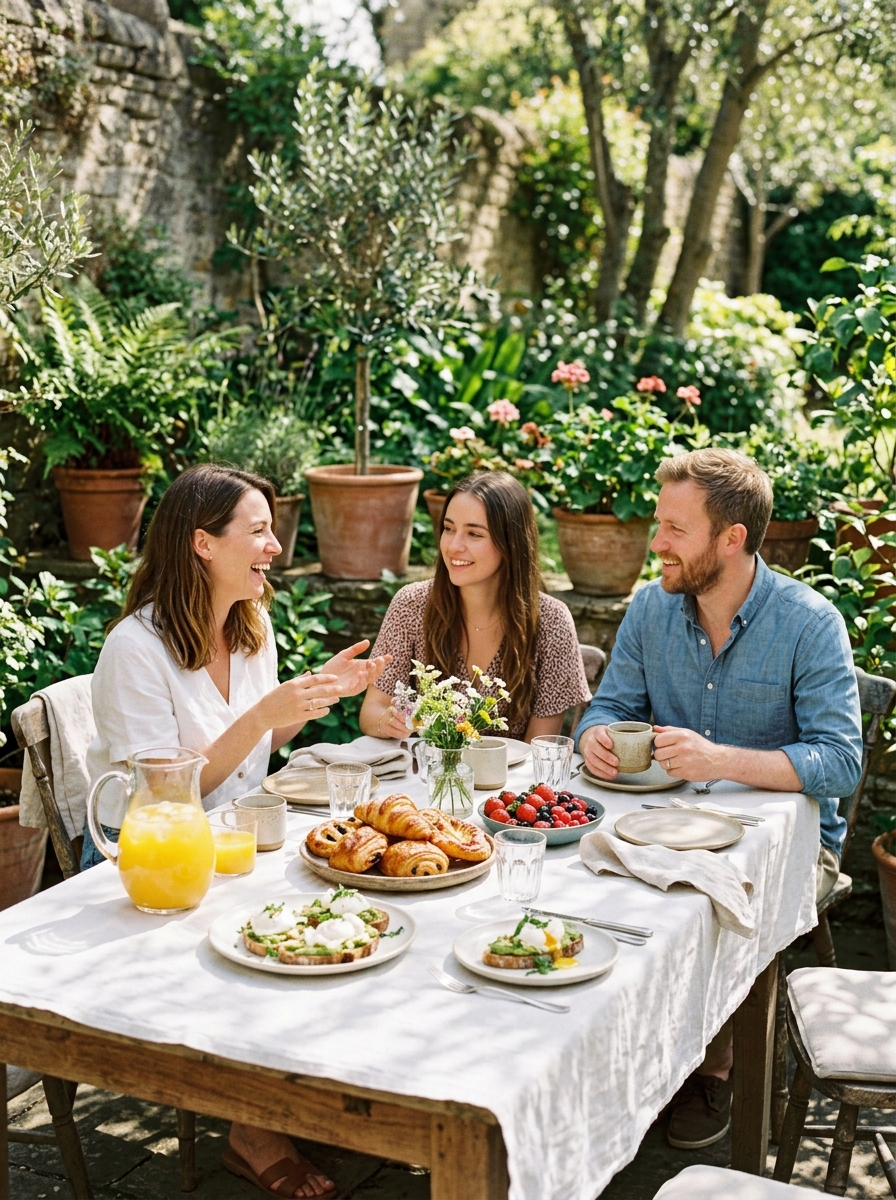
Evening gatherings carry an unspoken pressure that morning gatherings simply do not.
The expectation of a long night, an elaborate meal, and a sustained social performance is baked into the concept of a dinner party in a way that brunch entirely sidesteps. Brunch arrives with its own built-in permission to keep things light, relaxed, and time-limited, and for the homebody host, that changes everything.
An outdoor brunch is not a lesser version of a dinner party. In many ways it is a smarter one.
Why This Works for Homebodies
Brunch has a natural end time baked into it that no evening gathering can replicate without awkwardness. Guests arrive mid-morning, the meal is relaxed, and by early afternoon the gathering has concluded organically, no hints dropped, no lingering, no energy spent managing an exit. For a homebody who values their own time as much as they value their guests, this is the ideal gathering format.
How to Pull It Off
- Build the menu around a sweet and savoury balance: eggs in some form, something fresh like fruit or a salad, and a pastry or baked element. This combination covers every appetite without requiring elaborate cooking
- A juice bar or a single signature drink is all you need for beverages. Freshly squeezed orange, watermelon, or pineapple juice in a large pitcher or dispenser is visually impressive, genuinely delicious, and requires no bartending. Mimosas follow the same principle, pre-mix a light batch and let guests pour their own
- Natural morning light handles your entire ambience. You do not need string lights, candles, or any atmospheric setup, the quality of outdoor morning light does more for a gathering than most hosts realise
- Keep the guest list to six to eight people maximum. Brunch energy is intimate by nature, a crowd of fifteen turns it into something else entirely, and not something better
The One Thing Most Hosts Miss
The end time. Most hosts set a start time and leave the conclusion open, which is the single fastest way to turn a relaxed brunch into a draining all-day event. Set a clear end time when you invite guests.
Brunch from 10am to 1pm” is a complete sentence that gives guests helpful context and gives you a protected afternoon. Most guests will leave naturally before the stated end time anyway, but having it there protects you if they don’t.
Works Wherever You Are
Outdoor brunch works in virtually every climate with one simple adjustment: timing. In hot regions like West Africa, the Gulf, and South and Southeast Asia, a late morning start between 9 and 10am catches the cooler part of the day before the heat builds.
In temperate climates like the UK, Northern Europe, and Canada, a late brunch starting at 11am works well through spring and summer. The format is universal, only the clock needs adjusting.
8. Create a Grazing Table Gathering
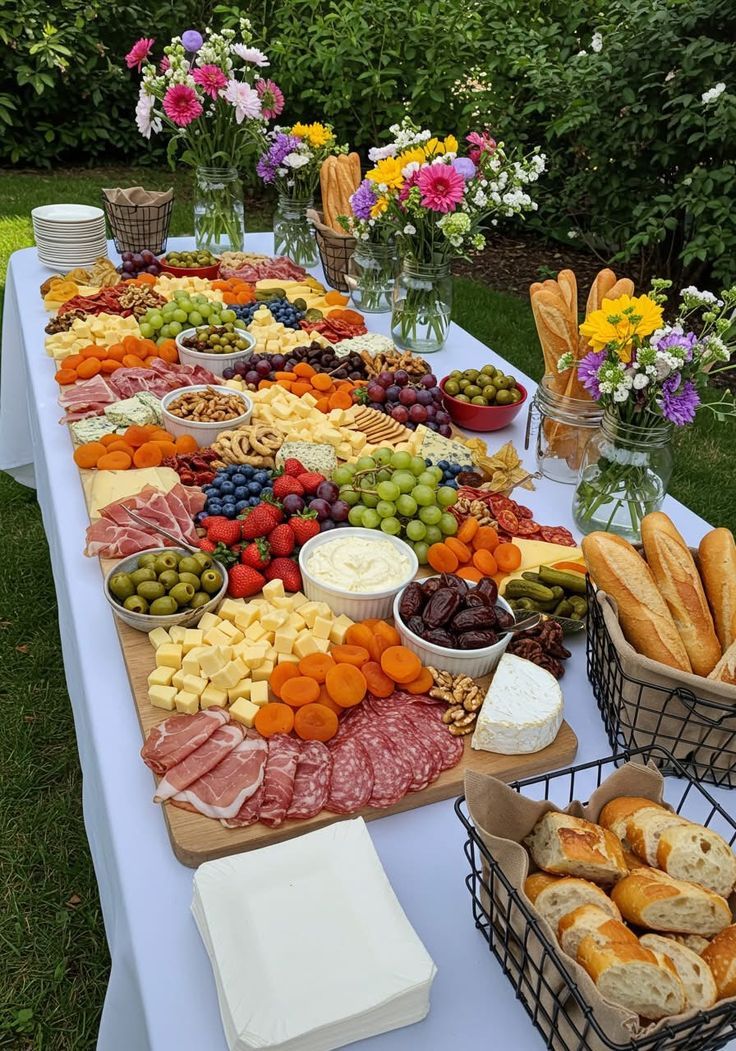
The plated dinner has a fundamental flaw that most hosts discover too late: everything has to be ready at the same time.
The timing, the temperature, the serving order, the plating, it creates a window of about fifteen minutes in which everything must go right, and any slip sends a ripple of stress through the entire evening. A grazing table eliminates that problem entirely.
A grazing table is not a shortcut. It is a genuinely different philosophy of feeding people, one that prioritises abundance, variety, and relaxed eating over formality and precision timing. And it almost always looks more impressive than a plated meal, at a fraction of the stress.
Why This Works for Homebodies
A grazing table can be assembled entirely in advance. There is no cooking window to manage, no dishes to time, no moment where everything has to come together at once. You build it before guests arrive, step away, and it holds beautifully for the duration of the gathering. For the homebody host who wants the visual impact of an impressive spread without the kitchen pressure, this is the most reliable format there is.
How to Pull It Off
- Build around five core components: a protein or cured meat, a cheese or dairy element, a cracker or bread base, fresh fruit, and something pickled or briny such as olives, cornichons, or pickled vegetables. These five elements together create variety, balance, and visual contrast
- Fill the gaps between anchor items with nuts, dried fruit, fresh herbs, and small bunches of grapes. These additions are inexpensive, look abundant, and add colour and texture to the overall spread
- A one-metre board or surface comfortably serves eight to ten people as a generous shared starter or a light standalone meal. Scale the surface size proportionally to your guest count
- Place items in clusters rather than spreading everything evenly. Clusters create visual depth and make the table look more intentional and generous than a flat, evenly distributed layout
The One Thing Most Hosts Miss
Labelling. In any group of more than four or five people, there will almost certainly be guests managing a dietary restriction, an allergy, or a religious food requirement.
Unlabelled food creates quiet anxiety for those guests, they spend the gathering trying to work out what is safe to eat rather than enjoying themselves.
A small card or handwritten label next to each significant item, noting key ingredients and flagging anything that contains nuts, gluten, or animal products, takes five minutes to prepare and makes every single guest feel genuinely considered.
Works Wherever You Are
The grazing table format adapts completely to local ingredients and food culture. In West Africa, the protein component becomes suya, grilled chicken, or fried plantain.
Middle East, it becomes hummus, flatbread, and stuffed vine leaves. In Southeast Asia, rice crackers, satay, and fresh mango work beautifully.
The structure, protein, dairy or dip, carb, fruit, something pickled, is universal. The specific ingredients are entirely yours to define based on what is local, seasonal, and meaningful to your guests.
9. Host a Backyard Cocktail or Mocktail Tasting Night
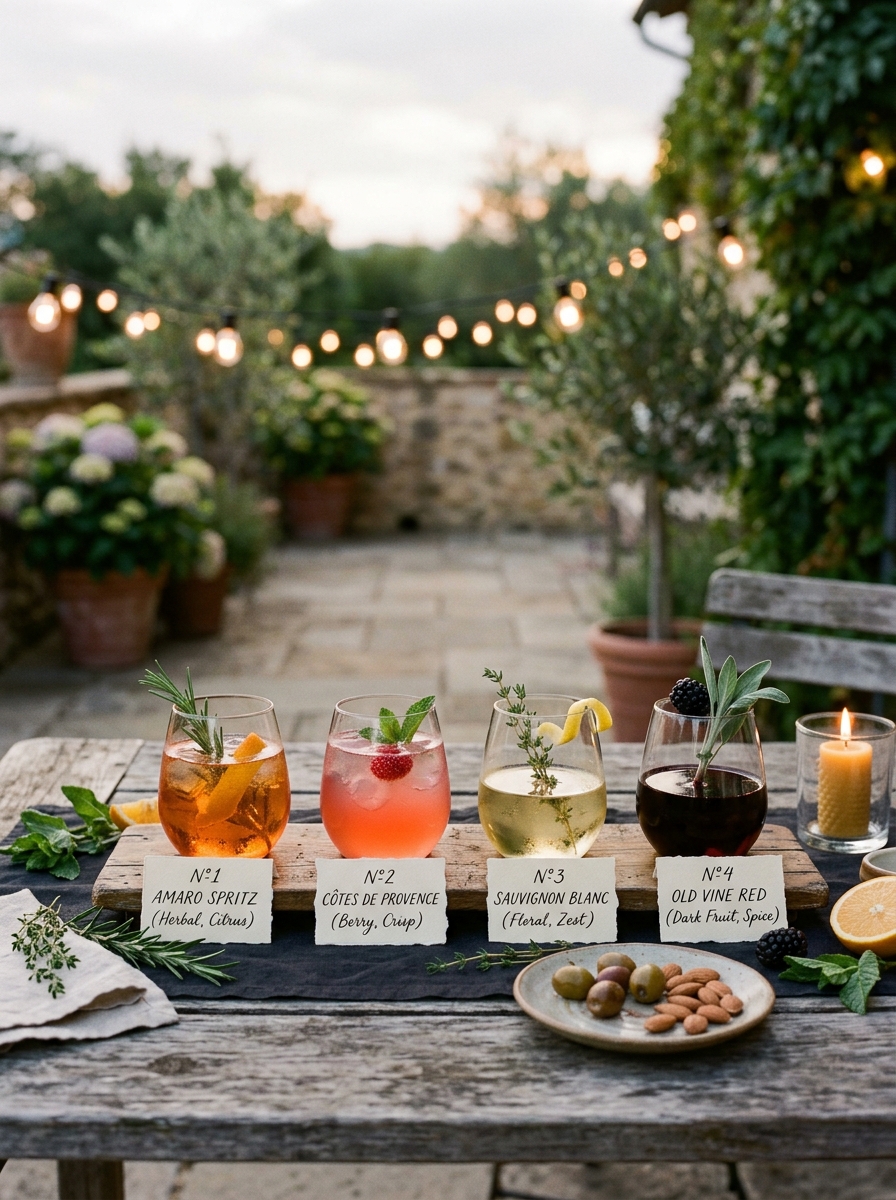
Most gatherings follow the same passive drinking format, drinks are available, people help themselves, and alcohol becomes background rather than experience.
A tasting night flips that entirely. It takes something guests would have done anyway and turns it into an activity, a conversation starter, and a memory, without adding significant cost or complexity to your evening.
For the homebody host looking for outdoor entertaining ideas that feel special without requiring a complete production, a tasting night is one of the most underrated options available. The structure does the heavy lifting. You just need three or four good drinks and a little presentation.
Why This Works for Homebodies
A tasting format gives the evening a built-in agenda without feeling programmed. Guests move through each drink, discuss, compare, and vote, and that gentle structure means you are never responsible for manufacturing conversation or filling silence.
The activity does it for you. As outdoor entertaining ideas go, this one has one of the highest enjoyment-to-effort ratios of anything on this list.
How to Pull It Off
- Prepare three to four drinks built around a loose theme, tropical, citrus-forward, herbal, or local and seasonal ingredients. A theme gives the tasting a coherent story and makes the selection feel curated rather than random
- Serve tasting portions of 60 to 80ml per drink per person. This is enough to taste properly and form an opinion without anyone becoming overwhelmed before the last round
- Give each drink a name and a one-line description written on a small card. It does not need to be elaborate, even a handwritten index card next to each glass adds a layer of intention that guests genuinely respond to
- At the end of the tasting, ask guests to vote for their favourite. A simple show of hands or a written vote creates a natural conclusion to the activity and gives the evening a lighthearted winner
The One Thing Most Hosts Miss
Water and palate cleansers between rounds. Professional tastings, whether wine, spirits, or food, always include a neutral element between samples so that each drink is experienced on its own terms rather than against the residual flavour of the last one.
A small glass of still water and a plain cracker between each tasting round costs almost nothing and immediately elevates the experience from a casual drink session to something that genuinely feels considered and well thought through.
Works Wherever You Are
The mocktail tasting format is one of the most globally relevant outdoor entertaining ideas on this list, and it is growing in popularity worldwide, driven by the sober-curious movement that has taken hold across Europe, North America, Australia, and increasingly across West Africa and Southeast Asia.
A well-crafted hibiscus and ginger mocktail, a tamarind cooler, or a spiced lemonade is as complex, as interesting, and as conversation-worthy as any cocktail. In regions where alcohol is less common socially, the mocktail tasting night is not the alternative, it is the main event.
Relaxing after a busy day feels much easier with the simple projects featured in Cozy Craft Night Ideas for Adults to Relax, Unwind, and Get Creative at Home.
10. Host an Outdoor Board Game Night
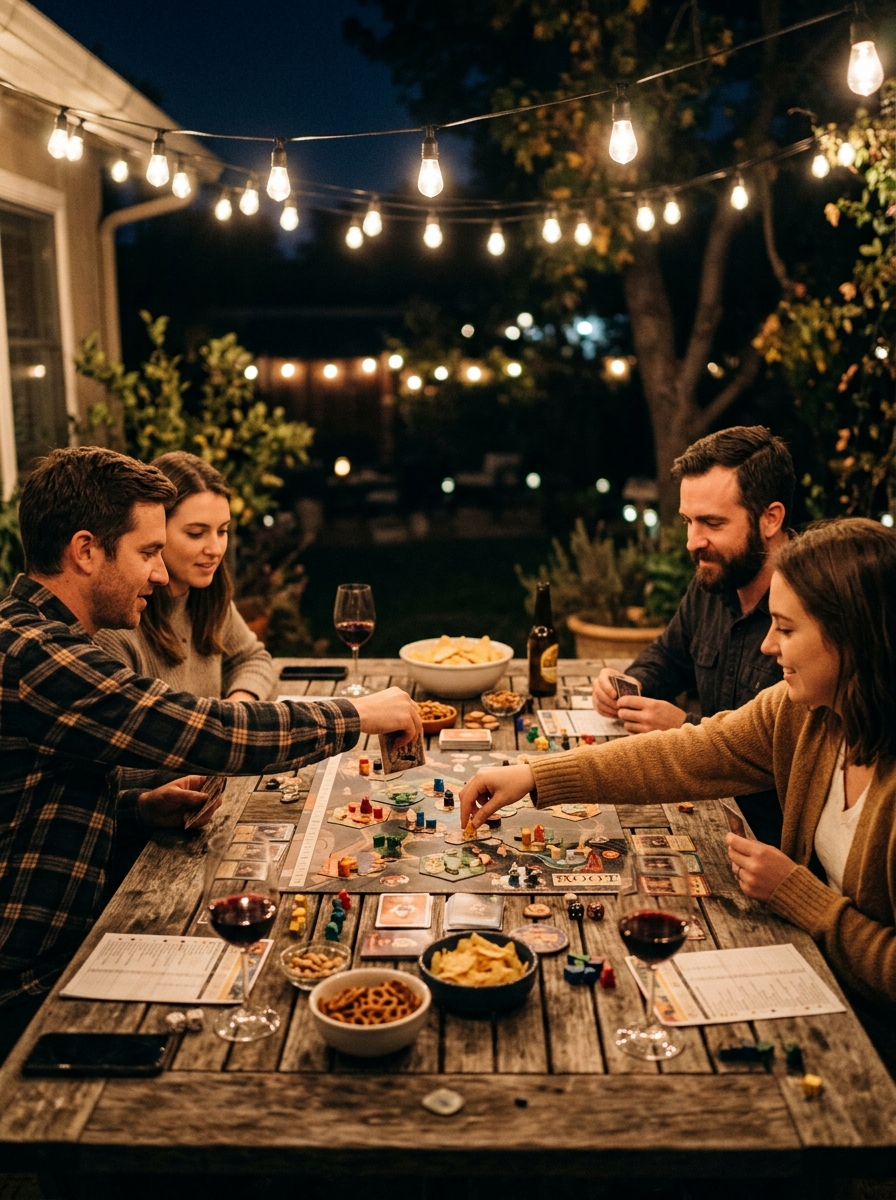
Something has shifted in how people socialise. Screen time has become the default shared activity, streaming a show, scrolling separately, half-present in the same room.
What board games restore, and what makes an outdoor board game night one of the most valuable outdoor entertaining ideas for the homebody host, is genuine face-to-face attention.
Everyone at the table is looking at the same thing, reacting in real time, and fully present in a way that passive screen-based socialising rarely produces.
Taking it outside adds one more layer, the open air, the natural light or evening ambience, and the relaxed setting all lower the social stakes and make the whole experience feel more like play and less like an event.
Why This Works for Homebodies
Board games provide structure without the homebody host having to create it. The game sets the agenda, the rules create the rhythm, and the competition generates the energy, none of which requires anything from you beyond setting the table and choosing the game.
For a host who finds unstructured social time the most draining kind, this is one of the most genuinely restful outdoor entertaining ideas available.
How to Pull It Off
- Choose games designed for four to eight players: Catan, Ticket to Ride, Codenames, and Sequence are all well-tested, widely available, and genuinely enjoyable for mixed groups
- For guests who do not know each other well, or for groups spanning different ages and backgrounds, Codenames and Sequence are the most universally accessible starting points, low complexity, high engagement, no prior experience required
- Lighting matters more than most hosts account for. Set up under string lights, a covered patio light, or a well-positioned outdoor lamp. Playability is non-negotiable, guests cannot enjoy a game they cannot clearly see
- Keep snacks and drinks within reach of every player throughout. The moment someone has to leave the table to refill their drink, the momentum of the game breaks and the gathering loses its rhythm
The One Thing Most Hosts Miss
The game briefing. Most hosts assume guests either know the game already or will pick it up as they go, and both assumptions regularly derail the first twenty minutes of the evening.
Before play begins, take five minutes to walk through the core rules clearly, answer questions, and run one practice round if the game is new to anyone at the table.
A group that understands what they are playing is a group that actually enjoys it. A confused group becomes a frustrated one quickly, and the outdoor entertaining idea that was supposed to bring people together starts to do the opposite.
Works Wherever You Are
Codenames has been translated into over 40 languages and is one of the best-selling party games in the world precisely because it works across cultures, language levels, and age groups with minimal explanation.
Sequence and Jenga carry the same universal accessibility. If you are hosting an international or multicultural group and want one outdoor entertaining idea that truly needs no cultural translation, an outdoor board game night built around these titles is it.
11. Set Up a Backyard Picnic for Friends
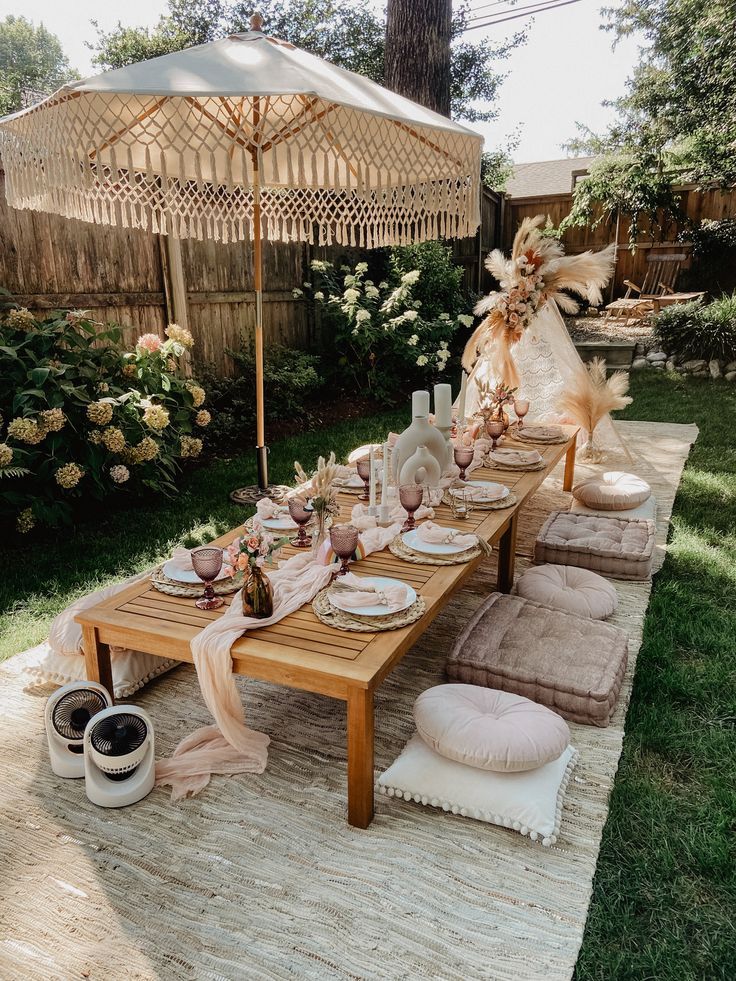
There is a version of hosting that does not require furniture, serving dishes, a dining table, or any of the infrastructure most people associate with having guests over.
It requires a flat surface, a blanket, and food that travels well. The backyard picnic strips hosting back to its most essential form, people gathered together, eating well, in a space that feels easy and unhurried.
For the homebody host, this is one of the most liberating outdoor entertaining ideas on this list. Not because it is lay, but because it is deliberately, intentionally simple. And guests respond to that simplicity with a relaxation that more elaborate gatherings rarely produce.
Why This Works for Homebodies
The picnic format removes almost every logistical pressure associated with hosting. There is no table to set, no serving timing to manage, no formal structure to maintain.
The low seating, the shared containers, and the relaxed format give guests implicit permission to settle in, slow down, and just be present. For a homebody who wants connection without the performance of a full hosting production, this outdoor entertaining idea delivers exactly that.
How to Pull It Off
- Large blankets or weatherproof picnic mats on the grass or any flat outdoor surface are all the infrastructure you need. If you have multiple blankets, arrange them in a cluster rather than in a line, clusters create intimacy, lines create distance
- Pack food in individual portions or easy-share containers with lids. No plating, no serving spoons, no dishes to manage mid-gathering. Food that travels well and eats easily without cutlery, wraps, sandwiches, fruit, cheese, finger foods, is the ideal picnic menu
- A wicker basket or a well-packed cooler bag at the centre of the blanket acts as a natural centrepiece. It signals that this has been thought about and prepared with care, even when the setup itself is beautifully simple
- Time it for the mid to late afternoon window between 3 and 6pm. This catches the best natural light of the day, avoids the peak heat of midday in warmer climates, and creates a natural conclusion as the evening arrives
The One Thing Most Hosts Miss
The ground surface. Most hosts plan the food, the blanket, and the guest list, and completely overlook what they are actually sitting on.
Uneven ground, wet grass, or hard concrete surfaces without adequate cushioning will have guests shifting uncomfortably within twenty minutes regardless of how good the food is. Before the day, check your surface.
Add a foam mat under your blanket if the ground is hard, choose a shaded area if the afternoon sun is strong, and if the grass is damp, have a spare blanket or two ready. Comfort is the entire foundation of this outdoor entertaining idea, protect it.
Works Wherever You Are
The picnic format works in any outdoor space regardless of size or geography. No garden required, a rooftop terrace, a courtyard, a balcony with floor cushions, or even a well-chosen spot in a local park extends this outdoor entertaining idea beyond the backyard entirely.
In warm climates like West Africa, the Caribbean, and South Asia, early evening timing between 5 and 7pm catches the most comfortable temperature of the day. In cooler climates, a midday start makes the most of available warmth. The blanket and the basket travel anywhere.
12. Host a Garden Party
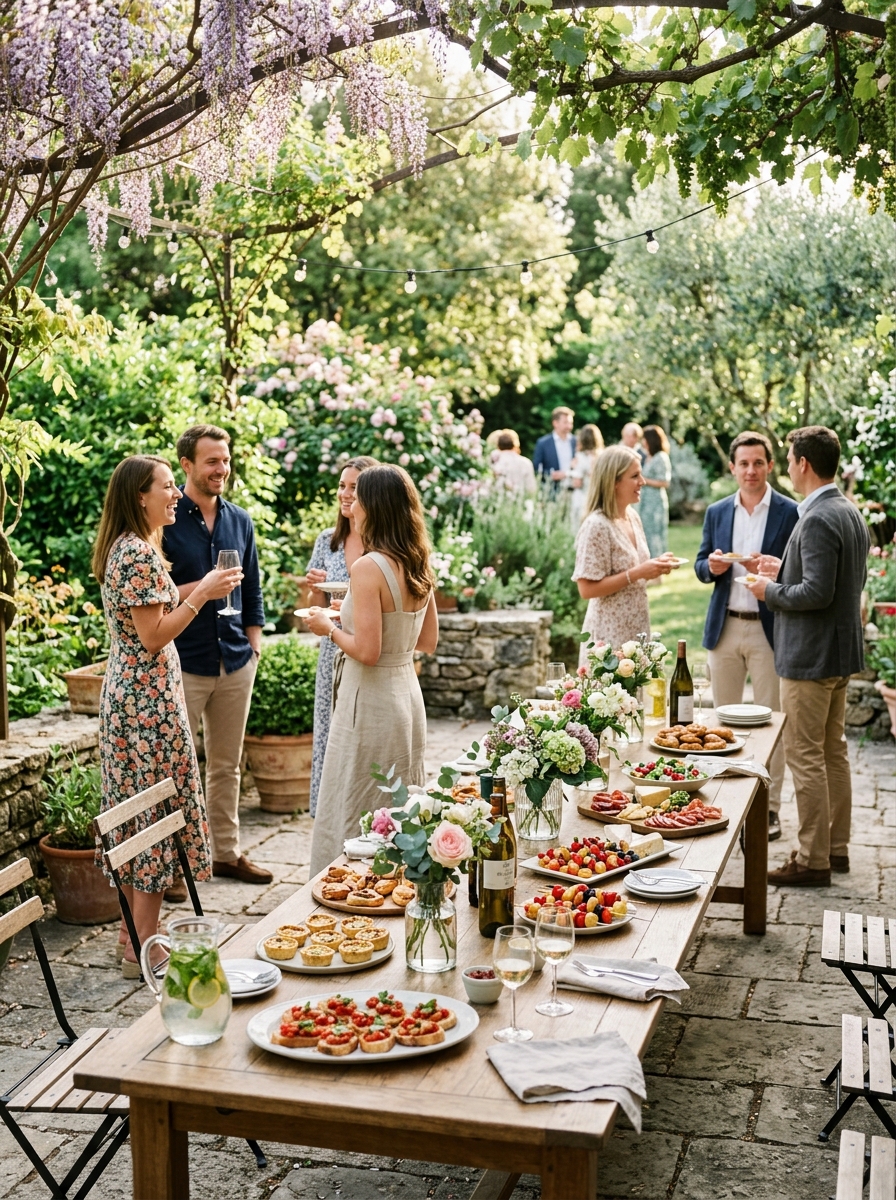
The garden party has a reputation for being a formal, high-maintenance affair ,cucumber sandwiches, strict dress codes, elaborate floral arrangements.
That reputation is largely undeserved and, for most hosts, entirely unhelpful. Strip away the stereotype and what remains is actually one of the most elegant and low-pressure hosting formats available: a daytime gathering, light food, relaxed dress, and a natural end time built in before the evening even begins.
For the homebody host who wants to offer guests something that feels elevated without turning their weekend into a catering operation, the garden party, reimagined on your own terms, is the answer.
Why This Works for Homebodies
Daytime gatherings are fundamentally easier to host than evening ones. The natural light handles your ambience. The food is lighter and simpler to prepare.
And the social expectation of a garden party is inherently time-limited, guests arrive, enjoy themselves, and leave at a civilised hour. No late nights, no lingering, no managing an exit. The format protects your energy by design.
How to Pull It Off
- Build the menu around finger foods and light bites rather than a full meal. Mini sandwiches, skewers, seasonal fruit, small pastries, and bite-sized savoury items are the right scale for this format, guests graze, mingle, and eat at their own pace without the structure of a sit-down meal
- Fresh flowers are the single most impactful decorative element you can add. Even two or three bunches from a local market, arranged loosely in simple vases or jars, elevate the setting significantly. You do not need a florist or an elaborate centrepiece, just something living and colourful that signals care
- Suggest a dress code when you invite guests. “Garden casual” or “smart casual” gives people helpful context and makes the event feel considered without being intimidating. Guests who know what to wear arrive more relaxed and more present
- Protect the time boundaries. A garden party runs for two to three hours, that is the format. Communicate the start and end time clearly in your invitation so guests can plan accordingly and you are not managing an open-ended afternoon
The One Thing Most Hosts Miss
Shade. A garden party is a daytime gathering, which means direct sun is a genuine practical concern that most hosts do not account for until guests are already squinting and overheating.
Before your guests arrive, identify where the shade falls in your outdoor space at the time of your gathering and arrange your primary seating there.
A market umbrella, a shade sail, or even a well-positioned canopy over the main seating area makes the difference between a gathering people want to linger in and one they are quietly trying to escape.
Works Wherever You Are
You do not need an actual garden. A well-kept patio, a rooftop terrace, a balcony with potted plants, or a courtyard with a few carefully placed flowers reads as a garden party setting regardless of whether there is a single blade of grass in sight.
The aesthetic is created by the details, the flowers, the light bites, the dress code, the time of day, not by the presence of a lawn. In tropical climates, an early morning garden party between 9 and 11am catches the coolest, most beautiful part of the day before the heat builds.
13. Host a Backyard BBQ with a Twist
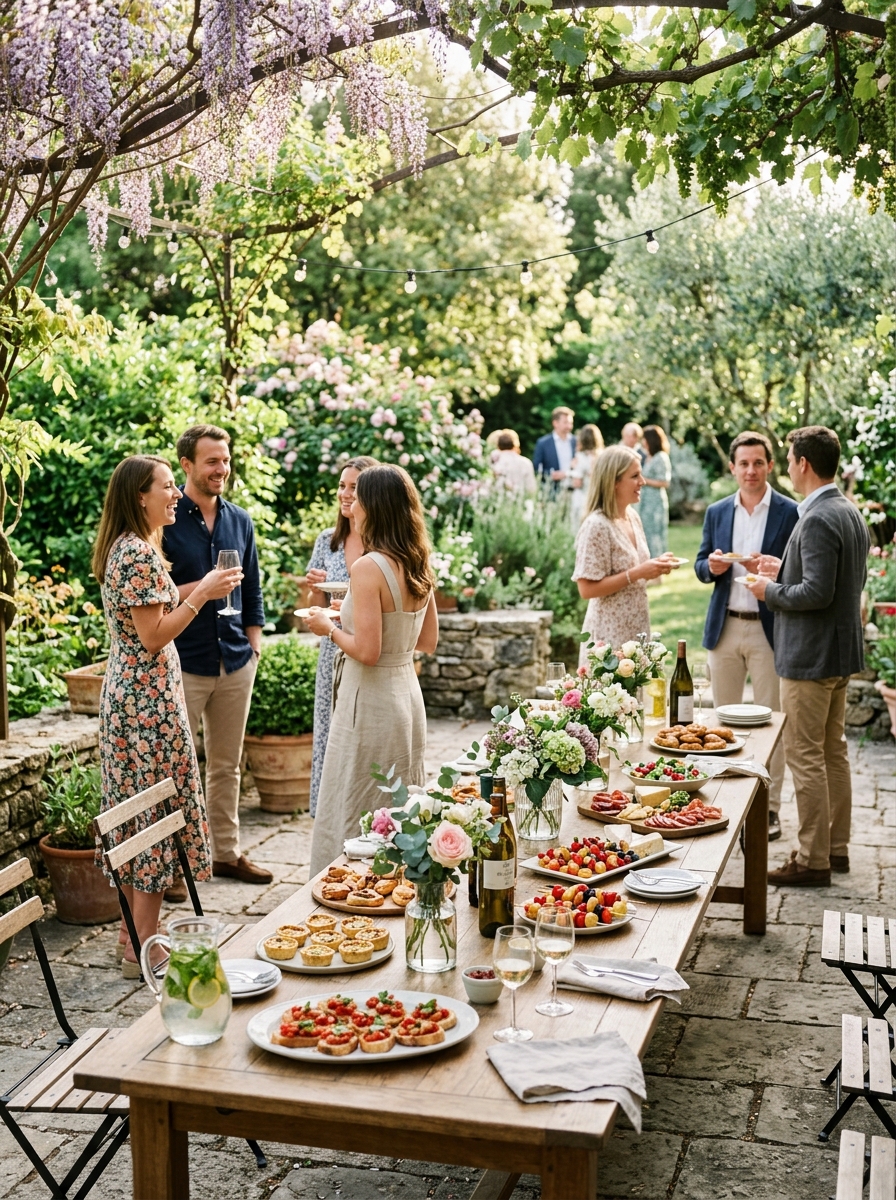
The standard backyard BBQ is one of the most familiar social formats in the world, and familiarity, over time, becomes predictability. Guests know what to expect before they arrive: burgers, sausages, a cooler of drinks, and a few hours of easy conversation. None of that is bad. But none of it is particularly memorable either.
Adding one unexpected element to a BBQ does not complicate the format, it revives it. The grill stays. The relaxed energy stays. What changes is the reason guests are still talking about it three weeks later.
Why This Works for Homebodies
A BBQ with a twist keeps the hosting effort exactly where a standard BBQ sits, manageable, familiar, and largely outdoors, while adding a layer of experience that guests remember.
The homebody host does not have to do more. They just have to do one thing differently. That distinction matters enormously when your hosting energy is a finite resource.
How to Pull It Off
The twist can take several forms, choose the one that fits your crowd:
- The Global BBQ Night, each guest brings a marinated protein from their own cultural background. Brazilian churrasco, Korean bulgogi, Nigerian suya, Jamaican jerk chicken, Moroccan kefta, all grilled together, all shared around the same table. The grill becomes a meeting point for different food traditions and the conversation writes itself
- The Blind Taste Test, multiple marinades and seasonings are prepared in advance, guests taste each grilled item and try to identify the origin, the spice profile, or the key ingredient. It turns eating into an activity without adding complexity to the cooking
- The Build-Your-Own Skewer Station, raw ingredients are laid out and guests assemble their own skewers before they go on the grill. It gives everyone ownership of their food, reduces your prep load, and creates a natural gathering point early in the evening before the grill is even fully hot
The One Thing Most Hosts Miss
Resting time. Most backyard BBQ hosts serve meat directly off the grill, and most backyard BBQ hosts serve meat that is less juicy and less flavourful than it should be as a result.
Resting grilled meat for five to ten minutes before serving allows the internal juices to redistribute through the flesh rather than running out the moment it is cut. It costs nothing, requires no equipment, and is the single most impactful technique improvement available to any home grill cook regardless of experience level.
Works Wherever You Are
The global BBQ format is particularly powerful in multicultural cities and communities, Lagos, London, Toronto, Sydney, Dubai, where guests genuinely bring different food traditions to the table.
Suya spice, the West African peanut-based BBQ seasoning, has been gaining serious attention in international food media over the past several years and is a genuine conversation starter for guests encountering it for the first time. If you are hosting a diverse crowd and want one ingredient that bridges food cultures effortlessly, suya spice is it.
14. Host an Outdoor Book Club Session
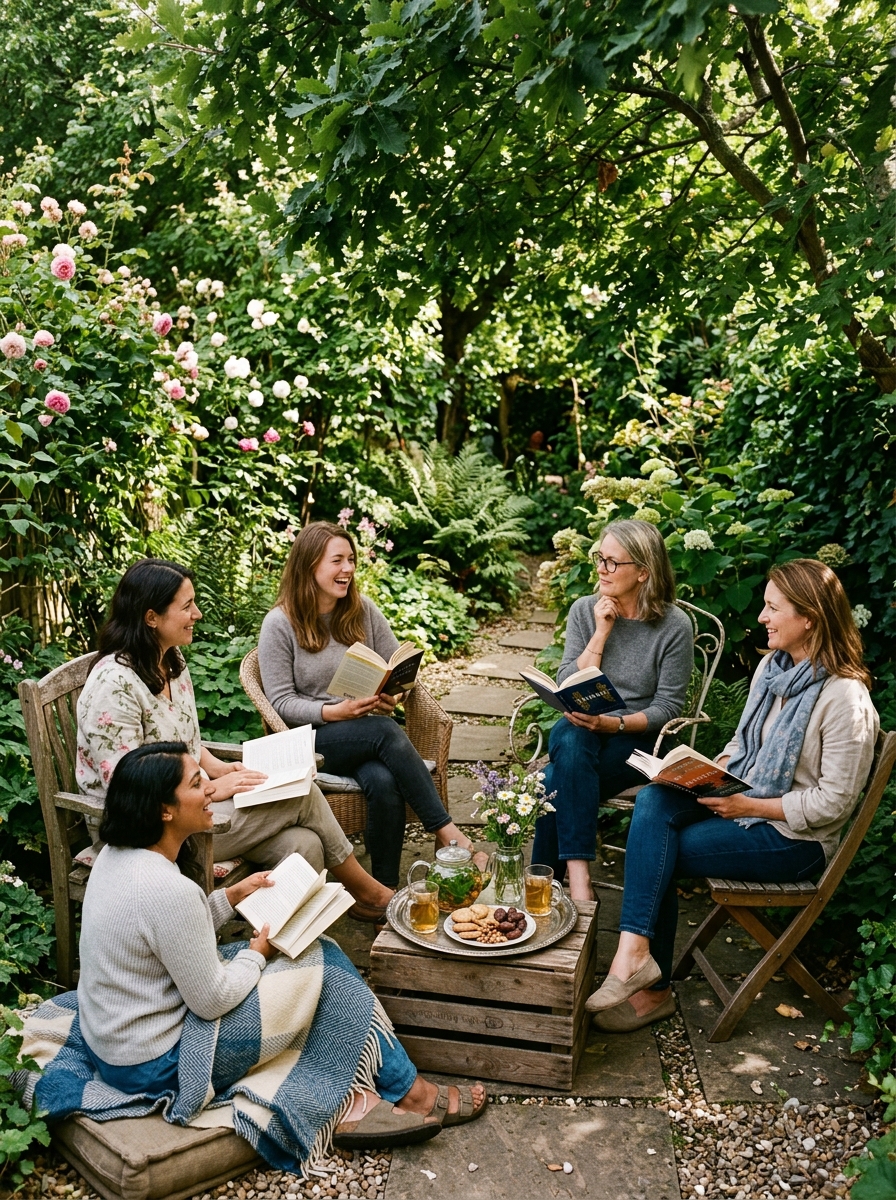
Book clubs held indoors have a tendency to drift toward the formal, a living room setup that resembles a meeting more than a conversation, a host who feels pressure to facilitate rather than participate, and an atmosphere that can make literary discussion feel more like a seminar than an evening among friends.
Taking the book club outside changes the dynamic immediately. The open air, the informal seating, and the natural environment lower the conversational stakes in a way four walls rarely do. Discussion becomes looser, more honest, and more enjoyable, which is the entire point of a book club that anyone actually wants to attend.
Why This Works for Homebodies
An outdoor book club is one of the most naturally self-contained hosting formats available. The book provides the agenda. The discussion questions provide the structure.
The outdoor setting provides the atmosphere. Your role as host is to create the space and show up as a participant, not a facilitator, not a performer, not a one-person entertainment programme. For the homebody who values depth of conversation over breadth of social activity, this is the ideal gathering.
How to Pull It Off
- Choose the book four to six weeks in advance and share it with guests as soon as the date is set. Six weeks gives even the slowest readers enough time to finish without pressure, and enough time for the ideas to settle before discussion
- Prepare three to five discussion questions in advance and share them with guests a few days before the gathering. This is not about controlling the conversation, it is about giving people who process ideas slowly the chance to arrive prepared and confident
- Pair your food and drink to the book’s setting or themes. Reading a novel set in Japan? Serve green tea and rice crackers. Set in the American South? Sweet tea and cornbread. Set in West Africa? Chin chin, puff puff, and zobo. This detail costs almost nothing and adds a layer of immersion that guests genuinely appreciate
- Introduce a soft no-phone agreement for the discussion portion of the evening. Frame it as a suggestion rather than a rule, most guests will honour it willingly when the conversation is good enough to hold their attention
The One Thing Most Hosts Miss
The distinction between discussion and debate. Book clubs occasionally tip into argumentative territory, particularly around books that touch on politics, identity, or morality, and a host who has not thought about how to navigate that shift can find the evening becoming tense in ways that are difficult to recover from.
Before the gathering, decide privately on one or two grounding phrases you can use to redirect the conversation if it becomes combative rather than exploratory. Something as simple as “that’s a strong point, does anyone see it differently?” is enough to open the space back up without anyone feeling shut down.
Works Wherever You Are
Outdoor book clubs work best in moderate temperatures, spring and autumn in temperate climates are ideal. In hotter regions like West Africa, the Gulf states, and South Asia, an early evening start between 6 and 8pm catches the most comfortable part of the day after the heat has begun to ease.
In cooler climates, a midday or early afternoon session makes the most of available warmth. The format itself is entirely climate-neutral, only the timing needs adjusting based on where you are hosting.
15. Host a Stargazing Night
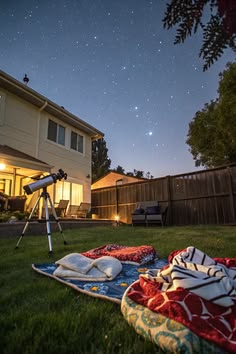
In a world of constant noise, overstimulation, and social performance, there is something quietly radical about a gathering where the entire point is to slow down, look up, and say very little.
A stargazing night is one of those outdoor entertaining ideas that sounds simple on paper and delivers something genuinely profound in practice, because it gives people permission to be present without having to perform.
For the homebody host, this is perhaps the most personally aligned outdoor entertaining idea on this entire list. Quiet. Unhurried. Beautiful. And almost entirely effortless to set up.
Why This Works for Homebodies
Most outdoor entertaining ideas require the host to generate and sustain energy throughout the evening. A stargazing night requires the opposite. The sky is the centrepiece. The silence is the atmosphere. The stillness is the experience.
Your job as host is simply to create the conditions, the seating, the darkness, the warmth, and then disappear into the evening alongside your guests. For an introvert who finds hosting exhausting, this outdoor entertaining idea is genuinely restorative rather than draining.
How to Pull It Off
- Download Sky Map on Android or Star Walk on iOS before the evening begins. Both are free, both are accurate, and both allow guests to point their phones at any part of the sky and identify exactly what they are looking at in real time. This single addition transforms a passive experience into an interactive one
- Turn off every outdoor light at least twenty minutes before you want guests to start looking at the sky properly. Human eyes take approximately fifteen to twenty minutes to fully adjust to darkness, a fact most hosts do not account for, and one that makes an enormous difference to what is actually visible overhead
- Keep seating flat and reclined wherever possible. Blankets on the ground, camping mats, reclining garden chairs, or hammocks, anything that allows guests to look upward comfortably for an extended period without straining their necks
- Prepare hot drinks for the latter part of the evening. Tea, coffee, and hot chocolate served as the temperature drops extends the gathering naturally and gives guests something warm to hold as the night deepens
The One Thing Most Hosts Miss
Light pollution awareness. Many hosts plan a stargazing night without considering how much artificial light surrounds their outdoor space, and then wonder why the sky looks underwhelming. If you are in a dense urban area, the full Milky Way will not be visible. But the moon, Venus, Jupiter, Mars, and the brightest stars remain clearly visible even in heavily light-polluted cities.
Use the Sky Map app to identify what will actually be overhead on your specific date and build the experience around what is genuinely there rather than what you hope might be. Honest expectations create better experiences than oversold ones.
Works Wherever You Are
A stargazing night is one of those outdoor entertaining ideas that requires nothing but open sky,which means it works on a rooftop in Lagos, a garden in London, a balcony in Manila, or a courtyard in Riyadh.
The experience scales to whatever sky is available. In regions close to the equator, the southern sky offers constellation views that are entirely invisible from northern latitudes, Scorpius, the Southern Cross, and Centaurus are spectacular from West Africa and Southeast Asia in ways that northern hemisphere guests have genuinely never seen. That geographical uniqueness is itself a hosting asset worth leaning into.
16. Host an Outdoor Paint and Sip
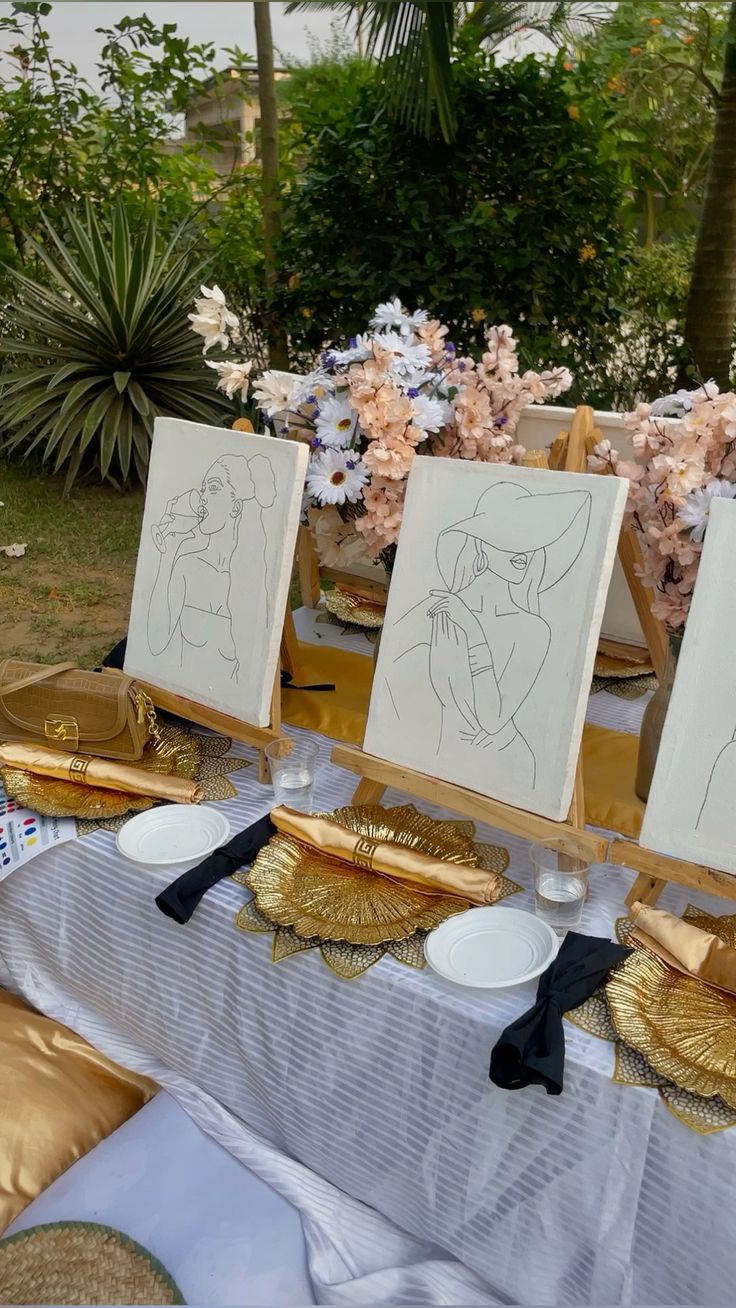
Every gathering needs something to do, not because conversation is insufficient, but because an activity gives people who do not yet know each other well a reason to be in the same space without the pressure of sustained eye contact and small talk.
Of all the outdoor entertaining ideas built around a shared activity, paint and sip is one of the most reliably successful, because it asks nothing of your guests beyond showing up and being willing to try.
Nobody needs to be able to paint. That is entirely the point.
Why This Works for Homebodies
Paint and sip is one of those outdoor entertaining ideas that removes the hosting burden almost completely once it is set up. Every guest is occupied with their own canvas for the majority of the evening.
Conversation happens naturally and in parallel, not as the primary activity, but alongside one. For a homebody host who finds the pressure of sustaining group conversation draining, having a shared activity running in the background changes the entire energy of the gathering.
How to Pull It Off
- Choose one simple subject for everyone to paint together. A sunset, a vase of flowers, a wine glass, a simple landscape, something forgiving enough that a complete non-artist can produce something they are genuinely pleased with. The goal is not technical achievement. The goal is a finished piece that makes every guest feel capable and proud
- Your supply list is straightforward: small canvases or sheets of thick watercolour paper, basic acrylic paints in five to six colours, a selection of brush sizes, a water cup per person, and a generous pile of paper towels. All of this is available in any art supply shop or large general retailer for between $5 and $10 per person in materials
- Demonstrate each step of the painting slowly and clearly before guests attempt it themselves. Work through the background first, then the mid-ground, then the foreground detail, the same sequence a proper art class would follow. Guests who understand what comes next paint with more confidence and enjoy the process far more
- Keep drinks flowing and accessible throughout. The looseness that comes from a relaxed drink alongside a creative activity is not incidental, it is structural to why paint and sip works as well as it does
The One Thing Most Hosts Miss
The drying and display moment. Most paint and sip hosts end the evening when the painting ends, and miss the single most enjoyable moment of the entire gathering.
Once every guest has finished, line all the canvases up together and look at them as a collection. Every painting will be different. Some will be technically accomplished.
Some will be gloriously chaotic. All of them will be funny, warm, and human, and that moment of collective display, where everyone sees what everyone else created, consistently produces the most genuine laughter and connection of the entire evening. Do not skip it.
Works Wherever You Are
Paint and sip is a $1.5 billion global industry according to Allied Market Research, and it has reached that scale precisely because it works everywhere, for everyone, regardless of artistic background or cultural context.
The backyard version of this outdoor entertaining idea costs a fraction of what a commercial paint and sip venue charges, delivers the same experience, and adds the comfort and intimacy of a familiar space.
In warm climates, set up in the shade or in the early evening to protect both your guests and their wet canvases from direct sunlight, which dries acrylic paint faster than most beginners expect.
Stylish decorating doesn’t have to come with a high price tag, and How to Decorate Your Home When You’re Broke But Have Good Taste proves that beautiful spaces can be created on a budget.
17. Host a Cultural Food Night
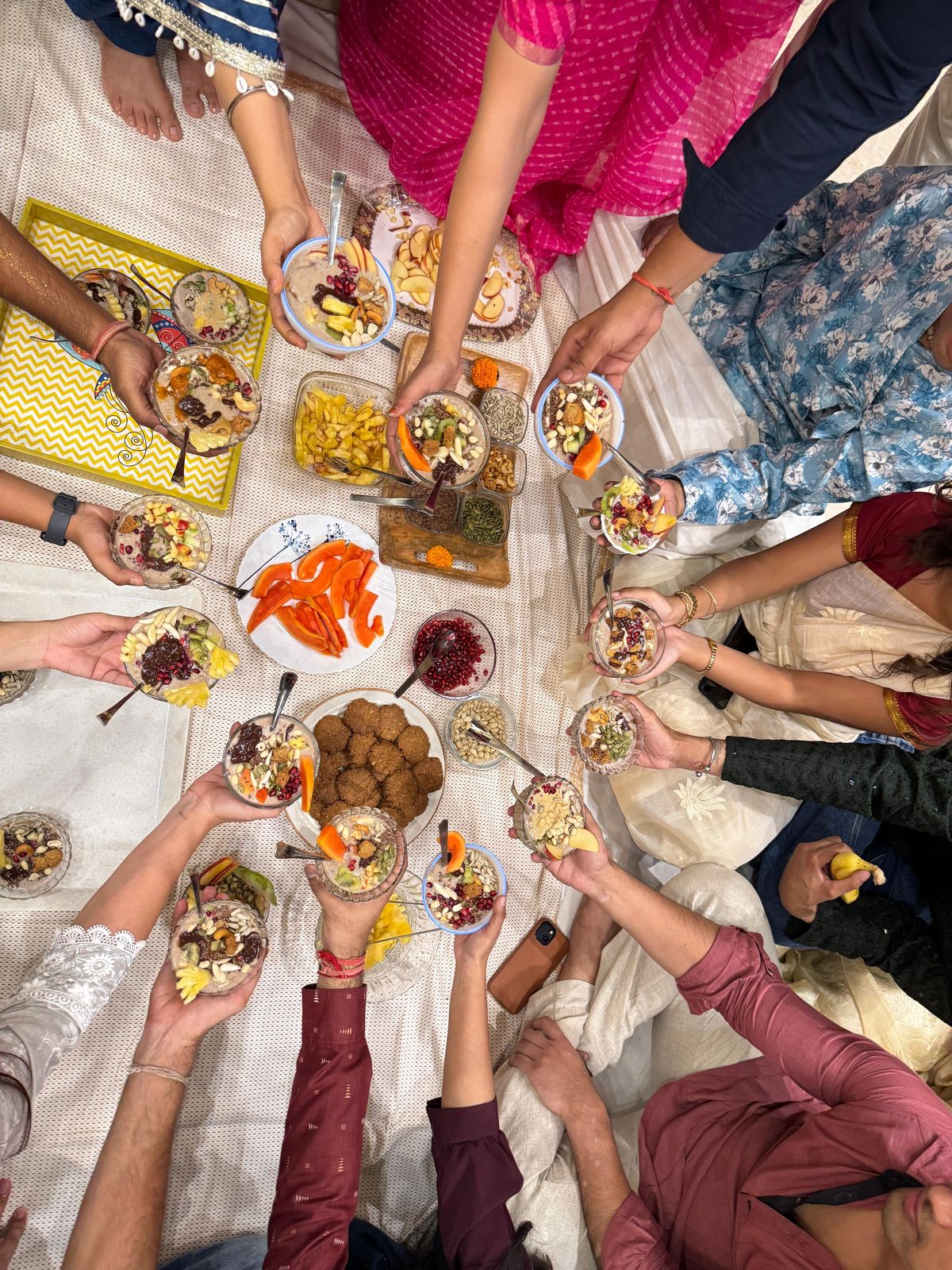
Photo credit: @ Erika
Food is one of the most direct routes into understanding a culture, more immediate than language, more accessible than history, and more personal than any documentary.
A cultural food night takes that truth and builds an entire gathering around it: one country or region, explored through its dishes, its flavours, its stories, and its music, over the course of a single evening.
For the homebody host who wants to offer guests something genuinely educational and memorable, one of those outdoor entertaining ideas that people bring up in conversation months later, this is it.
Why This Works for Homebodies
A cultural food night has built-in structure that carries the entire evening without requiring the host to perform. The cuisine provides the theme. The dishes provide the conversation.
The music provides the atmosphere. Your role is curator, not entertainer, and for a homebody host, that distinction is everything. You have done your research, made your selections, and created the conditions. The evening unfolds from there largely on its own.
How to Pull It Off
- Choose one specific country or region per gathering rather than a broad continental theme. “West African food night” is interesting. “A Nigerian food night exploring Yoruba cuisine” is a genuinely immersive experience. Specificity creates depth, and depth is what makes this outdoor entertaining idea stand out from a standard dinner party
- Research three to four dishes from that cuisine thoroughly before the gathering. Cook one yourself, ideally a dish that is central to the culture rather than its most internationally recognisable export. Assign one or two dishes to guests who are comfortable cooking, and source the remainder from a local restaurant or caterer that specialises in that cuisine if needed
- Create a simple one-page food passport for each dish, the name in the original language, a brief origin story, the key ingredients, and one genuinely interesting cultural fact. Print or handwrite these and place them next to each dish on the table. Guests read them as they eat and the information becomes part of the conversation naturally
- Build a playlist from that country or region and have it running from the moment guests arrive. Music establishes cultural context faster than any other sensory element, and it does so without requiring anyone to pay attention to it deliberately
The One Thing Most Hosts Miss
The sourcing of authentic ingredients. Many hosts planning a cultural food night default to approximate versions of dishes using whatever is available in a standard supermarket, and the result, while edible, lacks the depth and authenticity that makes the evening genuinely educational.
Before the gathering, identify whether your city has a specialist food market, an ethnic grocery store, or an online supplier that stocks ingredients from the cuisine you are exploring.
Authentic palm oil, proper suya spice, real jerk seasoning, genuine miso paste, or fresh pandan leaves make a difference that guests can taste, and tasting the difference is the entire point of this outdoor entertaining idea.
Works Wherever You Are
A cultural food night is one of the most globally scalable outdoor entertaining ideas on this list because it deliberately celebrates the world beyond wherever you are hosting.
In a multicultural city, it validates the backgrounds of guests who rarely see their own cuisine treated as worthy of this kind of attention. In a more homogeneous community, it opens a genuine window into a world that most guests have never directly encountered.
Either way, the educational value is real, the experience is memorable, and the conversation it generates, about food, travel, identity, and culture, is some of the richest that any gathering can produce.
18. Host an Outdoor Families and Kids Hangout
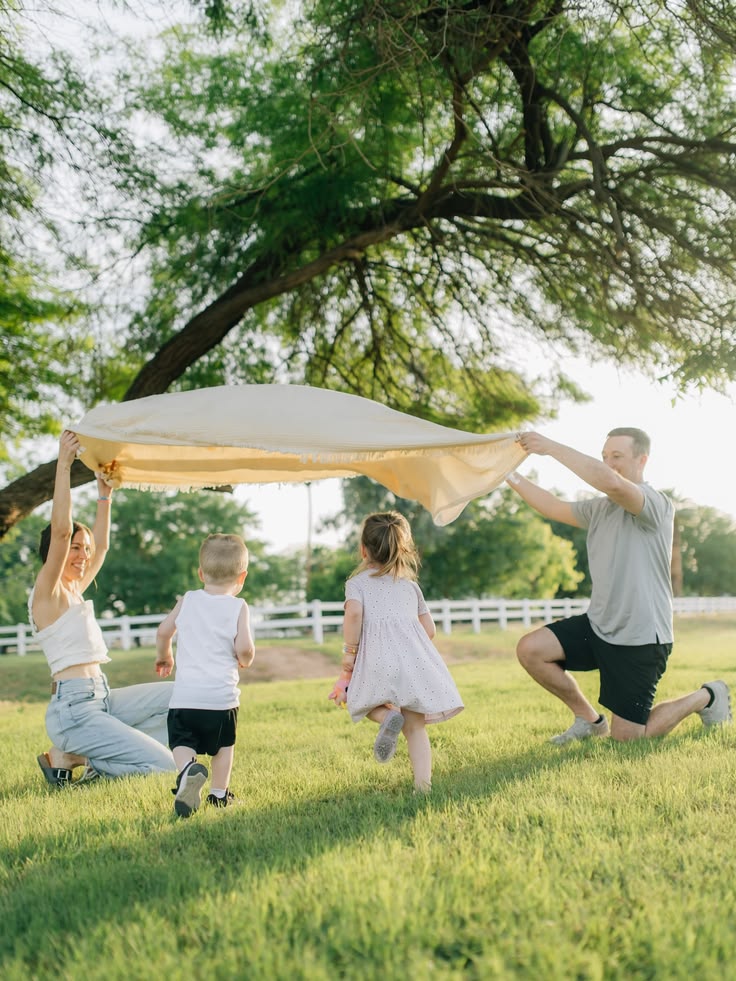
There is an unspoken social cost that comes with being a parent, the gradual withdrawal from gatherings that were not designed with children in mind.
The mental calculation happens quietly and consistently: is there somewhere for the kids to be? Will they be in the way? Will I spend the entire evening managing them instead of actually enjoying myself? For many parents, the answer to that calculation is simply not to come.
One gathering designed explicitly for families removes that barrier entirely, not just for one evening, but for the friendship itself. Parents who feel genuinely included, children and all, show up differently.
They stay longer, relax more, and connect more deeply than they ever do at adult-only events where part of their mind is always elsewhere.
Why This Works for Homebodies
A families and kids hangout works particularly well for the homebody host because it comes with its own natural structure and a built-in, non-negotiable end time.
Children have bedtime routines. Parents respect that boundary without needing to be asked. The gathering concludes cleanly, predictably, and at a civilised hour, which is everything a homebody host needs to protect their own energy and still feel like the evening was a genuine success.
How to Pull It Off
- Designate a clear, visible kids’ zone before guests arrive. It does not need to be elaborate, a mat or blanket on the ground, a few outdoor toys, sidewalk chalk, a bubble machine, and some simple craft supplies is enough to keep children occupied and happy for hours. The key is that the zone is defined and obvious from the moment families walk in, so children know immediately where they belong and parents can relax immediately rather than spending the first twenty minutes settling everyone in
- Position adult seating close enough to the kids’ zone to supervise comfortably but far enough away to allow genuine adult conversation. The spatial relationship between the two areas is the most important logistical decision in this entire gathering, get it right and both groups thrive independently. Get it wrong and neither group fully relaxes
- Plan food that works across both age groups without requiring two separate menus. Skewers, finger foods, fresh fruit, mini sandwiches, and simple dips cover every appetite from toddler to adult without anyone feeling like an afterthought. Juice boxes alongside adult drinks signals that children were considered in the planning, not accommodated as an afterthought
- Set a clear end time of 6 to 7pm and include it in your invitation. This respects children’s bedtime routines, gives parents a guilt-free exit, and gives you a protected evening after the gathering concludes
The One Thing Most Hosts Miss
The transition moment between kids’ activity and collective wind-down. Most family gatherings end abruptly, children hit their limit, parents scramble to gather belongings, and the evening concludes in a flurry of coats and car keys rather than a proper farewell. Building a gentle transition into the last thirty minutes of the gathering smooths this considerably.
A simple shared dessert that brings both children and adults to the same table, a final group game that everyone can participate in, or even just a deliberate shift in music tempo signals that the evening is winding down in a way that feels intentional rather than chaotic.
Works Wherever You Are
The families and kids hangout format is one of the most culturally universal gathering types that exists, because children are universal, and the relief parents feel when their children are genuinely welcomed and accommodated is the same in Lagos as it is in London, Manila, or Toronto.
In cultures where multi-generational socialising is the default, much of West Africa, South Asia, the Middle East, and Latin America, this gathering format aligns naturally with existing social values rather than introducing something new.
And in more age-segregated social cultures, it offers a genuinely refreshing alternative to the standard adults-only gathering that most parents have quietly learned to dread.
19. The Low-Key “Come As You Are” Backyard Hang
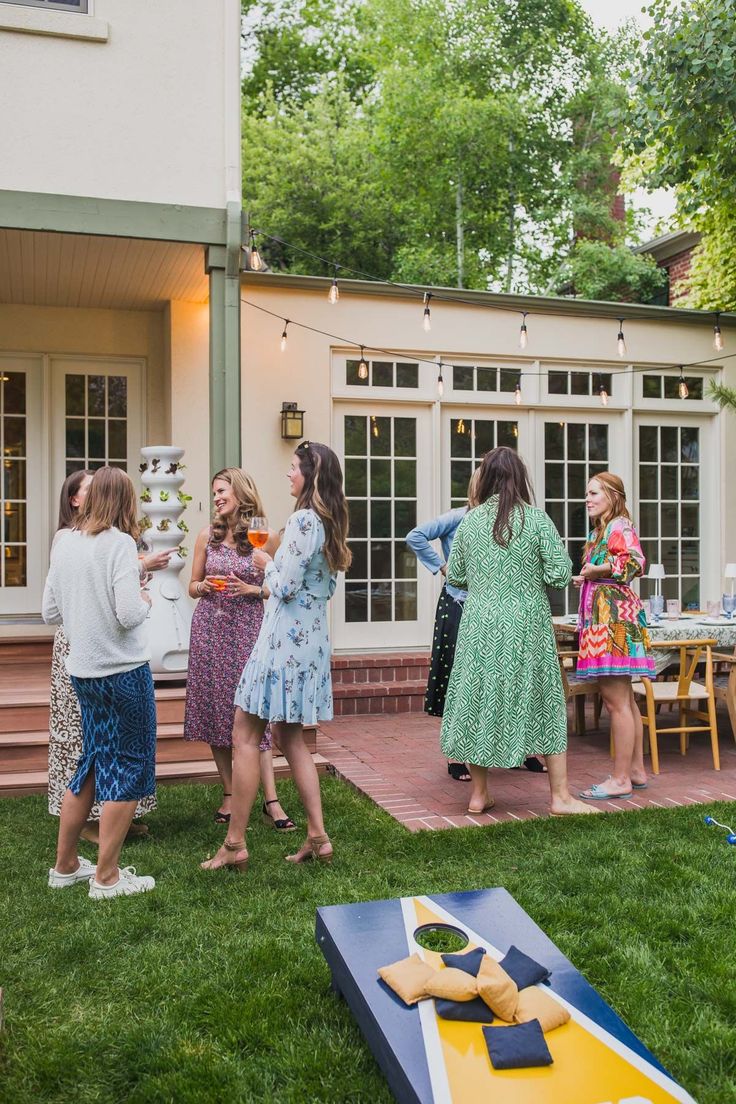
Every idea on this list has involved some degree of planning, a theme, a format, a structure, a purpose. This one has none of that. And that is precisely the point.
The “come as you are” backyard hang is not a lesser version of the other ideas on this list. It is a different philosophy of hosting entirely, one rooted in the belief that the most important ingredient in any gathering is not the food, the activity, or the aesthetic.
It is the people. And sometimes the most honest, most generous thing you can do as a host is strip everything back and let the people be enough.
For the homebody host who has been putting off hosting because it feels like too much, this is where you start.
Why This Works for Homebodies
The greatest barrier between most homebodies and hosting is not a lack of desire.
It is the weight of perceived expectation, the feeling that a gathering must be worthy of the effort it asks of guests, which means it must be planned, themed, decorated, and catered to a standard that justifies everyone’s time.
That belief, more than any practical obstacle, is what keeps homebodies from hosting as often as they would genuinely like to.
The “come as you are” hang dismantles that belief entirely. It says: the gathering does not need to earn its existence. Your people just need to be in the same space. That is enough. That has always been enough.
How to Pull It Off
- A cooler of drinks, a selection of snacks, comfortable seating, and an open invitation. That is the complete infrastructure of this gathering, nothing more is required and nothing more should be added
- No theme, no dress code, no elaborate food, no organised activity. The absence of structure is not an oversight, it is the entire design. Guests arrive knowing they are not being asked to perform, participate, or impress anyone, and that knowledge produces a quality of relaxation that more structured gatherings rarely achieve
- Works for three people or twelve people with exactly the same effort. The gathering scales to whoever shows up without requiring any adjustment from you
- Send the invitation casually and honestly. “Nothing fancy, just come” is a complete and sufficient invitation. Guests who receive that message feel trusted rather than managed, and they arrive in a completely different state of mind than guests who feel they are attending an event
The One Thing Most Hosts Miss
The frequency. A single elaborate gathering once every few months is how most people approach hosting, and it is far less valuable to the relationships it is meant to serve than a simple, low-key hang every few weeks. Research on social connection consistently shows that frequency of contact matters more than the quality of any individual interaction.
Showing up regularly for your people, with nothing but good company, a cooler of drinks, and an open backyard, builds stronger, more resilient friendships than any perfectly curated dinner party ever could. The “come as you are” hang is not the backup plan when you do not have time to host properly. It is one of the most powerful hosting tools available to you, and it works best when it becomes a habit rather than an occasion.
Works Wherever You Are
This gathering needs nothing that is not already in your outdoor space. No specialist equipment, no imported ingredients, no elaborate setup. A chair, a drink, and a friend, that combination works in every country, every climate, every culture, and every budget.
In communities where spontaneous, drop-in socialising is already the cultural norm, much of West Africa, the Caribbean, Southern Europe, and Latin America, this gathering format simply formalises something that good neighbours and close friends have always done naturally.
You are not inventing a new way to host. You are coming home to the oldest one.
Vintage charm and handmade character come together beautifully in Grandmacore DIY Projects That Make Your Home Look Like It Has a 100-Year Story, offering inspiration for a warm and timeless home.
Conclusion
You do not have to be an extrovert to be a great host, also, you do not need a perfectly landscaped garden, an elaborate menu, or the energy to entertain a room full of people for hours on end. You need a space you know well, people you genuinely care about, and the willingness to pick one idea and begin.
Your gatherings are not events, they are experiences. And the people who leave them carry something that no restaurant meal or crowded bar ever quite provides: the feeling of having been genuinely welcomed into someone’s world.
So, pick one idea from this list. Start smaller than you think you need to. And ask yourself the question that every great gathering begins with, not “what do I need to prepare?” but “who do I want around me?”