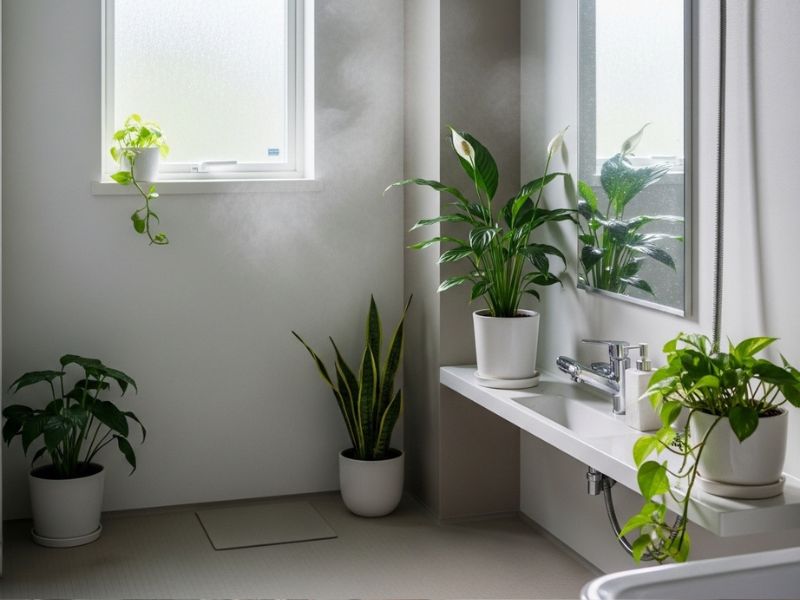
Looking for natural ways to handle bathroom dampness? Bathroom plants for humidity and low light survive low-light conditions and help improve mold-prone spaces.
If your bathroom often feels damp after showers, you’re not imagining it. Bathrooms naturally trap steam, and when that warm moisture hits cooler surfaces like tiles, mirrors, and walls, it turns into condensation.
Over time, that constant dampness creates the kind of environment where mold tends to develop.
Because of this, many people look for quick natural fixes, one of the most popular ideas being bathroom plants. And while it’s easy to assume plants can “solve” mold problems, that’s not entirely accurate.
The truth is, plants do not remove mold or prevent it from forming. What they can do, however, is play a small supporting role.
Certain plants thrive in humid conditions and can help make a bathroom feel less stagnant by slightly balancing moisture in their immediate surroundings and improving overall air freshness.
So instead of thinking of plants as a solution to mold, it’s more realistic to see them as part of a healthier bathroom environment, especially when combined with proper ventilation and basic moisture control habits.
In this guide, you’ll discover which bathroom plants actually thrive in humid, low-light spaces, and how they can be used realistically to support a fresher, less damp environment.
If your bathroom always feels damp after showers, plants won’t replace ventilation, but they can make the space feel less stagnant, more natural, and more balanced over time.
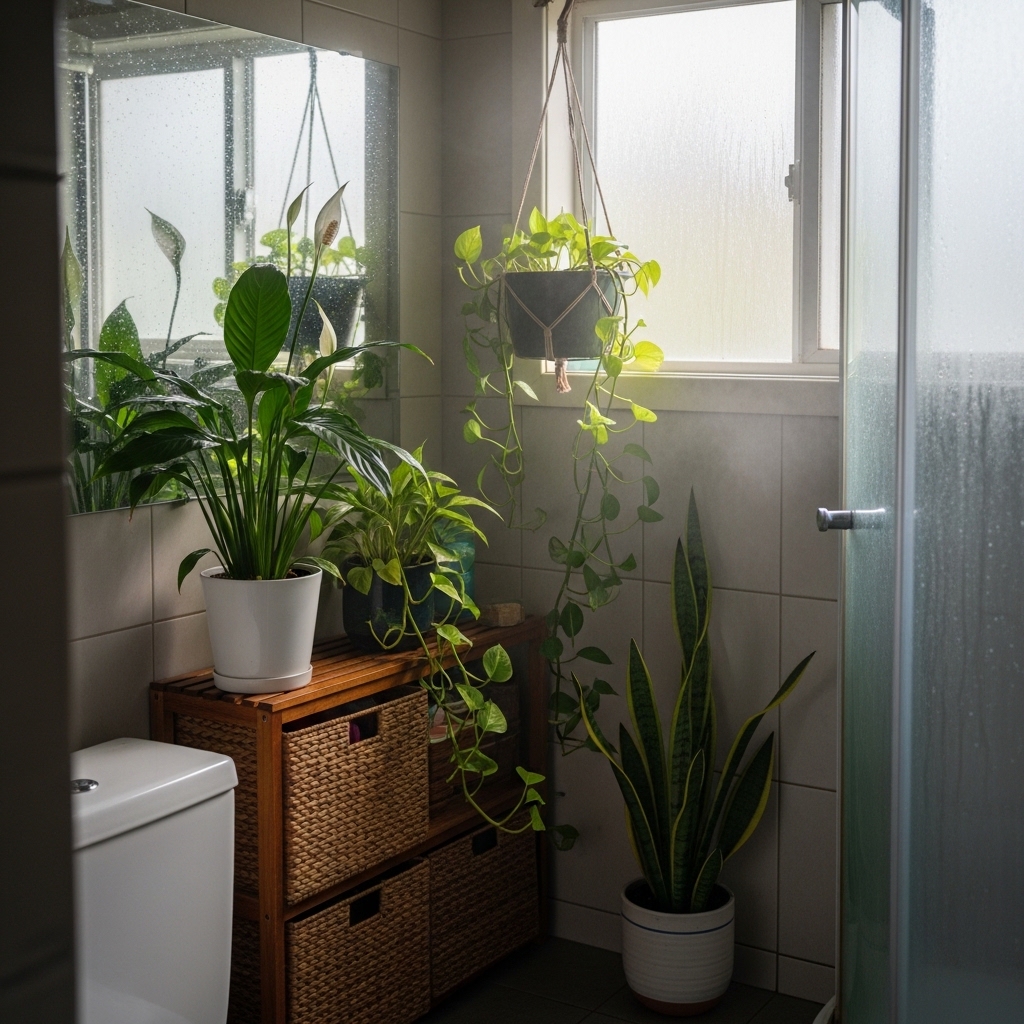
Bathroom Plants For Humidity And Low Light
2. Boston Fern
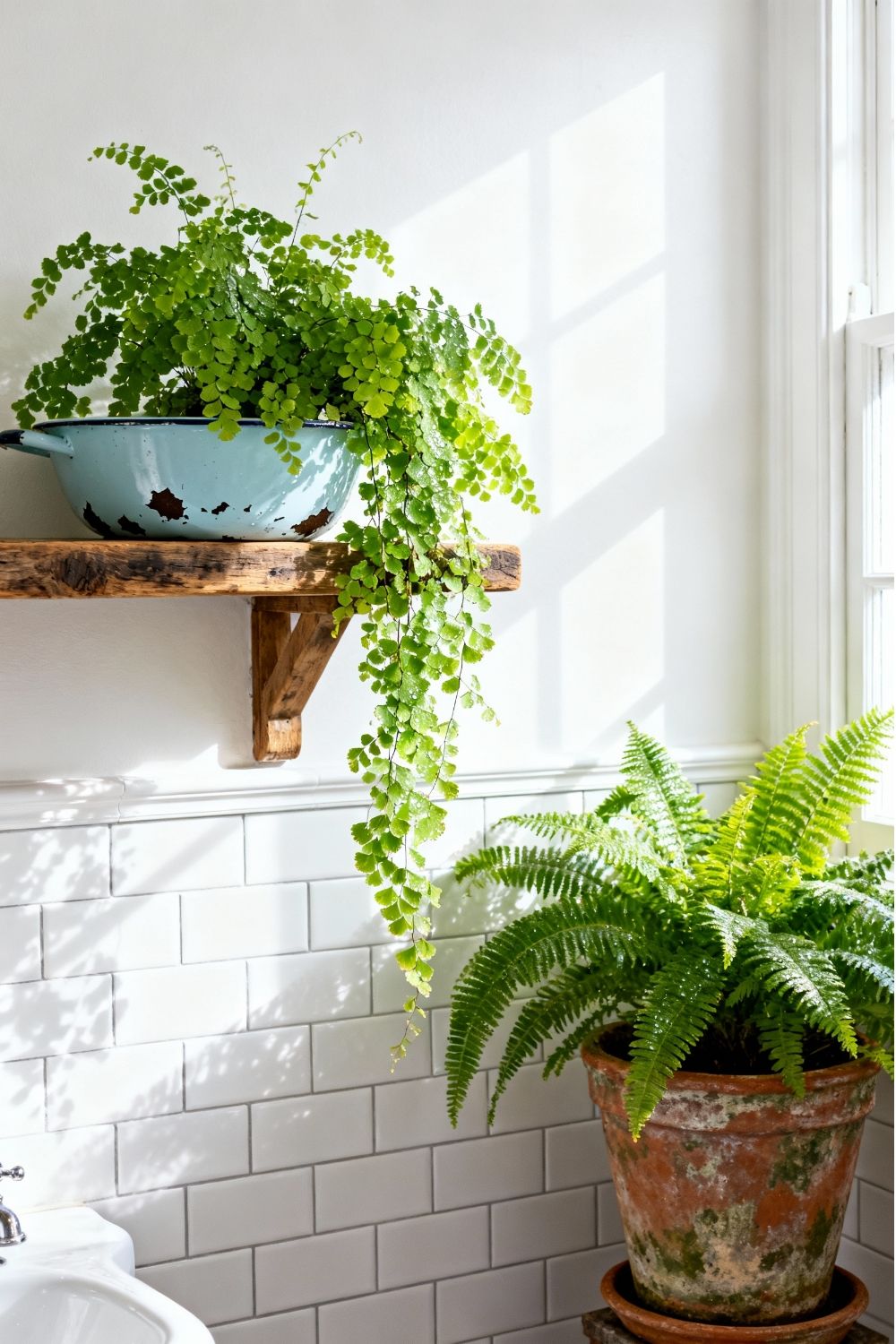
The Boston Fern is one of those plants that almost feels like it was made for bathrooms.
It has soft, flowing green fronds that instantly make a space feel more natural and less harsh. If your bathroom often feels a bit dry-looking or lifeless, this plant brings in a very different energy, it feels closer to a mini indoor jungle.
Why it survives in humidity
- It naturally grows in humid forest environments, so moist air is exactly what it’s used to
- It prefers moisture-rich air, which makes bathrooms one of the few indoor spaces it actually enjoys
- It struggles in dry rooms, so humidity is not a problem for it—it’s a requirement
Light tolerance
- Prefers indirect, filtered light
- Can handle low light, but grows better when it still gets some natural brightness
- Avoid strong direct sunlight, which can dry it out quickly
Real benefit
- Fits well in spaces where you’re dealing with bathroom plants that thrive in humidity, because it naturally adapts to those conditions
- Helps the room feel more lush and less stagnant visually
- It does not reduce mold or humidity directly, but it does thrive in the same damp conditions where mold is common
Care tip
- Keep the soil consistently moist, but not waterlogged
- Mist occasionally if your bathroom is not very humid
- If the fronds start drying at the edges, it usually needs more moisture in the air
Best bathroom placement
- Hanging baskets work best (lets the fronds fall naturally)
- Also good on a shelf where it has space to spread
- Keep it in a spot with indirect light and steady humidity
In simple terms, this is a plant that doesn’t just tolerate a humid bathroom, it actually prefers it, making it a strong fit for bathrooms that already feel damp or moisture-heavy.
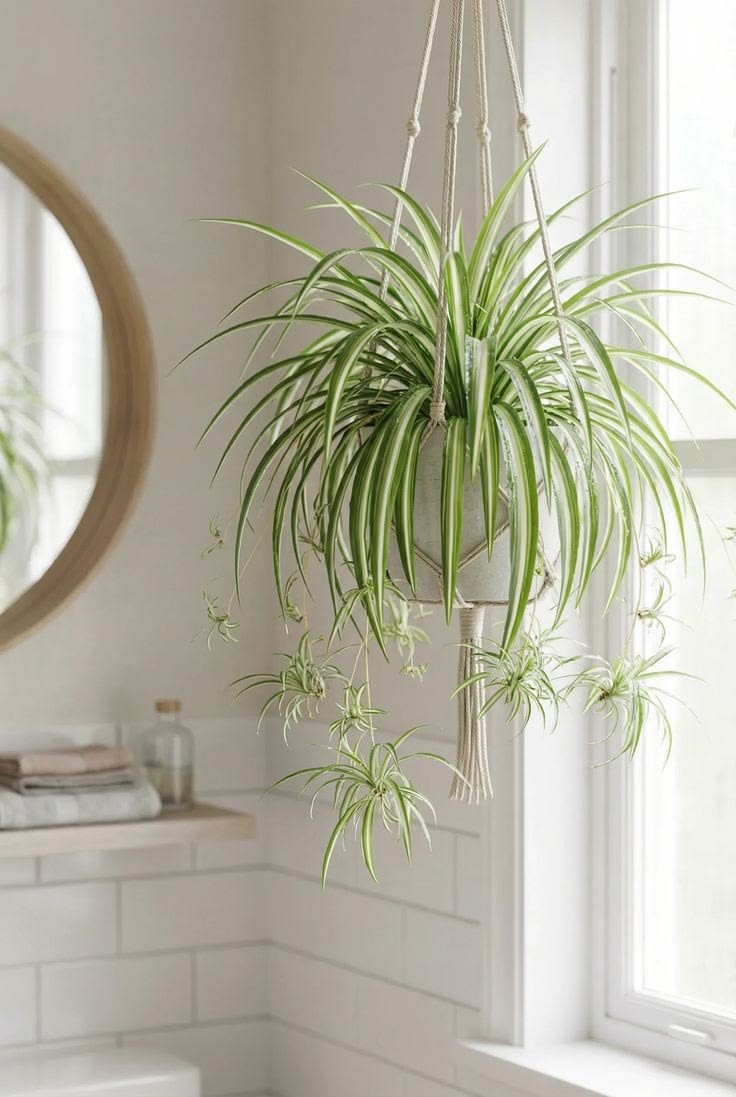
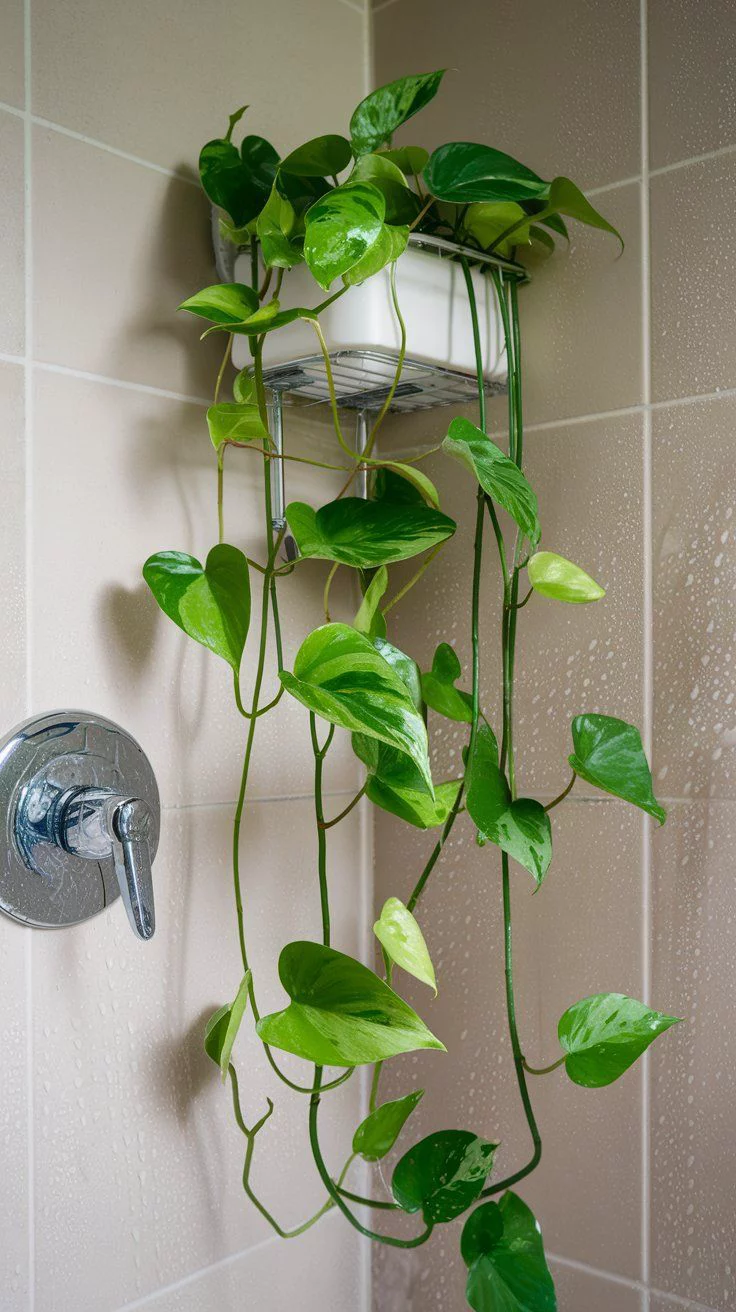
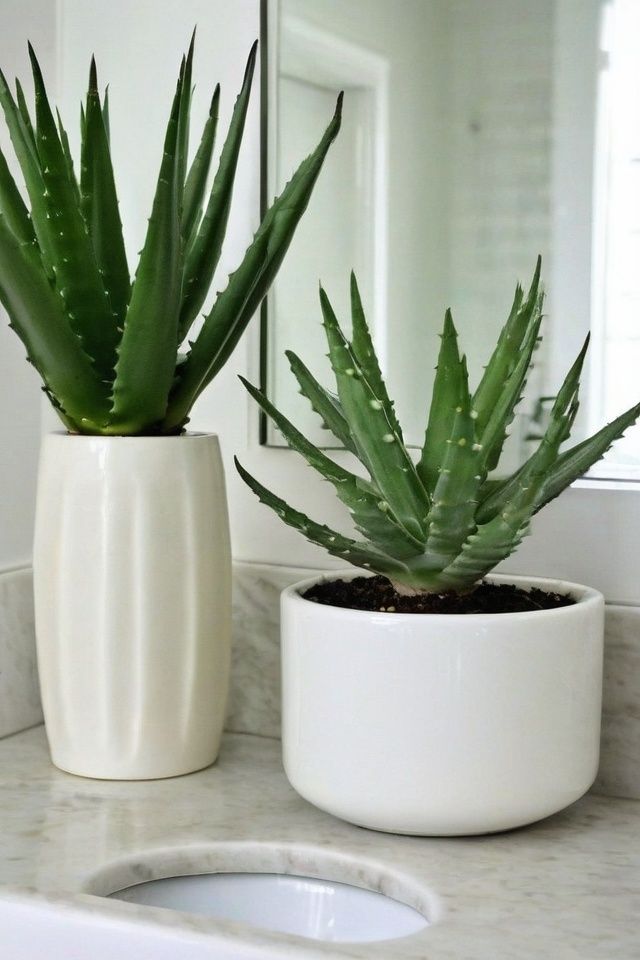
5. Snake Plant
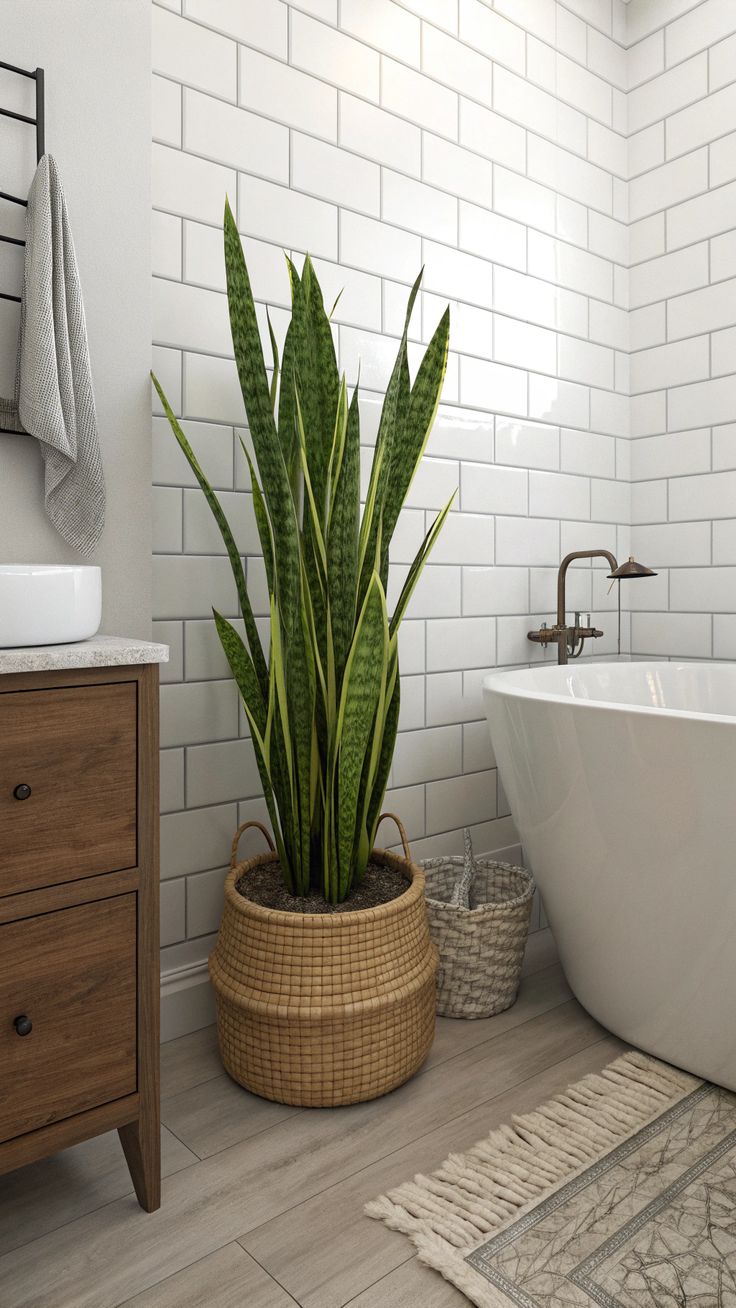
Photo credit: @ SpruceTouch
The Snake Plant is one of the toughest indoor plants you’ll come across. It has tall, upright leaves that give a clean, structured look, and it’s often chosen by people who want greenery without having to constantly manage or worry about it.
Why it survives in humidity
- It doesn’t need specific conditions to stay alive, making it very adaptable
- Handles humidity changes well, especially in bathrooms where steam comes and goes
- Its thick leaves store water, so it isn’t easily affected by moisture fluctuations
Light tolerance
- Doesn’t need much light to survive
- Performs well in low-light bathrooms
- Can also handle brighter indirect light if available
Real benefit
- Adds a strong, clean visual structure to bathrooms
- Stays stable in environments where other plants may struggle
- It does not reduce humidity or mold, but it remains healthy in those conditions without extra care
Care tip
- Water sparingly, this is one plant that prefers dryness over too much water
- Overwatering is the most common mistake with it
- Let the soil dry out completely before watering again
Best bathroom placement
- Floor corners for a tall, minimal look
- Beside sinks or bathtubs (away from direct splashes)
- Areas with low to moderate light
In simple terms, the Snake Plant is ideal for someone who wants a strong, low-maintenance plant that can survive in a humid bathroom without needing constant attention.
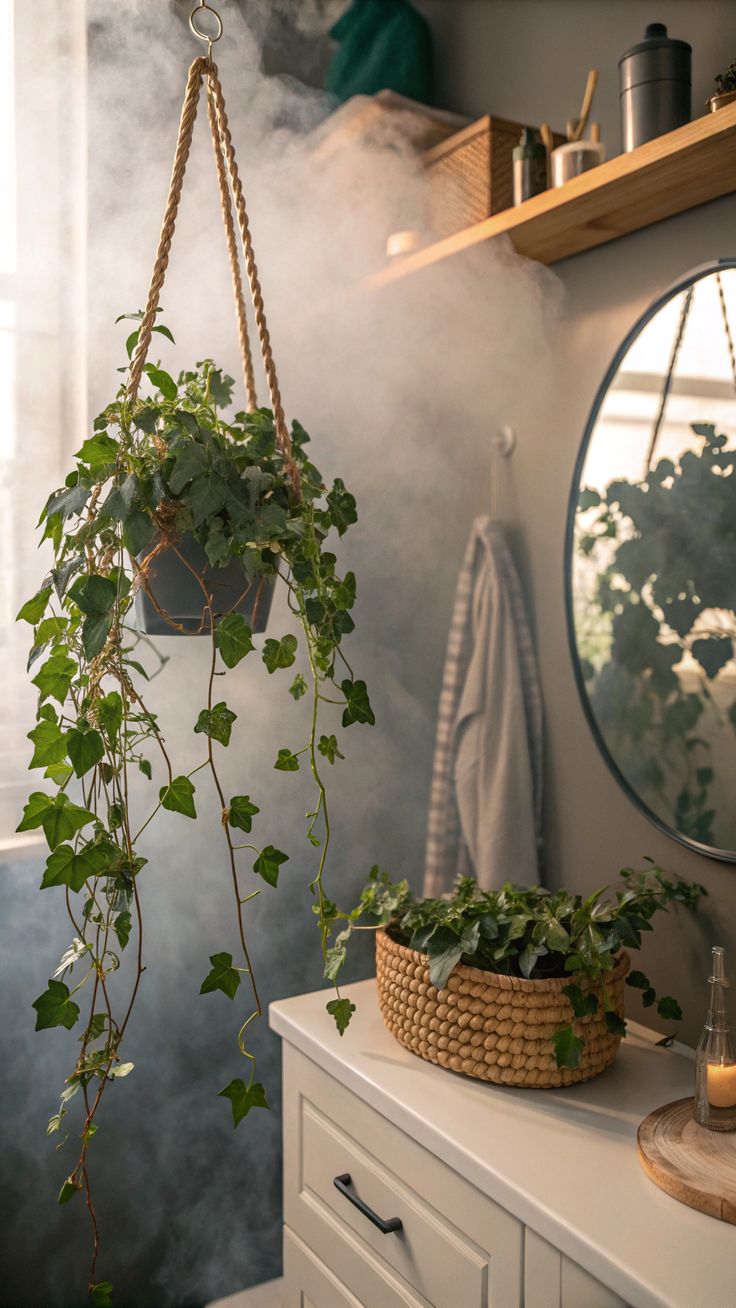
9. Calathea
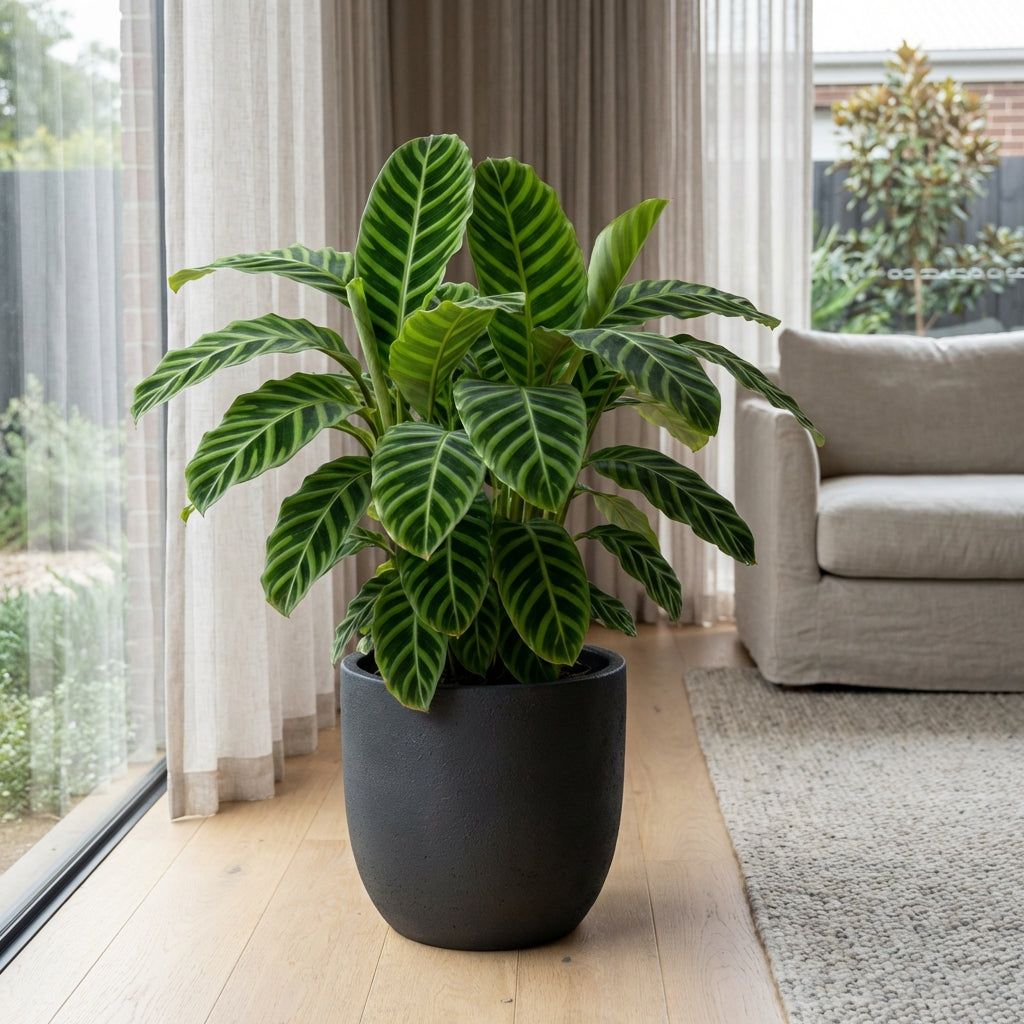
Photo credit: @ Nursery Near Me
Calathea is one of those plants people choose when they want their bathroom to feel a bit more styled and intentional. Its patterned leaves, often with deep greens, purples, or stripes, make it stand out, so it’s not just greenery, it’s also part of the room’s visual feel.
Why it survives in humidity
- Naturally thrives in humid, tropical-like conditions
- Actually struggles in dry air, so bathroom humidity suits it well
- Prefers stable moisture levels rather than fluctuating dry environments
Light tolerance
- Does best in low to medium indirect light
- Can work in bathrooms with filtered light or small windows
- Avoid strong direct sunlight, which can damage its leaves
Real benefit
- Adds strong aesthetic value to the bathroom with its patterned leaves
- Performs better in humid conditions where many indoor plants fail
- It does not reduce mold or humidity, but it is well-suited to environments where moisture is already present
Care tip
- Keep soil lightly moist, not soggy
- Avoid letting it dry out completely
- If leaf edges brown, it usually signals low humidity or inconsistent watering
Best bathroom placement
- On shelves where its leaves can spread naturally
- Near indirect light sources like frosted windows
- Spots with steady humidity but not constant water splash
In simple terms, Calathea is best for humid bathrooms where you also want a strong visual upgrade, not just a functional plant.
If you’re thinking about turning creativity into income, strategies shared in 10 Low-Cost DIY Crafts to Make and Sell From Home can help you start small without overwhelming yourself or overspending.
Where to Place Bathroom Plants for Best Results (Bathroom Plants for Humidity and Low Light)
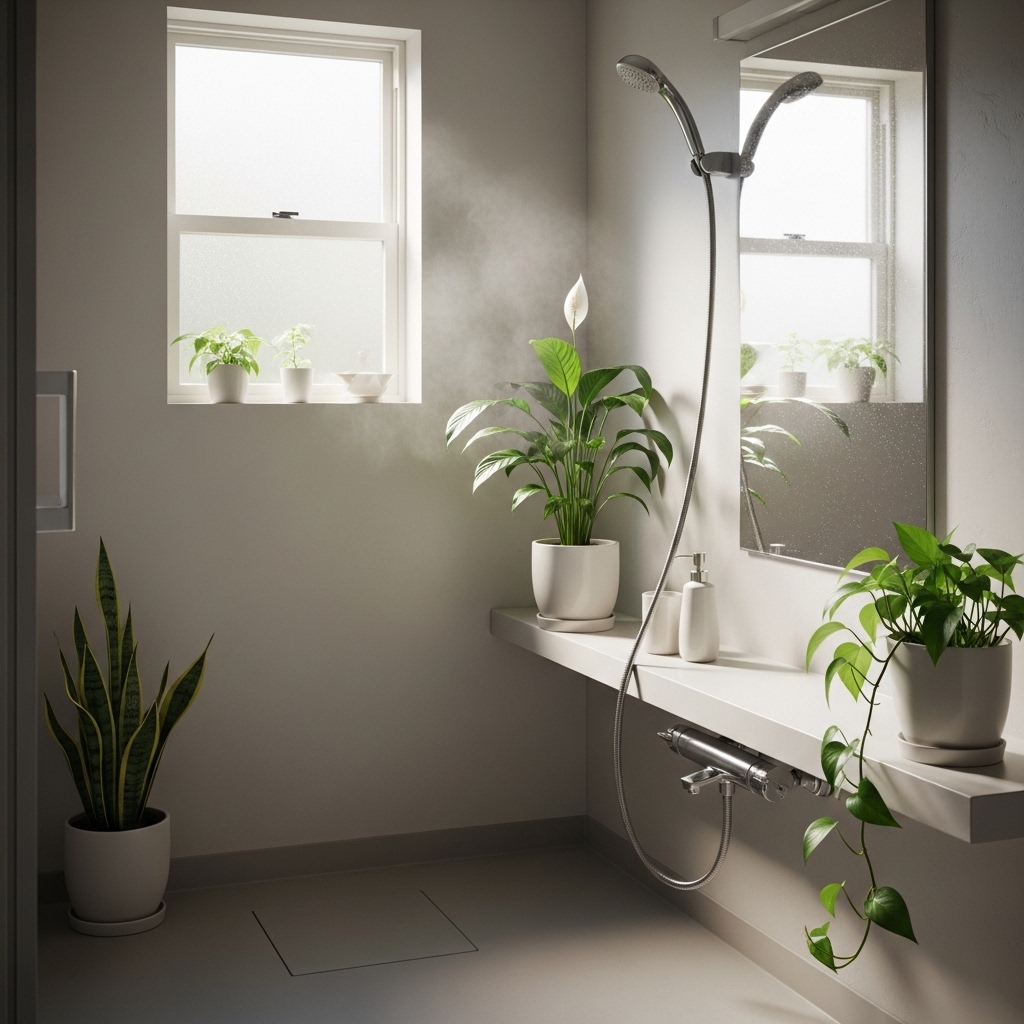
Where you place your plants can make the difference between a plant that thrives and one that slowly struggles, even if it’s the right type of plant.
This is especially important when working with bathroom plants for humidity and low light, because placement directly affects how much light, moisture, and airflow they actually receive.
✔ Near (But Not Inside) The Shower Splash Zone
Keep plants close enough to benefit from the natural humidity after showers, but not so close that they’re constantly getting soaked. Too much direct water can lead to root rot over time and weaken even strong plants.
✔On Shelves For Better Airflow
Shelves are one of the most balanced spots because they allow air to move more freely around the plant. This helps prevent excess moisture from sitting in the soil and supports healthier, more stable growth in humid bathroom conditions.
Hanging Baskets For Small Bathrooms
If space is limited, hanging plants are a practical option. They stay out of the way, get better air exposure, and work especially well for trailing plants like pothos or ivy that naturally adapt to bathroom environments.
Avoid Completely Dark Corners
Even humidity-tolerant plants still need some level of indirect light. Deep, dark corners with no light will slowly weaken most plants over time, no matter how hardy they are, and reduce their ability to survive in the long run.
Simple Solutions That Actually Help Prevent Mold
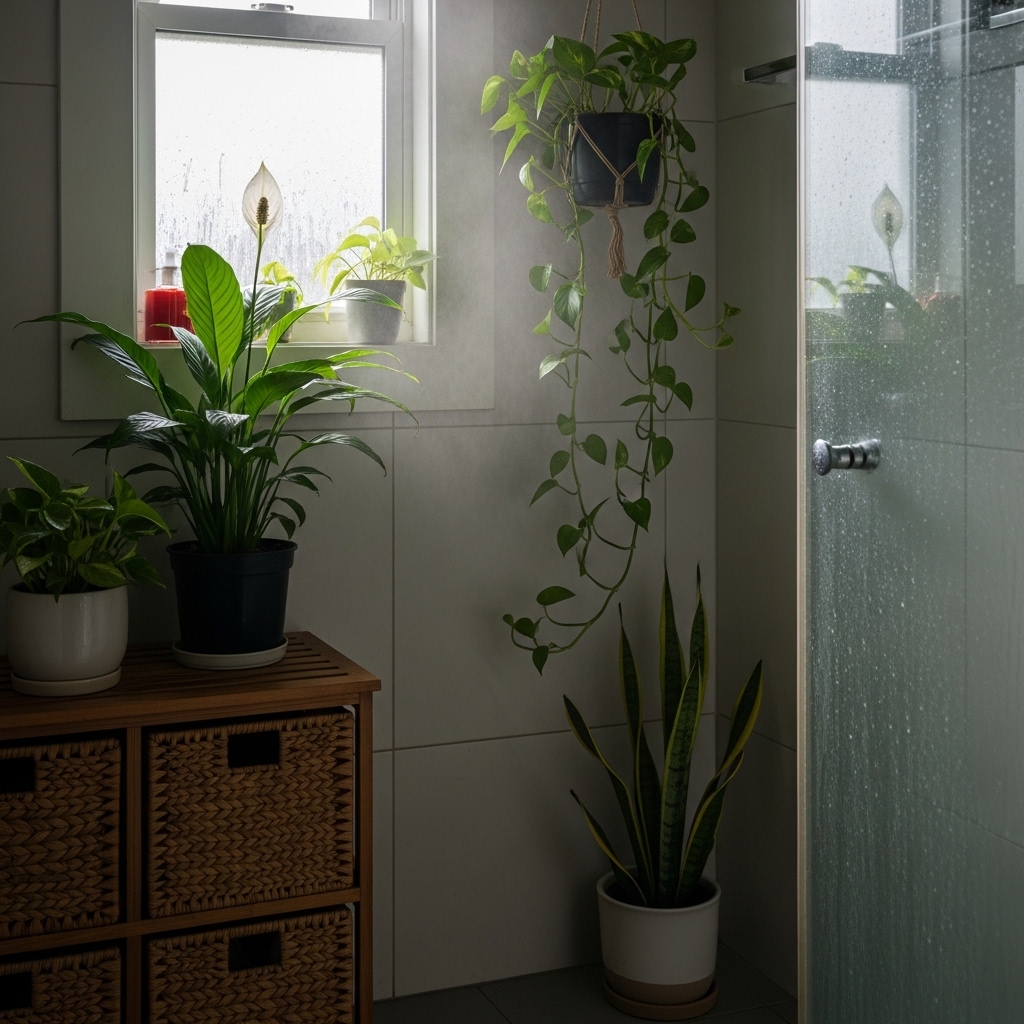
Plants alone won’t solve a damp bathroom problem. If you really want to reduce mold growth, you still need to manage moisture properly. These small habits make the biggest difference.
1. Open Door Or Window After Showers
After a hot shower, don’t leave the bathroom sealed up. Open the door or window so steam can escape. This helps prevent moisture from sitting on walls, tiles, and mirrors for too long.
2. Use An Exhaust Fan If Available
If your bathroom has a fan, turn it on during and after showers. It helps pull out humid air faster, which reduces how long surfaces stay wet.
3. Wipe Wet Surfaces
Take a few seconds to wipe down tiles, glass, or sinks after heavy condensation. It may feel small, but it stops water from sitting and turning into long-term damp spots.
4. Reduce Standing Moisture (Towels, Mats, And Clothes)
Don’t leave wet towels or bathroom mats piled up for long periods. Hang them properly so they dry faster, instead of keeping moisture trapped in the room.
Conclusion
FAQs
1. Why Does My Bathroom Still Feel Damp Even After Cleaning It?
Cleaning removes dirt, but it doesn’t remove moisture in the air. If steam from showers has nowhere to escape, the room will still feel damp even if it looks clean. This is why ventilation matters more than surface cleaning.
2. Can Bathroom Plants Actually Stop Mold From Coming Back?
No. Bathroom plants cannot stop mold growth. They don’t control moisture levels enough to prevent mold. At best, they survive in humid environments where mold is likely to appear, but they are not a prevention method.
3. How Many Bathroom Plants Do I Actually Need?
There’s no fixed number. Even one or two plants can improve the feel of a space, but adding more won’t significantly change humidity levels. It’s more about placement and airflow than quantity.
4. Why Do My Bathroom Plants Keep Dying Even Though The Room Is Humid?
Humidity alone is not enough. Most bathroom plants still need:
- Some indirect light
- Proper drainage
- Avoidance of constant waterlogging
Many plants die in bathrooms not because of dryness—but because of overwatering and lack of light.
5. Is It Safe To Keep Plants In A Bathroom With Mold?
Yes, but only if you manage moisture properly. Plants do not worsen mold, but if your bathroom is already heavily damp with no ventilation, both mold and plant health will suffer.
6. What Is The Biggest Mistake People Make With Bathroom Plants?
The biggest mistake is assuming humidity = no care needed. People overwater plants or place them in completely dark corners, which slowly kills them even if the bathroom feels “moist.”
7. Do Bathroom Plants Work In Windowless Bathrooms?
Some do, but not all. Only low-light tolerant plants like snake plants, pothos, and ZZ plants can survive. However, growth will be slower without any natural light source.
This post talked on: Bathroom Plants That Thrive in Humidity and Help Reduce Dampness Where Mold Grows -Even in Low Light.