There’s more to Thanksgiving than a traced hand — these crafts for young children are simple enough for little fingers to finish solo.
A handprint turkey is a classic for a reason. It is simple, inexpensive, and easy enough for young children to make.
But Thanksgiving crafts for young children do not have to begin and end with tracing a hand and turning it into a turkey.
There are plenty of other things a child can make that still connect to the season, something they can use at the Thanksgiving table, give to someone, create from real leaves, or build around foods and traditions they know.
The trick is choosing ideas that are interesting without being too complicated for small hands.
That is what you’ll find here: Thanksgiving crafts for young children that give them something new to make, while still being realistic for their age and abilities.
Before Choosing a Craft, Think About What a Young Child Can Actually Do
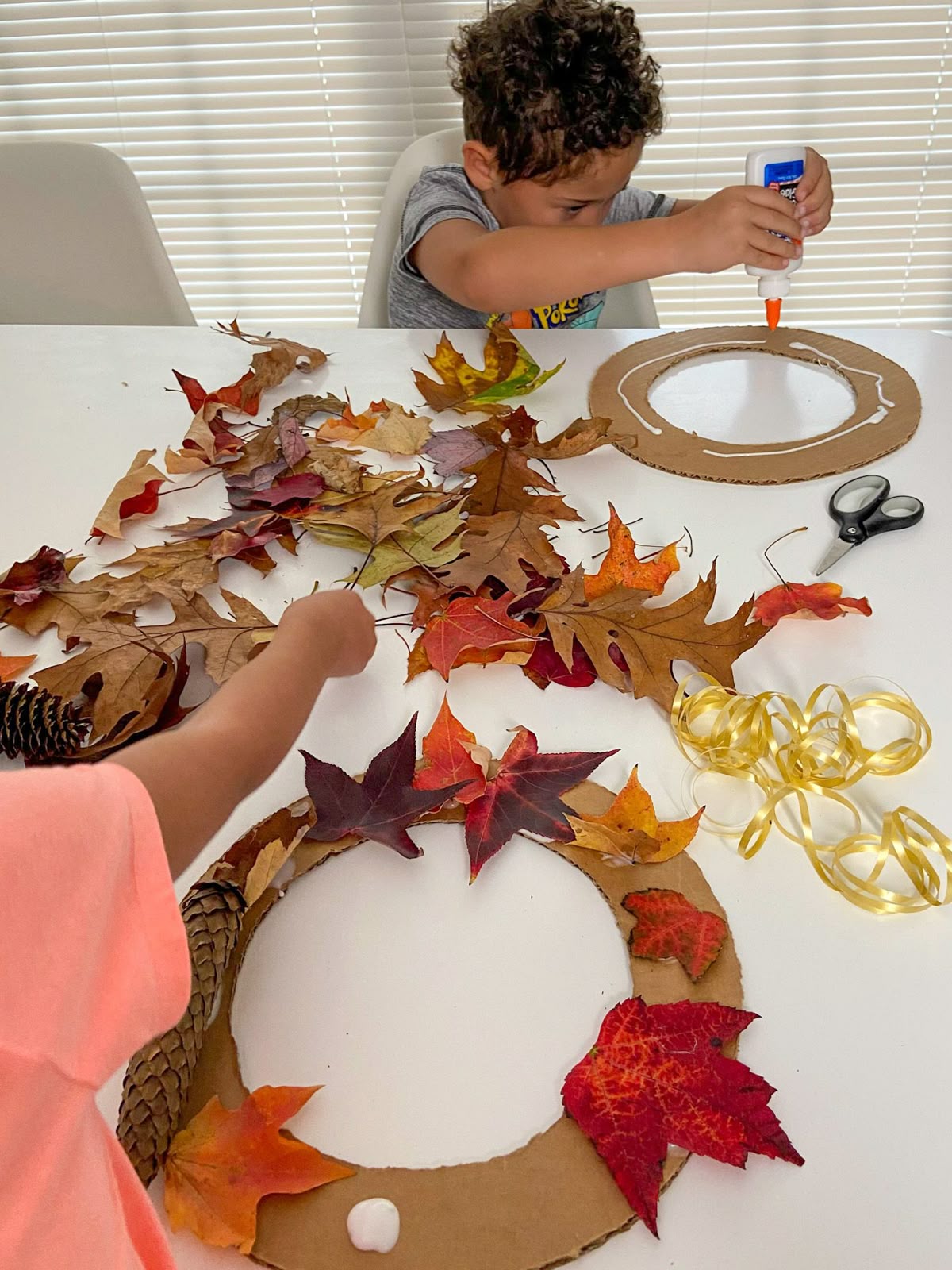
Young children can have very different abilities, even when they are close in age. A 3-year-old may be happy tearing paper and sticking large pieces down, while a 6-year-old may want to cut shapes, follow several steps, and add their own details.
That matters when choosing Thanksgiving crafts for young children. A project may look easy in a photo but become frustrating when it involves tiny pieces, precise cutting, complicated instructions, or too much waiting.
For younger children, look for activities that involve:
- Tearing, gluing, painting, stamping, or arranging large pieces
- Simple cutting with child-safe scissors and supervision
- A small number of clear steps
- Plenty of room for the child to make their own choices
Older children can usually handle more detailed cutting, simple patterns, writing, and crafts with several stages.
These age ranges are only general guides. Children develop at different rates, so adapt the activity rather than expecting every child of the same age to work in exactly the same way.
The best craft with kids is one where the child can do a meaningful part of the work, not one where the adult has to take over just to get the finished result.
If you’re looking for more seasonal projects that younger and older children can enjoy together, try Fall Crafts for Siblings of Different Ages: 9 Projects the Whole Family Can Do Together.
1. Paper Cornucopia Filled With Fall Foods
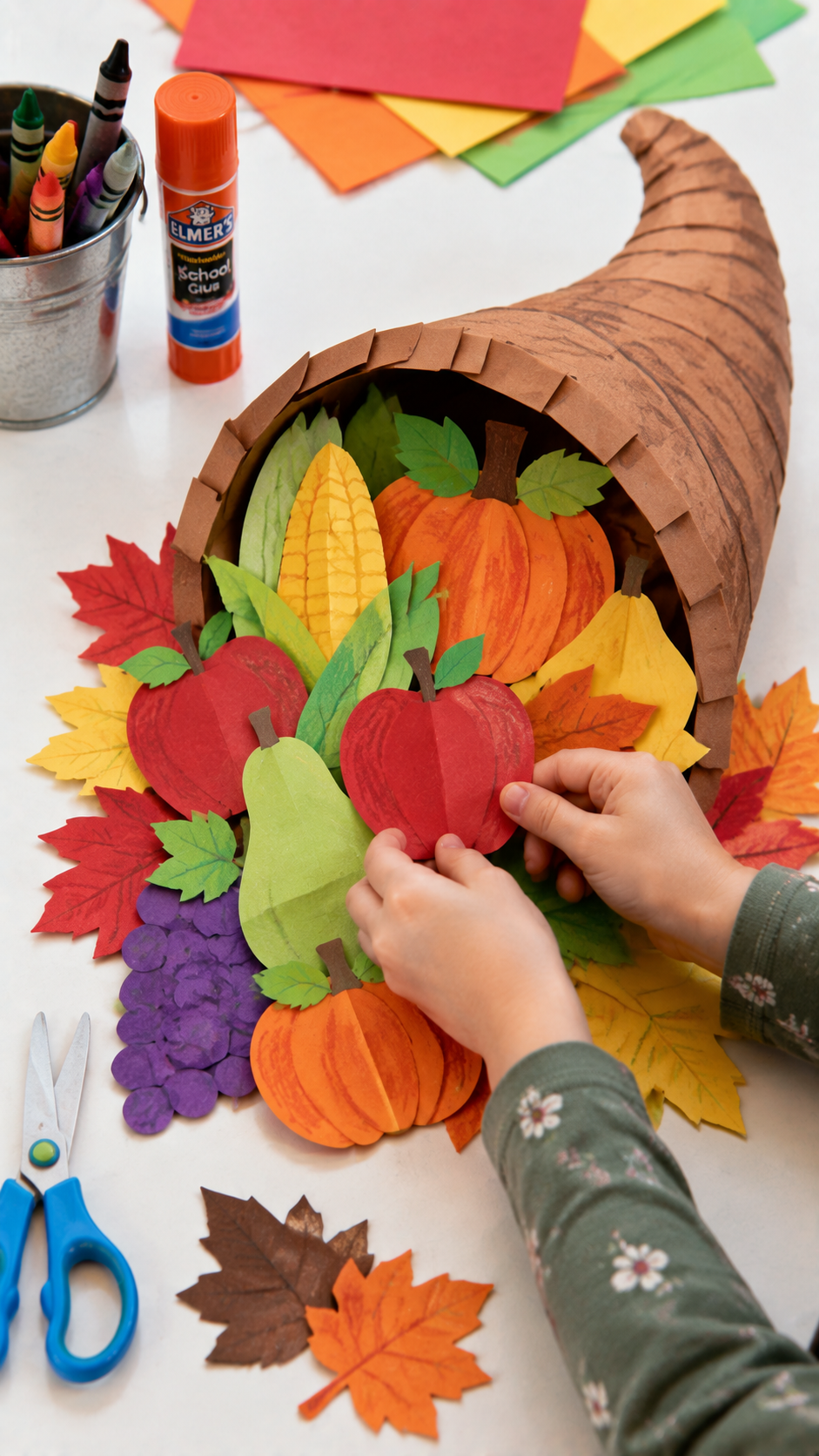
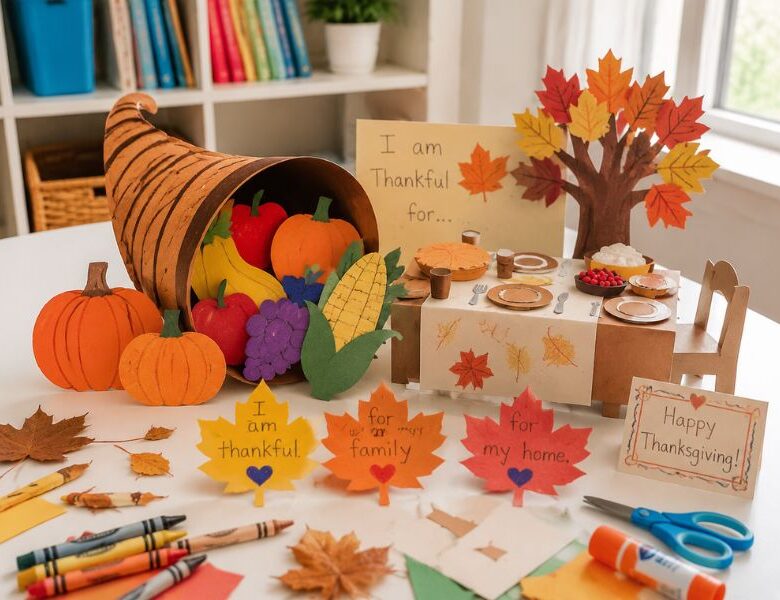
A cornucopia is a horn-shaped container traditionally shown overflowing with food, flowers, or other signs of abundance.
That makes it a natural Thanksgiving craft, but it also gives young children something new to explore beyond making another turkey.
For this idea, the child creates a large paper cornucopia and fills it with foods they recognize from autumn or their own family meals. Apples, corn, pumpkins, grapes, squash, and other fruits and vegetables can all become part of the picture.
The interesting part is that there isn’t one correct cornucopia to copy. A child can decide what belongs in theirs and how much food should spill out.
While they work, you can explain that harvest means gathering crops when they are ready to be collected. You can also introduce the word cornucopia, which is sometimes called a “horn of plenty.”
For younger children, pre-cut the larger shapes if necessary and let them focus on choosing, arranging, and gluing. The finished piece can become a Thanksgiving decoration or part of a larger harvest display.
2. Thankful Placemat Children Can Actually Use
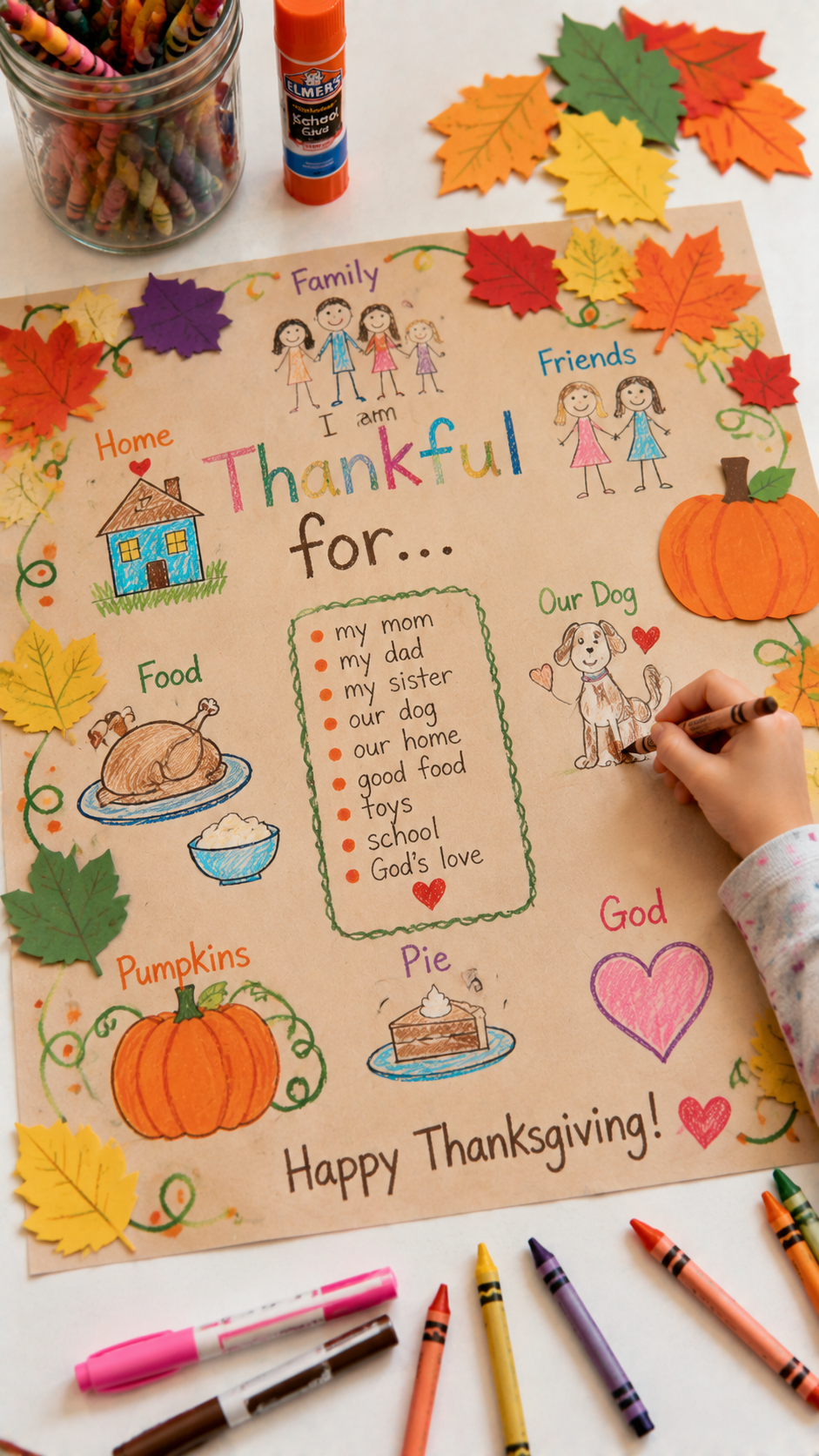
This is a simple way to let a child have a place in the Thanksgiving table preparation. Instead of making something that only gets displayed, they create a placemat they can actually put under their plate.
The child can draw a favorite Thanksgiving food, add the names or pictures of people they’ll be eating with, decorate the edges with leaves and pumpkins, or simply fill the page with whatever makes Thanksgiving feel special to them.
For a child who cannot write yet, an adult can write down what they say. That keeps the activity about their ideas, rather than turning handwriting into the main task.
3. Fall Leaf People
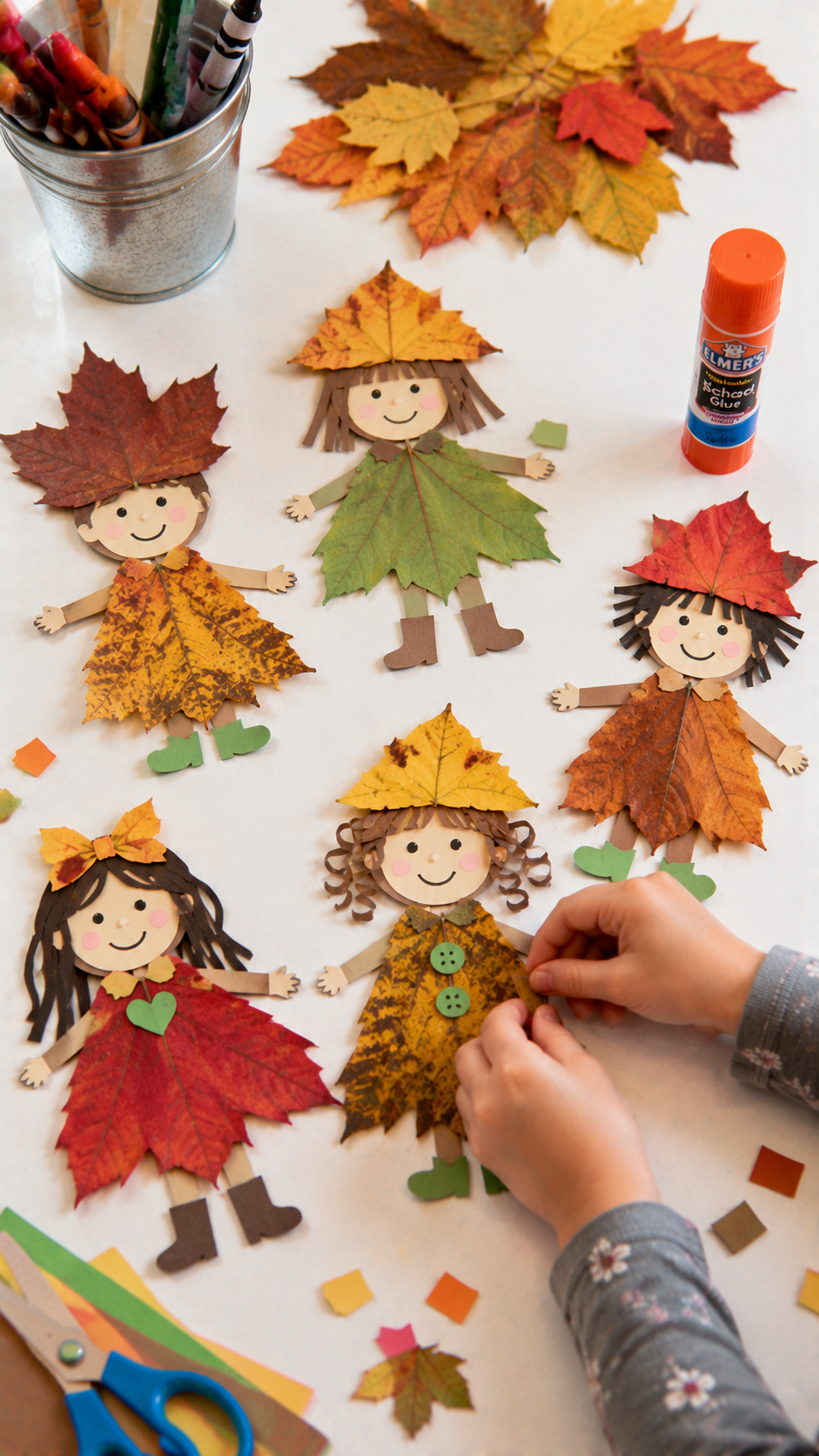
Save a few interesting fallen leaves and let the child decide what each one could become. A long leaf might look like a dress, a round one could become a body, and a tiny leaf might turn into a hat or pair of wings.
Add paper or drawn details for faces, arms, legs, hair, or anything else the child imagines. The fun isn’t in producing a perfect “leaf person.” It’s in looking at an ordinary leaf and seeing something else in it.
This also gives you a natural opportunity to talk about why leaves change color in autumn. As chlorophyll breaks down, the green color becomes less dominant and other pigments already present in the leaf become easier to see.
And because real leaves vary in shape, size, and color, every child’s creation will naturally look different.
4. Paper Corn Mosaic
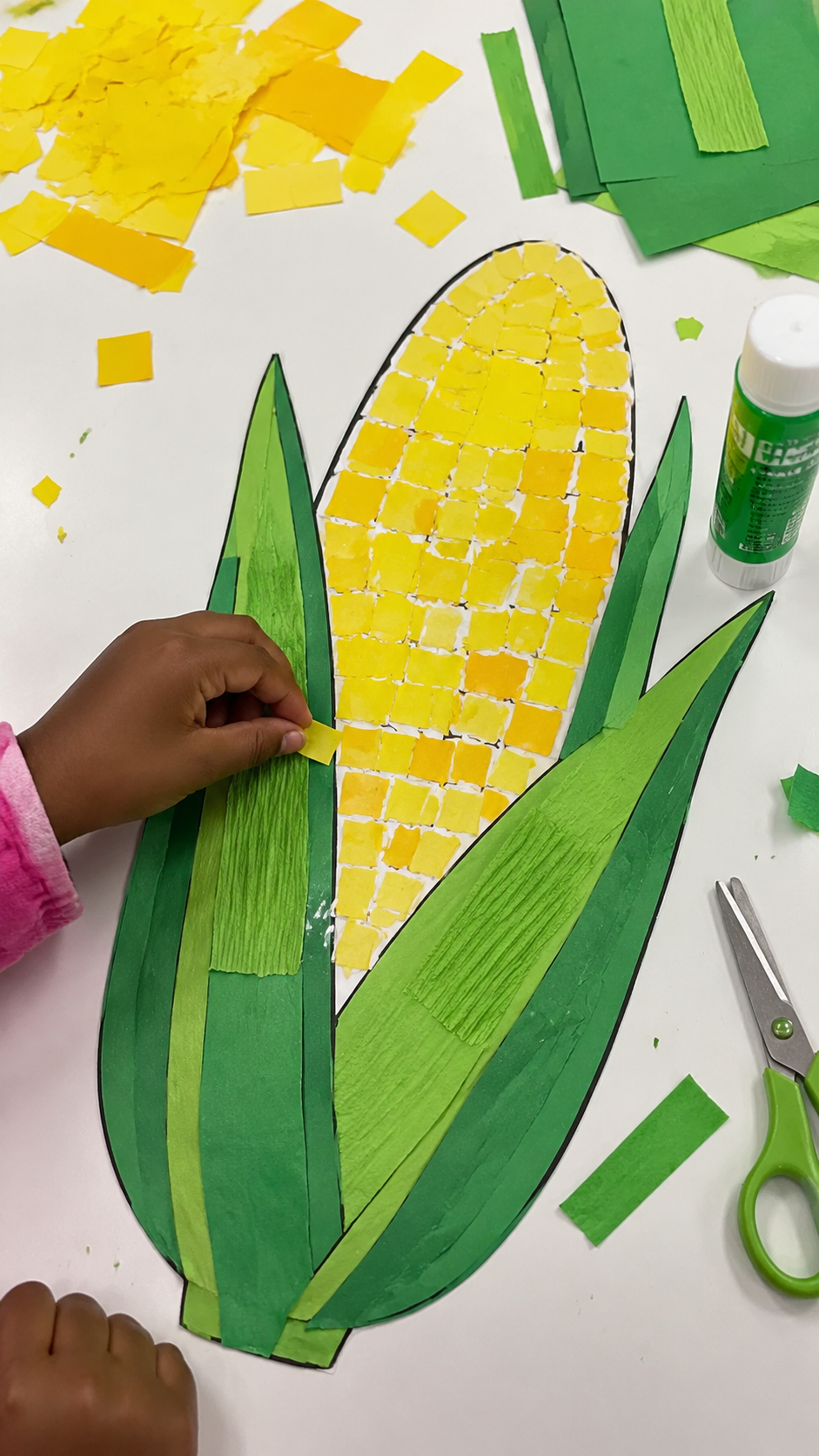
Corn is strongly connected with harvest, but children don’t have to turn every Thanksgiving food into a turkey. This craft turns an ear of corn into a simple paper mosaic, giving young children something to build with small pieces of color.
The child can start with a large corn shape and fill it with yellow paper pieces, leaving space for green husks around the sides.
Younger children can use larger pieces, while older children can work with smaller pieces to create rows and patterns.
There is also a little science hiding in the activity. Corn kernels are the individual seeds of the corn plant, even though we usually think of them as food. That makes the craft a natural starting point for a simple conversation about where some of our food comes from.
For Thanksgiving crafts for young children, this is a nice change from making a character because the child is creating the texture and pattern of the food itself.
5. Thanksgiving Table Place Cards
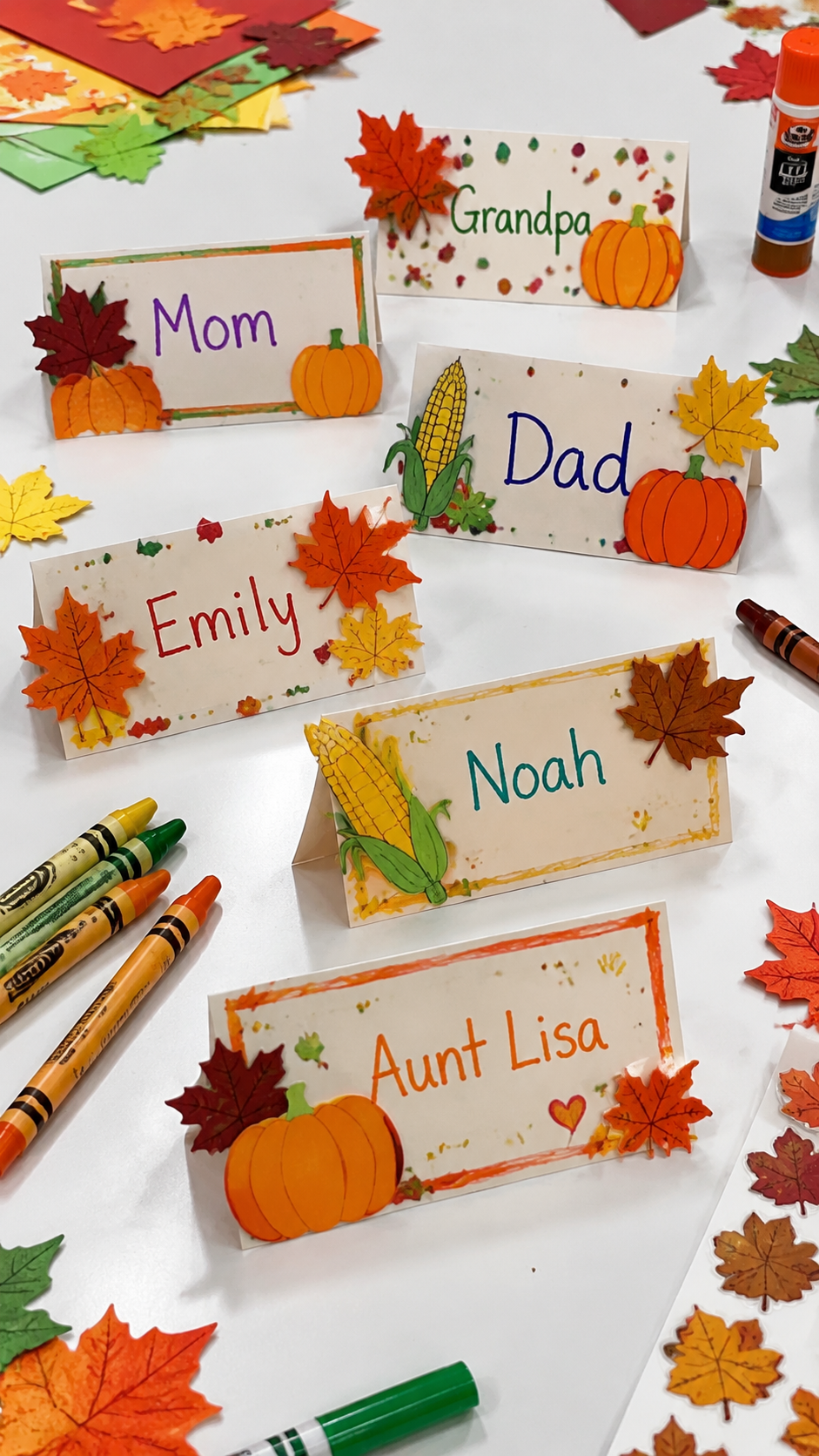
Let the child help prepare one small part of the Thanksgiving table. Instead of making a decoration that has no job once it is finished, they can create a place card for someone who will actually sit at the meal.
A folded piece of cardstock can become the base. The child can decorate it with leaves, pumpkins, apples, corn, or another design and then add the guest’s name.
Children who are not writing independently can decorate the card while an adult writes the name for them.
Place cards also give young children a reason to notice people’s names and letters without turning the craft into a handwriting exercise.
And there is no need to assume every Thanksgiving table uses place cards. If your family doesn’t normally assign seats, the same idea can become a small “Welcome to Thanksgiving” card or a name card for a family member’s plate.
That flexibility makes this one of the more practical Thanksgiving crafts for young children because the finished piece can become part of the family’s actual gathering.
6. Thanksgiving Story Stones
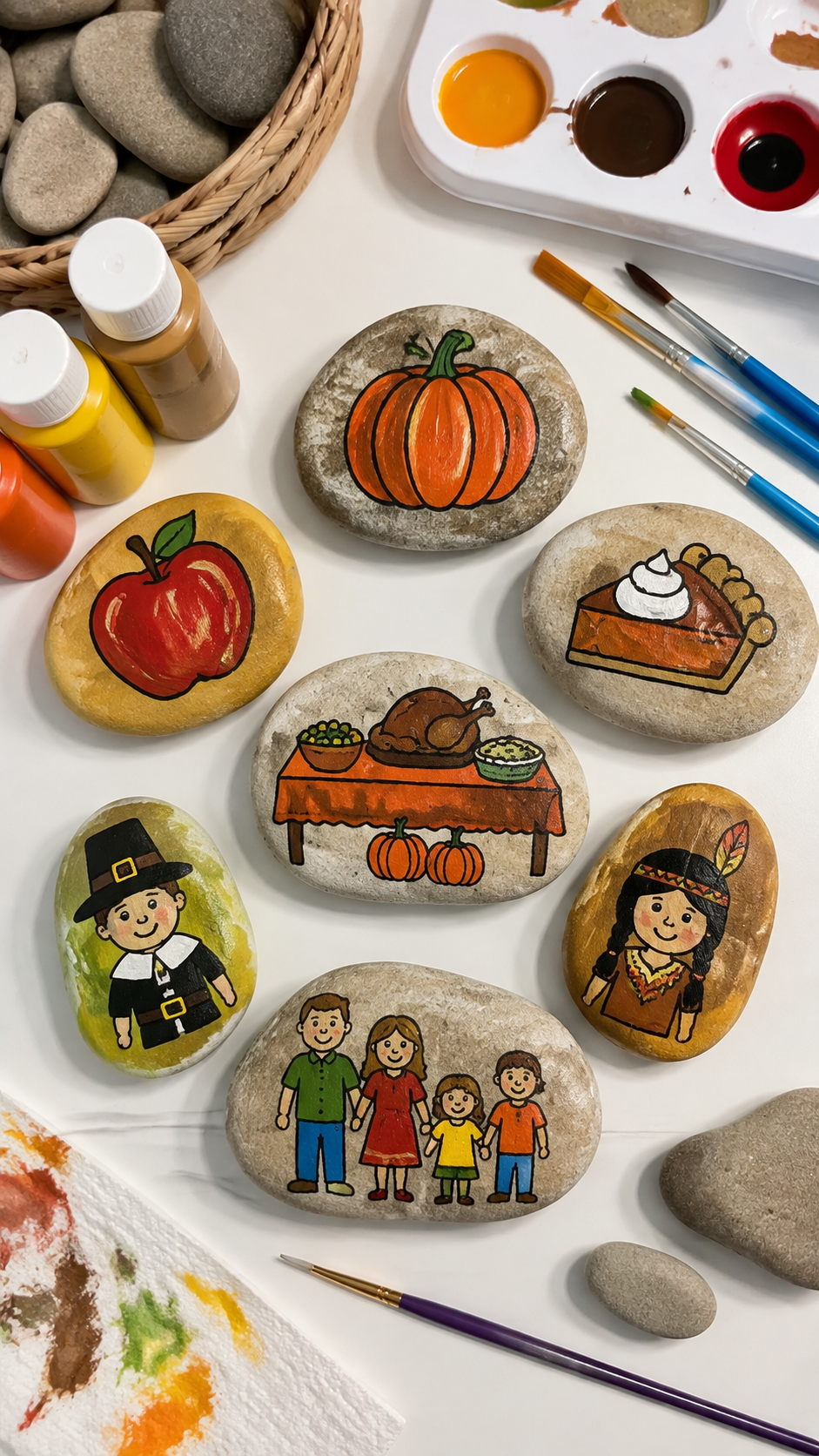
Turn a few smooth stones into simple picture prompts that children can use to make up their own Thanksgiving story. One stone could have a pumpkin, another an apple, another a table, another a pie, and another a person or animal.
The child picks several stones and decides what happens in the story. They don’t need to write anything, the pictures can do the work.
This gives Thanksgiving crafts for young children a different purpose. The finished craft isn’t just something to display; it becomes something they can use for storytelling and pretend play.
You can also keep the images open-ended. A pumpkin doesn’t have to mean “Thanksgiving pumpkin.” The child might decide it belongs in a garden, at a family meal, or in a completely imaginary story.
For younger children, keep the drawings very simple and let an adult help with painting the stones. Use clean, smooth stones and child-appropriate paint, and make sure the stones are fully dry before children handle them.
7. Thanksgiving Food Plate Collage
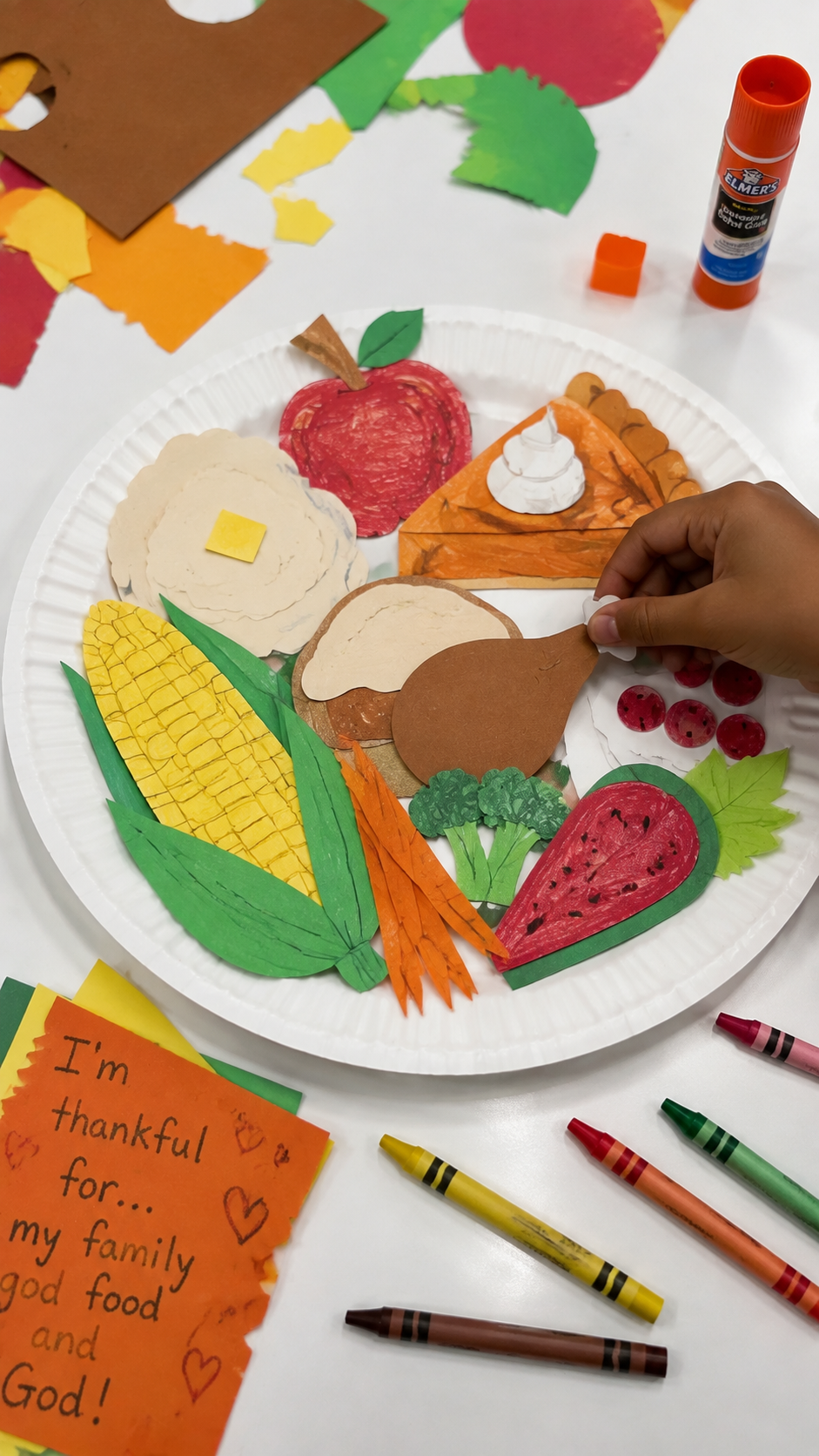
Forget the idea that a Thanksgiving craft has to look like a turkey. Give the child a paper plate and let them create a pretend meal instead.
They can add paper versions of foods they know from their own family table, corn, potatoes, vegetables, bread, fruit, pie, turkey, or anything else they eat. They can even include foods that might not appear on a traditional American Thanksgiving table.
That last part is worth keeping. Thanksgiving meals are not identical in every family, so there is no need to give children a fixed list of “correct” Thanksgiving foods.
The activity becomes more meaningful when the child gets to represent what their own family actually eats.
For a younger child, you can prepare a few large food shapes. Older children can draw and cut their own. Once the plate is finished, ask them to tell you what they chose and why.
8. Thanksgiving Thank-You Card
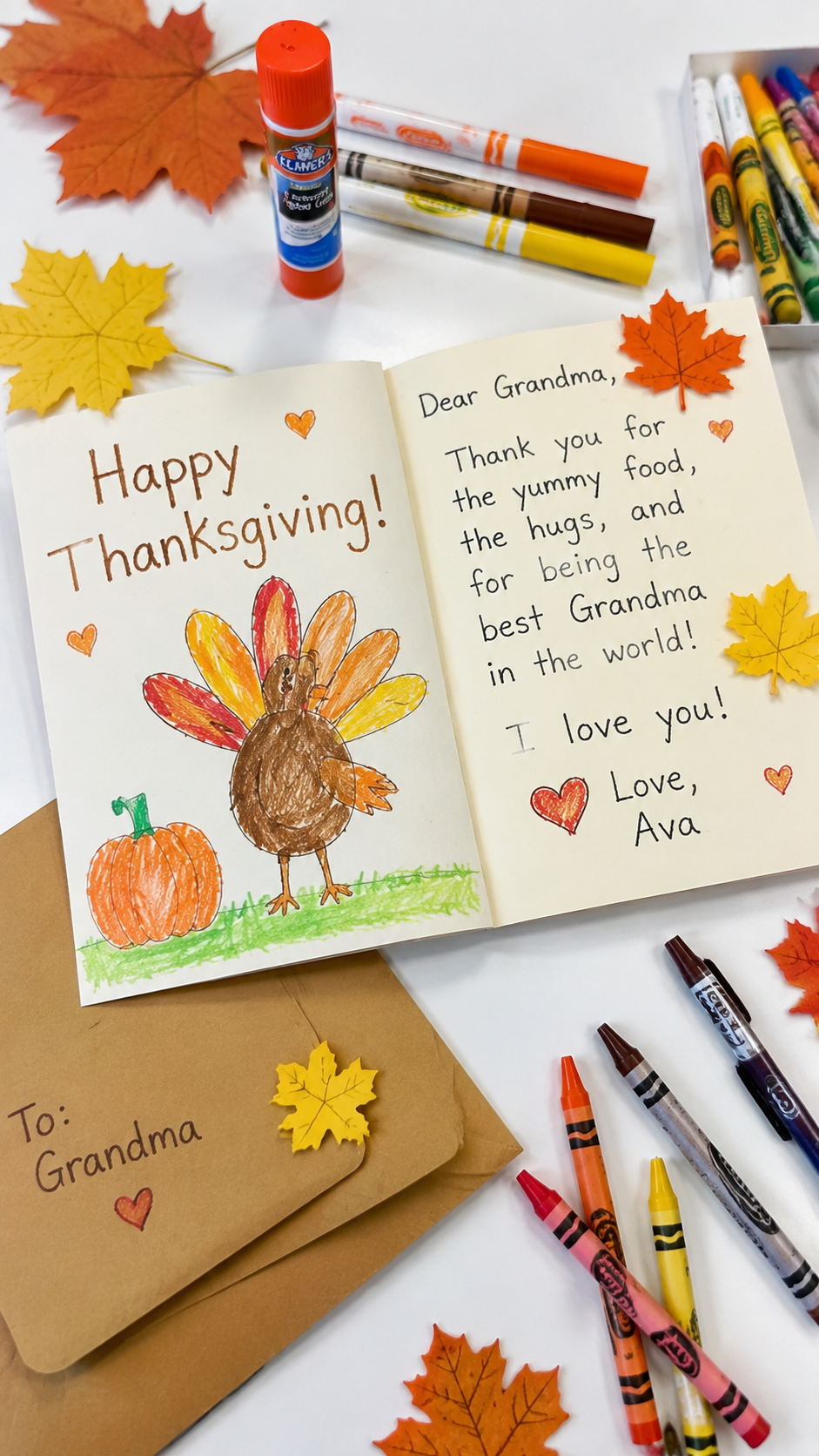
A homemade card can give a young child a reason to think about a particular person rather than asking them to produce a long list of things they are thankful for.
The child could make a card for a grandparent, parent, teacher, sibling, friend, neighbor, or anyone else they appreciate. They can draw the person, decorate the front, and add a short message inside.
Children who are not writing independently can dictate what they want to say while an adult writes their words down. Their message might be as simple as “Thank you for playing with me” or “I like when you read to me.”
That keeps the focus on expressing appreciation rather than testing the child’s spelling or handwriting.
It also makes the finished craft useful beyond the holiday itself. The child has created something they can actually give to another person.
9. My Thanksgiving Table” Paper Scene
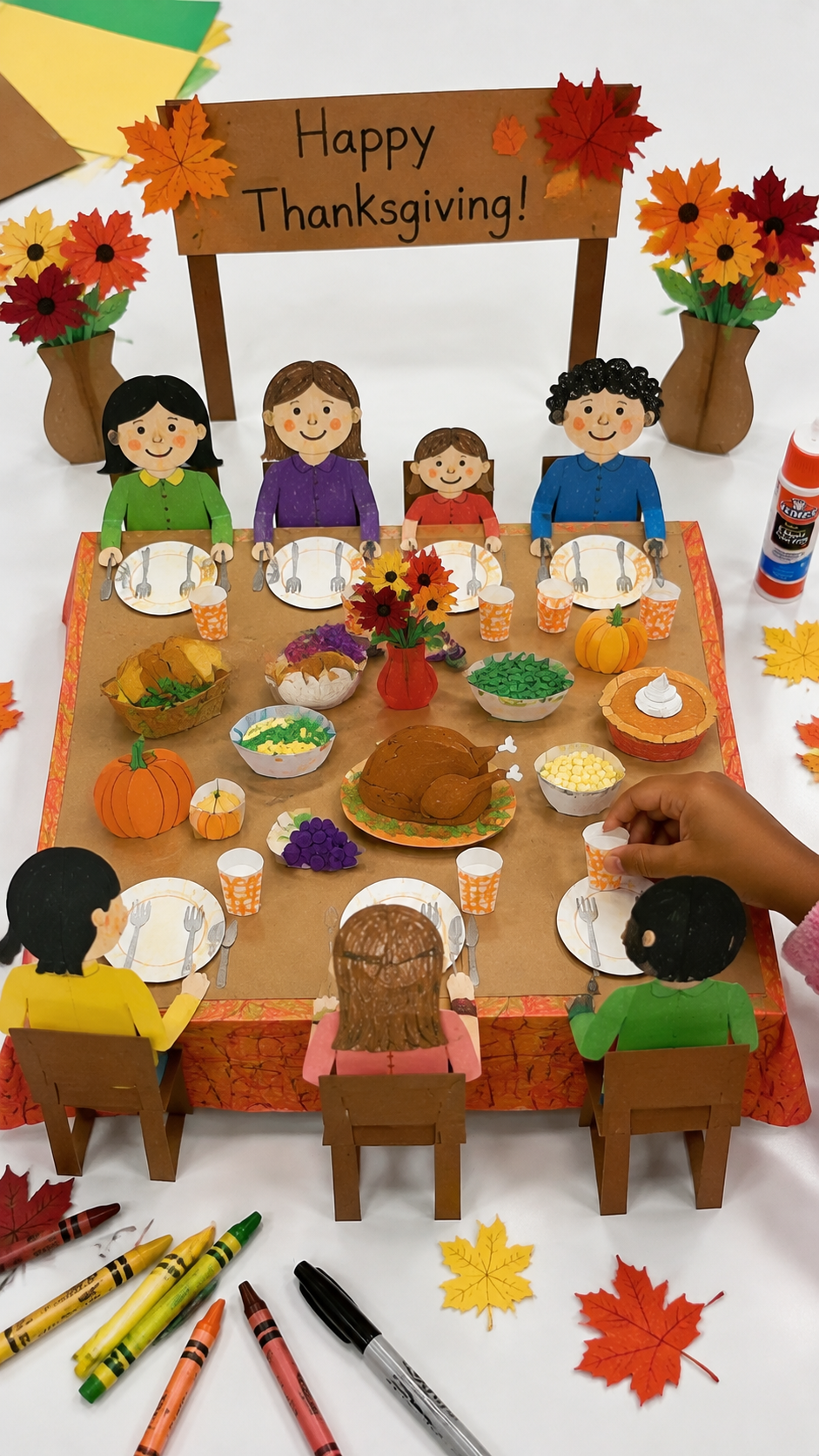
Give the child a large sheet of paper and let them create the Thanksgiving table they imagine.
They can draw or add paper plates, cups, food, flowers, people, chairs, decorations, or anything else they think belongs there. There doesn’t have to be a perfect table setting to copy.
The idea works particularly well for young children because they can build the picture at their own level.
One child might draw a few large objects, while another might fill the table with tiny details.
It also opens up a conversation that goes beyond the craft itself:
“Who would sit at your table?”
“What food would you put there?”
“What would you have on the table besides food?”
Those questions let the child connect the picture to their own family and experiences instead of simply copying a Thanksgiving image from an adult-designed template.
And if you want to turn your crafting into a little extra income this season, What to Make and Sell This Fall: 15 Fall Craft Fair Project Ideas Worth Your Table Space has practical ideas to consider.
10. Handprint Autumn Tree
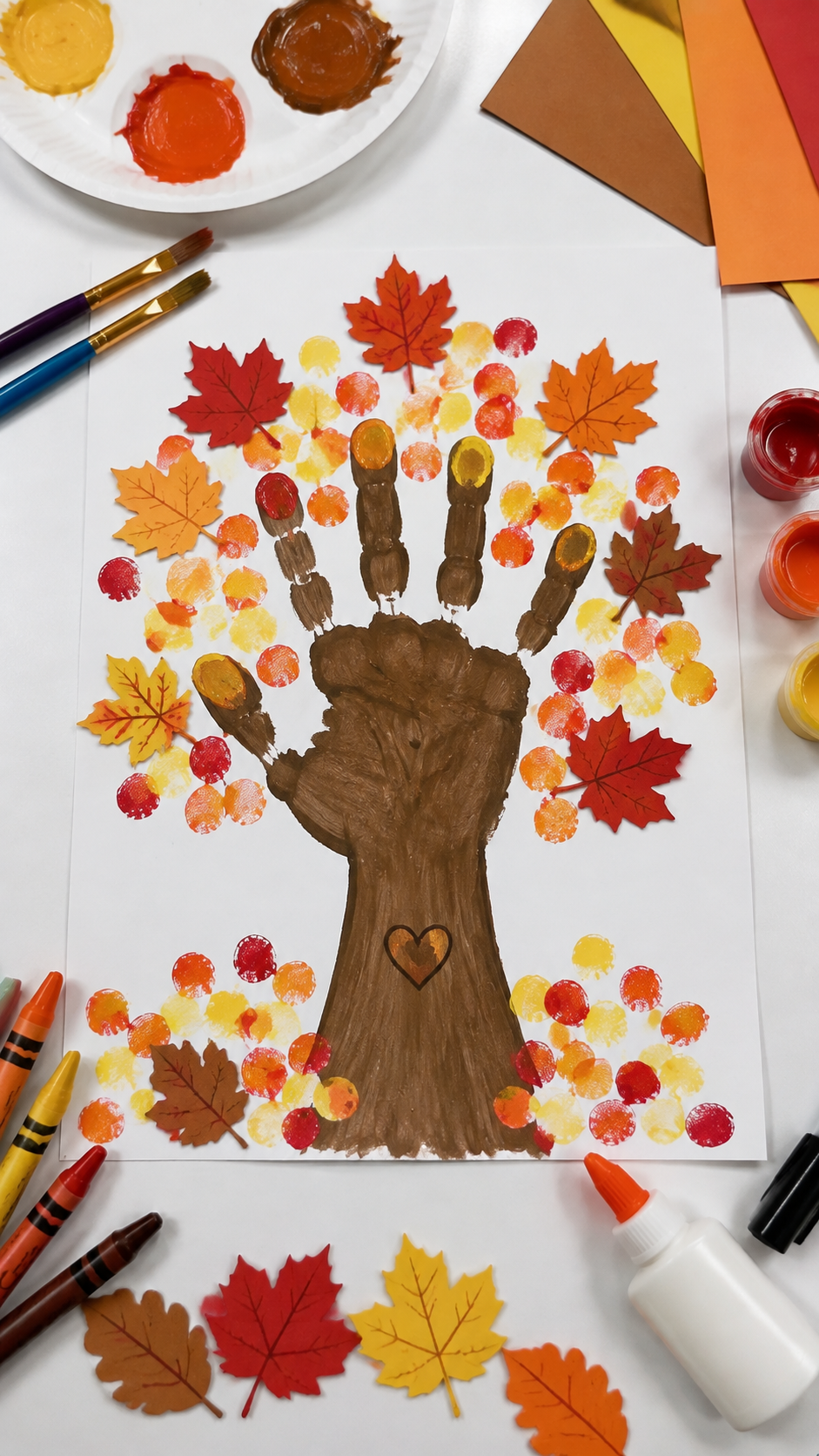
The handprint can stay in the article without turning it into another turkey. This time, the child’s hand and arm become the trunk and branches of an autumn tree.
The child can add paper leaves, paint fingerprints as leaves, or draw leaves around the branches. They can use different colors to show an autumn tree changing from green to yellow, orange, or red.
This is a simple way to make Thanksgiving crafts for young children feel familiar but still give them something different to create.
You can also use the craft to explain that trees do not all change color in exactly the same way. Some leaves turn yellow, some orange, some red, and some may simply turn brown before falling.
11. Paper Bag Harvest Basket
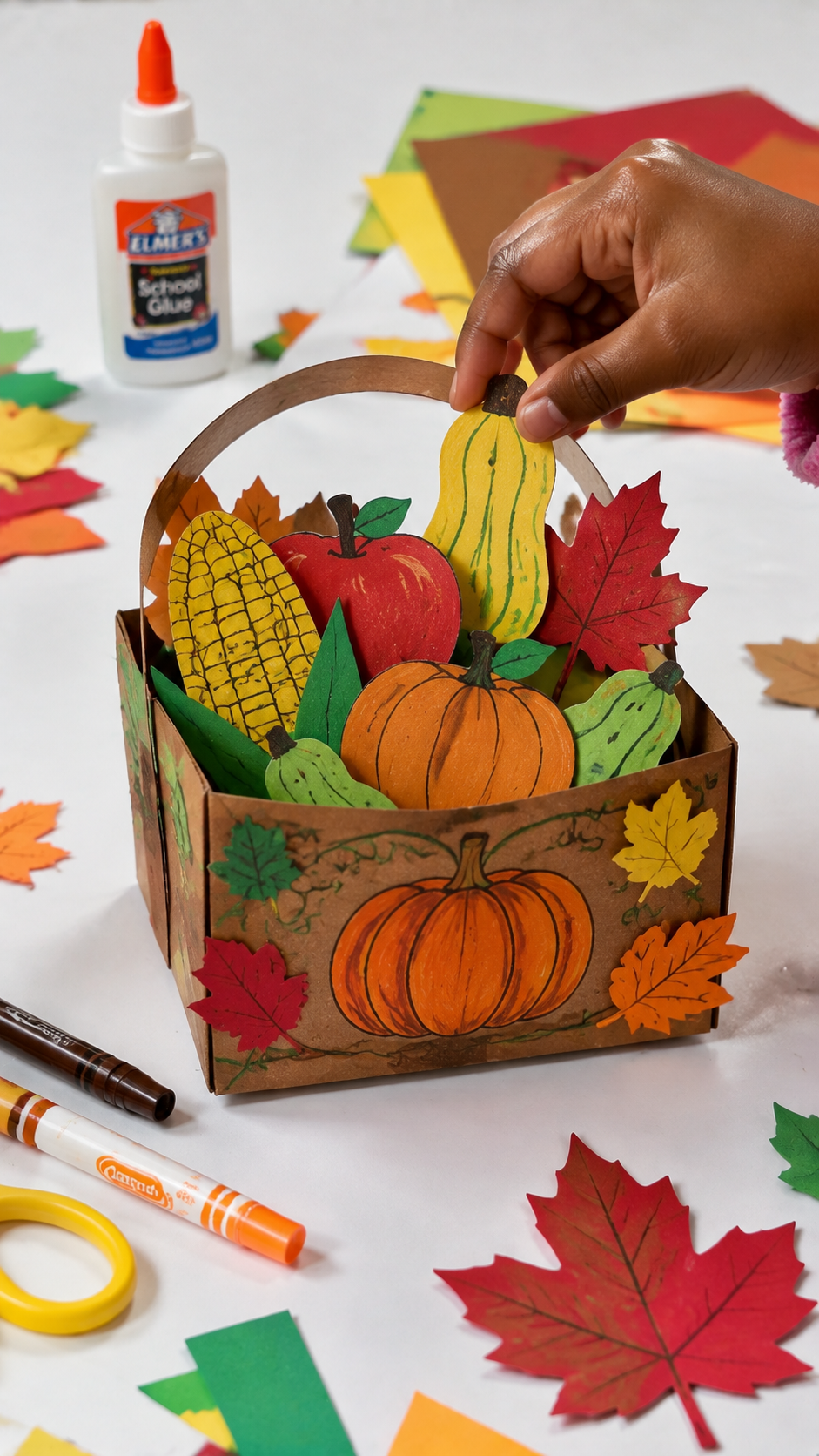
A small paper bag can become a pretend harvest basket filled with fruits and vegetables. Children can make paper apples, corn, pumpkins, squash, or other foods and place them inside.
The idea connects naturally with the word harvest, which means gathering crops when they are ready to be collected.
For Thanksgiving crafts for young children, this one has a nice hands-on part because the child can make the food, put it into the basket, take it out, and use it again during pretend play.
You can also ask where some of the foods come from before they reach the kitchen. An apple grows on a tree, while corn grows on a plant. Keep the conversation simple and let the child continue playing.
12. Paper Plate Autumn Wreath
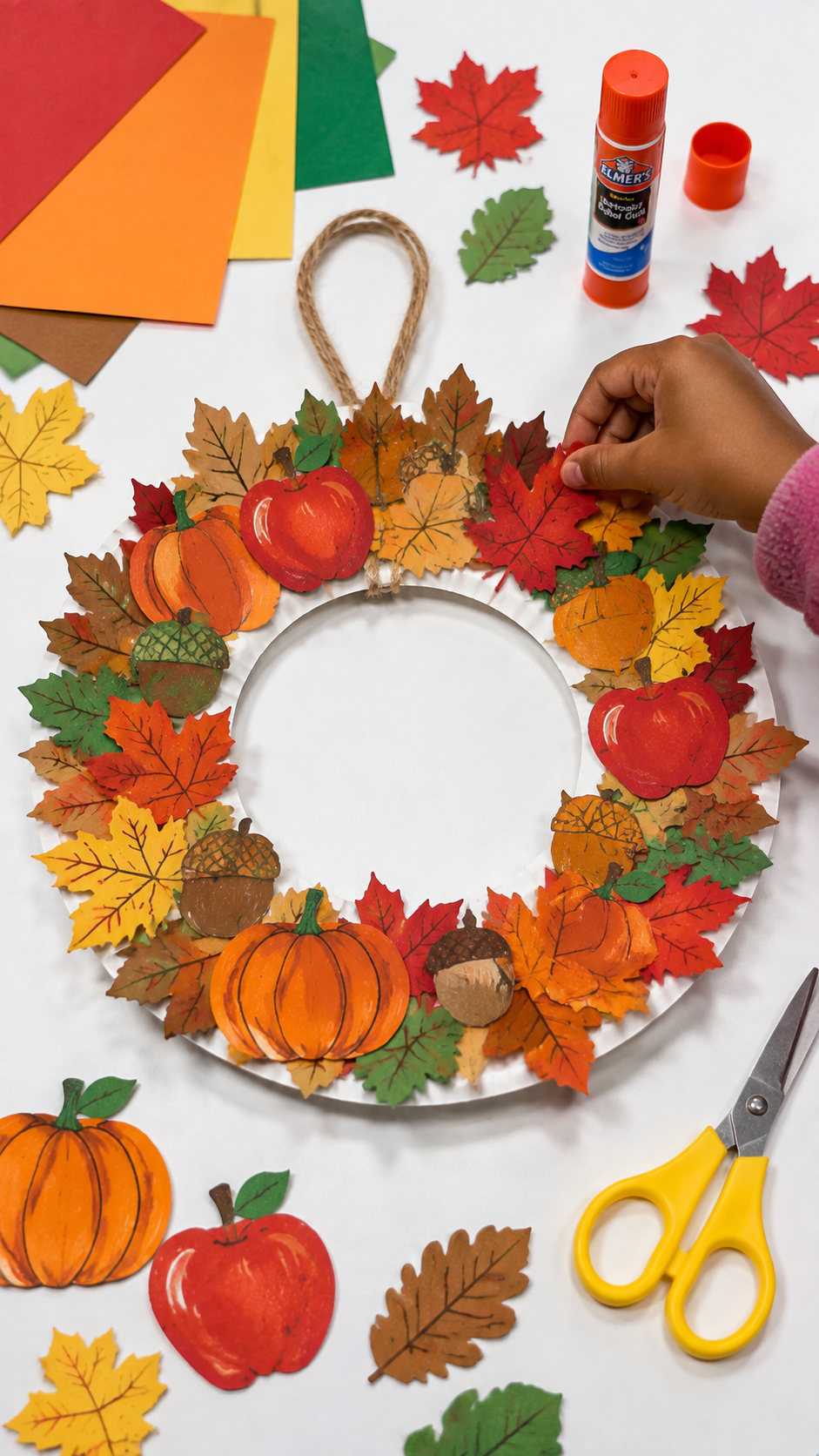
A paper plate can become a simple autumn wreath that a child can help decorate for the home.
Instead of filling it with complicated pieces, use large paper leaves in different autumn colors and let the child decide how they want to arrange them around the plate.
The middle of the plate can be left open, or you can cut out the center to create a more traditional wreath shape.
Younger children can work with leaves that have already been cut out, while older children can help cut their own with child-safe scissors.
The nice thing about this craft is that there is no single correct arrangement. Some children may make a neat circle of leaves, while others may overlap them or mix in pumpkins, acorns, apples, or other shapes.
Once finished, the wreath can be hung on a bedroom door, classroom wall, or family space.
It gives young children a chance to make a seasonal decoration that can actually be displayed rather than another craft that gets put aside after the activity.
How to Make Thanksgiving Crafts for Young Children Easier
Younger children do not need to complete every part of a craft by themselves. The goal is to let them do the parts they can manage while an adult handles anything that is too difficult or unsafe.
For example, you can:
- Cut difficult shapes ahead of time and let the child arrange and glue them.
- Use larger pieces when small pieces are hard for little fingers to pick up.
- Give one or two steps at a time instead of explaining the whole craft at once.
- Let children draw instead of write when a craft includes words or sentences.
- Prepare the messy parts such as paint or glue before the child starts.
- Give them choices rather than telling them exactly where every piece must go.
The same Thanksgiving crafts for young children can often work for different ages when you change the amount of help.
Most importantly, don’t take over just because the finished craft doesn’t look like the example. The child does not need to make it perfectly. They need to have a real part in making it.
What to Do With the Crafts After They’re Finished
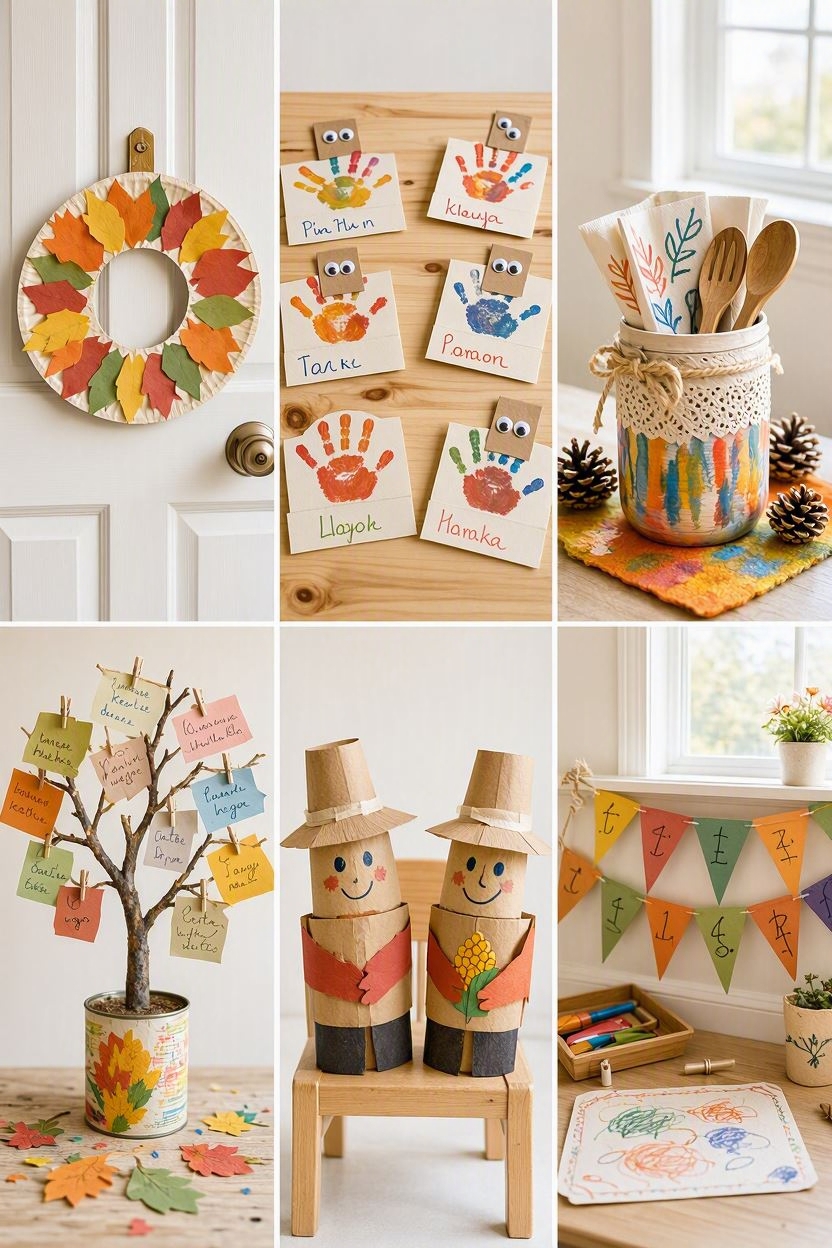
That fits the article because several of our ideas are actually usable, not just decorations.
We can briefly show parents what to do with them:
- Put the paper plate autumn wreath on a door or wall.
- Use the thankful placemat at the Thanksgiving table.
- Display the paper cornucopia with other autumn decorations.
- Give the thank-you card to someone the child appreciates.
- Keep the family memory collage as a little record of that year’s Thanksgiving.
- Use the story stones again for pretend play instead of putting them away immediately.
- Put the harvest basket into a child’s pretend-play area.
The important point could be that not every craft needs to become permanent home décor. Some can be used at the table, given away, played with, or kept as a memory.
That would actually reinforce one of the strongest ideas running through this post: young children aren’t just making something to look at, they’re making things they can use, talk about, play with, or share.
Conclusion
Thanksgiving crafts do not have to keep coming back to the same handprint turkey. Young children can make something just as enjoyable from a paper plate, a few leaves, a piece of cardboard, or even an idea from their own family traditions.
The best Thanksgiving crafts for young children leave enough room for the child to make choices, even when an adult needs to prepare some of the harder parts.
The finished craft does not have to look perfect either. A crooked wreath, an unusual harvest basket, or a very imaginative Thanksgiving table is still something the child made.
So choose one that fits your child’s age and attention span, put the materials within reach, and let them take it from there. And if the handprint turkey still makes an appearance, that’s perfectly fine too. It can share the table with something new this year.
Which of these Thanksgiving crafts will your child want to make first? Pick one, gather what you already have at home, and let the creation begin.