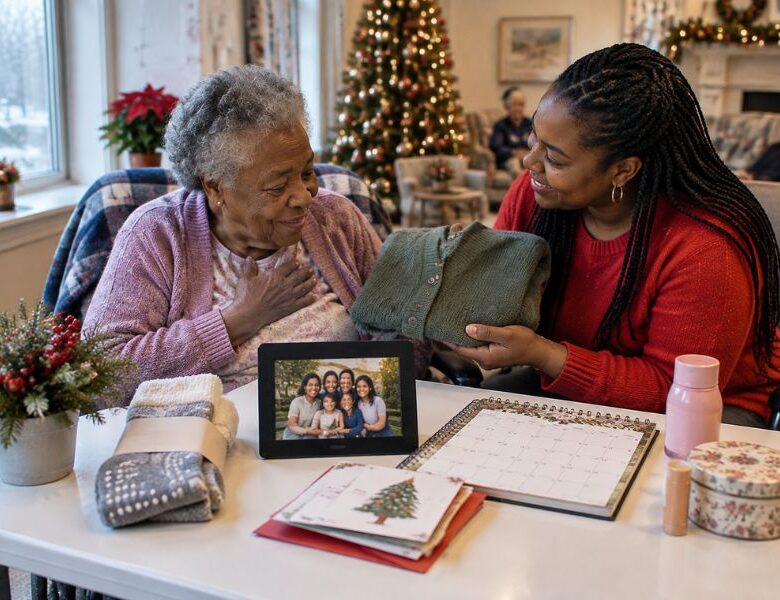
Christmas gifts for someone in a nursing home should feel personal, not become more stuff. Find thoughtful gifts that fit their room, routine, and life.
In a U.S. nursing home, federal standards require at least 80 square feet of usable living space per resident in a multiple-resident bedroom and 100 square feet in a single-resident room, with closets and bathrooms excluded from that calculation.
That doesn’t mean every nursing-home room looks the same, and rules vary by country and facility, but it does put the problem into perspective: personal space can be limited.
So when you’re standing in a store trying to choose a Christmas gift for someone who lives in a nursing home, “something nice” isn’t always the best place to start. The better question is where the gift is going to live after Christmas.
A bulky hamper can take up valuable storage. Another decorative item may have nowhere to go.
Even a seemingly useful gift can be unsuitable if the facility doesn’t allow it, the resident can’t use it independently, or it creates extra work for family or staff.
That’s why these Christmas gifts for someone in a nursing home with no room for anything take a different approach.
The ideas focus on gifts that can be used, enjoyed, shared, worn, consumed or experienced without turning a limited living space into another place to store Christmas presents.
When the nightly Christmas routine starts feeling like another task on the to-do list, Elf on the Shelf Alternatives for Parents Tired of Coming Up With Ideas Every Night: 9 Low-Effort Traditions Kids Still Love gives you simpler traditions to keep the fun going.
The Five Gatekeepers Between Your Gift and Their Room

A thoughtful Christmas gift still has to fit the realities of nursing-home life. Before choosing one, these five practical checks can save you from buying something the resident cannot use, keep or enjoy.
Space
In U.S. federally certified nursing facilities, the minimum is 80 square feet per resident in a shared bedroom and 100 square feet in a private room, excluding areas such as closets and bathrooms.
Actual space varies, so gifts that are used up, worn or experienced can be easier to accommodate than another decorative item.
Facility rules
Nursing homes have their own policies on personal belongings and room items. Candles, for example, are not permitted in resident rooms under CMS guidance, while some electrical items have specific safety requirements.
Check with the facility before buying anything that plugs in, produces heat or needs special storage.
Dietary needs
Food can be a good clutter-free Christmas gift, but don’t assume a favourite treat is automatically suitable. Residents may have allergies, therapeutic diets or modified food and drink textures. Ask the family or facility before sending food, especially when swallowing or dietary restrictions are involved.
Laundry
Clothing can be useful, but nursing-home laundry often handles residents’ items together. Check the facility’s labelling requirements before buying a robe, cardigan, nightwear or other washable gift so it can be properly identified.
Independence
Ask whether the resident can use the gift easily. Complicated gadgets, difficult packaging or items requiring frequent charging may create frustration or extra work for caregivers.
Familiar, simple gifts are often easier to incorporate into daily life.
The goal isn’t simply to find the smallest Christmas gift. It’s to find something that fits the resident’s space, rules, needs and routine.
Office gift exchanges can get tricky when you barely know the person you picked, so Corporate Secret Santa Gifts for a Coworker You Barely Know: 9 Safe Ideas Under $20 is a useful place to start.
On Their Body and in the Closet — 6 Gifts That Replace Instead of Adding
The closet in a shared nursing home room holds maybe four square feet of hanging space, split with a roommate.
So the rule for anything that goes in it is simple: one in, one out. Bring the new cardigan on your visit, and take the worn one home the same day.
That single habit is what makes a Christmas gift for someone in a nursing home actually livable in a room with nowhere to put “extra.”
1. Non-slip tread socks, labeled before you wrap them
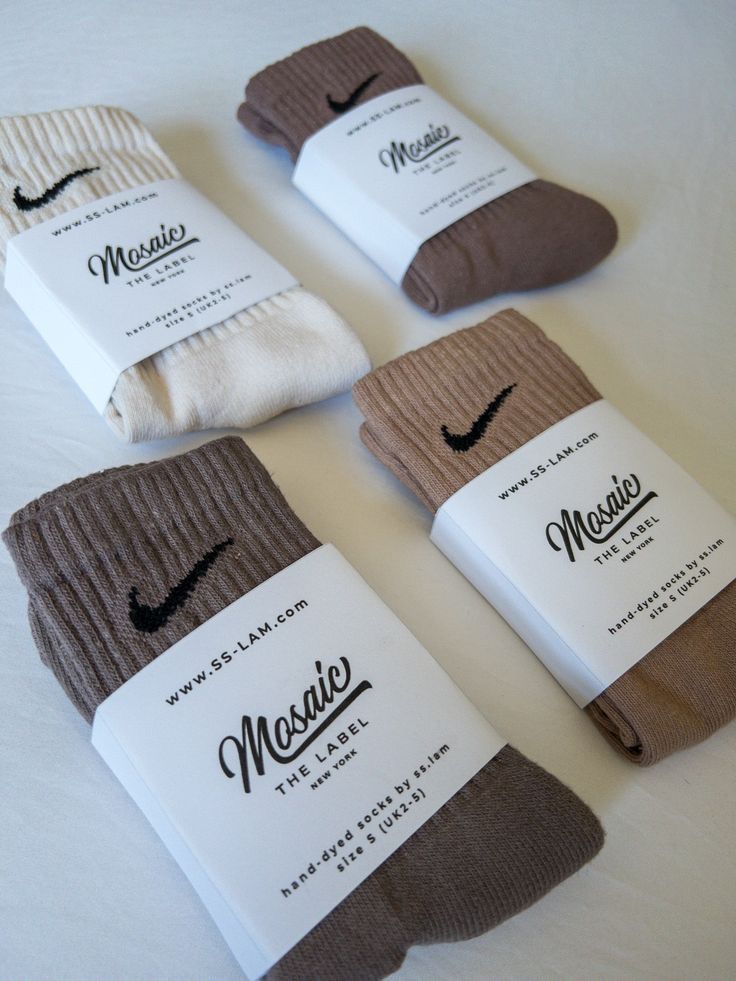
Look for grip on the sole rather than plush softness, an activity director interviewed by the Alabama Nursing Home Association points out that the fluffiest socks tend to be the slickest, and residents who are still walking need traction, not just warmth.
Treaded socks solve that. Write the full name inside the cuff before the sock ever reaches the room, because loose socks are among the first things lost to commercial laundry.
2. An adaptive cardigan or snap-closure top
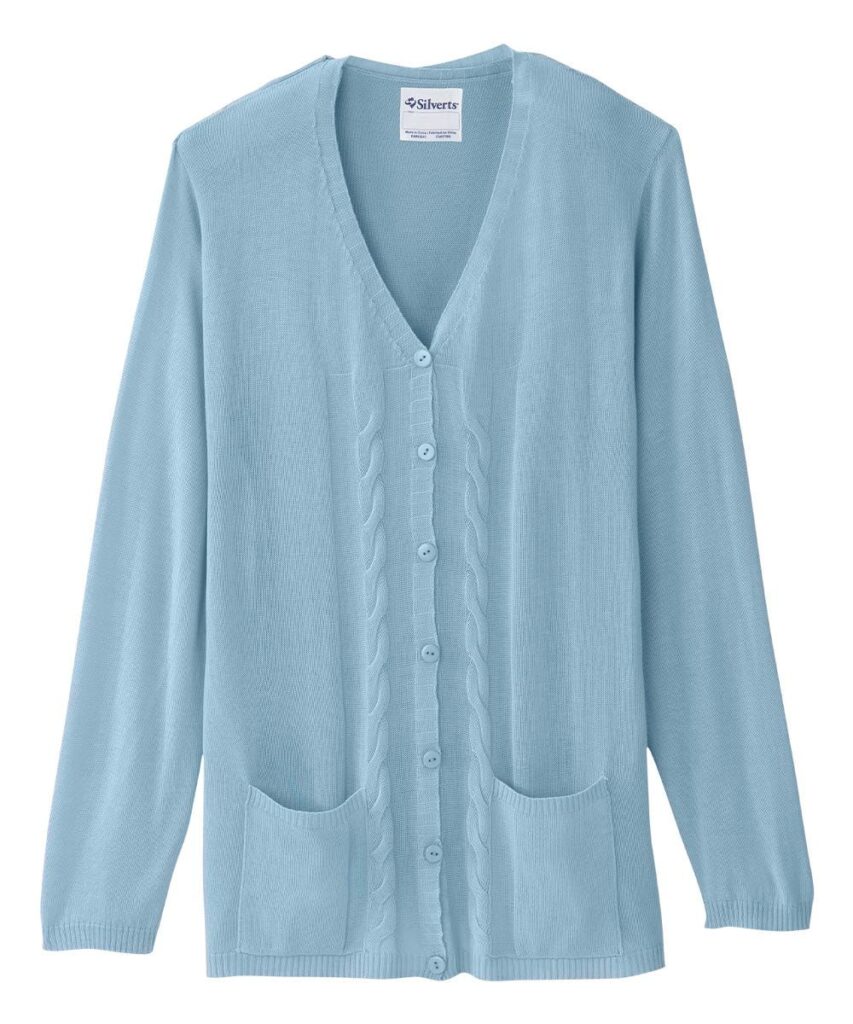
Traditional buttons and pullover sweaters are hard to manage with limited hand strength or dexterity.
A cardigan with snaps or magnetic closures lets a resident dress with some independence, and it replaces one worn-out layer instead of adding a second one to a closet that has no room for it.
3. Mittens instead of gloves

A life enrichment director quoted on the same nursing home gift list notes that residents often struggle to work their fingers into individual glove openings, while mittens slide on with almost no effort.
For someone with arthritis or reduced grip strength, that’s the difference between a glove that gets worn and one that sits in a drawer.
4. A sleeved wearable blanket, sized for a wheelchair
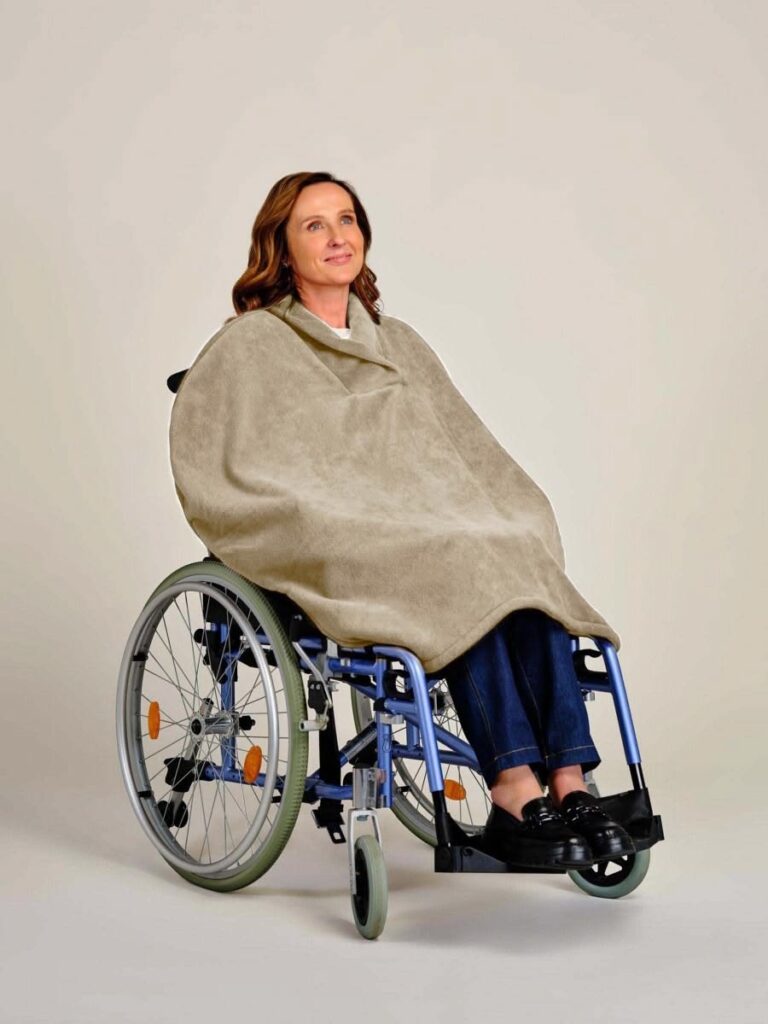
Look for one cut short enough that it doesn’t trail on the floor or catch in wheelchair wheels, a real fall and fire-code risk in shared spaces.
Worn like a robe rather than draped like a throw, it becomes something the resident actually keeps on, not something folded away on a shelf that doesn’t exist.
5. Sleepwear in a pattern they picked out themselves
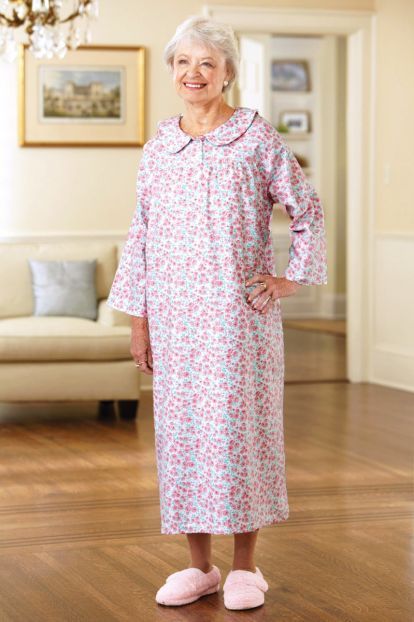
The same activity director frames gowns and sleepwear as one of the few remaining choices a resident gets to make about their own body each night, a small way to express personality in a room that otherwise looks like everyone else’s.
A snap-back or wrap-style gown also makes nighttime changes easier for staff, which matters more than it sounds like it should.
6. Iron-on name labels with the full legal name

Not a nickname, the name on the resident’s chart, since that’s what laundry staff check against.
This is the gift that protects every other gift on this list: without it, the treaded socks, the cardigan, and the sleepwear are all one laundry cycle away from someone else’s closet.
Keep the Christmas story at the centre of the season with 12 Nativity Crafts That Walk Kids Through the Story of Jesus’ Birth, at Home or Sunday School.
On the Overbed Table — Gifts for the Only Surface They Can Reach
An overbed table is designed to swing across the bed and lock in place, and for a resident with limited mobility, it’s often the only flat surface within arm’s reach all day.
Understanding what that table is actually for changes what belongs on it, this isn’t decorative space, it’s functional space shared with a meal tray, a water pitcher, and often a call button.
Every gift here earns its spot by working with that function instead of crowding it.
7. Battery-operated flameless candle on a timer

Real flame is prohibited in nursing home rooms under fire code, a rule written into state health statutes, not just facility policy, because an open flame near oxygen equipment, bedding, or an unsupervised resident is a documented fire risk in long-term care settings.
A flameless LED candle with a built-in timer gives the same warm light and evening ritual without tripping any safety violation, and the timer means nobody has to remember to switch it off.
8. A ten-foot charging cable
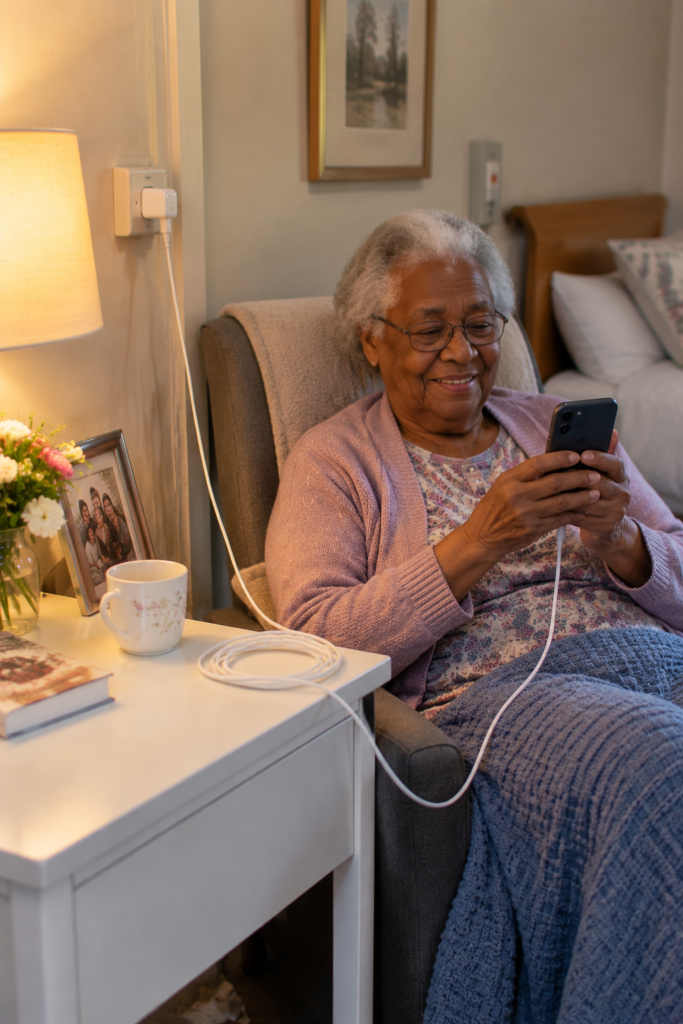
This solves a problem almost nobody accounts for: outlets in most resident rooms are mounted behind the headboard, not beside the overbed table, and standard six-foot cables simply don’t reach.
Extension cords are banned in nearly all facilities because loose cords across the floor are a documented trip hazard for residents using walkers or wheelchairs, and multi-plug adapters raise the same fire-code concerns as open flame.
A single, longer cable — routed once and left alone, lets a resident charge a phone or tablet at the table without anyone needing a cord that isn’t allowed in the first place.
9. Digital photo frame, fully loaded before it’s wrapped
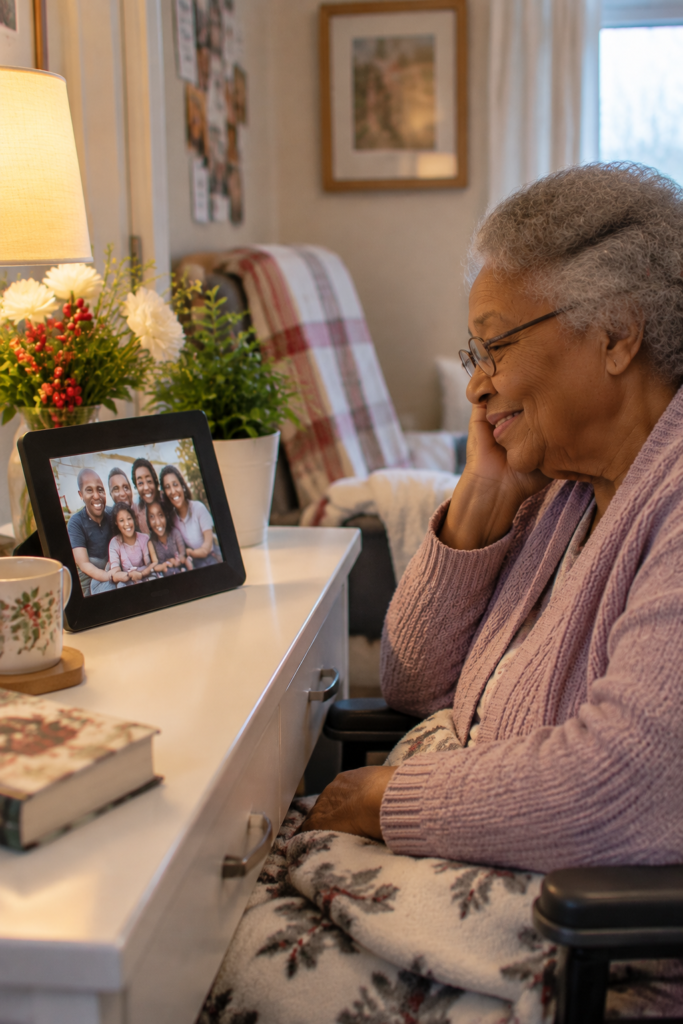
Facility wifi is often locked to staff devices or requires a guest code from the front desk, so the frame needs its photos on it, or on a memory card that’s already inserted, before it ever reaches the room.
Ask the front desk or activities coordinator whether guest wifi exists at all; if it doesn’t, an SD card slot is the more reliable choice than a wifi-dependent frame that never syncs.
10. Their own shampoo, lotion, or body wash in a scent they’ve used for decades

Facilities are required to provide basic hygiene items as part of the daily rate, but the versions supplied are typically generic, and buying replacements through the facility’s own store is usually priced well above retail.
A familiar scent does something a generic bottle can’t: it’s one of the small sensory cues that helps an older adult, especially one with memory loss, feel like themselves in a room that otherwise looks nothing like home.
11. Weighted lap pad — with one condition

A weighted pad can genuinely ease restlessness or anxiety for some residents, but it isn’t an automatic yes.
Weighted items carry real risk for anyone with limited mobility, circulation issues, or breathing conditions, so it needs sign-off from the care team before it comes anywhere near the room.
Ask the charge nurse whether it fits the resident’s current care plan before you buy, a five-minute question that prevents a gift from becoming a safety incident.
A craft does not have to require getting out of bed or sitting at a table; Crafts for Seniors in Bed or Wheelchairs: 8 Ideas That Work on a Lap Tray and Support Independent Participation focuses on projects that can work within a smaller setup.
On the Door and the Wall Above the Bed — Gifts That Use Vertical Space
When the floor, the closet, and the overbed table are all already spoken for, the only space left to decorate is the space nobody’s standing on — the door and the wall above the bed.
This is often the most overlooked category of Christmas gifts for someone in a nursing home, because it doesn’t compete with a single square foot of the room’s limited storage.
12. Door decorations that double as a landmark

In a long hallway lined with identical doors, a wreath or seasonal door hanging does more than look cheerful, it helps a resident, especially one with vision changes or early memory loss, actually locate their own room.
Most facilities decorate common areas for the holidays but leave individual resident rooms untouched, so a door decoration is often the only personal holiday touch a resident’s space gets all season.
Confirm with staff whether hooks or magnetic hangers are allowed, since some fire codes restrict what can be affixed to doors in an evacuation path.
13. Photo sets mounted with removable adhesive strips, not nails or tacks

Command-style strips hold real weight without putting a hole in facility walls, which matters because damage to walls is typically billed back to the resident’s account or family.
A small cluster of three or four framed photos above the bed gives a resident something familiar to look at first thing in the morning, without needing a single inch of shelf or drawer space.
14. A large-print wall calendar marking who’s visiting and when
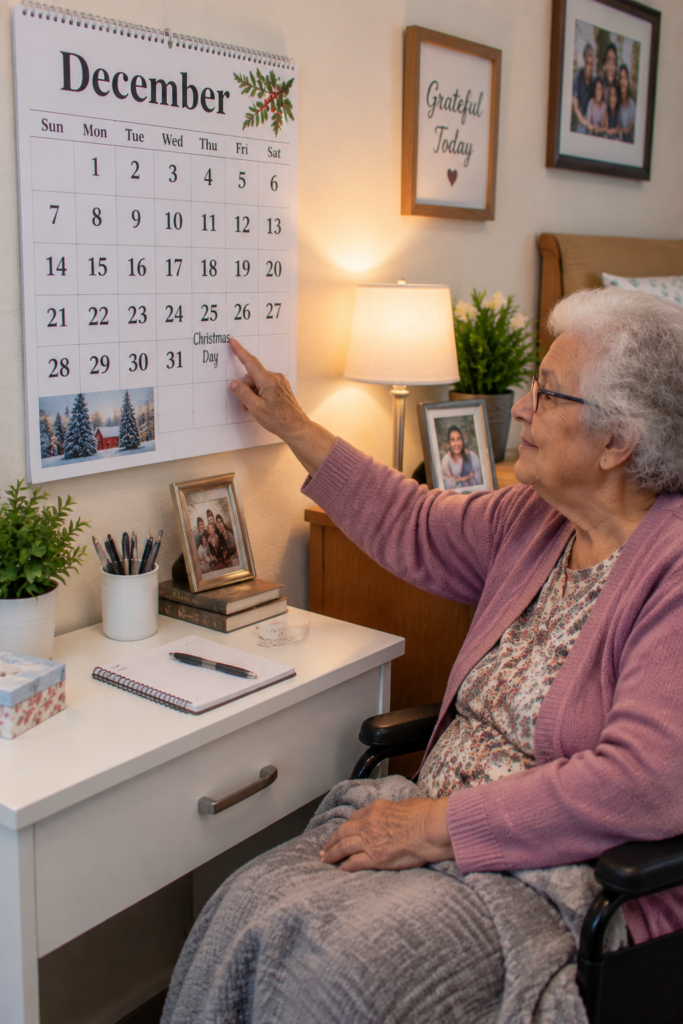
For a resident with low vision or cognitive changes, a standard calendar is often unreadable from the bed.
A large-print version, hung within eye line, lets them track upcoming visits independently, a small piece of orientation and control in a schedule that otherwise runs entirely on staff routines.
Christmas treats do not have to mean making the same cookies every year; 10 Showstopping Christmas Desserts to Make This Holiday Season brings more festive options to the table.
Gifts That Get Used Up and Vanish
Not every good gift needs a place to live. Some of the most useful Christmas gifts for someone in a nursing home are the ones designed to disappear entirely, no clutter, no laundry risk, no competing for the four square feet of closet space.
These four are consumed, spent, or delivered, and then they’re simply gone.
15. Snacks — but only after the charge nurse clears them against the diet order

Many nursing home residents are on a modified diet for swallowing safety, tracked using a standardized scale called IDDSI, which specifies exactly how soft food must be and how thick liquids must be to prevent choking or aspiration.
A resident on a pureed or “mechanical soft” diet order cannot safely eat regular cookies, nuts, or crusty bread, no matter how thoughtful the gift.
Always ask the nurse’s station what the current diet order allows before bringing any food into the room, it takes one phone call and it’s the difference between a treat and a hazard.
16. Stamps and pre-addressed holiday cards

This solves a cost problem most people never think about.
A resident’s only discretionary income is typically a Medicaid personal needs allowance, which by federal law is at least $30 a month and varies by state up to around $200, and stamps come directly out of that small amount.
Pre-addressed, stamped cards let a resident stay in touch with family without spending down an allowance that’s already stretched thin.
17. Prepaid beauty shop or barber appointment through the facility

Most nursing homes contract with an on-site or visiting stylist, and the cost is usually billed to the resident’s personal account rather than covered by the daily care rate.
Prepaying for a haircut, set, or shave is a gift that restores a small piece of routine dignity, and like the appointment itself, it leaves nothing behind to store or lose.
18. Large-print magazine subscription delivered straight to the room

Standard print is genuinely difficult for residents with age-related vision loss to read independently, and a subscription arrives monthly without ever needing a shelf.
It’s a recurring gift that keeps giving well past December, without adding a single object to a room that has nowhere left to put one.
Gifts That Never Enter the Room at All
The final category of Christmas gifts for someone in a nursing home skips the room altogether.
These three don’t need a place on the overbed table, the closet, or the wall, they work through the facility’s own systems, which means there’s nothing to lose, nothing to label, and nothing that competes for space that was never there to begin with.
19. Prepaid funds added to the resident trust fund, coordinated directly with the business office

Most facilities manage a resident’s personal money through this account rather than letting cash sit in the room, and it’s what covers small purchases like haircuts, snacks from the facility store, or stamps.
Here’s the part that catches families off guard: Medicaid caps a resident’s countable assets at $2,000 in most states, and any balance in that trust account counts toward the limit.
Depositing money without checking the current balance first can push a resident over the threshold and put their Medicaid eligibility at risk.
Call the business office before the holidays and ask two things, the current balance, and how much room is left before it becomes a problem, so the gift helps instead of jeopardizing their coverage.
20. A paid streaming or audiobook subscription tied to the television or device already in the room

Most residents already have a TV provided by the facility, and adding a streaming subscription or audiobook account uses hardware that’s already there instead of introducing a new device that needs a plug, a cord, or a spot on the table.
This matters especially for a resident with vision changes, since audiobooks and familiar shows offer entertainment that doesn’t depend on reading small print or holding a book steady.
21. Booked transportation and a companion for one family event

For many residents, the real barrier to attending a holiday gathering isn’t willingness. it’s logistics.
Medical transport or a wheelchair-accessible vehicle, plus someone who can manage transfers and stay with them the whole visit, is often the missing piece.
Coordinating both in advance, and confirming with the facility what documentation or notice they require to approve a day pass, turns “I wish they could come” into an afternoon the resident actually gets to have.
When stiff or aching hands make ordinary crafts frustrating, Can You Still Craft With Arthritis? 10 Gentle DIY Projects for Seniors With Stiff, Aching Hands focuses on projects that are easier to adapt around changing hand comfort.
What Not to Buy, and Why

Before any Christmas gift for someone in a nursing home gets wrapped, it helps to know what won’t make it past the front desk at all, not because the facility is being difficult, but because each of these items is tied to a documented safety rule, not a preference.
- Open-flame candles. Real flame is prohibited in nursing home rooms under state health codes, not just internal facility policy, a rule that exists because of documented fire risk around bedding, oxygen equipment, and residents who can’t quickly move away from a room in an emergency.
- Plug-in scent warmers. These carry a heating element, which places them in the same fire-hazard category as candles even though there’s no visible flame. If scent matters to the resident, a spray or lotion in the same fragrance is the safer substitute.
- Space heaters. Facilities maintain centralized, regulated heating for exactly this reason — a portable heater is one of the most common causes of residential fires nationally, and in a room with limited mobility and shared oxygen lines, the risk multiplies.
- Heating pads and electric blankets. A resident can fall asleep on either one and sustain a serious burn before anyone notices, particularly if they have reduced sensation from diabetes, neuropathy, or limited mobility. This is one of the most consistently banned items across long-term care facilities nationwide.
- Extension cords. Banned under fire code, and for a second reason people don’t expect: a cord crossing the floor is a fall hazard for any resident using a walker, cane, or wheelchair — the exact population living in that room.
- Throw rugs. Loose rugs catch wheelchair casters and walker legs and are one of the most common causes of falls in long-term care settings, which is why most facilities require resident room floors to stay completely clear.
- Unlabeled clothing. Anything without a full legal name sewn or ironed in gets lost in commercial laundry almost immediately — facilities process laundry in bulk, and an unlabeled item has no way to find its way back to the right room.
- Anything valuable enough to grieve if it’s lost. Rooms aren’t lockable in the way a home is, and roommates, staff turnover, and laundry mix-ups all create real opportunities for items to go missing. Save heirloom jewelry, family keepsakes, or anything irreplaceable for a visit, not a gift left behind in the room.
- Cash or checks. Money handed directly to a resident on Medicaid counts as income the month it’s received and as a countable asset the month after — and Medicaid caps countable assets at $2,000 in most states. A gift meant to help can unintentionally put coverage at risk; a contribution to the resident trust fund, made through the business office, is the safer way to give money.
- Unopened, sealed food — unless the diet order allows it. Even a factory-sealed box of cookies isn’t automatically safe. Many residents are on a modified diet for swallowing safety, and the seal on the package has nothing to do with whether the texture inside is appropriate for that resident’s current diet order. Always check with the nurse’s station first, regardless of how the food is packaged.
- Balloons — check with the facility first. Some facilities restrict latex balloons over allergy or choking concerns, and rules vary by facility rather than following one national standard, so a quick call before you buy avoids the guesswork.
If You Can’t Visit This Year

Distance, health, or a full schedule can make an in-person visit impossible during the holidays, but a Christmas gift for someone in a nursing home doesn’t have to wait for one.
Shipping it correctly, and choosing gifts that don’t depend on you being in the room, means the resident still gets something real on Christmas morning.
-
Address it the way the mailroom actually sorts it
Nursing homes route mail and packages the same way any large institution does, by matching a name against a resident roster, not by recognizing a face. Use the resident’s full legal name, exactly as it appears on their admission paperwork, not a nickname or a maiden name they no longer go by.
Include the room number if you know it, and add an “Attn:” line with the resident’s name directly above the facility’s own address, this tells front-desk or mailroom staff who to route it to before it ever reaches a shelf of unclaimed packages.
A package addressed only to “Grandma Betty” at a building with 120 residents has a real chance of sitting unopened.
-
Call the facility before you ship, not after
This one call solves several problems at once.
Ask whether packages are accepted at a general front desk or a specific mailroom, whether there’s a size or weight limit, and whether a staff member opens packages before they reach the resident’s room, some facilities do this routinely as a safety check for the same reasons a candle or space heater gets flagged in person.
It’s also the moment to confirm the current diet order if you’re shipping anything edible, since a kitchen or nursing staff member needs to clear food before it’s given to the resident regardless of how it arrives.
Choose from the gifts that don’t need you there to work. Several items on this list were built for exactly this situation:
- Iron-on name labels and treaded socks ship flat, need no assembly, and start protecting the resident’s belongings the day they arrive
- A digital photo frame loaded with photos before it ships needs no wifi and no visit to start working the moment staff plug it in
- A prepaid resident trust fund deposit, a streaming subscription tied to the TV already in the room, or a large-print magazine subscription all activate through the facility’s own systems and never require a delivery to a specific hand
- Stamps and pre-addressed cards let the resident write back to you, which matters more when a visit isn’t possible
The gifts that need a visit to matter, the sleeved blanket you fit yourself, the appointment you sit through together, can wait for the next trip.
The ones above are built to arrive, get put to use, and mean just as much without you standing in the room when they do.
The Real Constraint Isn’t the Room
None of this is about how little space a nursing home resident has. It’s about how few people know what that space actually requires, which diet order applies, which cord is a fire hazard, which sock is a fall risk, which check could cost someone their Medicaid coverage.
That’s not a smaller kind of giving. It’s a more accurate one.
Bookmark this list before your next visit, or send it to anyone else buying for someone in care this year, the questions here are worth asking every holiday, not just this one.