Wondering which sensory craft your child actually needs? Find sensory DIY craft ideas for kids with special needs written to help.
You’ve probably already saved a dozen sensory craft ideas for your child. Pinterest boards full of them, maybe a few printed lists from a Facebook group. And yet the hard part hasn’t changed: knowing which one actually fits what your child needs right now.
That’s the real question underneath “sensory craft ideas”, not what to make, but what it’s for.
A craft that calms an overwhelmed nervous system looks nothing like one that builds hand strength, and both look nothing like one that helps a child tolerate a new texture.
Without knowing the difference, it’s easy to end up with a pile of activities and still not the right one for the moment.
This list is organized by the sensory system each craft actually targets, tactile, proprioceptive, vestibular, auditory, and oral-motor, so you can choose based on what your child is asking for, whether that’s calming input after a hard day or a gentle push toward a skill they’re still building.
By the end, you’ll know exactly which craft to reach for.
Helping children manage emotions through hands-on play becomes easier with DIY Sensory Bottles: How to Make a Calming Jar for Kids to Ease Big Emotions, a simple activity that creates a soothing tool children can use during overwhelming moments.
Why Sensory Input Matters for Learning
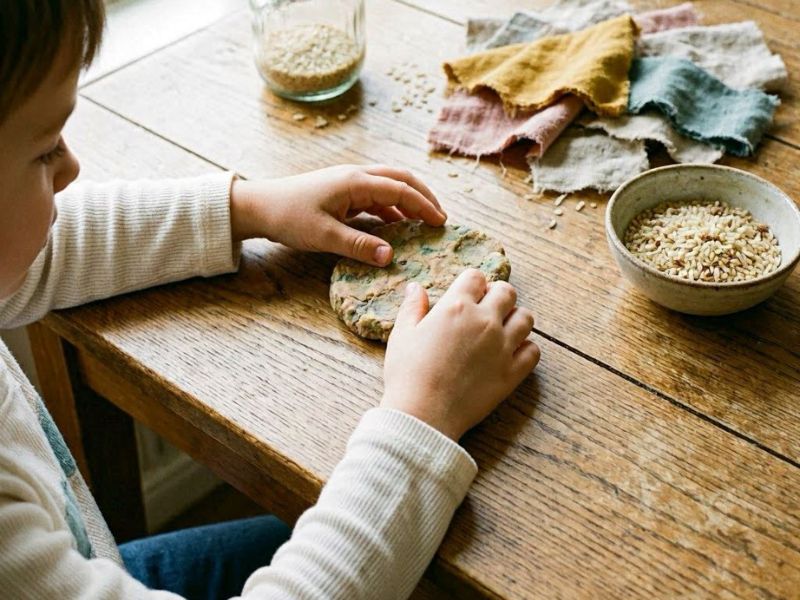
Before a child can focus, follow instructions, or take in something new, their brain has to first make sense of everything coming in through their senses, touch, movement, sound, sight, smell.
This sorting process happens constantly, and it’s called sensory processing. When it works smoothly, a child barely notices it’s happening. When it doesn’t, the brain stays busy managing that input instead of being free to learn.
This is why sensory DIY craft ideas for kids with special needs aren’t just a fun add-on to a day. They’re a direct way to give the brain the input it’s asking for, in a form that’s manageable and predictable.
A few things happen in the brain during sensory-based play:
- Regulation comes first. A child who’s overstimulated or understimulated can’t attend to a task well until their sensory system settles. Crafts that offer calming or organizing input (deep pressure, repetitive motion, predictable texture) help that happen naturally.
- Attention follows regulation. Once the nervous system isn’t overwhelmed, a child has more capacity to focus on the task in front of them.
- Learning follows attention. Fine motor skills, language, problem-solving, and following multi-step directions all build on top of a regulated, attentive state, not before it.
That order matters. A craft that looks educational on the surface won’t do much if a child’s sensory system is still working overtime.
This is why matching the craft to the sensory need, not just the age or interest, makes the biggest difference in whether it actually supports learning.
Adding texture to artwork becomes incredibly exciting with Bubble Wrap Painting: The Easy Texture Trick That Turns Bored Kids Into Little Artists, a simple activity that transforms ordinary painting into a fun sensory experience.
Sensory DIY Craft Ideas for Kids with Special Needs
Tactile Crafts — Building Tolerance and Fine Motor Control
1. Textured Collage Board
This craft brings together several different materials, fabric, bubble wrap, sandpaper, cotton, onto one board, so your child moves between textures in a single sitting rather than encountering them one at a time.
Materials: Cardboard or a wooden board, fabric scraps, bubble wrap, sandpaper, cotton balls or felt, strong glue.
What it’s teaching: Tactile discrimination, the ability to notice, compare, and describe differences in texture, along with the fine motor control needed to place and press each piece into position.
Tip for a tactile-averse child: Let them choose the order of textures themselves, starting with whichever feels safest. Handing them a small paintbrush or foam roller to “test” a texture before touching it with bare fingers gives them a buffer while they build confidence.
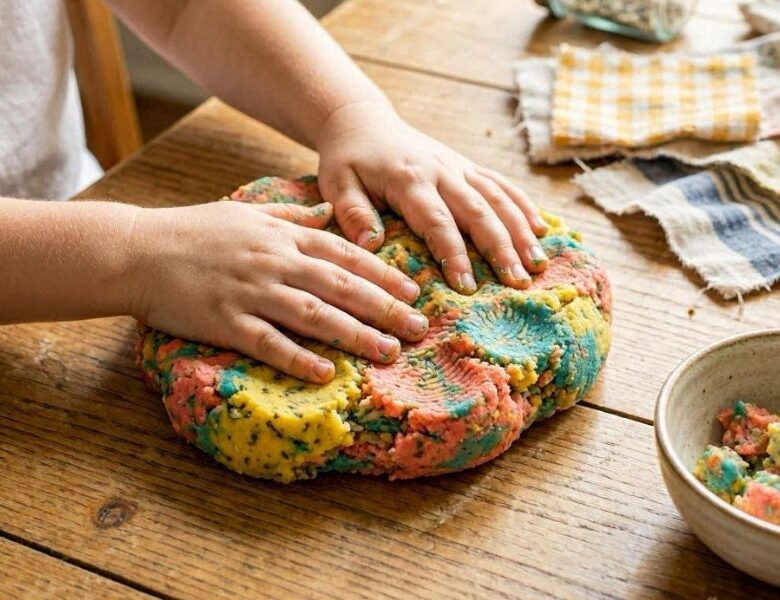
2. Homemade Scented Playdough
Mixing scent into playdough turns a familiar tactile activity into a two-sense experience, layering smell on top of touch without adding any extra mess.
Materials: 1 cup flour, ½ cup salt, ¾ cup warm water, 1 tablespoon vegetable oil, a few drops of a mild essential oil or a spoonful of ground cinnamon or cocoa.
What it’s teaching: Proprioceptive input through kneading and squeezing, paired with sensory association between smell and texture, a skill that supports memory and self-regulation.
Tip for a tactile-averse child: Offer a rolling pin or cookie cutters first, so their hands can interact with the dough through a tool before moving to direct contact. Some children warm up to the texture faster once they’ve watched an adult handle it first.
Rainy weather doesn’t have to mean boredom when Indoor Activities for Kids on Rainy Days That Actually Keep Them Busy is filled with creative ideas that keep children entertained without relying on screens.
3. Contact-Paper Sensory Window
Sticky-side-out contact paper turns loose materials, tissue paper, leaves, yarn, into a see-through piece your child builds piece by piece and can hang on a window afterward.
Materials: Clear contact paper, tissue paper scraps, dried leaves or petals, yarn or ribbon, tape to frame the edges.
What it’s teaching: Fine motor precision through picking up and placing small pieces, along with tolerance for stickiness, a texture many tactile-sensitive children avoid.
Tip for a tactile-averse child: Tape the contact paper sticky-side-up to a table first so it doesn’t move, and offer tweezers or clothespins for placing pieces. This keeps their fingers off the sticky surface until they’re ready to try it directly.
Children can discover new traditions, patterns, and artistic styles through 12 African Art Projects for Kids That Teach Culture, Not Just Craft, making art time both creative and educational.
Proprioceptive Crafts — Heavy Work That Calms and Focuses
Proprioceptive input is the feedback a child’s muscles and joints send to the brain during pushing, pulling, squeezing, or carrying, and it’s one of the most reliably calming, organizing types of sensory input there is.
Among sensory DIY craft ideas for kids with special needs, this category tends to get the least attention, even though it’s often the one that helps a child settle enough to engage with everything else on this list.
4. Weighted Sensory Pouch
Filling a small fabric pouch with dried beans or rice and sewing or tying it shut gives your child something with real heft to hold, squeeze, or rest across their lap while working on another task.
Materials: Small fabric squares or an old sock, dried beans or rice, needle and thread or a hot glue gun, ribbon for tying.
What it’s teaching: Deep pressure input through squeezing and holding weight, which supports self-regulation and can extend a child’s ability to sit and attend to a task.
Proprioceptive tip: Let your child fill the pouch themselves, scooping and pressing the beans in by hand, the filling process alone offers resistance and heavy work before the pouch is even finished.
Recycling becomes part of the fun with 13 Easy Egg Carton Craft Ideas for Preschoolers at Home (Perfect for Tired Days), where ordinary egg cartons are transformed into playful creations that preschoolers love making.
5. Kneading-Based Dough Ornaments
Rolling, pressing, and shaping a stiff salt dough into ornaments or shapes gives your child’s hands sustained resistance from start to finish, not just a quick squeeze.
Materials: 2 cups flour, 1 cup salt, 1 cup water, a rolling pin, cookie cutters, a straw for hanging holes.
What it’s teaching: Sustained proprioceptive input through kneading and rolling, along with bilateral coordination as both hands work together to flatten and shape the dough.
Proprioceptive tip: Make the dough slightly stiffer than a standard recipe calls for, the extra resistance gives more proprioceptive feedback, and rolling it out with real body weight behind the pin adds even more.
6. Squeeze-and-Press Printmaking
Pressing sponges, bubble wrap, or foam shapes firmly onto paper to transfer paint turns a simple printmaking craft into a repetitive, pressure-based motion your child can repeat as many times as they need.
Materials: Washable paint, sponges or bubble wrap, paper, a shallow tray for paint.
What it’s teaching: Repetitive proprioceptive input through the press-and-release motion, along with visual feedback as each print appears, a helpful pairing for a child who needs to see the result of their effort.
Proprioceptive tip: Encourage a firm, full-hand press rather than fingertip contact. Pressing with a fist or the whole palm delivers more proprioceptive input than a light touch and tends to feel more satisfying for a child seeking that kind of feedback.
Creative play gets a safe, mess-managed upgrade with Safe and Easy Slime Craft Ideas for Kids — Non-Toxic Projects That Keep Them Busy for Hours, offering hands-on fun without the worry of harsh ingredients.
Vestibular-Adjacent Crafts
Vestibular input comes from movement itself, spinning, swinging, tilting, or shifting balance, and it’s the sense most craft lists skip entirely, since most crafts happen sitting at a table.
7. Paint-Spinning Art
Placing paper inside a salad spinner or on a lazy Susan and spinning it while paint is added lets your child watch color scatter and blend through motion, not brushwork.
Materials: A salad spinner or lazy Susan, washable paint, paper cut to fit, spoons for dripping paint.
What it’s teaching: Vestibular input through the spinning motion, paired with visual tracking as the paint moves and settles — a combination that can be both stimulating and organizing depending on the speed.
Movement tip: Start with slow, short spins and watch how your child responds before increasing speed. Some children need the fast, dizzying version to feel regulated; others do better with a gentle turn and plenty of pauses to reset.
8. Balance-Based Mark-Making
Taping a large sheet of paper to a wall and asking your child to draw while standing on one foot, a balance cushion, or a low wobble board turns a simple drawing task into a full-body balance challenge.
Materials: Large paper, tape, crayons or markers, a balance cushion or folded towel to stand on.
What it’s teaching: Vestibular and proprioceptive input working together, since staying upright while drawing requires constant small postural adjustments, good practice for the core stability that supports sitting still later.
Movement tip: Keep the surface low-risk to start, a folded towel or thick cushion rather than anything unstable enough to cause a fall, and stand nearby until you know how your child balances.
9. Obstacle-Course Sensory Path
Building a short path from household materials, then walking, crawling, or hopping through it before or after crafting, gives your child a burst of movement input that can make the sit-down part of a craft easier to manage.
Materials: Painter’s tape, floor cushions, a step stool, pool noodles or rolled towels for crawling under.
What it’s teaching: Vestibular input through changes in direction and level, plus motor planning as your child figures out how to move through each section of the path.
Movement tip: Let your child help build the path, arranging the cushions and taping down the route adds proprioceptive work before the movement even starts, and gives them ownership over the sequence.
These are genuinely among the most overlooked sensory DIY craft ideas for kids with special needs, since most craft content assumes a child is seated the entire time.
More colorful science-meets-art inspiration awaits in Coffee Filter Butterfly Craft for Kids (Easy Stained Glass Effect Craft Idea), where simple supplies create beautiful butterflies and fascinating color effects.
Auditory and Visual Crafts — Calm-Down and Focus Tools
10. DIY Sensory Bottle for Visual Tracking
Sealing water, glitter, and a slow-moving filler like oil inside a bottle gives your child something to watch settle at a pace their eyes can follow without any pressure to respond.
Materials: A clear plastic bottle with a tight lid, warm water, glitter, a few drops of food coloring, clear glue or hot glue for sealing.
What it’s teaching: Sustained visual tracking and calming visual input, since following a slow-moving object requires the eyes to settle into a steady rhythm rather than jumping between stimuli. This makes it especially useful after overstimulation, not before a task.
Tip: Keep one bottle in a quiet corner your child can retreat to on their own, so shaking and watching it becomes a habit they reach for after a loud or overwhelming moment, rather than something you have to prompt each time.
11. Homemade Shaker Instrument
Filling a small container with rice, beads, or dried beans and sealing it shut turns a simple craft into an instrument your child can shake, testing different fillers for different sounds.
Materials: Small plastic containers or cardboard tubes, rice, dried beans, or beads, tape or glue to seal the ends, decorative paper (optional).
What it’s teaching: Auditory discrimination, noticing how different fillers produce different sounds, along with rhythm and cause-and-effect through repeated shaking. This makes it especially useful for building focus before a task, since a few minutes of rhythmic shaking can help organize a child’s attention before something that requires more sustained concentration, like a worksheet or a seated activity.
Tip: Make two or three shakers with different fillers side by side, so your child can compare sounds directly. Letting them choose which one to reach for before a task also gives them a sense of control over their own focus routine.
Little learners who love vehicles and hands-on activities will have a great time with Train Craft Ideas for Kids That Make Learning the Alphabet Fun With Things You Already Have, where letter recognition and creativity come together in one engaging project.
12. Light-and-Shadow Box
Cutting simple shapes into a cardboard box and shining a flashlight through from behind creates shadows on a wall, giving your child a visual result that shifts every time they move the light.
Materials: A cardboard box, scissors or a craft knife (adult use), a flashlight, tape.
What it’s teaching: Focused visual attention, since tracking how the shadow changes with each small movement of the light requires sustained looking rather than a quick glance. This works well as a calming, low-stimulation activity in a dimmed room, particularly for a child who’s sensitive to bright or busy visual environments during the day.
Tip: Dim the room as much as possible before starting, and let your child control the flashlight themselves. Being the one moving the light, rather than watching someone else move it, tends to hold their attention longer.
13. Wind Chime From Recycled Materials
Stringing bottle caps, buttons, or spoons onto a hanger and hanging it somewhere it can catch a breeze gives your child a craft that keeps producing sound long after it’s finished.
Materials: A wire hanger or wooden dowel, string, bottle caps, buttons, or metal spoons, a hole punch.
What it’s teaching: Auditory awareness and anticipation, since the sound only comes with movement, which encourages a child to notice cause and effect in their environment over time. This makes it a good ongoing calming tool once hung near a window, since many children find the intermittent, natural sound easier to tune into or tune out of than something constant.
Tip: Hang it somewhere your child passes daily, like near a bedroom window, rather than somewhere out of sight. The sound working its way into daily routine, without being forced, is part of what makes it calming over time.
Patriotic celebrations become even more memorable with Q-Tip Firework Painting Craft for Kids for 4th of July Indoor and Outdoor Fun, a project that captures the excitement of fireworks without leaving home.
Oral-Motor and Smell-Based Crafts
This is one of the most overlooked categories in sensory content. Most craft lists stop at hands and eyes, skipping the mouth and nose entirely, even though oral-motor input and smell play a real role in regulation and skill-building for many kids.
14. Straw-Painting Art
Dropping a small puddle of thin paint onto paper and blowing through a straw to push it into shapes turns a simple art project into an oral-motor exercise, since it requires controlled, sustained breath rather than a quick puff.
Materials: Washable paint thinned with a little water, paper, plastic straws, an eyedropper (optional, for placing paint).
What it’s teaching: Oral-motor strength and breath control, the same kind of sustained exhale used in speech and feeding therapy exercises, built here into a low-pressure creative task instead of a drill.
Tip: Start with a wider straw, which requires less breath control, and move to a narrower one as your child builds strength. If blowing feels difficult at first, a short practice round blowing bubbles in water can help before moving to paint.
15. Scented Dough
Kneading a batch of playdough with a mild scent mixed in, cinnamon, vanilla, citrus zest, pairs a familiar tactile activity with a smell your child can notice and return to.
Materials: 1 cup flour, ½ cup salt, ¾ cup warm water, 1 tablespoon vegetable oil, a spoonful of ground cinnamon, citrus zest, or a drop of a mild extract like vanilla.
What it’s teaching: Olfactory awareness alongside tactile input, giving a child two senses to process at once in a mild, predictable way rather than an overwhelming one.
Tip: Stick to one scent per batch and keep it mild. Strong or mixed scents can overwhelm a child who’s sensitive to smell, so it’s worth testing a small amount first and adjusting based on their reaction.
These two round out the sensory DIY craft ideas for kids with special needs that most lists skip, giving you a way to work oral-motor and smell-based input into the mix without it feeling like a therapy exercise.
Empty cardboard tubes become exciting craft materials in Toilet Paper Roll Crafts for Kids That Turn Everyday Waste into Fun, Skill-Building DIY Projects at Home, proving that creativity can start with items already in the recycling bin.
How to Choose the Right Craft for Your Child
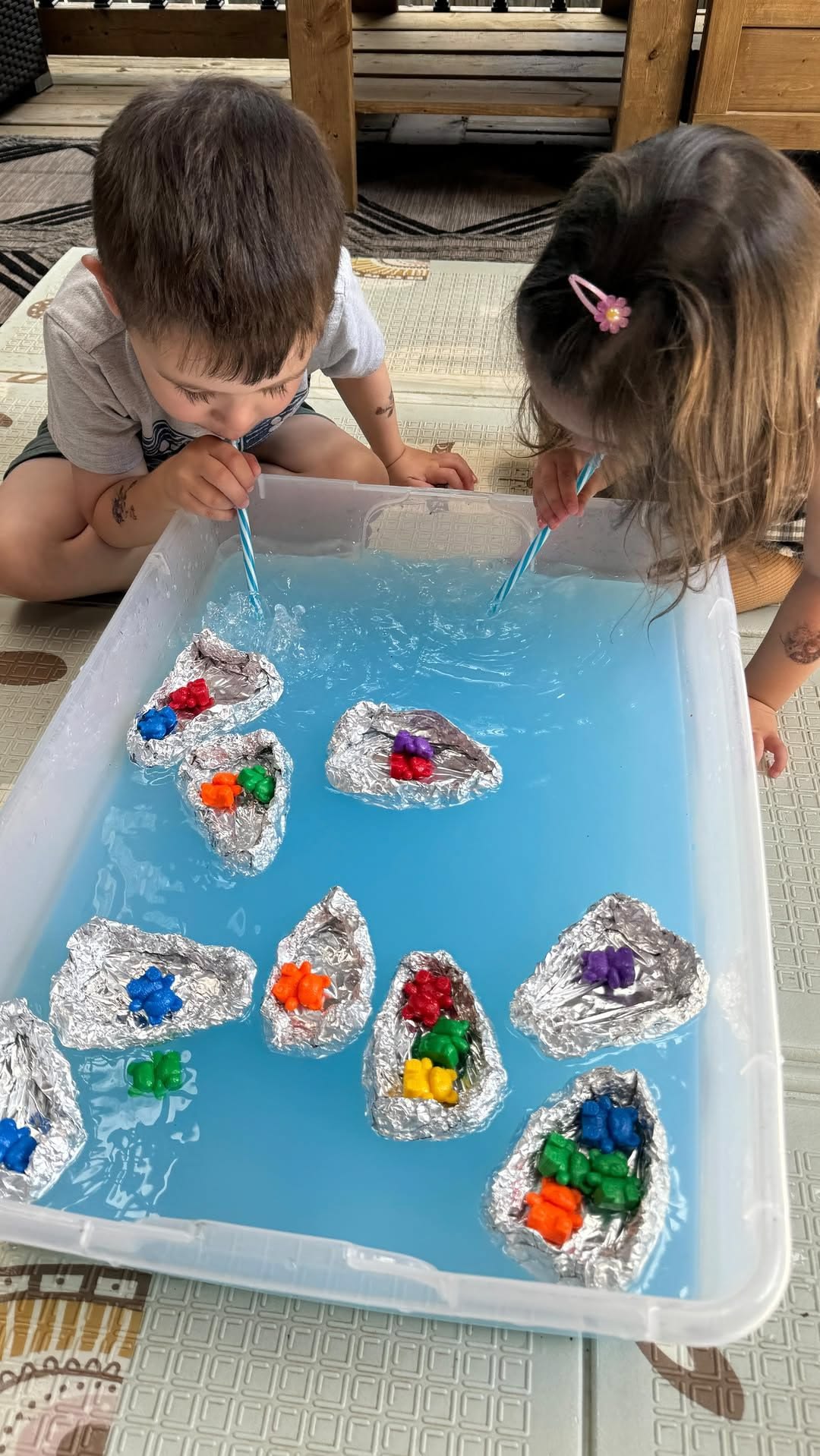
- Notice what your child avoids versus what they seek out. A child who pulls away from messy textures needs a different starting point than one who constantly seeks out deep pressure or movement. Pay attention before picking a craft, not after.
- Match the craft to the moment, not just the diagnosis. The same child might need a calming visual craft after school and a proprioceptive one before homework. Choose based on what they need right now, not a fixed category.
- Start with tolerance-building, not challenge. If a texture or sensation is new, offer the mildest version first, a tool instead of bare hands, a small amount instead of a full bin. Build up gradually rather than starting with the most intense version of an activity.
- Follow your child’s pace over the finished project. The value is in the sensory input, not a completed craft to display. If your child wants to stop halfway through, or repeat one step twenty times, that’s still working.
- Watch for signs of overstimulation mid-activity. Pulling away, covering ears, or increased fidgeting are signals to pause or switch to a calming option, not signs to push through.
- Keep a few options ready across categories. Having one tactile, one proprioceptive, and one calming visual or auditory craft on hand means you can respond to what your child needs in the moment instead of starting from scratch.
- Let your child lead when possible. Choosing the filler for a sensory bottle, the scent for playdough, or the texture for a collage gives your child a sense of control, which often makes them more willing to engage.
Bright colors and endless possibilities make Easy Foam Sheet Crafts for Kids That Keep Them Focused, Creative, and Productively Busy at Home a wonderful choice for quiet afternoons and classroom activities alike.
Safety and Adaptation Notes
-
Choking hazards with small sensory bin items
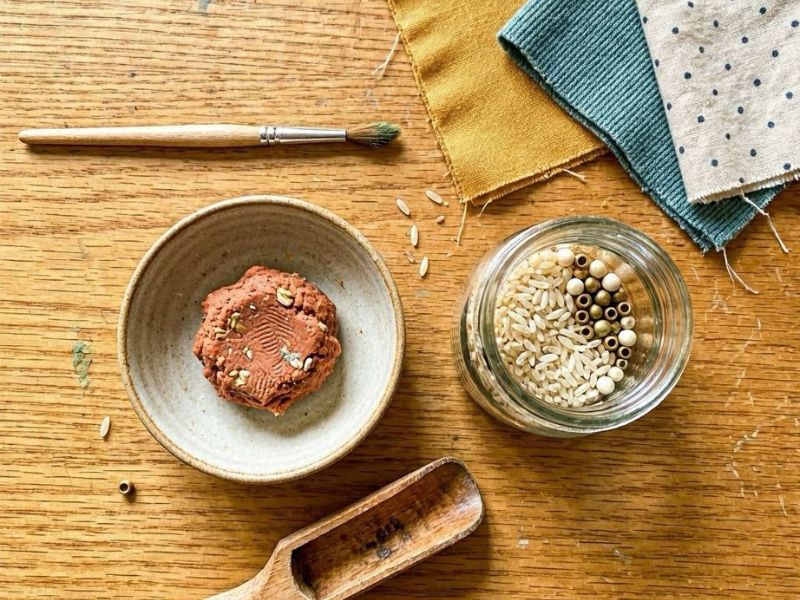
Rice, beans, water beads, and small toys used in tactile bins are a real risk for any child who still mouths objects or is under three.
Water beads in particular expand once swallowed and have caused serious injuries, so skip them entirely for a child with a mouthing habit. Swap in larger-scale alternatives instead, cooked and cooled pasta, torn paper strips, or fabric scraps, which offer similar texture without the same risk.
-
Texture substitutions for tactile defensiveness
A child who resists touching rice or sand outright isn’t being difficult, the sensation may genuinely register as unpleasant or even painful to their nervous system.
Rather than pushing through, substitute a milder texture first: dry oats instead of rice, a soft pom-pom bin instead of beans, or a texture board with fabric only, no sandpaper, until tolerance builds.
Tools like tongs, spoons, or paintbrushes let a child engage with a texture at a distance before direct contact is expected.
-
Modifying for limited fine motor control
Several crafts in this list assume a level of grip strength or pincer control that not every child has yet. For bead-stringing or small-piece placement, switch to pipe cleaners instead of string, which hold their shape and don’t require threading through a tight hole.
Pouring or scooping activities, wider scoops and shorter pours reduce spills and frustration. For anything involving cutting, pre-cut the pieces and let your child focus on placing and arranging instead.
-
General setup Advice
Lay down a washable mat or tray under messier crafts so cleanup doesn’t become its own source of stress. Keep any craft involving small parts fully supervised, not just nearby-supervised, especially with sensory bins.
And if a child has a known allergy, check scented dough ingredients and any nut-based materials (like certain glues or dried beans) before starting.
Quick, colorful creations are easy to make with 13+ Pipe Cleaner Crafts for Kids That Are Simple, Fun, and Completely Mess-Free, perfect for children who love building and shaping things with their hands.
Quick, colorful creations are easy to make with 13+ Pipe Cleaner Crafts for Kids That Are Simple, Fun, and Completely Mess-Free, perfect for children who love building and shaping things with their hands.
Conclusion
Remember you don’t need all seventeen of these at once. Pick one from the category that matches what your child needs this week, and let that be enough.
That’s really the point of grouping sensory DIY craft ideas for kids with special needs this way, not to hand you a longer list, but a clearer one.
The right craft isn’t the most elaborate one; it’s the one that meets your child where they actually are.
Try one this week, and notice how your child responds. That response will tell you more about what to reach for next than any list could.
FAQ
✔️ How do I know if my child needs more or less sensory input?
Watch their behavior in the moments before and after an activity rather than guessing in the abstract. A child who seeks out spinning, crashing into cushions, or squeezing tightly is usually asking for more input, while a child who covers their ears, pulls away from touch, or shuts down in noisy rooms is usually asking for less. The same child can shift between the two depending on the day, so it’s worth treating this as an ongoing observation rather than a fixed label.
✔️ Can sensory crafts replace occupational therapy?
No. Sensory crafts can support and extend the work your child is doing in therapy, but they aren’t a substitute for it. An occupational therapist assesses your child’s specific sensory profile and builds a plan around it, something a general craft list isn’t able to do. If your child is already working with an OT, it’s worth asking them which category on this list fits best right now.
✔️ What’s the difference between a sensory craft and a sensory bin?
A sensory bin is one specific tool, usually a container filled with a texture like rice or beans for open-ended exploration. A sensory craft is broader; it includes bins, but also anything your child makes or does that targets a sensory system, from a weighted pouch to a balance-based drawing activity. Bins are one entry on a much longer list.
✔️ How long should a sensory craft session last for a child who overstimulates easily?
Shorter than you’d expect, often five to ten minutes, is a reasonable starting point. Watch for early signs of overstimulation, like increased fidgeting or pulling away, rather than waiting for a full meltdown to signal it’s time to stop. Ending a session while your child is still regulated, even if it feels early, tends to build more tolerance over time than pushing to a natural stopping point.