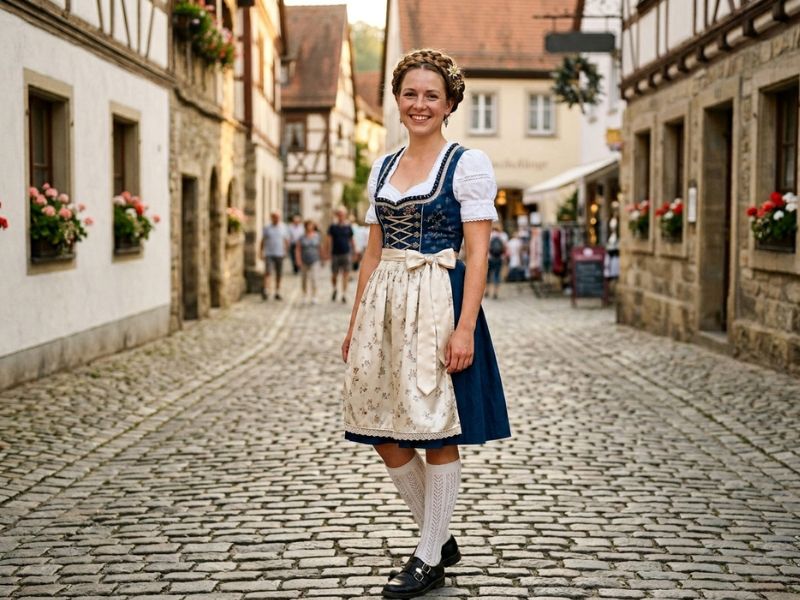
Make your own DIY Oktoberfest costume using clothes you already own, easy, budget-friendly outfit ideas.
If you’ve priced out a dirndl or lederhosen lately, you’ve felt that sticker shock. Authentic pieces run $80 to $300, and even the thin costume-store versions are $30 to $50, for something you’ll wear once and then stuff in a drawer for a year.
Here’s the thing though: what makes an outfit look like Oktoberfest usually isn’t the garment itself. It’s the pattern, the shape, a small detail in the right place. And there’s a good chance you already own pieces that can do that job.
Below are 7 outfits, for women and men, built mostly from what’s likely already in your closet. A couple get even better with one small extra piece, usually under $15, and I’ll point those out as we go.
Love unique clothing traditions? These beautiful cultural outfits reveal style details and heritage that still inspire fashion today. → Cultural Fashion: 10 Stunning Traditional Attire from Around the World You Need to See for Style Inspiration.
Quick History: Dressing Up for Oktoberfest Isn’t a New Idea
Oktoberfest started in 1810, not as a beer festival but as a royal wedding celebration. Crown Prince Ludwig of Bavaria (later King Ludwig I) married Princess Therese of Saxe-Hildburghausen on October 12, 1810, and the citizens of Munich were invited to the festivities on a meadow just outside the city gates.
That meadow was named Theresienwiese, “Therese’s meadow”, in her honor, which is still shortened to “the Wiesn” today and is the same site Oktoberfest is held on now.
The celebration capped off five days later with a massive horse race watched by an estimated 40,000 people, part of that original 1810 procession included children dressed in traditional Bavarian folk costumes paying tribute to the royal couple.
The whole thing was such a hit that Munich just… kept doing it every year, and it slowly grew into the beer-and-tents festival we know now (the big beer tents didn’t actually show up until 1896).
Stop buying patterns you’ll only use once. Learn the simple method for recreating your favorite clothes without taking them apart. → How to Copy a Pattern From Clothes You Already Own (Without Taking Them Apart).
The 3 Visual Cues That Make Any Outfit Read as Oktoberfest
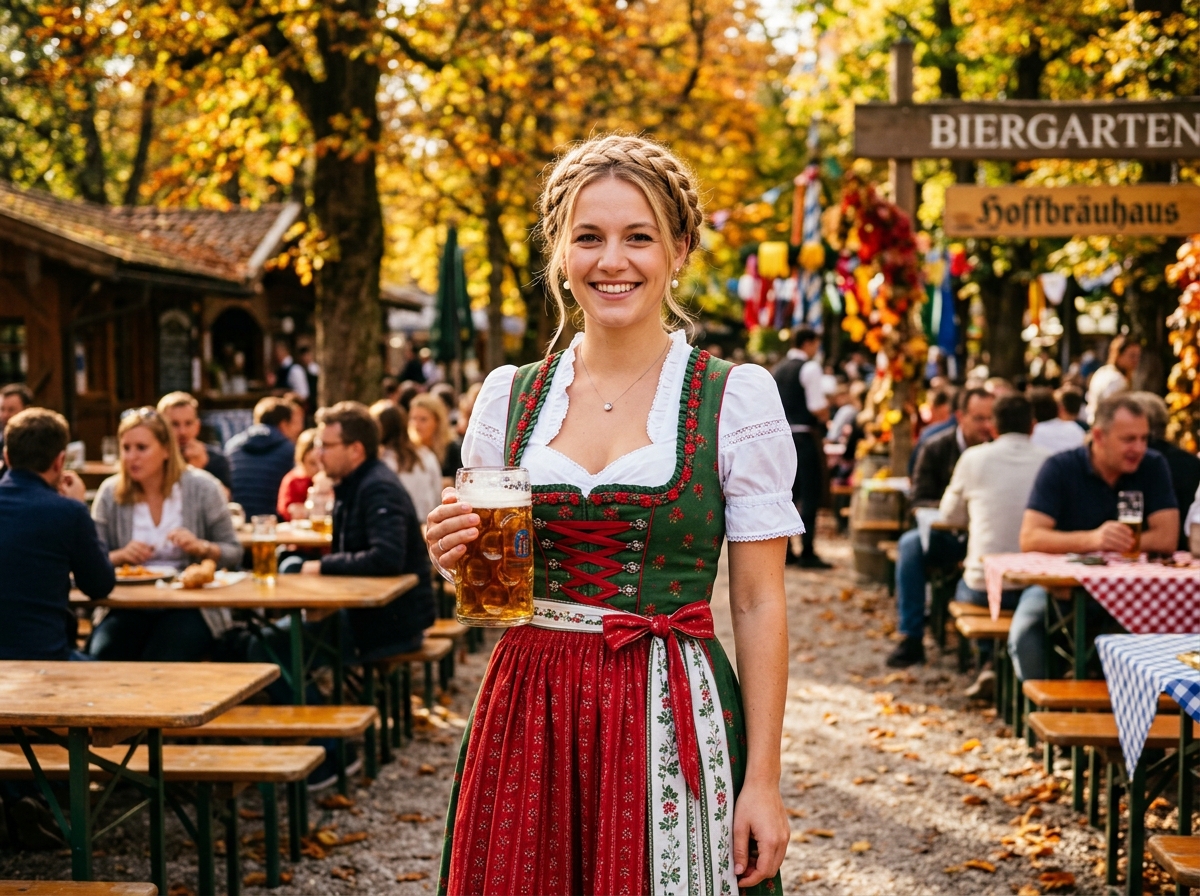
Worth knowing before you spend any of that: what makes an outfit look unmistakably Oktoberfest has surprisingly little to do with owning either of those garments.
It comes down to three things, pattern, shape, and a couple of small finishing details. There’s a decent chance your closet already covers most of it.
1. Checks and plaids — but blue-and-white specifically does the heavy lifting
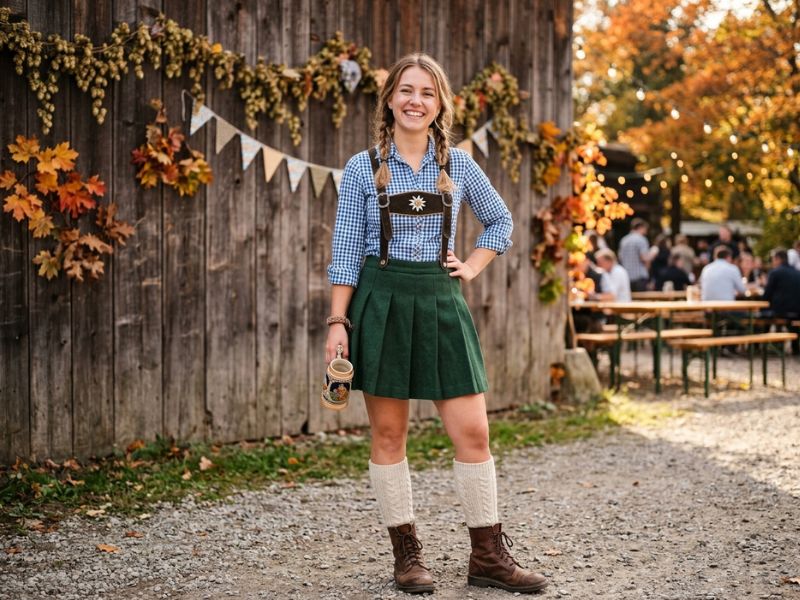
Any checkered shirt nods toward Bavaria, but blue-and-white carries extra weight.
The blue-and-white diamond pattern, the Bayerische Rauten, has been Bavaria’s heraldic symbol since the 12th century and is the basis of the Bavarian flag.
That’s why a blue-and-white checked shirt feels more “authentically Bavarian” than the same shirt in red or green checks, even though red and green are common and perfectly fine too. If there’s a blue gingham shirt hanging in your closet, that’s your strongest starting piece.
Before you throw out damaged clothes, discover easy sewing fixes that can save your favorite pieces in minutes. → 15 Smart and Easy Sewing Fixes for Clothes and Fabrics You Keep Throwing Away.
2. Silhouette does more than fabric ever will
The dirndl shape, fitted bodice, cinched waist, full skirt, started as a practical work dress before city dwellers picked it up as fashion in the 19th century.
Lederhosen follow the same logic: shorts at or above the knee, held up by suspenders, worn with a button-up shirt.
It’s a recognizable outline built from ordinary garments. A fitted top tucked into a full skirt, or shorts-plus-suspenders-plus-shirt, reads as “the look” even when none of the individual pieces are traditional Bavarian wear.
3. Small accessories carry outsized weight
Suspenders, knee socks, and a felt or alpine-style hat are the cheapest items on this list, and they do the most visual lifting, often the difference between nice outfit and oh, you’re doing Oktoberfest.
One detail worth getting right if you go the lederhosen route: suspenders are traditionally worn crossed at the back, not straight. Small thing, but it’s the kind of detail that signals you actually know what you’re doing.
Feeling stuck in the same outfits? These confidence-boosting looks help you express your personality without sacrificing comfort. → Plus Size Outfits for Women Who Want to Feel Confident and Express Their Personality.
DIY Oktoberfest Costume Ideas
1. White Button-Down + A-Line or Denim Skirt + Tied Apron
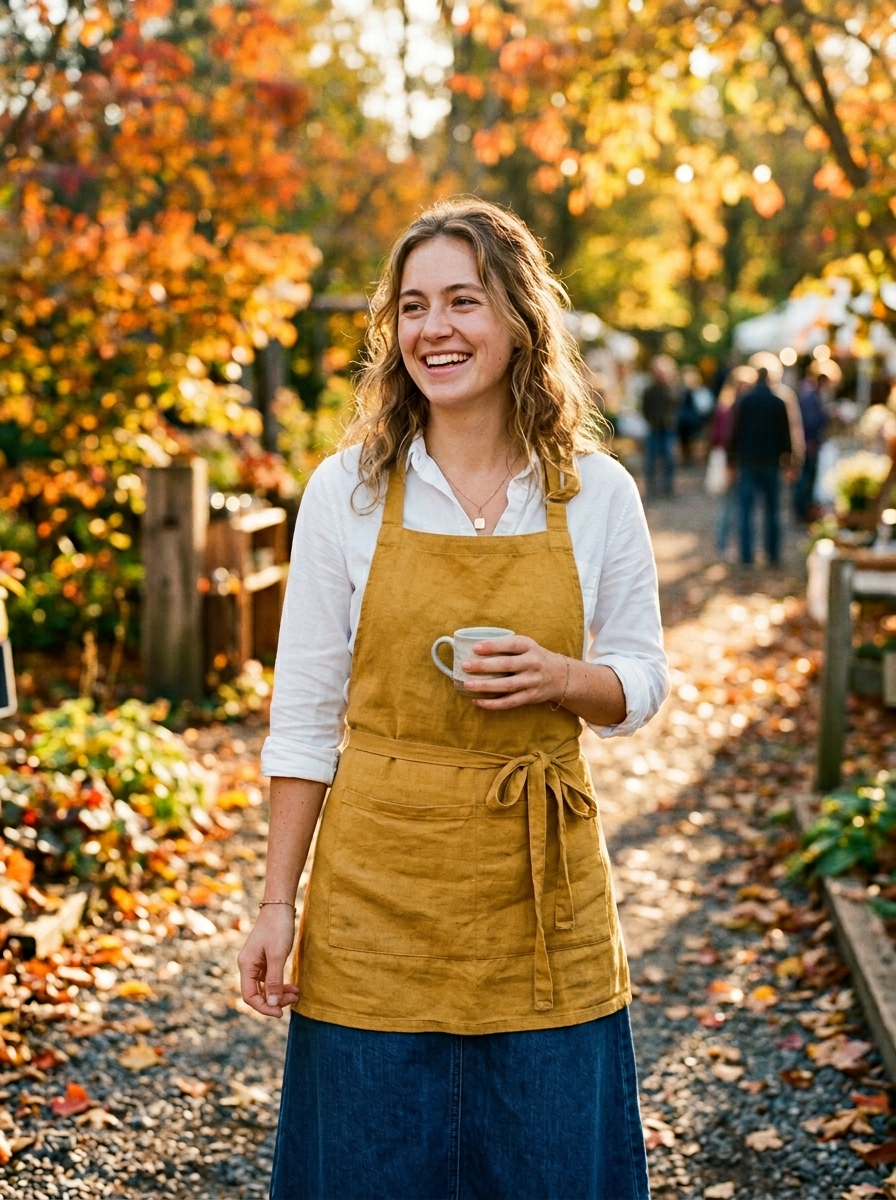
Closet items: a white or light-colored button-down shirt, an A-line or denim skirt, and a scarf, bandana, or plain kitchen apron.
How to style it: Tuck the shirt in, then either push the sleeves up past the elbow or pull the collar slightly off one shoulder, both read as the loose, peasant-style blouse that sits under a dirndl bodice.
Tie your scarf or apron at your natural waist, not your hips, this is what creates that cinched, fitted-bodice silhouette from earlier, even though you’re technically just wearing a shirt and skirt.
One more thing: where you tie that bow actually means something in real dirndl tradition, more on that in a minute, because it’s too good a detail to rush.
Add-on (under $10-15): If you don’t have a scarf or apron to tie, a wide elastic belt does the same cinching job. A pair of knee-high socks with flats or ankle boots finishes it off.
Expensive-looking style doesn’t have to come with a luxury price tag. See how simple thrift flips can create polished old-money outfits. → Old Money Outfit Ideas from Thrift Flips That Look Rich (But Cost Almost Nothing).
2. Floral Wrap Dress + Wide Belt
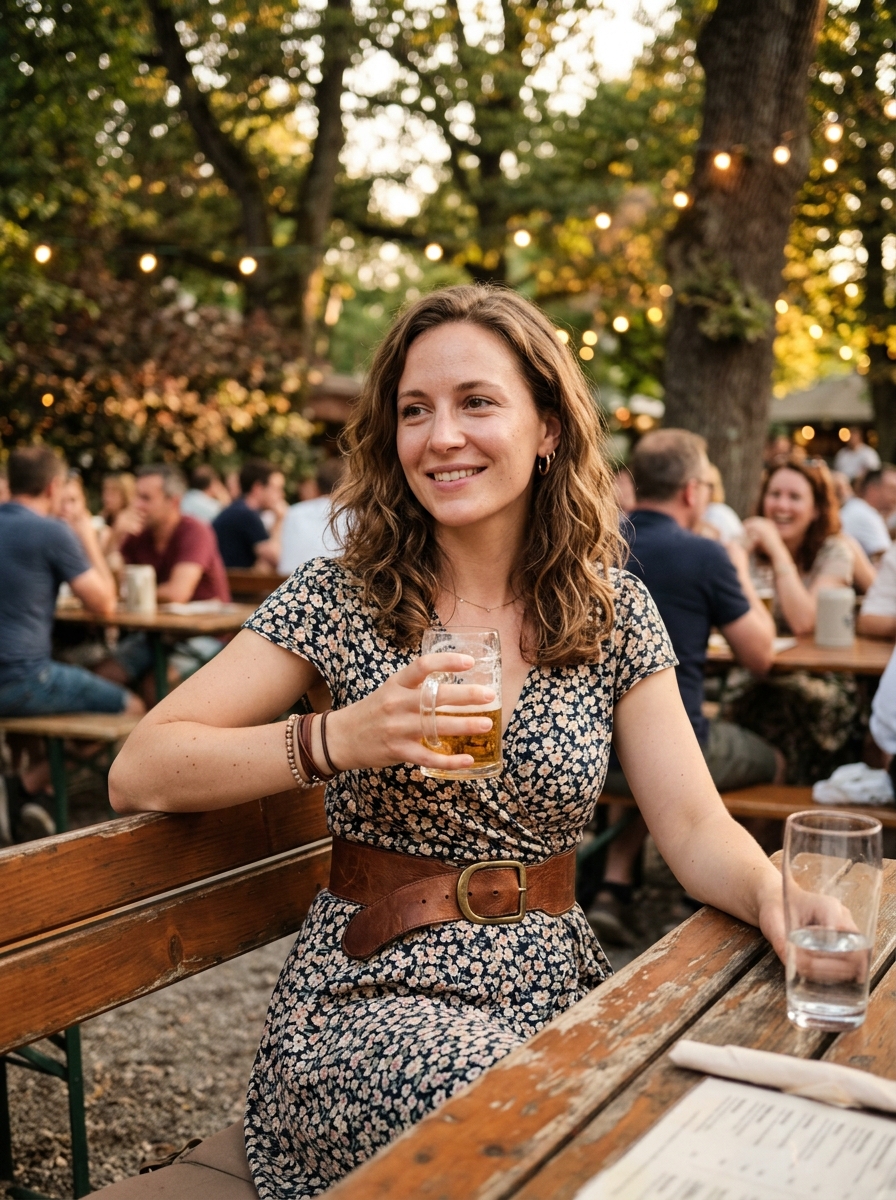
Closet items: a floral wrap dress (any color scheme works, florals are actually common on modern dirndls, so you’re not improvising as much as you’d think) and a wide belt, ideally 3 inches or wider.
How to style it: Wrap dresses already have the fitted-top-into-full-skirt shape going for them, but the belt is what sharpens it.
Cinch it at your natural waist, slightly higher than where you’d normally wear a belt, to exaggerate the bodice line. If the wrap dress has long sleeves, push them up to the elbow to keep things from looking too “everyday.”
Add-on (under $10-15): A statement belt buckle if your current belt is plain, or a small flower hair clip, real dirndls are often paired with floral hair pieces, so this isn’t decoration for decoration’s sake.
3. Denim Pinafore or Overall Dress + White Blouse
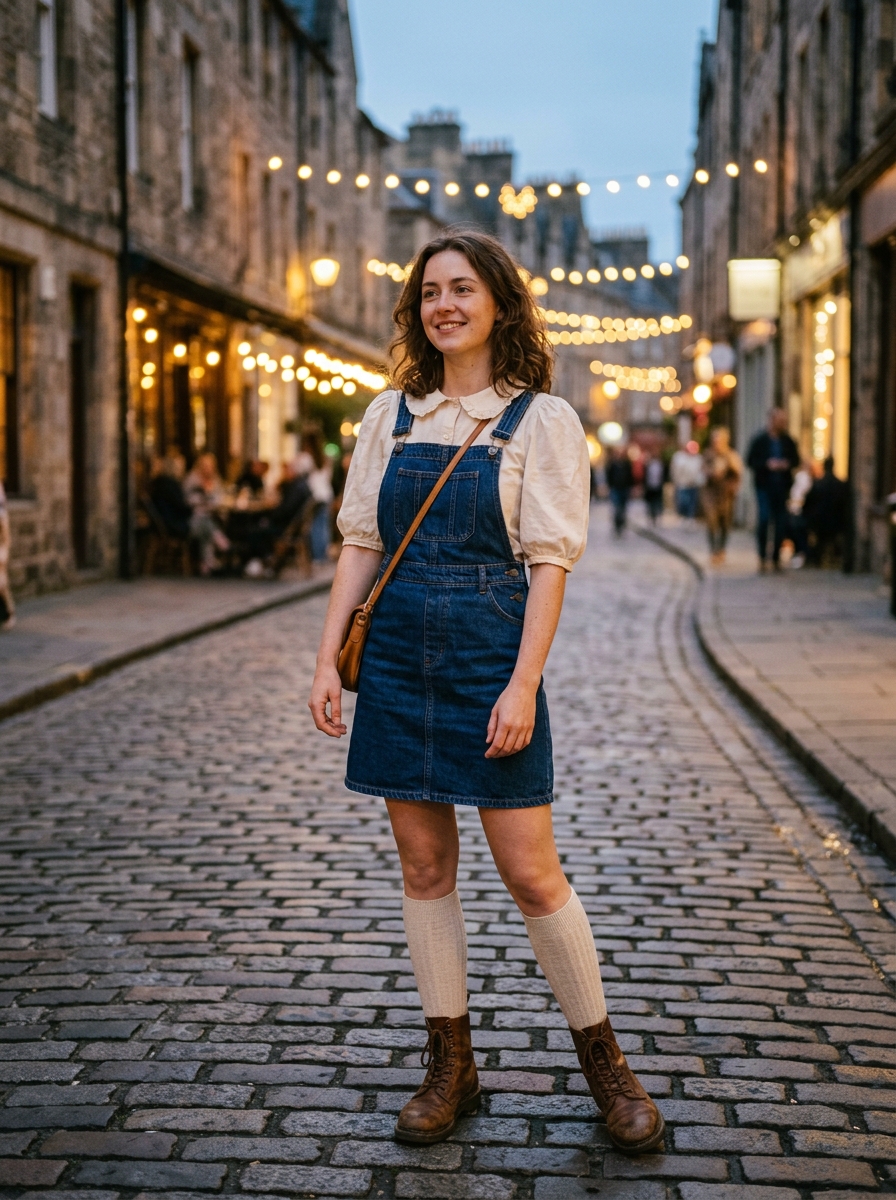
Closet items: a denim pinafore/jumper dress and a white (or light) blouse.
How to style it: This one does most of the work for you. Layer the blouse underneath the pinafore and let the sleeves show below the straps and at the cuffs , the straps themselves mimic a dirndl bodice, and the skirt portion of the pinafore functions the same way an apron would, which means you can skip the apron-tying step entirely for this one.
Add-on (under $10-15): Knee socks or a pair of lace-up ankle boots, both lean into the “practical peasant dress” origin of the silhouette rather than fighting it.
4. Solid-Color Skirt + Puff-Sleeve or Peasant Blouse + Contrasting Sash
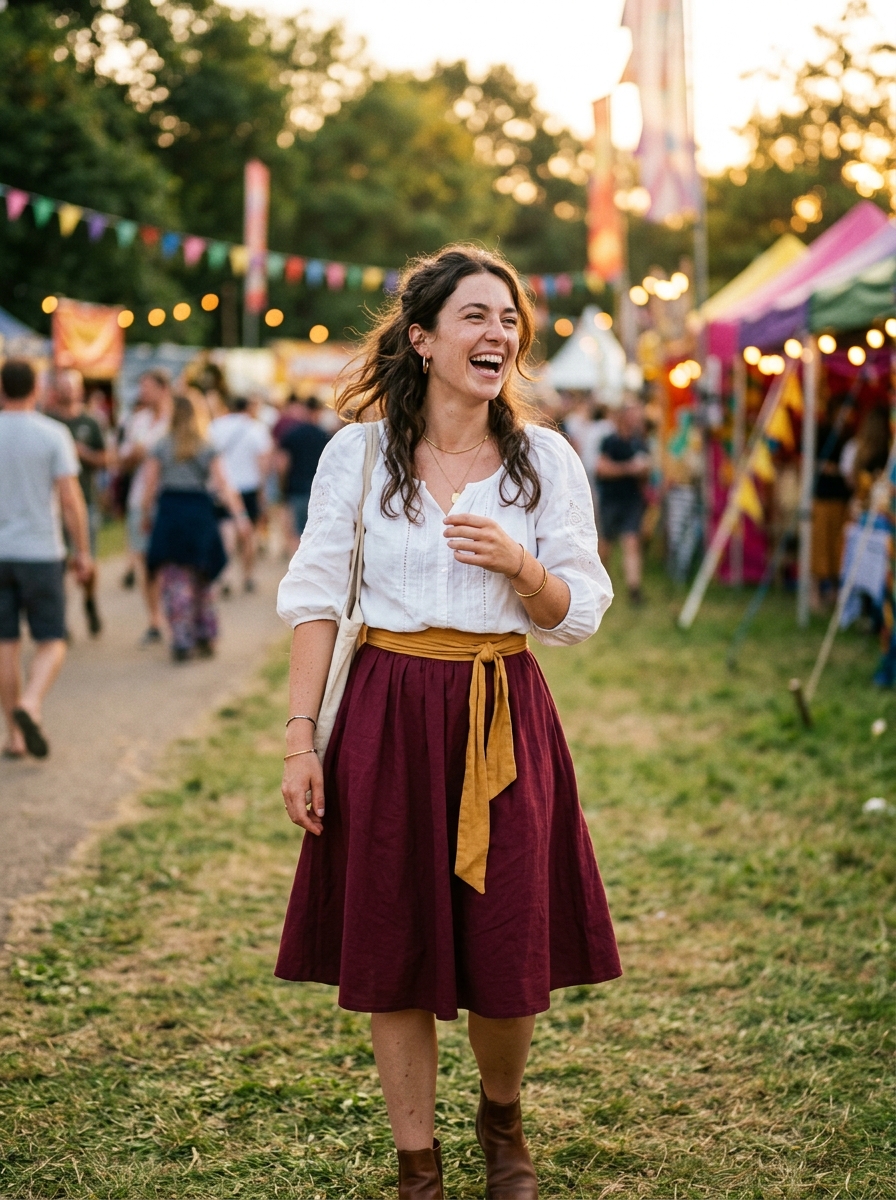
Closet items: a solid-color skirt (navy or dark blue is a nice bonus here, since it nods to the Bavarian blue from earlier, but black, burgundy, or green all work) and a puff-sleeve, ruffled, or peasant-style blouse, the kind with a bit of volume at the shoulder or elbow.
How to style it: This combo leans almost entirely on silhouette. The blouse’s volume up top contrasts with the skirt below, which creates that fitted-to-full shape without any cinching at all. Add a scarf in a contrasting color, ideally something with a bit of pattern, tied as a sash at the waist.
Same rule as outfit #1 applies here: tie it at the natural waist, and if you want to play with the apron-bow tradition (left for single, right for taken, covered properly below), this is a great outfit to do it with, since the sash sits exactly where a real apron would.
Add-on (under $10-15): A small flower hair clip or a brooch pinned at the neckline of the blouse, both are common finishing touches on actual dirndls and elevate this from “nice outfit” to put-together costume.
If your closet is full but getting dressed still feels frustrating, discover what’s really causing the problem and how to fix it. → Why You Feel Like You Have Clothes but Still Nothing to Wear (Even With a Full Wardrobe) And How to Fix It.
5. Plain Sundress + Cardigan Worn Backwards as a Faux Vest
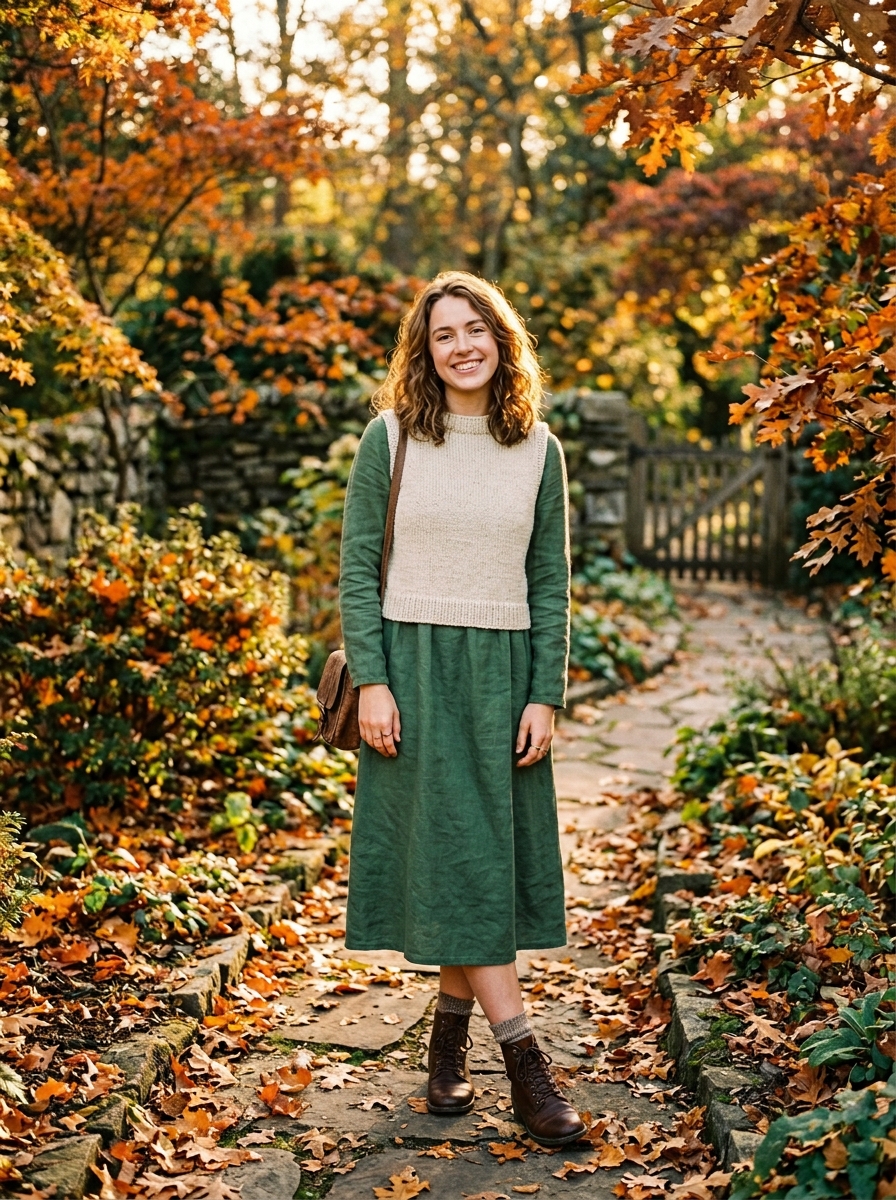
Closet items: a solid or subtly patterned sundress with a fitted or semi-fitted top, and a cardigan (any color, though navy, green, or burgundy lean more “Bavarian” than pastels).
How to style it: Put the cardigan on backwards, buttons facing your back, and pull it off your shoulders slightly so it sits like a vest layered over the dress. Worn this way, the smooth, button-free front of the cardigan mimics the solid, fitted bodice of a dirndl, while the sundress underneath does double duty as both blouse and skirt.
This is a genuinely useful trick for a DIY Oktoberfest costume because it gives you that two-piece “bodice + dress” look from something that’s actually one dress and one cardigan.
Add-on (under $10-15): A simple brooch or pin at the center front, where the cardigan sits closed, this covers any gap and adds the kind of small metal detail real dirndl bodices often have.
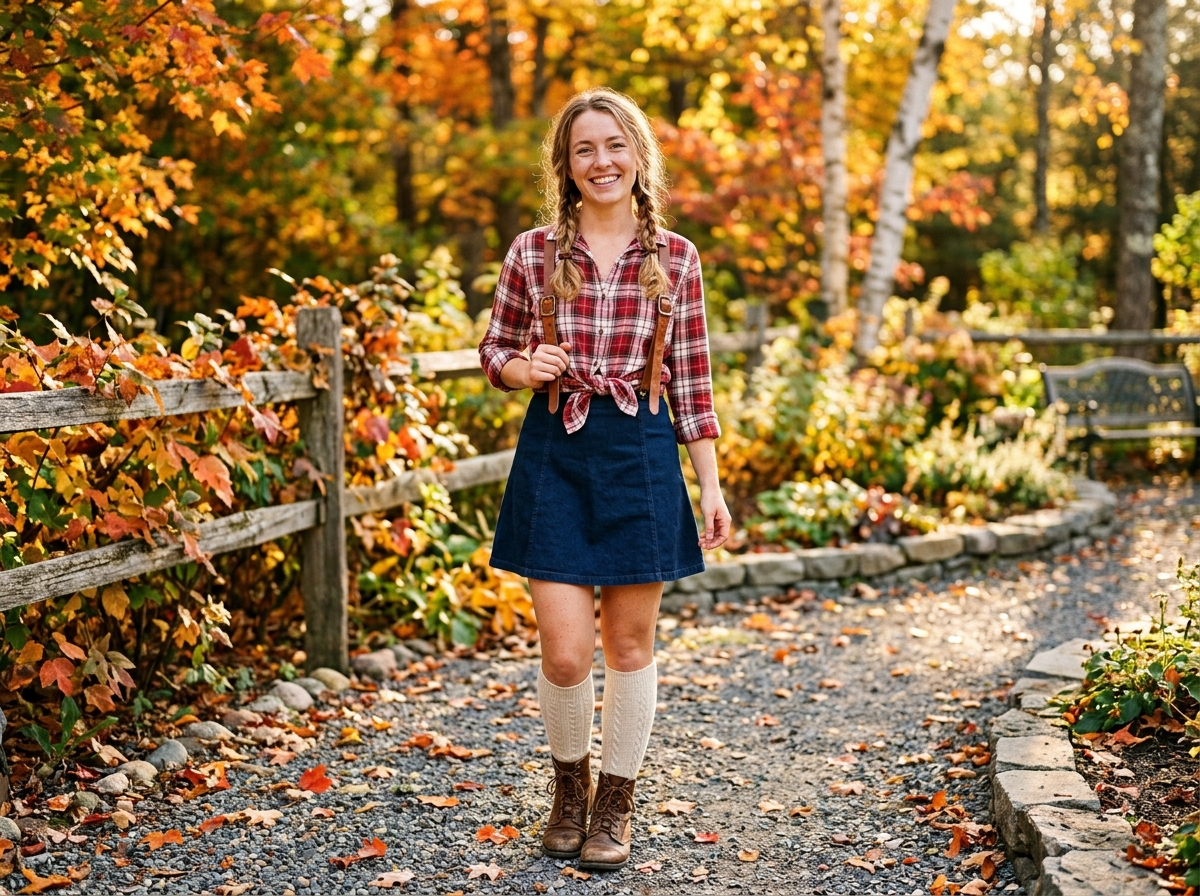
6. Plaid or Flannel Shirt + Dark Denim Shorts + Suspenders + Tall Socks

Closet items: a plaid or flannel button-up shirt (blue-and-white check if you’ve got it, but red or black flannel both read fine), dark denim shorts, and tall socks.
How to style it: This is probably the single most recognizable men’s DIY Oktoberfest costume combo, and it works because it’s pure silhouette — shorts-plus-suspenders-plus-shirt is the lederhosen shape, full stop.
Style the shirt inside the waistband, pull the socks up to just below the knee, and if your shorts sit a little long, roll the cuff once to bring them closer to the traditional above-the-knee length.
Add-on (under $10-15): Suspenders, if you don’t already own a pair, and remember to cross them at the back, not straight, for that extra bit of authenticity we mentioned earlier. This is the highest-impact $10 you can spend on this entire list.
Want to sew pieces you’ll still love years from now? These fashion trends blend timeless style with fresh modern details. → 2026 Sewing Fashion Trends: Sew Classic Pieces with a Modern Update to Refresh.
7. Corduroy Pants + Checked Shirt + Suspenders
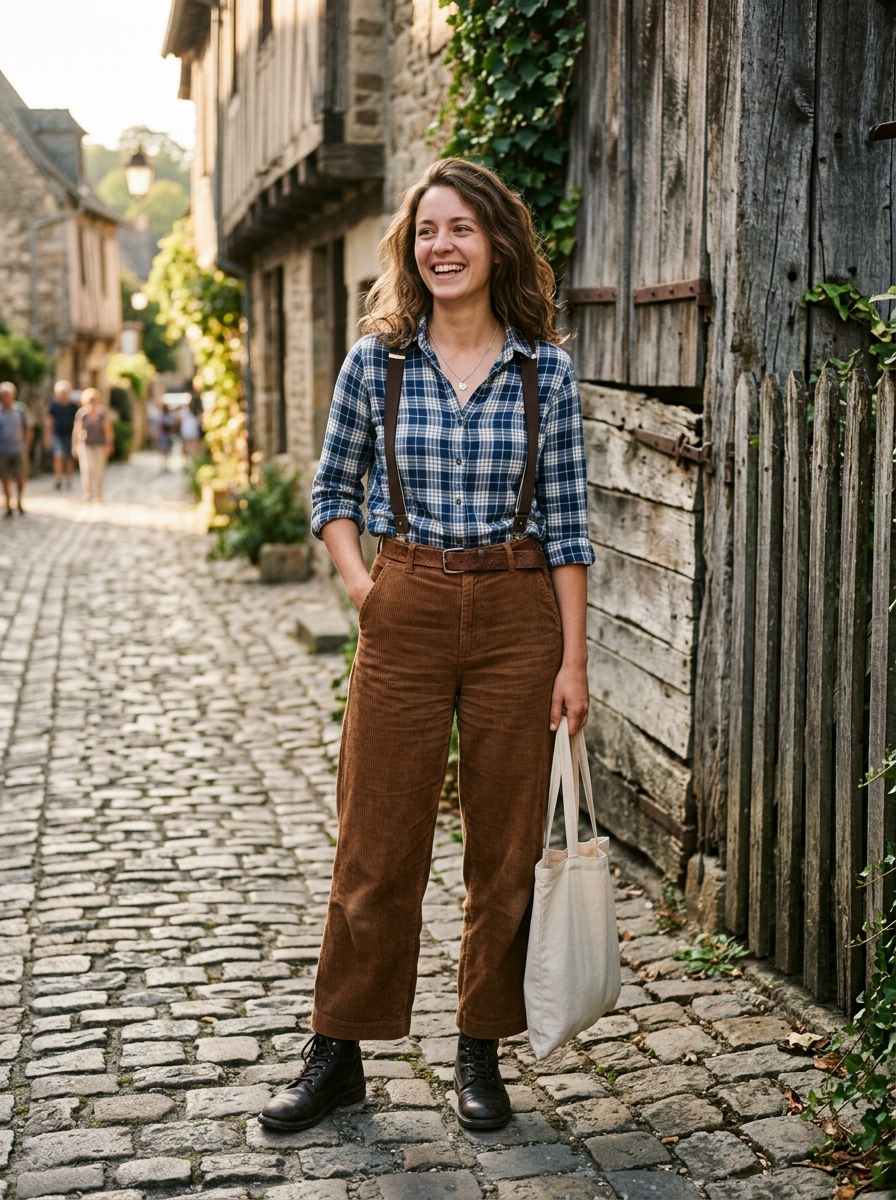
Closet items: a pair of corduroy pants (brown, tan, or olive work best), a checked button-up shirt, and suspenders.
How to style it: This is the longer, slightly dressier cousin of outfit. Corduroy’s texture is the closest everyday fabric stand-in for the leather lederhosen are traditionally made from, and the longer pant length leans toward the over-the-knee or full-length lederhosen styles some older or more formal looks use.
Tuck the shirt in, add the suspenders crossed at the back, and if the pants are a looser fit, a belt underneath the suspenders keeps everything sitting cleanly at the waist.
Add-on (under $10-15): A flat cap or simple felt hat, this outfit’s slightly more “put-together” feel pairs well with a hat in a way the shorts version doesn’t always need.
Designer-inspired fashion is closer than you think. These thrift flip projects turn budget finds into standout wardrobe pieces. → Thrift Flip Sewing Projects Ideas For People Who Want Expensive Style on A Budget.
The Apron Bow Trick (Real Bavarian Tradition)
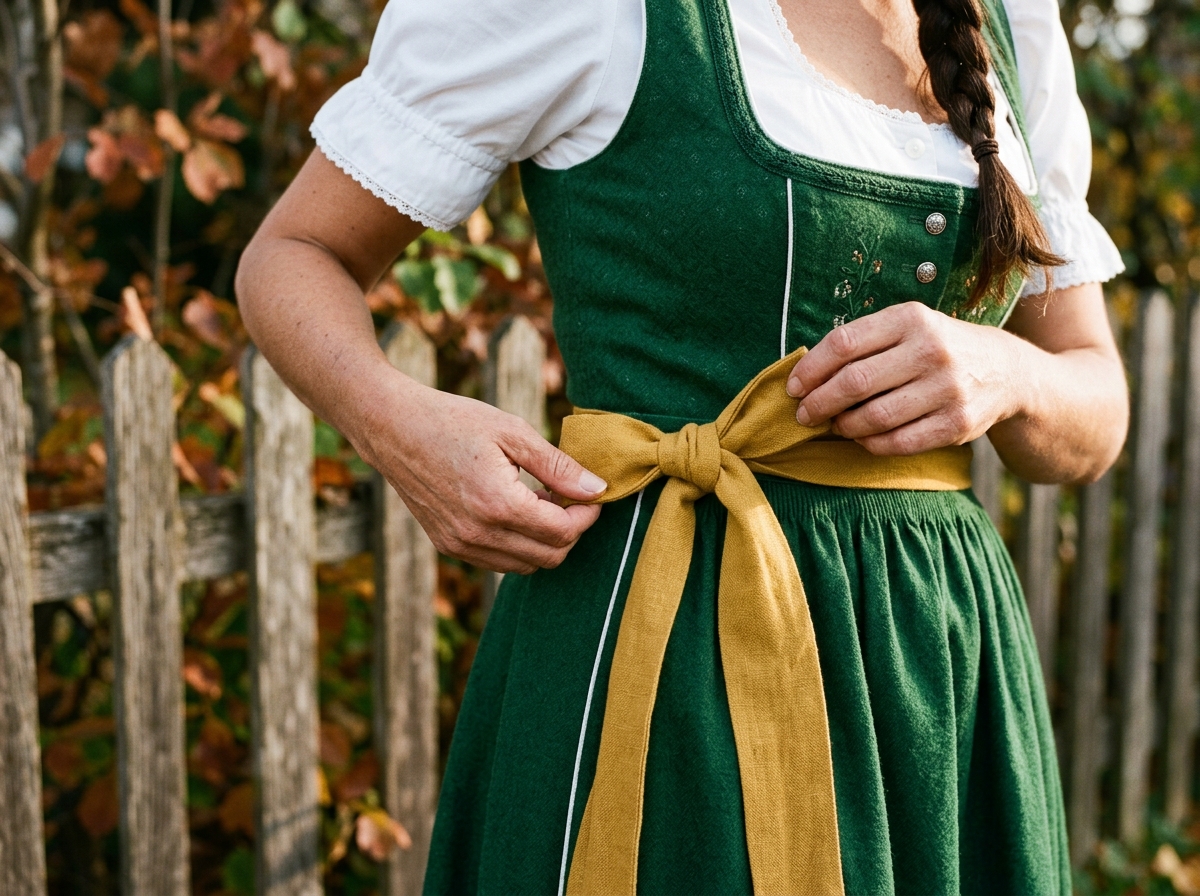
In Bavarian custom, where you tie your apron bow isn’t random. It’s a quiet signal about relationship status, a tradition that goes back to the 19th century, when young women used bow placement to let people know, without saying a word, whether they were open to being approached.
- Tied on the left: you’re single
- Tied on the right: you’re taken, married, engaged, or in a relationship
- Tied center-front: traditionally “undecided” or unmarried (historically tied to virginity, though that meaning has softened a lot over time)
- Tied center-back: you’re widowed, or, more commonly today, working. Waitstaff tie it at the back so it doesn’t get in the way while carrying trays of beer
Worth being upfront about: nobody’s enforcing this, and plenty of people tie their apron wherever’s comfortable. But it’s recognized widely enough that someone who knows the tradition will notice, which is exactly what makes it worth a mention.
For outfits #1 and #4, where you’re tying a scarf or apron as a sash anyway, this is a free, two-second choice. For #3, if your pinafore has a tie-back or wrap element, the same logic applies.
Either way, it’s the kind of small, accurate detail that makes a DIY Oktoberfest costume feel intentional rather than thrown together, and it’s the sort of “wait, really?” fact that gets a post saved.
Struggling with confusing sewing instructions? Discover beginner-friendly patterns that make learning easier and far less frustrating. → How to Find Sewing Patterns That Are Easy to Follow and Beginner-Friendly (Save Hours of Frustration).
Costume vs. Tracht: One Thing Worth Knowing
What Tracht Actually Means
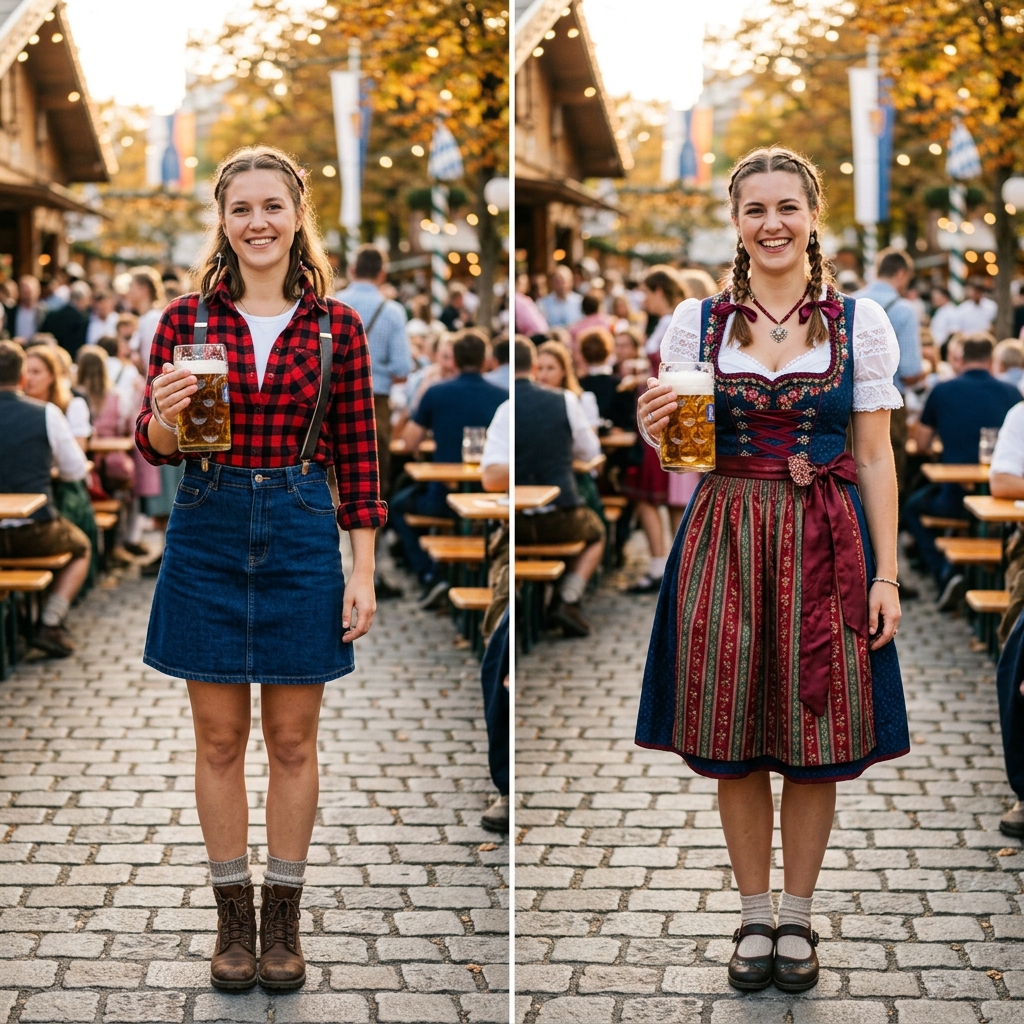
“Tracht” is the German term for traditional folk dress, the dirndls and lederhosen that descended from rural working clothes and are now considered proper festival attire.
At the actual Oktoberfest in Munich, Tracht has effectively become the unspoken dress code. Around 79% of attendees are locals, and most show up in genuine or well-made Tracht rather than anything else.
Where the Line Actually Is
There’s a real difference between styling something that nods to Tracht, generally seen as appreciation, even if you’re not German or Bavarian, and showing up in a cheap, joke, or “sexy” novelty costume, which has been publicly called out (The Guardian ran a piece on this back in 2018) as disrespectful to the people for whom this is a genuine cultural tradition.
A few Munich beer tents have reportedly turned people away at the door for exactly this.
Why This Doesn’t Change Much for You
If you’re putting one of these closet outfits together with any care, the right silhouette, real fabric, a small authentic detail like the apron bow, you’re already on the right side of that line.
This distinction matters most if you’re actually heading to Oktoberfest in Germany. For a themed party at home, the context (and the stakes) are simply different.
FAQ
-
Can you wear jeans to Oktoberfest?
Yes, plenty of people do. While traditional Tracht (dirndls and lederhosen) is the festive norm, there’s no dress code requirement. Jeans paired with a flannel shirt or a simple top work fine, especially if you’d rather not buy a costume. That said, wearing Tracht adds to the atmosphere and many find it more fun.
-
Do you have to wear a costume at all?
No, it’s not mandatory. Locals and visitors alike show up in everyday clothes every year. Tracht is a tradition and a way to get into the spirit of the festival, but you won’t be turned away or stand out negatively for skipping it.
-
What if you can’t find your size?
Plus-size and larger sizing for lederhosen and dirndls can be harder to find, especially closer to the event when stock runs low.
Options include shopping early, checking specialty retailers that focus on extended sizing, looking at adjustable styles (like lace-up dirndl bodices or stretch-waist lederhosen), or considering rental services that may carry a broader size range. Pairing separate pieces, such as a dirndl blouse and skirt in different sizes, can also help.
Conclusion
Oktoberfest style doesn’t have to mean a last-minute shopping trip or an expensive rental. With a little creativity, the flannel shirt, denim skirt, or vest already hanging in your closet can be transformed into an outfit that fits right in.
The right combination matters more than buying something brand new, comfort, confidence, and a festive touch go a long way.
Take another look at your closet, try one of these combinations, and get ready to enjoy Oktoberfest in a look that’s uniquely yours.