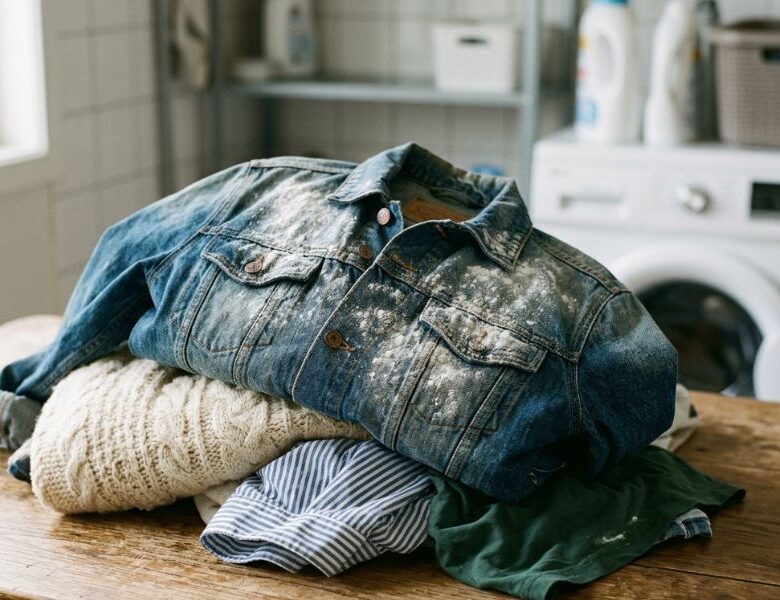
That smoke smell won’t wash out on its own. Here’s how to get smoke smell out of thrifted clothes for good, without ruining your fabric.
Smoke smell is the one thing that ruins an otherwise great thrift find. You can deal with a loose button, a small stain, a missing size tag. But smoke gets into everything, and it doesn’t leave just because you ran it through the wash once.
Most people find that out the hard way. They wash the piece, it smells fine wet, and then it dries and the smoke’s back. That’s not a fluke. Smoke residue doesn’t sit on the surface of fabric, it bonds into the fibers themselves.
Cotton and wool hold onto it especially well. A regular wash cleans the outside, but it doesn’t reach what’s actually stuck inside the weave.
That’s the whole reason so many people searching for how to get smoke smell out of thrifted clothes end up trying the same wash twice and still smelling smoke. It’s not about scrubbing harder, but knowing what’s actually in the fabric and using the right method to break it down instead of just covering it up for a day or two.
That’s what this post is for, seven ways to actually get smoke smell out of thrifted clothes for good, what each one works best on, and the mistakes that make people think a piece is unsalvageable when it isn’t.
Preparing secondhand clothing for customers starts with How to Clean and Disinfect Secondhand Clothes Before Selling — Make Every Item Sale-Ready, where you’ll learn practical methods to clean, sanitize, and present garments with confidence.
Why Smoke Smell Clings to Clothes

What you’re actually smelling isn’t smoke. Smoke itself disappears once the air clears. What lingers on a thrifted piece is thirdhand smoke, residue made up of nicotine, tar, and other volatile compounds left behind after smoke settles.
That residue doesn’t sit on top of fabric waiting to be rinsed away. It bonds chemically to the fibers, which is exactly why a single wash barely touches it.
Fabric type changes how deep that bond goes. Research on tobacco-exposed clothing found that polyester holds onto far less thirdhand smoke residue than cotton does, since cotton’s fibers are more porous and absorb more of it in the first place.
That’s not a small detail. It means a polyester blazer and a cotton dress carrying the same smell need genuinely different levels of effort to fully clear.
Heat matters too, and not the way people assume. Studies looking at how thirdhand smoke releases from fabric found that most residue lifts from terry cloth after just one treatment, while cotton and wool need repeated rounds, often heat-assisted, before the smell actually breaks down instead of just fading temporarily.
None of this is meant to complicate things. It’s meant to explain why some methods work fast and others don’t work at all, so the seven ahead aren’t just things people say to do, they’re methods that actually target what’s really happening in the fabric.
Great products deserve great listings, and How to Write Thrifted Clothing Descriptions That Build Buyer Trust and Boost Sales explains how to create descriptions that answer buyer questions and encourage more purchases.
Before You Start: 3 Quick Prep Steps

A few things matter before jumping into any method for how to get smoke smell out of thrifted clothes, mostly because the wrong first move can cost more than the smell itself.
-
Check the care label
Fiber content decides which methods are even safe to try. A soak that works fine on cotton can shrink wool or damage silk. Knowing what the piece is made of first prevents choosing a method that solves the smell but ruins the garment.
-
Do a patch test in an inconspicuous spot
An inside seam or hem is usually enough. It shows how the fabric responds to moisture, heat, or a cleaning solution, colorfastness, shrinkage, texture change, before that reaction happens across the whole piece.
-
Inspect for stains first
Smoke and staining often show up together on older thrifted pieces, and treating both at once isn’t a shortcut. Heat and certain odor treatments can set a stain permanently if it’s still there when the process starts. Dealing with visible stains separately, first, protects the fabric either way.
None of this adds much time. It just means the method chosen actually works with the fabric, instead of against it.
Ready to build your own resale business? Thrift Business in Nigeria: How to Start a Profitable Thrift Clothing Business covers the essential steps to launch, grow, and manage a successful thrift clothing business.
Methods to Get Smoke Smell Out of Thrifted Clothes

Start gentle, move up only if the smell holds on. Most pieces won’t need all seven, but knowing the full range means nothing is a dead end. One thing to keep in mind across every method below: a faint smell after one round isn’t failure.
It usually means the surface layer is gone but deeper residue remains, which is exactly why repeating the same method, rather than jumping to a stronger one, is often the right next move.
1. Air and UV Exposure Outdoors
This is the first move for every fabric, no exceptions. Hang the piece outside on a clothesline or drying rack, somewhere with good airflow and direct sun if possible. UV light and moving air begin breaking down surface-level VOCs before any product touches the fabric. Shaking the garment out every hour or two speeds this up, movement dislodges trapped particles that still air alone won’t release.
Time: 4–8 hours, or overnight for stronger smells.
Caution: Bright or dark colors can fade with extended sun exposure, a few hours is usually enough; save all-day airing for whites and neutrals.
2. Baking Soda Dry Method
For delicate pieces that can’t handle a soak, wool sweaters, structured knits, anything with a “dry clean only” label, sprinkle baking soda generously over the fabric, work it in lightly, and seal the item in a bag or covered bin.
Time: 24 hours minimum.
Caution: Shake or vacuum out all residue before wearing; leftover baking soda can sit in the weave and irritate skin.
3. White Vinegar Soak
Sturdier natural fibers, cotton, denim, linen, a vinegar soak reaches deeper than a dry method can. Fill a basin with cool water and a cup of white vinegar, submerge the piece fully, and let it sit before washing as usual. The vinegar smell itself fades completely once the item dries, so there’s no trade-off of one smell for another.
Time: 1–2 hours for moderate smell, overnight for heavier cases.
Caution: Overnight soaking can weaken fibers or fade bright colors over time, always patch test first, and rinse thoroughly after.
4. Vinegar + Hot Water Combination
This is where fabric science actually matters. Heat helps loosen the bond between smoke residue and cotton fibers specifically, allowing the vinegar to reach and neutralize what a cold soak leaves behind. Use the hottest water the care label allows, combined with the same vinegar ratio as above.
Time: 1 hour soak, followed by a normal wash cycle.
Caution: Only for fabrics rated for hot water, check the label first, since heat can shrink or damage anything not built for it.
Choosing the right inventory is one of the biggest keys to success, and Top-Selling Clothes for Thrift Business in Nigeria (What Moves Fast) highlights the clothing categories that consistently attract buyers and sell quickly.
5. Enzyme-Based Detergent Wash
Polyester and other synthetics don’t absorb smoke as deeply as natural fibers do, but they hold odor on the surface stubbornly. An enzyme-based detergent (often sold for pet odor) breaks down those surface compounds more effectively than standard detergent. This method also works well as a second pass after methods 1–4, for pieces where the first round cut the smell significantly but didn’t fully clear it.
Time: One full wash cycle, though a second run helps for heavier smell.
Caution: None major, enzyme detergents are generally safe for synthetics, but always follow the dosing on the label.
6. Activated Charcoal Enclosed-Bag Method
For pieces that can’t be washed at all, wool coats, blazers, structured vintage, charcoal pulls odor out through absorption rather than water or heat. Place the garment in a large bag or bin with a few activated charcoal pouches, sealed but not airtight. Charcoal bags sold for shoes or closets work just as well here as ones marketed specifically for laundry, so there’s no need to hunt for a specialty product.
Time: 3–5 days.
Caution: Give the piece airflow occasionally during this window; a fully airtight seal for days can trap dampness if the fabric wasn’t completely dry going in.
7. Steam Treatment
The last option for garments that reject both washing and soaking. Steam loosens residue from fibers using heat and moisture without submerging the fabric, and it’s gentle enough for most structured or delicate pieces when done carefully.
Time: 10–15 minutes of direct steaming, moving the steamer continuously.
Caution: Keep the steamer moving; holding it in one spot too long can scorch delicate fabric or warp certain trims and buttons.
A Note Before Washing: Keep Smoky Items Separate
Whatever method comes first, wash the smoky piece on its own, not mixed in with a regular laundry load, especially on the first wash. Residue can transfer onto other clothes in the same cycle, which means “fixing” one item can end up passing the smell onto several others.
Shipping doesn’t have to feel overwhelming when Thrift Delivery for Beginners: How to Safely Ship Thrift Clothes Across States or Countries walks you through packaging, delivery options, and protecting your items in transit.
Common Mistakes That Make Smoke Smell Worse

A few habits quietly undo all the work above, worth avoiding from the start.
-
Using the dryer before the smell is fully gone
Heat re-bonds any remaining residue to the fibers instead of releasing it, which is exactly why a piece can smell fine going into the dryer and come out smelling like smoke again.
-
Relying on perfume, essential oils, or fabric spray alone
These mask the smell temporarily, they don’t remove it. The smoke residue is still sitting in the fabric, it just gets covered by a stronger scent for a few hours. Worth knowing before spending money on a product that was never going to solve the actual problem.
-
Storing treated items in sealed plastic before they’re fully dry
Trapped moisture revives odor fast, sometimes undoing days of work in a single humid storage bag. Breathable cotton garment bags or open hangers are the safer call until a piece is completely dry.
What to Do Instead

- Air-dry completely before considering the dryer. Lay the piece flat or hang it until it’s fully dry and smell-tested. Only run it through the dryer once the smell is genuinely gone, using the dryer as a finishing step, not a shortcut.
- Treat the residue first, freshen the scent last. If a light scent is wanted at the end, add a few drops of essential oil to the final rinse water, not as a stand-alone fix. This works after the smoke residue has actually been removed, not instead of removing it.
- Store in breathable fabric, and only once bone-dry. Cotton garment bags, open hangers, or uncovered closet space let any remaining moisture escape instead of trapping it. Check the piece is fully dry, not just dry to the touch on the surface, but dry all the way through seams and linings, before it goes anywhere enclosed.
Shopping smarter begins with knowing quality, and How to Identify Grade A vs Grade B Thrift Clothes Before Buying a Bale (Beginner Guide) helps you recognize the differences before investing your money.
When One Round Isn’t Enough
Some pieces need more than one pass, and that’s not a sign anything went wrong. A coat that’s spent decades in a smoker’s closet has had years to build up residue layer by layer, no single treatment, however well done, undoes that in one attempt.
Two or three repeated rounds of the same method is often what it actually takes, and each round genuinely does less work than the last, since most of the surface residue is gone by the second pass.
The fabric matters here too. Cotton and wool hold onto smoke residue more stubbornly than synthetics do, which means a natural-fiber piece with a strong smell may simply need patience, the same vinegar soak or charcoal treatment, repeated, rather than a stronger or different method altogether.
For high-value vintage pieces, a well-made wool coat, a piece with real history or craftsmanship worth preserving, professional cleaning or ozone treatment is worth the cost when home methods have been tried and the smell still lingers. Ozone treatment breaks down odor molecules at a level home methods can’t fully replicate, and it’s a reasonable next step rather than a failure of everything tried before it.
None of this means the piece is a loss. It means matching the effort to how deep the smell actually goes, which is often more about patience than about finding some missing trick.
Conclusion
That smoke smell isn’t a reason to give up on a good thrifted find. Once it’s clear what’s actually happening in the fabric, residue bonded into the fibers rather than sitting on top, the fix stops feeling like guesswork and starts feeling like a straightforward process: the right method, matched to the right fabric, given enough time to actually work.
Most pieces respond well to the first few methods here. The stubborn ones just need patience, a repeat round, or a step up in intensity, not a different approach altogether. Either way, now there’s a clear answer to how to get smoke smell out of thrifted clothes, without ruining the fabric or wasting money on things that only mask the problem for an afternoon.
Next time a great find comes with an unwanted smell attached, there’s no need to leave it on the rack. A little time and the right method is usually all it takes to make it wearable again.
FAQs
✅ Is it safe to wear clothes that still faintly smell of smoke?
A faint smell after treatment usually means trace residue, not a health risk, but it’s worth one more round of the mildest method used before wearing it regularly, especially for anyone sensitive to smoke or with respiratory concerns, since thirdhand smoke residue can still off-gas in small amounts even when barely noticeable.
✅ Does dry cleaning remove smoke smell completely?
Professional dry cleaning handles smoke smell better than a home wash in many cases, since the solvents used reach into fibers differently than water-based methods do.
It’s not guaranteed on the first attempt for heavily contaminated pieces, but it’s a solid option for delicate or structured garments that can’t go through soaking or steaming at home.
✅ Can you tell if a thrifted item has smoke smell before buying it?
Smell the item close to the collar, underarms, and any lining first, these areas hold onto odor longer than the rest of the garment. A piece that smells faintly musty in the store often smells stronger once it’s out of a crowded rack and into open air, so it’s worth trusting a faint hint of smoke as a sign there’s more underneath.
✅ Will smoke smell fade on its own over time without treatment?
Very slowly, and usually not completely. Thirdhand smoke residue can off-gas gradually over months, but it doesn’t fully break down without an actual removal method, leaving a piece in a closet and hoping tends to leave a faint smell indefinitely rather than solving it.
✅ Can smoke smell transfer from one garment to others nearby?
Yes. Untreated smoky items can pass residue onto other clothes stored or washed alongside them, which is why keeping a new thrifted find separate until it’s been treated protects the rest of a closet or laundry load.
This post covered: how to get smoke smell out of thrifted clothes.