Even with stiff hands, crafting isn’t over, discover crafts for seniors with arthritis that feel light, simple, and satisfying.
Arthritis does not just take away movement. For many seniors it quietly takes away something harder to name, the satisfaction of making something with your own hands.
There is a quiet sadness that comes with putting away a hobby you once loved.
For many seniors living with arthritis, crafting is one of the first things they reluctantly give up. The knitting needles get packed away, the paintbrushes stay untouched, and unfinished projects sit on shelves collecting dust.
Not because the passion disappeared, but because stiff fingers, aching joints, and reduced dexterity can make familiar crafts feel frustrating or even impossible.
What many people don’t realize is that arthritis doesn’t have to mean the end of creativity.
The answer to the question in this title is yes; you can absolutely still craft with arthritis. The key is understanding that your hands may need a different approach than they did years ago.
The same tools, the same grip, and the same pace may no longer work, but that doesn’t mean beautiful handmade projects are out of reach.
With a few adaptations and carefully chosen activities, the hands that ache in the morning can still create something meaningful by afternoon.
In this guide, you’ll discover 13 gentle DIY projects for seniors with arthritis, specifically selected because they work with stiff, aching hands, not against them.
What Arthritis Does to Your Hands — And Why That Doesn’t Mean You Have to Stop Creating
Many seniors eventually stop crafting because their hands no longer cooperate the way they once did. Before exploring arthritis-friendly projects, it helps to understand exactly what arthritis does to the hands and why certain crafts become more difficult over time.
- Arthritis causes inflammation in the joints, which can lead to swelling, tenderness, and discomfort when gripping tools or handling materials.
- Morning stiffness is a common challenge. Fingers may feel tight, sore, or difficult to move for extended periods after waking up.
- Grip strength often decreases with age and arthritis. Tasks such as holding scissors, squeezing glue bottles, threading needles, or grasping small objects can become tiring much faster.
- Fine motor skills can be affected. Activities that require precise movements, such as beading, detailed painting, or intricate sewing, may become more challenging.
- Pain can occur even during periods of rest. This is one reason many older adults gradually step away from hobbies they once enjoyed.
The encouraging news is that giving up creativity is not the only option.
- Gentle crafting keeps fingers and hands moving, helping maintain flexibility and range of motion.
- Regular creative activities can help preserve fine motor skills, which are important for both hobbies and everyday tasks.
- Crafting provides meaningful mental engagement, offering a sense of purpose, accomplishment, and enjoyment.
- Many low-strain crafts can be genuinely therapeutic, allowing seniors to create without putting excessive stress on painful joints.
The goal is not to force arthritic hands to perform like they did decades ago.
But to choose projects that work with changing abilities, making it possible to continue creating, learning, and enjoying the satisfaction of making something by hand.
For anyone trying to balance budget and sentiment, 25 Father’s Day Gifts for Dads Who Say Don’t Buy Me Anything But Secretly Love Thoughtful Surprises helps you choose gifts that feel thoughtful, practical, and emotionally meaningful.
Before You Start: How to Prepare Your Hands and Space for Comfort When Doing Crafts for Seniors With Arthritis
The best crafts for seniors with arthritis become even more enjoyable when a little preparation happens first.
Many people focus on the project itself and overlook the simple adjustments that can make crafting more comfortable, less tiring, and easier on stiff joints.
A few small changes before getting started can make a surprisingly big difference.
✔ Warm Up Your Hands Before Crafting
Just like muscles benefit from warming up before exercise, arthritic hands often respond better after a few minutes of gentle movement.
Before starting any of these crafts for seniors with arthritis, try:
- Slowly opening and closing the hands several times
- Gently stretching the fingers apart and bringing them back together
- Rotating the wrists in slow circles
- Lightly massaging stiff fingers and joints
During cooler months, fingerless gloves can help keep hands warm without limiting movement, making crafting sessions more comfortable.
✔ Follow the 20-Minute Rule
One of the biggest mistakes seniors make is pushing through discomfort because they’re enjoying a project.
Instead:
- Work for about 20 minutes at a time
- Take short breaks to stretch your hands
- Relax your shoulders, wrists, and fingers
- Resume only when your hands feel comfortable
Short crafting sessions often allow seniors to enjoy their hobbies longer without triggering excessive stiffness or inflammation.
✔ Choose Arthritis-Friendly Tools
The right tools can reduce strain before the project even begins.
Look for:
- Thick-handled paintbrushes
- Large-grip scissors
- Chunky crochet hooks or knitting needles
- Ergonomic pens, markers, and pencils
- Lightweight crafting supplies whenever possible
Tools with wider handles require less gripping force, making them ideal for crafts for seniors with arthritis.
✔ Create Good Lighting
Poor lighting causes unnecessary eye strain and often leads people to grip tools more tightly as they struggle to see details.
To create a comfortable workspace:
- Use an adjustable desk or floor lamp
- Position light directly over the work area
- Reduce shadows whenever possible
- Keep reading glasses nearby if needed
Good lighting makes crafting safer, easier, and more enjoyable.
✔ Keep Everything Within Easy Reach
A comfortable crafting setup should minimize unnecessary movement.
Arrange supplies so that:
- Frequently used items stay close by
- Tools are easy to grab without stretching
- Storage containers are lightweight
- Water, glue, scissors, and materials remain within arm’s reach
The less reaching, twisting, and straining involved, the more energy can be spent enjoying the creative process itself.
Taking a few minutes to prepare your hands and workspace helps set the stage for successful crafts for seniors with arthritis, allowing creativity to take center stage instead of discomfort.
DIY Crafts For Seniors With Arthritis
1. Watercolour Painting
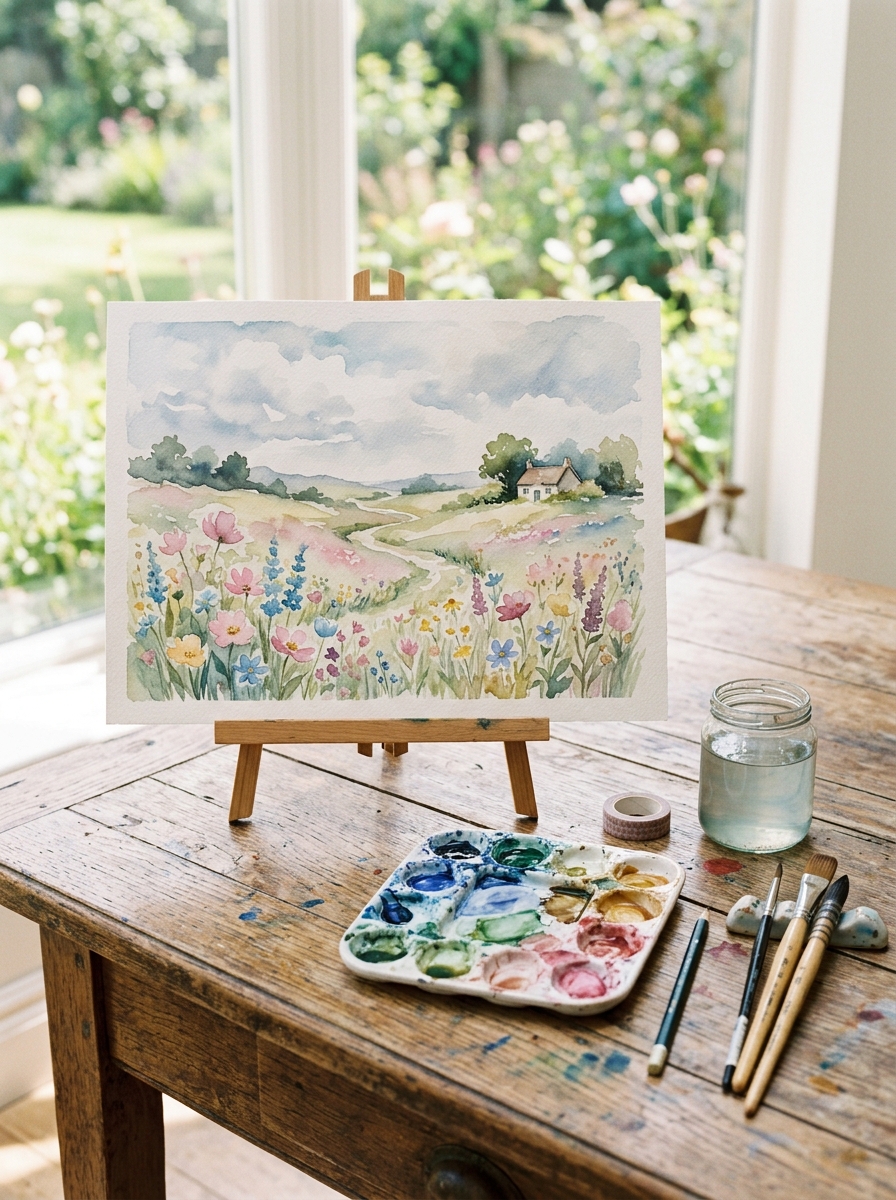
Watercolour painting is one of the most accessible crafts for seniors with arthritis because it requires very little pressure. Unlike acrylics or detailed drawing, watercolour allows the paint and water to do much of the work.
Soft, flowing colours blend naturally on the paper, creating beautiful results without the need for tight gripping, repetitive movements, or forceful brush strokes.
The relaxed nature of watercolour also makes it easy to work at your own pace. There is no rush to finish, and mistakes often become part of the artwork rather than something that needs to be corrected.
Adaptive Tools Needed
- Wide, soft-bristled paintbrushes
- Chunky foam brush grips or ergonomic brush handles
- Watercolour paint set
- Watercolour paper pad
- Small cup of water
- Adjustable table lamp for better visibility
Gentle Steps
- Set up your painting area with all supplies within easy reach to avoid unnecessary stretching or strain.
- Dip a wide brush into water and lightly wet a section of the watercolour paper.
- Pick up a small amount of paint and gently sweep it across the damp paper using slow, relaxed movements.
- Allow colours to blend naturally, adding more water or paint as desired without worrying about perfect details.
- Continue layering soft colours until you’re happy with the design, then set the painting aside to dry completely.
Helpful Tip: Simple subjects such as flowers, sunsets, leaves, abstract colour washes, or landscapes are often easier and more enjoyable than highly detailed paintings when dealing with stiff or aching hands.
2. Soft Air-Dry Clay Sculpting
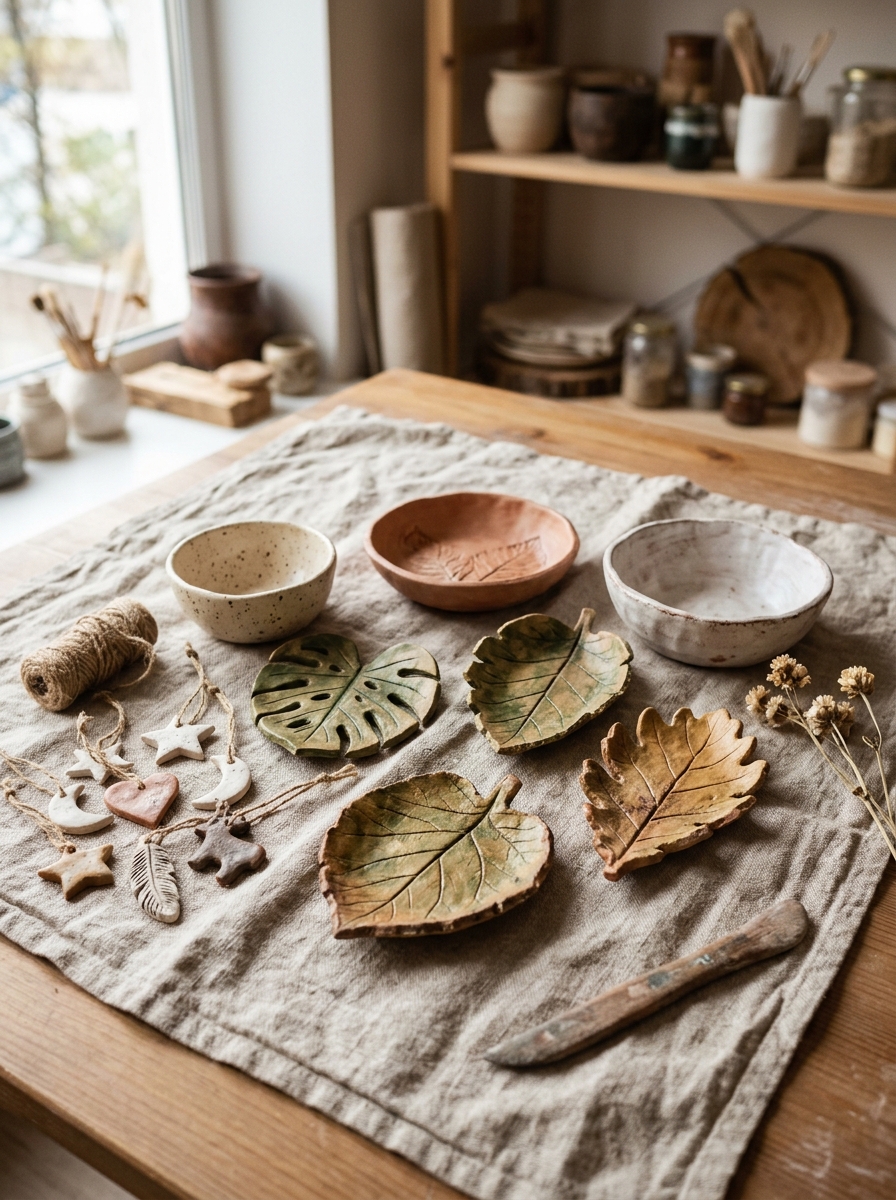
Soft air-dry clay offers a wonderful balance between creativity and gentle hand movement. Unlike many crafts that require precision or strong gripping, clay can be squeezed, rolled, pressed, and shaped using comfortable motions.
The soft resistance of the clay encourages fingers and hands to move through their range of motion, which can help maintain flexibility and dexterity.
Because the material is forgiving, there is no pressure to create perfect shapes. Even simple bowls, ornaments, leaf impressions, or decorative dishes can become beautiful finished pieces.
Adaptive Tools Needed
- Extra-soft air-dry clay or therapeutic clay
- Silicone work mat
- Large rolling pin
- Clay shaping tools with thick handles
- Small bowl of water for smoothing surfaces
- Apron or table covering
Gentle Steps
- Place a small piece of soft clay on a comfortable work surface.
- Gently roll, press, or flatten the clay using your hands or a rolling pin.
- Shape the clay into a simple bowl, ornament, coaster, or decorative object.
- Smooth rough edges with slightly damp fingers or a clay tool.
- Allow the project to air dry according to the manufacturer’s instructions before displaying or decorating it.
Helpful Tip: Smaller projects are often more comfortable than large sculptures because they require less prolonged hand use and can be completed in shorter sessions.
3. Collage Making
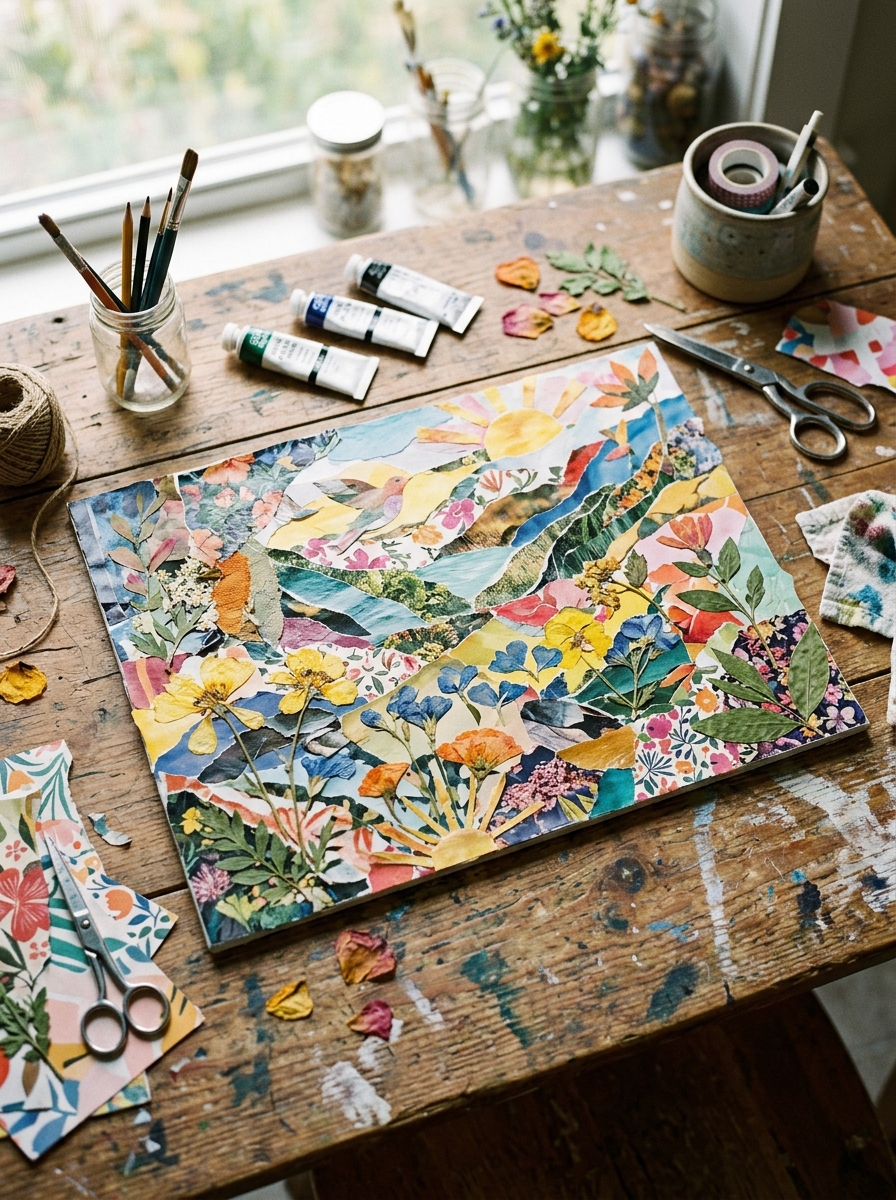
Collage making is one of the easiest and most adaptable crafts for people with stiff or aching hands. It focuses on creativity and personal expression rather than precision.
Images, photographs, decorative paper, fabric scraps, and magazine cutouts can be arranged in countless ways without requiring detailed hand movements.
The project can be completed entirely while seated at a table, and there is no need for drawing skills, painting techniques, or intricate crafting abilities. The process is relaxing, flexible, and easy to pause whenever a break is needed.
Adaptive Tools Needed
- Magazines, photographs, or decorative paper
- Large-grip scissors
- Glue stick or easy-squeeze glue
- Cardstock, canvas board, or poster board
- Tweezers with padded grips (optional)
- Storage tray for organizing materials
Gentle Steps
- Gather images, photographs, or paper pieces that fit a chosen theme or design.
- Cut or tear materials into desired shapes and sizes.
- Arrange the pieces on a backing board until you are satisfied with the layout.
- Apply glue and secure each piece in place using gentle pressure.
- Allow the collage to dry completely before displaying or framing it.
Helpful Tip: Tearing paper by hand instead of cutting can often be easier on sore joints while adding interesting texture and character to the finished artwork.
4. Stamp Art and Card Making
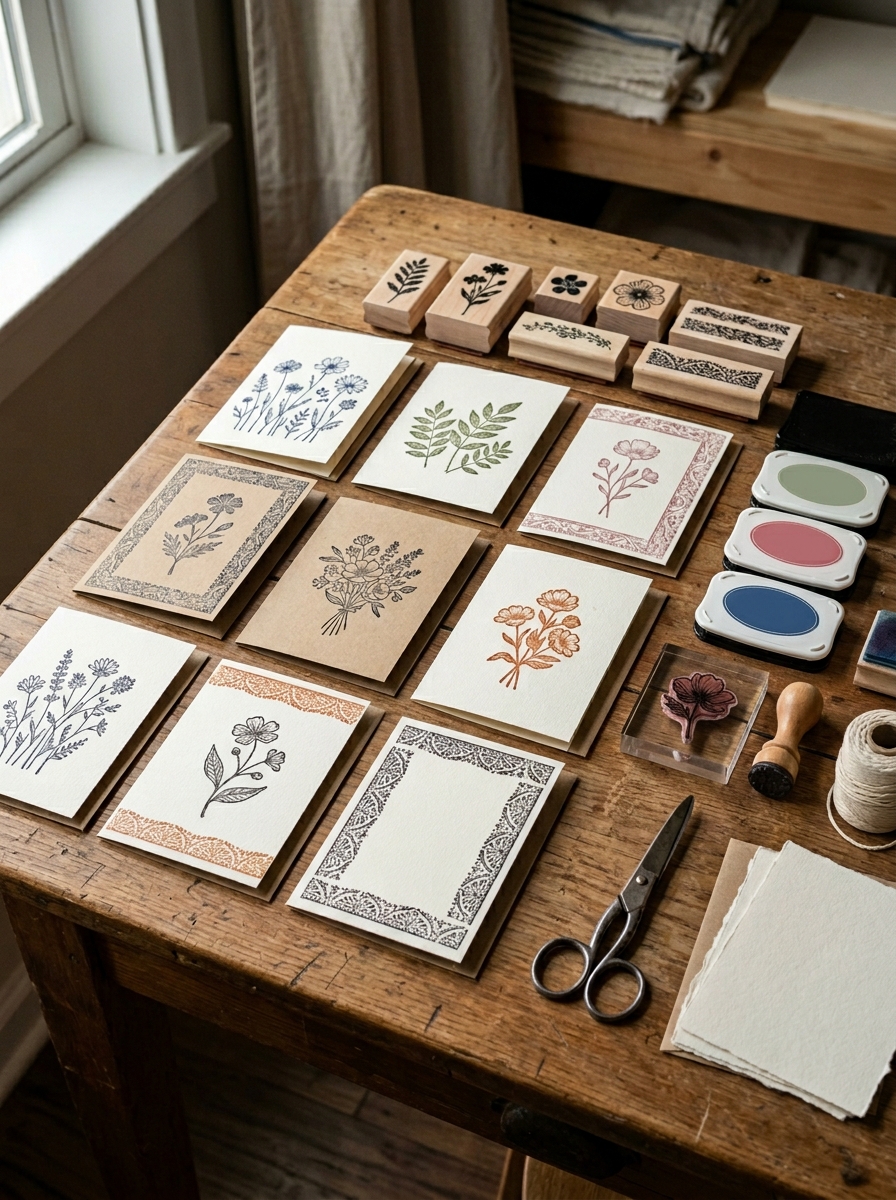
Among the most enjoyable crafts for seniors with arthritis, stamp art requires very little hand strength while still producing beautiful results.
Instead of drawing detailed designs or making precise movements, seniors simply press a foam-backed stamp onto an ink pad and then onto paper.
The motion is repetitive but gentle, making it much easier on stiff fingers and sore joints.
The finished designs can be transformed into greeting cards, bookmarks, gift tags, journal pages, or decorative artwork. Since stamps come in countless patterns and themes, it’s easy to create professional-looking projects without advanced artistic skills.
Adaptive Tools Needed
- Foam-backed or large-handle rubber stamps
- Ink pads
- Blank greeting cards or cardstock
- Non-slip crafting mat
- Ergonomic markers for adding details
- Storage tray to keep supplies organized
Gentle Steps
- Place your paper or card on a flat surface within easy reach.
- Press a large-handled stamp gently onto an ink pad.
- Position the stamp on the paper and apply light, even pressure.
- Repeat with different stamps, colors, or patterns to create a design.
- Allow the ink to dry before displaying the artwork or turning it into a greeting card.
Helpful Tip: Larger stamps are often easier to grip and position than smaller, highly detailed designs.
5. Large-Print Colouring
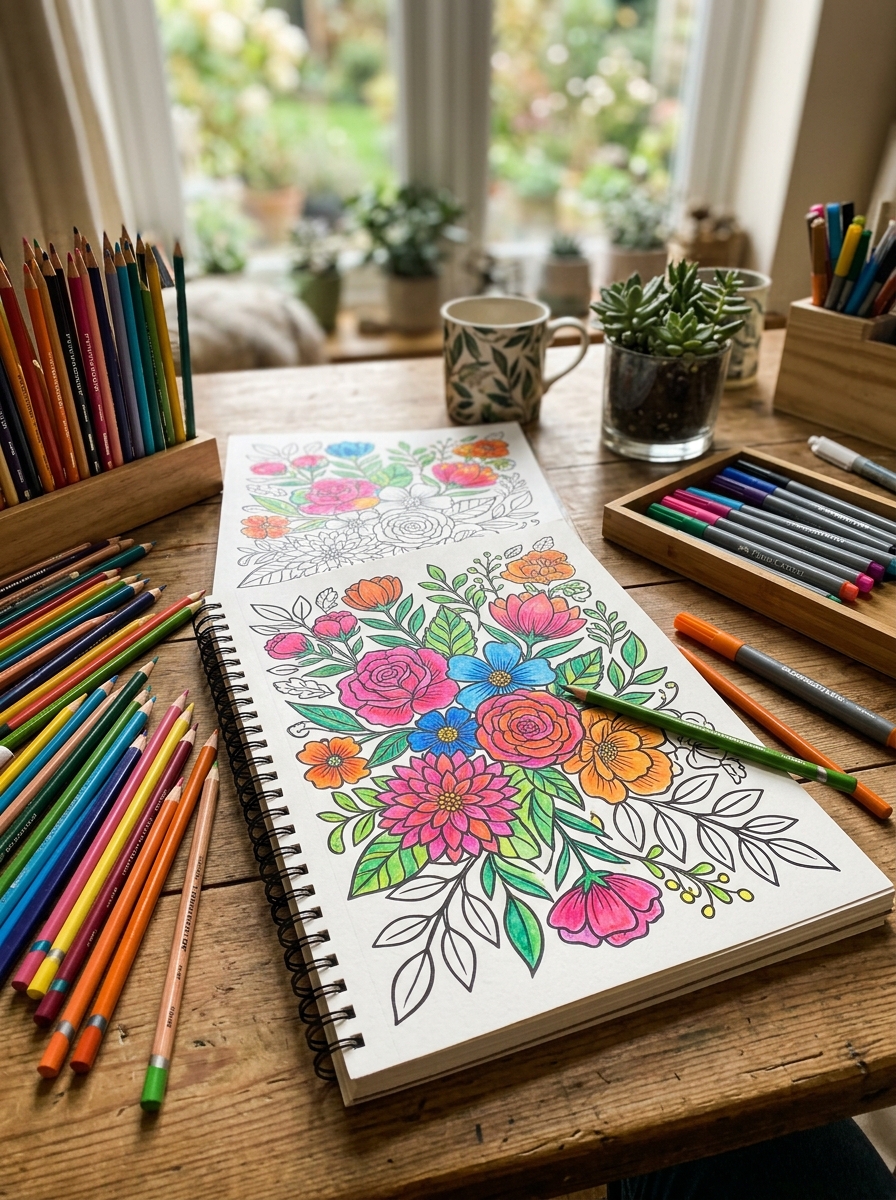
Large-print colouring is one of the simplest crafts for seniors with arthritis because it combines creativity, relaxation, and minimal physical strain.
The oversized shapes and bold outlines eliminate the need for detailed hand control, allowing seniors to focus on colour and enjoyment rather than precision.
Colouring can also promote calm, concentration, and mindfulness. Many seniors find it relaxing to sit with a favourite set of colours and gradually bring a design to life. Finished pages can be framed, displayed, or given as thoughtful handmade gifts.
Adaptive Tools Needed
- Large-print colouring books
- Ergonomic coloured pencils
- Pencil grips or foam sleeves
- Broad-tip markers
- Adjustable table lamp
- Lap desk or comfortable work surface
Gentle Steps
- Choose a colouring page with large shapes and simple outlines.
- Select a few favourite colours before beginning.
- Use slow, relaxed strokes to fill sections of the design.
- Take breaks whenever your hands begin to feel tired or stiff.
- Continue until the page is complete, then display or frame your finished artwork.
Helpful Tip: Markers often require less pressure than coloured pencils, making them a comfortable choice for many people with arthritis.
6. Chunky Yarn Knitting or Finger Knitting
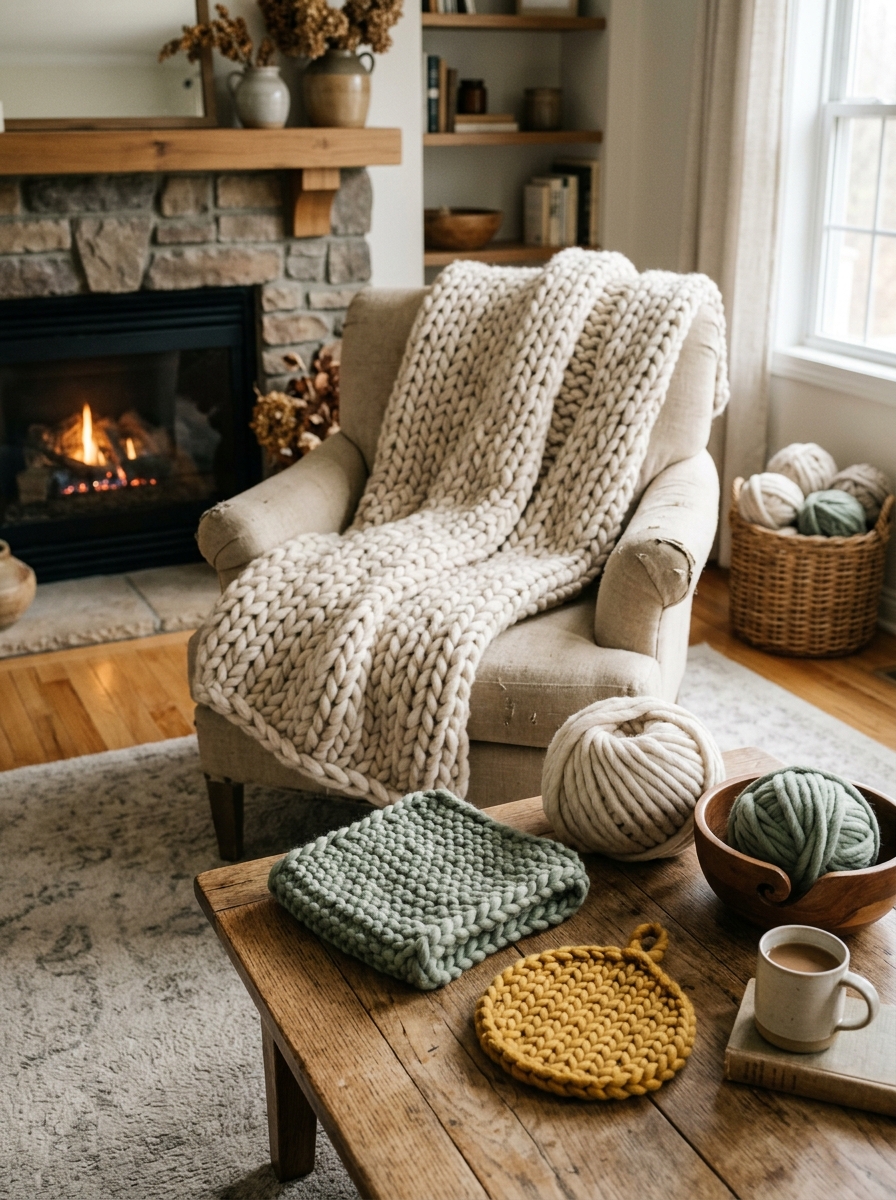
Traditional knitting can become challenging when small needles and fine yarn are involved. Chunky yarn, however, uses larger needles that are easier to grip and control, reducing strain on stiff fingers and wrists.
The larger stitches also make projects progress faster, which can be encouraging and satisfying.
For those who find needles uncomfortable, finger knitting offers an excellent alternative. By using only the hands and soft yarn, it removes the need to hold tools altogether while still providing the enjoyment of creating something useful and beautiful.
Adaptive Tools Needed
- Super chunky yarn
- Large knitting needles
- Ergonomic knitting needle grips
- Yarn bowl (optional)
- Comfortable chair with arm support
Gentle Steps
- Choose a simple beginner-friendly project such as a scarf or blanket.
- Cast on a small number of stitches using chunky yarn.
- Knit slowly using relaxed hand movements and light grip pressure.
- Take regular breaks to stretch your fingers and wrists.
- Continue until the project reaches the desired length, then bind off and enjoy your finished creation.
Helpful Tip: If needles become uncomfortable, try finger knitting, which uses the same chunky yarn without requiring any tools.
7. Candle Making
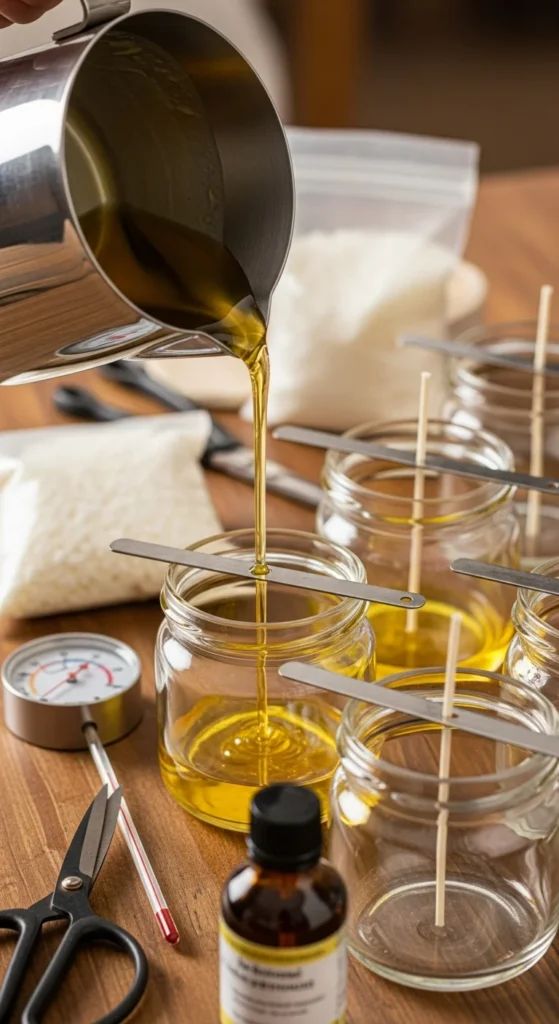
Candle making is a relaxing craft that relies more on pouring than gripping. Most of the process involves preparing containers, melting wax, and carefully pouring it into molds or jars.
Because there is very little repetitive hand movement or fine motor work involved, it can be an enjoyable option for people with stiff or aching hands.
The finished candles can be used at home, given as gifts, or displayed as decorative pieces.
Adaptive Tools Needed
- Candle wax
- Heat-safe pouring jug with a wide handle
- Candle wicks
- Glass jars or candle containers
- Wick stickers or holders
- Protective work surface
Gentle Steps
- Secure a wick in the center of each candle container.
- Melt the wax according to the product instructions.
- Carefully pour the melted wax into the prepared containers.
- Adjust the wick if needed and allow the candles to cool completely.
- Trim the wick once the wax has fully hardened.
Helpful Tip: Small container candles are often easier to handle and require less setup than larger decorative molds.
8. Decoupage
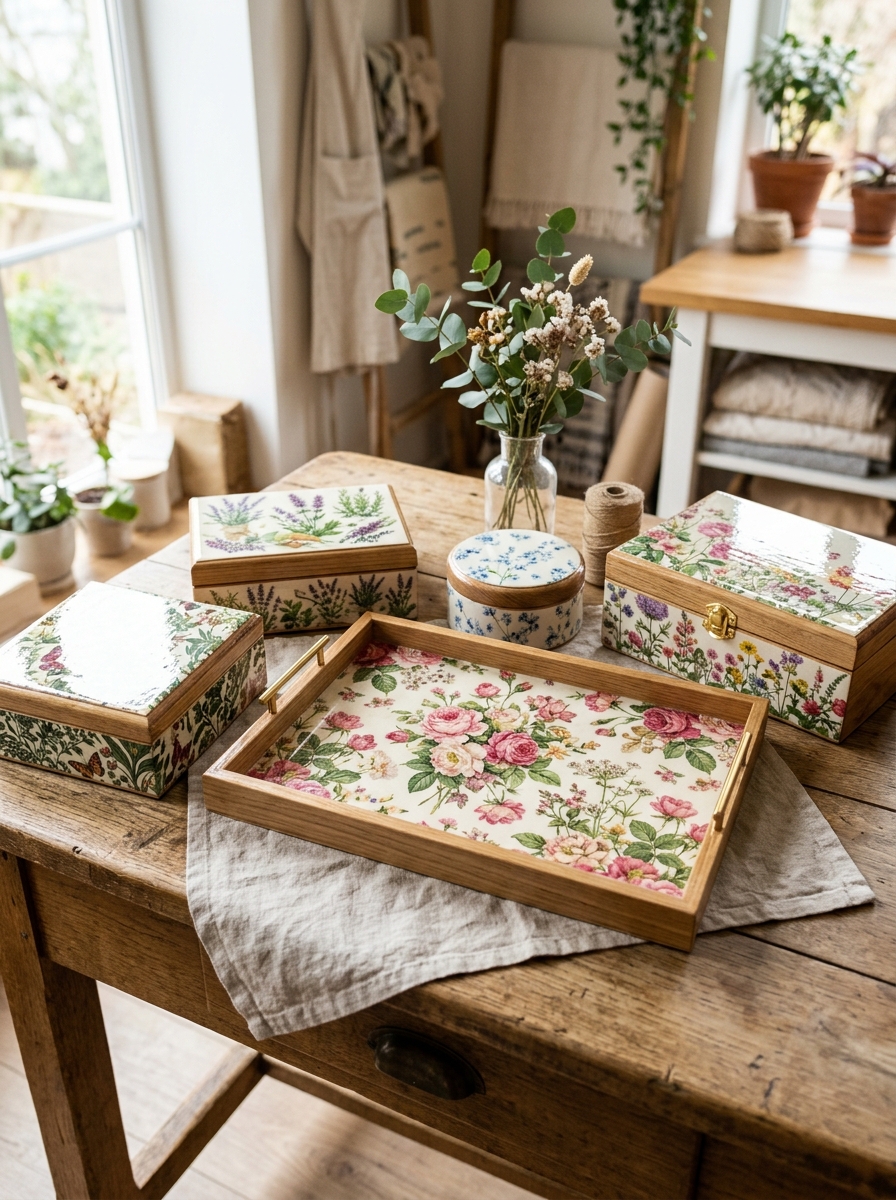
Decoupage is ideal for anyone who enjoys crafting but wants to avoid detailed handwork. The process involves tearing or cutting paper, applying glue with a broad brush, and pressing decorative pieces onto a surface.
These simple, low-grip motions place less stress on the joints than crafts that require constant precision.
Almost any object can become a decoupage project, including picture frames, wooden boxes, trays, flower pots, and storage containers.
Adaptive Tools Needed
- Decorative paper, napkins, or magazine pages
- Decoupage glue or craft adhesive
- Wide foam or bristle brush
- Wooden box, frame, tray, or plant pot
- Protective table covering
Gentle Steps
- Tear or cut decorative paper into manageable pieces.
- Apply a thin layer of glue to the chosen surface using a wide brush.
- Press the paper pieces onto the surface, overlapping them as desired.
- Brush another thin layer of glue over the top to seal the design.
- Allow the project to dry completely before displaying or using it.
Helpful Tip: Tearing paper by hand often requires less effort than detailed cutting and creates attractive textured edges.
9. Photo Memory Journaling
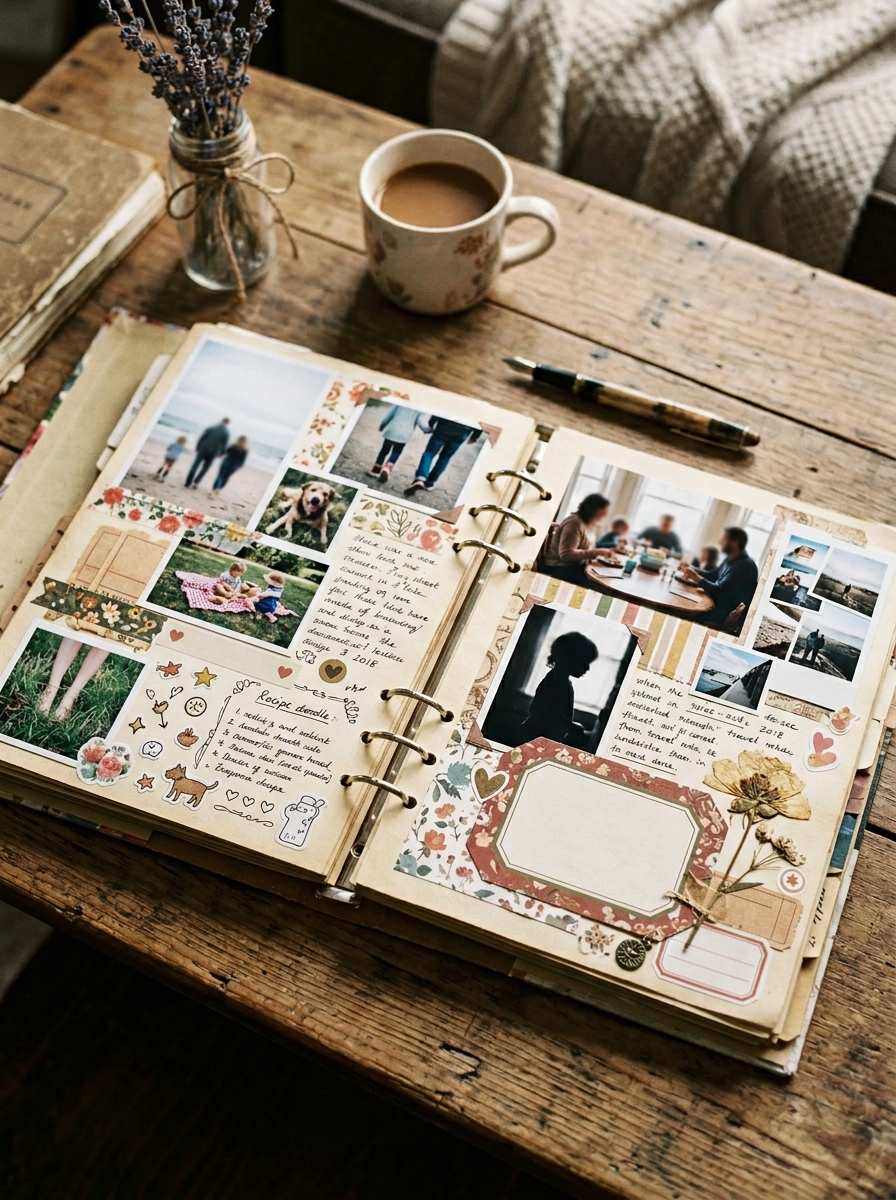
Photo memory journaling is one of the most meaningful crafts for seniors with arthritis because it focuses on storytelling rather than precision.
Instead of requiring small, detailed hand movements, it uses larger, easier actions like placing photos, writing short notes, and arranging pages. This makes it much more comfortable for stiff or aching hands.
It is also deeply emotional and intergenerational. Working alongside family members to gather memories, print photos, and document life stories creates a sense of connection and purpose that goes beyond the craft itself.
Adaptive Tools Needed
- Printed photographs (various sizes)
- Wide-tip markers or thick pens
- Pre-made scrapbook or journal
- Large decorative stickers
- Glue stick or easy-squeeze adhesive
- Photo corners (optional for easy placement)
Gentle Steps
- Gather printed photos and decide on a theme (family events, milestones, or special memories).
- Open the journal and lightly plan where each photo will be placed.
- Attach photos using glue, tape, or photo corners.
- Add short notes, captions, or dates using wide markers or thick pens.
- Decorate pages with large stickers or simple embellishments to finish each memory spread.
Helpful Tip: Working on one or two pages at a time keeps the process relaxed and prevents hand fatigue while still building a meaningful keepsake over time.
10. Beading With Large-Hole Beads
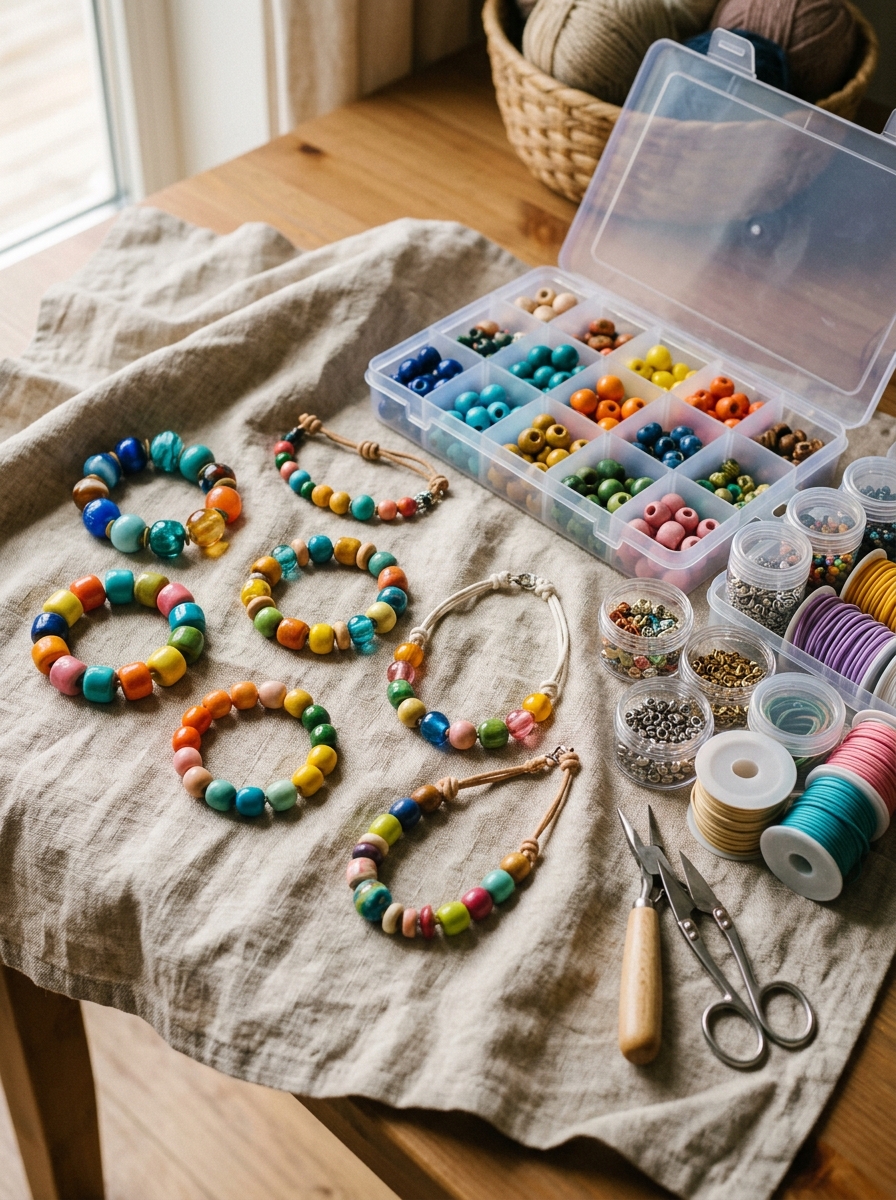
Beading with oversized materials is one of the more accessible creative activities because it supports gentle finger movement without demanding precision.
Large-hole beads are much easier to handle than traditional tiny beads, reducing the need for tight pinching or sustained grip strength. The threading motion encourages slow, controlled hand activity, which can support coordination while remaining manageable for stiff or aching joints.
It also offers immediate visual progress, each bead added builds something tangible, which can feel motivating without requiring long or strenuous effort.
Adaptive Tools Needed
- Large-hole beads (wooden, silicone, or acrylic)
- Thick elastic cord or soft string
- Bead tray or shallow container (to prevent rolling)
- Needle threader or flexible beading needle (optional)
- Non-slip mat for workspace
Gentle Steps
- Pour beads into a shallow tray to keep them stable and easy to reach.
- Cut a comfortable length of elastic cord and secure one end with a simple knot or bead stopper.
- Pick up large beads one at a time using a relaxed grip.
- Thread beads slowly onto the cord, working at a steady, comfortable pace.
- Once the desired length is reached, tie off the ends securely to finish a bracelet, necklace, or decorative strand.
Helpful Tip: Taking frequent pauses between adding beads helps prevent hand fatigue and keeps the activity enjoyable rather than tiring.
Why Crafting Is One of the Best Things a Senior With Arthritis Can Do
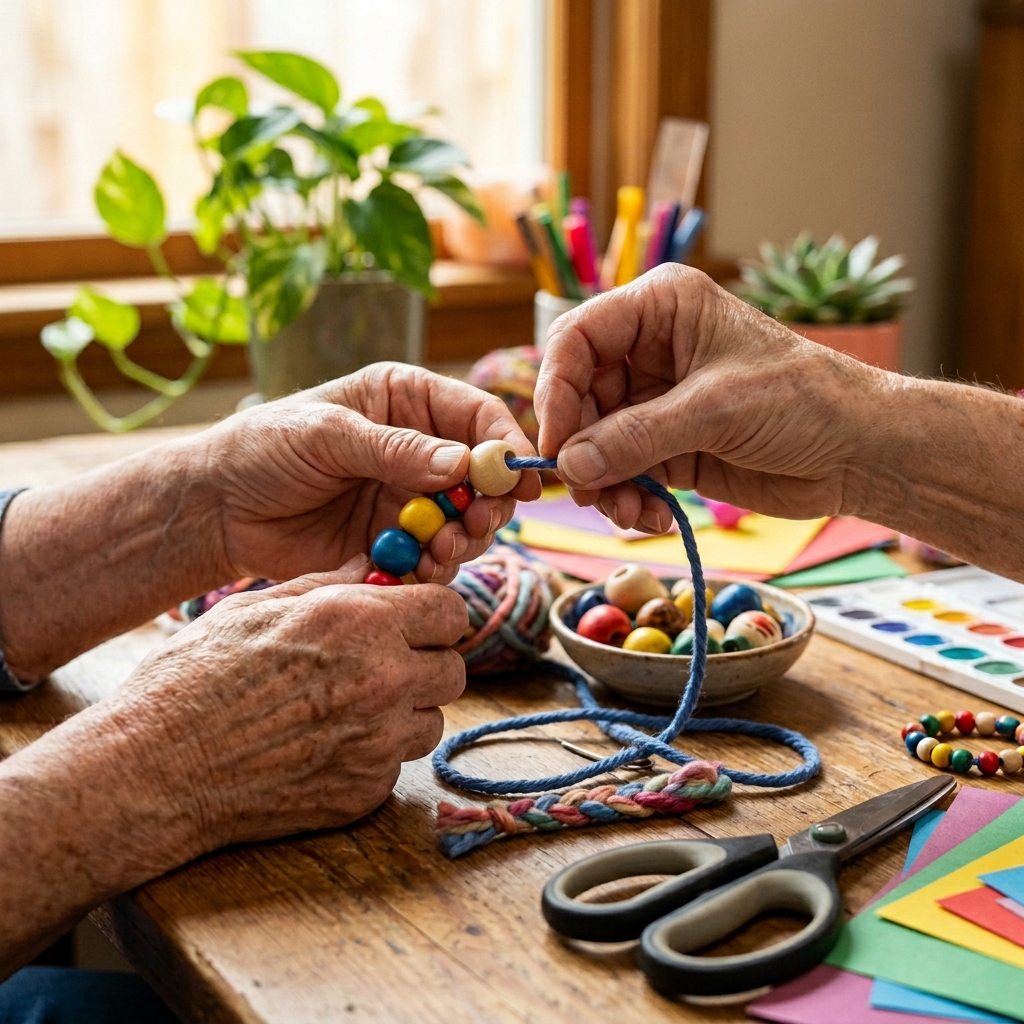
Crafting is much more than a way to pass the time, it can play an important role in healthy aging.
Research published in the Journal of Neuropsychiatry and Clinical Neurosciences and Psychological Science has linked creative activities such as quilting, knitting, pottery, and other hands-on hobbies with better cognitive function and a lower risk of depression and dementia.
Studies also show that older adults who regularly engage in creative pursuits tend to perform better on memory and problem-solving tasks.
For seniors with arthritis, gentle crafting offers a unique combination of mental stimulation, purposeful hand movement, and emotional well-being, helping support both brain health and overall quality of life.
Your Hands Still Have Something to Make
Even when arthritis changes how your hands move, it does not remove your ability to create. It simply asks you to slow down, choose gentler materials, and craft in ways that respect your comfort.
With the right timing, supportive positioning, and accessible tools, creative expression, social connection, and cognitive stimulation are still fully within reach.
If this helped you, save this post and share it with someone whose hands are slowing down, but whose creativity is still very much alive.