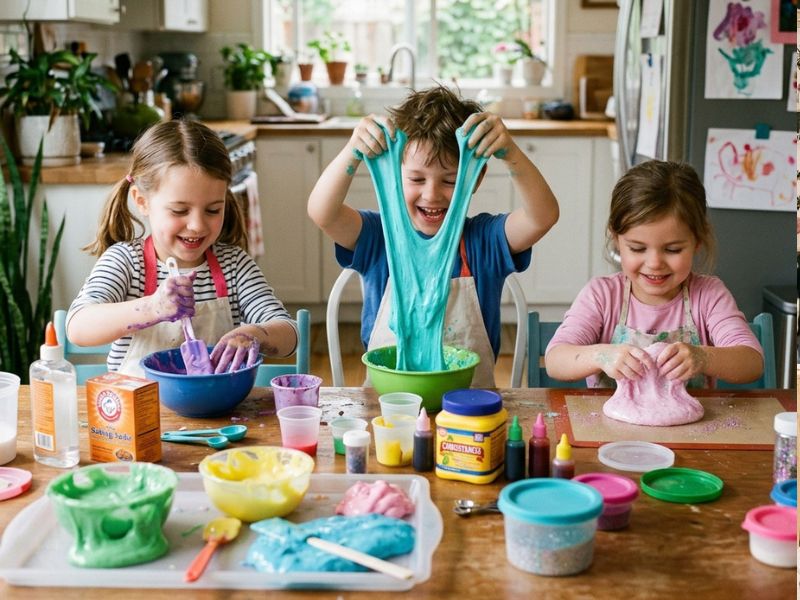
Non-toxic slime craft ideas for kids that make messy play safer while keeping children entertained, creative, and off screens for hours.
You have probably never stopped to ask what is actually inside the slime your child is making.
Why would you? It looks harmless. It is just a fun craft.
But here is what is worth knowing, not all slime is made the same way. Some use three simple ingredients sitting in your kitchen right now that are completely safe. Others use a chemical activator that pediatricians now openly advise against for young children.
The difference between the two takes five minutes to understand. And if your child has been asking you for slime, this is the one thing you need to read first.
Because once you know it, your child can craft freely, no fear, no giant mess, no second-guessing every ingredient on the table.
Slime is one of the best screen-free, creativity-boosting crafts kids are enjoying right now. Your child deserves to enjoy every bit of it.
You just need the right version of it, and that is exactly what this post is here to show you.
Kids who enjoy colorful hands-on activities will love this Coffee Filter Butterfly Craft for Kids (Easy Stained Glass Effect Craft Idea) that turns simple materials into bright window art.
Safe Slime Exists — Here Is Exactly What to Use
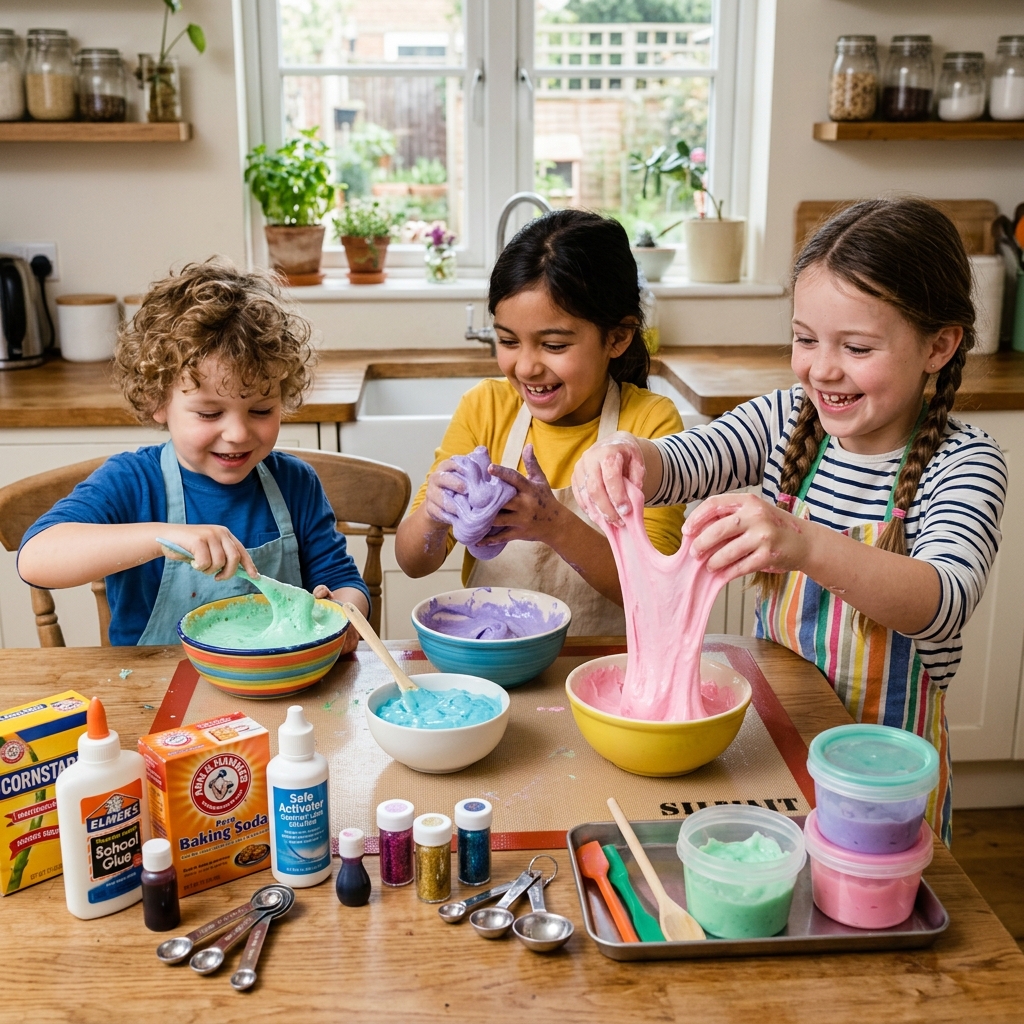
Safe slime craft ideas for kids are not hard to find, they are just not the ones showing up at the top of most search results.
The Two Safest Ingredients You Probably Already Have at Home
A clinical toxicologist at Cincinnati Children’s Hospital confirms that white school glue is considered nontoxic and cornstarch is completely nontoxic, making them the two safest base ingredients you can use when making slime at home with your child.
These are not fancy craft store finds either. Check your kitchen cupboard and your child’s school bag, you likely already have both.
That is where every safe slime craft idea for kids starts. Not with complicated chemicals. Just two simple, trusted ingredients your child can handle confidently.
What Age Is Slime Actually Safe For?
This is one of the most searched questions parents have, and the answer is straightforward.
Slime is recommended for children aged 6 and up because at this age a child can understand and follow simple safety rules like not putting slime in their mouth or rubbing their eyes during play.
If your child is younger than six, do not worry. There are taste-safe, glue-free slime options later in this post made specifically for little ones who still put everything in their mouths.
What to Check Before Buying Store-Made Slime
If you ever pick up slime from a shop instead of making it at home, do this one thing before it touches your child’s hands:
- Look for the ASTM F963 safety label on the packaging, this confirms the slime meets the standard safety certification required for children’s products in the US.
- No label on the packaging? Put it back on the shelf.
- Avoid slime with strong fragrances or glitter microplastics, these can irritate sensitive skin and airways.
Holiday crafting becomes more exciting with this Q-Tip Firework Painting Craft for Kids for 4th of July Indoor and Outdoor Fun, especially for children who enjoy messy-free painting activities.
Non-Toxic Slime Craft Ideas For Kids They Will Actually Love
Each one below has been chosen because it is genuinely safe, easy to make at home, and the kind of activity your child will ask to do again tomorrow.
1. Oobleck — The Slime That Defies Science
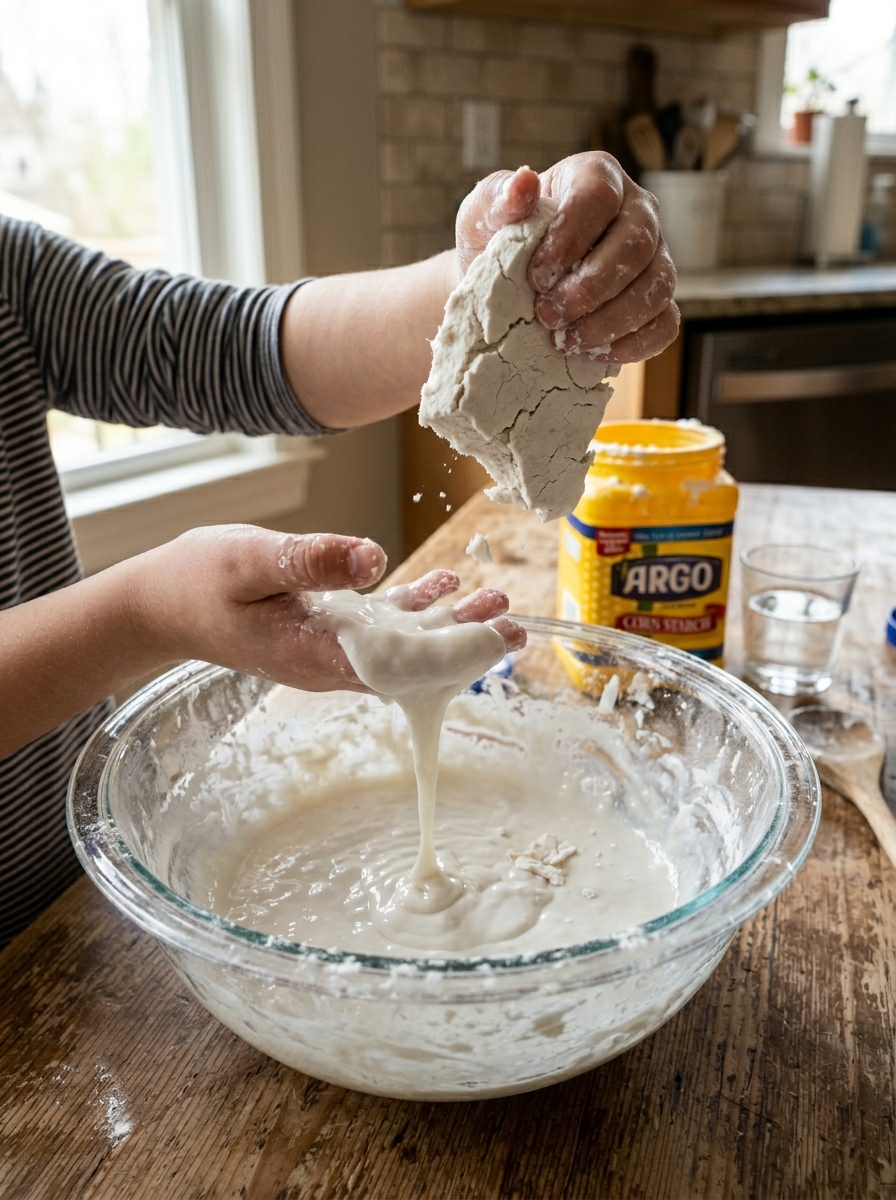
Oobleck is made by mixing cornstarch and water together, and what you get is a non-Newtonian fluid, meaning it does not behave like a normal liquid or solid. Tap it quickly and it feels hard. Press into it slowly and your hand sinks right through.
Your child’s face the first time they experience that? Priceless.
Why Is It Safe?
- Made with just two ingredients — cornstarch and water
- Cornstarch is completely nontoxic — confirmed safe by a clinical toxicologist at Cincinnati Children’s Hospital.
- No glue, no borax, no chemical activator of any kind
- Safe to touch and taste — making it the one slime you do not have to panic about if it goes near a little one’s mouth
What Age Is It For?
- Toddlers and up — this is the safest slime craft idea for kids of any age, including children under six
How to Make It
- You need: 1 cup cornstarch + 1 cup water + food colouring (optional)
- Mix cornstarch and water together slowly in a bowl
- Add food colouring if your child wants colour
- Stir until fully combined
- Play time: let your child tap it, punch it, pour it, and watch their mind be completely blown
What Makes It Fun?
It is the slime that feels like magic. Your child will spend an hour just figuring out why it goes hard when they hit it and soft when they hold it. That curiosity? That is science happening in real time, and they will not even realise they are learning.
Recycling everyday materials becomes creative and educational through these Toilet Paper Roll Crafts for Kids That Turn Everyday Waste into Fun, Skill-Building DIY Projects at Home.
2. Cornstarch and Glue Slime — The One That Feels Just Like the Real Thing
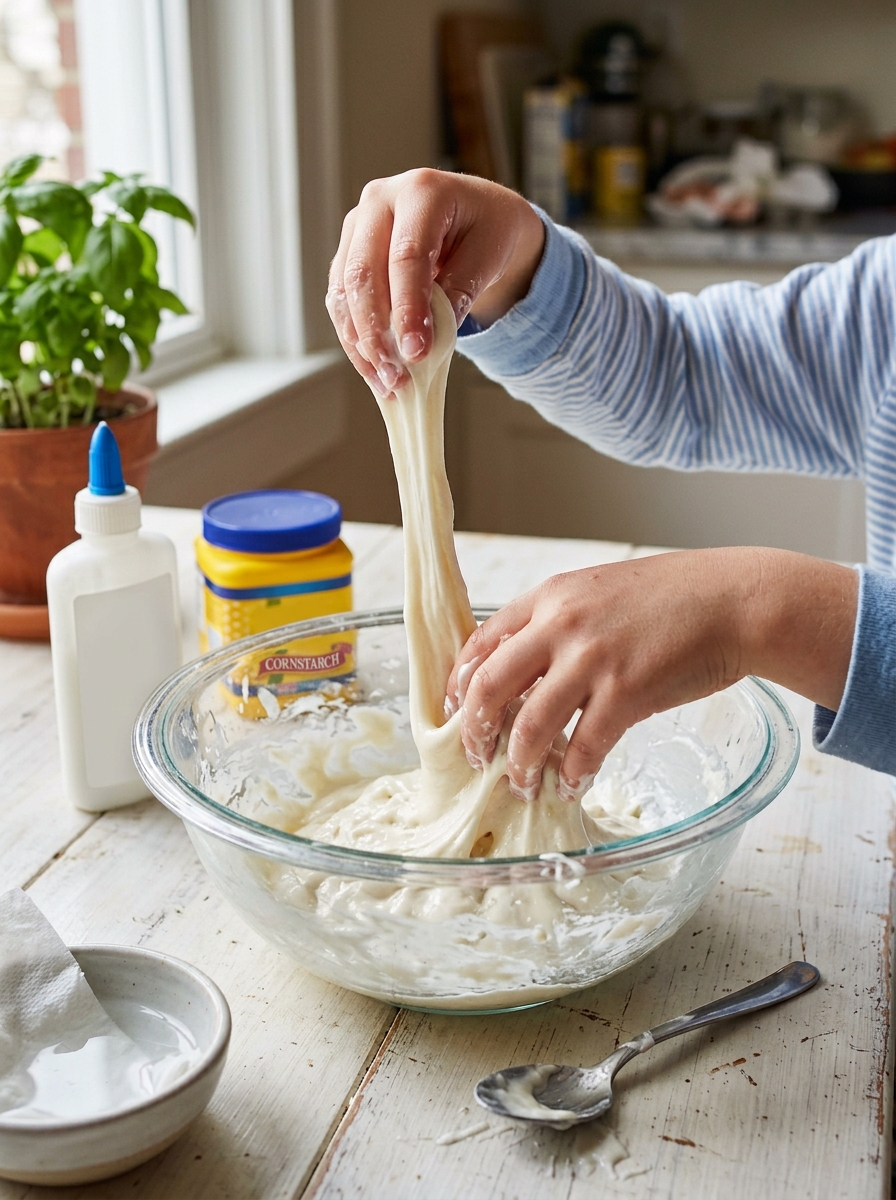
This is a simple two-ingredient slime made with white school glue and cornstarch, no borax, no saline solution, no chemical activators of any kind. It will not stretch like traditional slime but it is squishy, moldable, and completely satisfying to play with.
Think of it as the safe, smarter version of the slime your child sees all over YouTube, without any of the ingredients that should not be anywhere near little hands.
Why Is It Safe?
- White school glue — considered nontoxic and nonpoisonous according to a clinical toxicologist at Cincinnati Children’s Hospital.
- Cornstarch — completely nontoxic, no chemical reaction involved
- No activator needed — meaning no boric acid, no borax, no saline risk
- Instead of a chemical reaction, the cornstarch simply thickens the glue to give it structure, making it one of the gentlest slime craft ideas for kids with sensitive skin.
What Age Is It For?
- Ages 3 and up — with adult supervision for the mixing process
- Great first slime craft idea for kids who have never made slime before
How to Make It
- You need: ¼ cup white school glue + ¾ cup cornstarch + food colouring (optional)
- Pour glue into a mixing bowl
- Add a few drops of food colouring and stir well
- Slowly add cornstarch — a little at a time — mixing as you go
- When it gets too thick to stir, use your hands to knead it together
- Keep kneading until it reaches a smooth, dough-like texture
What Makes It Fun?
This is the slime your child can actually mould into shapes, little balls, flat pancakes, funny sculptures. It is less about stretching and more about creating.
If your child loves play dough, this will be their new favourite thing, except they made it themselves, which makes it ten times more exciting.
Parents looking for low-mess indoor activities can try these Easy Foam Sheet Crafts for Kids That Keep Them Focused, Creative, and Productively Busy at Home.
3. Fluffy Slime — The Cloud-Like Slime Craft Idea Kids Go Absolutely Wild For
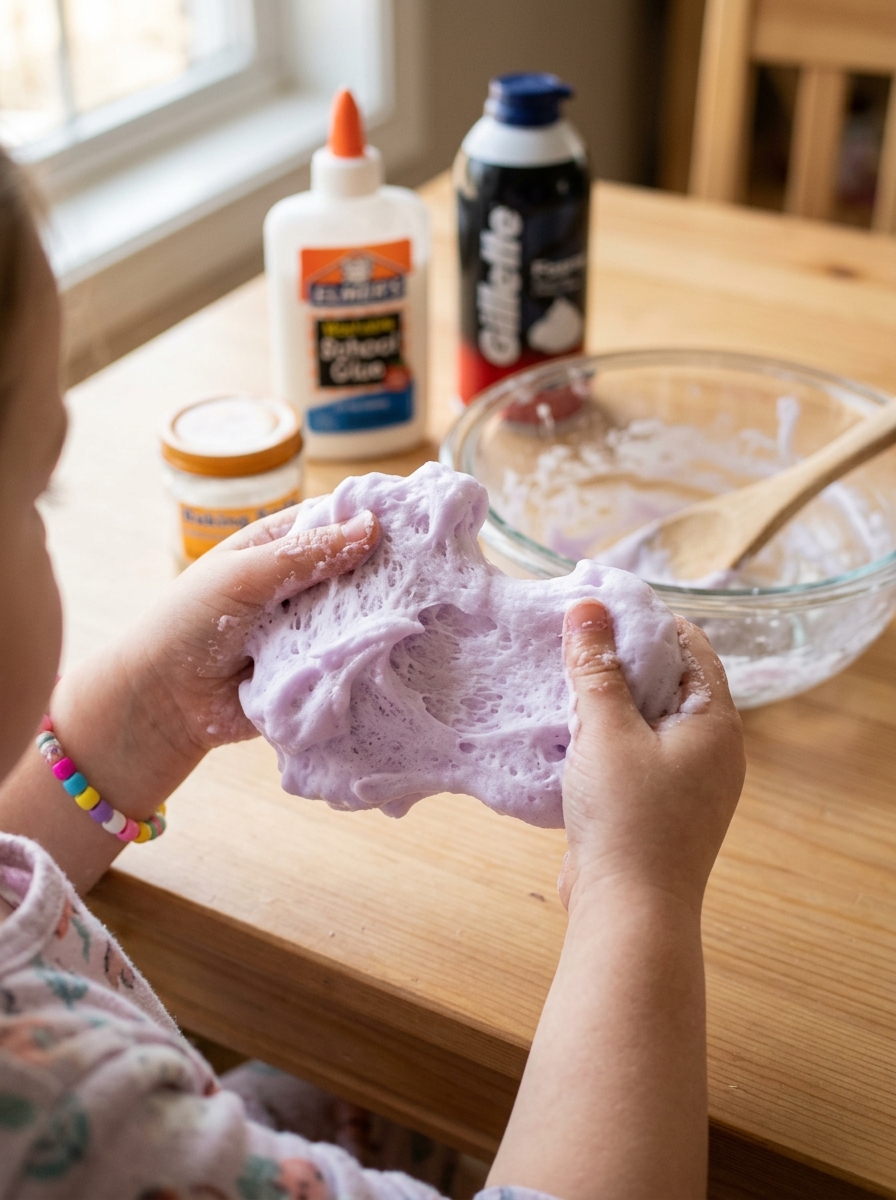
Fluffy slime is exactly what it sounds like — light, airy, soft, and satisfying in a way that regular slime simply is not. It is the slime your child has probably seen being squished and stretched in those oddly satisfying videos online.
The safe version of this slime craft idea for kids uses four ingredients — washable school glue, shaving cream, baking soda, and boric acid-free saline solution. That last detail matters more than most parents realise.
Why Is It Safe?
- Washable school glue — nontoxic and gentle on skin
- Shaving cream — adds the fluffy texture and is skin-safe when used as directed
- Baking soda — completely nontoxic, a pantry staple
- Saline or contact lens solution can still contain small amounts of boric acid, which may irritate sensitive skin in children who play with slime frequently — always check the label carefully before using it. Simplify, Live, Love
What to look for on the saline label:
- Choose a saline solution that clearly states boric acid-free
- If the label lists sodium borate or boric acid as an ingredient — put it back and find another brand
- When in doubt, ask your pharmacist which saline solution is completely boric acid-free
What Age Is It For?
- Ages 6 and up — this slime craft idea for kids requires a little more supervision during mixing
- Not recommended for children under 5 due to the saline activator
How to Make It
- You need: ½ cup washable school glue + 1 cup shaving cream + 1 teaspoon baking soda + 1 tablespoon boric acid-free saline solution
- Pour glue into a large bowl — fluffy slime needs space to grow
- Add shaving cream and stir gently until combined and fluffy
- Sprinkle in baking soda and mix well
- Add saline solution one small drop at a time — not all at once
- Stir until the slime pulls away from the sides of the bowl
- Knead with hands until smooth and cloud-like
What Makes It Fun?
The texture. That is it. There is something about fluffy slime that children simply cannot put down, it is soft like a cloud, stretchy like putty, and makes the most satisfying sound when squished.
If you are looking for a slime craft idea for kids that will genuinely keep them busy for hours, this is the one.
Fine motor skills and imagination work together perfectly in these 13+ Pipe Cleaner Crafts for Kids That Are Simple, Fun, and Completely Mess-Free.
4. Marshmallow Slime — The Safest Slime Craft Idea for Kids Under Six
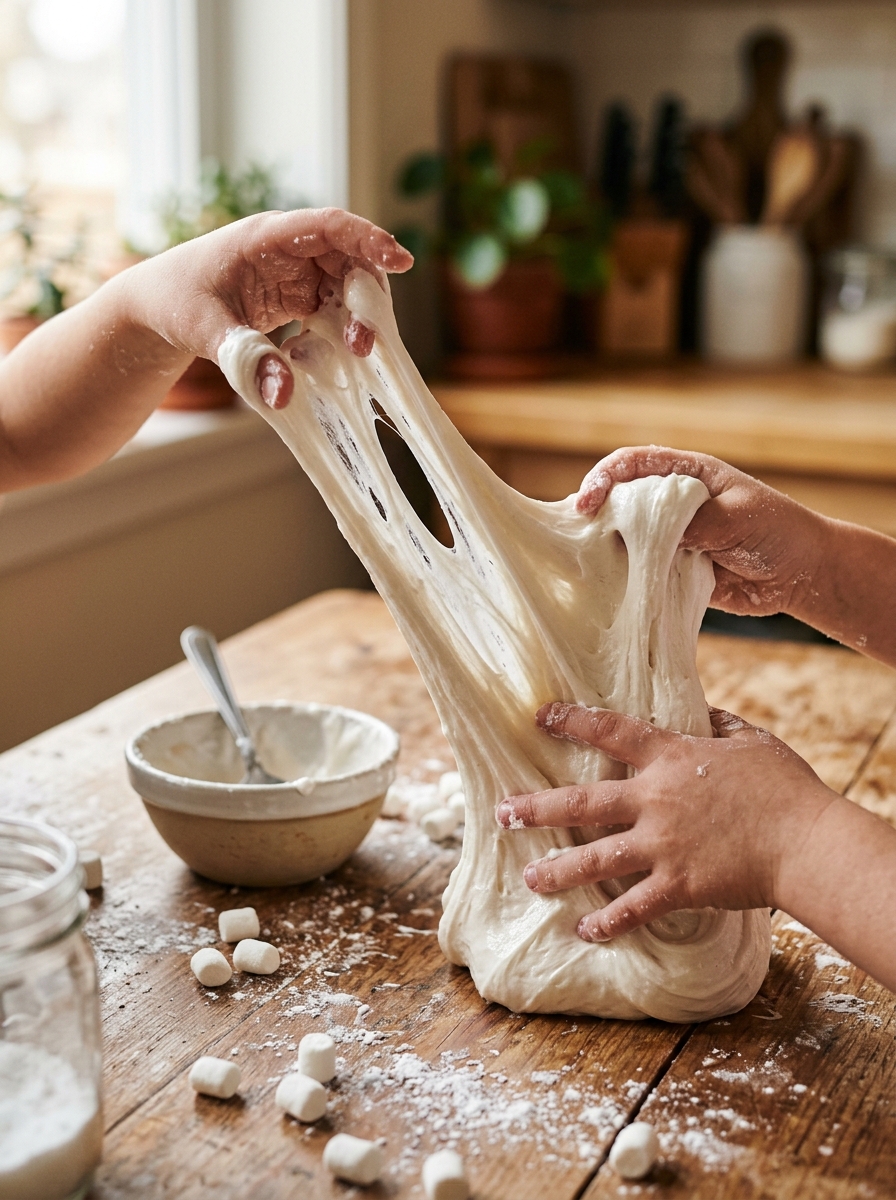
If your child is under six and you have been reading this post thinking, “but what about my little one?”, this idea is written specifically for you.
Marshmallow slime is the one slime craft idea for kids that removes every single ingredient concern from the table. It is taste-safe, glue-free, and borax-free. And yes — it is made with actual marshmallows.
Marshmallow slime is listed as one of the safest slime options available, using no chemical activators whatsoever, no saline solution, no liquid starch, and no borax powder of any kind.
That means if your toddler sneaks a taste mid-craft, and let us be honest, they will, you do not have to panic.
Why Is It Safe?
- No glue — completely glue-free
- No borax — not a single trace of it
- No chemical activator — no saline, no liquid starch, nothing
- Made with marshmallows and cornstarch — two ingredients with no safety concerns whatsoever
- Taste-safe — meaning accidental ingestion of a small amount is not a cause for alarm
- Still supervise your toddler throughout — taste-safe does not mean encourage eating it
What Age Is It For?
- Toddlers aged 2 and up — the most toddler-friendly slime craft idea for kids on this entire list
- Perfect for nursery, playgroup, or a rainy afternoon at home
- Still requires adult supervision — small hands and mouths go together
How to Make It
- You need: 1 cup mini marshmallows + 1 to 2 tablespoons cornstarch + coconut oil for greasing hands
- Lightly grease your hands with coconut oil before handling
- Microwave marshmallows for 10 to 15 seconds until just soft, not melted completely
- Remove from microwave and immediately start kneading with greased hands
- Add cornstarch gradually as you knead to reduce stickiness
- Keep kneading until it reaches a smooth, stretchy, dough-like consistency
- If too sticky, add a little more cornstarch
- If too stiff, microwave for another 5 seconds and knead again
What Makes It Fun?
Everything about this one is sensory gold for a toddler. The soft, pillowy texture. The sweet smell.
The way it stretches just enough to feel satisfying without falling apart. Your toddler gets the full slime craft experience, squishing, pulling, moulding, without you spending a single second worrying about what is in it.
And when they inevitably try to eat it? You just smile and keep going.
Simple supplies become surprisingly creative in these 13 Popsicle Stick Crafts for Kids That Actually Keep Them Busy and Boosts Creativity for fun screen-free play at home.
5. Chia Seed Slime — The Fully Natural Slime Craft Idea for Kids With Zero Compromise
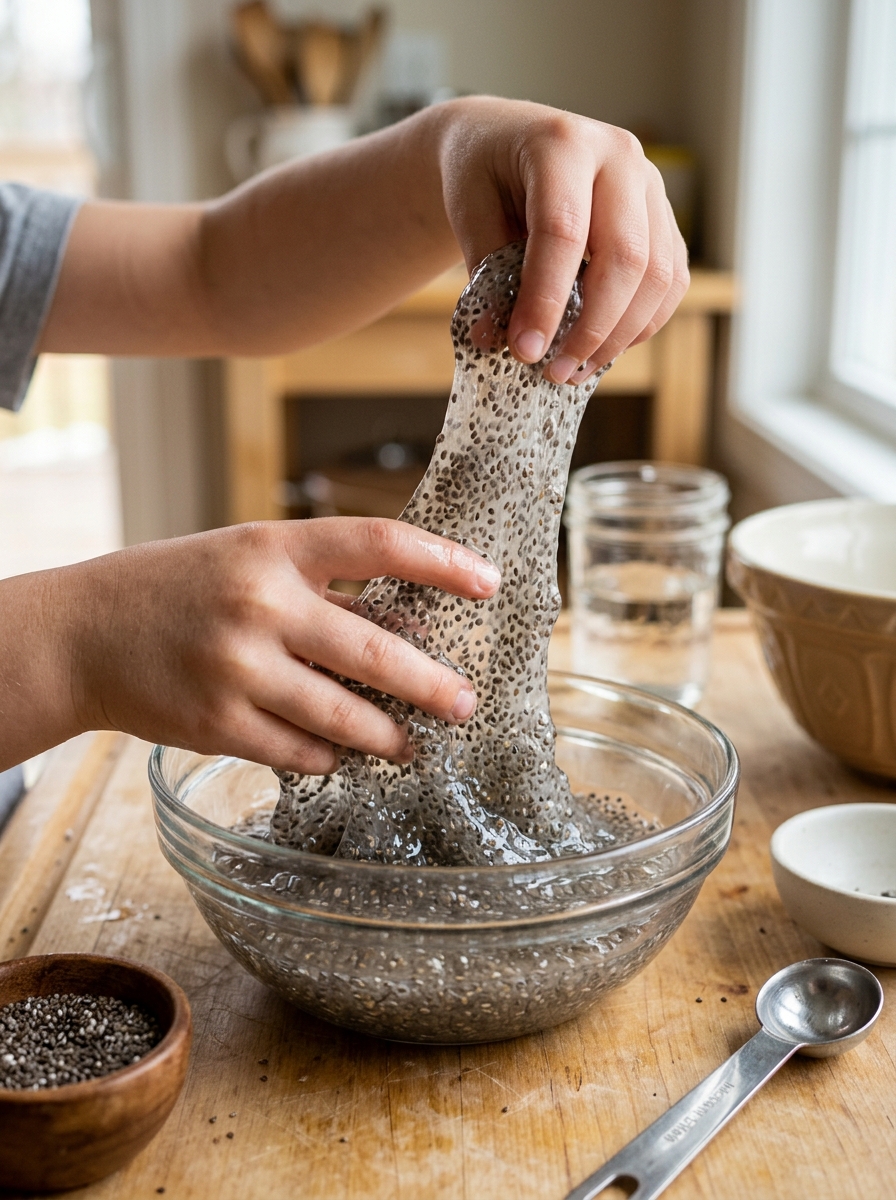
If you are the kind of parent who reads every ingredient label at the supermarket, this one was made for you.
Chia seed slime is the most natural slime craft idea for kids on this entire list. No glue. No activator. No chemicals of any kind. Just chia seeds, the same ones sitting in your kitchen pantry right now, and water.
Chia seeds mixed with water create a gel-like slime texture that is completely glue-free and activator-free, making it one of the safest and most natural slime craft alternatives available for young children and families who want to be completely certain about every single ingredient their child touches.
Why Is It Safe?
- 100% natural ingredients, nothing synthetic, nothing chemical
- Completely glue-free — no PVA, no school glue of any kind
- Completely activator-free — no saline, no borax, no liquid starch
- Both ingredients: chia seeds and water, are food grade
- Safe for children with sensitive skin or allergies to craft chemicals
- The gel that forms is the same natural gel chia seeds produce when soaked, completely harmless
What Age Is It For?
- Toddlers and up, one of the most age-inclusive slime craft ideas for kids on this list
- Ideal for children with eczema, sensitive skin, or sensory sensitivities
- Still supervise younger children, chia seeds are small and can be a choking hazard if handful are put in the mouth dry
How to Make It
- You need: 3 tablespoons chia seeds + 1 cup water + food colouring (optional)
- Pour chia seeds into a bowl or jar
- Add water and stir well to combine
- Add food colouring now if your child wants colour
- Leave to sit for 20 to 30 minutes, stirring every five minutes
- Watch the gel form as the chia seeds absorb the water
- Once fully gelled and thick, it is ready to play with
- Tip: make it the night before and refrigerate, the texture is even better the next day
What Makes It Fun?
This one is as much about the making as the playing. Your child gets to watch something transform right in front of their eyes, plain water and tiny seeds turning into a gooey, gel-like slime over thirty minutes.
That waiting and watching builds patience, curiosity, and excitement all at once.
And when it is ready, the texture is unlike anything else on this list, cool, smooth, slightly grainy, and endlessly satisfying to squish through fingers.
It is also the one slime craft idea for kids you can make together on a Sunday morning with zero stress, because every single ingredient in it you would happily put in a smoothie.
Low-energy parenting days become more manageable through these 13 Easy Egg Carton Craft Ideas for Preschoolers at Home (Perfect for Tired Days) using simple recycled materials.
What Slime Actually Does to a Child’s Brain
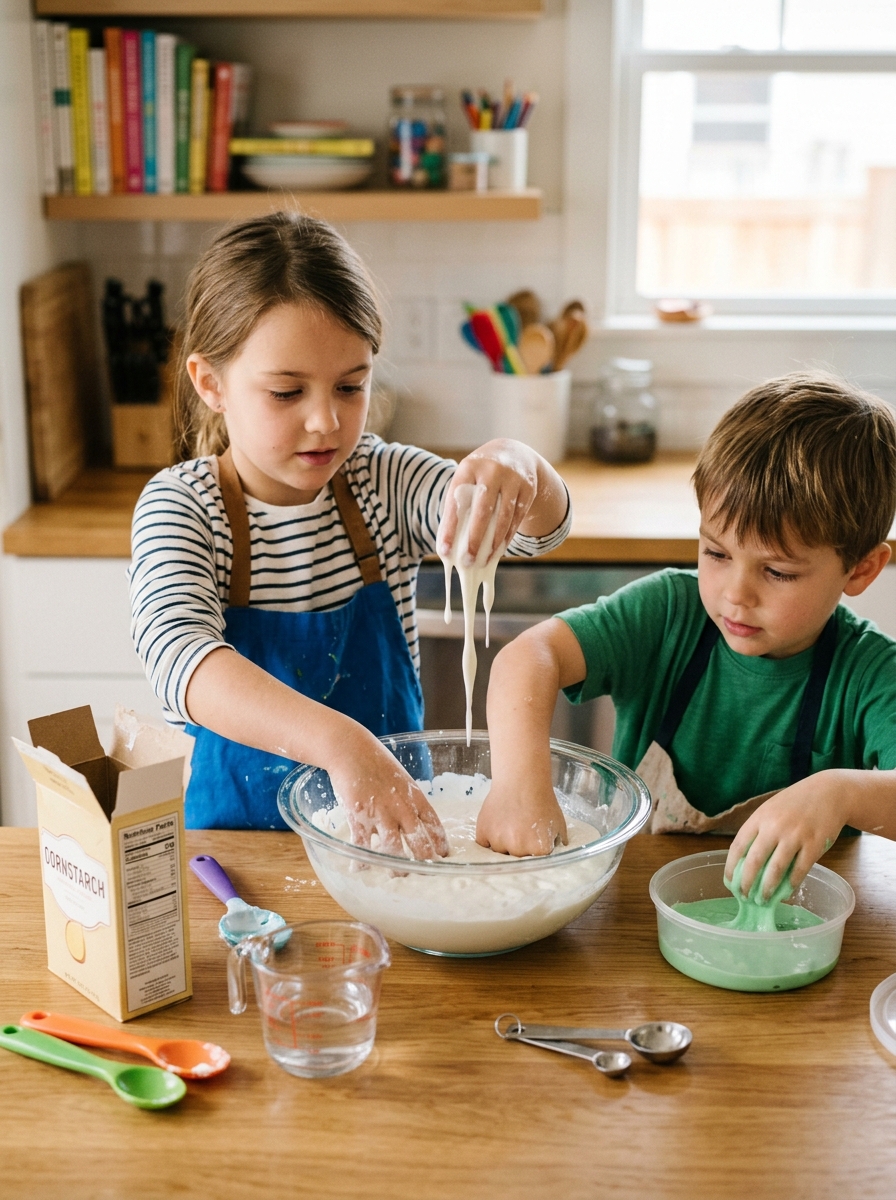
You probably thought you were just keeping your child busy for an afternoon.
Turns out you were doing a lot more than that.
Because every time your child squishes, stretches, and moulds slime, something real is happening inside their brain, and the research behind it is genuinely fascinating.
-
It Builds the Small Muscles That Help Your Child Write
Research from the University of Haifa has shown that sensory play experiences in early childhood directly lead to improved fine motor development and dexterity.
Every time your child kneads, pulls, and pokes their slime, they are strengthening the small muscles in their hands and fingers — the exact same muscles they need for writing, drawing, using scissors, and buttoning up their school shirt in the morning.
It does not look like exercise. But for little hands, it absolutely is.
-
It Helps Your Child Focus — Without You Having to Ask Twice
This one might surprise you.
Sensory play with slime activates all of a child’s senses and satisfies their sensory needs, which research shows can genuinely help increase their attention span and overall focus. It also naturally promotes mindfulness, grounding a child in the present moment without any effort.
So the next time your child sits quietly at the table for forty minutes playing with slime, that is not zoning out. That is their brain regulating itself. That is focus being built in real time.
-
It Is a Recognised Therapeutic Tool — Not Just a Craft
This is the part most parents never hear about slime craft ideas for kids, and it is worth knowing.
For children with sensory processing disorders, slime is actively used to support therapy. The combination of tactile, visual, and auditory input it provides can benefit behavioural development and support therapeutic approaches for children with autism.
Making slime specifically targets fine motor skills, direction following, sequencing, tactile processing, and emotional regulation, which is exactly why therapists use it as a structured developmental tool with children.
If your child struggles with any of these areas, or even if they do not, slime craft time is quietly doing more good than most structured activities you could put in front of them.
-
It Teaches Your Child Science Without Them Knowing It
When your child mixes cornstarch and water and watches it behave like both a liquid and a solid at the same time, they are not just playing.
They are observing cause and effect. They are asking questions. They are making predictions and testing them with their hands.
That is the scientific method, happening naturally, at your kitchen table, because you said yes to slime.
Keeping children entertained indoors becomes much easier with these Indoor Activities for Kids on Rainy Days That Actually Keep Them Busy when outdoor play is not possible.
6 Non-Negotiable Safety Rules Before Your Child Touches Slime
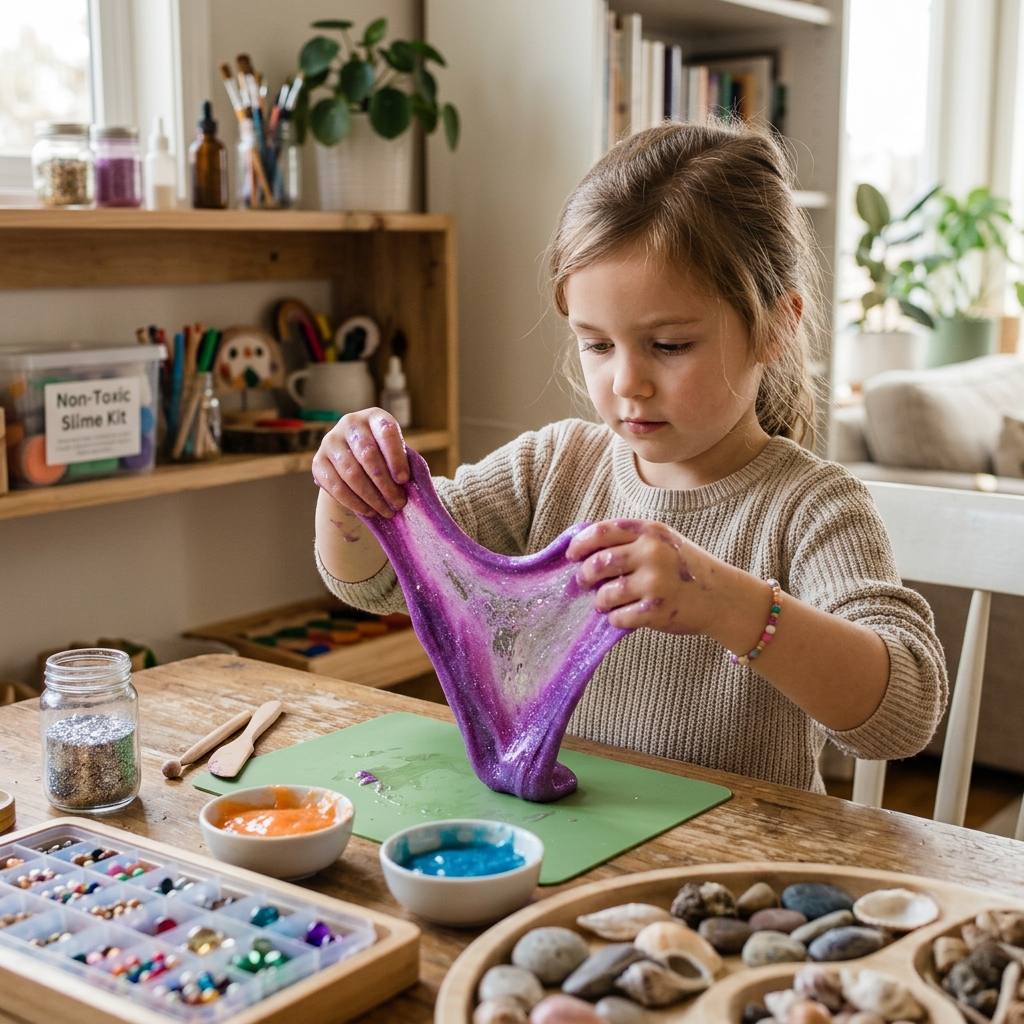
Safe slime craft ideas for kids start long before the mixing bowl comes out.
Because the truth is — even the safest slime on this list requires a few ground rules. Not to take the fun away. But to make sure the fun keeps happening, again and again, without a single trip to the doctor.
Here are the six rules worth setting before any slime craft session begins in your home.
Rule 1 — Always Check Every Ingredient Before You Mix
Not all glue is the same. Not all saline solution is the same. Not all food colouring is the same.
Before your child touches a single ingredient in any slime craft idea for kids, read every label.
Look for the words nontoxic and kid-safe. If an ingredient does not clearly state what is in it — do not use it. Find an alternative. The five minutes it takes to check is worth every second.
Rule 2 — Keep Small Add-Ins Away From Young Children
Glitter. Styrofoam balls. Plastic beads. Sequins.
These are the add-ins that make slime look incredible in photos, and the same ones that turn into choking hazards the moment a toddler gets their hands on them.
Small objects like styrofoam balls and plastic beads are perfectly sized for choking, skip the crunch-and-pop versions of slime craft ideas for kids when babies and toddlers are nearby.
Save the glittery, beaded versions for older children. Keep it simple for the little ones.
Busy afternoons feel less stressful with these 10 Super Fun After-School & Homework-Friendly Crafts Kids Can Make in 20 Minutes designed for quick creative breaks.
Rule 3 — Always Supervise — Every Single Time
It does not matter if your child has made slime craft projects a hundred times before. Supervision is non-negotiable every single session, especially for children under eight.
Young children can put slime near their eyes, mouth, or nose without thinking twice. Being in the room is not enough, be at the table, present, and engaged throughout the entire slime craft session.
Rule 4 — Wash Hands Before and After Every Session
This one is simple and non-negotiable.
- Wash hands before — so no dirt or bacteria gets mixed into the slime
- Wash hands after — so no residue from any ingredient sits on your child’s skin longer than necessary
- Use warm water and soap both times
- Pay attention to under the fingernails — slime loves to hide there
Rule 5 — Store Slime Properly After Every Use
Slime left out overnight becomes a breeding ground for bacteria, and a dried-out, crumbly mess your child will be devastated about the next morning.
- Store every slime craft creation in an airtight container or zip-lock bag
- Keep it away from direct sunlight and heat
- Check it before the next play session — if it smells off, throw it out and make a fresh batch
- Most homemade slime craft ideas for kids last between one and two weeks when stored correctly
Rule 6 — Save This Number Before You Start
This is the one safety rule most parenting blogs leave out of slime craft posts, and it is the most important one on this list.
Before any slime craft session happens in your home, save the US Poison Control number in your phone:
If any slime ingredient is accidentally ingested, do not wait to see if symptoms appear , call Poison Control immediately for professional guidance on exactly what to do next. Children’s National
It is not about being dramatic. It is about being prepared. The parents who have this number saved are the ones who stay calm when it matters most.
Slime Can Be Safe — You Just Have to Know What You Are Doing
You came to this post unsure. You are leaving informed.
You now know which ingredients to avoid, which safe slime craft ideas for kids are worth making at home, what age each one is right for, and exactly how to set up a slime session your child will talk about for days.
The goal was never to avoid slime. It was to do it right.
And now you can.
Pick one of the five safe slime craft ideas from this post, lay down some newspaper, wash those little hands, and enjoy every messy, squishy, screen-free minute of it.
Your child has been waiting long enough.
Before you leave, read: Farm Animal Crafts for Toddlers: Build Creativity and Fine Motor Skills Beyond Playtime.