November craft fair ideas for makers facing the holiday rush. Learn what is worth making for early shoppers, what could leave you with unsold stock.
By November, the question at a craft fair isn’t only “What can I make?” It is “What will someone walking past my table have a reason to take home?”
Holiday shopping has started for many people, but shoppers are not necessarily looking for Christmas decorations at every November event.
Some are picking up gifts, some want something for a host or family member, and others are simply looking for a handmade item that catches their eye. That makes November an interesting month to sell, but also an easy one to get wrong.
The smartest November craft fair ideas are not necessarily the most complicated or the most seasonal.
They are products that fit the moment: giftable without being too specific, useful enough to justify the purchase, and realistic for you to make at a price that pays for your time.
So before filling your table with whatever happens to be trending, it is worth looking at the kinds of handmade products that make sense for November shoppers, and why some are a much safer use of your making time than others.
For the season leading into November, What to Make and Sell This Fall: 15 Fall Craft Fair Project Ideas Worth Your Table Space can help you choose projects with a clear reason to make the table space.
November Has Its Own Craft-Fair Shopping Window
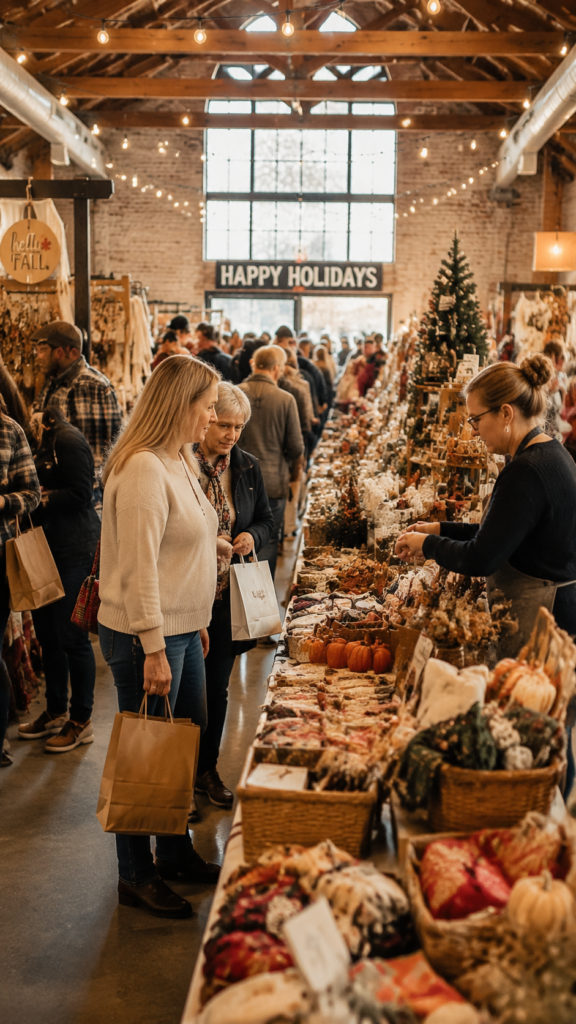
A craft fair held in November is catching shoppers at an interesting point in the year. Autumn has not completely disappeared, but holiday buying is already beginning.
That means the person browsing a handmade table may be looking for a small autumn purchase, a host gift, a birthday present, or something to put away for Christmas.
Holiday shopping also does not begin on one fixed date.
The National Retail Federation’s holiday research treats November as part of the winter holiday shopping season and has consistently found that a significant share of consumers begin shopping before the traditional December rush. Others wait until later in the season.
That matters when deciding what to make. A November craft fair isn’t automatically a Christmas market, and covering your table entirely in Christmas products may not make sense simply because December is approaching.
Halloween products can also give you ideas for seasonal selling. Browse Halloween Crafts to Make and Sell: 21 Ideas to Cash In on the Spookiest Season for inspiration.
Early November and Late November Can Bring Different Shopping Intent
The difference becomes more noticeable as the month progresses.
✅ In early November, shoppers may still be interested in autumn colours, seasonal home items and products they can use immediately. Someone buying a gift may also prefer something that feels useful or personal rather than unmistakably Christmas-themed.
✅ By late November, holiday shopping can become a stronger reason for visiting a craft fair. Thanksgiving weekend and Black Friday also fall within this period in the United States, while many holiday markets begin or become more prominent around this time.
Shoppers who have started their Christmas lists may be looking for finished gifts they can buy and take home that day.
That doesn’t mean every late-November fair will have the same buyer. A local artisan market, school fundraiser, farmers’ market and dedicated Christmas fair can attract very different audiences.
The organiser, location, event theme, competing vendors and price level can all influence what people are prepared to buy.
So the useful question isn’t simply “What sells in November?” It is “What are the people coming to this particular November fair likely to be shopping for?”
That small shift in thinking can change what you make, how much of it you produce and how you arrange your table.
Small handmade pieces can make useful add-ons or stocking-stuffer-style gifts. 20 Genius Ways to Turn Cloth Buttons Into Beautiful Crafts You Can Use or Give as Gifts is a good example.
November Craft Fair Ideas
✅ Small Gifts for People You Don’t Know Extremely Well

When you’re planning your November table, don’t overlook the shopper who needs a gift but doesn’t know the recipient well enough to choose something highly personal.
They may be buying for a colleague, neighbour, host, teacher or distant relative. Give them something that is easy to like without requiring them to know the person’s size or very specific taste.
Good options to consider include:
- Fabric tote bags — practical, reusable and available in different fabrics or prints without requiring a size choice.
- Zippered pouches — useful for cosmetics, stationery, chargers or other small belongings, and easy to display in groups.
- Handmade notebooks and journals — a straightforward gift, especially when you offer a few different covers rather than one design.
- Tea towels and kitchen towels — useful for the home and easy for a shopper to pick up as a host or household gift.
- Fabric coaster sets — small, lightweight and simple to package as a ready-to-give set.
- Bookmarks — inexpensive to make in suitable materials and useful as a small gift or add-on purchase.
- Reusable fabric gift bags — particularly useful during the holiday season because the packaging becomes part of the gift.
- Small fabric organisers or catch-all trays — practical pieces for desks, bedside tables or entryways.
- Simple handmade Christmas ornaments — worth considering for fairs that have clearly shifted into holiday shopping.
When choosing among these, look at your own production time.
A product that costs little in materials but takes an hour to make isn’t automatically a good low-priced item. You need enough margin to make the work worthwhile.
Also give shoppers a reason to understand the product quickly. Put related pieces together, show sets where appropriate and make prices visible.
Someone who is buying a last-minute gift should not have to stand at your table trying to figure out what an item is or whether it is meant to be given as a present.
The opportunity here is not simply to make “small crafts.” You’re creating easy gift decisions for shoppers who want something thoughtful without having to know the recipient inside out.
✅ Personalised Gifts Without Creating a Production Nightmare
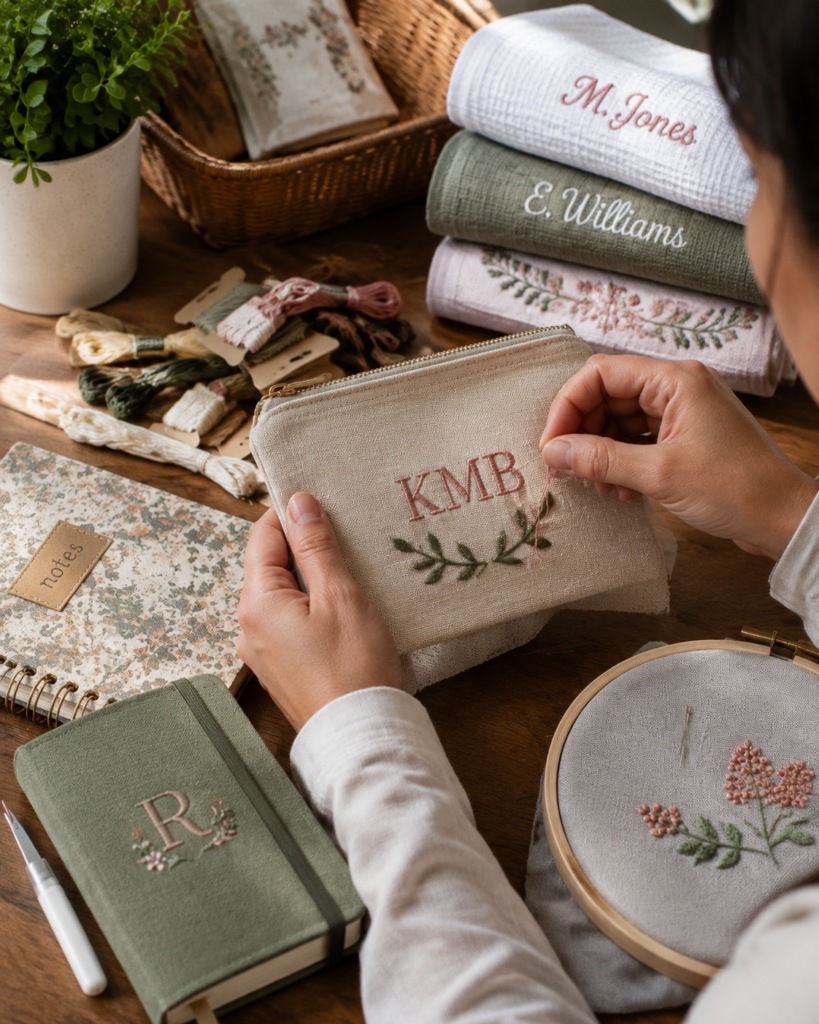
Personalisation can make a handmade gift feel much more intentional, especially when someone is shopping for a particular person.
But as a vendor, you need to decide how much custom work your November table can realistically handle.
A product that takes five minutes to personalise is very different from one that requires you to redesign, embroider or remake the item for every customer.
Good November craft fair ideas for controlled personalisation include:
- Embroidered tea towels — offer a name or short initial rather than completely different designs for every order.
- Monogrammed fabric pouches — initials can add a personal touch without changing the basic product.
- Personalised notebooks or journal covers — names, initials or a short phrase can work within a few predetermined designs.
- Name key fobs — small enough to display in quantity and suitable as inexpensive personalised gifts.
- Embroidered tote bags — keep the bag design consistent and allow the customer to choose the name, initials or a limited selection of motifs.
- Personalised fabric bookmarks — names or initials give a simple product a more individual feel.
- Custom Christmas ornaments — names, dates or a short family message can make these particularly relevant for holiday shoppers.
- Personalised reusable gift bags — the bag becomes part of the present while also giving you another product that can be used beyond one holiday.
The important part is controlling the choices. Decide beforehand which fonts, colours, wording and personalisation methods you can offer.
If every customer can request a completely different design, your craft fair can quickly turn into a queue of custom orders rather than a sales event.
Display finished examples so shoppers can see exactly what you mean by “personalised.”
If an item cannot be completed while they wait, make the turnaround time clear before taking payment and have a simple system for recording names and spelling accurately.
And don’t forget your pricing. Personalisation is additional labour, even when the material cost is tiny. A name that costs almost nothing in thread or vinyl can still take several minutes of your time, and those minutes add up across a busy day.
The goal is not to offer the most customisable product on the table. It is to give shoppers something that feels personal while keeping the work predictable enough for you to produce, price and deliver profitably.
Wood is another material worth considering, especially for personalized gifts. See 11 Wood Burning Crafts You Can Make at Home with Basic Tools That Turn into Income.
✅ Gifts for the Person Who Is Difficult to Shop For
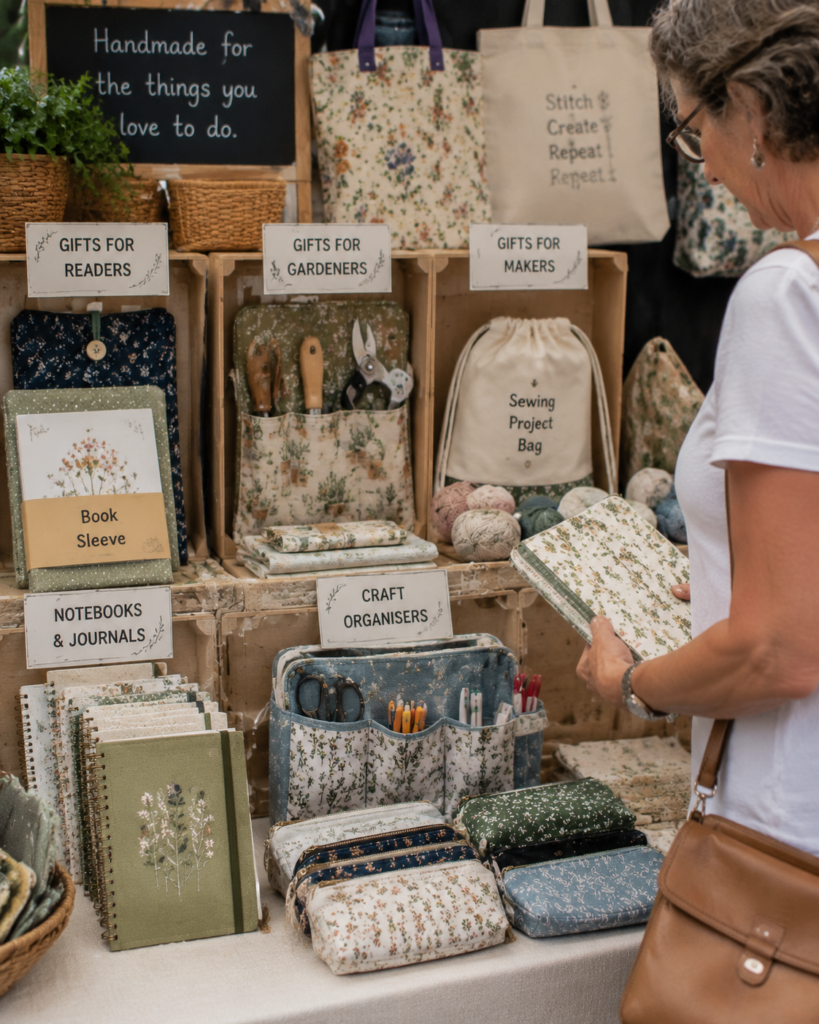
The “hard-to-shop-for” customer is often looking for something that feels personal without being too specific.
They may already own plenty of things, have unusual interests or simply be the person on the gift list who leaves everyone stuck.
This is where interest-based handmade products can give you more useful options than generic Christmas gifts. Instead of making something that is meant for everyone, give the shopper a way to connect the gift to what the recipient enjoys.
Good options to consider include:
- Book sleeves — a practical choice for readers, especially when made in different fabrics or sizes.
- Handmade bookmarks — easy to pair with a book-related gift and inexpensive enough for a smaller purchase.
- Sewn project bags — useful for knitters, crocheters, embroiderers and other makers who need somewhere to keep an unfinished project.
- Craft tool rolls or organisers — practical for people who sew, draw, paint or work with small tools.
- Gardening tool pouches or kneeling pads — useful for gardeners and easy to connect to a specific hobby.
- Reusable produce bags or market totes — suitable for someone who enjoys cooking, shopping at markets or reducing disposable packaging.
- Recipe-card holders or kitchen organisers — a useful option for someone who spends a lot of time cooking or baking.
- Pet-themed accessories — such as treat pouches, toy baskets or personalised pet-name items for animal lovers.
- Desk organisers or cable pouches — practical for someone who works from home or spends a lot of time at a desk.
- Hobby-themed notebooks or journals — useful for gardeners, readers, travellers, cooks or anyone who keeps notes about a particular interest.
As a seller, don’t try to make every possible hobby into a separate product. Choose interests that match your existing skills and production process, then create a small number of clearly recognisable options.
Presentation matters here too. A sign saying “For the gardener” or “For the reader” can help a shopper make the connection faster than simply displaying a collection of unrelated handmade items.
You’re not just selling the object; you’re helping the buyer solve the question of “What can I give this person?”
That is what makes this category useful at a November fair: the product gives the shopper a starting point when the recipient is difficult to buy for.
✅ Host and Entertaining Gifts for November Gatherings
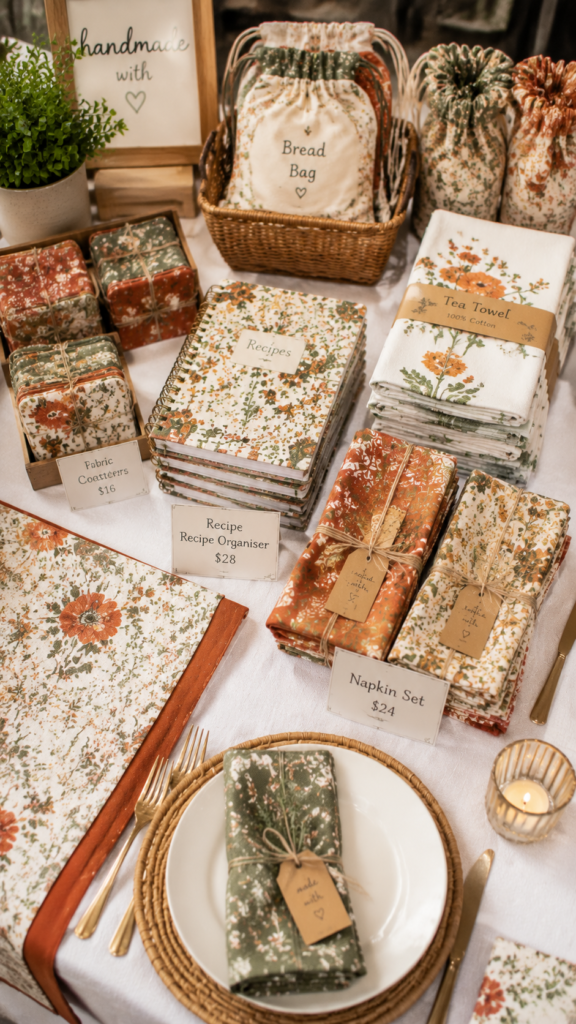
November can bring more opportunities for host and entertaining gifts as people attend dinners, family gatherings and seasonal get-togethers. The shopper may not be looking for a Christmas present at all; they may simply want to arrive with something thoughtful for the person hosting them.
This gives you an opportunity to stock handmade products that are useful around the home and easy to give without needing to know the recipient’s personal size or preferences.
Good options to consider include:
- Fabric napkin sets — practical for a host and easy to present as a coordinated gift.
- Handmade coasters — offer sets of two, four or six so shoppers have different price points to choose from.
- Tea towels — useful, lightweight and easy to fold into a gift-ready package.
- Bread bags — a practical kitchen item for someone who regularly bakes or serves bread at home.
- Reusable bowl covers — useful for covering leftovers or food being prepared for gatherings.
- Fabric placemats — particularly suitable when you can coordinate colours or patterns into a small set.
- Table runners — a higher-priced option for shoppers looking for a more substantial home gift.
- Fabric bread baskets or serving baskets — useful for presenting bread or other food at the table.
- Reusable produce or market bags — a practical option for hosts who enjoy cooking and shopping for fresh ingredients.
- Recipe-card holders or recipe notebooks — suitable for someone who enjoys cooking and collecting recipes.
- Small kitchen organisers — useful for keeping utensils, napkins or other frequently used items together.
As a seller, think about how the product will be given, not just how it will be made. A set of coasters in a simple sleeve, for example, can look much more gift-ready than several loose pieces on a table. Grouping complementary products can also make the buying decision easier.
Keep your materials and designs appropriate to your own production capacity. You don’t need ten different types of table linen just because they’re suitable for entertaining.
Choose a few products you can make well and display together so shoppers can immediately recognise the connection.
And remember that a host gift does not need to scream Christmas. A useful handmade kitchen or table item can make sense for a November dinner, Thanksgiving gathering or holiday party without becoming unsellable once the occasion has passed.
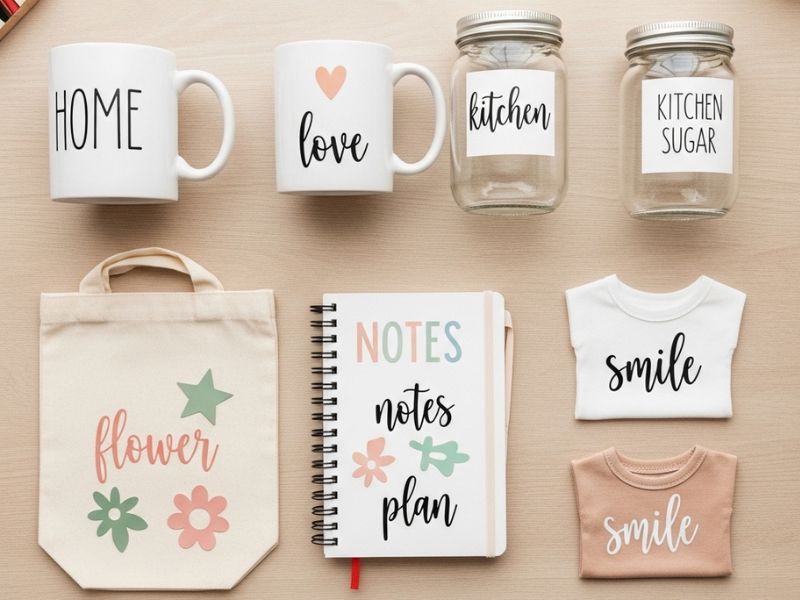
For personalized products without investing in a Cricut, 10 Beginner-Friendly Vinyl Crafts to Make and Sell Without a Cricut at Home offers accessible ideas.
✅ Handmade Gifts That Can Be Bought on the Spot

Not every shopper arrives at a craft fair with a complete gift list.
Some people find something while walking around, realise it would suit someone they need to buy for and decide to take it home immediately. Those are the purchases your table should make easy.
For this type of buyer, choose products that are finished, easy to understand, reasonably priced and simple to carry. Good options to consider include:
- Fabric bookmarks — inexpensive, lightweight and easy to add to a book or larger gift.
- Key fobs — small, practical and available in different fabrics, colours or simple designs.
- Zippered pouches — useful for cosmetics, stationery, chargers or other small belongings.
- Coaster sets — easy to package as a complete gift rather than selling individual pieces.
- Handmade notebooks — a straightforward gift when you offer several cover designs.
- Tea towels — useful household gifts that don’t require the buyer to know the recipient’s size.
- Reusable shopping bags — practical, easy to carry and suitable for a wide range of recipients.
- Small fabric organisers — useful for desks, handbags, bedside tables or travel.
- Simple Christmas ornaments — particularly suitable once your fair has clearly moved into holiday shopping.
- Ready-made gift bags — useful for shoppers who want something presentable without additional wrapping.
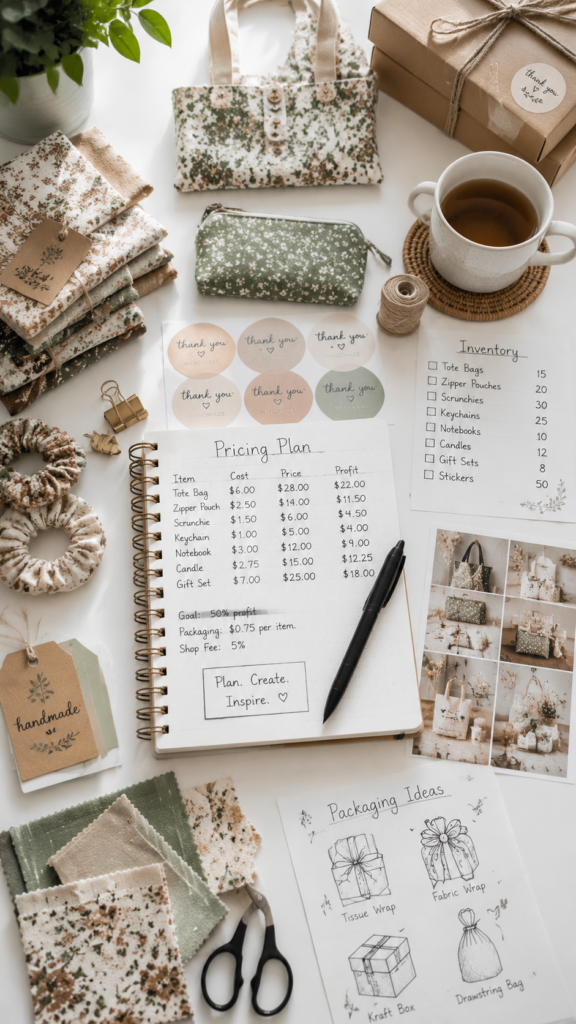
As a vendor, resist the temptation to make these products so inexpensive that your time disappears into them. A small item still needs to cover its materials, labour, packaging and other selling costs.
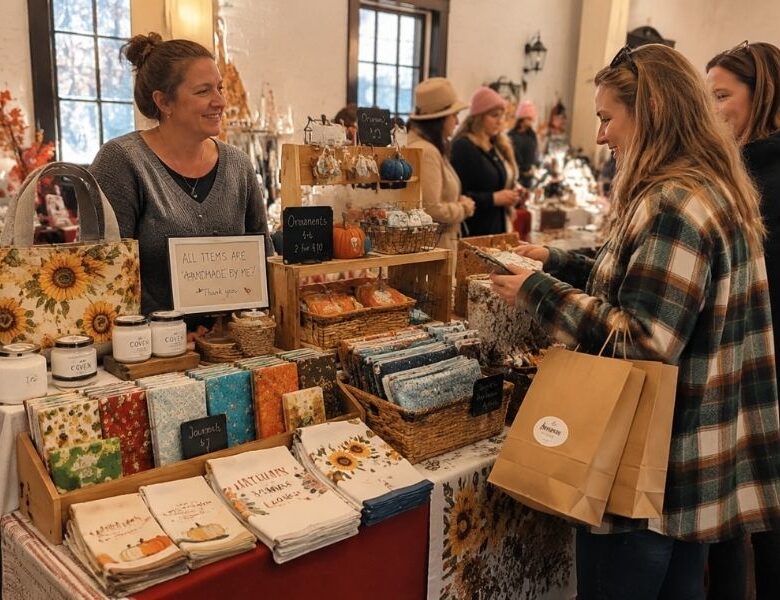
Presentation can also turn a quick decision into an easier sale. Keep these products where shoppers can see and handle them, display the price clearly and group related items together.
A small sign such as “Easy Gifts Under $X” can help shoppers who are specifically looking for something they can pick up and take home without much deliberation.
The point isn’t to make the cheapest products on your table. It’s to give the shopper a few finished gifts they can recognise, choose and carry away in the same visit.
And for anyone considering secondhand clothing as a business, Thrift Business in Nigeria: How to Start a Profitable Thrift Clothing Business covers the basics of getting started.
✅ Gift Sets That Solve the “What Do I Buy?” Problem
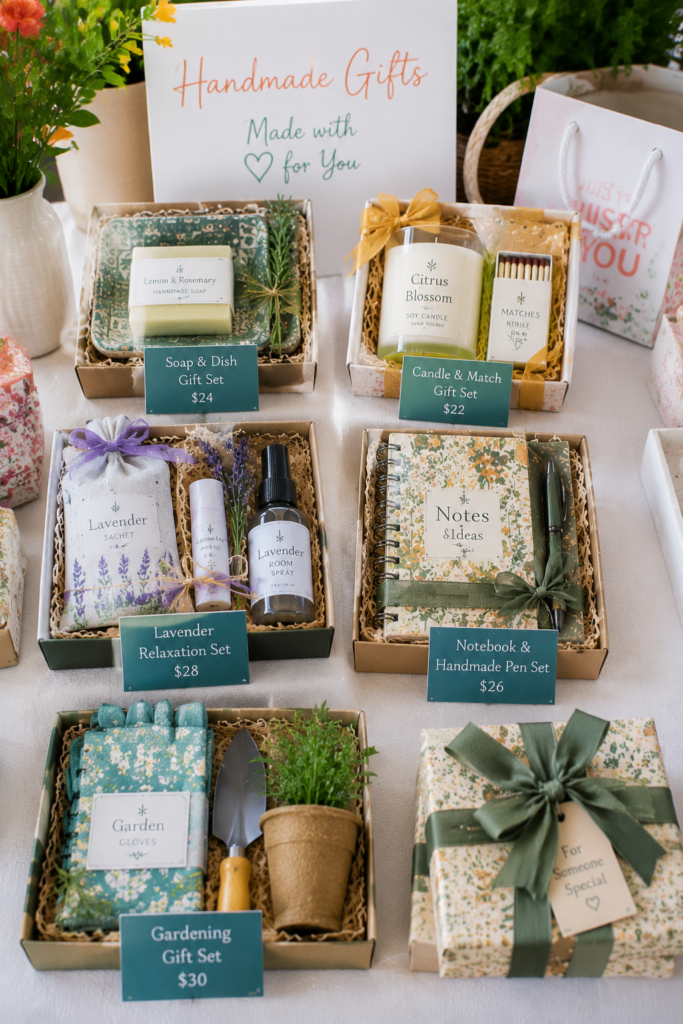
Sometimes the shopper isn’t struggling to find a gift; they’re struggling to decide which combination of things actually makes a complete gift. A well-planned handmade set can solve that problem for them.
Instead of placing three unrelated products together and calling them a bundle, combine items that naturally belong together. Good options to consider include:
- Handmade soap + soap dish — the dish gives the consumable gift something lasting, while the two pieces have an obvious relationship.
- Bath salts + reusable bath sachet — a simple self-care set that doesn’t require knowing the recipient’s clothing size.
- Candle + handmade candle snuffer or match-holder jar — a more complete home-fragrance gift than selling the candle alone.
- Hot-water-bottle cover + warming eye pillow — suited to someone who appreciates cosy, practical gifts.
- Lavender eye pillow + small lavender sachet — works as a compact relaxation set where the maker already has the materials and process for both.
- Handmade pen + refillable notebook — gives a writer or stationery lover something more complete than a notebook by itself.
- Plant pot + handmade plant marker set — a natural combination for gardeners, particularly when the pieces are designed as one gift.
- Seed packet organiser + handmade plant labels — useful for gardeners who save and organise seeds.
- Reusable makeup remover pads + wash bag — the two products solve the same routine and can be sold as a complete set.
- Dog bandana + matching waste-bag holder — a more specific gift for a dog owner than a generic pet-themed product.
- Sourdough starter jar + fabric bowl cover — an unusual option for a baker, provided you are selling the jar as equipment rather than making unsupported claims about the starter itself.
- Handmade puzzle or card game + fabric storage bag — useful when the maker already works with appropriate game components and wants the storage solution to be part of the gift.
The important part is not to force a bundle simply to increase the number of items. A soap dish belongs with soap because the shopper can immediately understand the pairing.
Two unrelated handmade products thrown into a basket just create a more expensive collection.
Before making a large number of sets, also check whether the individual components sell well on their own.
That gives you more flexibility if shoppers like one part of the set but don’t want the complete bundle.
Handmade gifts with a relaxed, decorative feel could also fit a holiday market. 10 Handmade Boho-Inspired Gift Ideas You Can Make and Sell From Home has some options to consider.
✅ Handmade Products That Are Useful Beyond Christmas

Seasonal products have their place at a November craft fair, but you don’t want too much of your money sitting in stock that only makes sense for a few weeks.
Look for handmade products that can be presented as Christmas gifts without being Christmas-only products. A fabric tote can be packaged as a holiday gift but remain useful in January.
A zippered pouch can be bought for Christmas and later used for travel, cosmetics or stationery. A notebook can be presented with festive packaging in November and still work as a birthday or everyday gift later.
Look beyond the usual bags and stationery and consider:
- Pin cushions — useful for sewists and crafters and still relevant after December.
- Knitting needle or crochet-hook cases — a practical gift for a specific hobby rather than a generic Christmas item.
- Eyeglass cases — small, useful and suitable for a wide range of recipients without requiring a size fitting.
- Hearing-aid or small-device cases — a niche but practical handmade product when made with appropriate dimensions and secure closures.
- Reusable produce or bulk-food bags — useful beyond the holiday season and suitable for shoppers interested in reducing disposable packaging.
- Plant pot covers — can be styled for Christmas gifting but remain useful as home décor afterward.
- Fabric tool aprons — useful for gardeners, artists, makers or DIY enthusiasts.
- Handmade draft stoppers — a practical cold-weather home item that can remain relevant through winter rather than becoming obsolete after Christmas.
- Door-hanging organisers — useful for storing small everyday items and not dependent on a holiday motif.
- Laundry or shoe bags — practical for travel, gym use or home organisation throughout the year.
- Reusable bowl or food-storage covers — useful in the kitchen regardless of the season.
- Picnic or outdoor utensil rolls — a less obvious gift that can become useful again when warmer weather returns.
- Handmade fabric storage baskets — useful for toys, craft supplies, toiletries or household organisation.
You can give an evergreen product a November shopping angle through gift-ready packaging, a seasonal colourway, a removable Christmas tag or a limited holiday version rather than permanently attaching a Christmas theme to the product.
That distinction matters when you’re the one paying for the materials. A Christmas-only item has to earn its place within a short selling window; an evergreen product can still be useful stock when the holiday market is over.
And that’s the real advantage: you’re not gambling your entire November inventory on whether shoppers want one particular Christmas design.
Polymer clay is another beginner-friendly medium for small handmade products. Take a look at 12 Polymer Clay Crafts You Can Make and Sell from Home for Beginners.
What Makes a Handmade Product Worth Taking to a November Craft Fair?

A handmade product can be beautiful and still be a poor choice for a craft fair. Before making a large batch, consider whether it works for both the shopper and your business.
✅ Giftability
Can someone immediately picture giving it to another person? It doesn’t have to look overtly Christmas-themed; products connected to someone’s hobbies, home or everyday life can make strong gifts.
✅ Usefulness
What does the product do? An item that solves a small problem or serves a clear purpose gives shoppers a practical reason to buy, rather than relying on decoration alone.
✅ Price Accessibility
Can the shopper make a purchase decision without a long explanation or major financial commitment? You don’t need everything to be cheap, but having different price levels can accommodate different budgets.
✅ Production Time
How long does one item take to make, and how many can you realistically finish before the fair? A product that sells well but takes hours to produce may not be worth the labour.
✅ Personalisation
Personalised gifts can be attractive during the holiday season, but unlimited customisation can quickly become difficult to manage. Offer a few clear options rather than promising every possible variation.
✅ Transport and Display
Can you carry enough stock safely, and will the products be easy to see on your table? Large, fragile or very small items each create different display and transport challenges.
✅ Seasonal Shelf Life
What happens to unsold stock after December? Highly Christmas-specific products have a shorter selling window, while an evergreen product with seasonal packaging or presentation can remain useful beyond the holidays.
The goal isn’t to find a product that ticks every box. It’s to spot problems before you spend your time and money making inventory that may be difficult to sell.
Clothing sellers can take a different route with Top-Selling Clothes for Thrift Business in Nigeria (What Moves Fast) if you’re interested in selling fashion rather than handmade goods.
Building Your November Craft-Fair Table Around Different Budgets

Not everyone who stops at your table has the same amount of money to spend. One shopper may be looking for a small gift for a colleague, while another may be searching for a more substantial handmade present.
That doesn’t mean you need a huge range of products. You can build a more useful table by giving shoppers different levels at which they can enter your range.
1. Lower-Priced Items for Easy Add-On Purchases
Keep a few smaller products within reach of shoppers who want to spend modestly or add something to another gift.
Ideas include:
- Handmade ornaments
- Key fobs
- Fabric bookmarks
- Small plant markers
- Scrunchies
- Mini lavender sachets
- Greeting cards
- Reusable gift tags
These products should still be profitable. Don’t use a low price as an excuse to ignore your labour.
2. Mid-Range Products for the Main Gift Purchase
This is where many of your shoppers may find the kind of present they came specifically to buy.
Consider products such as:
- Handmade apron
- Project bag for a crafter
- Recipe box
- Embroidered wall hanging
- Handmade serving board
- Fabric storage basket
- Knitted scarf
- Personalised kitchen accessory
Choose products you can make consistently and price according to their actual production cost.
3. Higher-Priced Pieces for a More Substantial Gift
You don’t need many expensive items. A few well-made pieces can give shoppers an option when they want something more substantial.
Depending on your craft, this might include:
- Hand-quilted throw
- Large woven wall hanging
- Handcrafted wooden serving set
- Detailed leather accessory
- Hand-knitted garment
- Larger ceramic serving piece
- Bespoke home décor
The purpose of these pieces isn’t simply to make your table look expensive. They give shoppers somewhere to go when their budget is higher and can also make your mid-priced products feel more accessible by comparison.
Let the Products Lead the Shopper
You don’t have to label your table “cheap,” “medium” and “expensive.” Instead, arrange products so shoppers can naturally see the progression from smaller purchases to more substantial gifts.
Most importantly, don’t create a low-priced range by choosing products that take almost as long to make as your expensive ones.
A small handmade item can still be labour-intensive, and underpricing it just because it is physically small can hurt your margins.
The aim is to give different shoppers a realistic way to buy from you—not to fill your table with products at every possible price.
Working with a small budget? 10 Low-Cost DIY Crafts to Make and Sell From Home focuses on projects that don’t require a large upfront investment.
What to Make for an Early November Fair vs. a Late November Fair
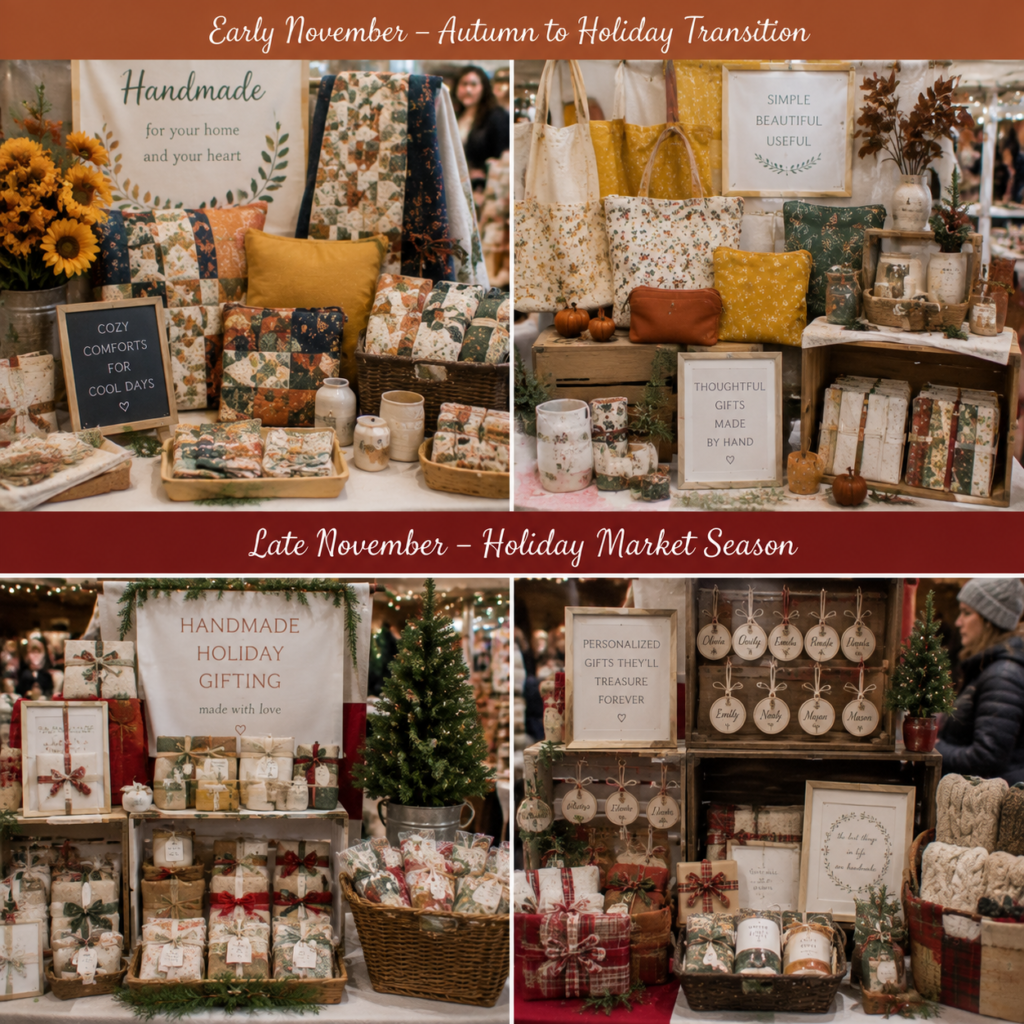
The timing of your November fair can influence what shoppers are ready to buy, so your inventory doesn’t have to look exactly the same throughout the month.
Early November
Keep a stronger mix of everyday products, autumn gifts, host gifts and non-seasonal presents, with some holiday-ready items for shoppers who have already started buying.
Late November
You can give giftable and Christmas-related products more space, particularly as Thanksgiving weekend and other major holiday-shopping dates approach.
You don’t need to turn the whole table into Christmas merchandise. The smarter approach is to shift the balance toward holiday gifting as December gets closer, while keeping enough evergreen products to appeal to shoppers who aren’t buying Christmas items yet.
Crafting isn’t the only hobby that can become an income stream. 7 Surprising Hobbies That Could Actually Make You Cash explores other possibilities.
How to Choose the Right November Craft Fair Before You Make Anything

A good product can struggle at the wrong event. Before you spend weeks making inventory, spend some time finding out whether the fair actually attracts the people you want to sell to.
Check:
- Who attends: families, tourists, local residents, gift shoppers, collectors or a mix?
- What other vendors sell: look for the types of products and price points already represented.
- What kind of event it is: a dedicated holiday market may attract more gift-focused shoppers than a general farmers’ market.
- The booth fee and other costs: include travel, parking, accommodation where necessary and payment fees when working out whether the event is worth it.
- Previous event photos: these can reveal the crowd, table setup and overall quality of the market better than promotional claims alone.
- The venue: consider accessibility, parking, weather exposure and how easy it is for shoppers to carry purchases.
- The organiser’s information: a clear description of the event and its intended audience is a better sign than vague promises about “huge crowds.”
Don’t judge an event by attendance figures alone. A busy fair is not automatically a profitable fair if the shoppers are not interested in what you make or the costs of participating are too high.
A handmade gift aimed at holiday shoppers may perform very differently at a Christmas artisan market than at a weekly produce market. Choose the event based on audience fit, not just foot traffic.
Start planning your seasonal inventory with 30 Summer Crafts to Make and Sell at Craft Fairs This Year (With Free Patterns) and see which handmade products could work for different types of shoppers.
Conclusion
A November table doesn’t need to look like Christmas arrived six weeks early. The stronger approach is to give shoppers useful gifts, easy purchases and a few seasonal pieces while keeping your stock practical enough to sell beyond December.
Use these November craft fair ideas as a starting point, then match them to the particular people coming to your fair and the amount of time and money you can realistically put into making stock.
Before you cut, sew, pour or package your first batch, check the event and choose the products that give you the best balance of buyer appeal, making time and staying power.