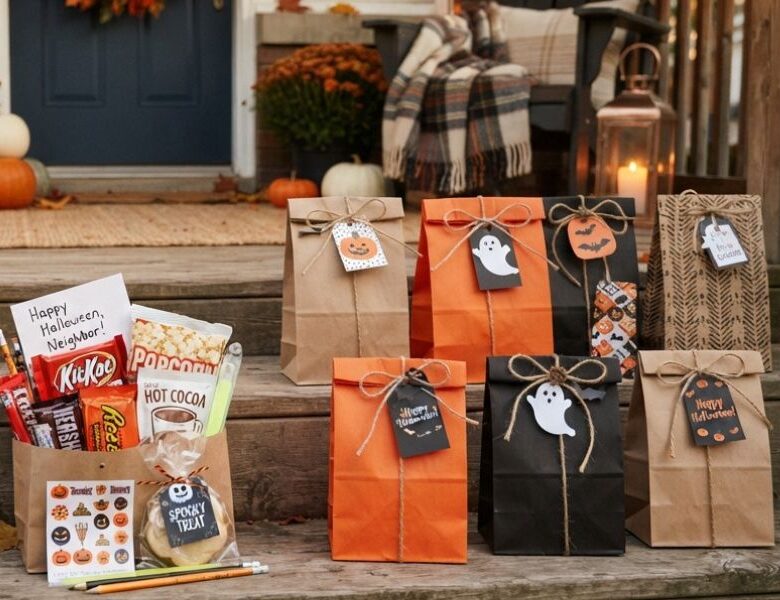
Wondering if Halloween treat bags for neighbors is even a real thing? It is, here’s the tradition, timing, and what actually belongs inside.
Halloween gets a reputation as a kids’ holiday, costumes, candy, trick-or-treating door to door. But somewhere along the way, a quieter tradition took root for the adults in the neighborhood, one that has nothing to do with children ringing doorbells.
It’s called “Booing,” and if you’ve ever found a mysterious bag of treats on your porch in October with a note that says “You’ve Been Booed,” you already know exactly what this is.
The idea is simple: you put together a small treat bag, leave it anonymously on a neighbor’s doorstep, and pass along a note asking them to do the same for two more neighbors.
No RSVPs, or big gathering, no expensive gift exchange, just a quiet chain of small surprises moving down the street. It’s the kind of tradition that turns “we should really get to know our neighbors better” into something that actually happens, one porch at a time.
If you’ve never taken part in it, or you’re looking to do it properly this year, here’s everything you need to know, from timing the drop just right, to what belongs in the bag when the recipient is a grown adult and not a seven-year-old in a costume.
Celebrate the season without spending hours cleaning up with Halloween Craft Ideas for Adults Who Don’t Want a Big Mess or Anything That Takes All Day, featuring simple projects that are festive, creative, and easy to finish.
What Is “Booing” and Why Neighbors Actually Do This
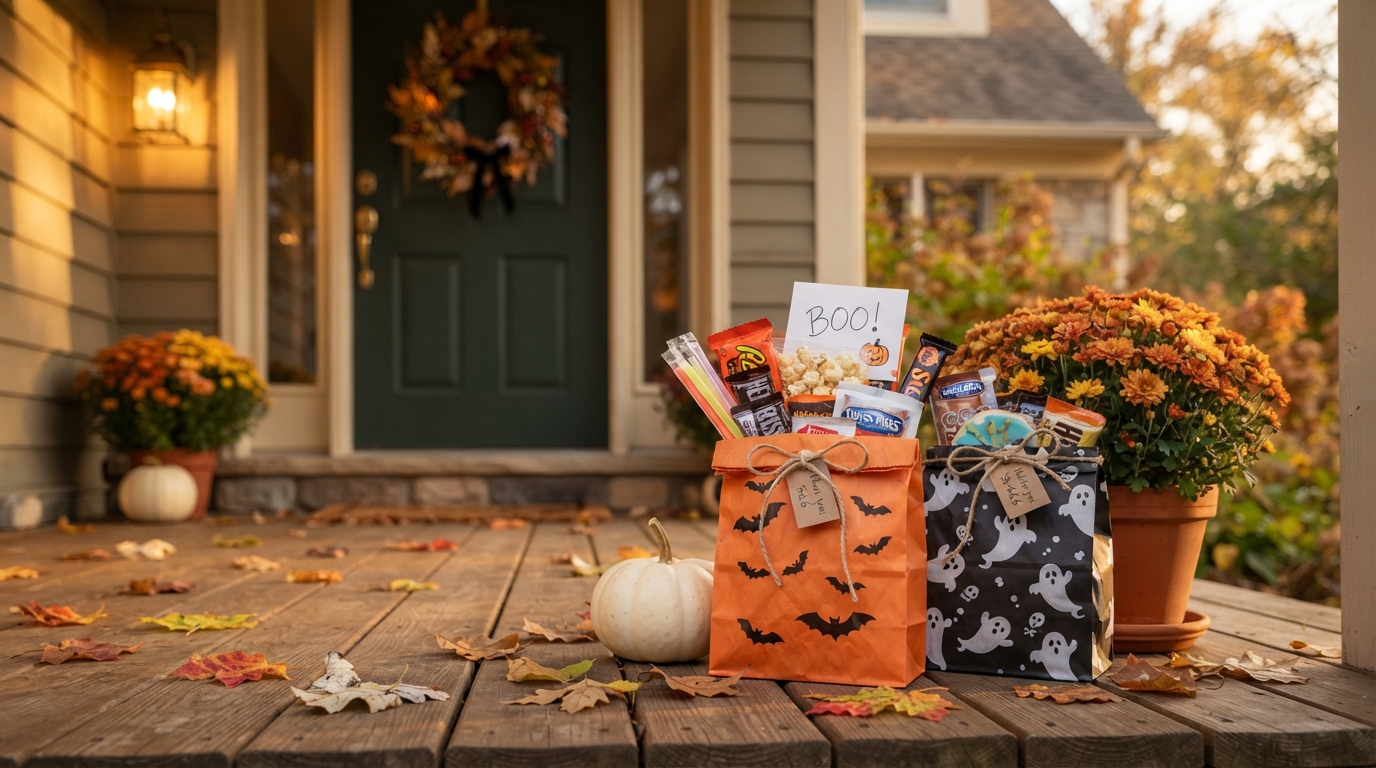
Booing traces back to the 1980s, though nobody can point to one exact household that started it.
Over the years it’s picked up different regional nicknames, some communities called it “ghosting,” others “hobgoblining”, but the concept stayed the same everywhere it popped up: a small treat, delivered in secret, with instructions to keep it moving.
The mechanics haven’t changed much either. Someone puts together a treat bag, tucks in a note explaining the game, and leaves it on a neighbor’s porch after dark, no doorbell, or introduction and no credit taken.
The note usually comes with a small sign that reads “You’ve Been Booed,” which the recipient hangs somewhere visible, like a front window, so other neighbors know that house has already been looped in.
From there, the recipient has a day or two to put together two treat bags of their own and quietly deliver them to two neighbors who haven’t been booed yet. The chain keeps stretching until, ideally, the whole street has taken part before Halloween night.
Part of why it’s stuck around, and why it seems to be picking up steam again in more neighborhoods, is that it asks for so little. There’s no party to plan, calendar to coordinate, pressure to reciprocate with something expensive.
It’s a low-stakes way to do something genuinely kind for people you might otherwise only wave to from the driveway, and it gives neighbors an easy, built-in reason to actually talk to each other in October.
One thing worth being upfront about: Booing is largely a U.S. and Canadian tradition, and depending on where you live, your neighbors may never have heard of it.
That’s not a reason to skip it, if nobody on your street is doing this yet, you can just as easily be the one who starts it. All it takes is one bag, one note, and enough curiosity from the neighbors who receive it to keep the chain going.
When to Start (Timing Matters More Than People Think)
Booing comes with one big challenge: timing. The tradition only works when everyone has enough time to pass the fun along before Halloween arrives.
That’s why many neighborhoods start booing in early October instead of waiting until the final week. Once the first treat bag goes out, the chain needs time to grow. Each recipient typically surprises two more neighbors within a day or two, and the excitement spreads quickly from there.
Wait too long to start, and the chain may fizzle out before it reaches many homes.
The time of day matters just as much as the date. Early evening, after most people have returned from work but before it gets fully dark—is usually the best time to deliver your surprise.
Although the tradition is anonymous, that doesn’t mean deliveries should happen late at night. A knock at 9 or 10 p.m. feels less like a fun mystery and more like an unexpected interruption. That can be especially unsettling for elderly neighbors or anyone who isn’t expecting visitors.
Halloween treat bags for neighbors should create a moment of joy, not make someone feel uneasy.
If you’re unsure when to deliver, use trick-or-treat hours as your guide. Dusk through early evening is ideal because people are usually awake, home, and comfortable answering the door. Anything much later is better avoided so your thoughtful surprise stays fun, welcoming, and considerate.
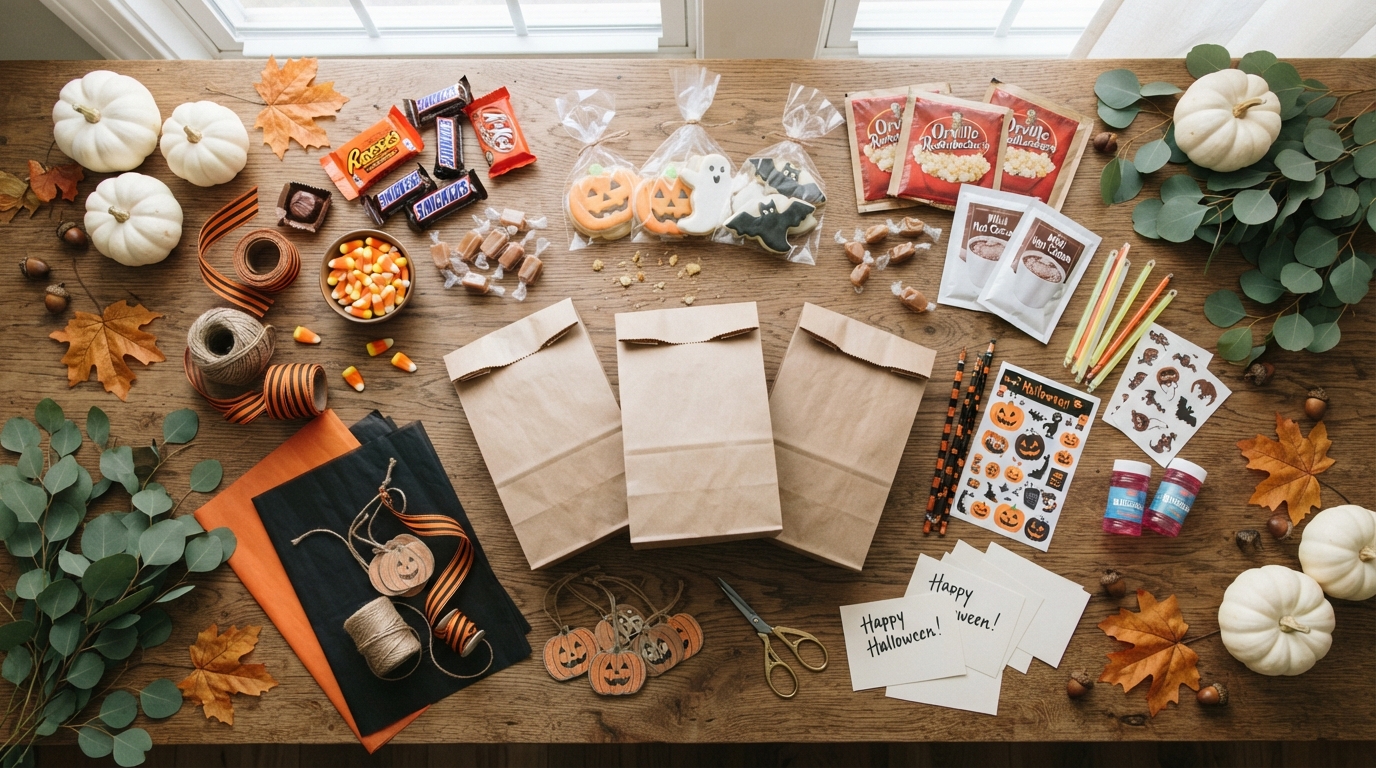
What Actually Goes in an Adult Neighbor Treat Bag
Planning a group costume is much easier with Plus-Size Group Halloween Costumes: 11 Costume Ideas That Fit the Group, Not Just the Theme, where you’ll find comfortable, confidence-boosting costume ideas everyone can enjoy together.
The Anonymous Delivery (And Why That’s the Whole Point)
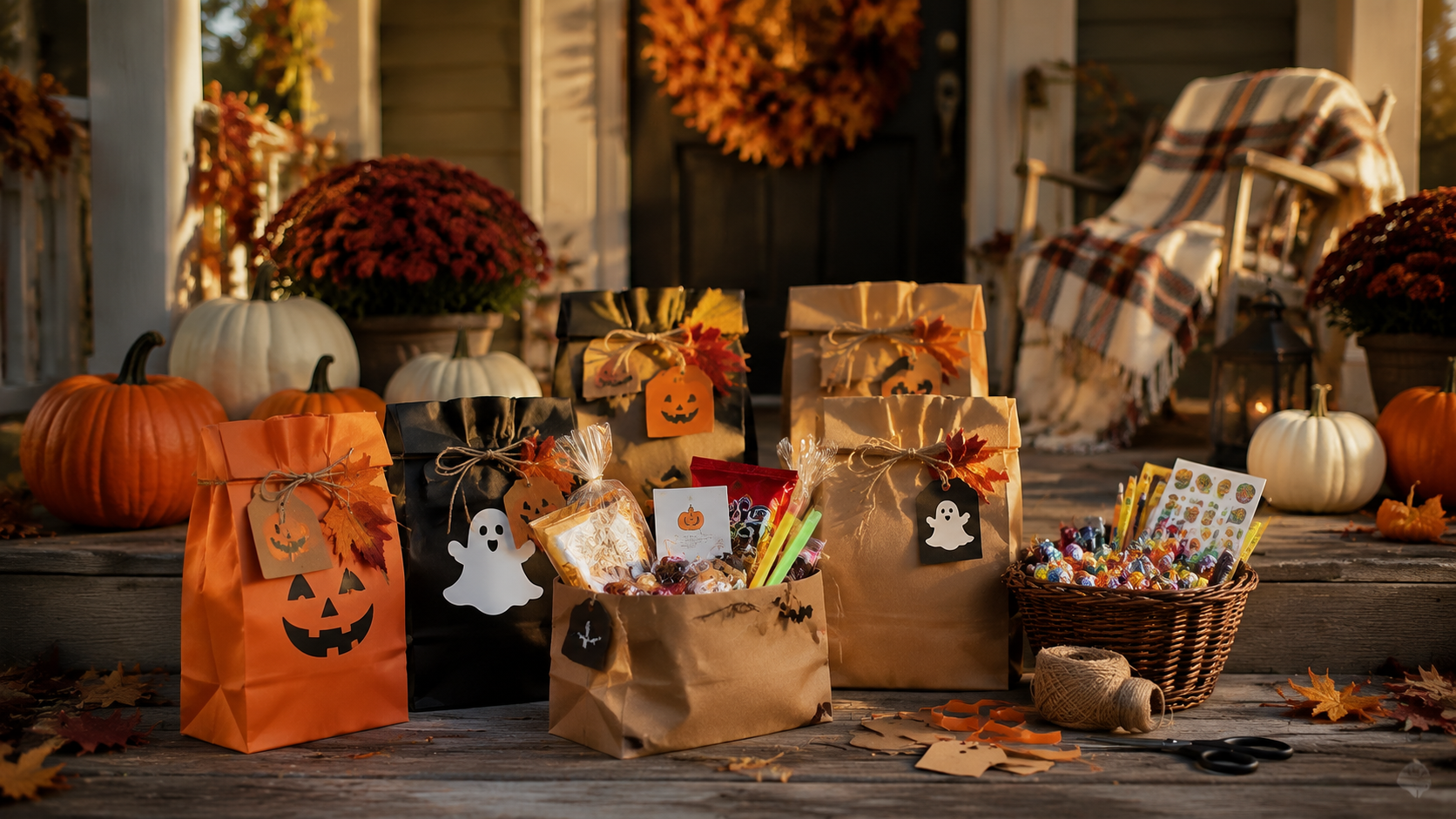
The anonymity isn’t a small detail in this tradition, it’s the whole point. A boo should feel like a fun little mystery, not a doorstep meet-and-greet, so your delivery deserves a little planning instead of simply walking up and knocking.
Early evening, around dusk, is usually the best time. Porch lights are on, most people have settled in for the night, and you can drop off your surprise before it gets too late.
Skip the doorbell, place the bag by the door, and give a light knock only if you want to let them know something has arrived. Then head back to your car or home before they answer. The excitement comes from wondering who left the surprise.
A little discretion also helps. Dropping off Halloween treat bags for neighbors while everyone is outside carving pumpkins or chatting on their porches will quickly give away the surprise.
Choose a quieter moment, and simply walk away at a normal pace. There’s no need for a dramatic getaway.
Sometimes your plan won’t work out exactly as expected. You might arrive and find the house empty for the week, or the treat bag may sit outside overnight because no one noticed it.
That’s perfectly okay. If you later discover your neighbors were away, you can always try again when they return or deliver the bag to another neighbor who hasn’t been booed yet.
The goal isn’t to pull off the perfect surprise. It’s to spread a little Halloween kindness and keep the boo tradition going, even when things don’t go exactly as planned.
The Note and Sign — What to Actually Write
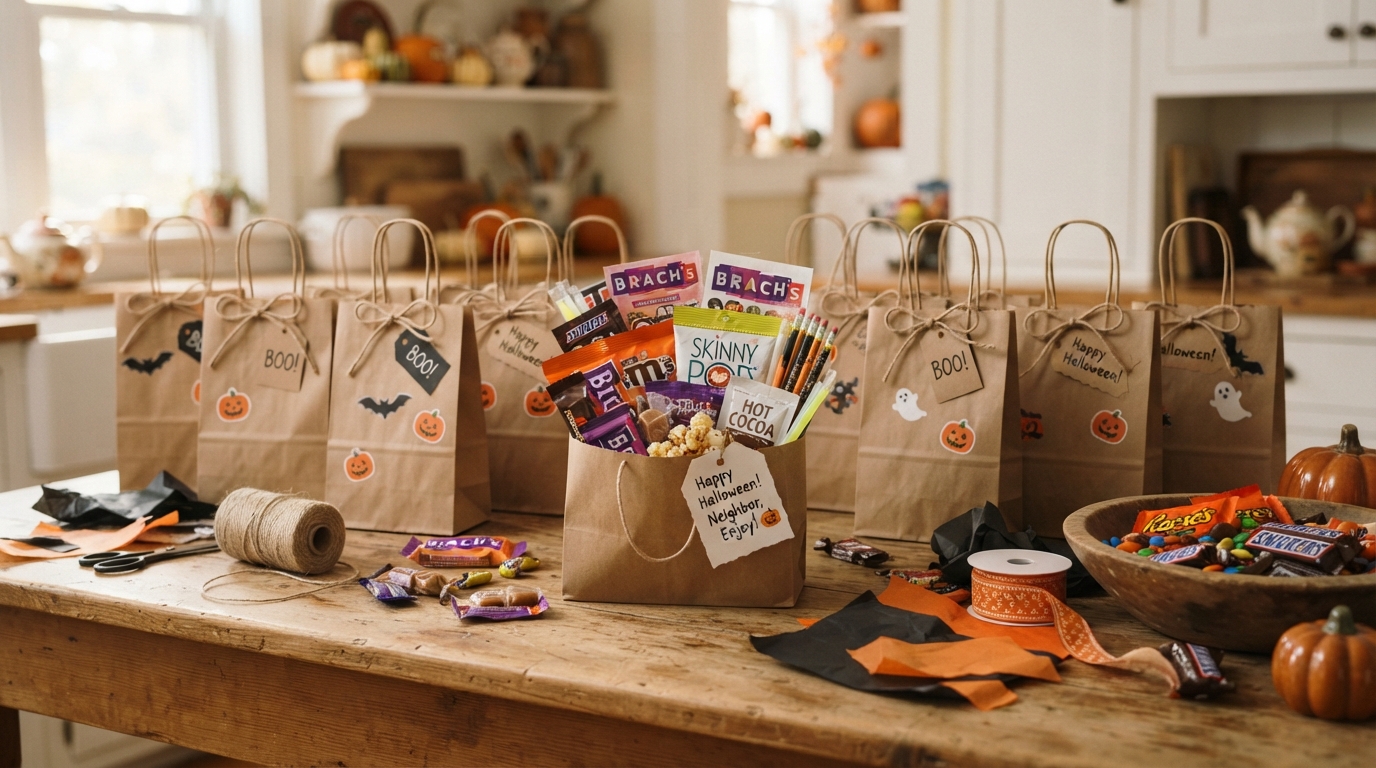
The note is what keeps the tradition going. Without it, you’ve simply left a bag on someone’s porch with no explanation.
A good boo note should do three things: let your neighbor know they’ve been booed, briefly explain the tradition, and tell them exactly how to keep it going.
Be sure to include:
- A clear message announcing they’ve “Been Booed!”
- A short explanation of the tradition for anyone experiencing it for the first time.
- Simple instructions to make two treat bags and secretly deliver them to two neighbors who haven’t been booed yet within a day or two.
- A small “You’ve Been Booed” sign they can display in a window or on their front door so others know their home has already joined the fun.
Here’s a simple example:
You’ve Been Booed!
Someone in your neighborhood left this Halloween surprise just for you. Now it’s your turn! Put together two treat bags like this one and secretly deliver them to two neighbors who haven’t been booed yet.
Then display the enclosed “You’ve Been Booed” sign in your window or on your door so everyone knows you’ve joined the fun. Keep the mystery alive, and Happy Halloween!
You don’t need elaborate designs to make the note feel special. A handwritten message on cardstock with a small pumpkin, ghost, or bat doodle adds a thoughtful personal touch. If you’d rather print it, choose a festive Halloween font and keep the instructions easy to read.
The most important part isn’t how the note looks, it’s making the next step so clear that your neighbors can confidently continue the boo chain and keep the Halloween fun spreading throughout the neighborhood.
Starting the Tradition If No One’s Doing It Yet
If nobody on your street has ever mentioned Booing, that’s not a reason not to try it, it just means you’ll be the one starting it instead of joining something already in motion.
Somebody delivered the first bag in every neighborhood that does this now, at some point, and there’s no rule that says it can’t be you.
Starting from scratch is simpler than it sounds. Put together your own Halloween treat bags for neighbors, write out a clear note explaining the tradition (since your neighbors likely haven’t seen this before), and deliver two or three to houses nearby in early October.
Giving it that much runway matters, the earlier the first bags go out, the more time the chain has to spread before Halloween actually arrives.
Sometimes, even with a good start, the chain stalls. A neighbor might not have time to boo anyone back, or a bag might land with someone who simply doesn’t want to continue it, and that’s fine.
If you notice the momentum dying down a few days in, the easiest fix is to boo a couple more houses yourself rather than waiting on the chain to pick back up on its own.
The goal was never a perfectly unbroken sequence reaching every house, it’s a bit of Halloween goodwill making its way around the neighborhood, even if it takes a restart or two to get there.
Conclusion
At the end of the day, booing isn’t really about the treats—it’s about making a small, thoughtful gesture for a neighbor you may not see or talk to very often.
Halloween treat bags for neighbors don’t have to be elaborate or expensive to make an impact. A simple bag, a heartfelt note, and the intention to brighten someone’s day are more than enough to make the tradition meaningful.
Whether you’re joining an existing neighborhood boo chain or starting one yourself this October, the goal stays the same: spread a little kindness, add a touch of Halloween mystery, and help your neighborhood feel a little more connected before the holiday arrives.
If you’re putting together your own Halloween treat bags for neighbors, start early, deliver them discreetly, and focus on thoughtful touches instead of expensive gifts. The care behind the surprise is what people remember most.
Once you boo your first neighbor, don’t be surprised if the experience becomes just as rewarding for you as it is for the person who discovers the treat on their doorstep.
FAQs
1. Do I have to participate if I get booed?
No. Booing is meant to be optional and pressure-free, if you’d rather not continue the chain, you can simply enjoy the treats and hang the “We’ve Been Booed” sign so others know not to boo your house again. Nobody’s tracking who passes it on.
2. What if I live in an apartment or don’t have neighbors close enough to boo?
Apartment residents often adapt it by leaving a shared basket in a common area with a “take one, you’ve been booed” sign, rather than delivering door to door. It keeps the spirit of the tradition intact even without individual porches.
3. Are there similar traditions for other holidays?
Yes, “You’ve Been Egged” (plastic eggs at Easter) and “You’ve Been Thanked” (a Thanksgiving version) follow the same anonymous, pass-it-on format, so Booing isn’t a one-off idea.
4. Does the treat bag have to include food?
Not at all. Since food allergies are common, plenty of people leave non-food fillers only, or add a small note flagging any allergens if food is included, both are considered normal and courteous within the tradition.