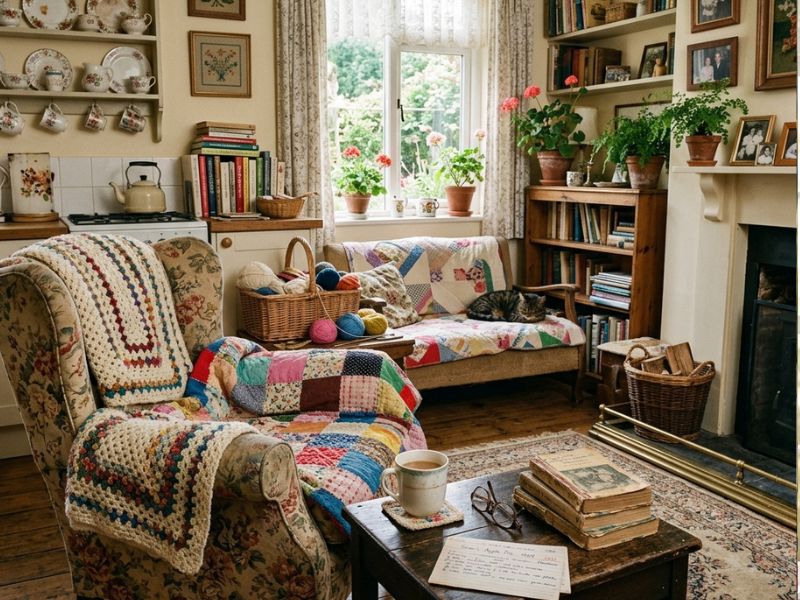
Tired of homes that feel cold and trend-driven? These grandmacore DIY projects add cozy vintage charm and make every room feel warm, lived-in, and timeless.
Scroll through any home decor account right now and you’ll notice something. The most saved, most shared, most talked about rooms are not the ones that look new.
They’re not the white oak floors. Not the limewash walls. Not the open-plan kitchen with the waterfall island and the pendant lights that cost $400 each. Those rooms are everywhere, and because they’re everywhere, they’ve stopped meaning anything.
The rooms people keep coming back to are the ones that feel like someone actually lives there. A bedroom with a hand-stitched quilt draped over a weathered chair.
A shelf crowded with mismatched china that doesn’t match and is more beautiful because of it. A hallway that smells faintly of dried lavender and old wood and something you can’t quite name — time, maybe.
Nobody posts photos of a beige wall. People are done decorating. They want to inhabit.
That’s the real reason grandmacore has done what no other home trend has managed in years: it’s reached across generations. Designers who’ve been working for decades recognize it as craft.
Millennials and Gen Z recognize it as the antidote to growing up in homes that felt like temporary accommodation. And everyone, regardless of age, recognizes it as warmth, the physical, tangible kind that no amount of smart lighting or Japandi styling can manufacture.
None of these 15 projects require you to actually be someone’s grandmother. They don’t require a craft room, a large budget, or years of sewing experience. What they require is patience, the right technique, and, most importantly, understanding why things look aged.
A note before you start: You don’t need to do all 15. Pick one from each section, textiles, furniture, walls, and objects, and transform a single room first. Four well-executed projects in one space will do more than fifteen scattered across a house.
A warm, lived-in home doesn’t happen by accident—these DIY Room Decor Ideas on a Budget That Make Your Space Feel Warm and Lived-In show how small changes can completely transform any space.
What Grandmacore Means in Home Design and Lifestyle
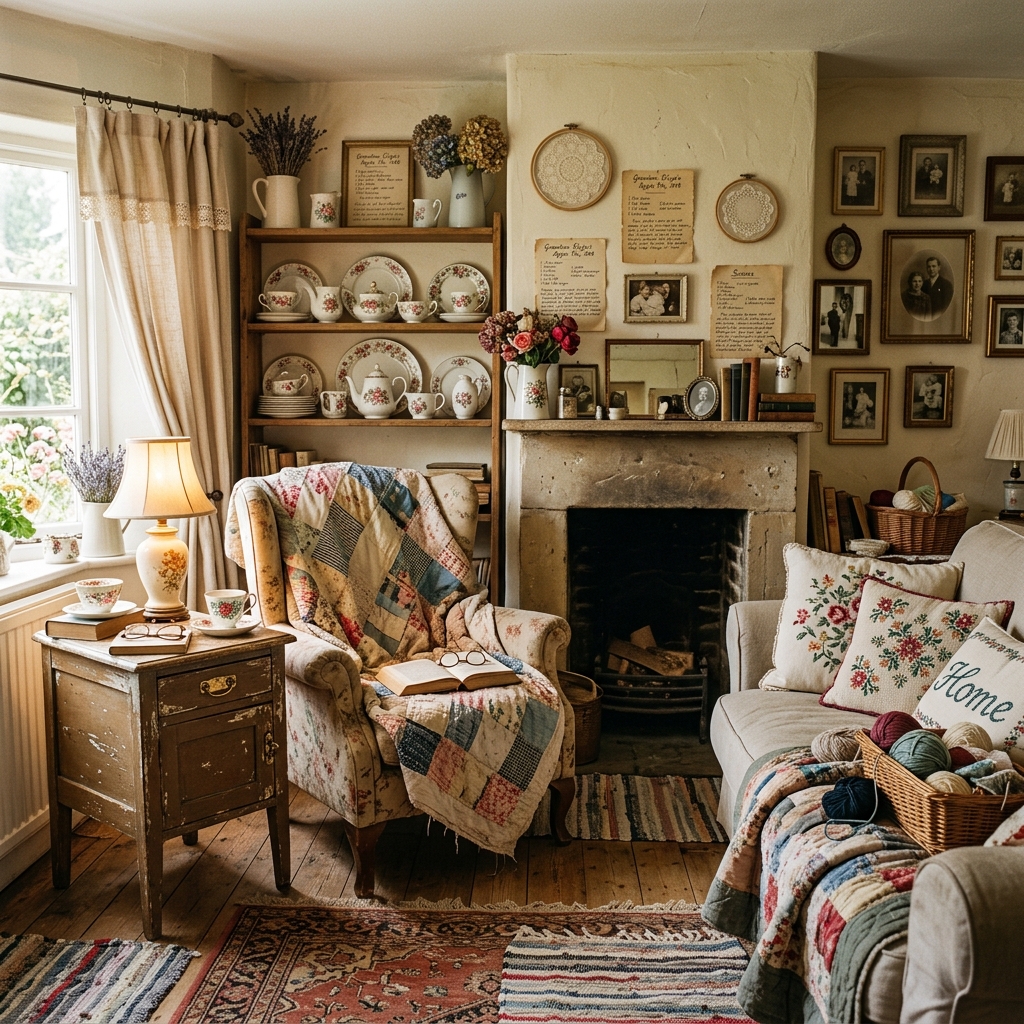
Grandmacore is a home and lifestyle style inspired by the everyday details found in older, lived-in homes. It is not about luxury antiques, curated vintage collections, or styled retro shops, but about real domestic life built slowly over time through use, care, repair, and routine.
At its core, Grandmacore focuses on comfort, familiarity, and handmade or functional objects that feel naturally integrated into a home. It reflects the kind of environment where things are not replaced quickly, but instead repaired, layered, and kept because they hold meaning or usefulness.
Unlike aesthetics that aim to “make a space look old,” Grandmacore is not about surface aging or decoration tricks. Instead, it is about recreating the warmth, texture, and emotional layering that naturally develops in homes that have been lived in for many years, where objects carry memory, and every corner reflects daily life rather than design perfection.
Grandmacore DIY Projects That Make Your Home Feel Warm and Timeless
1. Doily Wall Decor Using Hoop Frames (Grandmacore Textile Wall Art Idea)
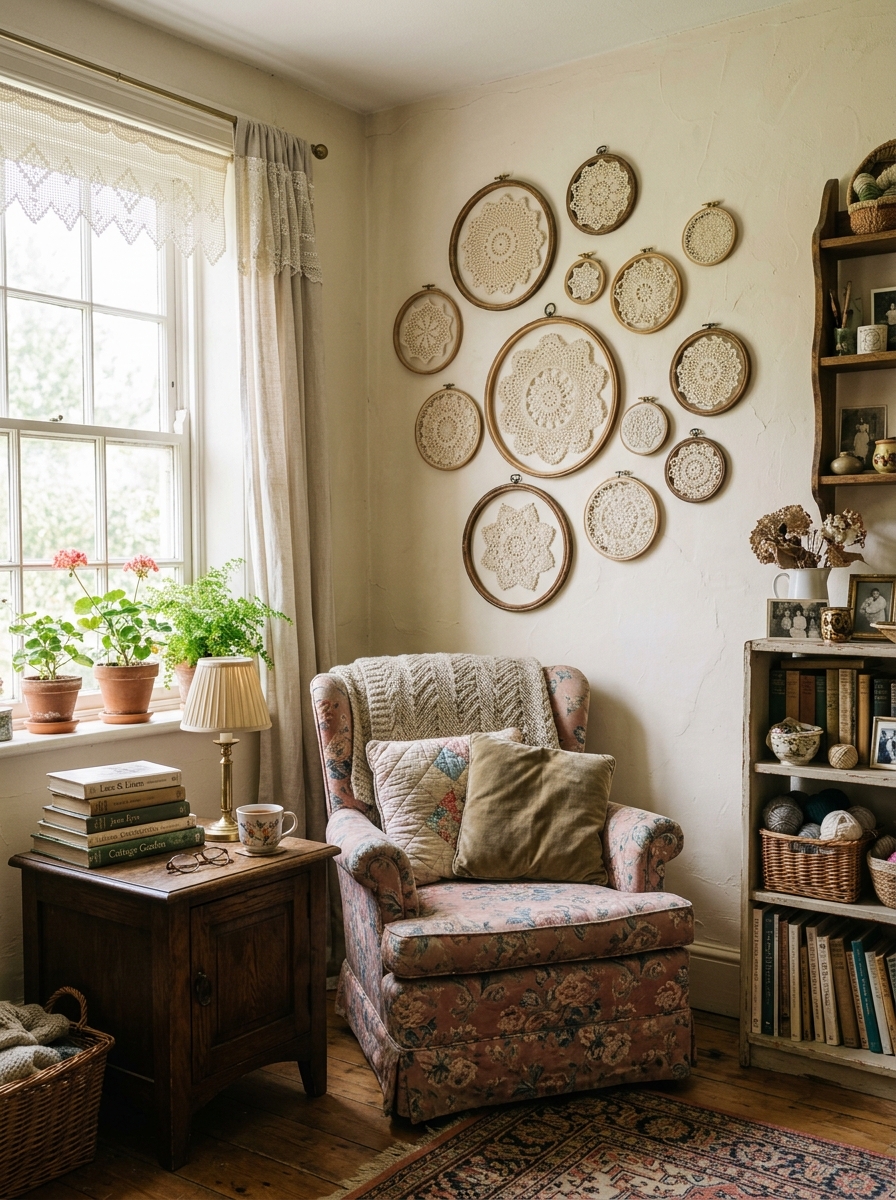
Old doilies are often stored away or used in very traditional ways that no longer fit modern homes. This project reimagines them as wall art, giving them structure, purpose, and a visual presence that instantly softens a room.
It’s a simple way to add texture without buying expensive decor, while still keeping a strong sense of history and craftsmanship.
Why This Works In Modern Homes
Many modern interiors struggle with flat, empty walls that feel unfinished. Printed posters and mass-produced art can look repetitive, while high-end pieces are not always affordable. Textile decor solves this because fabric naturally adds softness, depth, and warmth that hard materials cannot.
Doilies are especially useful because they bring pattern without visual noise. They sit between minimal decor and detailed craftsmanship, making them ideal for small spaces, rentals, or plain walls that need character.
How To Turn Doilies Into Wall Art
- Start by lightly stiffening the doily using spray starch so it holds its shape without losing its delicate texture.
- Once dry, press it flat to remove wrinkles.
- Place it inside an embroidery hoop or lightweight frame, adjusting it so the pattern sits evenly in the center.
- Secure the edges neatly using fine thread or light stitching so it stays taut and clean.
- For a stronger visual impact, use multiple hoops in different sizes and arrange them as a cluster on the wall. Mixing slightly different lace patterns also creates a layered, collected look instead of a single flat design.
Why It Feels Historically Authentic
This idea connects directly to real home traditions rather than just aesthetics. Doilies were commonly used in older homes as protective fabric layers for furniture, but they also showcased skill, patience, and domestic craft.
Similar textile pieces, like antimacassars placed on the backs of chairs and sofas, were common in many historic interiors. These items weren’t just decorative, they reflected care, maintenance, and pride in the home. That’s why they still feel emotionally rich today.
The Problem This Project Solves
This DIY is especially useful if you are trying to fix specific home decor frustrations like:
- Your walls look empty, flat, or unfinished even after decorating
- You want a cozy, vintage feel but can’t afford real antiques or artwork
- Rental restrictions stop you from painting or making permanent changes
- Store-bought wall art feels too generic or mass-produced
- Your space looks clean but lacks warmth, texture, and personality
Instead of adding more “things” to your wall, this project solves the real issue: it adds texture and story without clutter or high cost.
The Result You Get
Instead of a plain wall, you get a soft textile display that feels warm, handmade, and quietly historic. It doesn’t overpower the room, but it changes the mood instantly, making the space feel more lived-in, thoughtful, and personal.
This is what makes Grandmacore decor powerful: not decoration for decoration’s sake, but simple pieces that carry texture, memory, and a sense of time.
2. Patchwork Memory Quilt From Old Clothes
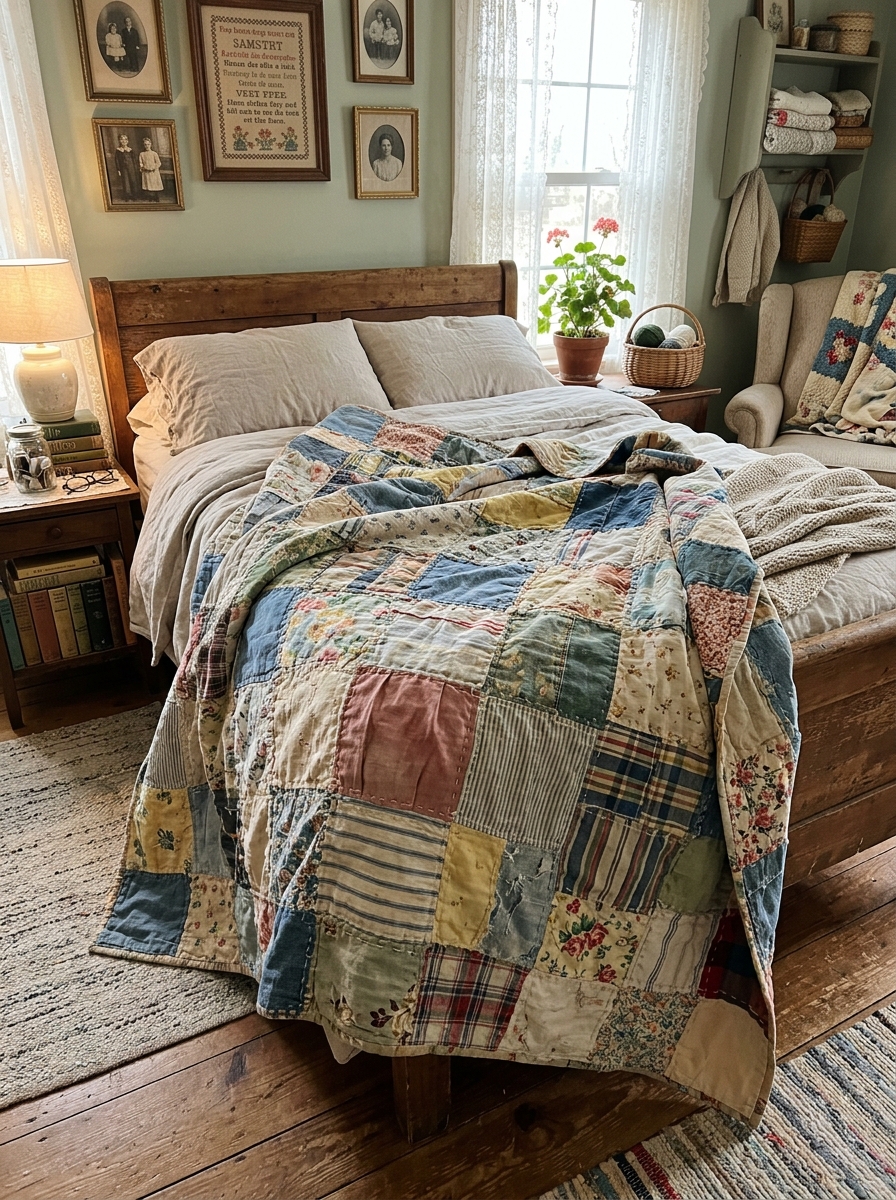
Most modern quilts are designed mainly for decoration, but traditional quilts were originally practical household items made from necessity.
They were created from available fabric, repaired over time, and slowly built into layered pieces that carried real memories. That is what gives them emotional depth and makes them feel more authentic than mass-produced decor.
A memory quilt also solves a very real modern problem: people often have old clothes, baby items, or meaningful fabrics they don’t want to throw away, but also don’t use anymore.
Instead of letting them sit in storage, this grandmacore DIY project transforms them into something useful, warm, and deeply personal.
How This Becomes A Real “Story Quilt”
Instead of buying new fabric, this project relies on meaningful materials such as:
- old shirts with sentimental value
- worn-out curtains or home fabrics
- tablecloths with family history
- baby clothes or milestone outfits
Each piece of fabric carries a memory, and when combined, they form a visual timeline of life. This is what gives the quilt its “historic” and emotionally rich feeling.
You are not just making a decorative item, you are preserving personal history through fabric, which is a core idea behind many traditional grandmacore DIY projects.
Basic Techniques You Should Understand
To make the quilt feel intentional and not overly “craft-store generic,” it helps to understand a few foundational quilting methods:
- English Paper Piecing: A hand-stitching method where fabric is wrapped around paper shapes for precision, structure, and a traditional handmade look
- Strip Piecing (Machine Method): A faster approach where fabric strips are sewn together in rows, creating a clean but still textured quilt base
- Batting Layer: The inner filling that gives the quilt softness, warmth, and thickness — historically made from cotton or wool fibers
The technique you choose affects not only the look, but also the emotional tone of the final piece.
Why Fabric Choice Matters More Than Design
In this type of grandmacore DIY projects, design is secondary to meaning. What makes the quilt powerful is not perfect symmetry or color matching, it is the story behind each fabric.
Using real, worn materials creates:
- natural variation in color and tone
- soft fading from actual use
- texture differences across fabrics
- visible emotional history embedded in the material
This is what gives the quilt a “100-year story” feeling, even if it was made recently.
The Problem This Project Solves
This is especially helpful if you are dealing with:
- old clothes you can’t emotionally discard but no longer wear
- a desire for meaningful home decor instead of mass-produced items
- the need for a warmer, more personal living space
- interest in sustainable decorating that reduces textile waste
Instead of creating clutter or storage guilt, this grandmacore DIY project turns those items into something functional, beautiful, and emotionally grounding in your home.
Even simple outdoor corners can feel intentional and styled when you use ideas from DIY Farmhouse Planter Ideas That Don’t Look Cheap and Fit Every Space to add charm and structure.
3. The Layered Antique Paint Illusion (Gesso + Glaze Method)
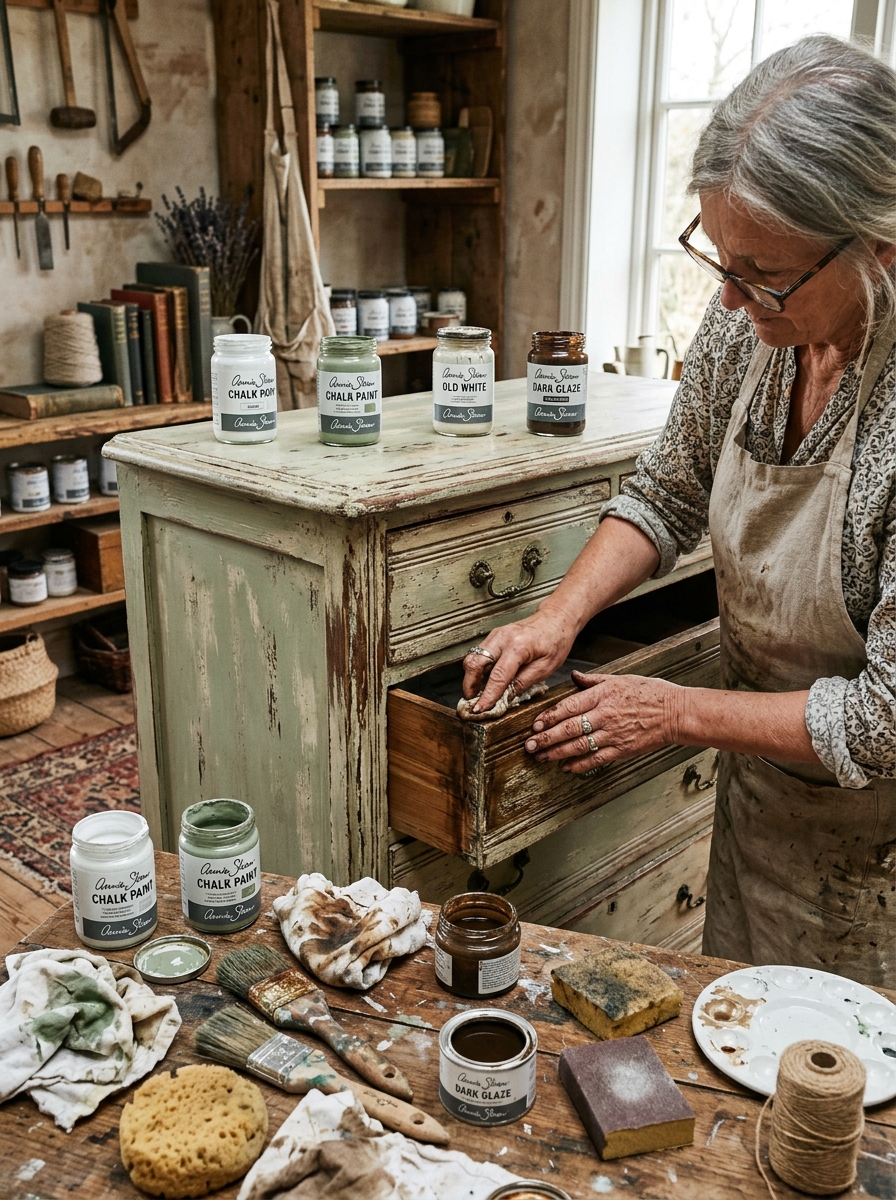
One of the biggest challenges in grandmacore DIY projects is avoiding decor that looks freshly made but artificially distressed. Real antique surfaces don’t look “painted to look old, they look naturally aged through years of layering, wear, and repair.
This method works because it recreates that history in controlled stages, instead of relying on surface-level sanding or basic chalk paint effects.
How The Gesso Base Builds An Authentic Foundation
Gesso is a primer that creates a slightly chalky, absorbent surface. Instead of leaving paint sitting flat and uniform, it gives later layers something to grip unevenly, which is what helps produce subtle cracking, soft texture shifts, and aged depth over time.
In this grandmacore DIY projects approach, gesso is not used everywhere evenly. It is intentionally applied in selected areas where natural wear would normally occur, edges, corners, handles, and raised surfaces.
This uneven preparation is what prevents the final piece from looking artificially “made to look old.”
Why The Glaze Layer Is The Turning Point
The antiquing glaze stage is where the transformation really happens. Instead of painting a solid color, glaze is applied in small sections so it stays workable long enough to manipulate the surface.
The key technique is:
- apply glaze in controlled areas
- lightly wet or rework the surface
- use a sea sponge to lift and soften layers of paint
This creates variation in tone, transparency, and depth, similar to how real furniture ages through years of cleaning, handling, and environmental exposure.
It is this layering effect that separates basic DIY painting from a convincing antique illusion.
Why This Method Feels Historically Authentic
Real antique furniture rarely aged evenly. Surfaces changed gradually depending on use, light exposure, cleaning habits, and repairs. Some areas darkened, others faded, and paint layers often built up over time rather than staying uniform.
This technique intentionally recreates that irregularity instead of forcing perfection.
That is why this is one of the most powerful grandmacore DIY projects for furniture transformation — it doesn’t just decorate an object, it simulates time.
The Problem This Solves
This method is especially useful if you are dealing with:
- modern furniture that looks too flat or mass-produced
- pieces you want to upgrade without replacing
- difficulty finding real vintage furniture at affordable prices
- a desire to create a home that feels layered and historically rich
Instead of buying “antique-style” furniture, you can create the illusion of age and depth using controlled layering techniques.
The Result You Get
When done correctly, the finish does not look newly painted at all. It reads as something that has naturally evolved over time — softened, layered, and quietly worn.
In fact, the effect is strong enough that most people will assume the piece has been passed down for generations, rather than recently transformed through a grandmacore DIY project technique.
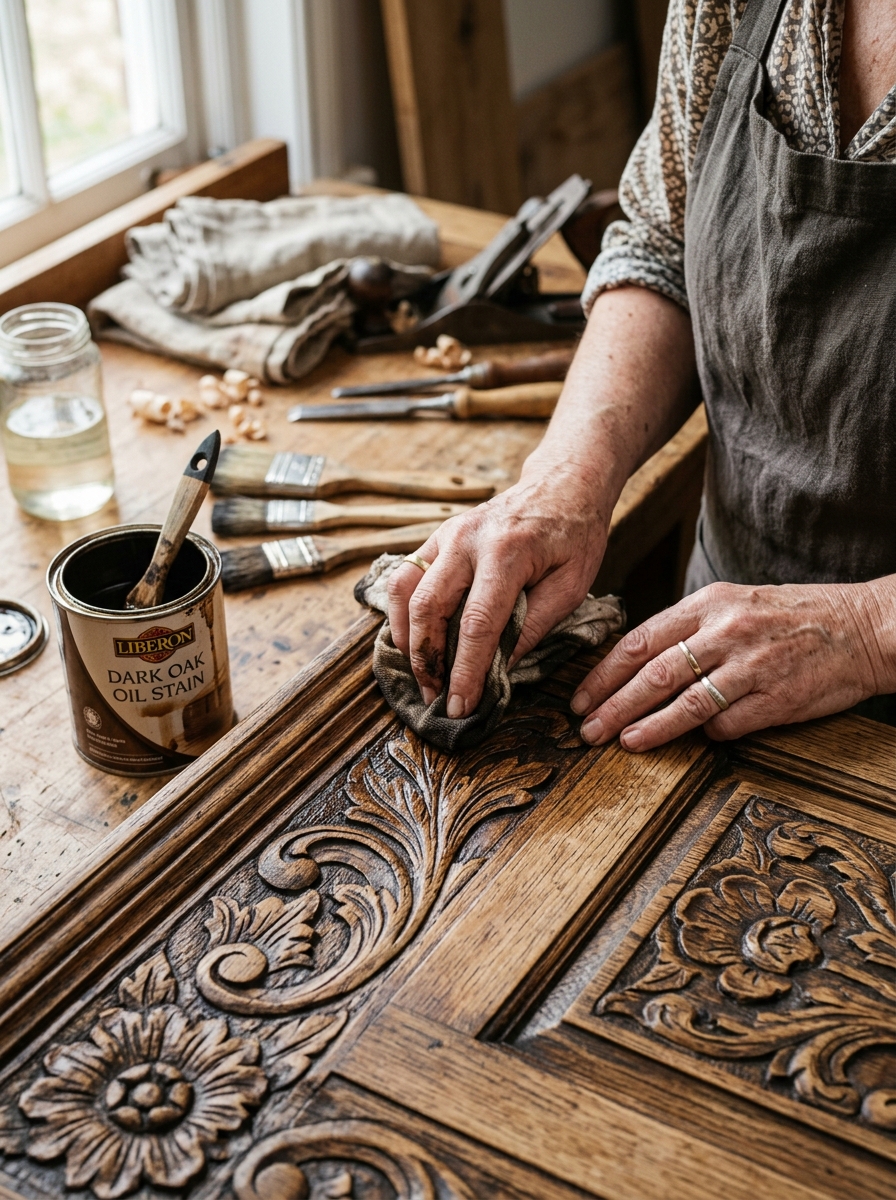
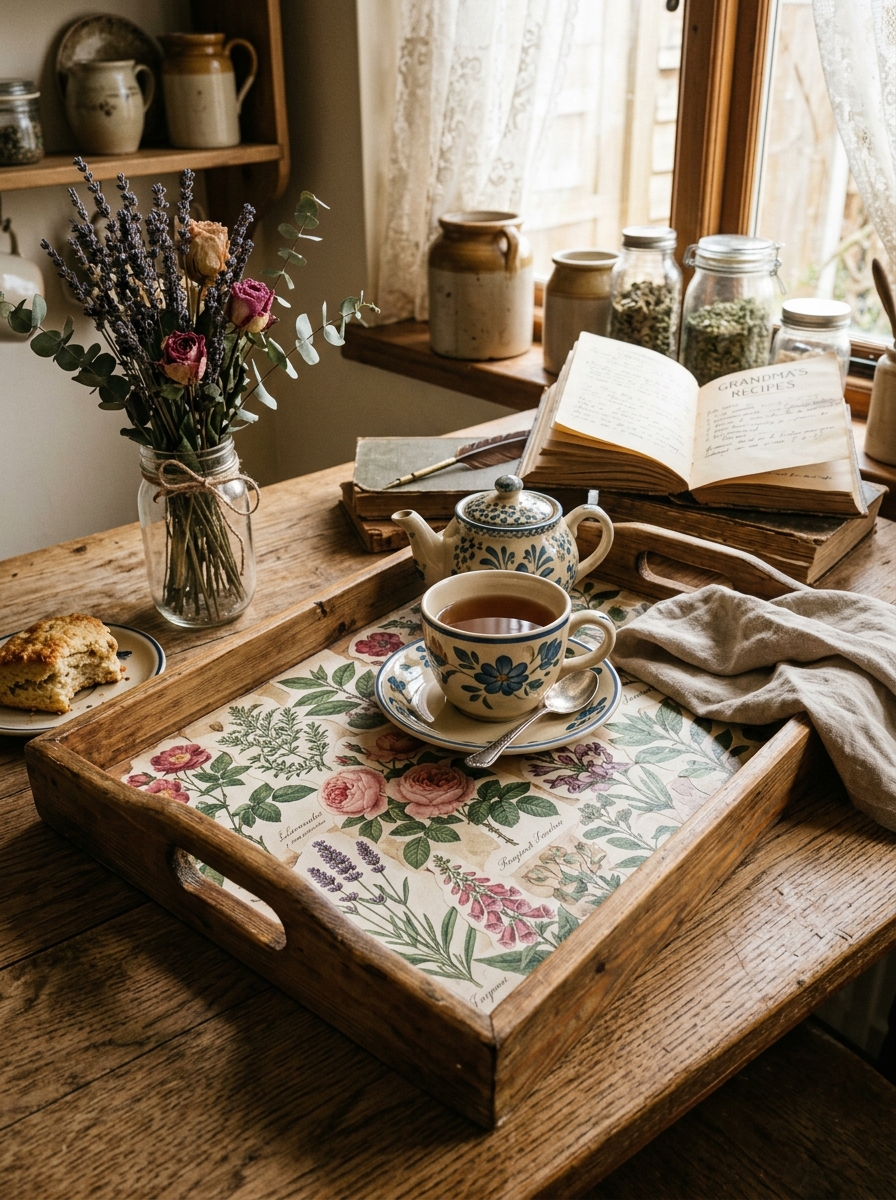
DIY becomes much easier (and less frustrating) when you know the right tools to use—15 Must-Have Crafting Tools Beginners Often Forget -That Make DIY Projects Easier helps you avoid common mistakes and wasted effort.
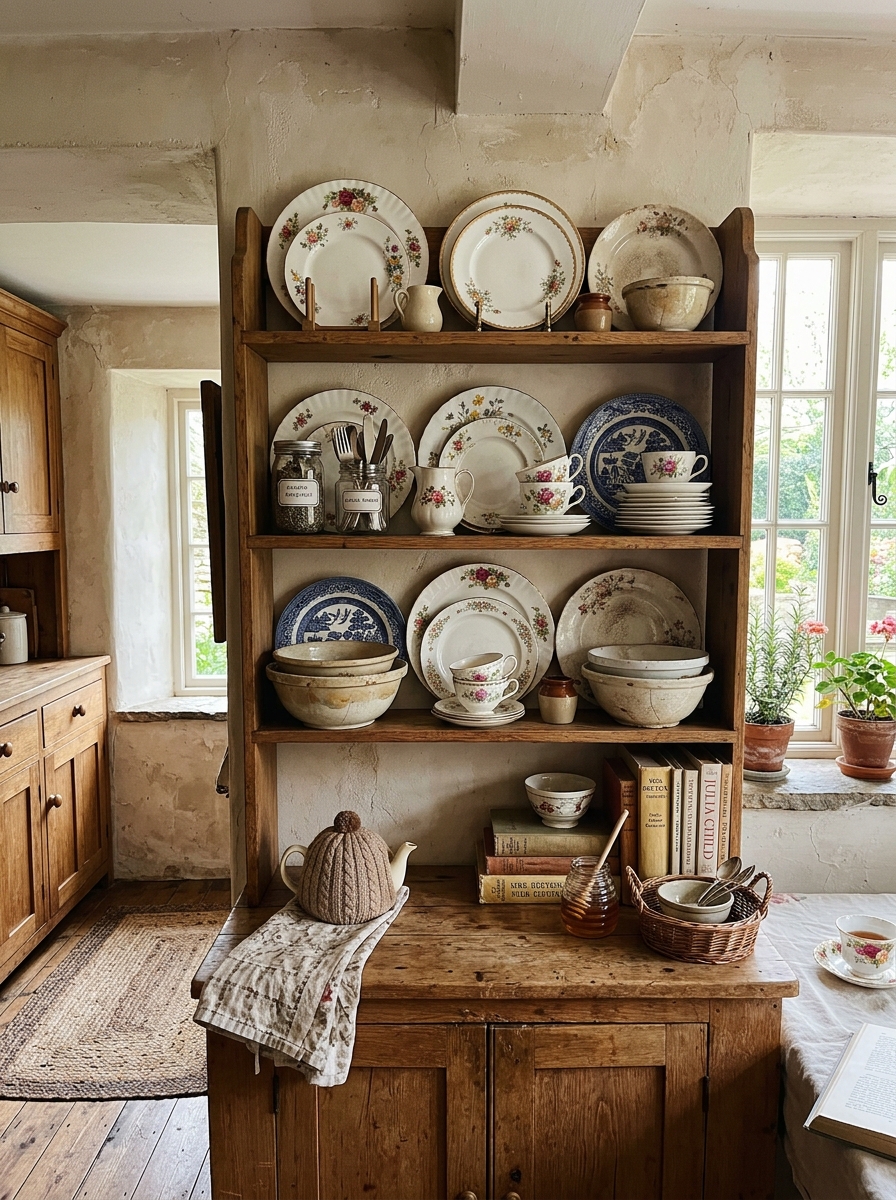
What Actually Makes a Home Feel Historic? (Not Just “Old”)
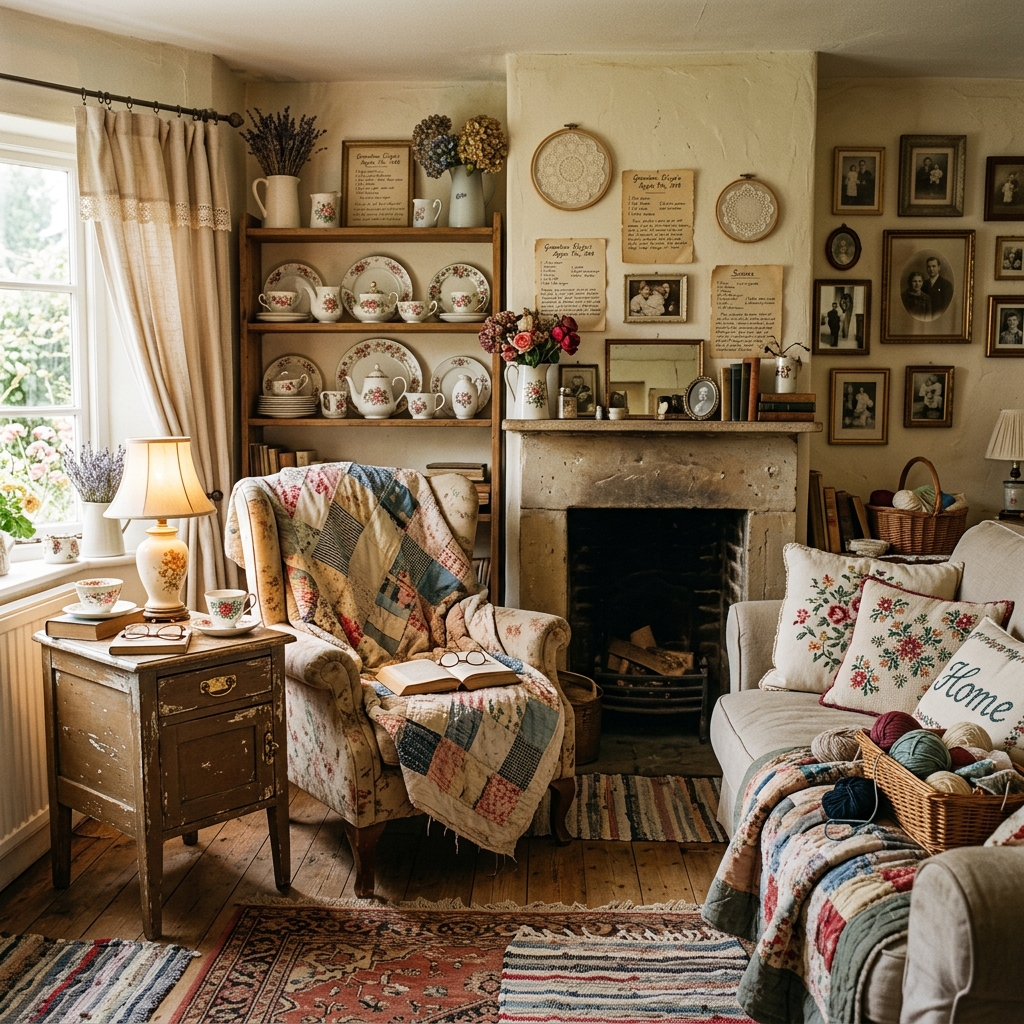
Many people confuse old-looking decor with true historic charm. But homes that feel timeless usually share a few deeper qualities: warmth, use, texture, memory, and visible human care.
Historic homes were rarely perfect or fully matched. They evolved slowly through years of living, repairing, collecting, and layering meaningful objects.
These five principles are what actually give a home that rich 100-year story feeling.
1. Visible Handcraftsmanship
Older homes feel special because they show evidence of human hands. Before mass production, many household items were stitched, carved, painted, or repaired by hand. Those imperfections added warmth and personality naturally.
That is why details like:
- embroidered fabrics
- uneven wood grain
- hand-painted finishes
- crocheted textiles
- repaired furniture
instantly make a space feel softer and more authentic than factory-perfect decor.
A room starts feeling timeless when everything does not look overly polished.
2. Patina Over Perfection
Real vintage homes contain softened textures created through years of use:
- faded fabrics
- worn wood edges
- darkened brass
- aged leather
- slightly chipped paint
This natural aging is called patina.
Patina adds depth because it reflects time and everyday living. The key difference is:
Patina is earned texture — not damage.
Authentic homes usually age gradually and unevenly. Over-distressing furniture or forcing fake wear can make a space feel staged instead of believable.
3. Layered Textiles
Historically, homes used a lot of fabric for warmth, insulation, and comfort before modern heating became common. That is why older interiors often feel softer and cozier.
Common textile layers included:
- quilts
- lace curtains
- table runners
- woven rugs
- crocheted throws
These fabrics helped homes feel lived-in rather than empty or cold. Even one quilt or textured curtain can instantly warm up a modern room visually.
4. Functional Decor
Older generations decorated with items they actually used daily. Beauty and practicality were closely connected.
Things like:
- baskets
- teacups
- sewing tins
- books
- lamps
- wooden cabinets
were not just decorative — they served a purpose.
This is why functional decor often feels more believable than trendy shelf styling. A home gains character when everyday objects are displayed naturally instead of looking overly curated.
5. Emotional Storytelling
The strongest historic homes contain personal meaning. Handmade objects, inherited pieces, handwritten recipes, family photos, repaired furniture, or old books all help a home feel emotionally layered.
These objects create a sense of continuity and memory that cannot be bought instantly from a store.
Ultimately, homes feel historic not because everything inside them is antique, but because the space reflects care, use, tradition, and human life over time.
Closing Thought
A home that looks like it has a 100-year story is not about pretending or forcing age onto new things. It is about building the physical language of a life that has been felt, through texture, use, repair, memory, and objects that carry meaning over time.
The reason this style resonates so strongly in 2025–26 is because many younger people are actively seeking character and comfort in spaces that were once optimized for efficiency, minimalism, and uniform design.
As noted in broader lifestyle coverage by The Seattle Times, there is a growing cultural return to homes that feel personal, imperfect, and emotionally grounded rather than purely functional or trend-driven.
What To Do Next
Instead of trying to do everything at once, start small and intentional.
Pick one of these grandmacore DIY projects, and complete it.
That alone is enough to shift a space from feeling empty or generic to warm, layered, and lived-in, the real foundation of grandmacore DIY projects.