1. You’re Using the Wrong Needle Type (Not Just Size)
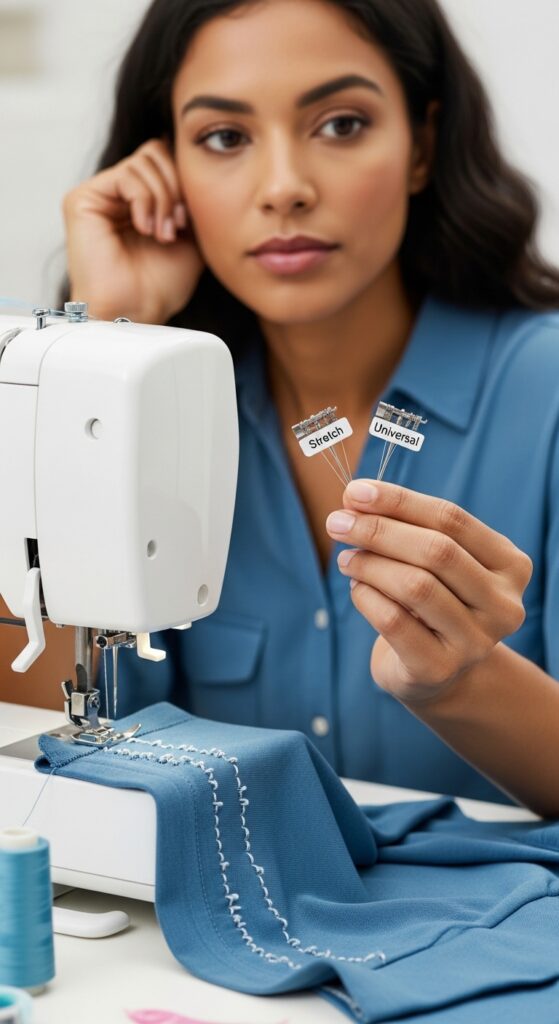
One of the most overlooked reasons your sewing machine keeps skipping stitches is the needle itself, and not just its size. Many beginners assume that any needle will work for any fabric, but that’s a big mistake.
-
Ballpoint needles are designed for knit fabrics and prevent the needle from piercing and splitting the fibers.
-
Universal needles work for most woven fabrics, but may struggle with delicate or stretchy materials.
-
Stretch needles are specifically made for stretchy fabrics like jersey, spandex, or knits. Using the wrong needle on these fabrics often causes your sewing machine to skip stitches, even if everything else is set correctly.
Suggestion: Always match the needle type to the fabric you’re using. This one simple change can fix skipped stitches instantly and make your sewing projects look professional.
Before investing in any machine, it helps to understand what you truly need, this detailed comparison of Industrial vs Domestic Sewing Machines: Which One Should You Buy as a Beginner will save you from costly mistakes.
2. Your Needle Is Inserted Slightly Wrong
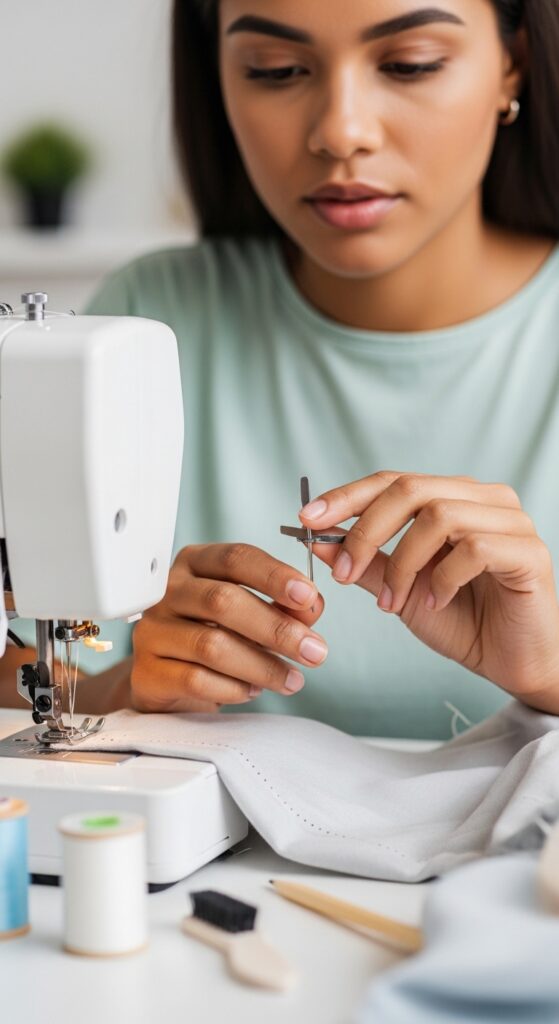
A surprisingly common reason for why is my sewing machine skipping stitches is simply that the needle isn’t inserted correctly. Even a tiny misalignment can prevent the hook from catching the thread loop, causing skipped stitches.
Most beginners don’t realize that the flat side of the needle must face the correct direction according to your machine’s manual. Insert it slightly off, and suddenly your sewing machine keeps skipping stitches, no matter how carefully you rethread or adjust the tension.
Suggestion: Always double-check the needle orientation before starting a project, it’s a small step that saves a lot of frustration.
Learning how to add subtle embellishments and perfect fit adjustments is easy when you explore Thrift flip Sewing Projects Ideas For People Who want Expensive Style on A Budget.
3. Cheap or Old Thread Is Disrupting Stitch Formation
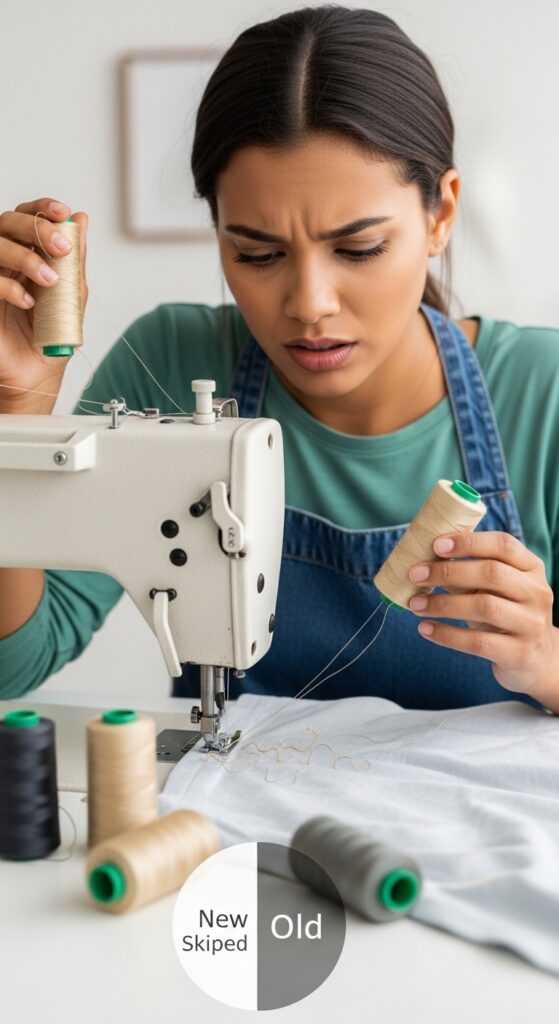
Another hidden reason for why is my sewing machine skipping stitches is the thread itself. Using cheap, old, or lint-heavy thread can cause weak loop formation, which prevents the hook from catching the thread properly.
The result is Inconsistent stitching and skipped stitches, even if your needle, tension, and technique are correct.
Suggestion: Always use good-quality thread that matches your fabric type. Replace thread that’s been sitting in your drawer for too long, it may have lost strength or collected dust, which directly affects stitch consistency.
4. Fabric and Needle Mismatch
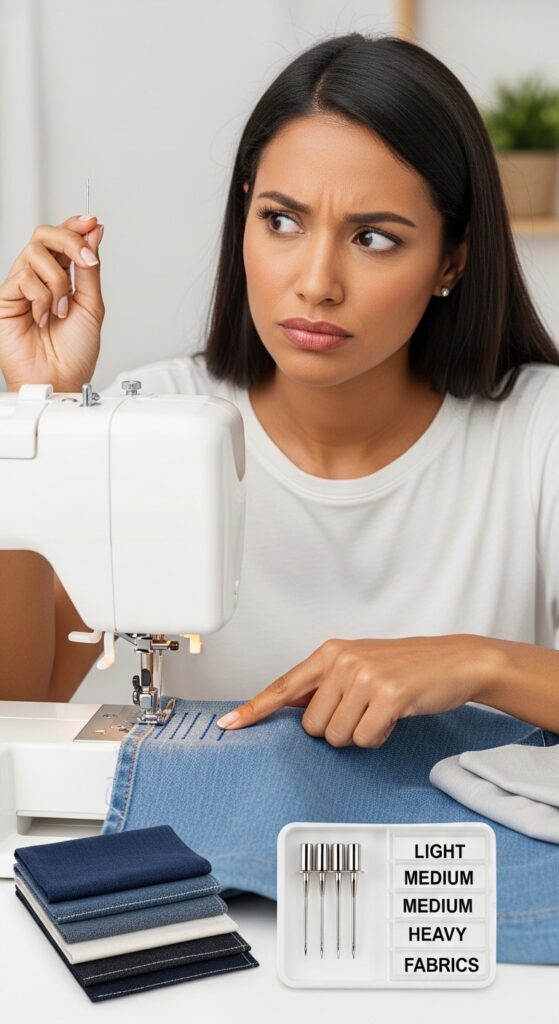
A major, often overlooked reason for why is my sewing machine skipping stitches is using the wrong needle for your fabric. Even if your machine is perfect, a needle that doesn’t match the fabric can cause skipped stitches.
-
Thick fabrics like denim or canvas require a larger, stronger needle. Using a small needle can’t penetrate properly, which leads to missed stitches.
-
Stretch fabrics like jersey or spandex need a stretch needle. Using a universal or sharp needle on stretch material often makes your sewing machine keep skipping stitches, even if you’ve rethreaded and adjusted tension.
Suggestion: Always match the needle type and size to your fabric. This simple adjustment can save hours of frustration and prevent skipped stitches before they happen.
If you’re struggling to get consistent customers, this breakdown of Why You’re Probably Not Getting Clients for Your Sewing Business — Even Though You’re Skilled explains what might be going wrong and how to fix it.
5. Pulling Fabric While Sewing (Silent Mistake)
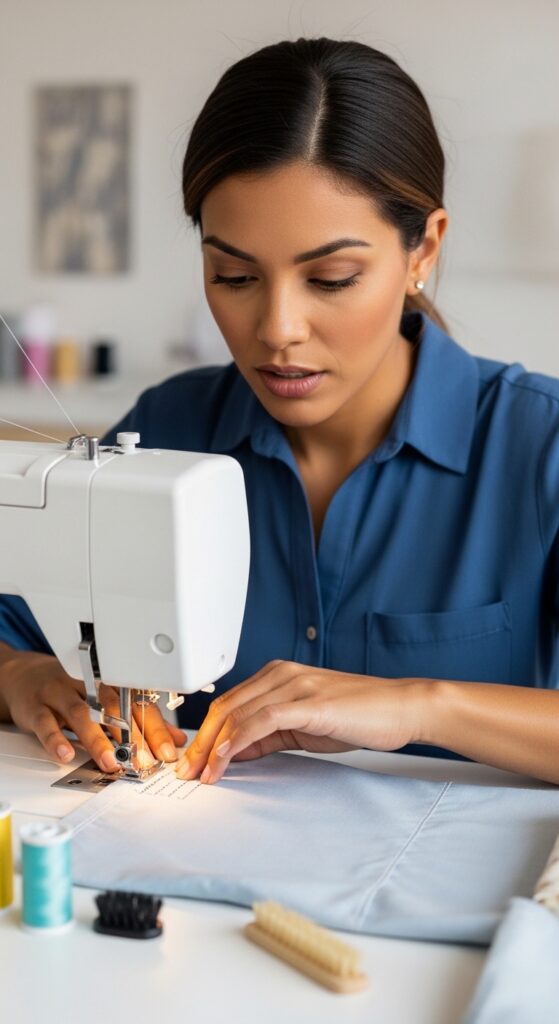
A common mistake that often goes unnoticed is pulling or tugging the fabric as you sew. Even gentle pulling can disrupt the timing between the needle and hook, which is essential for forming perfect stitches.
When the feed dogs and needle aren’t moving the fabric naturally, it can result in uneven stitch formation and cause your sewing machine to skip stitches.
Suggestion: Let the machine guide the fabric while you hold it lightly. This ensures smooth, consistent stitching and reduces the chance of skipped stitches, even on tricky fabrics.
Avoid skipped stitches by picking the right material — see Understanding Fabrics for Sewing: Choosing the Right Material for Every Project for a complete guide.
6. Machine Timing Slightly Off
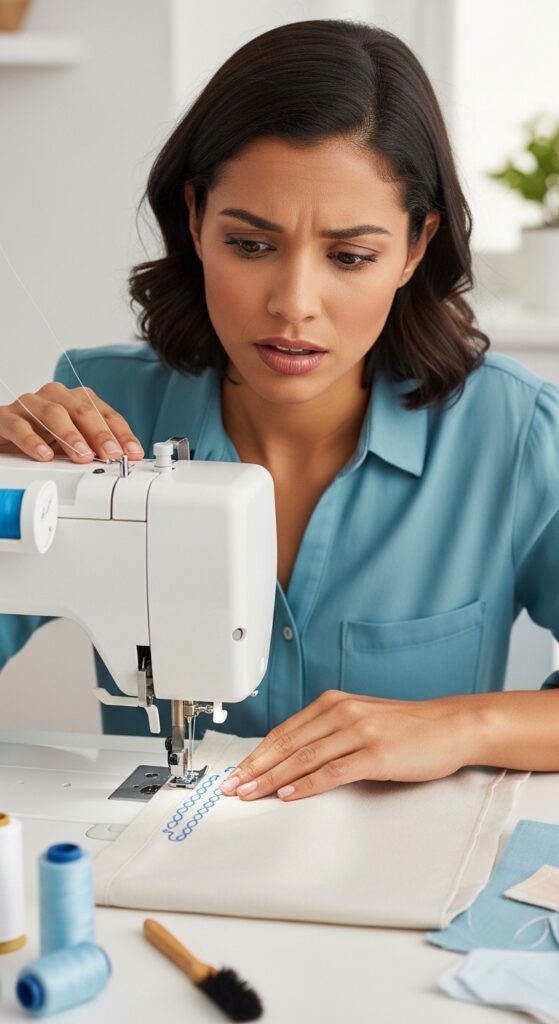
Another reason your sewing machine keeps skipping stitches is that the timing between the needle and the hook is slightly off. As a beginners think this means the machine is “broken,” but that’s rarely the case.
Here’s what’s happening:
-
The needle goes down through the fabric.
-
The hook is supposed to catch the thread loop and form a stitch.
-
If the needle and hook aren’t perfectly synced, even by a fraction of a millimeter, the hook can miss the loop.
-
When this happens, your machine produces skipped stitches, even if everything else seems fine.
Timing issues often occur after the needle hits something hard, like thick seams, pins, or metal embellishments. You might notice it especially when sewing heavier fabrics or layered projects.
Understanding timing helps you see that skipped stitches aren’t always caused by the needle, thread, or your technique alone — sometimes the machine needs a small adjustment.
Suggestion: If skipped stitches persist after checking all other causes, have the machine serviced to realign the needle and hook. Most timing problems are minor and can be fixed quickly, restoring smooth, consistent stitching.
7. Lint Build-Up in the Bobbin Area
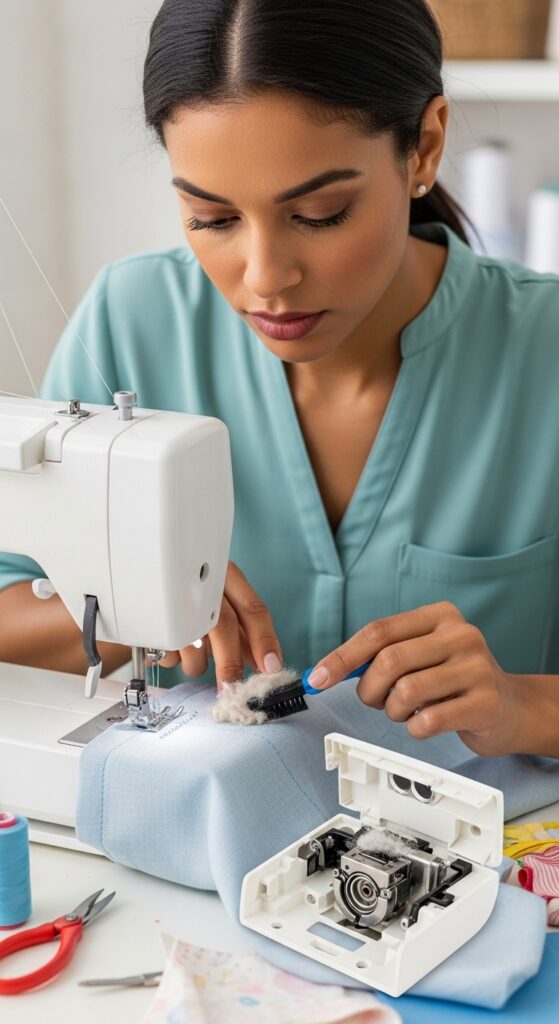
One of the easiest problems to overlook is lint and dust accumulating in the bobbin area. Even a little fluff can block smooth thread movement, causing your machine to skip stitches or produce uneven seams.
When thread and fabric aren’t feeding properly because of lint, the hook can miss the thread loop, and your sewing machine keeps skipping stitches, no matter what else you’ve tried.
Quick cleaning tip:
-
Remove the bobbin case and bobbin.
-
Use a small brush (often included with your machine) or a soft cloth to gently remove lint and dust.
-
Check the feed dogs and surrounding areas too — even tiny bits of fluff can affect stitch formation.
-
Reassemble and test on a scrap piece of fabric.
Doing this regularly, especially after long sewing sessions, keeps your machine running smoothly and prevents skipped stitches before they start.
If you have leftover fabric after fixing skipped stitches, discover creative ways to reuse it in What to Do With Fabric Scraps: Sewing Hacks That Turn Leftovers Into Keep-Worthy Gifts.
Fixes for the Sewing Machine that Keeps Skipping Stitches
1: Change to the Correct Needle Type
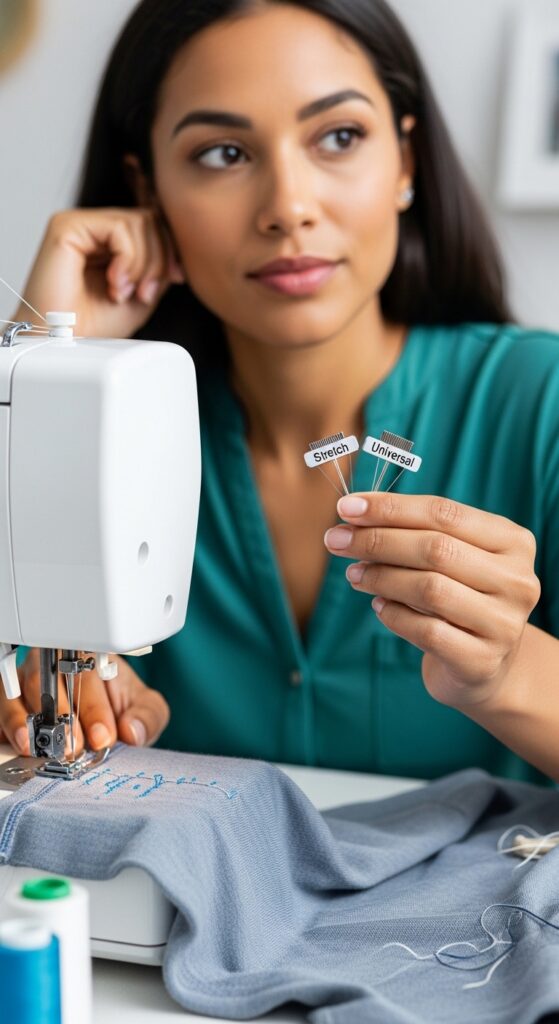
One of the easiest ways to stop your sewing machine from skipping stitches is to make sure you’re using the right needle for your fabric. Even a high-quality machine can skip stitches if the needle isn’t matched correctly.
Here’s a quick guide:
-
Stretch Needle: Use this for stretchy fabrics like jersey, spandex, or knit materials. It prevents the needle from splitting fibers, which is a common cause of skipped stitches.
-
Universal Needle: Best for most woven fabrics like cotton, linen, or lightweight polyester. This is the all-purpose option for everyday sewing.
-
Denim/Heavy-Duty Needle: Perfect for thick fabrics like denim, canvas, or multiple layers. Using a needle that’s too small can cause your sewing machine to skip stitches, even with proper threading.
Suggestion: Always replace the needle after 6–8 hours of sewing or when switching fabric types. A dull or bent needle can instantly create skipped stitches, no matter what else you do.
2: Rethread the Machine Properly
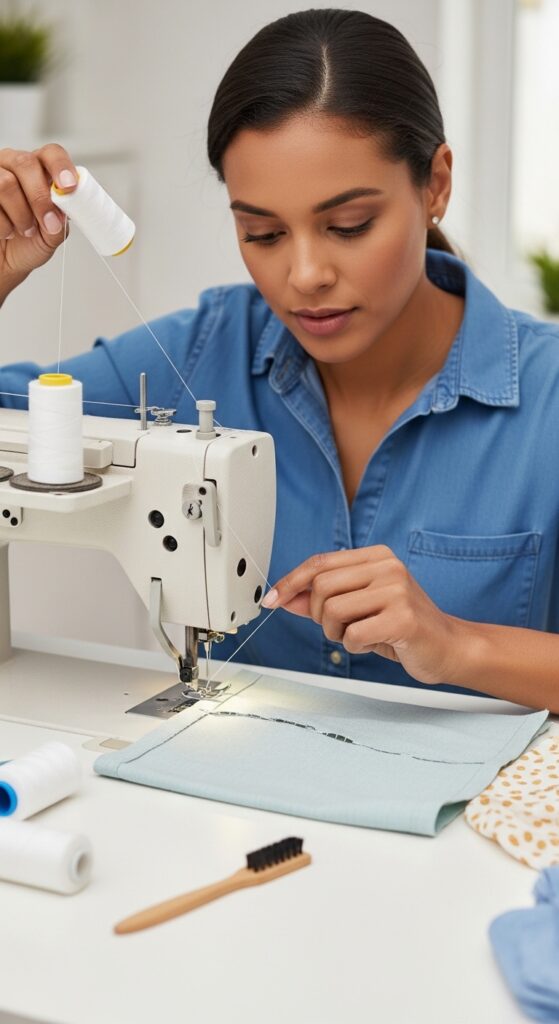
Sometimes the solution to why your sewing machine keeps skipping stitches is as simple as rethreading, but it has to be done correctly. Many beginners miss small steps that can lead to skipped stitches.
Step-by-step:
-
Raise the presser foot before threading. This opens the tension discs and ensures the thread seats properly.
-
Rethread the upper thread from spool to needle, following your machine’s threading path carefully.
-
Make sure the bobbin thread is correctly placed and that the bobbin case is fully seated.
-
Pull both threads to the back of the machine before starting to sew.
Suggestion: Even experienced sewists sometimes skip this step, which can lead to skipped stitches or uneven tension. Rethreading properly often fixes skipped stitches instantly without changing needles or tension.
After fixing skipped stitches, learn clever tailoring tricks in DIY Clothes That Never Fit? My Brother Ruined His Clothes—Until He Tried These 7 Tailoring Hacks.
3: Adjust Thread Tension
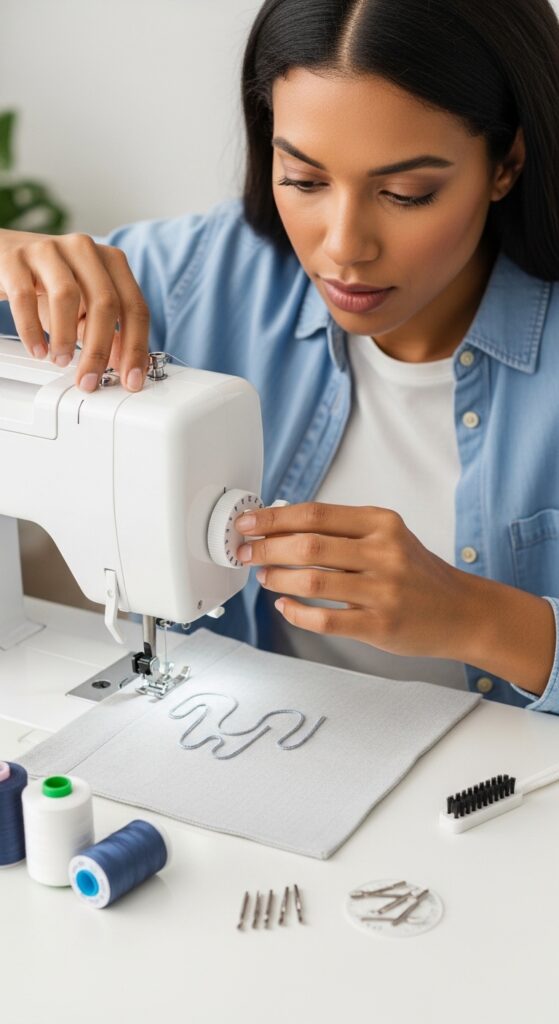
Sometimes skipped stitches happen because the thread tension isn’t set correctly. Adjusting it is simple, no need to overcomplicate things.
Quick test method:
-
Sew a few stitches on a scrap piece of the same fabric.
-
Check the stitch formation:
-
If the upper thread loops on the bottom, the tension is too loose.
-
If the bottom thread loops on the top, the tension is too tight.
-
-
Turn the tension dial slightly and test again until the stitch looks even.
Suggestion: Always test tension on scrap fabric before starting your actual project. This prevents skipped stitches and keeps seams smooth and professional.
Once your machine is running smoothly, try 5 Clothing Alterations I Stopped Paying a Tailor For (DIY Made Easy) to enhance your skills with practical DIY projects.
4: Clean the Bobbin Area
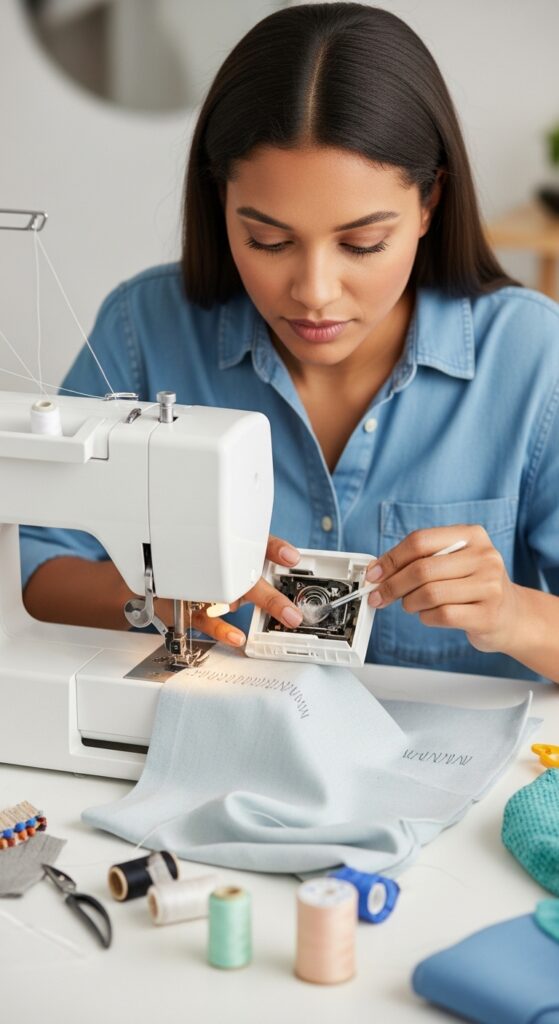
A common cause of skipped stitches is lint and dust build-up in the bobbin area. Even a small amount of fluff can block the smooth movement of the thread, causing uneven stitches.
Step-by-step cleaning:
-
Remove the bobbin case and bobbin from the machine.
-
Use a small brush (usually included with your machine) or a soft cloth to remove lint, dust, and stray threads from the bobbin compartment.
-
Check the feed dogs and surrounding areas for any debris that could interfere with stitch formation.
-
Reinsert the bobbin and test on a scrap piece of fabric.
Suggestion: Regularly cleaning the bobbin area, especially after long sewing sessions — keeps your machine running smoothly and prevents skipped stitches before they start.
5: Stop Pulling the Fabric
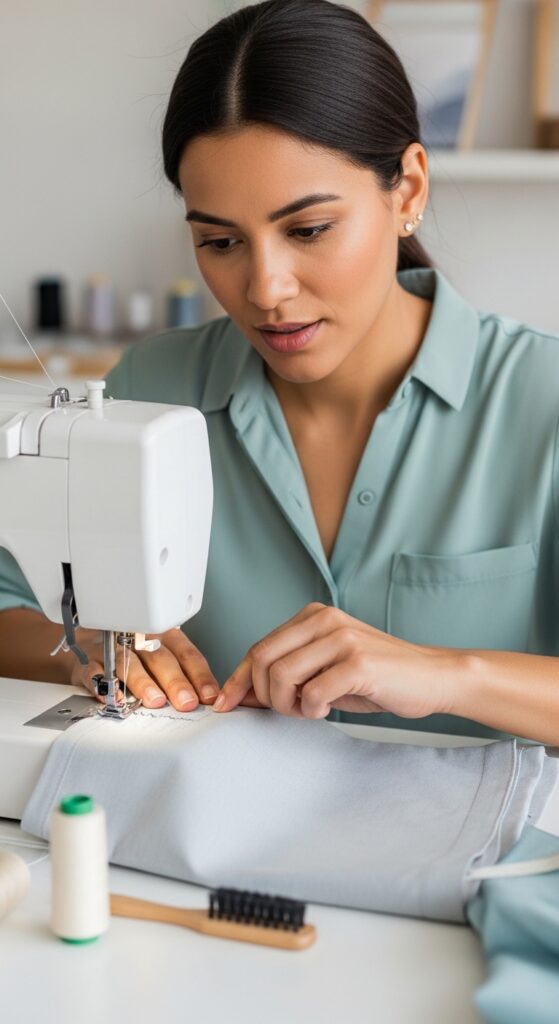
One of the simplest ways to prevent skipped stitches is to let the machine feed the fabric naturally. Pulling or tugging while sewing can disrupt the timing between the needle and hook, causing uneven stitch formation.
Step-by-step tip:
-
Place the fabric under the presser foot.
-
Gently guide it with your hands, don’t push or pull.
-
Allow the feed dogs to move the fabric at their own pace.
Suggestion: Holding the fabric lightly gives you control without interfering with stitch formation. This simple adjustment prevents skipped stitches and keeps seams neat, even on tricky fabrics or stretchy materials.
Once you’ve mastered skipped stitches, breathe new life into old clothes with 15 Genius Ways to Upcycle Old Clothes Into Trendy New Outfits.
6: Match Needle Size to Fabric Thickness
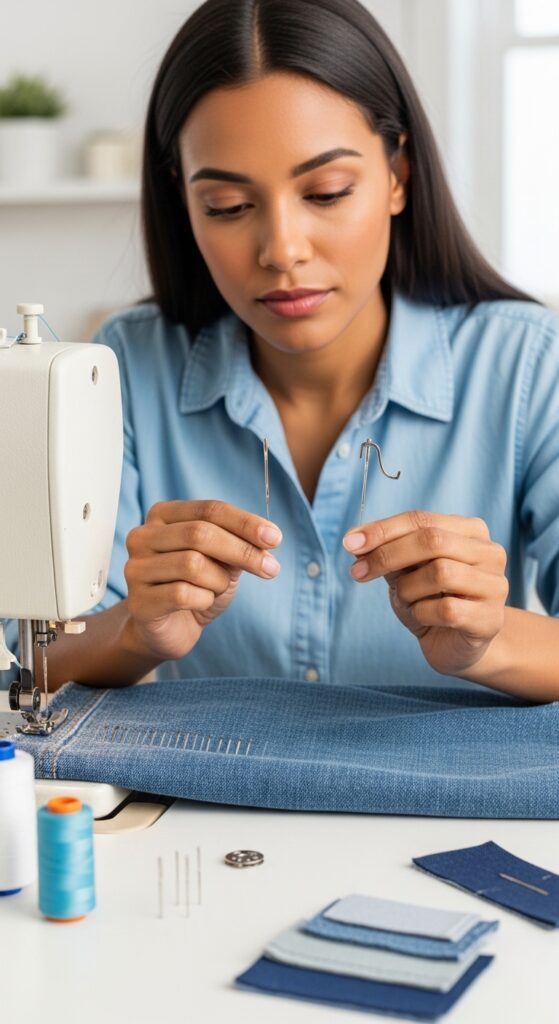
A very common reason why is my sewing machine skipping stitches is using a needle that doesn’t match the fabric thickness. Even if everything else, thread, tension, and technique, is correct, the wrong needle can cause skipped stitches.
Simple examples:
-
Light fabrics like cotton or silk → use a size 70/10 or 80/12 needle.
-
Medium fabrics like linen or quilting cotton → use a size 90/14 needle.
-
Heavy fabrics like denim or canvas → use a size 100/16 or larger needle.
Suggestion: Always check your fabric type before sewing and swap needles when switching to a different thickness. This small adjustment often fixes skipped stitches instantly and keeps your sewing smooth and professional.
7: Test on Scrap Fabric
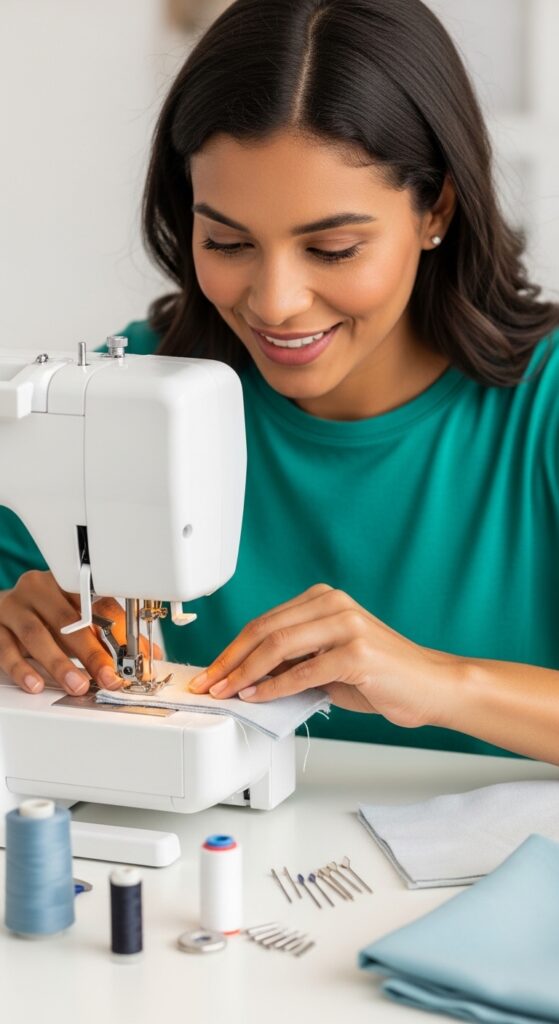
Before sewing your final project, always test your machine on a scrap piece of the same fabric. This simple step helps you catch issues like skipped stitches, uneven tension, or wrong needle choice before they ruin your work.
What to do:
-
Cut a small piece of scrap fabric that matches your project.
-
Sew a few rows, using the same stitch type and settings you plan to use.
-
Check the stitches: make sure they’re even, smooth, and free of gaps.
-
Adjust needle, thread, tension, or technique as needed.
Suggestion: Testing first saves time and frustration. Many skipped stitch problems can be prevented completely by doing a quick trial run.
After fixing skipped stitches, you can bring your creations to life by trying the styles in 13 Flattering Outfit Ideas That Hide Belly Fat and Make Your Waist Look Smaller for inspiration.
When It’s NOT Your Fault
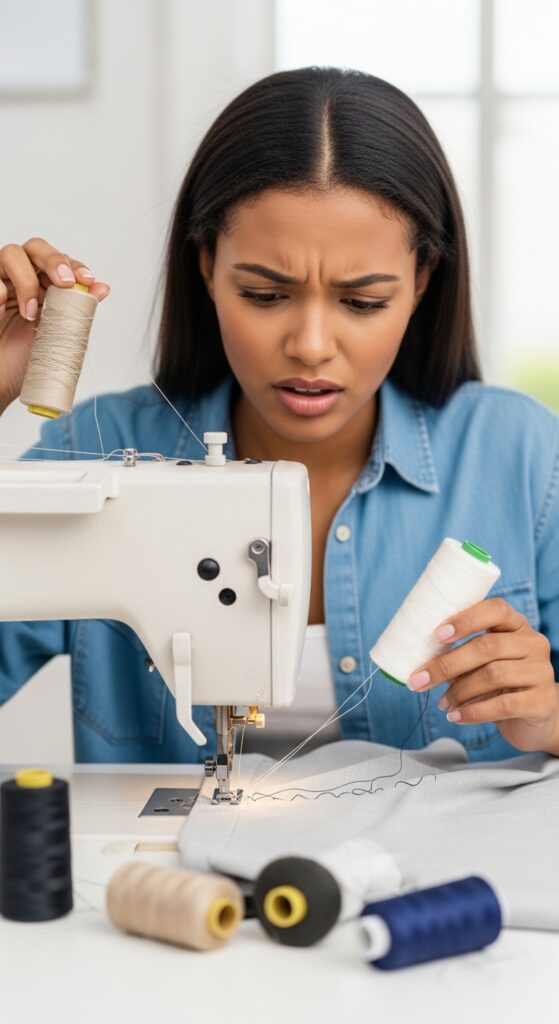
Sometimes, even after checking the needle, thread, and tension, your sewing machine keeps skipping stitches. It’s important to know that this doesn’t mean you’re doing anything wrong, skipped stitches can happen for reasons beyond your control.
Here are a few common causes:
-
Machine timing may need repair: If the needle and hook are slightly misaligned, even the most careful stitching can result in skipped stitches. This is often a minor adjustment that a professional technician can fix.
-
Worn-out parts: Older machines or frequently used components like bobbins, hooks, and feed dogs can wear down over time, affecting stitch formation.
-
Cheap or basic machines have limitations: Some lower-end models may struggle with thick fabrics, multiple layers, or certain stitch types, which can naturally lead to skipped stitches.
Knowing that these issues are machine-related, not user mistakes, helps you stay confident in your sewing skills. Most skipped stitch problems have a clear fix, and understanding when it’s the machine, not you, keeps frustration low.
Once your sewing issues are solved, try a fun project like the DIY Sequin Clutch Tutorial: Easy & Sparkly Party Handbag You Can Make Yourself to practice your skills on a stylish accessory.
Tips to Prevent Skipped Stitches Forever
Once you understand why skipped stitches happen, take a few steps to prevent them completely.
-
Always test stitches on scrap fabric first
Even experienced sewists do this. Testing your stitch settings on a piece of scrap fabric ensures your needle, thread, and tension are perfect before starting your actual project. -
Replace needles regularly
A dull or bent needle is one of the most common reasons for skipped stitches — and many beginners don’t realize it. Experts recommend changing your needle every 6–8 hours of sewing or when switching fabric types. This small habit keeps your stitches consistent. -
Use high-quality thread
Cheap or old thread can break easily or produce uneven loops, causing skipped stitches. Invest in thread that matches your fabric type and sew with confidence. -
Keep your machine clean and dust-free
Lint, dust, and leftover fabric fibers can block the hook or bobbin area, interfering with smooth stitch formation. Regularly cleaning your machine keeps it running flawlessly and prevents skipped stitches from happening unexpectedly.
While mastering your machine, you might also enjoy eco-friendly DIYs like Eco-Friendly Easter Crafts You Can Make and Reuse Year After Year that are fun and sustainable.
Conclusion
Skipped stitches are one of the most common frustrations sewists face, but understanding why is my sewing machine skipping stitches makes solving the problem much easier.
Remember, even experienced sewists encounter this issue, it doesn’t mean you’re doing anything wrong.
Before stressing over your project, try 2–3 of the fixes above first. Often, small adjustments like changing the needle, rethreading, or testing on scrap fabric solve the problem immediately.
We’d love to hear from you: which fix worked for you? Share your experience in the comments and help other sewists overcome skipped stitches too.