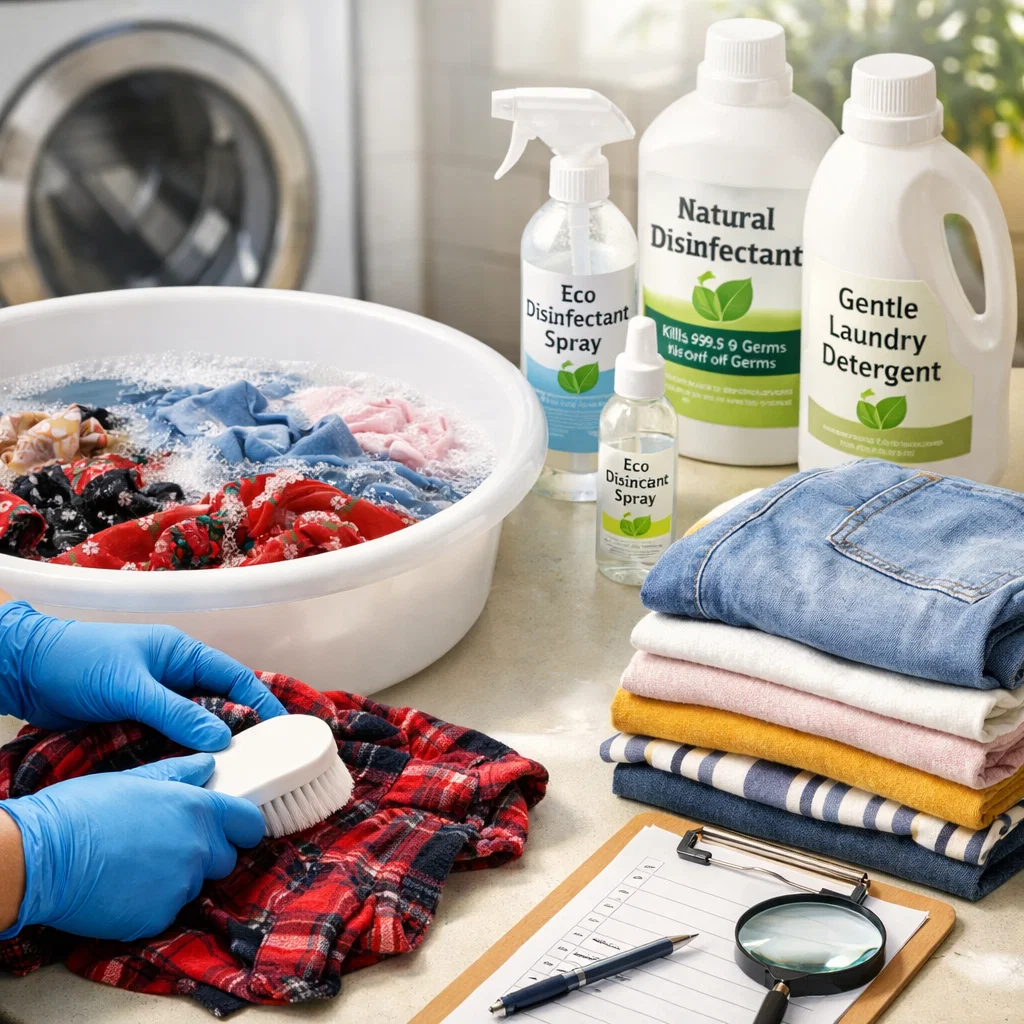
Struggling with dirty or smelly thrift items? Learn how to clean and disinfect secondhand clothes to make every garment safe, fresh, and sale-ready.”
A single dirty on a thrift item can hurt your reputation, cause returns, or even worse lead to bad reviews, which we dont want for our thrift business, especially as a beginner. Whether you sell locally or ship worldwide, it’s important to prepare every item properly, safely and neatly.
In this guide, you’ll learn simple and professional ways to clean and disinfect your clothes, smart tips for delicate items, and tricks that experienced thrift sellers use to make every item ready to sell.
These methods work for sellers anywhere, even if you run a physical store or sell online to customers around the world.
If you’re planning to grow your thrift business, Thrift Business in Nigeria: How to Start a Profitable Thrift Clothing Business shares key steps to build a professional, sale-ready inventory.
The Importance of Cleaning and Disinfecting Your Thrift Clothes
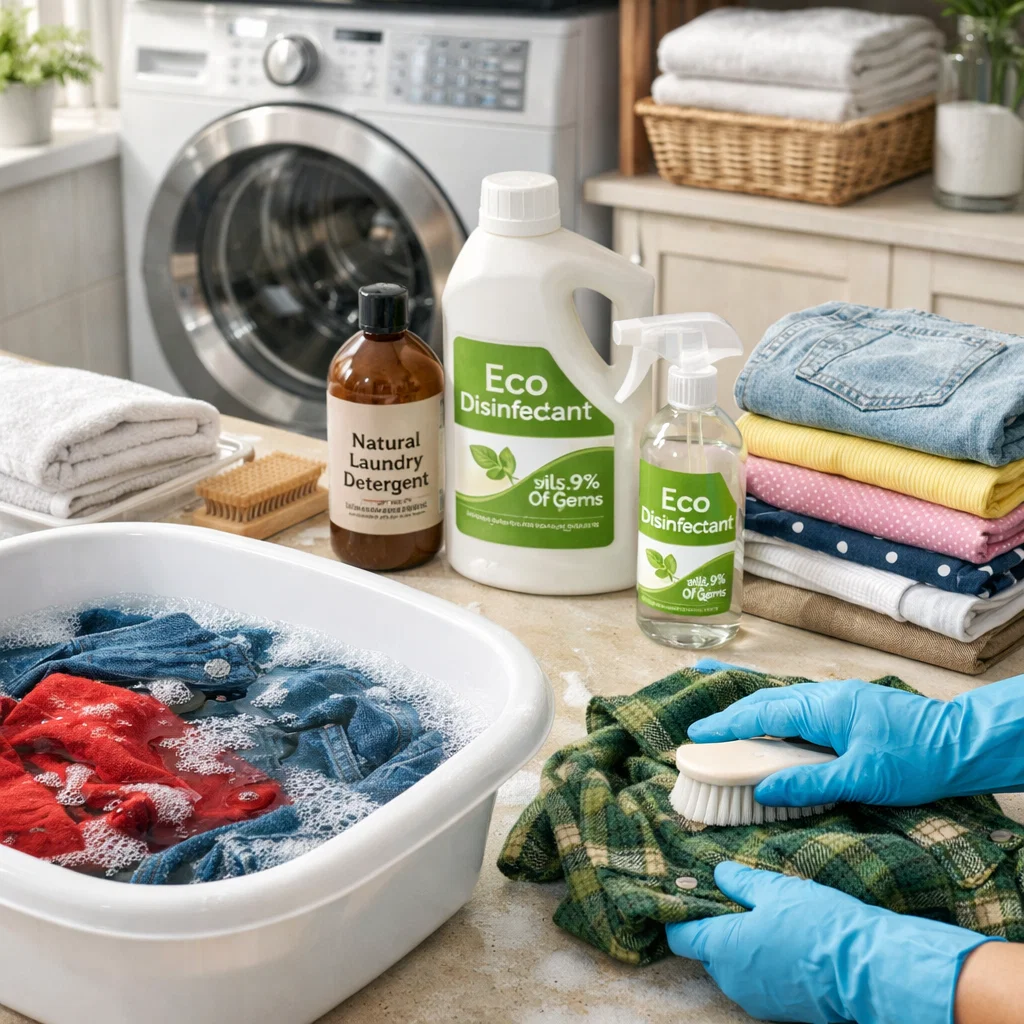
Understanding how to clean and disinfect secondhand clothes is more than a simple washing routine. Proper cleaning protects your buyers, keeps your items in good condition, and helps you run a trustworthy thrift business.
-
Protect buyer health and comfort
Secondhand clothes can carry bacteria, body oils, dust, or allergens from previous use. Sometimes they may also hold mites or strong odors from long storage.
Learning how to clean and disinfect secondhand clothes properly helps remove these hidden issues and ensures the garments are safe and comfortable for the next owner.
2. Build trust with your customers
Clean clothing sends a strong message to buyers. When items arrive fresh, well-prepared, and neatly packaged, customers feel confident buying from you again.
Sellers who understand how to clean and disinfect secondhand clothes often build stronger reputations and receive better reviews.
3. Meet expectations on online marketplaces
Many online resale platforms expect clothing to be clean and odor-free before listing. Buyers on platforms like eBay, Etsy, and Depop are quick to report items that arrive dirty or poorly prepared.
Knowing how to clean and disinfect secondhand clothes helps you meet these expectations and avoid listing problems.
4. Reduce returns and protect your profits
One overlooked stain or odor can lead to refunds or negative feedback. Proper preparation helps you catch issues early and present each item in its best condition.
This is why experienced sellers take time to master to clean and disinfect secondhand clothes before putting any item up for sale.
Understanding what buyers want can save time during prep — see Top-Selling Clothes for Thrift Business in Nigeria (What Moves Fast) to stock items that move quickly.
Essential Tools and Supplies for Preparing Thrift Clothes
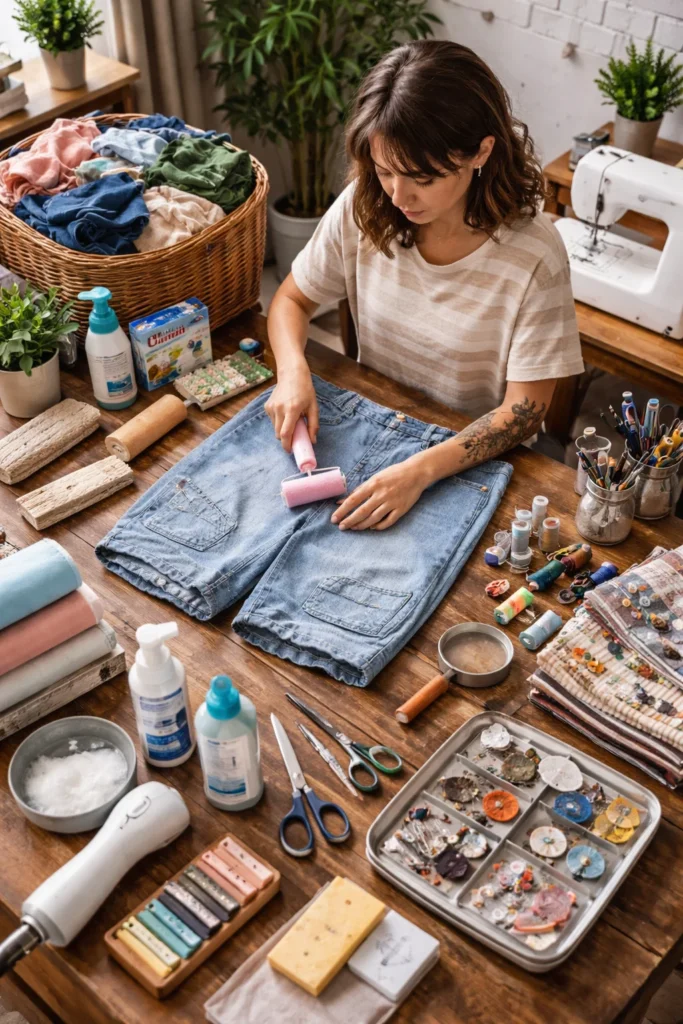
To get every secondhand item sale-ready, having the right tools makes all the difference. These are not just basic cleaning items, but items experienced thrift sellers rely on for safety, efficiency, and professional results.
1. Detergents and Stain Removers
-
Use mild detergents for delicate fabrics like silk, wool, or vintage items. Harsh detergents can damage the fibers or fade colors.
-
For stubborn stains, try oxygen-based bleach or enzyme stain removers — these remove dirt without harming fabric quality.
-
Some sellers pre-soak clothes in a mix of water and detergent for 15–30 minutes before washing to remove deep odors and grime.
2. Disinfecting Agents
-
Regular washing doesn’t always kill bacteria or mites. Fabric-safe disinfecting sprays or solutions are essential.
-
For delicate or heat-sensitive clothes, vinegar or oxygen-based fabric disinfectants work well without damaging colors.
-
Steaming clothes after washing can kill germs and freshen fabrics instantly, especially for items you can’t tumble dry.
3. Gloves and Safety Gear
-
Wearing gloves protects your hands from strong detergents and prevents spreading bacteria between items.
-
Masks are optional but useful if you’re handling very dusty or musty bales.
4. Washing Equipment
-
Machine washing is fine for sturdy fabrics like cotton and denim.
-
Hand washing is safer for delicate fabrics or vintage items.
-
Use a mesh laundry bag for small or delicate items to prevent snagging and shrinkage.
5. Iron, Steamer, and Folding Tools
-
Ironing or steaming not only removes wrinkles but also kills remaining germs.
-
Folding boards or neat stacking techniques can make clothes look more professional — this is especially important for online photos or physical display.
6. Optional Pro Items
-
UV sanitizers: Some professional sellers use small UV wands to disinfect delicate fabrics.
-
Scent boosters: Light, neutral fabric sprays can remove odors without leaving a strong artificial smell.
After cleaning and prepping clothes, small sewing hacks for What to Do With Fabric Scraps: Sewing Hacks That Turn Leftovers Into Keep-Worthy Gifts can help turn leftover fabrics into value-added pieces.
Sorting Clothes Before Cleaning
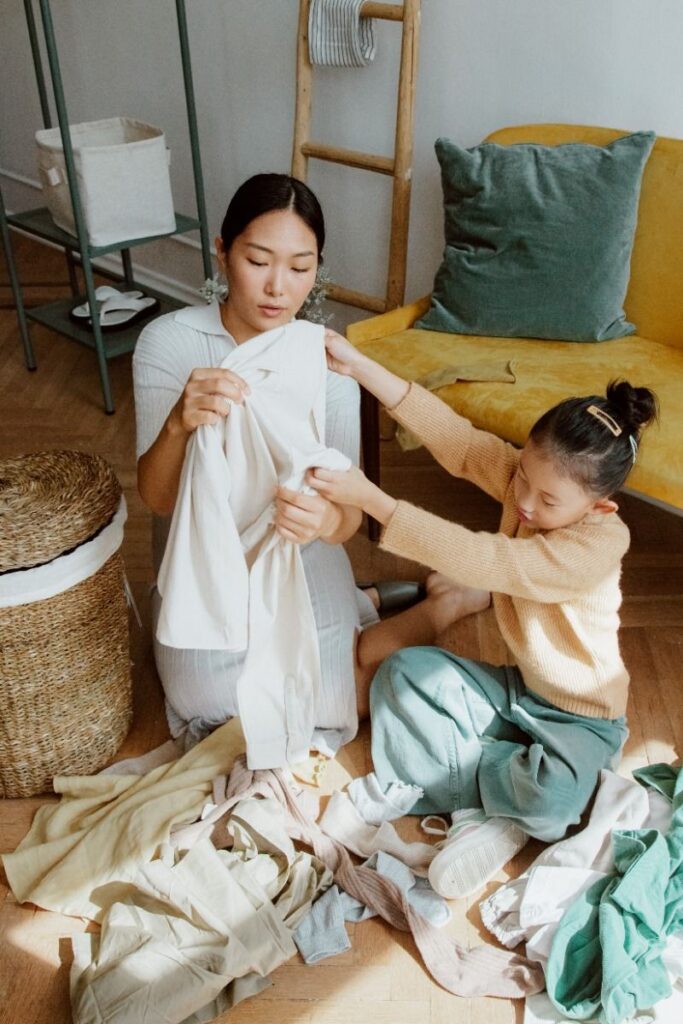
Photo credit @ Little Folks Furniture
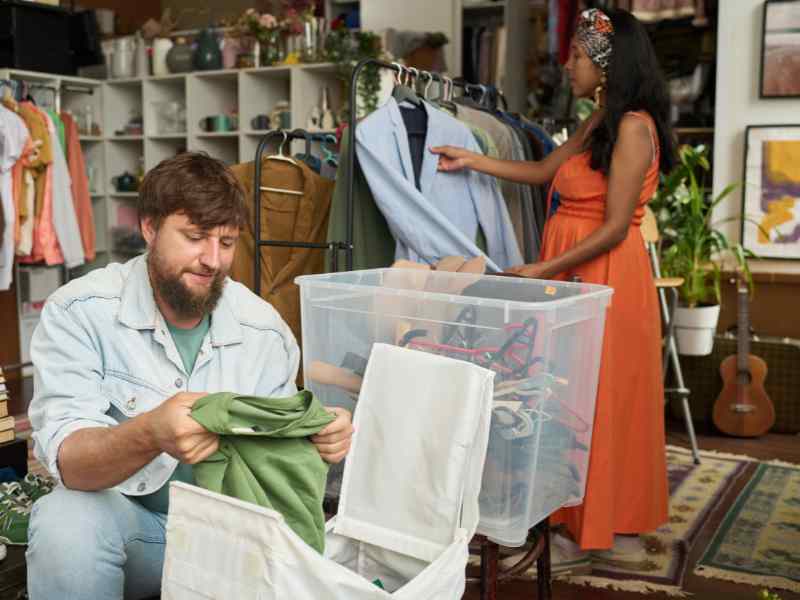
Sorting clothes properly is an important step many new sellers overlook when learning how to clean and disinfect secondhand clothes.
Washing everything together may seem faster, but it can damage fabrics, cause colors to bleed, or make stains harder to remove. Taking a few minutes to sort items first helps protect the clothing and improves your cleaning results.
-
Sort by fabric type
Different fabrics need different care. Cotton and denim can usually handle regular washing, while delicate fabrics like silk, lace, or wool need gentler treatment. Sorting by fabric helps you choose the safest washing method for each item.
-
Separate by color
Light colors, dark colors, and bright fabrics should be washed separately. Some secondhand clothes may release dye during the first wash, especially if they have been stored for a long time. Proper color sorting prevents color transfer that could ruin other items.
-
Group by dirt level
Heavily soiled clothes should not be washed with lightly used items. Dirt, oils, and strong odors can spread during washing. Sorting by how dirty the clothes are helps ensure each item gets the right level of cleaning.
-
Check the resale value of each item
While sorting, quickly assess the condition and potential resale value of each piece. High-value or delicate items deserve extra care during cleaning to avoid damage that could reduce their selling price.
-
Spot hidden damage early
Before washing, check for loose seams, missing buttons, small holes, or weak fabric areas. Catching these problems early prevents further damage during washing and helps you decide whether the item should be repaired or removed from your inventory.
-
Keep delicate fabrics separate
Items made from delicate materials should always be washed on gentle settings or by hand. Separating them during sorting helps prevent shrinkage, stretching, or fabric damage.
Minor repairs can increase resale value — 5 Clothing Alterations I Stopped Paying a Tailor For (DIY Made Easy) shows simple fixes to keep items market-ready.
Helpful organization tip
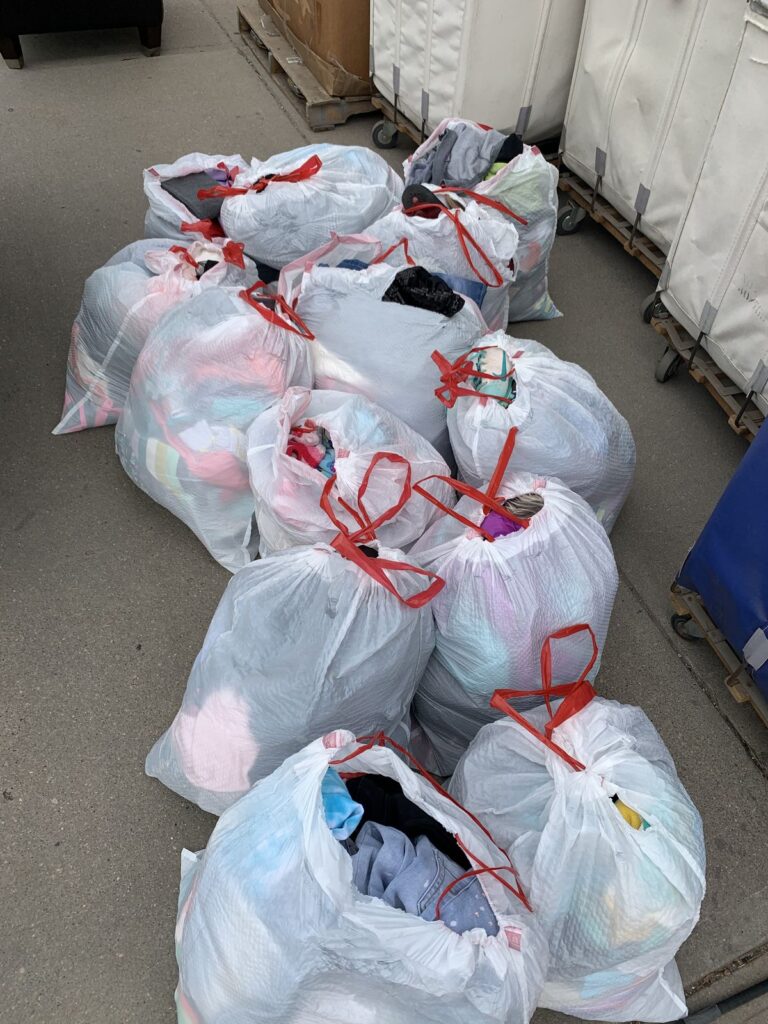
Many experienced thrift sellers store sorted clothes in clear bins or labeled containers before cleaning. Some even use simple color tags to mark different categories.
This small system keeps inventory organized and makes it easier when preparing clothes for storage, photography, or shipping.
Knowing fit challenges can help you inspect secondhand clothes more critically; Outfit Problems Short Women Deal With — Which Ones Are Ruining Your Look? highlights common issues that affect resale appeal.
Washing and Stain Removal Secrets
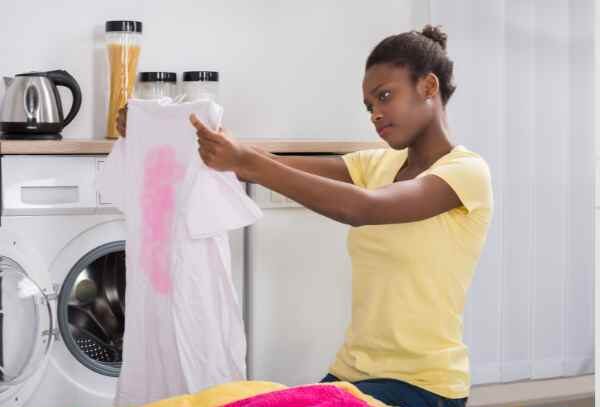
Washing secondhand clothes the right way helps remove odors, stains, and hidden dirt without damaging the fabric. Many experienced sellers know that using the correct washing method can greatly improve the final look of the clothing before it is listed for sale.
-
Hand washing vs. machine washing
Not every garment should go into a washing machine. Strong fabrics such as cotton, denim, and polyester can usually be washed in a machine using a normal or gentle cycle.
However, delicate items like silk, lace, wool, or vintage clothing are safer when hand washed. Hand washing reduces stress on the fabric and helps maintain the shape and quality of the garment.
2. Treat stubborn stains carefully
Stains should be treated before washing whenever possible. Applying a small amount of stain remover directly to the affected area and letting it sit for a few minutes can help break down oils, food stains, or dirt.
Gently rubbing the fabric together or using a soft brush can help lift the stain without damaging the fibers. Always test the treatment on a small hidden area first to make sure it does not affect the color.
3. Use simple cleaning alternatives when needed
If certain detergents are not available, simple household solutions can still work well. Vinegar helps remove odors and soften fabrics, while baking soda can help lift stains and neutralize smells. These options are widely available and are often safe for many fabric types when used in moderate amounts.
4. Wash in batches for better efficiency
Experienced thrift sellers often wash clothes in batches. This means grouping similar fabrics, colors, and dirt levels together. Batch washing saves time and water while still protecting the quality of the garments. It also helps maintain consistency when preparing multiple items for sale.
Understanding styling trends from posts like What to Wear on Valentine’s Day Based on Your Plans — Dinner, Staying In, or Galentine’s can inspire how to present clothes attractively in photos.
Disinfecting Beyond the Wash
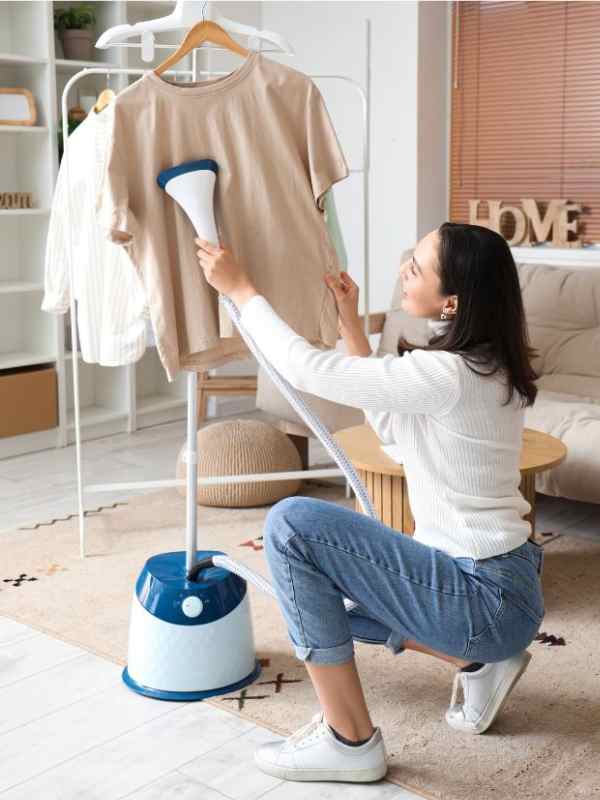
Regular washing removes dirt and many odors, but it does not always eliminate all bacteria or microorganisms that may be present in secondhand clothing.
Items that have been stored for long periods, shipped in large bales, or worn frequently may still carry germs even after a normal wash. This is why many experienced sellers take an extra step to properly disinfect garments before preparing them for sale.
-
Steam or heat treatment
Heat is one of the most effective ways to reduce bacteria on fabrics. Using a clothing steamer or ironing garments with proper heat can help kill many germs while also removing wrinkles.
Steam works especially well for items that cannot handle heavy washing or for clothes that need quick freshening before photographing or packaging.
-
Fabric-safe disinfecting sprays
Some disinfecting sprays are designed specifically for fabrics. These sprays help eliminate odor-causing bacteria without damaging the material.
Lightly spraying and allowing the item to air dry can add an extra layer of sanitation, especially for jackets, coats, or delicate fabrics that are not washed frequently.
-
Vinegar or oxygen-based solutions
White vinegar is commonly used as a natural disinfecting agent in laundry. Adding a small amount during the rinse cycle can help remove odors and reduce bacteria. Oxygen-based cleaners are another safe option that can disinfect fabrics while protecting colors and delicate fibers.
-
Advanced sanitation tools used by some sellers
Some professional resellers use small UV sanitizing devices for delicate items such as hats, scarves, or accessories that cannot be washed easily.
UV light can help reduce bacteria on the surface of fabrics and is becoming more common among sellers who handle large volumes of secondhand clothing.
Fabric knowledge is key to cleaning and prepping — Understanding Fabrics for Sewing: Choosing the Right Material for Every Project helps you handle delicate materials safely.
Drying Clothes Properly After Washing
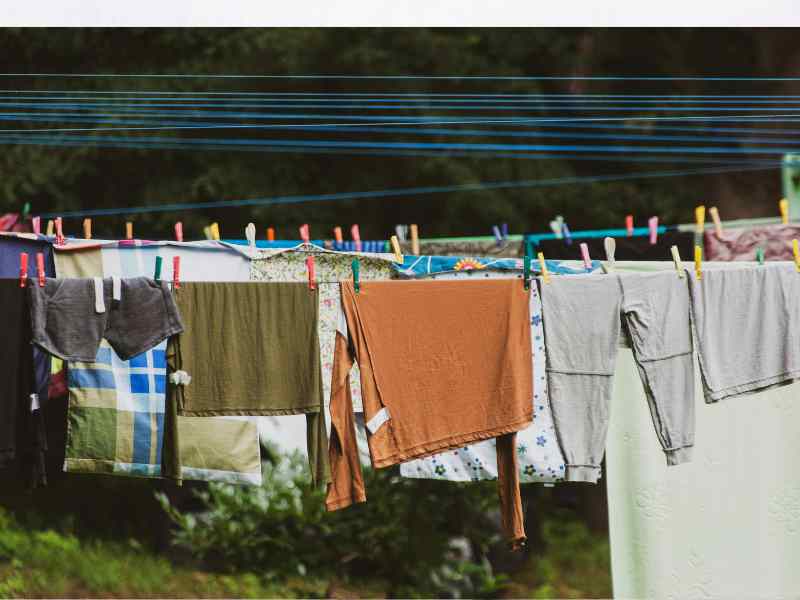
Drying is an important step many sellers overlook when learning how to clean and disinfect secondhand clothes. Even when clothes are washed correctly, poor drying methods can cause odors, shrinkage, or damage to the fabric. Drying garments the right way helps keep them fresh, neat, and ready for resale.
-
Air-drying vs. tumble drying
Air-drying is one of the safest ways to dry many secondhand clothes. Hanging garments on a drying rack or clothesline allows them to dry naturally while helping preserve their shape and fabric strength.
Tumble drying, on the other hand, works well for durable fabrics like cotton and denim, but delicate materials should usually avoid high heat to prevent shrinkage or damage.
2. Protect colors and delicate fabrics
Direct sunlight can fade certain fabrics, especially darker colors and vintage pieces. When possible, dry clothes in a shaded but well-ventilated space.
This helps maintain the color and texture of the garments. Sellers who understand how to clean and disinfect secondhand clothes.often pay close attention to drying conditions to prevent fabric damage before the item is even listed for sale.
3. Drying efficiently in humid or dusty environments
In areas with high humidity, clothes may take longer to dry and can develop a musty smell if airflow is poor. Using fans, indoor drying racks, or well-ventilated rooms can help speed up the drying process. In dusty environments, drying clothes indoors or covering them lightly while drying can prevent dust from settling on freshly washed garments.
Inspection and Prepping Clothes for Sale
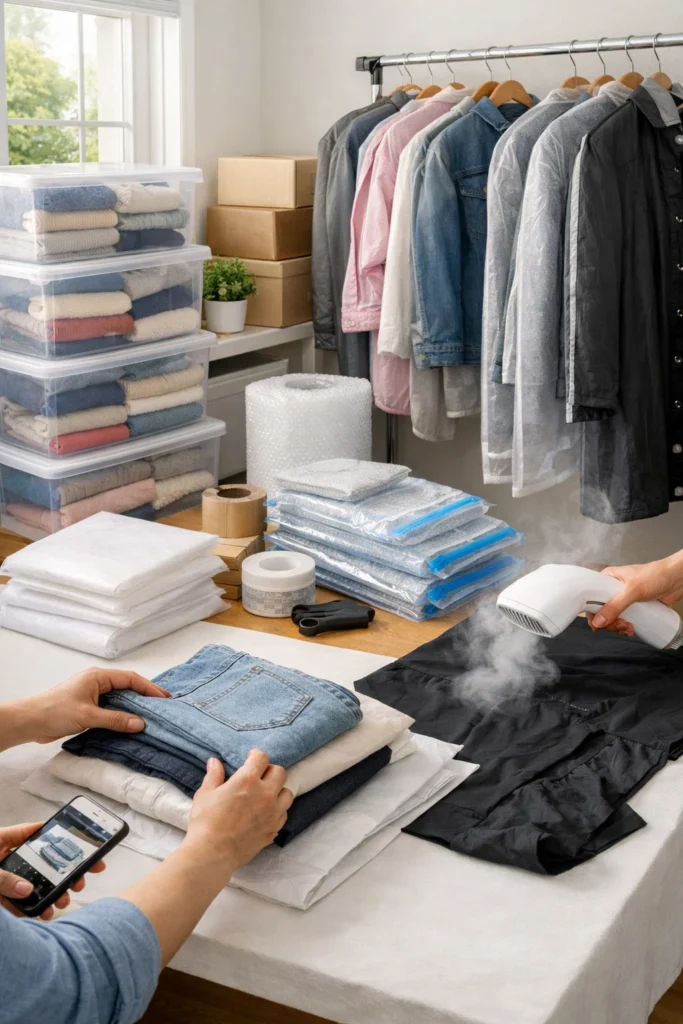
Once clothes are clean and fully dry, the next step is careful inspection and preparation. This stage helps ensure every item looks presentable and ready for buyers. Even small details can influence how customers perceive the quality of secondhand clothing.
-
Check for remaining stains or odors
Before listing or packaging an item, take a close look at the fabric. Sometimes stains or odors may remain after washing, especially on heavily used garments. If anything is still noticeable, it is better to treat the area again rather than risk selling an item that looks unclean.
-
Present the clothing neatly
Clothes that are neatly folded or properly hung look more appealing to buyers. Smooth out wrinkles using a steamer or iron so the garment appears well cared for. This small step can make a big difference when displaying items in a store or presenting them in online listings.
-
Prepare items for photos or packaging
If you sell online, presentation matters. Simple touches such as hanging the garment on a clean hanger, using a neutral background for photos, or neatly folding items before packaging can make the clothing appear more professional and attractive to buyers.
-
Use a simple checklist for consistency
Many experienced sellers create a small checklist for each item before it is listed or shipped. The checklist might include steps like final inspection, ironing, photographing, and packaging. This system helps maintain consistent quality, especially for sellers managing multiple items or shipping to customers in different locations.
Presentation matters; 13 Flattering Outfit Ideas That Hide Belly Fat and Make Your Waist Look Smaller can guide how to style items to appeal to buyers.

I’ve been selling secondhand clothes for a while, and one mistake I see a lot is neglecting to properly disinfect items before selling. Even if the clothes look clean, there’s always that added peace of mind knowing they’ve been disinfected, especially when shipping worldwide. Really helpful tips!
One needs to disinfect and properly keep clean up the items
Thank you so much for reading