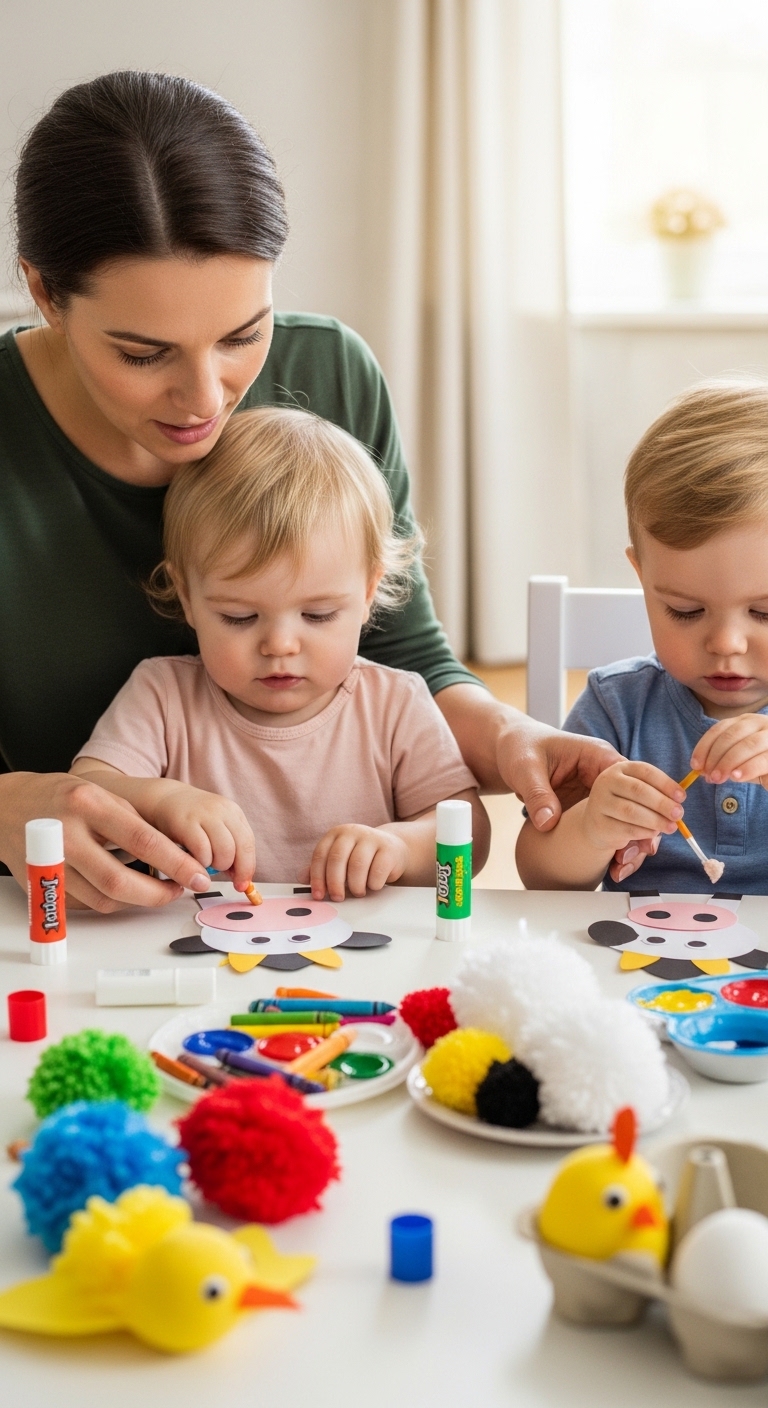
Looking for fun activities that teach skills? Try these farm animal crafts for toddlers: build creativity and fine motor skills beyond playtime.
Toddlers are naturally drawn to animals. They moo, baa, roar, and point excitedly at every picture book page long before they can form full sentences.
Add paint, paper, or cotton balls to that curiosity, and suddenly you have their full attention. That’s why farm animal crafts work so well for toddlers, they tap into something they already love while quietly supporting how their little hands and minds are growing.
These activities aren’t just about keeping toddlers busy or creating something to hang on the fridge. When a child presses glue, picks up small materials, or smears paint with their fingers, they’re strengthening fine motor skills, building hand-eye coordination, and learning how to control their movements.
At the same time, they’re exploring textures, naming animals, and expressing creativity in ways that feel natural and pressure-free.
The crafts in this guide are designed with toddlers in mind. They require simple, everyday materials and are easy to set up, even on busy days.
Because toddlers move quickly from one activity to the next, so there’s no pressure to finish or make anything look perfect. The goal isn’t a flawless farm animal, it’s the learning, confidence, and joy that happen along the way.
If your toddler needs ideas for short, engaging projects indoors, you might also enjoy our Indoor Activities for Kids on Rainy Days That Actually Keep Them Busy.
What Fine Motor Skills Really Mean- And what the Fine Motor Skills Crafts Are Quietly Teaching Toddlers
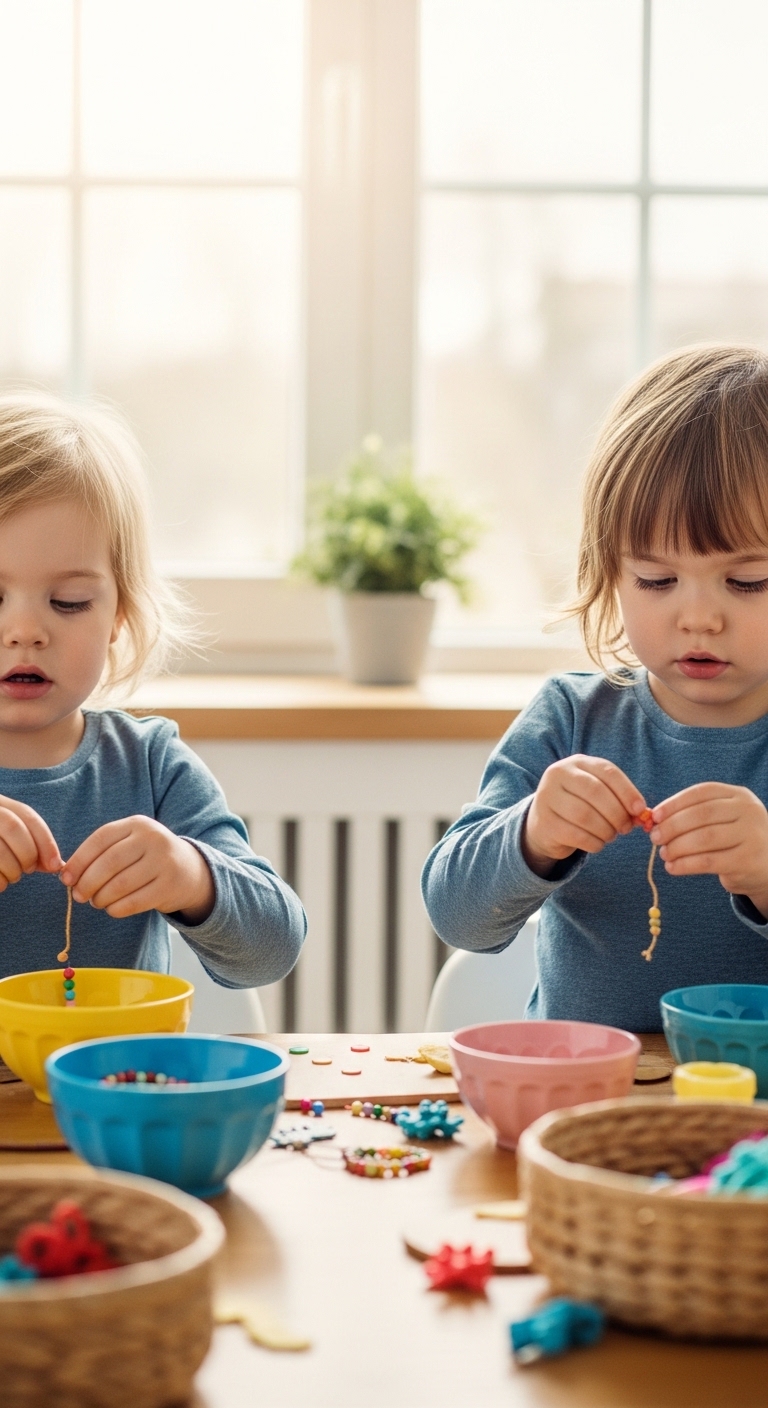
You’ve probably seen the phrase fine motor skills in many toddler craft posts, but it’s rarely explained in a way that actually helps parents understand what’s happening.
Fine motor skills are the small movements your toddler makes with their hands and fingers. These skills affect everyday things like holding crayons, feeding themselves, and playing with toys. Simple crafts are one of the easiest ways to build these skills without pressure.
Gluing Small Items
When your toddler glues small items like cotton balls, paper pieces, or pom-poms, they are learning finger control.
- Helps prepare hands for handwriting later
- Builds finger strength and coordination
- Teaches controlled movement instead of random grabbing
This is especially helpful if your child squeezes crayons too hard or struggles to place objects carefully.
How Tearing Paper Prepares Hands
Tearing paper might look like play, but it supports important hand development.
- Requires both hands to work together
- Builds strength needed for cutting with scissors
- Improves hand-eye coordination
Picking Up Cotton Balls or Pom-Poms
Small, soft materials are great for toddler crafts because they encourage gentle finger movements.
- Strengthens finger muscles
- Improves precision and grip control
- Helps with feeding skills and puzzle play
This is useful for toddlers who drop food often, avoid stacking toys, or get frustrated with small pieces.
How These Skills Show Up in Daily Toddler Struggles
When toddlers have weak fine motor skills, you may notice:
- Difficulty holding crayons or markers
- Frustration during feeding or spoon use
- Avoiding stacking toys, or small blocks
Farm animal crafts for toddlers quietly support these skills through fun, hands-on play. There’s no pressure to perform, just simple actions that help little hands grow stronger over time.
When you need something fun and productive for kids, these 13 Popsicle Stick Crafts for Kids That Actually Keep Them Busy and Boosts Creativityare a great place to start.
Setting Realistic Expectations for Toddler Crafts
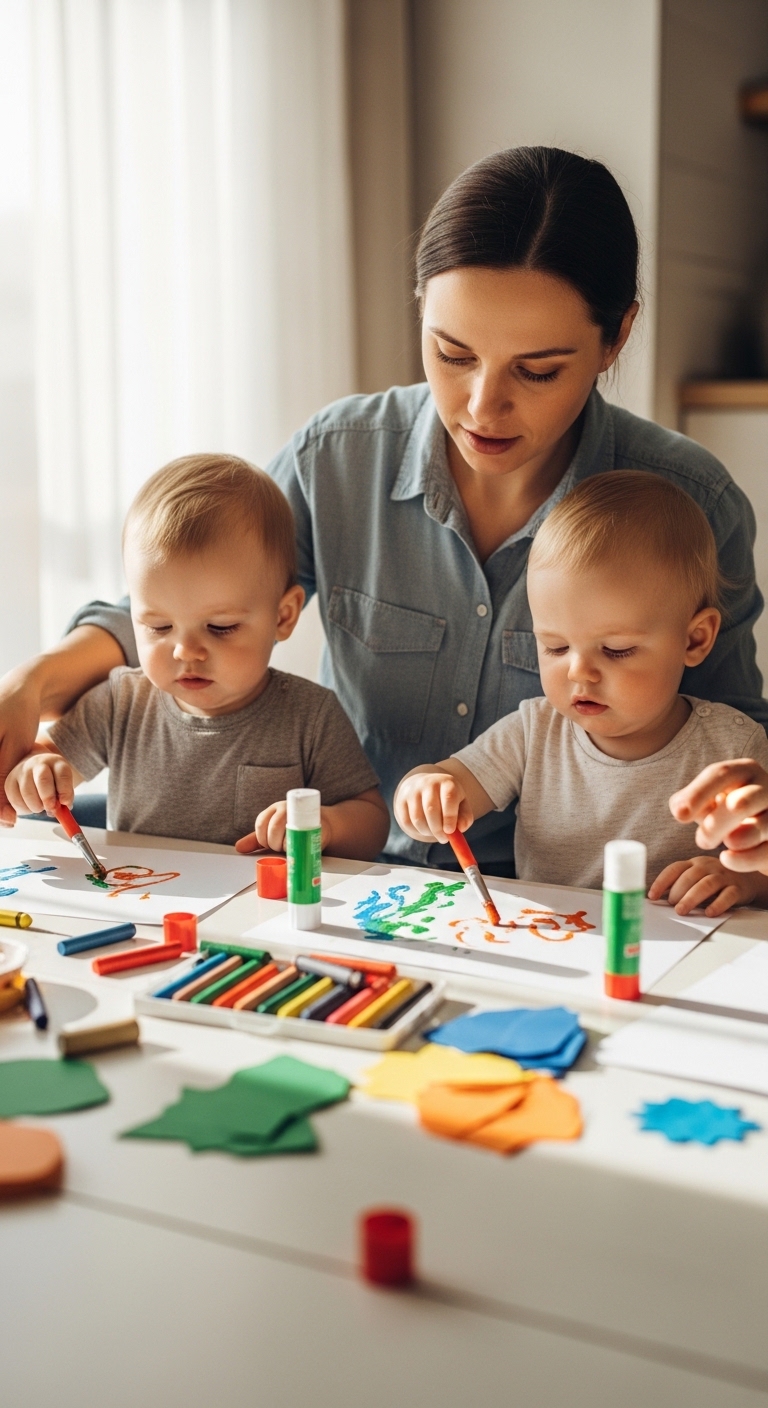
When you sit down to do a craft with your toddler, it helps to let go of the idea that it needs to be finished. At this age, learning happens in short moments, not long stretches.
Your 2-Year-Old Doesn’t Have to Finish
At around two years old, your child is still learning how to explore and focus.
- Attention spans are naturally short
- Exploration matters more than completion
- Walking away is part of learning
Even if your toddler glues a few pieces and moves on, that time still counts as progress.
Encouraging Choice Over Copying
When a toddler feels they need to replicate a result, curiosity often fades.
- They start watching instead of trying
- They worry about getting it “right”
- Creativity becomes limited
Open-ended crafts work best when your child can decide placement, colors, and textures.
Stopping Halfway Is Part of Learning
Switching activities helps toddlers regulate their energy and emotions.
- Short focus is age-appropriate
- Movement prevents frustration
- Returning later shows growing interest
Leaving a craft unfinished doesn’t mean failure, it’s a sign your child is learning at their own pace.
Discover 10 Cricut Crafts Beginners Always Struggle With- And How to Make and Sell Them — perfect for starting small and profitable.
What Progress Looks Like at Each Age
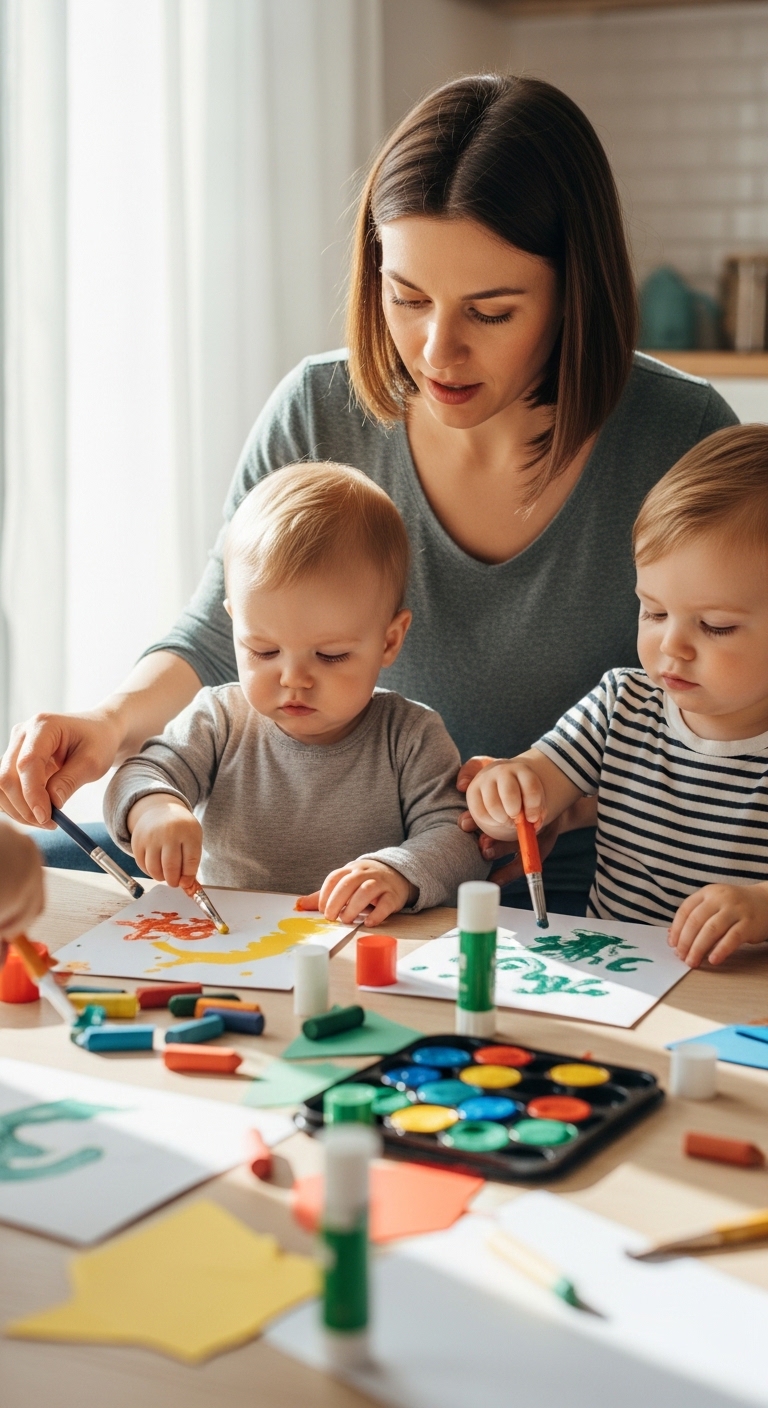
When you do crafts with your toddler, it’s easy to expect a finished product. But at this age, learning happens overtime, not in completing a project from start to finish.
At Age 1–2
- Exploration is the goal: touching materials, pressing glue, or playing with textures
- Attention spans are short, just a few minutes is enough
- Walking away or switching activities is normal and part of learning
Even if your toddler doesn’t finish, they’re practicing hand movements, coordination, and creativity.
At Age 3
- Your child can make simple choices: picking colors, placing pieces, or choosing textures
- Hands are more controlled; movements are deliberate
- They may return to the craft after a short break
Success now is effort and curiosity, not a perfect outcome.
Early Preschoolers (Age 4)
- Can follow simple steps with guidance
- Able to talk about what they’re making
- Show pride in their work, even if it’s not perfect
Here, the goal shifts slightly to confidence and independence, while still keeping crafts fun and low-pressure.
Mess, Pauses, and Switching Tasks Are Part of Learning
- Mess teaches pressure and texture
- Pauses prevent frustration
- Moving between activities supports focus and self-regulation
Flexible, age-appropriate crafts help your child learn, experiment, and feel proud, even if the project isn’t completed perfectly.
7 Farm Animal Crafts That Teach Skills to Toddlers
These farm animal crafts aren’t just about making something cute, they help your toddler grow. Each activity here is to develop fine motor skills, hand-eye coordination, sensory exploration, and early creativity, all while keeping your little one engaged.
1. Paper Plate Sheep
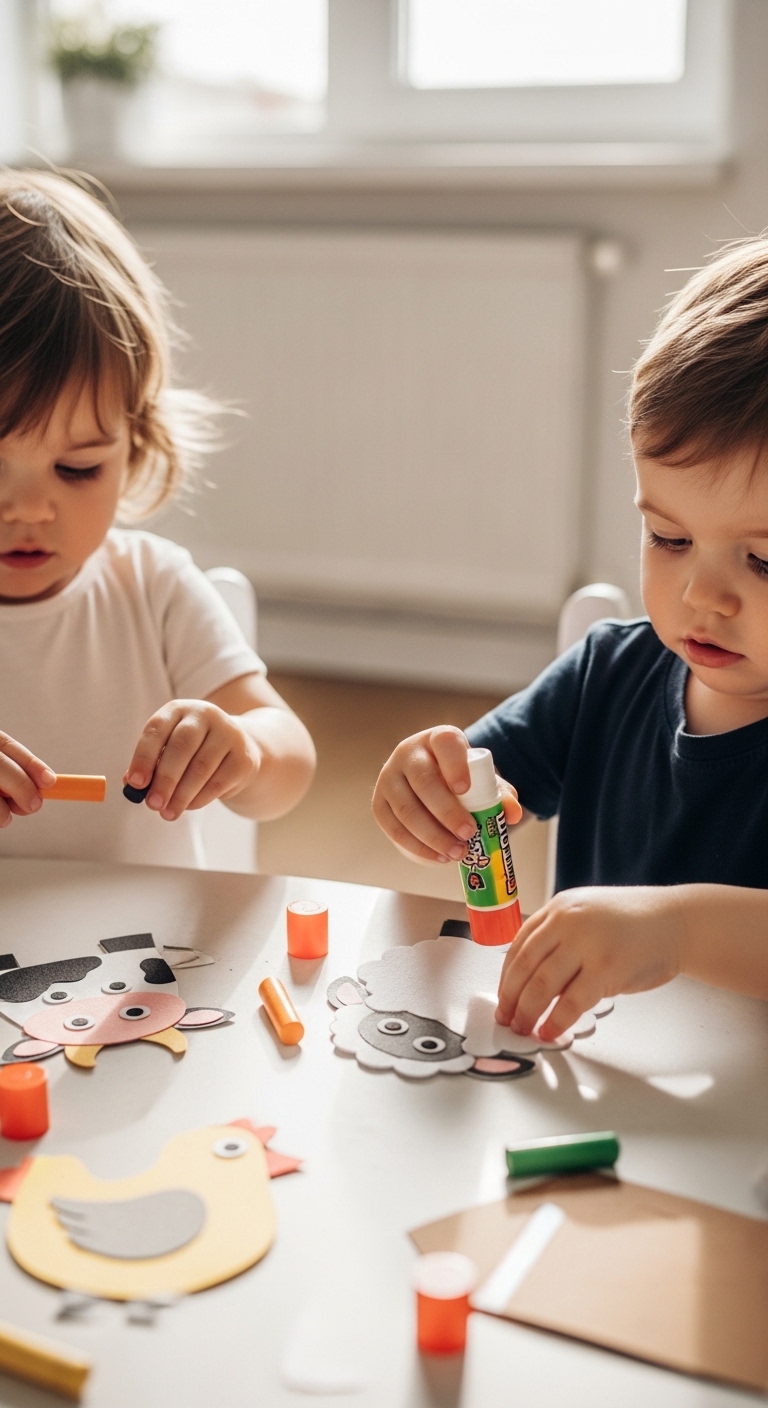
This activity is perfect for toddlers because they get to touch and feel different materials while practicing counting and learning shapes Pressing and gluing cotton balls strengthens tiny finger muscles, laying the foundation for future handwriting and feeding skills.
Materials: Paper plates, cotton balls, glue, black paper, scissors
Steps:
- Pre-cut black paper shapes for the face and legs for younger toddlers.
- Let your toddler glue cotton balls onto the plate to form the sheep’s body.
- Attach the face and legs.
- Count cotton balls together to practice numbers and sequencing.
Skills Learned:
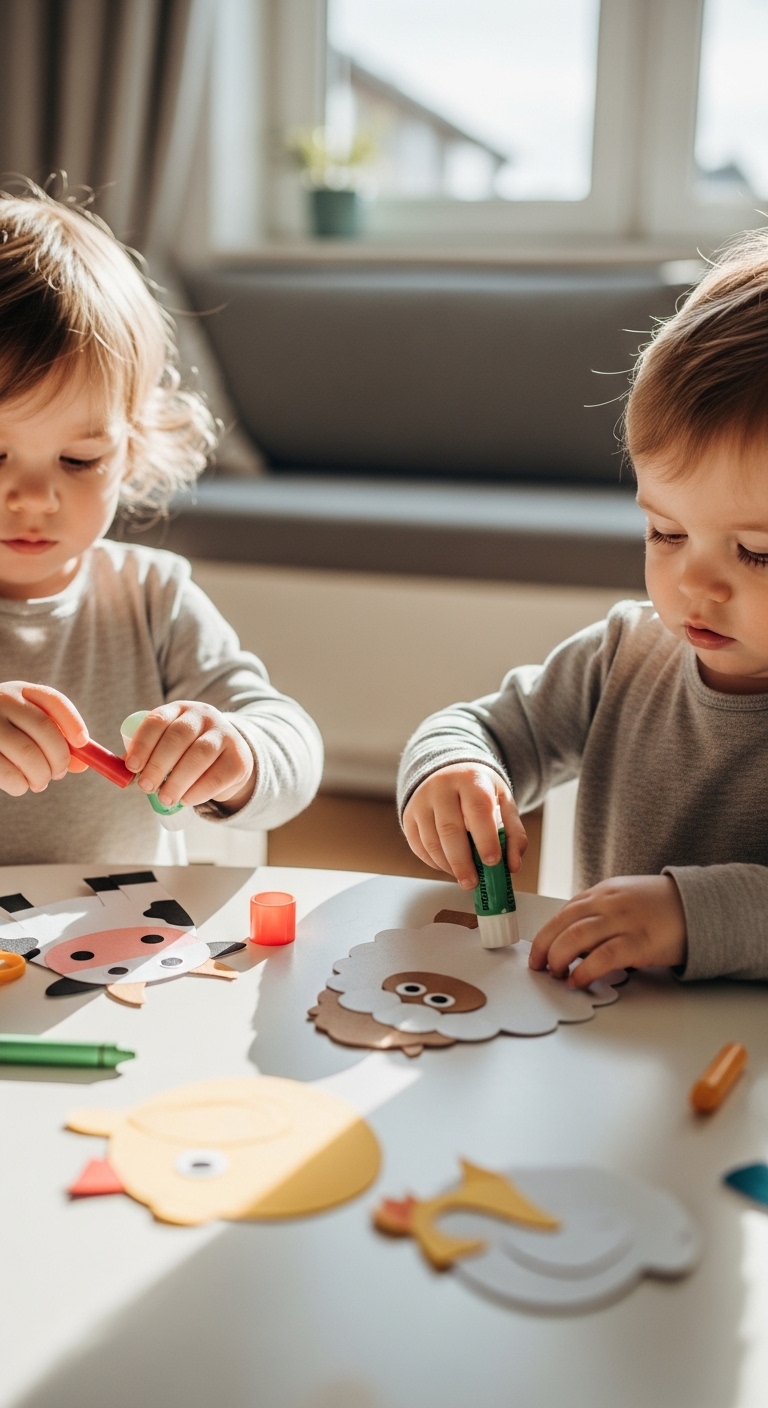
- Fine motor (finger strength and grip)
- Counting and sequencing
- Shape recognition
Why it matters: Every time your toddler presses a cotton ball onto the plate, they’re practicing the small movements their hands need to feed themselves, turn pages, or hold a crayon. It’s not about making a perfect sheep, it’s about building skills quietly while having fun.
If interest fades: Offer fewer cotton balls or let them place them freely—focus on engagement, not completion.
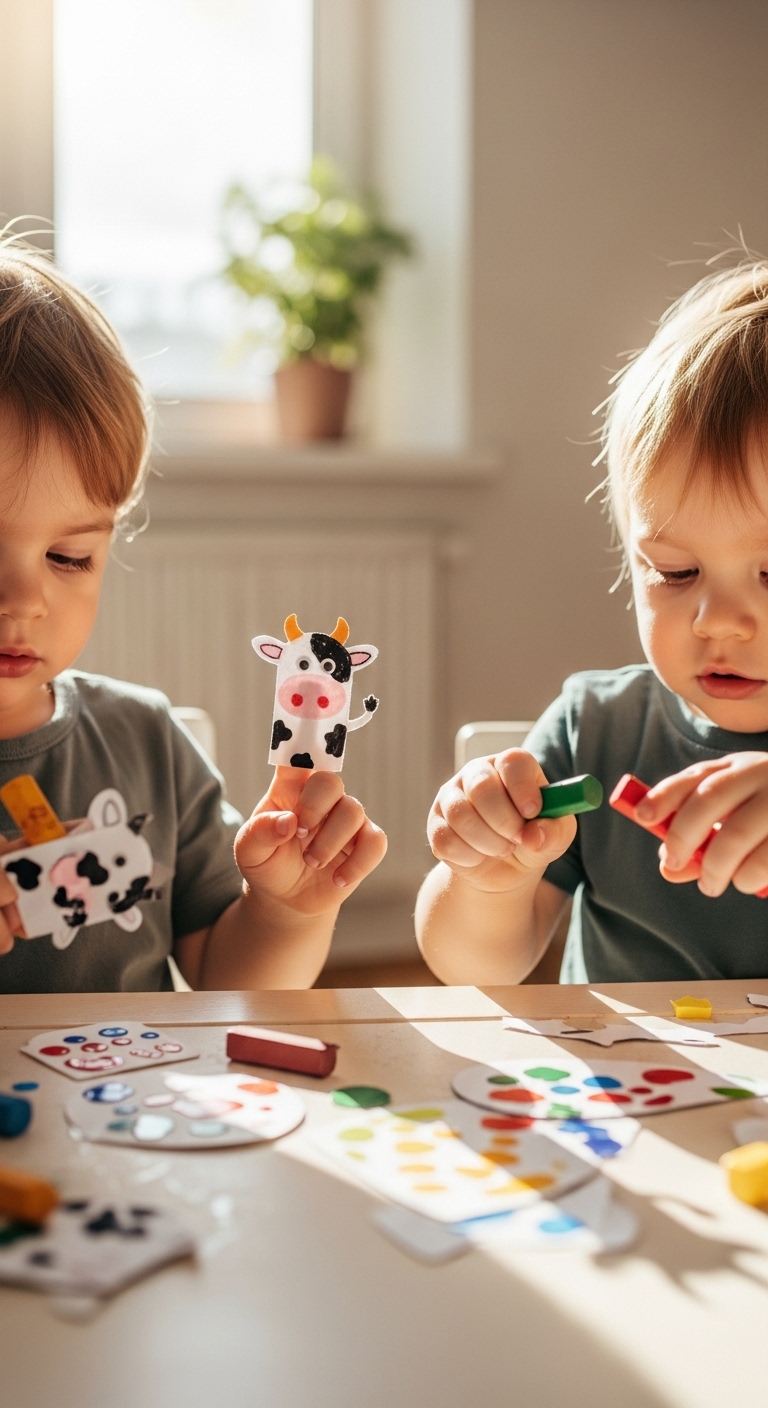
2. Cow Finger Puppets
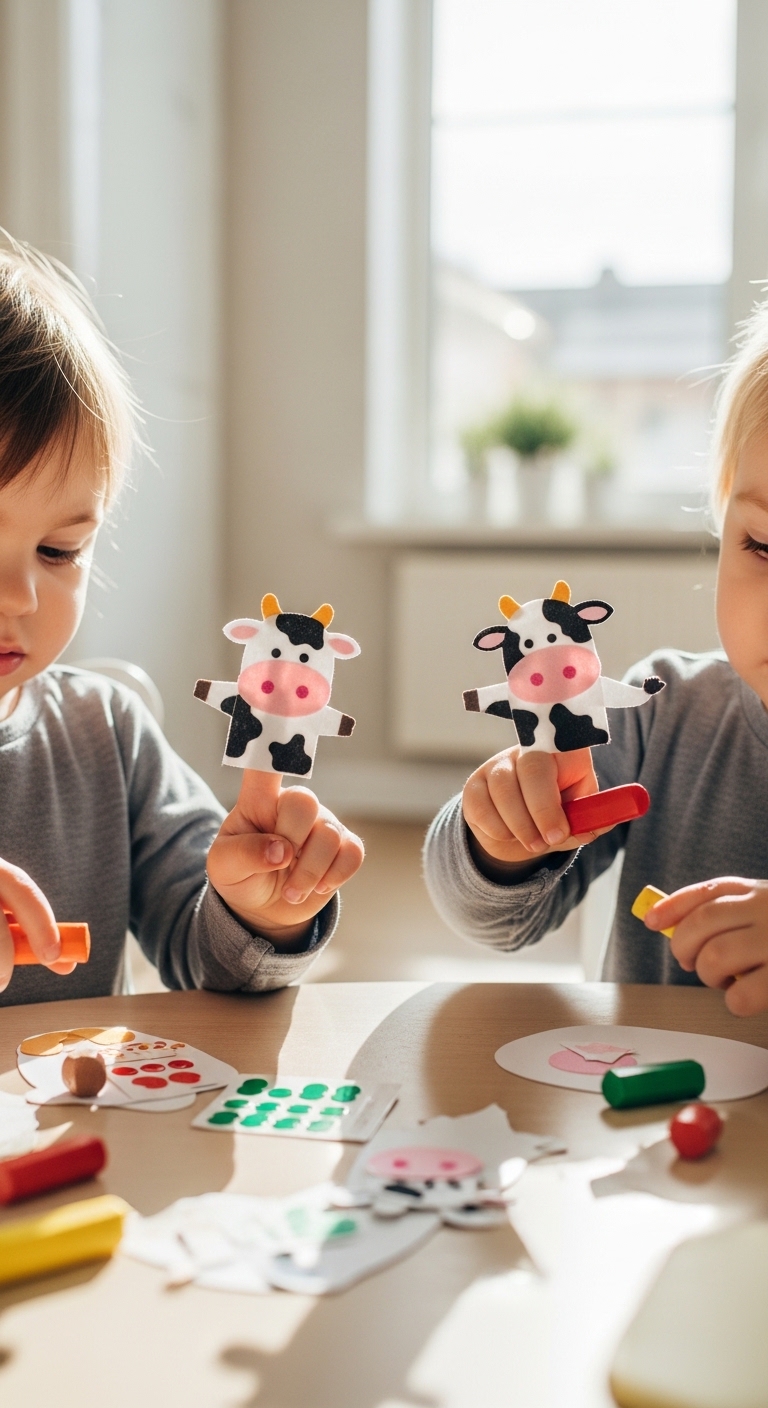
Farm animal crafts for toddlers that involve coloring, gluing, and role-playing improve fine motor control, imagination, and early language development. Using puppets encourages storytelling while your toddler practices hand-eye coordination.
Materials: Cardstock, markers, glue, popsicle sticks
Steps:
- Pre-draw or print cow shapes on cardstock.
- Let your toddler color the cow’s spots.
- Cut shapes if needed and glue to popsicle sticks.
- Act out farm stories using the puppets.
Skills Learned:
- Fine motor control
- Storytelling and imagination
- Hand-eye coordination
Why it matters: As your toddler colors spots and wiggles the puppets, they’re learning to coordinate their hands and eyes while exploring storytelling and imagination. Even a messy or funny cow is helping them practice speaking and creating.
If interest fades: Focus only on coloring or gluing; the role-play can be optional.
For more quick, hands-on activities that help build fine motor skills, check out our 10 Super Fun After-School & Homework-Friendly Crafts Kids Can Make in 20 Minutes.
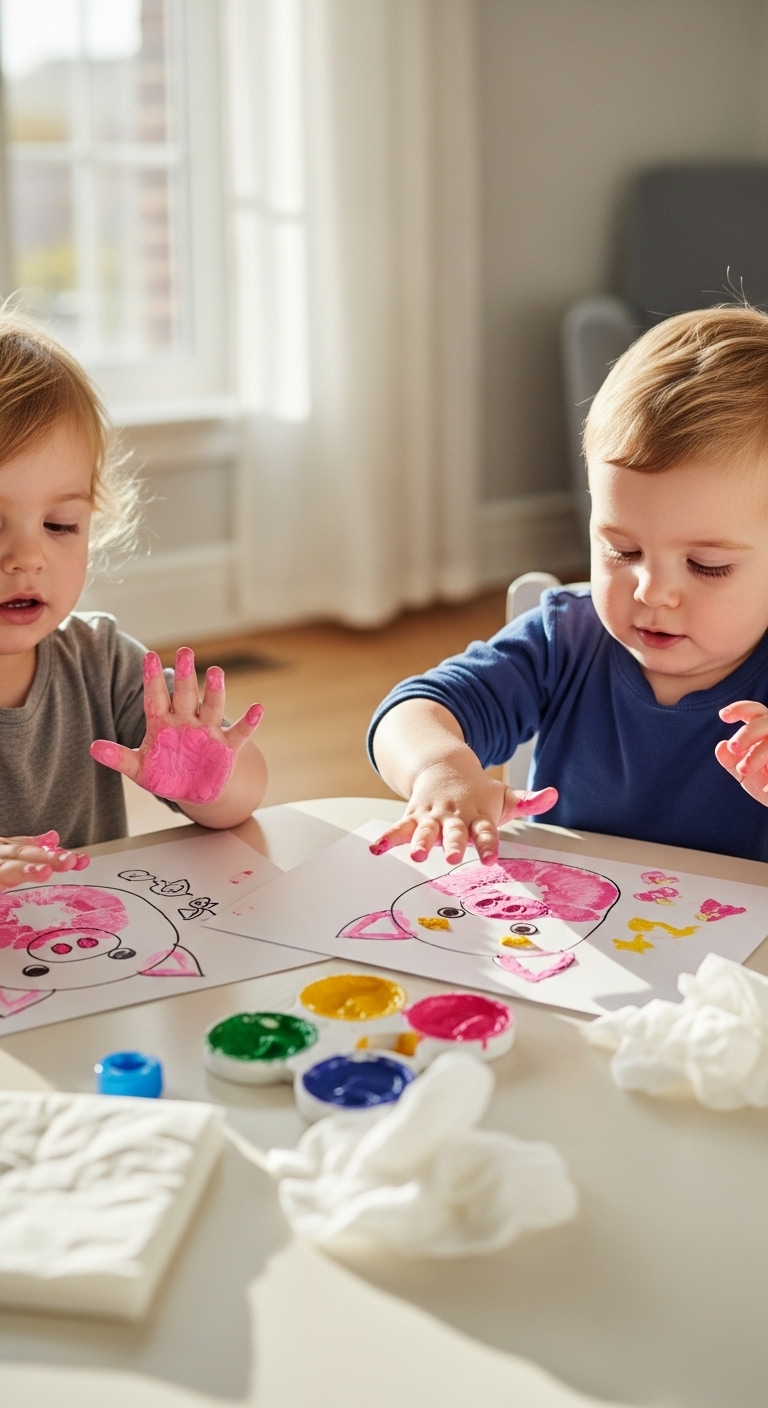
3. Piggy Handprints
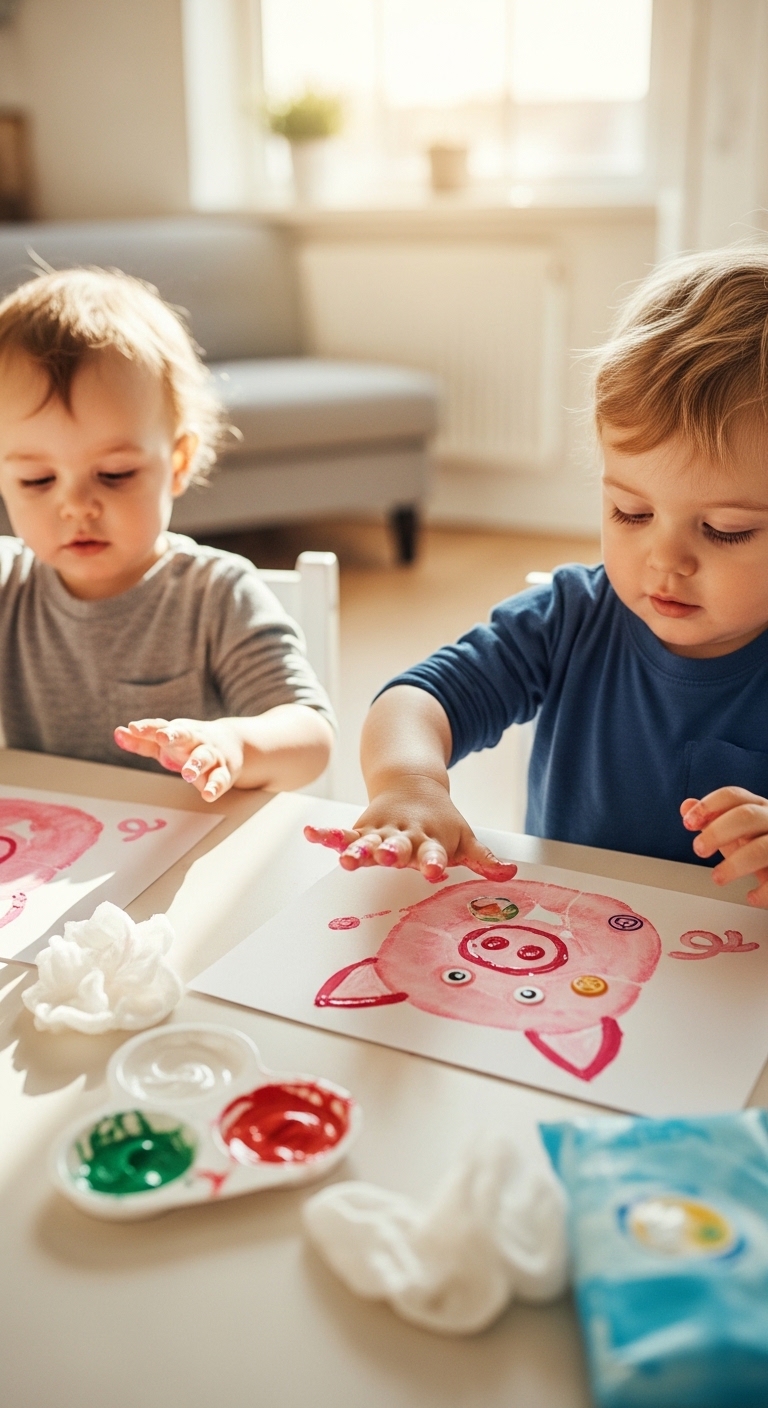
Handprint crafts are ideal for toddlers because they combine sensory play, hand-eye coordination, and color recognition. Pressing their hand into paint helps toddlers gain control of movements and explore textures safely.
Materials: Pink paint, paper, markers
Steps:
- Spread paint on a plate or tray.
- Press your toddler’s hand onto paper.
- Once dry, add details (snout, eyes, ears) with markers.
Skills Learned:
- Hand-eye coordination
- Sensory play (touch and pressure)
- Color recognition
Why it matters: Pressing hands into paint helps toddlers learn control over movement and pressure, while discovering textures and colors. These tiny skills support feeding, drawing, and manipulating toys later on.
If interest fades: Use one hand at a time or switch to finger stamping for shorter attention spans.
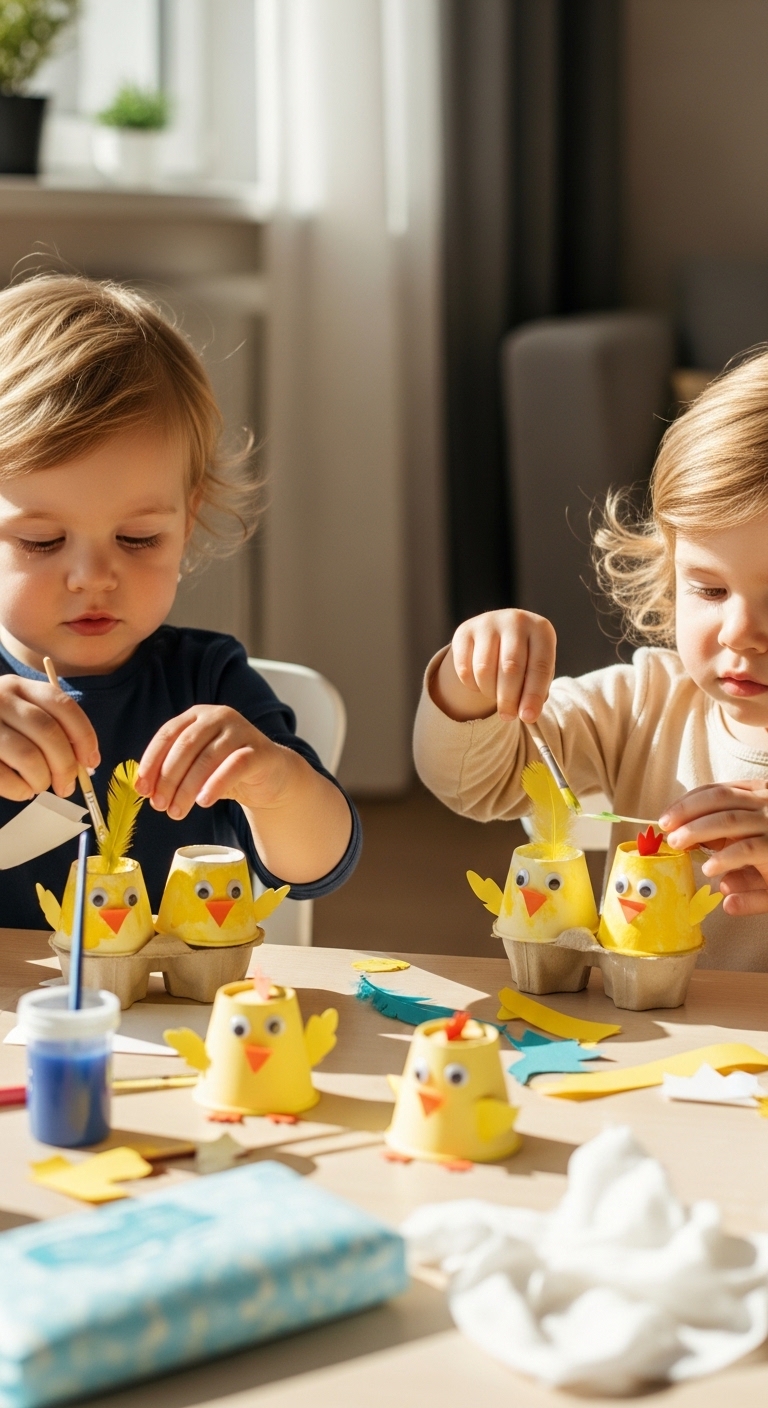
4. Egg Carton Chicks
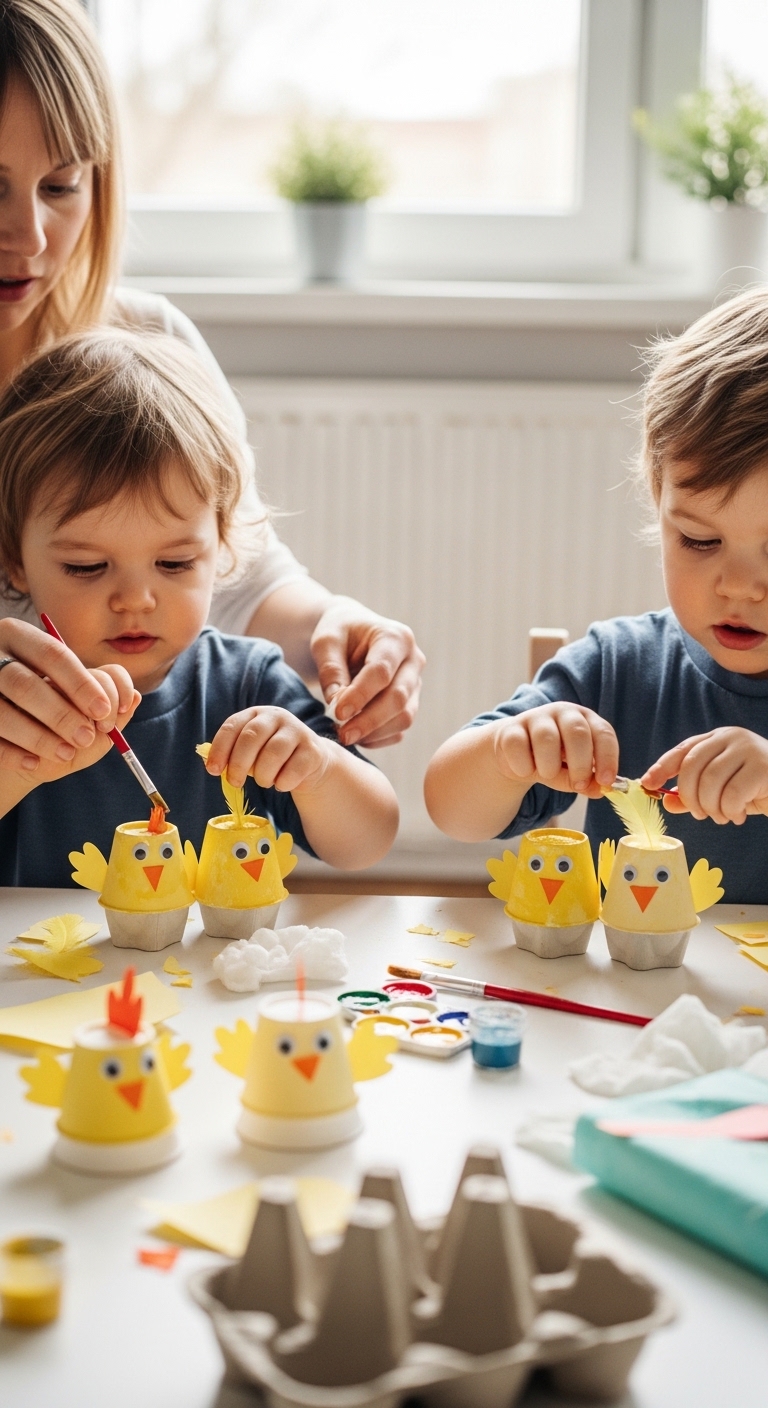
Using egg cartons for crafts helps toddlers practice cutting, gluing, and sequencing, while supporting color matching and hand-eye coordination. They also explore sensory textures and develop early planning skills.
Materials: Egg cartons, yellow paint, googly eyes, orange paper, glue, scissors
Steps:
- Cut egg carton cups apart (adult step).
- Let your toddler paint the cups yellow.
- Glue on googly eyes and pre-cut orange beaks.
- Attach wings from paper.
Skills Learned:
- Cutting (with supervision)
- Gluing and assembly
- Color matching and sequencing
Why it matters: Working in small steps, painting, gluing, adding wings, teaches toddlers how to plan and combine actions, which helps them handle routines and new tasks without frustration. Even partial participation counts as progress.
If interest fades: Allow toddlers to paint only and assist with assembly to keep it stress-free.
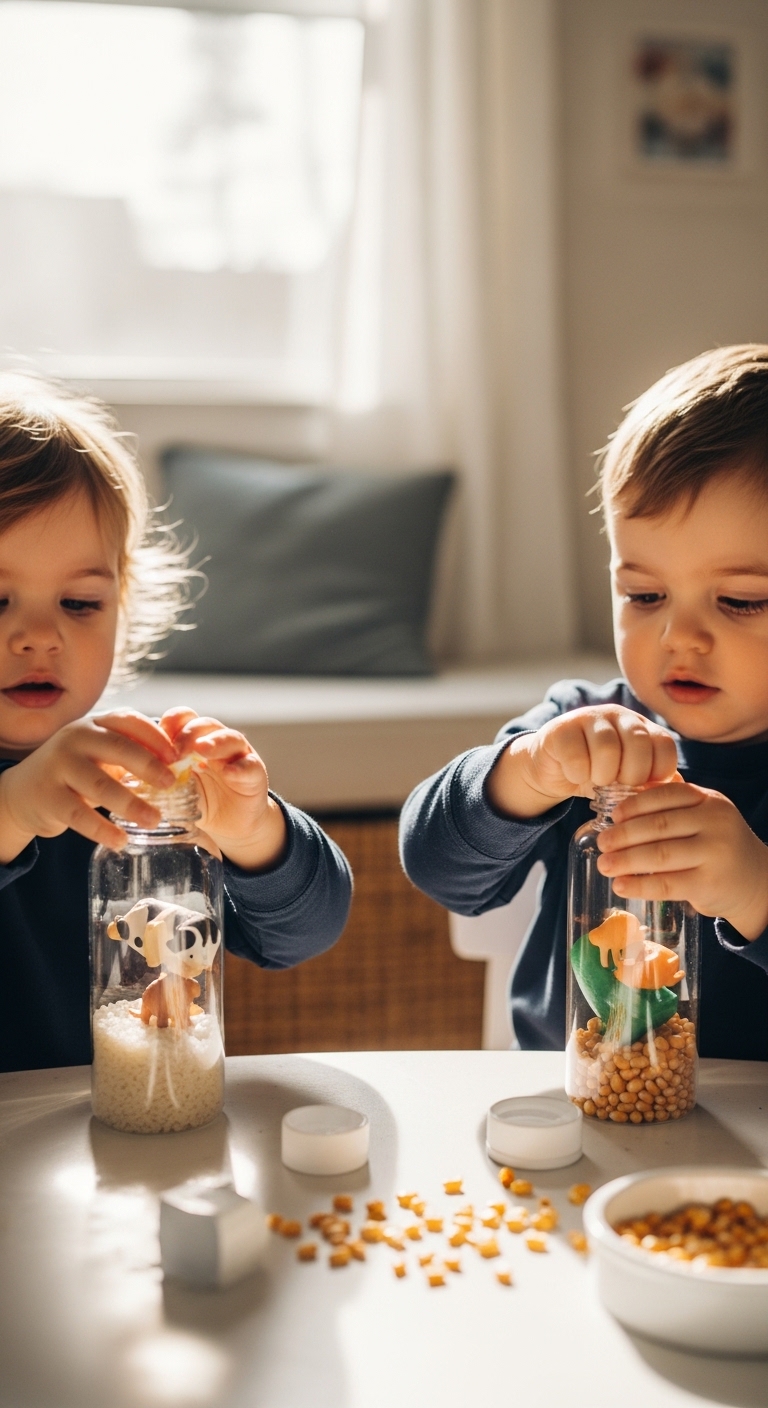
5. Barnyard Sensory Bottles
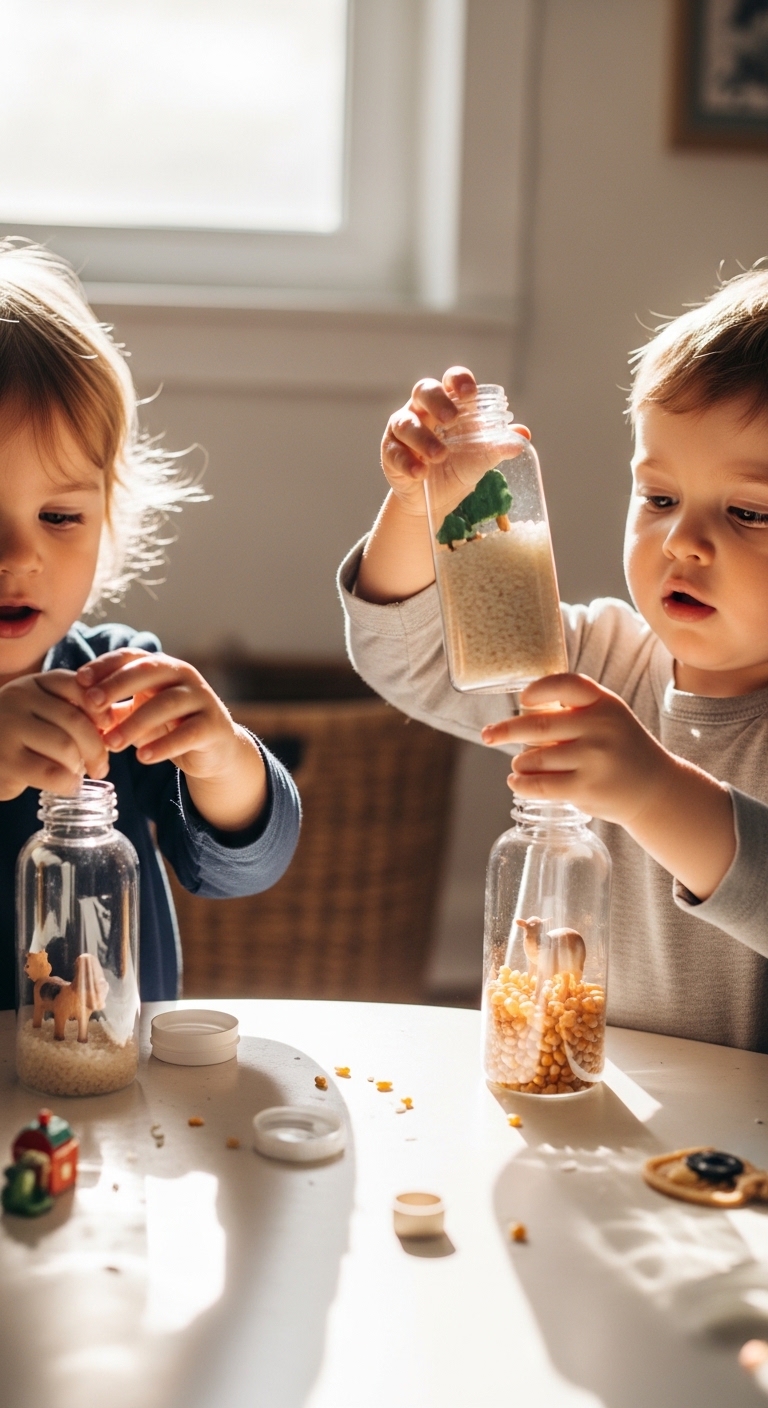
Sensory bottles teach toddlers cause-and-effect, observation skills, and imaginative play, while giving them a calming activity to explore textures and movement.
Materials: Small plastic bottles, toy farm animals, water, glitter, glue
Steps:
- Fill a bottle halfway with water.
- Add small toy animals and glitter.
- Seal the lid securely with glue.
- Let your toddler shake, turn, and watch the farm scene.
Skills Learned:
- Observation and focus
- Imaginative play
- Sensory regulation (touch and visual stimulation)
Why it matters: Watching glitter swirl and spotting animals helps toddlers calm down, focus, and practice observation. It’s a gentle way to teach cause and effect, attention, and imagination in one playful activity.
If interest fades: Focus on one bottle at a time or explore together, talking about what’s happening in the bottle.
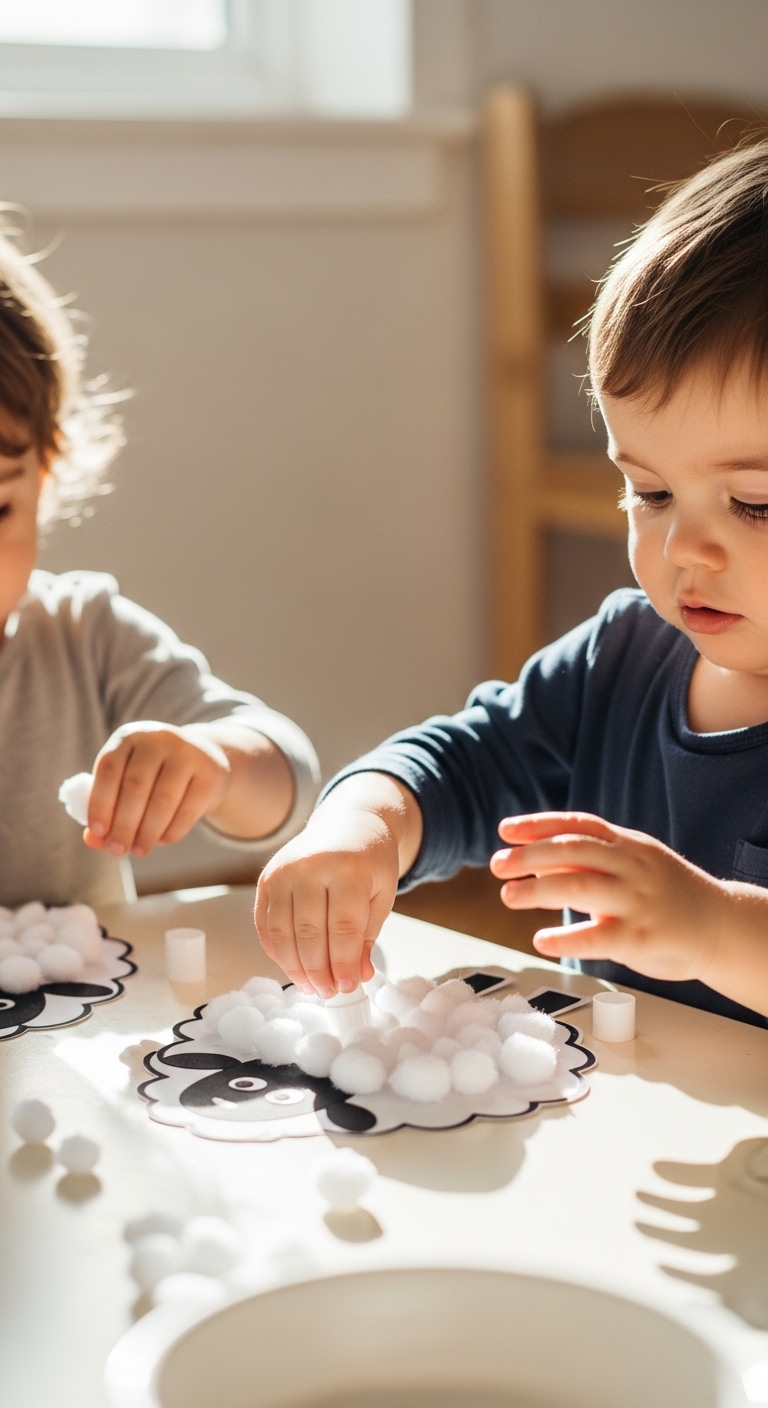
6. Sheep Pom-Pom Craft
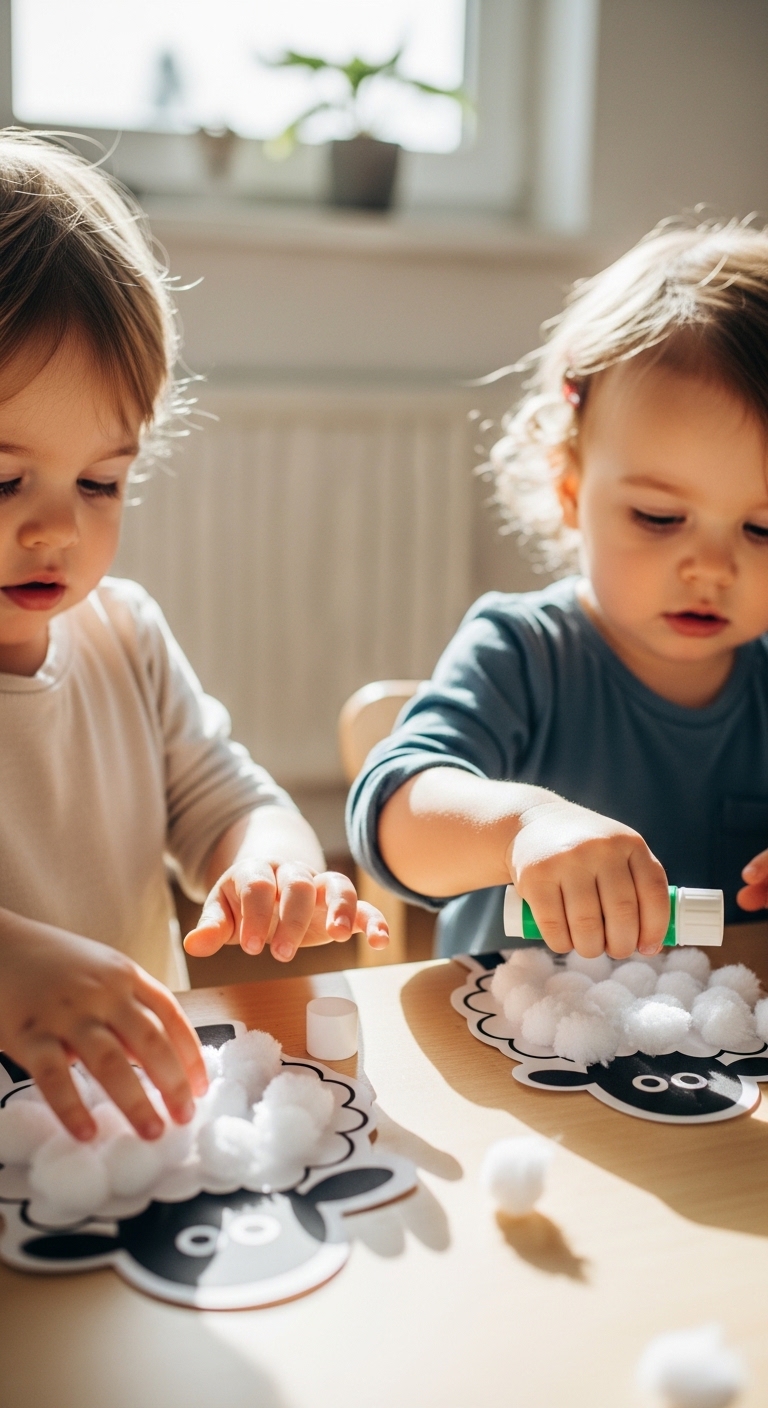
Wrapping yarn into pom-poms and gluing them onto shapes strengthens finger muscles, hand-eye coordination, and patience. It’s a craft that develops fine motor skills critical for cutting, writing, and daily tasks.
Materials: White yarn, glue, cardboard sheep outlines
Steps:
- Pre-cut cardboard sheep shapes.
- Wrap yarn into small pom-poms.
- Let your toddler glue pom-poms onto the sheep.
Skills Learned:
- Wrapping and gluing
- Fine motor coordination
- Hand-eye coordination
Why it matters: Wrapping yarn or gluing pom-poms strengthens finger muscles and hand coordination, skills toddlers need for blocks, utensils, and early writing. Each pom-pom they place gives a boost of confidence and pride.
If interest fades: Pre-make some pom-poms for toddlers to focus on placement and gluing.
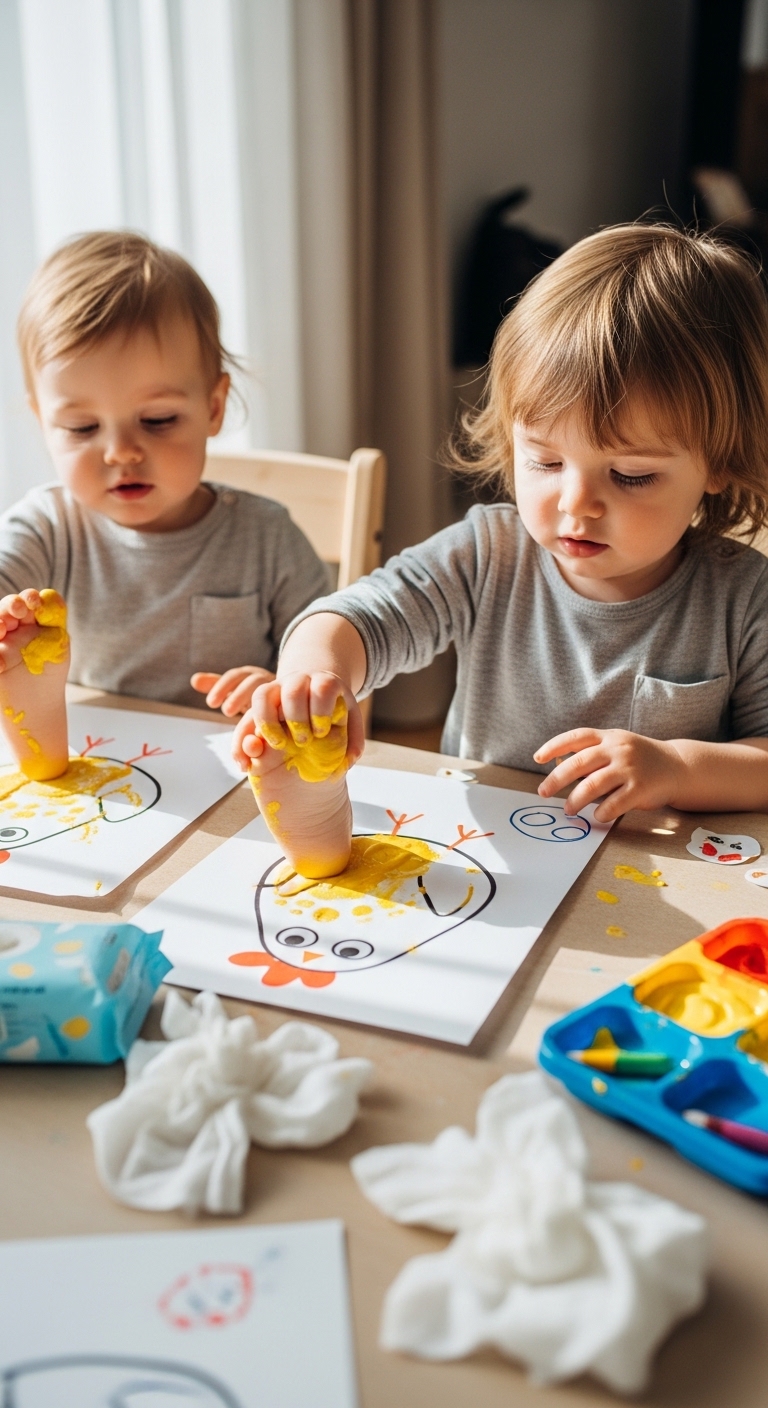
7. Chicken Footprint Art
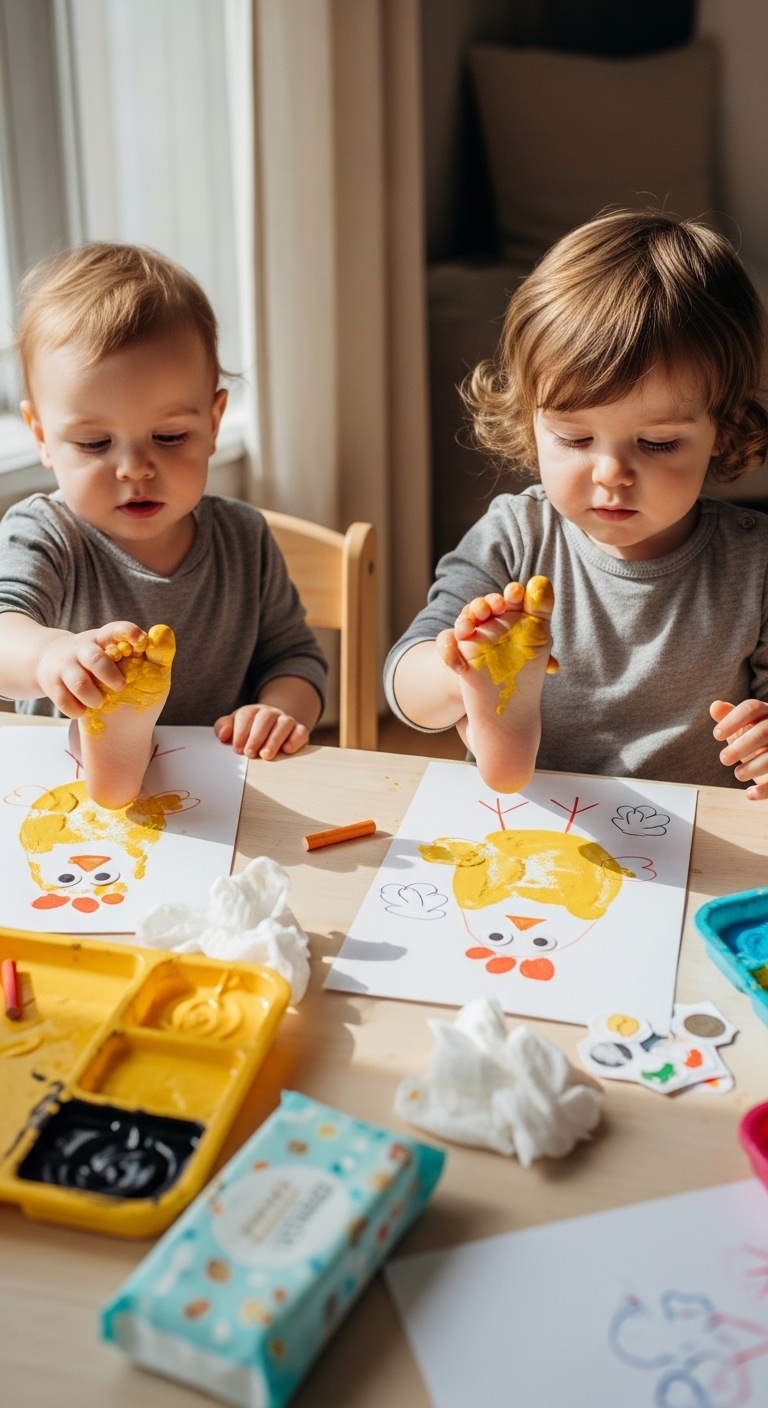
Using feet or hands in painting builds sensory awareness, body awareness, and early pattern recognition. It’s a fun, messy way for toddlers to learn cause-and-effect while exploring textures and pressure control.
Materials: Yellow paint, paper, markers
Steps:
- Spread paint on a plate or tray.
- Press your toddler’s foot or hand into paint and stamp onto paper.
- Once dry, add details like beaks or wings.
Skills Learned:
- Sensory play (touch and pressure)
- Pattern recognition
- Coordination and creativity
Why it matters: Stamping little feet or hands in paint teaches toddlers body awareness, coordination, and cause-and-effect. It’s messy, yes, but every footprint is a lesson in how their actions make things happen.
If interest fades: Use one foot or hand at a time, or switch to finger stamping for shorter bursts of attention.
How to Make Farm Animal Crafts for Toddlers Safe and Fun
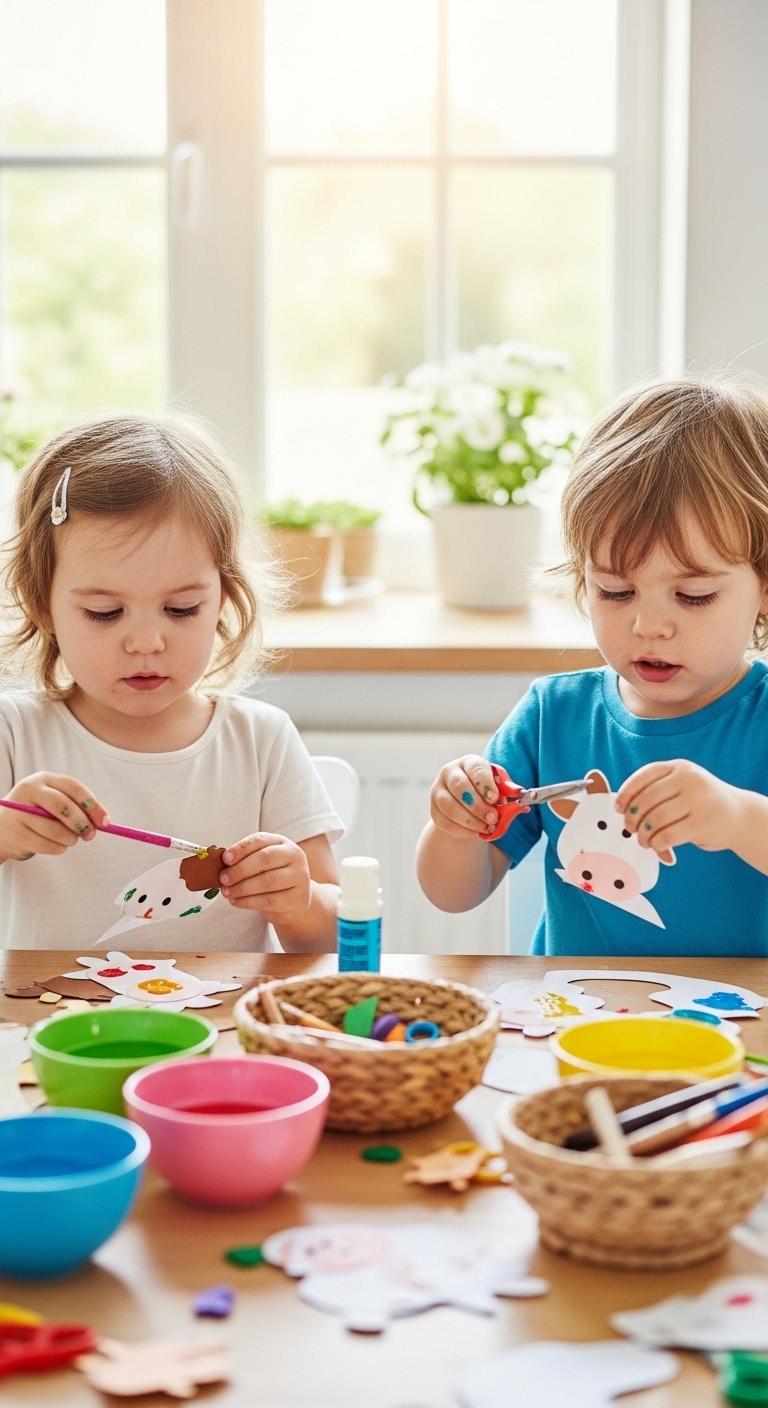
When you’re guiding your little one through farm animal crafts for toddlers, safety and enjoyment are just as important as learning. Toddlers are curious and eager, so setting up a safe, stress-free environment helps them explore confidently while you teach new skills.
Here’s how to do it :
1. Use Toddler-Safe, Non-Toxic Materials
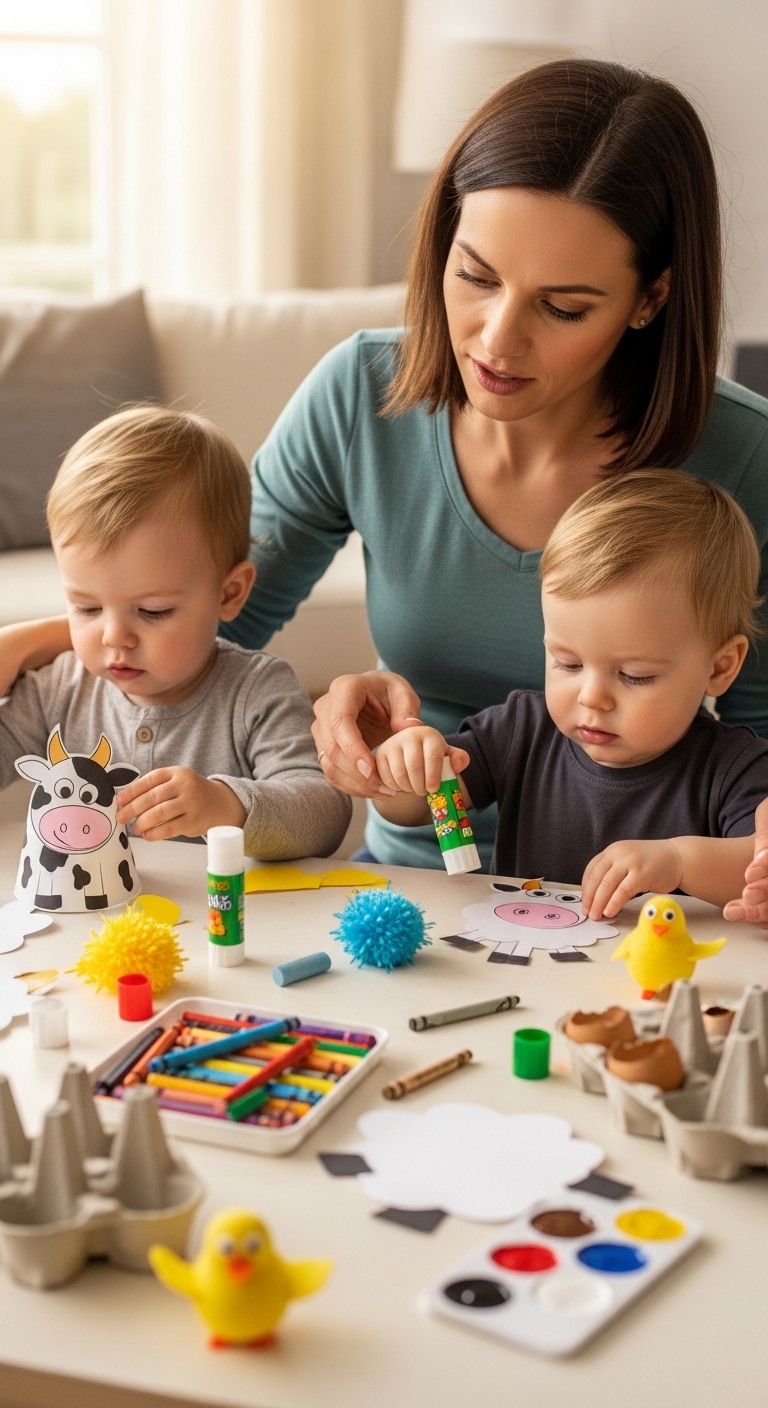
Choose paints, markers, glue, and other supplies that are non-toxic and safe if touched or tasted. Toddlers explore with their hands, and sometimes mouths, so this protects them while letting them learn through sensory play.
Tip: Look for washable paints and glue sticks, it keeps mess low while encouraging creativity.
2. Keep Scissors and Glue Age-Appropriate
If your toddler is under 3, stick to safety scissors or pre-cut shapes. For gluing, thicker glue sticks are easier for little hands to hold and control. This helps develop fine motor skills without frustration or injury.
Tip: Let them practice squeezing glue on paper or pom-poms, it strengthens fingers and builds confidence for future crafts.
3. Set Up a Washable Workspace
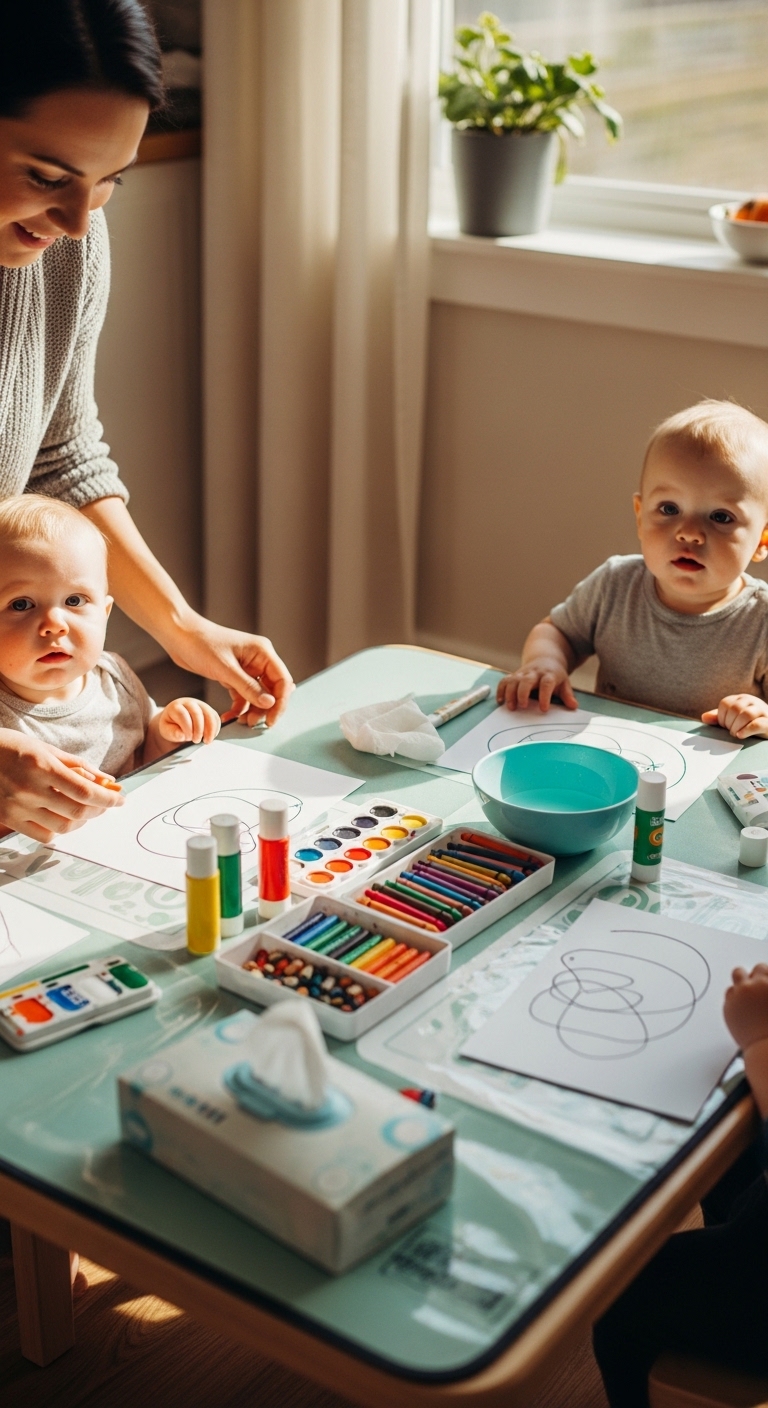
Cover tables with a mat, newspaper, or an old towel. This makes cleanup fast and stress-free, letting you focus on teaching and guiding your toddler, not scrubbing paint off furniture.
Tip: Keep wet wipes and a small bowl of water nearby for quick hand cleaning, toddlers can explore textures safely while staying comfortable.
These crafts are designed for toddlers who move quickly from one activity to another, similar to our Spring DIY Projects You Can Start, Stop, and Pick Up Again Without Losing Progress.
4. Encourage Exploration, Not Perfection
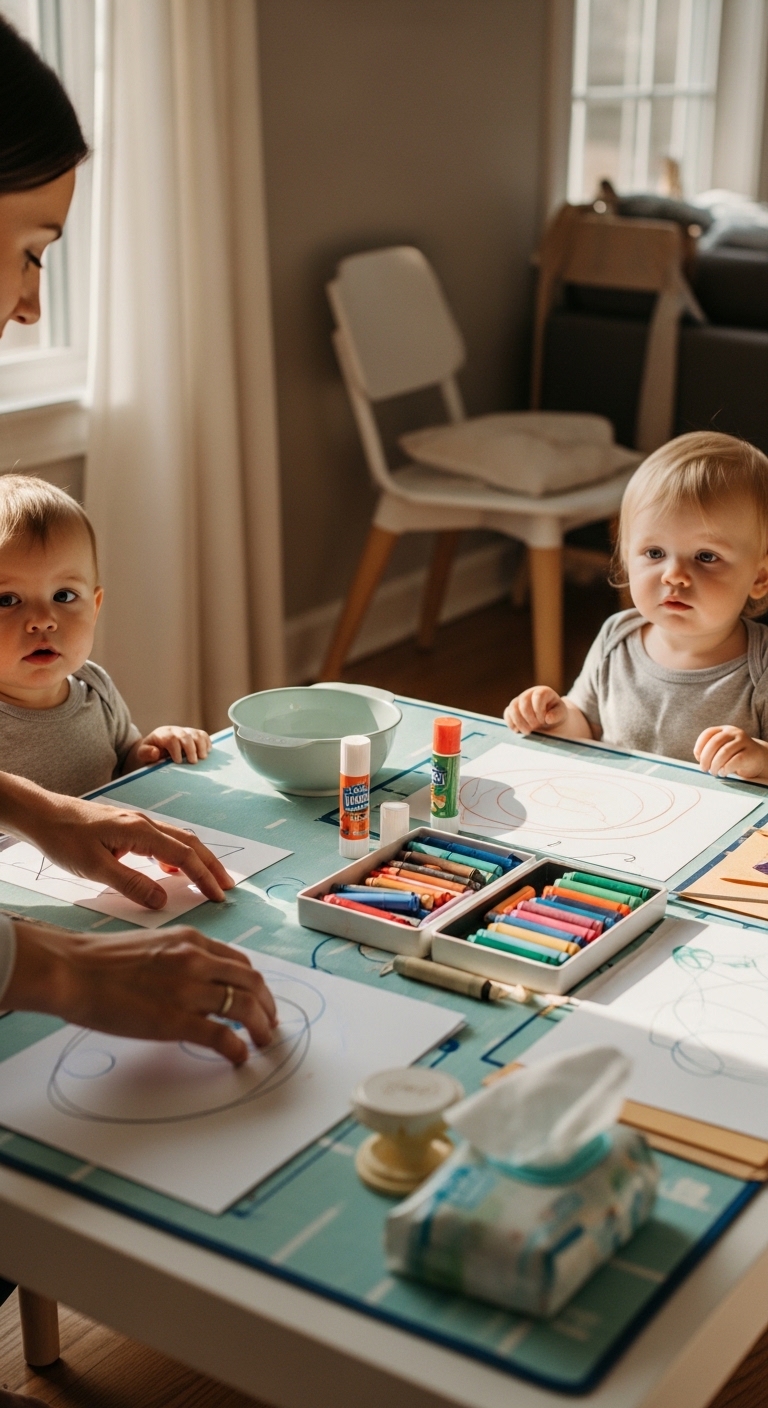
The goal of farm animal crafts for toddlers isn’t a perfect sheep, pig, or cow. Let your child choose colors, textures, and placement freely. This boosts creativity, problem-solving, and confidence.
Tip: Celebrate small wins: “You pressed the cotton balls so carefully!” or “Look at all the colors you used!” , this encourages effort and curiosity over exact results.
How Farm Animal Crafts for Toddlers Support Independent Play Over Time
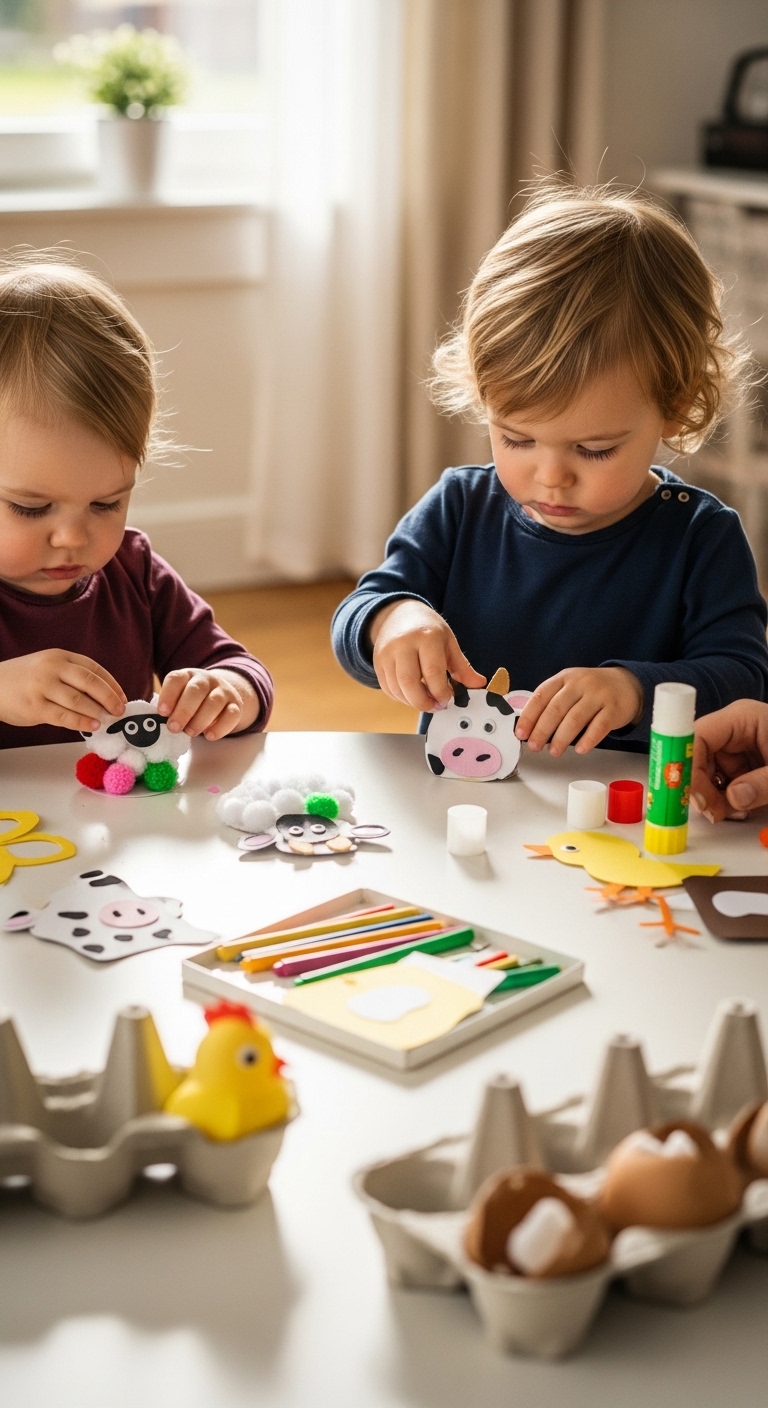
One of the hidden gems of farm animal crafts for toddlers is that they do more than build tiny muscles or creativity, they help your child learn to play and explore on their own. This is a huge win for parents, because it gradually gives you short, stress-free moments while your toddler engages independently.
1. Repeated Crafting Builds Focus
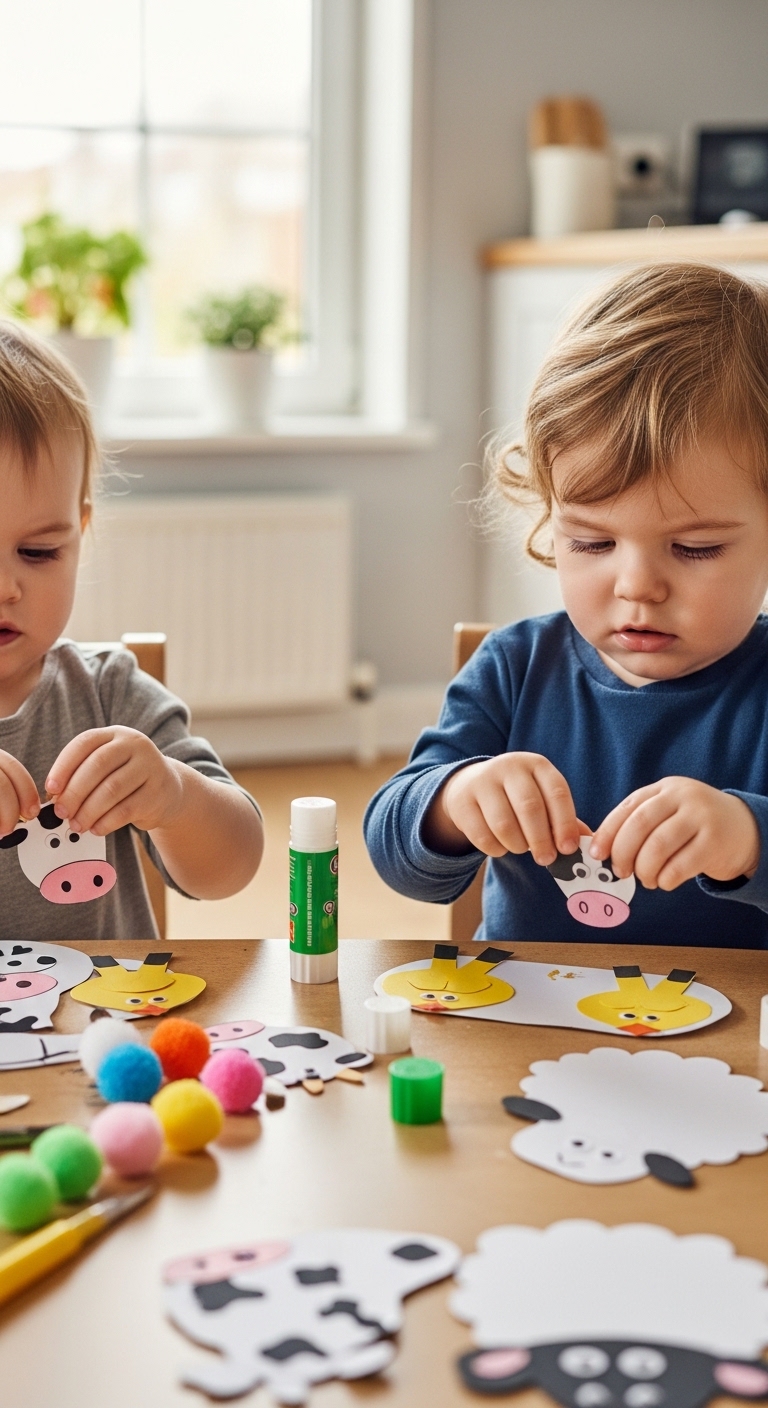
When toddlers paint, glue, or stamp animals repeatedly, their attention span naturally grows. Even a few minutes of focused crafting teaches them to stick with a task, notice details, and finish small steps. Over time, this translates into longer stretches of independent play, whether it’s puzzles, blocks, or pretend farm scenes.
Tip: Encourage short, guided sessions at first, then gradually step back while your toddler continues the activity on their own.
2. Toddlers Start Initiating Activities on Their Own
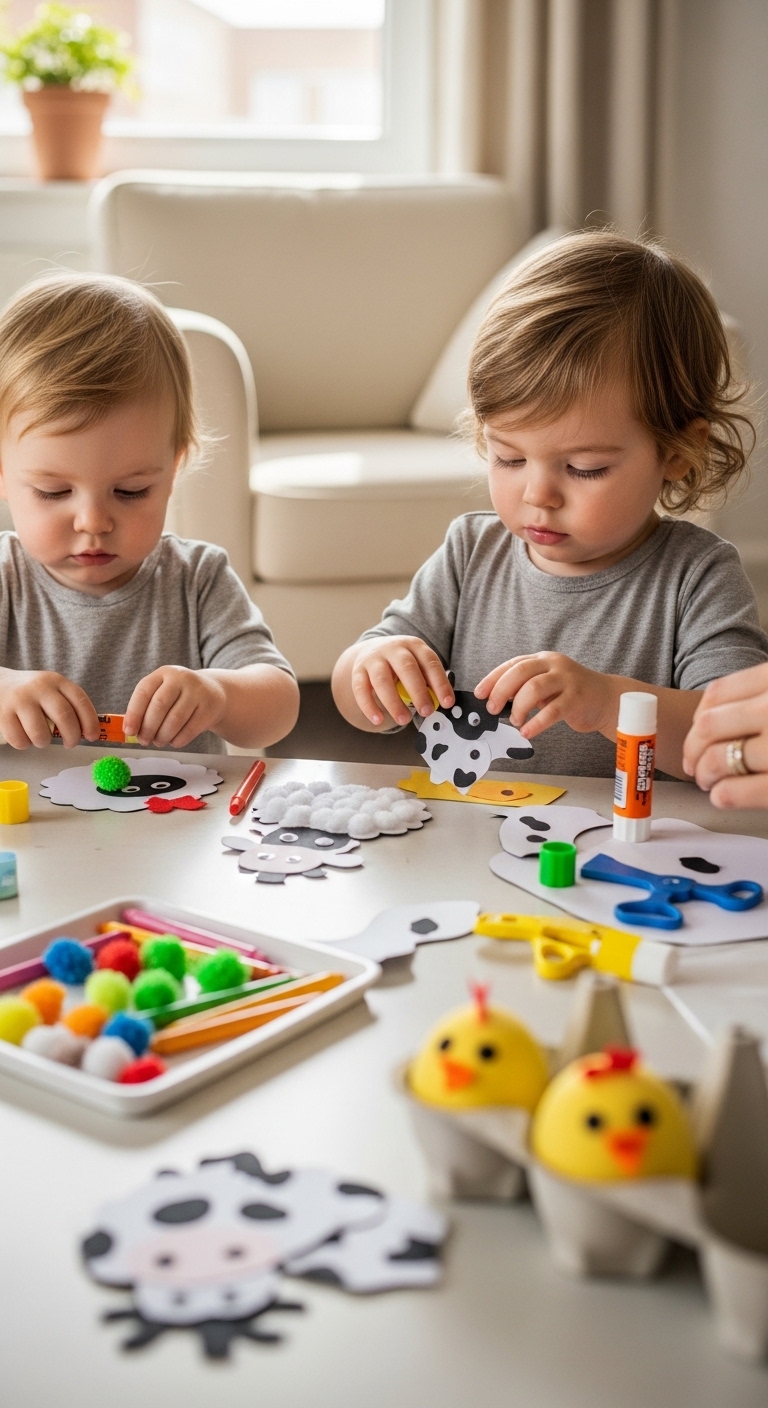
After a few sessions of farm animal crafts for toddlers, many children begin asking to paint, glue, or play with pom-poms without prompting. They remember favorite materials and start making choices independently, choosing colors, textures, or animals. This fosters confidence, decision-making, and curiosity, all essential for learning.
Tip: Keep a small, accessible craft basket or area ready so your toddler can initiate projects safely.
3. Parents Can Enjoy Short Breaks
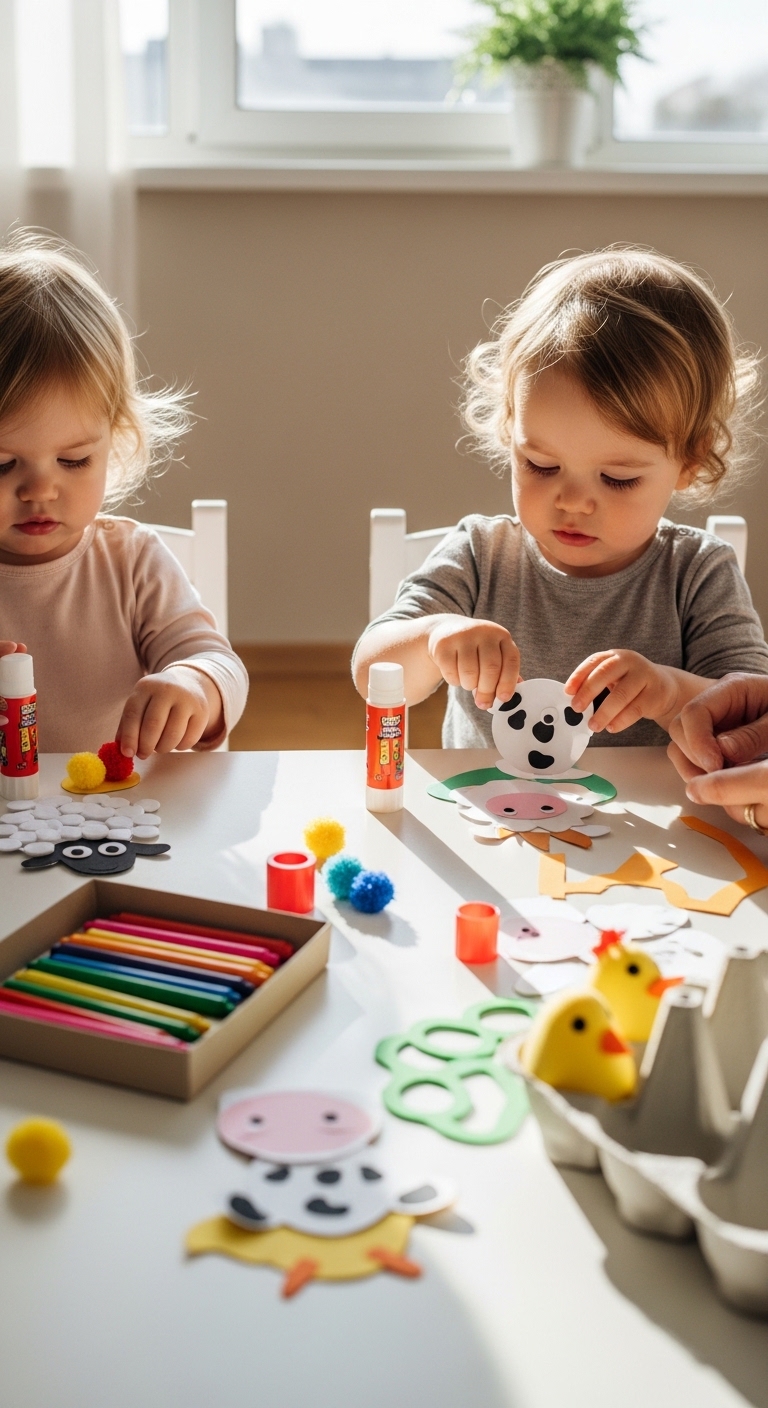
It’s not about leaving your toddler alone for hours, it’s about giving them a safe, engaging activity they can manage for a few minutes while you handle a small task, sip coffee, or reset the space. Knowing your child is learning, exploring, and building skills independently makes these short breaks guilt-free and productive.
Tip: Start with guided craft time, then slowly reduce support as your toddler gains confidence. Celebrate their independent effort!
Parent Reflection Tips: Track Learning
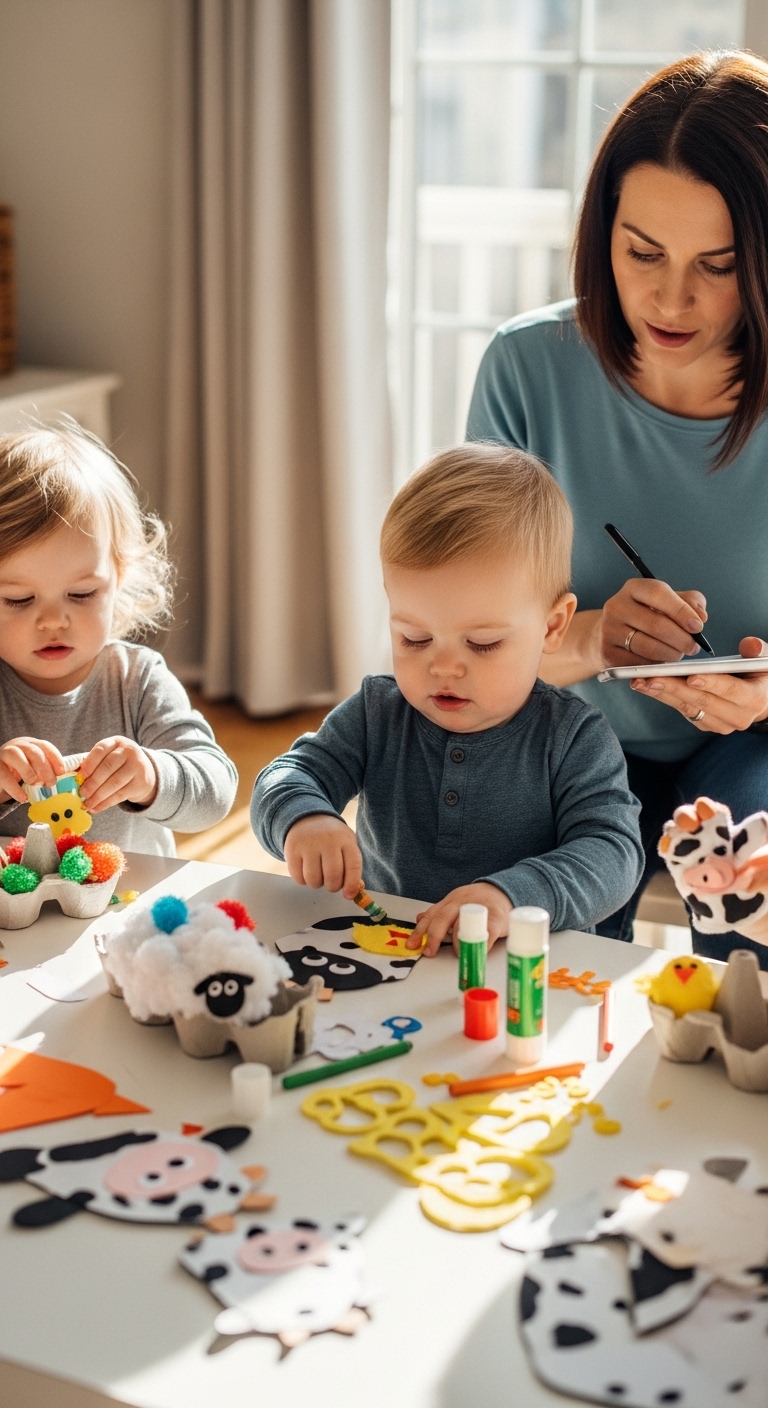
One of the best ways to see real progress and learning is to keep a mini observations journal while your toddler plays and creates.
When doing farm animal crafts for toddlers, jotting down little notes helps you notice patterns, preferences, and new skills, turning craft time into a powerful learning experience.
Examples to track:
- Notice which textures my toddler prefers, soft cotton or sticky glue.
- They chose the yellow chicken first—color choices show curiosity and preference.
- They concentrated for 5 minutes before switching—attention span and focus is developing.
What You’re Really Seeing: Observing and recording these small moments shows you how farm animal crafts for toddlers are building fine motor skills, sensory awareness, and problem-solving, even in short play sessions. It also helps you celebrate progress over time, instead of focusing only on the final craft.
A Little Tip: Use a small notebook or phone notes to quickly record observations. Over weeks, you’ll notice patterns in skill-building, creativity, and independent play, giving you confidence in your child’s learning journey.
Even if you don’t feel crafty, these farm animal crafts for toddlers are simple and fun, you can also try our DIY Projects for People Who Don’t Feel Crafty at All for more easy, stress-free activities.
Common Toddler Challenges During Farm Animal Crafts (and How to Handle Them)
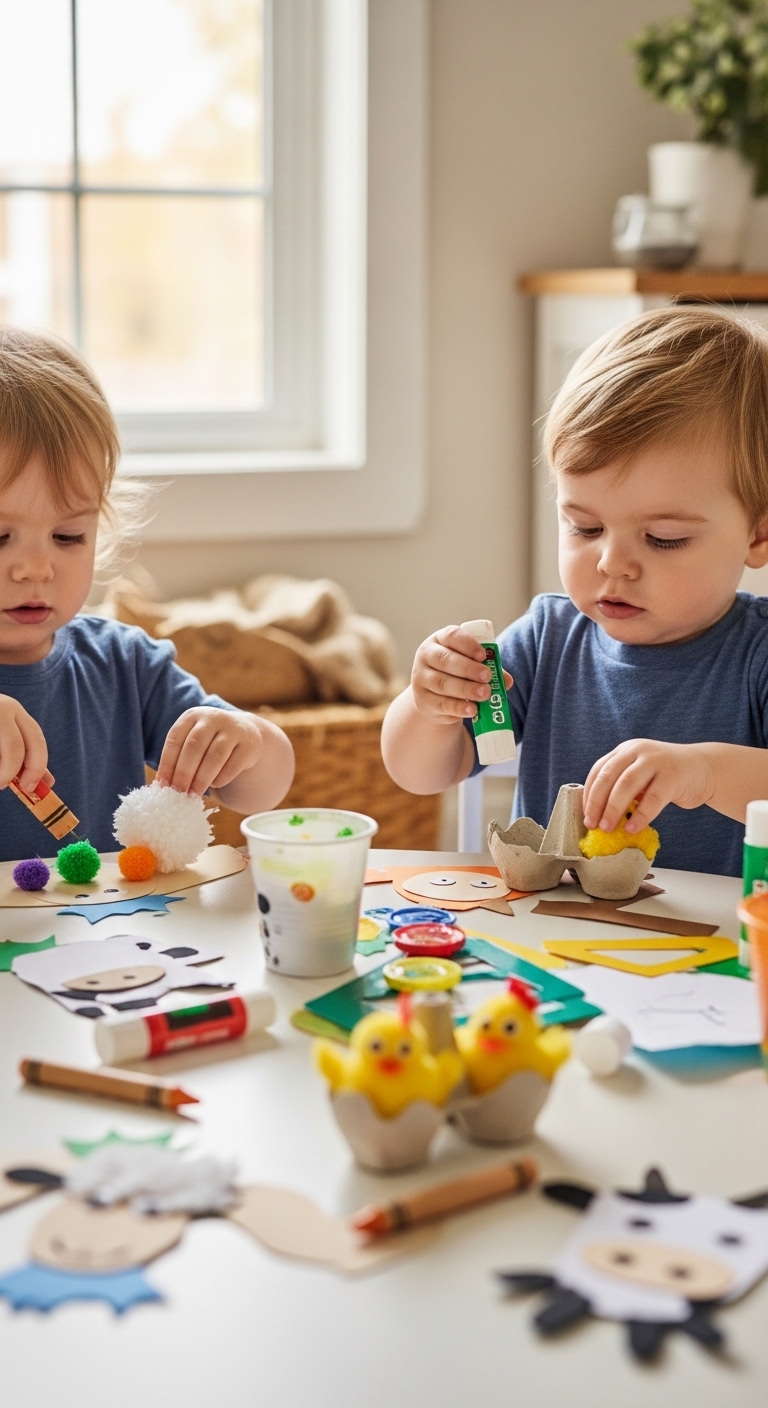
Even with farm animal crafts for toddlers, it’s normal for little ones to act unpredictably. You might notice:
- They abandon the craft halfway.
- They smear paint everywhere.
- They taste or eat glue or other materials.
- They refuse scissors or markers.
How to handle it:
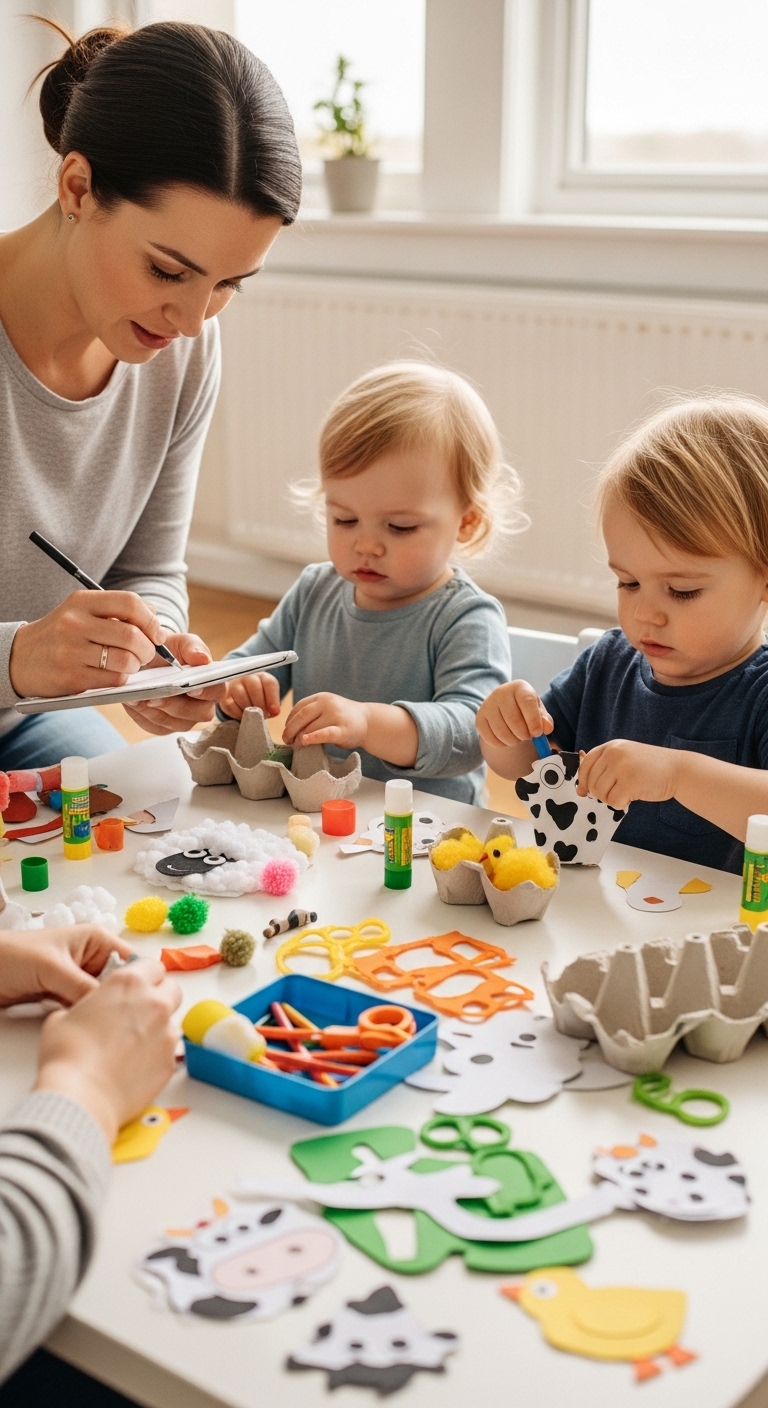
- Let them switch tasks, short bursts of focus are normal.
- Offer supervised sensory-friendly alternatives like sponge painting instead of messy glue.
- Use non-toxic, toddler-safe materials so tasting isn’t dangerous.
- Pre-cut shapes or provide age-appropriate tools to reduce frustration.
What This Really Shows:: These “challenges” are actually learning moments, your toddler is exploring textures, testing coordination, and learning boundaries. Handling them calmly builds confidence and makes crafting fun, safe, and educational.
Conclusion
Farm animal crafts for toddlers are more than just cute projects, they’re a way to build skills, confidence, and independence while having fun. Every smear of paint, glued cotton ball, or handprint is a learning moment that strengthens fine motor skills, hand-eye coordination, sensory awareness, and early language.
By using safe materials, guiding gently, and celebrating effort over perfection, you’re showing your toddler that creativity is fun and learning is natural.
Over time, these simple activities also encourage independent play, problem-solving, and curiosity, giving you small moments to step back while they explore and grow.
Remember, the goal isn’t a perfect craft, it’s the joy, confidence, and skills your child gains along the way. With these crafts, every messy, colorful moment becomes a step toward curiosity, independence, and lifelong learning.