5 Clothing Alterations I Stopped Paying a Tailor For (DIY Made Easy)
Tired of expensive tailors?this guide on 5 Clothing Alterations I Stopped Paying a Tailor For (DIY Made Easy) shows how to fix your clothes yourself..
Paying a tailor can get expensive, and sometimes small fixes don’t need professional help. The truth is, with basic tools and a little guidance, you can do many clothing alterations at home.
This guide will show you 5 alterations I started doing myself, why they’re simple, and how they save time and money. Even if you’ve never sewn before, these tips will help you feel capable and confident in making small adjustments to your clothes.
By the end, you’ll understand:
-
How to make basic adjustments at yourself
-
Which tools actually help
-
Simple techniques that don’t require professional skills
- When you should use a tailor
Now, I handle these small fixes myself, and you can too. No stress, no wasted money, just clothes that can actually still fit.
If saving money on tailoring is your goal, you should also read: Understanding Fabrics for Sewing: Choosing the Right Material for Every Project
What Clothing Alterations Actually Mean (and Why They’re Not as Intimidating as They Sound)
When most people hear “clothing alterations” or “tailoring fixes,” it sounds complicated, like something only a professional tailor can handle. But here’s the truth: clothing alterations are just small adjustments or simple fixes you make so your clothes fit your body better. A little hem here, taking in a seam there, shortening a sleeve, nothing magical nor scary.
Ever tried on something you really liked, only to hesitate because one small fit problem might mean another trip (and extra dollars) at the tailor? That tiny worry can turn a piece you love into one you leave behind, until you learn how easy alterations can be.
These “tiny adjustments” can make a huge difference in how your clothes look and feel, and many are beginner-friendly, meaning you can do them yourself with just a few simple tools.
Think of alterations like small clothing hacks: a minor change can turn a piece you almost loved into something you actually adore wearing. Once you know the basics, clothes that once felt frustrating suddenly become comfortable, flattering, and wearable, without breaking the bank.
If you found this helpful, check out: 15 Genius Ways to Upcycle Old Clothes Into Trendy New Outfits
When You Should Still Use a Tailor
While many clothing alterations are surprisingly easy to do yourself, there are times when bringing your clothes to a professional tailor is the smarter choice. Being honest about this not only saves frustration, it keeps your wardrobe looking sharp.
✅ Expensive fabrics like silk, cashmere, or delicate linens can easily be damaged if you try to alter them yourself. A professional tailor knows how to handle these materials without leaving marks or ruining the garment.
✅ Formal wear — Your suits, blazers, evening dresses, or wedding outfits, often requires precise tailoring that’s difficult to replicate at home. Even a small misstep can throw off the fit or the structure, which is why trusting a tailor here is worth it.
✅ Structural changes, like taking in the body of a coat, resizing a jacket, or altering a lined dress, often require special tools and sewing skills. Attempting these adjustments on your own can be frustrating, time-consuming, and sometimes costly if mistakes happen.
Knowing when to use a tailor keeps your DIY clothing alterations practical and stress-free. It ensures that your wardrobe stays wearable, flattering, and in excellent condition, while letting you handle the smaller, beginner-friendly fixes yourself.
Before you move on, see: What to Wear on Valentine’s Day Based on Your Plans — Dinner, Staying In, or Galentine’s
5 Clothing Alterations I’ll Never Pay a Tailor For Again
1. Shortening Pants Without a Full Hem
Video credit: @ Women Style
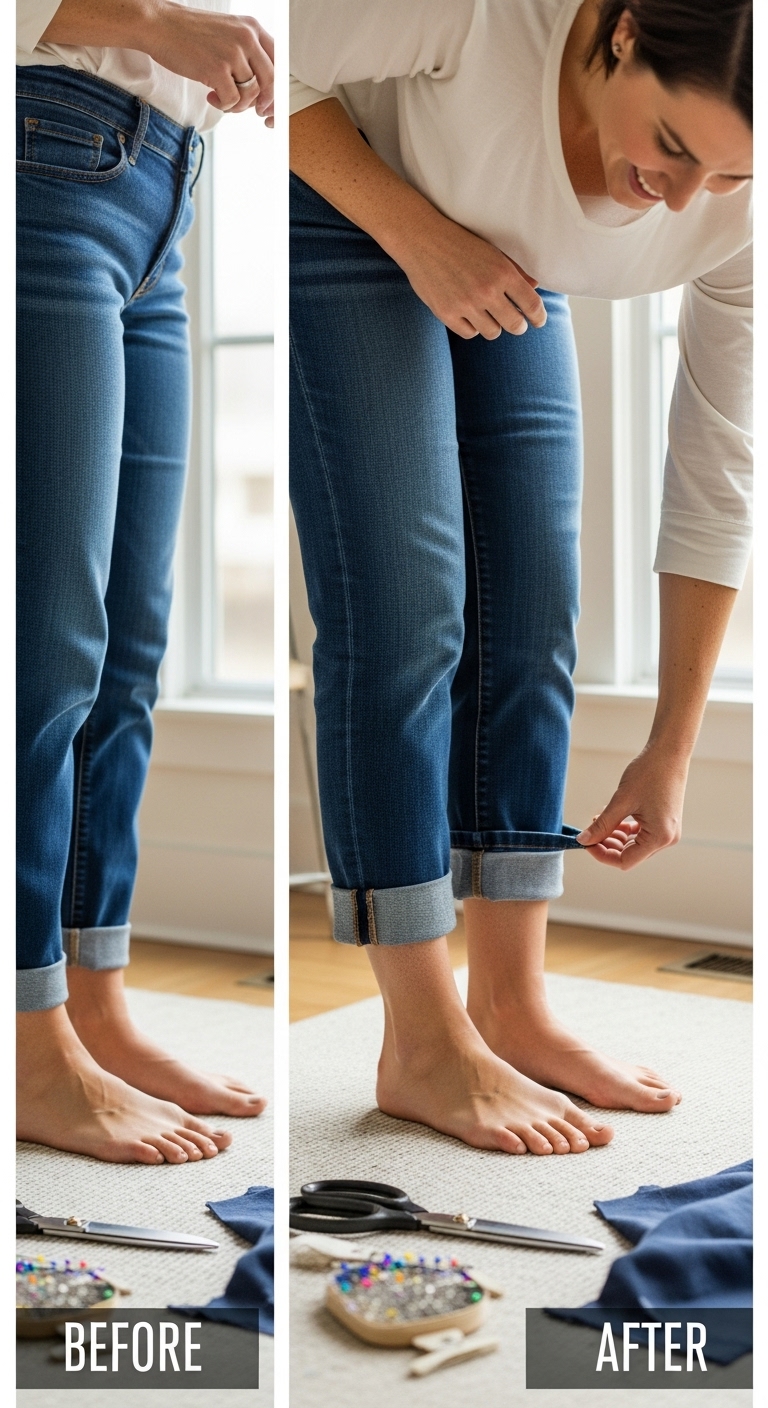
Most tailors charge anywhere from $20–$40, which can feel like a lot for a simple adjustment, especially when it’s something you can handle at home. In Nigeria, the same fix usually costs around ₦1,500–₦3,500, depending on the city and tailor.
For straight-leg or slim-fit pants, you can fold the bottom of the pant leg to the right length and secure it with a needle and thread or even fabric glue for a temporary fix. The process is simple, and the result looks clean, no professional skills required.
Who this works best for:
- Straight-leg or slim-fit pants
- Casual fabrics like cotton, linen, or polyester blends
- Pants you want to wear immediately without waiting for a tailor
One mistake beginners make: folding the hem unevenly or cutting too much at once. Measure twice, fold carefully, and pin before sewing or gluing. A little patience here goes a long way.
This alone saved me more money than I expected, and it gave me the confidence to tackle other small clothing alterations myself.
2. Taking In a Loose Waist (Without Rebuilding the Garment)
Video credit: @ Feee;)
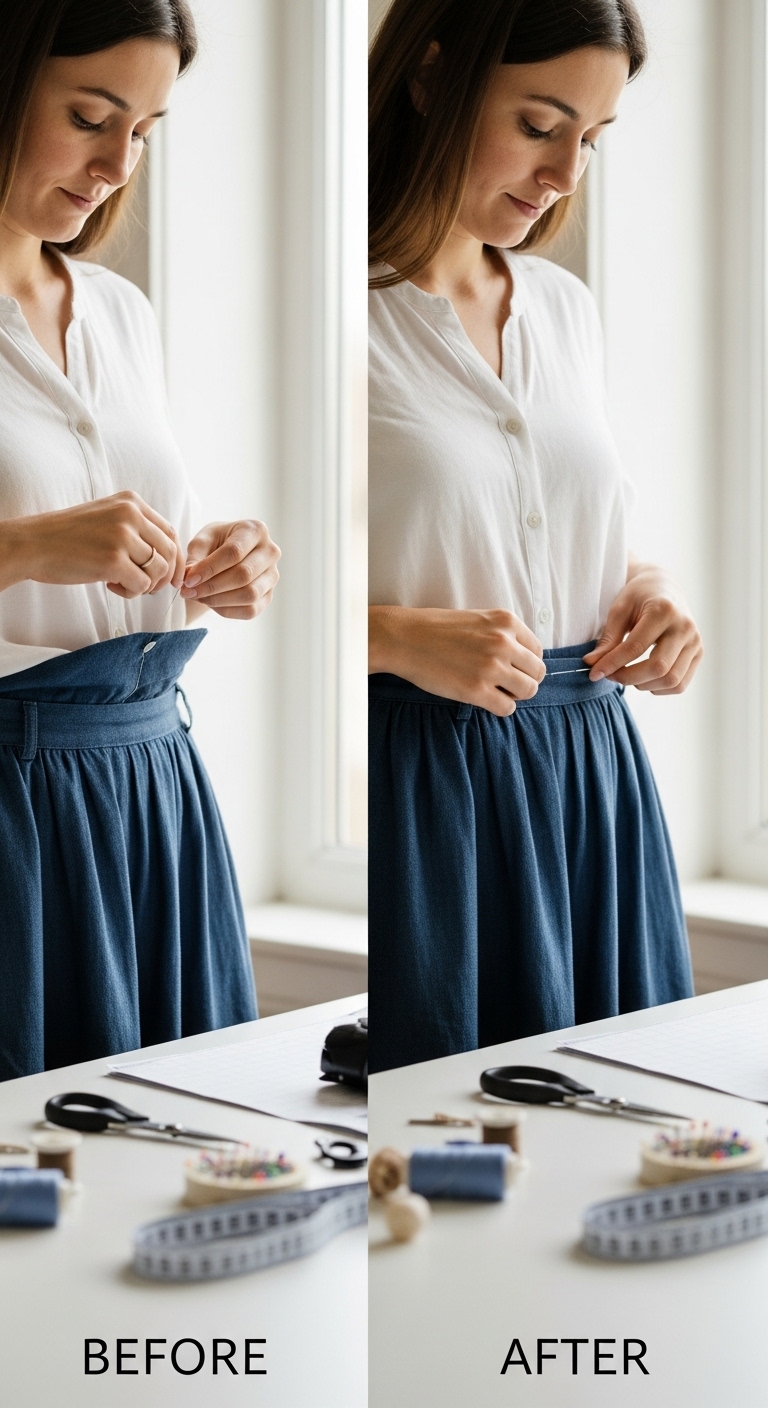
Off-the-rack pants and skirts in the US can be unpredictable. One brand’s size 8 fits like a glove, while another hangs loose in the waist no matter what you pick. That loose waistband can make a piece feel unfinished or frustrating to wear, which is exactly why learning to take in a waist is such a game-changer.
You have two main options:
Temporary fix: use safety pins, fashion tape, or elastic waist clips to cinch the waist for a quick solution. Perfect if you need to wear the item today or aren’t ready to commit to sewing.
Permanent fix: sew a few stitches along the existing seam or add a small dart at the back to reduce the waist. This takes a little patience but keeps the garment wearable for the long term.
When NOT to attempt it:
- Stretch fabrics like spandex or Lycra that require specialized sewing
- Expensive fabrics where mistakes could be costly
- Garments with complicated lining or belts built into the design
For more tips on clothes that never fit and how to handle small alterations yourself, check outbDIY Clothes That Never Fit?.
Even a small adjustment like this can turn an awkward piece into one you actually wear, without paying a tailor or risking your favorite garment.
Curious about more DIY fixes? Check out: 10 Low-Cost DIY Crafts to Make and Sell From Home
3. Fixing Gaping Shirt Buttons
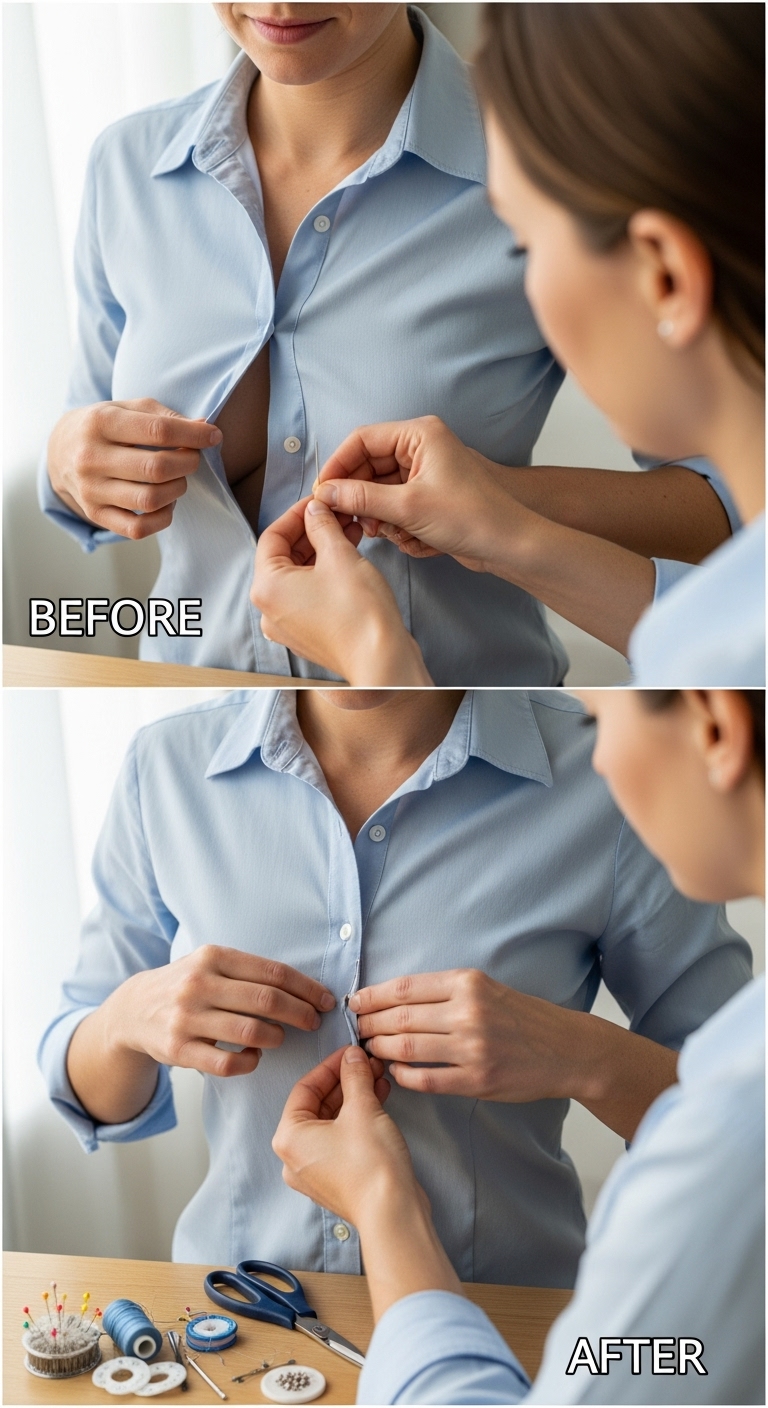
Video credit: @ Lady Rebecca Fashions
Shirt buttons tend to gap not because you’ve gained or lost weight, but often because of body shape differences. Even perfectly sized shirts can pull at the chest or midsection, leaving small openings that feel uncomfortable and make you self-conscious.
Tailors often charge for this fix because it involves resewing buttons or adjusting seams , a small job, but one that requires precision. That extra cost can add up, especially if you’ve already paid for multiple tailoring fixes.
DIY fix:
- Move the button slightly toward the gap and sew it in place.
- Add a small stitch or snap behind the button to keep it closed.
- Works best for button-down shirts made of cotton or polyester blends.
No more having to constantly adjust your shirt to keep it closed. Clothes feel more comfortable and flattering, and this tiny change can boost your confidence, you’ll look and feel more put-together.
A small adjustment like this saves money, makes your wardrobe more wearable, and removes that constant little frustration of gaping buttons.
4. Shortening Sleeves on Casual Tops
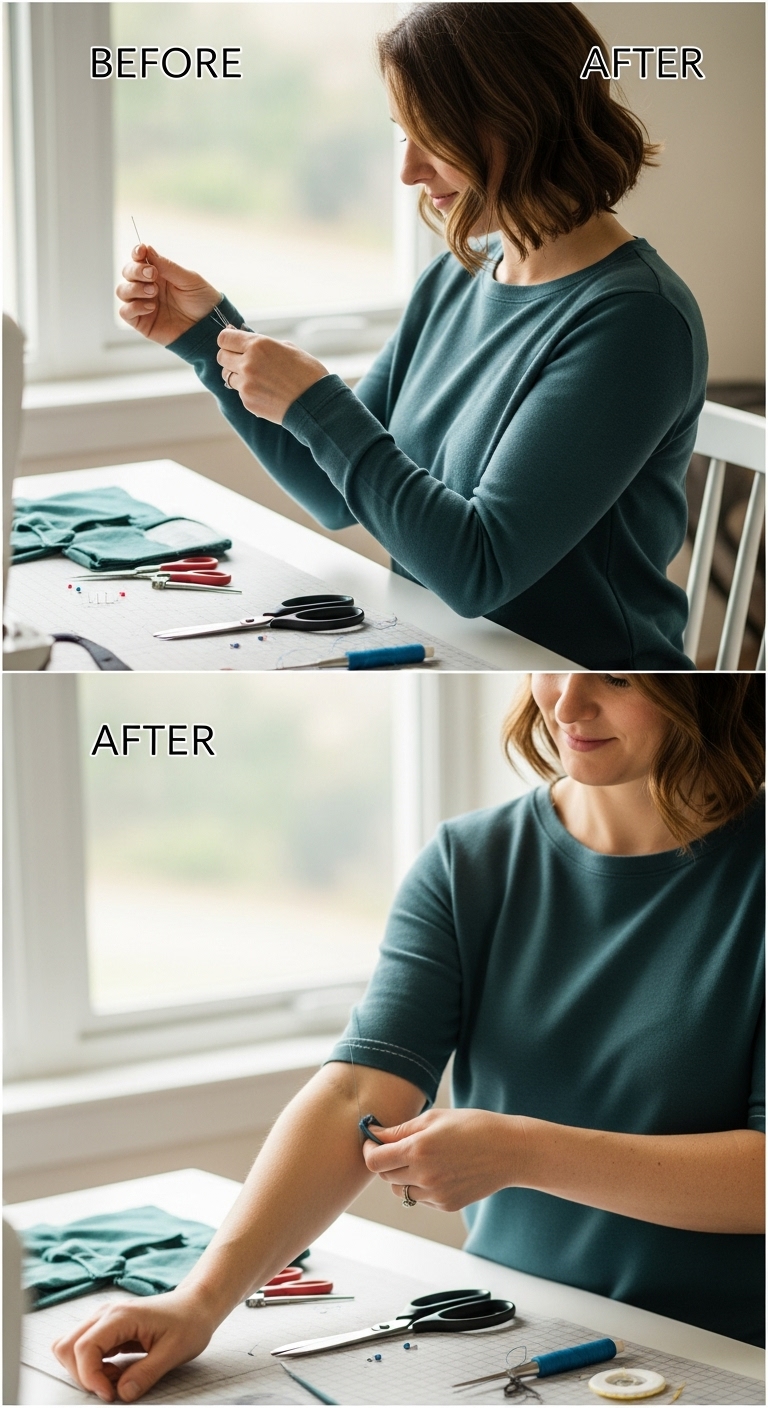
Video credit: @ Women Style
Not all sleeves are created equal. Casual tops like t-shirts, knit tops, and simple blouses have soft, flexible sleeves that are much easier to alter than structured sleeves on jackets or button-down shirts. That’s what makes this alteration beginner-friendly, you don’t need special sewing skills or complicated tools.
Why it’s beginner-safe:
- Casual sleeves usually have simple seams and no lining
- Soft fabrics like cotton, jersey, or lightweight polyester are forgiving if you make small mistakes
- No risk of changing the overall shape of the garment
How to do it:
- Measure the desired sleeve length and mark with pins or chalk
- Fold and hem the sleeve to the new length
- Sew with a straight stitch or use fabric adhesive for a no-sew option
Fabric types that are easiest: cotton, jersey, knit blends, and lightweight polyester. Avoid stiff fabrics or sleeves with cuffs, as they require more precise tailoring.
This is one of the least risky alterations to try at home, and it can completely change how comfortable and put-together your top feels.
Small adjustments like this are exactly the kind of clothing alterations that save money, reduce frustration, and make your wardrobe work for your body.
Take a look at this guide: What to Do With Fabric Scraps: Sewing Hacks That Turn Leftovers Into Keep-Worthy Gifts
5. Fixing Loose Necklines or Straps
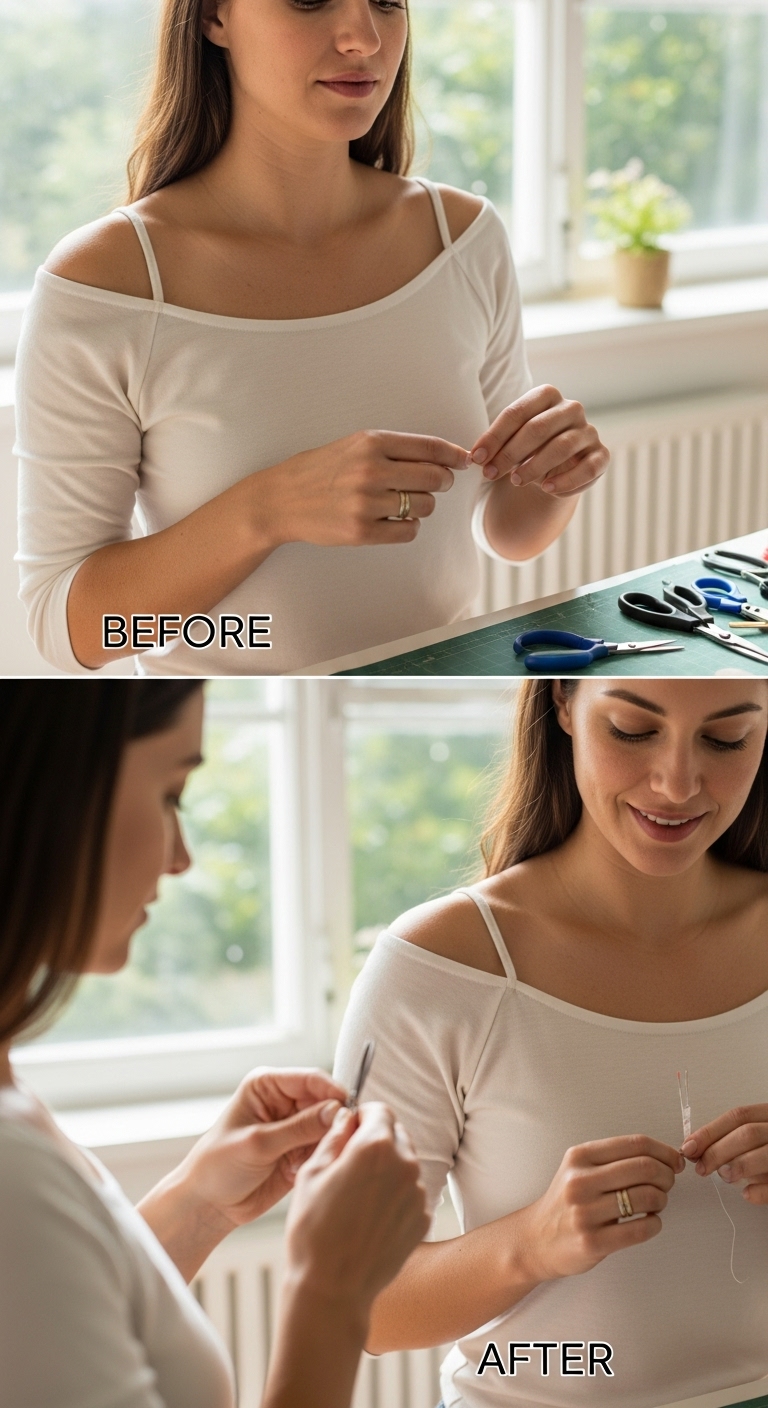
Video credit: @ Lee Allen
Video credit: @ AA Zehri
A neckline or strap that hangs too low can make even your favorite top feel awkward or uncomfortable. It’s not just about appearance, a loose neckline can affect comfort, confidence, and how you carry yourself, especially in casual or work settings.
Quick adjustment overview:
- Add small stitches at the shoulder seam to slightly shorten straps
- Use clear elastic or ribbon inside straps for adjustable tension
- Works best for lightweight tops and dresses with simple seams
When a tailor is still needed:
- Expensive fabrics like silk or satin
- Structured tops with lining or built-in support
- Garments where altering the straps could distort the overall design
This was the moment I stopped seeing tailoring as something I couldn’t learn. A small fix like this reminded me that even tricky-looking adjustments can be simple, cost-effective, and beginner-friendly, giving clothes a perfect fit without the constant worry of paying for every tiny adjustment(s).
Looking to start a sucessful thrift business, read our guide on: Thrift Business in Nigeria: How to Start a Profitable Thrift Clothing Business
Why I Stopped Paying for Small Alterations
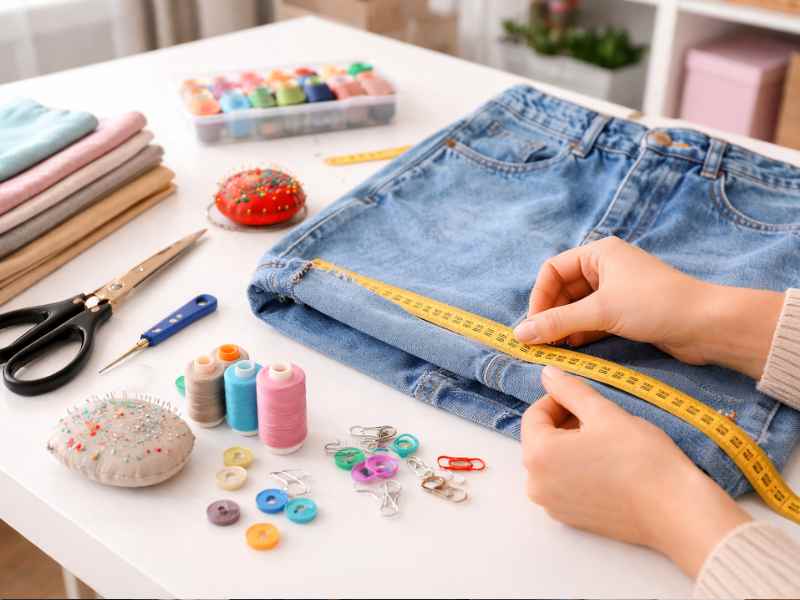
At first, it seemed easier to leave the tiny fixes to a tailor. But after a few visits, I started noticing something: the cost adds up quickly. A hem here, a button adjustment there, shortening a sleeve, suddenly, the money I spent on minor fixes could have bought a whole new outfit.
The first time I tried a simple alteration myself, like shortening a pair of pants, I felt a little thrill of confidence. It’s surprising how one small win can change the way you see your wardrobe. After that, I realized I could handle most minor fixes on my own, saving money while learning a valuable skill.
Another thing I noticed was fewer clothes were left unworn. Those pants or shirts that used to sit in the closet because of one small fit issue were now ready to wear. Simple adjustments turned frustration into usability, making my wardrobe feel more practical, comfortable, and enjoyable.
Learning to do basic clothing alterations doesn’t just save money, it gives you control over your wardrobe, boosts confidence, and makes your favorite pieces wearable again.
Don’t miss this post: Quick and Soft Valentine’s Gifts You Can Sew in a Few Hours That Melt Hearts
Ready to Try Your Own Clothing Alterations?
With just these 5 simple alterations, I’ve stopped paying for small fixes and now enjoy clothes that fit perfectly. You don’t need to be a professional, okay? just a little patience and these step-by-step tricks. Start with one alteration today and watch how much time and money you save, and you’ll feel more confident wearing the pieces you actually love.
FAQs About Small Clothing Alterations
- Will DIY alterations ruin my clothes if I make a mistake?
Not if you start small. Begin with casual tops or inexpensive pieces to practice. Even if a stitch isn’t perfect, it usually can be removed or adjusted without permanently damaging the garment. The key is to take it slow and treat it as a learning experience.
- How do I make clothes fit better if my body shape keeps changing?
Simple alterations like adjustable hems, moving buttons, or shortening straps can adapt to small changes in your body over time. You don’t need to redo an entire garment, little adjustments can make your clothes wearable and comfortable again, even if your shape fluctuates.
- Can I alter clothes bought online that don’t fit like in the photos?
Absolutely. Many online purchases don’t fit perfectly due to sizing differences. Small fixes like shortening sleeves, adjusting a neckline, or taking in a waist can make these pieces fit just right, saving you the frustration and cost of returns.
- Which small alterations have the biggest impact on how I feel in my clothes?
Tiny fixes like hemming pants, adjusting gaping buttons, or shortening sleeves can completely change how confident and comfortable you feel. Often, the smallest adjustments make the wardrobe feel tailored to your body without spending a lot of money.
- Are there simple fixes that don’t require a sewing machine?
Yes! Many beginner-friendly alterations can be done with needle and thread, iron-on hem tape, or even fabric adhesive. These methods are perfect for quick fixes and for anyone who feels intimidated by sewing machines.
