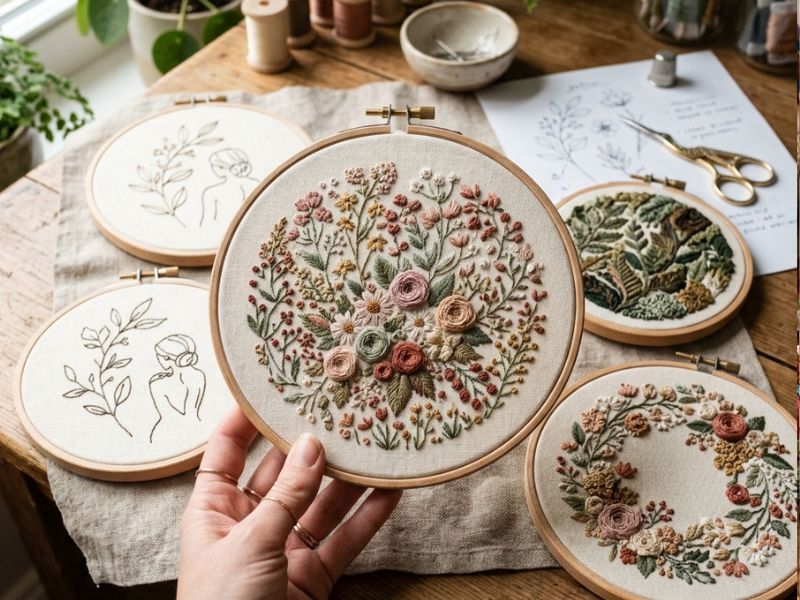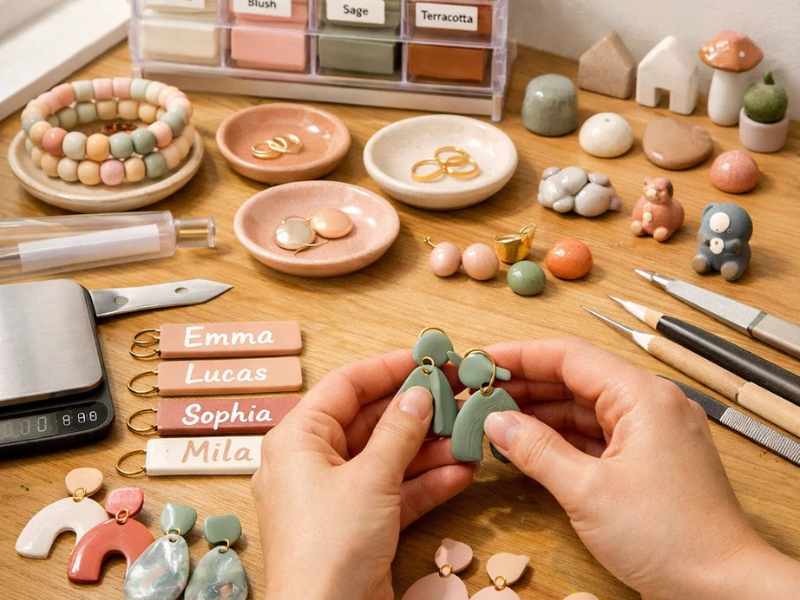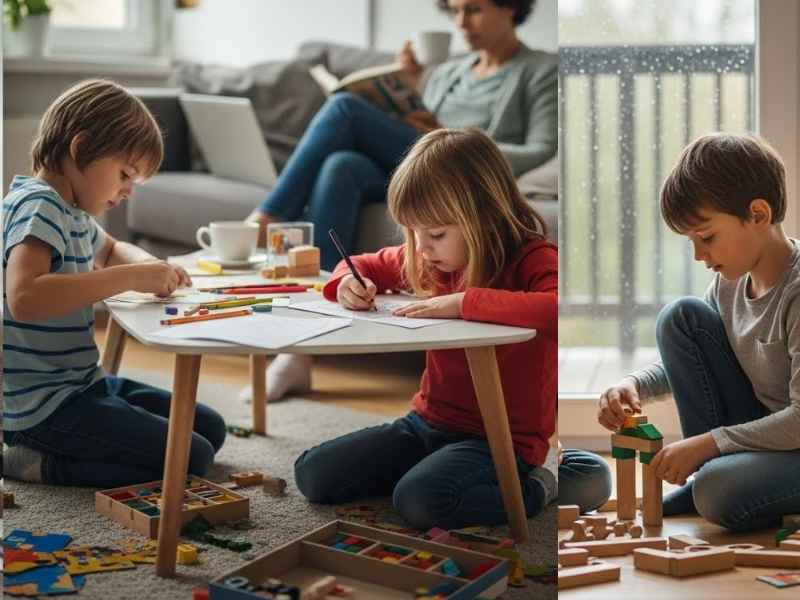
When the rain won’t stop, rely on indoor activities for kids on rainy days that actually keep them busy.
Rainy days can feel long when kids are stuck indoors with energy to burn and nowhere to put it. Screens start to feel like the easiest option, but they don’t always lead to calmer moods or better behavior.
You may not be looking for anything fancy, just simple indoor activities that keep your kids busy, reduce boredom, and don’t turn the house upside down.
You don’t need special supplies or a lot of preparation. Most of these activities use things you already have at home and give your kids something to focus on, so you’re not constantly hovering or screaming. The goal isn’t a perfect day, but to make the hours feel manageable and a little calmer for everyone.
Indoor Activities for kids on rainy days that actually keep them busy focuses on ideas that work in real homes. These are practical ways to get through rainy days without stress, mess, or constant chaos, helping both you and your kids make it through the day.
In this guide, i wrote on: Super Fun After-School & Homework-Friendly Crafts Kids Can Make in 20 Minutes
Why Kids Struggle on Rainy Days

Being stuck indoors doesn’t just limit kids’ space to move, it also cuts them off from new sights, sounds, and experiences that stimulate their minds.
Without these outlets, energy builds up, boredom sets in, and small frustrations can quickly turn into big meltdowns. Understanding why kids struggle is the first step toward helping them stay calm, engaged, and happier on indoor days.
1. Limited Space and Energy to Burn
Kids have a lot of natural energy, and when they can’t run, climb, or explore outside, that energy has to go somewhere. Even small indoor spaces can feel confining, and restlessness can show up as tantrums or irritability. It’s not misbehavior, their bodies and minds just need an outlet.
2. Screen Fatigue and Overstimulation
Handing a tablet or phone may seem like an easy fix, but too much screen time can make children more irritable and restless. Screens offer entertainment but rarely replace the variety and stimulation of hands-on play, leaving kids overstimulated and parents stressed.
3. Structured Yet Flexible Play Helps
Children thrive when there’s a balance between structure and freedom. A simple plan for indoor activities for kids on rainy days, helps them channel energy, focus, and stay occupied, but they still need room to experiment, be creative, and make small choices. This approach keeps boredom at bay while giving parents a breather.
You will love your little ones to try this:Farm Animal Crafts for Toddlers: Build Creativity and Fine Motor Skills Beyond Playtime
Setting Up for Success
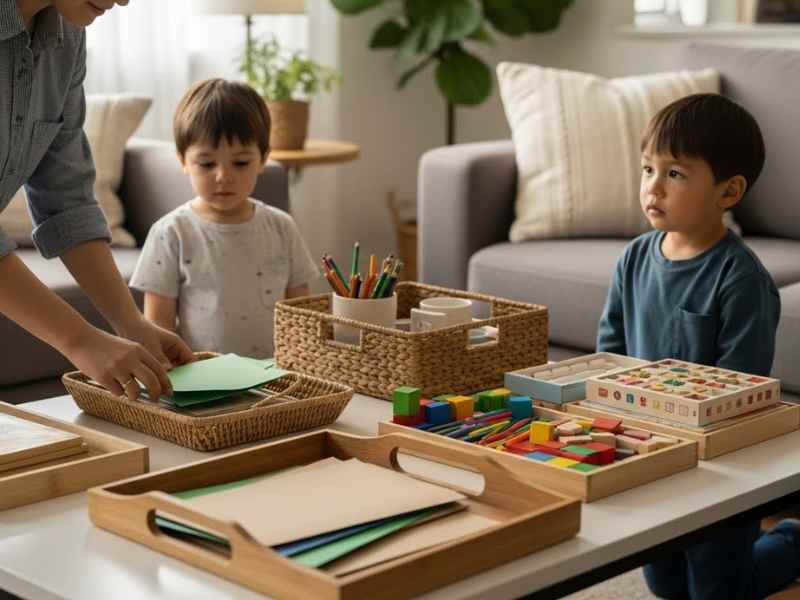
Even simple indoor activities can feel chaotic if you’re not prepared. Taking a few thoughtful steps before playtime can make rainy days easier for both you and your kids.
1. Prepare a Safe Play Area
Start by designating a corner or small section of your home for indoor activities.
- Use mats
- Trays
- or Old sheets
To protect floors and contain small messes. Having a clear, safe space not only prevents accidents but also gives kids a visual cue that it’s time to play, which can help reduce restlessness.
2. Gather Simple Materials Ahead of Time
Keep a small collection of kid-friendly items ready for indoor play.
Things like:
- Paper, markers
- Blocks
- Pipe cleaners,
or even everyday household objects can spark creativity. Having materials organized in bins or baskets makes it easy to start an activity quickly and keeps the day flowing without scrambling for supplies.
3. Set Realistic Expectations
Remember, indoor play doesn’t need to be perfectly quiet or focused. Kids naturally move between bursts of activity and short attention spans.
Encourage exploration and curiosity rather than perfect execution. This reduces stress for both you and your child while still helping them stay engaged and entertained.
Indoor Activities For Kids on Rainy Days
1. Painting with Watercolors
 Painting isn’t just about colors on paper. For kids, it helps build fine motor skills, hand-eye coordination, and encourages creativity. On rainy days, it also gives them a calm, focused activity that channels energy into something fun and tangible.
Materials You’ll Need
- Watercolor paints or washable markers
- Thick paper or cardstock
- Small cups of water and brushes
- Old newspaper or a mat to protect surfaces
How to Do It
- Set up the workspace on a tray or covered table.
- Let your child choose their colors and paper.
- Demonstrate basic brush strokes or allow free painting.
- Encourage experimentation — mixing colors, painting shapes, or even making patterns.
Common Challenges & How to Handle Them
Kids might spill water or mix all the colors together. That’s normal! Use this as a chance to teach about cleaning brushes, refilling water, or exploring new color combinations. It keeps them learning without turning it into a “messy fight.”
Learning Benefits They Might Not Notice
Even if it looks like simple play, painting develops patience, focus, and visual-spatial skills. Asking your child to describe what they’re painting also improves vocabulary and storytelling abilities.
Ways to Extend the Fun
- Turn the painting into a greeting card or a gift for someone in the house.
- Encourage your child to create a mini “gallery” by hanging their artwork on the fridge or a string with clips.
Adjusting for Age or Skill Level
Toddlers can dip brushes and make broad strokes, while preschoolers can try finer details, patterns, or even attempt mixing colors to make new shades.
Connection & Interaction Tips
Join your child for a few minutes, ask about the colors they’re using or the story behind their painting. You don’t need to guide every stroke; just sharing the moment strengthens connection and attention.
When you need something fun and productive for kids, these 13 Popsicle Stick Crafts for Kids That Actually Keep Them Busy and Boosts Creativity are a great place to start.
2. Simple Collages Using Scrap Paper and Glue
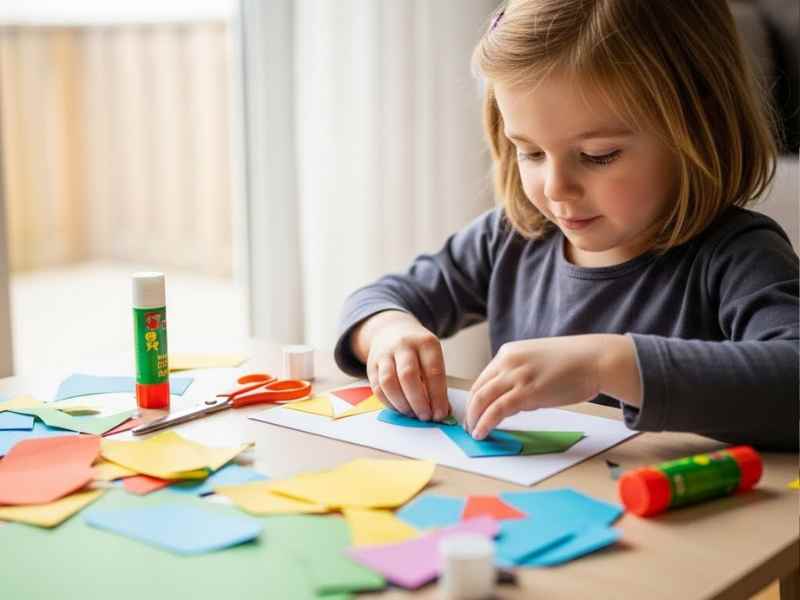
Creating collages isn’t just sticking pieces of paper together. For kids, it helps develop fine motor skills, hand-eye coordination, and decision-making as they choose shapes, colors, and placement.
Collages give them a calm, focused activity that channels energy into a creative project they can be proud of.
Materials You’ll Need
- Scrap paper, old magazines, colored paper, or fabric scraps
- Safety scissors (for preschoolers)
- Glue sticks or liquid glue
- A base paper or cardboard to build the collage on
- Optional: stickers, buttons, cotton balls, or other small items
- Newspaper or mat to protect surfaces
How to Do It
- Set up a tray or table with all the materials within easy reach.
- Show your child how to cut, tear, and arrange pieces on the base.
- Encourage them to layer shapes, overlap colors, or make patterns.
- Allow free exploration — they can make anything from abstract shapes to themed collages like “rainy day fun” or “my favorite animals.”
Common Challenges & How to Handle Them
- Pieces won’t stick: Demonstrate pressing down firmly or using a glue stick.
- Too many scraps on the floor: Use a tray or shallow box to keep scraps contained.
- Frustration with cutting: Let younger kids tear paper instead — tearing is just as good for motor skills.
Learning Benefits They Might Not Notice
Even if it looks like simple play, collaging develops creativity, hand strength, spatial awareness, and planning skills. Asking your child to explain their collage also boosts storytelling, language, and critical thinking.
Ways to Extend the Fun
- Turn collages into greeting cards, bookmarks, or wall art.
- Make a weekly theme — for example, “spring flowers,” “space,” or “under the sea.”
- Combine with painting or stamping for extra texture and color.
Adjusting for Age or Skill Level
- Toddlers can focus on tearing and gluing large pieces.
- Preschoolers can cut shapes, layer multiple items, and follow simple themes.
- Older kids can experiment with symmetry, patterns, or creating small scenes.
Connection & Interaction Tips
Sit with your child for a few minutes, talk about colors, shapes, and what their collage represents. You don’t need to direct them; just noticing their choices and asking questions strengthens attention and connection while keeping it fun.
3. Playdough or Clay Modeling
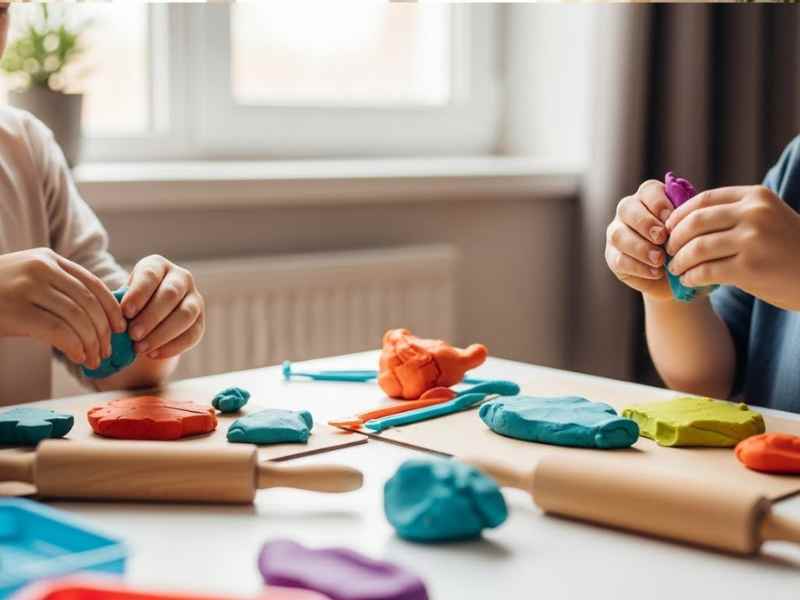
Playing with playdough or clay isn’t just about squishing and shaping, it’s hands-on learning in disguise. It helps strengthen little hands, develop fine motor skills, and encourages creativity.
Modeling clay gives kids a way to release energy, focus on a task, and explore textures without screens.
Materials You’ll Need
- Playdough or modeling clay (store-bought or homemade)
- Child-safe rolling pins, cookie cutters, or stamps
- Small containers or mats to keep the area tidy
- Optional: beads, buttons, or small sticks for decorating
- A damp cloth for easy cleanup
How to Do It
- Set up a space with a mat or tray to catch crumbs or clay bits.
- Let your child choose colors and tools.
- Show them simple shapes — snakes, balls, pancakes, or animals — or let them invent freely.
- Encourage stacking, rolling, pinching, or pressing textures into the clay.
Common Challenges & How to Handle Them
- Clay sticks to the table: Use a mat or wax paper as a base.
- Pieces get lost or squashed: Show your child how to store small creations in a container.
- Short attention spans: Switch between free play and guided tasks, like making a favorite animal or object.
Learning Benefits They Might Not Notice
Even basic squishing and rolling strengthens hand muscles needed for writing and self-care. Playdough also teaches planning, problem-solving (how to make a shape stand or stick), and imagination when kids create stories around their models.
Ways to Extend the Fun
- Make a mini “exhibit” of their creations on a shelf or tray.
- Introduce themes — for example, a garden, zoo, or ocean scene.
- Combine with storytelling: your child builds a character, then tells its story.
Adjusting for Age or Skill Level
- Toddlers: large pieces to pinch, roll, and mash.
- Preschoolers: use cutters, stamps, and create small scenes.
- Older kids: experiment with patterns, textures, and more complex creations like vehicles or houses.
Connection & Interaction Tips
Play alongside your child and ask them to explain what they are building. You don’t need to guide every detail, simply noticing their choices, asking questions, and celebrating their creations helps them feel seen and encourages confidence.
4. Blocks, LEGO, or DIY Cardboard Forts
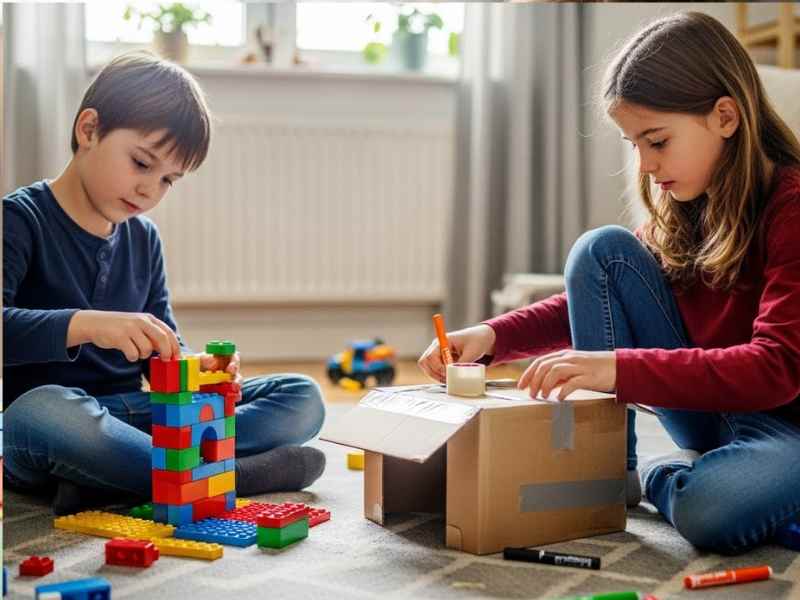
Building with blocks, LEGO, or cardboard isn’t just play, it’s an opportunity for kids to develop problem-solving skills, spatial awareness, and creativity.
Construction activities channel energy, encourage focus, and give kids a sense of accomplishment when their creation stands tall.
Materials You’ll Need
- Wooden blocks, LEGO sets, or large cardboard boxes
- Tape, glue, or clips for cardboard forts
- Small cushions or blankets for fort-building
- Optional: markers, stickers, or fabric scraps to decorate creations
How to Do It
- Designate a safe building space — a corner of the room, the dining table, or a cleared floor area.
- Let your child choose materials and decide what to build.
- Encourage them to plan first — which blocks or boxes go where.
- Offer minimal guidance: help only if structures collapse or pieces need balancing.
Common Challenges & How to Handle Them
- Structures fall apart: Show how to stack heavier pieces at the bottom or reinforce with tape.
- Limited space: Use a table or a small floor area for smaller builds.
- Short attention spans: Break building into phases — build one section, take a mini break, then continue.
Learning Benefits They Might Not Notice
- Enhances fine motor skills and hand-eye coordination.
- Promotes planning and sequencing as kids decide how to construct their vision.
- Boosts creativity and confidence as children solve building challenges independently.
Ways to Extend the Fun
- Turn building into a theme challenge: build a zoo, spaceship, or castle.
- Add storytelling: after building, your child can narrate adventures for the characters in their creation.
- Include simple math concepts: count blocks, compare heights, or measure lengths.
Adjusting for Age or Skill Level
- Toddlers: large blocks for stacking and knocking down safely.
- Preschoolers: smaller blocks, simple forts, and color or shape patterns.
- Older kids: complex structures or combining LEGO with cardboard to make elaborate scenes.
Connection & Interaction Tips
Join in by building alongside them, asking what each section is, or giving playful suggestions. You don’t need to control the design, being present, showing interest, and celebrating successes makes the experience richer for both of you.
5. Movement & Energy-Burning Indoor Games

Kids have energy, lots of it, and when they can’t go outside, it can turn into restlessness or frustration. Indoor movement games help burn off that energy, improve mood, and give kids a sense of accomplishment, all while keeping them safe inside.
Materials You’ll Need
- Cushions, pillows, or soft furniture for obstacle courses
- Music player or phone for dance games
- Open space on carpet or non-slip floor
- Optional: scarves, ribbons, or small props for games
How to Do It
- Create a safe play area free from breakables.
- Set up simple obstacle courses: crawl under chairs, hop over cushions, or balance along a taped line.
- Introduce short dance sessions — play upbeat songs and encourage movement.
- Play “Simon Says,” “Freeze Dance,” or follow-the-leader to combine fun with listening skills.
Common Challenges & How to Handle Them
- Overexcitement: Keep activities in 5–10 minute rounds to prevent overwhelm.
- Limited space: Use small zones or hallway stretches for mini activities.
- Safety concerns: Ensure floors are clear and soft items are available to prevent falls.
Learning Benefits They Might Not Notice
- Improves coordination, balance, and gross motor skills.
- Supports cognitive development through listening, following instructions, and pattern recognition.
- Teaches patience and turn-taking in structured games like “Simon Says.”
Ways to Extend the Fun
- Create themed obstacle courses: jungle adventure, space mission, or animal safari.
- Add simple props like scarves or beanbags to vary challenges.
- Incorporate storytelling: each obstacle is a part of a story, making movement imaginative.
Adjusting for Age or Skill Level
- Toddlers: short, simple paths with soft surfaces.
- Preschoolers: add jumping, crawling, or small challenges that encourage problem-solving.
- Older kids: combine multiple activities into a mini indoor “olympics” with timed challenges.
Connection & Interaction Tips
Participate alongside your child, even briefly. Give encouragement, cheer for their successes, and try following their lead. These small moments of shared movement build trust, joy, and connection while helping them release energy safely.
6. Imaginative Play: Letting Kids’ Minds Run Free
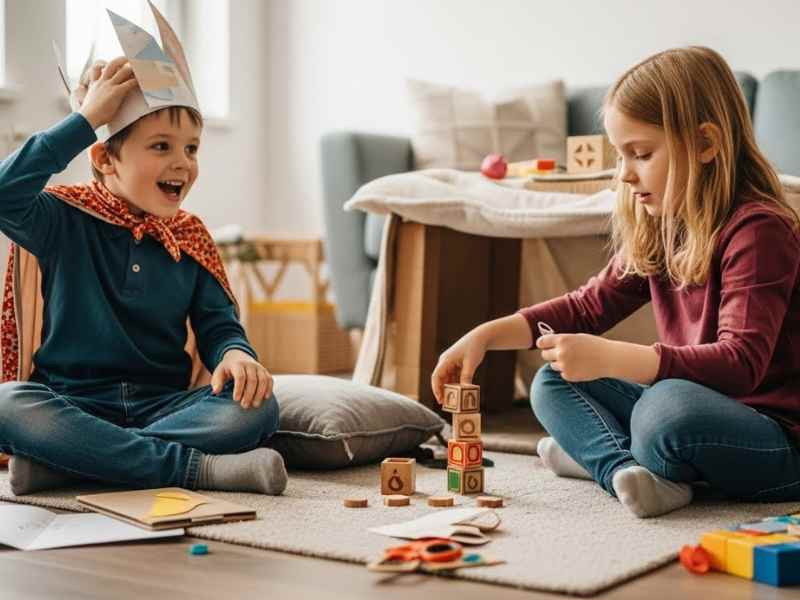
When kids play pretend, they’re not just having fun, they’re practicing problem-solving, language, and emotional understanding. Imaginative play is especially valuable because it can keep them deeply engaged without needing large spaces or fancy toys.
Materials You’ll Need
- Old clothes, hats, or scarves for dress-up
- Paper bags, socks, or cardboard for puppets
- Household items like bowls, spoons, or boxes for props
- Paper, crayons, or markers for creating small scenes or signs
How to Do It
- Set up a small play area where your child feels safe to move and act freely.
- Introduce a simple scenario: a store, a restaurant, a zoo, or a superhero adventure.
- Encourage role-play: dressing up, making up dialogues, and acting out stories.
- Use puppets or props to guide interactions and expand creativity.
- Let your child take the lead — adults can join in lightly without controlling the story.
Common Challenges & How to Handle Them
- Short attention span: Rotate scenarios every 10–15 minutes to keep excitement high.
- Messy setups: Use a designated “pretend play corner” with easily cleanable props.
- Reluctance to play: Start with simple prompts or familiar themes, like pets or favorite characters.
Learning Benefits They Might Not Notice
- Expands vocabulary and storytelling skills.
- Strengthens social-emotional understanding through empathy and perspective-taking.
- Encourages problem-solving as they navigate pretend situations.
Ways to Extend the Fun
- Turn a puppet show into a mini “performance” for family members.
- Encourage children to create small “worlds” with cardboard boxes or paper scenery.
- Make a story journal where your child draws or writes the events of their imaginative play.
Adjusting for Age or Skill Level
- Toddlers: simple role-play like feeding a doll or pretending to drive a car.
- Preschoolers: longer scenarios with dialogue, problem-solving, and multiple roles.
- Older kids: integrate storytelling challenges, props, or multi-step pretend “missions.”
Connection & Interaction Tips
Ask questions that extend the story: “What happens next?” or “How does your character feel?” Offer encouragement and share in the imaginative world for a few minutes. This strengthens connection, validates their ideas, and shows that play has value.
7. Dress-Up and Role-Playing
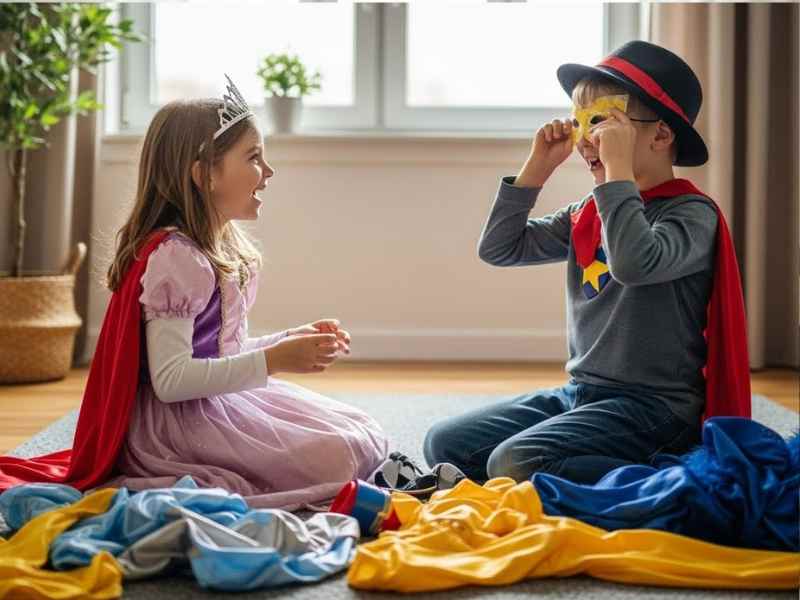
Dressing up isn’t just fun, it’s a way for kids to explore identities, practice social skills, and stretch their imagination. Role-playing helps them stay engaged while expressing creativity without needing a large space.
Materials You’ll Need
- Old clothes, scarves, hats, or costume accessories
- Shoes, bags, or household items that can become props
- Mirrors for self-observation and creative expression
How to Do It
- Create a small “dress-up corner” where costumes and props are easy to reach.
- Introduce a scenario if needed: a doctor’s office, superhero adventure, or favorite storybook scene.
- Encourage your child to pick roles and act them out, using voices, movements, or gestures.
- Let them improvise — adults can join lightly without directing every action.
- Rotate costumes or props to spark new scenarios as interest wanes.
Common Challenges & How to Handle Them
- Mixing costumes in ways you didn’t expect: Let them experiment — it’s part of creative thinking.
- Short attention spans: Introduce mini “missions” or short scenes that last 10–15 minutes.
- Overcrowded space: Keep the dress-up corner tidy with a bin or hanging organizer.
Learning Benefits They Might Not Notice
- Boosts storytelling, imagination, and language skills.
- Develops confidence as they express different characters or emotions.
- Enhances social and emotional awareness through acting and perspective-taking.
Ways to Extend the Fun
- Encourage your child to “perform” their scene for family members.
- Combine dress-up with simple DIY props or paper crowns for a richer experience.
- Take photos of their outfits or characters to create a mini “memory book” of their imaginative play.
Adjusting for Age or Skill Level
- Toddlers: simple hats or scarves, short pretend actions like “feeding the doll.”
- Preschoolers: multi-role scenarios, using props and dialogues.
- Older kids: add story challenges, problem-solving, or multi-step adventures.
Connection & Interaction Tips
Ask open-ended questions like, “What does your character want to do next?” or “How does your character feel?” Join briefly in the fun, it validates their creativity without taking control.
8. Puppet Shows with Socks or Paper Bags
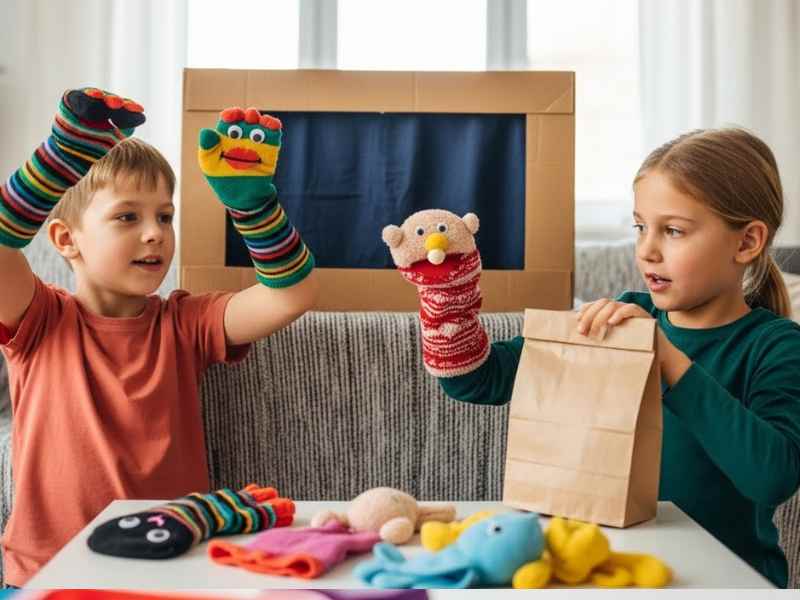
Puppet shows are more than just entertainment, they give kids a way to explore stories, emotions, and communication skills. They’re a quiet, creative activity that keeps little hands and minds busy while encouraging imagination.
Materials You’ll Need
- Old socks or paper bags to make puppets
- Markers, crayons, or paint to decorate faces
- Glue, felt, buttons, or yarn for hair and features
- A small box or table to act as a puppet stage
How to Do It
- Help your child decorate their puppets with faces, hair, and clothes.
- Set up a small “stage” — this could be a box turned sideways, a table with a cloth, or even the floor.
- Encourage your child to create a short story or scene.
- Let them practice moving the puppets and giving them voices.
- Invite family members to watch or join as other characters.
Common Challenges & How to Handle Them
- Short attention span: Keep stories simple, 5–10 minutes long, and allow breaks.
- Messy materials: Use a tray for markers and glue to contain mess.
- Puppet frustration: If puppets don’t behave as expected, model how to adjust movements or reimagine the character.
Learning Benefits They Might Not Notice
- Enhances creativity and narrative skills by encouraging storytelling.
- Builds confidence in speaking and expressing emotions.
- Improves fine motor skills as kids manipulate puppets.
- Encourages problem-solving when stories don’t go as planned.
Ways to Extend the Fun
- Record a mini puppet show video for family memories.
- Let your child design a “puppet theater” with cardboard or a shoebox.
- Encourage mixing different puppet characters to invent new storylines.
Adjusting for Age or Skill Level
- Toddlers: Simple puppets, short and playful actions, no strict story needed.
- Preschoolers: Develop short stories, practice dialogue between characters.
- Older kids: Complex stories with problem-solving elements and multiple puppets.
Connection & Interaction Tips
Sit with your child while they perform and ask questions like, “What will happen next?” or “How does your puppet feel?” You don’t need to guide the story, just share in the excitement and celebrate their creativity.
9. Storytelling Games Where Kids Invent the Plot

Storytelling games give kids a chance to create, imagine, and practice language skills, all while having fun indoors. On rainy days, they’re a quiet but engaging way to keep kids entertained, letting them use their minds instead of screens.
Materials You’ll Need
- Paper and crayons (optional, for drawing scenes or characters)
- Small toys or figurines (optional, to act out parts of the story)
- A cozy spot where kids can sit and focus
How to Do It
- Start with a prompt: a character, a place, or a problem (e.g., “A cat who wanted to fly”).
- Ask your child to add the next part of the story.
- Take turns building the story together, adding characters, events, or obstacles.
- Encourage them to draw or act out scenes if they want to.
- Celebrate the story at the end — you can even write it down or record it for keepsakes.
Common Challenges & How to Handle Them
- Getting stuck: Offer gentle prompts like, “What does the character do next?”
- Short stories: Keep sessions short and repeat the activity over several days.
- Frustration with details: Remind kids there’s no “wrong” story — creativity is the goal.
Learning Benefits They Might Not Notice
- Expands vocabulary and storytelling skills.
- Encourages logical thinking as they sequence events.
- Boosts confidence in speaking and expressing ideas.
- Strengthens imagination and emotional understanding through character perspectives.
Ways to Extend the Fun
- Turn stories into mini books with illustrations.
- Act out parts of the story with toys, puppets, or family members.
- Record their storytelling and play it back to encourage reflection and pride.
Adjusting for Age or Skill Level
- Toddlers: Keep prompts simple, use single words or short sentences.
- Preschoolers: Encourage full sentences and short story arcs.
- Older kids: Introduce more complex characters, problems, or settings.
Connection & Interaction Tips
Sit with your child during the game and show genuine curiosity: ask, “Why did the character do that?” or “What happens next?” You don’t need to lead the story, listening and asking questions shows you value their imagination and ideas.
10. Puzzles or Matching Games
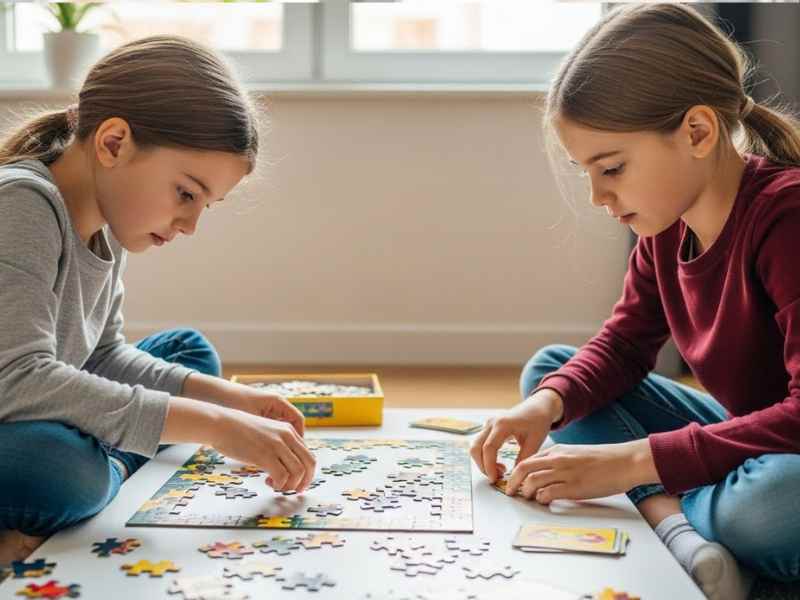
Puzzles and matching games are more than just quiet time fillers. They help kids focus, problem-solve, and build memory, all while giving them a sense of accomplishment. These activities provide a structured yet fun way to channel energy when outdoor play isn’t possible.
Materials You’ll Need
- Age-appropriate jigsaw puzzles or wooden puzzles
- Matching card games (animals, shapes, numbers, or letters)
- Small table or soft mat for setup
- Optional: timer or basket to store pieces
How to Do It
- Set up a small workspace where all pieces stay contained.
- Start with a puzzle or matching game suited to your child’s skill level.
- Show how to match pieces or cards, but let your child attempt it independently.
- Celebrate small wins, every completed section or correct match builds confidence.
Common Challenges & How to Handle Them
- Lost or mixed-up pieces: Keep a basket or zip bag handy to store puzzle pieces between sessions.
- Frustration if a match or puzzle piece doesn’t fit: Encourage patience and try breaking the task into smaller steps.
- Short attention span: Rotate games or add mini-breaks every 10–15 minutes.
Learning Benefits They Might Not Notice
- Strengthens visual-spatial reasoning and memory.
- Teaches patience, persistence, and focus.
- Improves fine motor skills and hand-eye coordination.
- Encourages independent problem-solving and critical thinking.
Ways to Extend the Fun
- Let your child create their own matching game using drawn cards or printed images.
- Turn completed puzzles into wall art or a “gallery” to show progress.
- Introduce a friendly challenge: time how quickly a puzzle is solved or how many matches they can make in a row.
Adjusting for Age or Skill Level
- Toddlers: Large-piece, simple puzzles and matching cards with colors or animals.
- Preschoolers: Medium puzzles, memory matching games, simple shape/number games.
- Older kids: Complex puzzles, multi-step matching challenges, strategy-based games.
Connection & Interaction Tips
Join in without taking over. Ask questions like: “Which piece do you think goes next?” or “Can you find the card that matches this one?” This encourages conversation, strengthens observation skills, and builds your connection while letting your child lead.
11. Simple Board Games
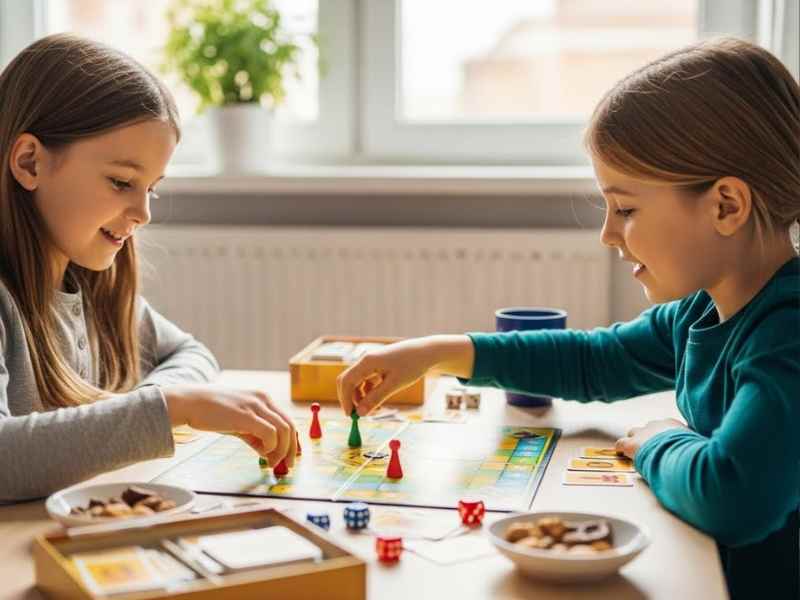
Board games are a fantastic way to keep kids engaged while teaching important life skills. They turn rainy days into structured fun and encourage focus, patience, and social interaction, all without screens.
Materials You’ll Need
- Age-appropriate board games (Candy Land, Chutes & Ladders, Connect 4, or simple strategy games)
- A table or flat surface for setup
- Optional: small timer for turn-taking or challenges
How to Do It
- Choose a game suited to your child’s age and attention span.
- Explain the rules clearly but keep it simple — you can simplify rules if needed.
- Take turns, letting your child make decisions and celebrate wins.
- Encourage positive reactions when someone wins or loses, modeling good sportsmanship.
Common Challenges & How to Handle Them
- Short attention spans: Break the game into smaller rounds or play only a few turns at a time.
- Arguments over rules or turns: Use this as a teaching moment to practice patience and sharing.
- Losing interest mid-game: Let your child choose a different game or add small variations to keep it fun.
Learning Benefits They Might Not Notice
- Builds problem-solving and strategic thinking skills.
- Encourages counting, matching, and pattern recognition.
- Teaches patience, turn-taking, and social interaction.
- Improves focus and memory over repeated play.
Ways to Extend the Fun
- Make your own DIY board game using paper, markers, and dice for a creative twist.
- Add mini challenges or rewards for completing sections of a game.
- Encourage siblings or parents to play together for family bonding.
Adjusting for Age or Skill Level
- Toddlers: Simple matching, counting, or color games.
- Preschoolers: Classic beginner board games with short playtime.
- Older kids: Strategy-based games, cooperative games, or games with multiple steps.
Connection & Interaction Tips
Sit together, cheer each other on, and ask open-ended questions like: “What strategy will you try next?” This makes the game social and helps children develop communication and reasoning skills while having fun.
12. Reading Corners with Books or Audiobooks

Reading corners aren’t just about books, they create a cozy space where kids can unwind, focus, and explore stories at their own pace. The corners provide a calm break from high-energy play while still keeping kids engaged and learning.
Materials You’ll Need
- Age-appropriate books (picture books, beginner readers, or storybooks)
- Audiobooks or kid-friendly podcasts (optional for auditory learning)
- Comfortable seating like pillows, bean bags, or small chairs
- Soft lighting or a reading lamp to make the space inviting
- A small basket or shelf to organize books
How to Do It
- Set up a small, cozy corner with pillows and blankets.
- Let your child choose their book or audiobook — giving them choice increases engagement.
- Encourage quiet reading or listening for a set amount of time.
- For audiobooks, pair listening with follow-up questions or drawing activities to reinforce comprehension.
Common Challenges & How to Handle Them
- Short attention span: Start with 5–10 minutes and gradually increase reading time.
- Distractions: Keep the corner away from high-traffic areas or loud toys.
- Reluctance to read: Read aloud together, or act out the story to make it interactive.
Learning Benefits They Might Not Notice
- Expands vocabulary and language skills.
- Sparks imagination and creativity through storytelling.
- Encourages independent focus and self-directed learning.
- Introduces empathy and problem-solving through characters and plots.
Ways to Extend the Fun
- Create a mini “book club” — talk about the story after reading.
- Have your child draw or act out their favorite part of the story.
- Mix in audiobooks with books so they can follow along visually and audibly.
Adjusting for Age or Skill Level
- Toddlers: Picture books, board books, or short interactive stories.
- Preschoolers: Beginner readers or simple chapter books.
- Older kids: Longer chapter books, audiobooks, or read-along stories with discussion.
Connection & Interaction Tips
Join your child in the reading corner, ask what they liked most, or make predictions about the story. You don’t have to read the whole book, just being present and engaging occasionally strengthens their love of reading and builds a meaningful connection.
Making It Easier for Parents
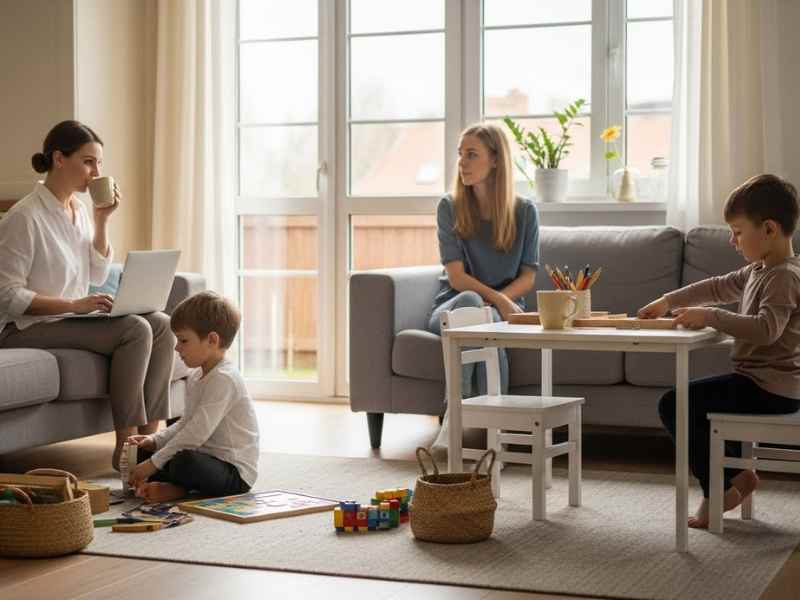
Rainy days don’t just drain kids, they drain parents too. The goal isn’t to fill every minute or create picture-perfect activities. It’s to get through the day with fewer power struggles, less mess stress, and kids who feel settled enough to stay busy.
Rotate Activities to Prevent Boredom
Kids lose interest quickly when the same activity is repeated too often in one day. Rotating activities works because it resets their attention without needing new supplies or extra planning.
Instead of trying to keep one activity going for hours, think in short blocks. A quiet activity after movement, then something creative after focus time.
This natural shift helps kids stay engaged longer because their brains aren’t overstimulated or underused. Rotation isn’t about doing more, it’s about changing how energy is used throughout the day.
Involve Kids in Setup and Cleanup
Letting kids help set up or clean up isn’t about making them “responsible”, it gives them ownership. When kids help lay out supplies, choose where to play, or put materials away, they’re more invested in the activity itself.
Simple tasks like carrying pillows, sorting crayons, or wiping a table also help release excess energy in a productive way. Over time, this reduces resistance because the activity feels like something they helped create, not something being enforced.
Keep Expectations Flexible
Rainy-day activities don’t need to look neat or last long to be successful. Some days, a child may play for twenty minutes. Other days, five minutes is enough, and that’s okay. Engagement matters more than completion.
Flexibility also protects your own energy. When parents release the pressure for perfect focus or clean results, kids sense that calm. That shift alone often leads to better behavior, smoother transitions, and fewer emotional blowups during the day.
Conclusion
Rainy days don’t have to feel overwhelming or like something you just have to “get through.” With a few simple indoor activities ready, the day becomes more manageable and far less stressful, even when plans change or energy runs high.
Having a small go-to list of Indoor Activities for kids on rainy days means you’re not scrambling for ideas when boredom hits. You already know what works in your home, with your space, and with your kids.
Most importantly, remember this: the goal isn’t perfect focus, quiet hours, or mess-free play. It’s engagement. If your child feels occupied, curious, or calm, even for a short while, you’re doing exactly what they need.
You just read: indoor activities for kids on rainy days.